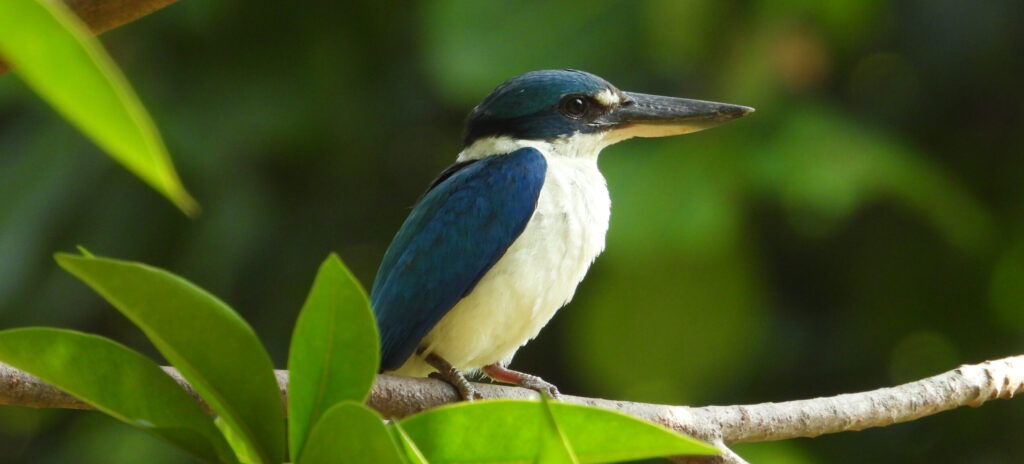
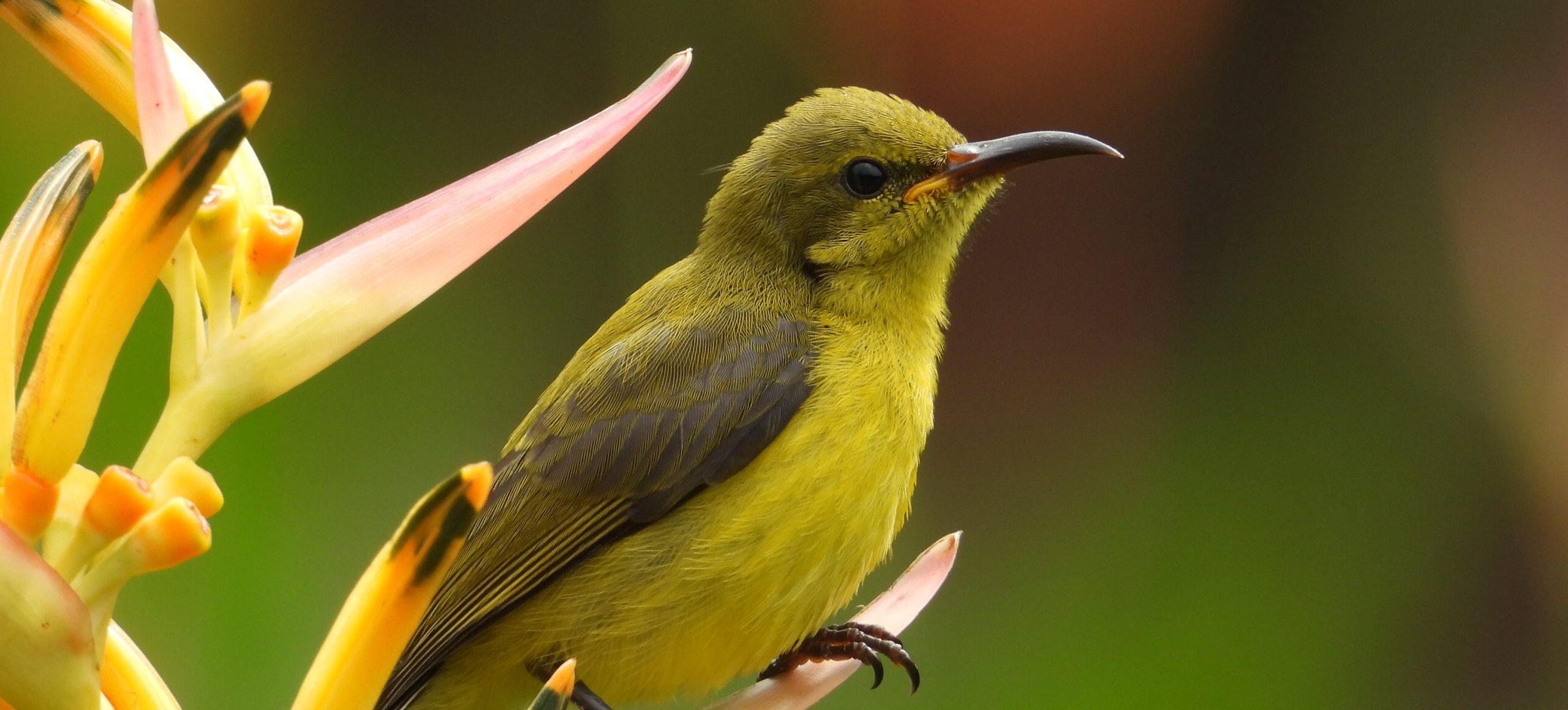
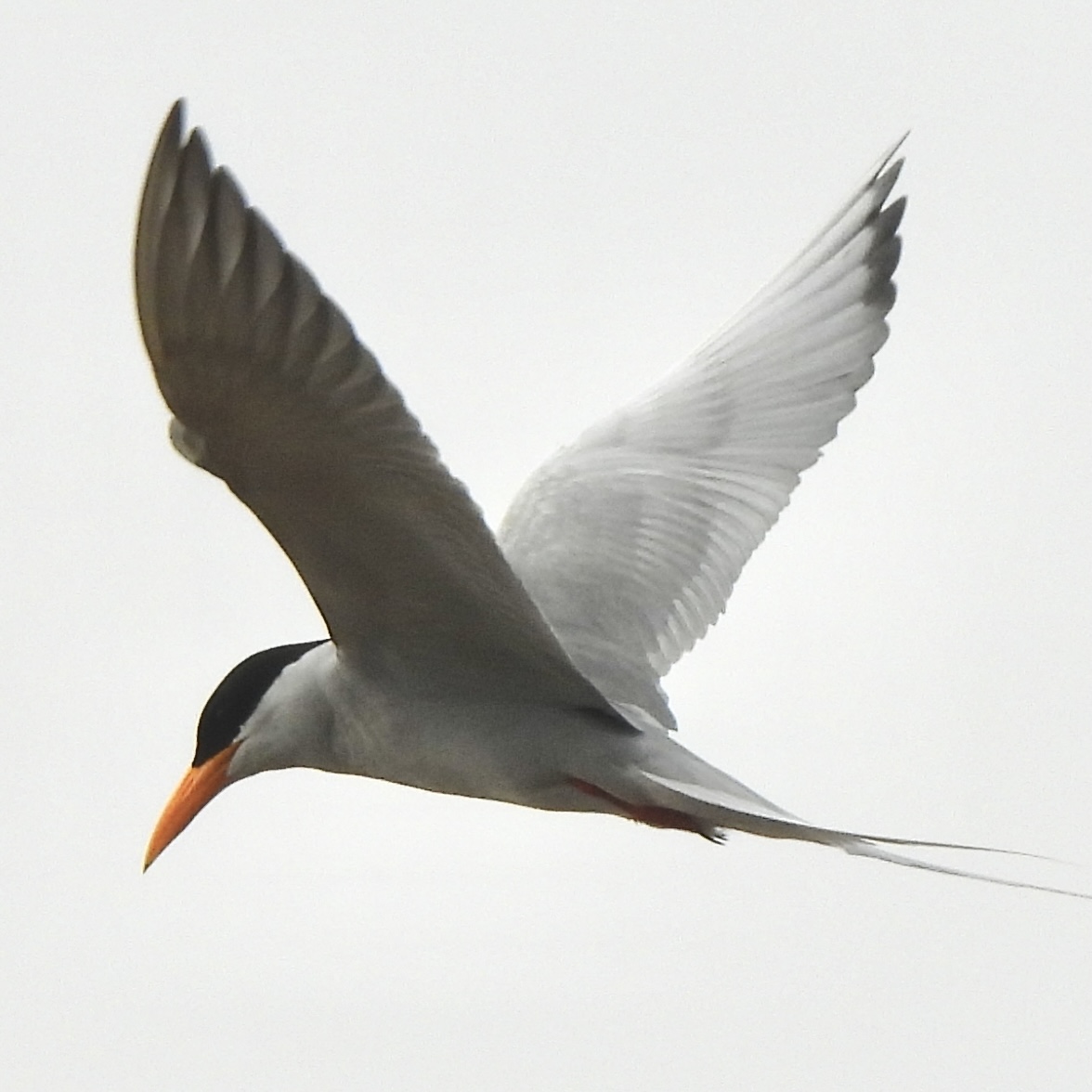
Merja Zerga is a large coastal lagoon on the northern Atlantic coast of Morocco. This wetland is a key stopover for thousands of birds moving along the East Atlantic Flyway. It became globally known in the late 1980s, when it proved to be the very last reliable location worldwide to connect with one of the world’s rarest waders, the slender-billed curlew (Numenius tenuirostris), a long-distance migrant breeding in Siberia, of which three individuals wintered there for some years. As a growing birdwatching tourism network developed in the country, the very last individual left Merja Zerga in 1995, never to be seen again. Thirty years later, without a single confirmed sighting, in 2025 the species has finally met IUCN criteria to be sadly reclassified as extinct.
The heartbreaking conservation story of the slender-billed curlew is just one example illustrating the profound land-use changes in Merja Zerga. The flooded surface has rapidly declined over recent decades, turning vast mudflats and grass-covered fields into avocado and berry plantations. Slender-billed curlews may already have been extremely scarce when Merja Zerga was first identified as a wintering site for the species, but the transformation and loss of high-quality habitat undoubtedly contributed to its extinction. Sadly, this trend is strongly affecting the migration routes of many other birds, and additional species may face a similar fate in the future.
Darío Gijón and I are currently visiting northern Morocco and spent several days in Merja Zerga. The lagoon is best accessed from Moulay Bousselham, north of its outflow. We stayed at Camping Kbir, a basic but comfortable guesthouse owned by Kebir Belmajdoub, a local ornithologist who organizes bird-focused rowboat trips and visits to the owl roosts. Although we chose not to take a boat trip, visiting the owl roost must be done through local guides, as this supports the long-term preservation of the site. We have nothing but kind words for Kebir, whom we got to know over shared teas and dinners, chatting about the history of the slender-billed curlew and the local owls, habitat loss, the decline of waterbirds over the years and his involvement in international bird conservation projects.
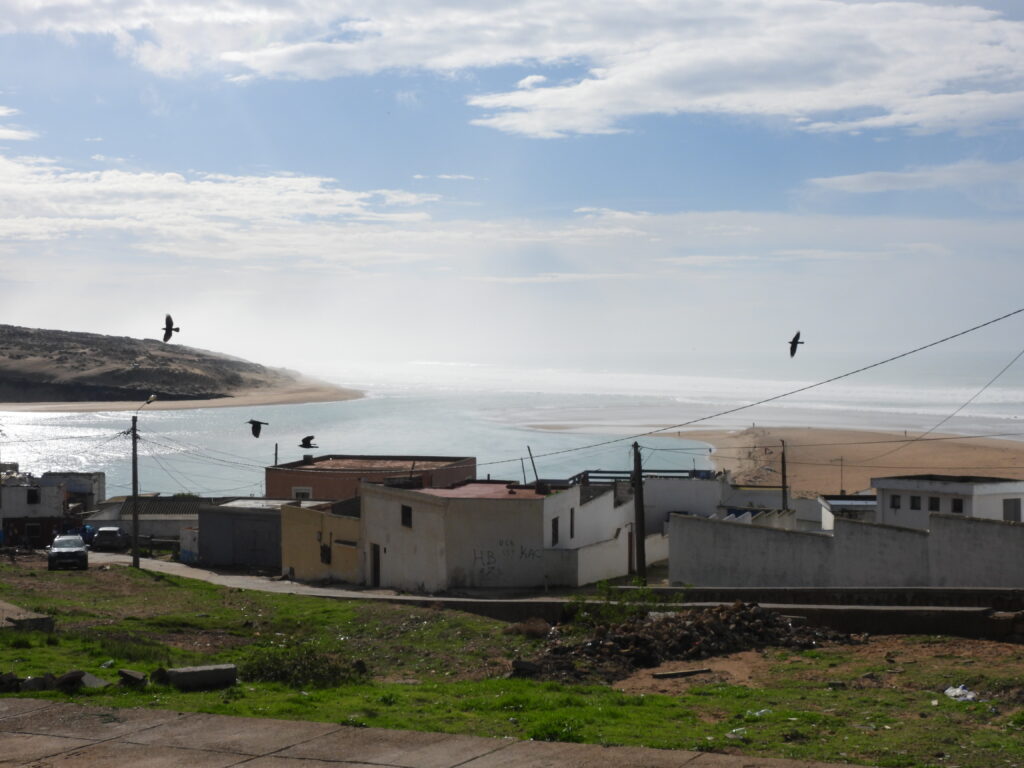
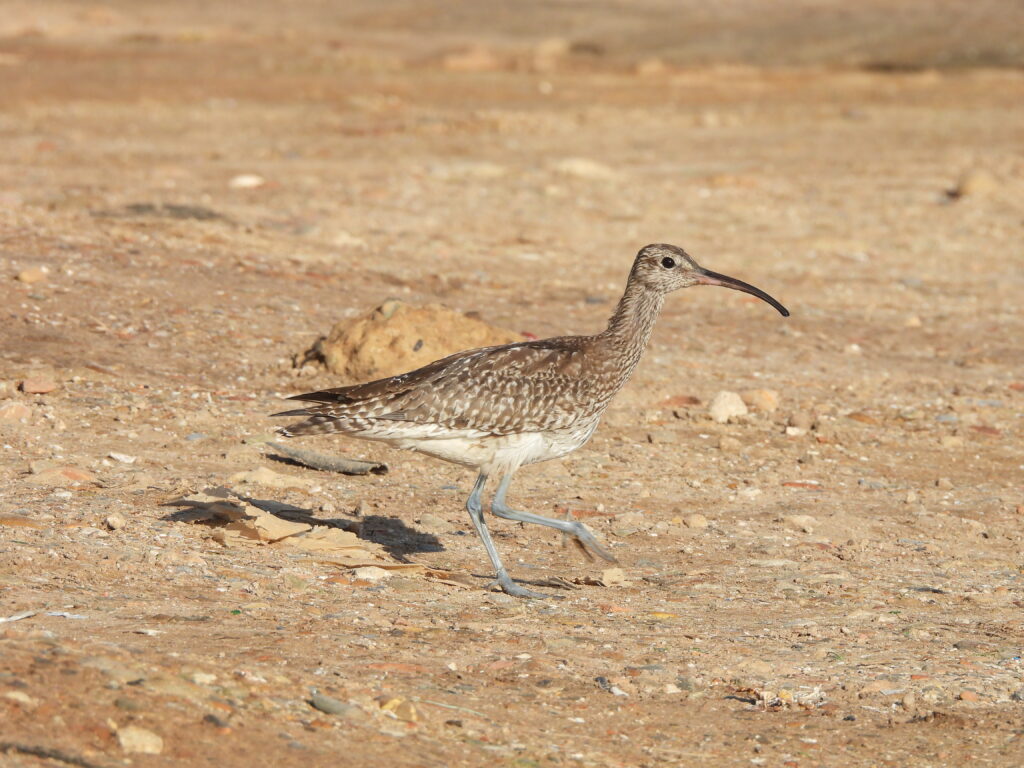
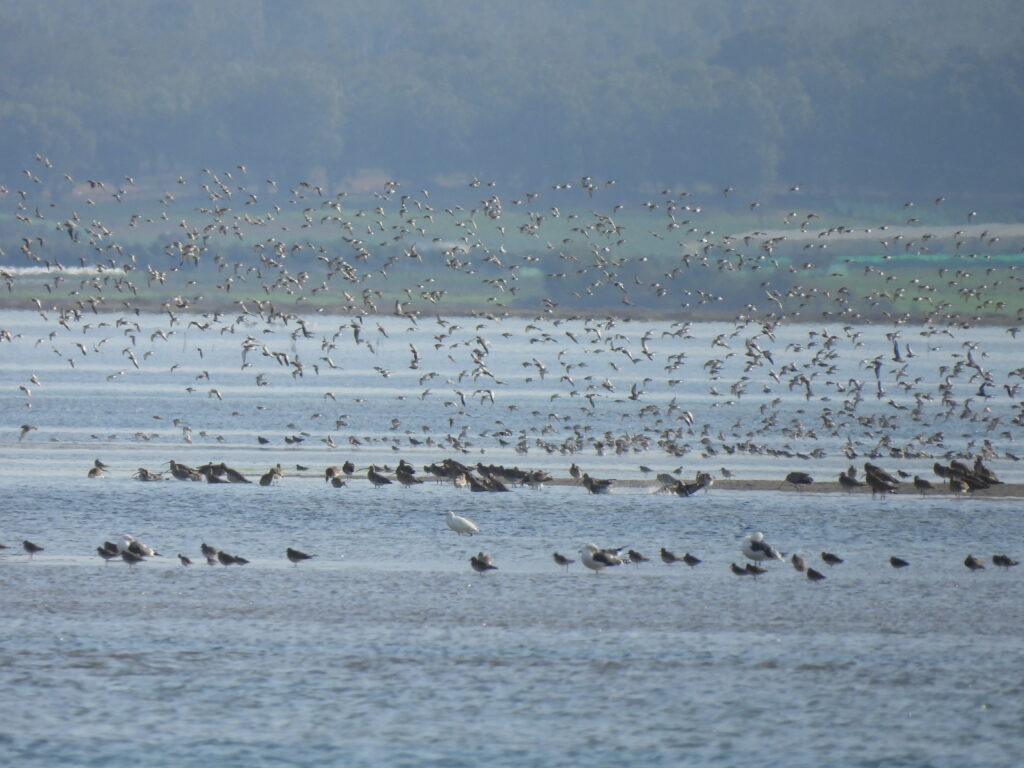
From land, one of the best locations to look for waders is La Casa Latifa, an inn at the southernmost point of Moulay Bousselham, with excellent views over mudflats north of the lagoon. We were glad to have brought our scope, as we could scan distant flocks holding hundreds of dunlins (Calidris alpina), dozens of Eurasian curlews (Numenius arquata), whimbrels (Numenius phaeopus), oystercatchers (Haematopus ostralegus), grey plovers (Pluvialis squatarola), common redshanks (Tringa totanus), red knots (Calidris canutus), common ringed plovers (Charadrius hiaticula), as well as several bar-tailed godwits (Limosa lapponica), common sandpipers (Actitis hypoleucos), greenshanks (Tringa nebularia) and Kentish plovers (Anarhynchus alexandrinus). Western marsh harriers (Circus aeruginosus) patrolled overhead, a common kingfisher (Alcedo atthis) flew past and an osprey (Pandion haliaetus) feasted on a fresh catch.
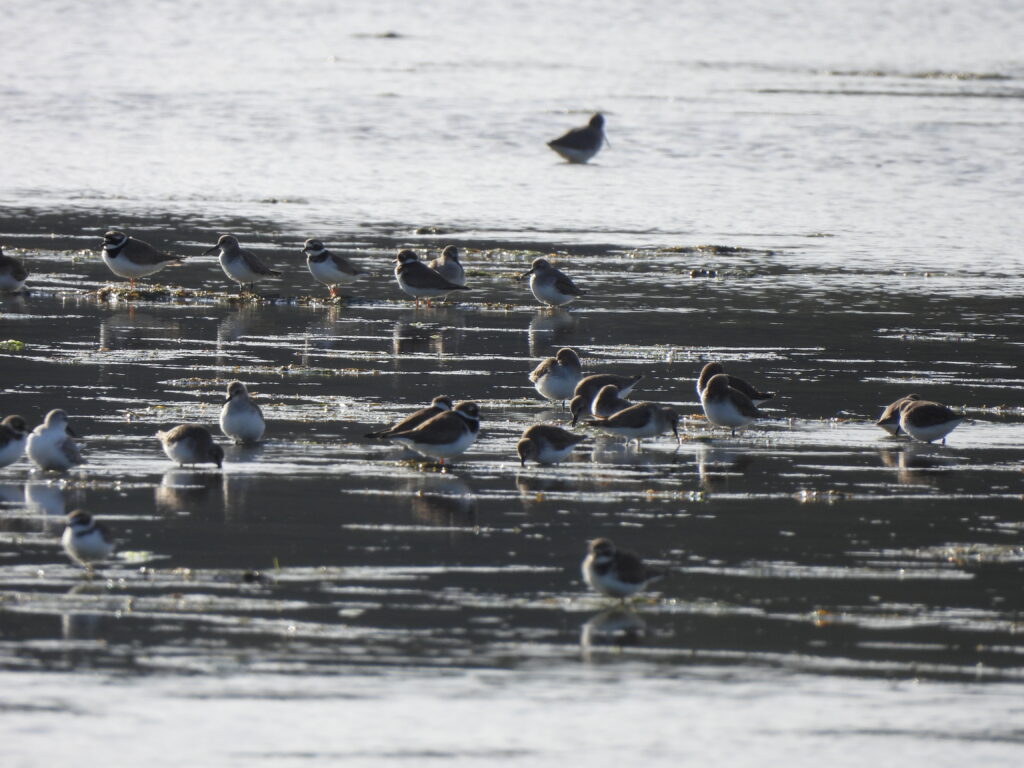
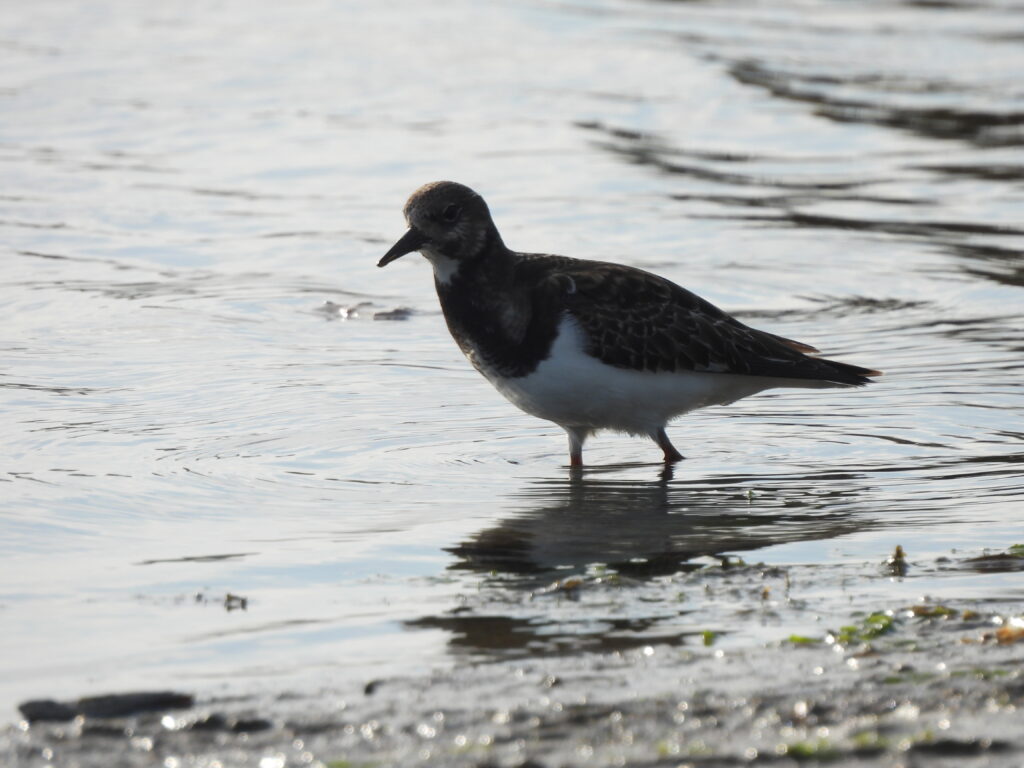
A few birds foraged closer to the café from where we scoped the lagoon, including fishing Sandwich terns (Thalasseus sandvicensis), ruddy turnstones (Arenaria interpres) and an unwary whimbrel walking close to people.
We caught the attention of La Casa Latifa’s owner, who kindly invited us to the roof of the building, allowing excellent views of flocks of great cormorants (Phalacrocorax carbo) and lesser black-backed gulls (Larus fuscus), among which we picked out several Audouin’s gulls (Ichthyaetus audouinii), slender-billed gulls (Chroicocephalus genei) and a Mediterranean gull (Ichthyaetus melanocephalus). The constant movement of wader flocks flying in all directions was mesmerizing, inevitably prompting thoughts of how these scenes must have looked during peak passage, and especially in earlier decades, when Merja Zerga covered a much larger area.
Later in the evening, we had arranged a visit to the owl roost. The Moroccan population of marsh owl (Asio capensis) forms a distinctive subspecies, tingitanus, endemic to the Western Palearctic. In the past, this population occupied a much wider range of wetlands, extending from Morocco north into Spain, where there are 19th-century records of hunted individuals, mostly from the now desiccated lagoon of La Janda. Now long extinct in Spain, the only recent record dates back to December 1998 in Cádiz, Andalusia.
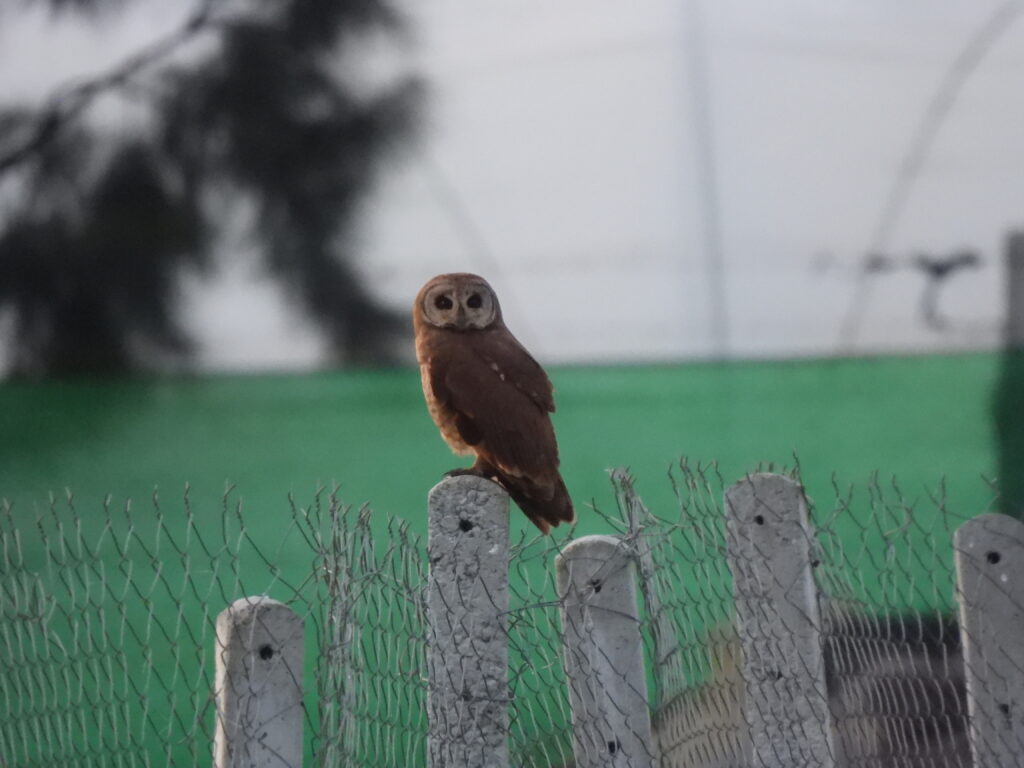
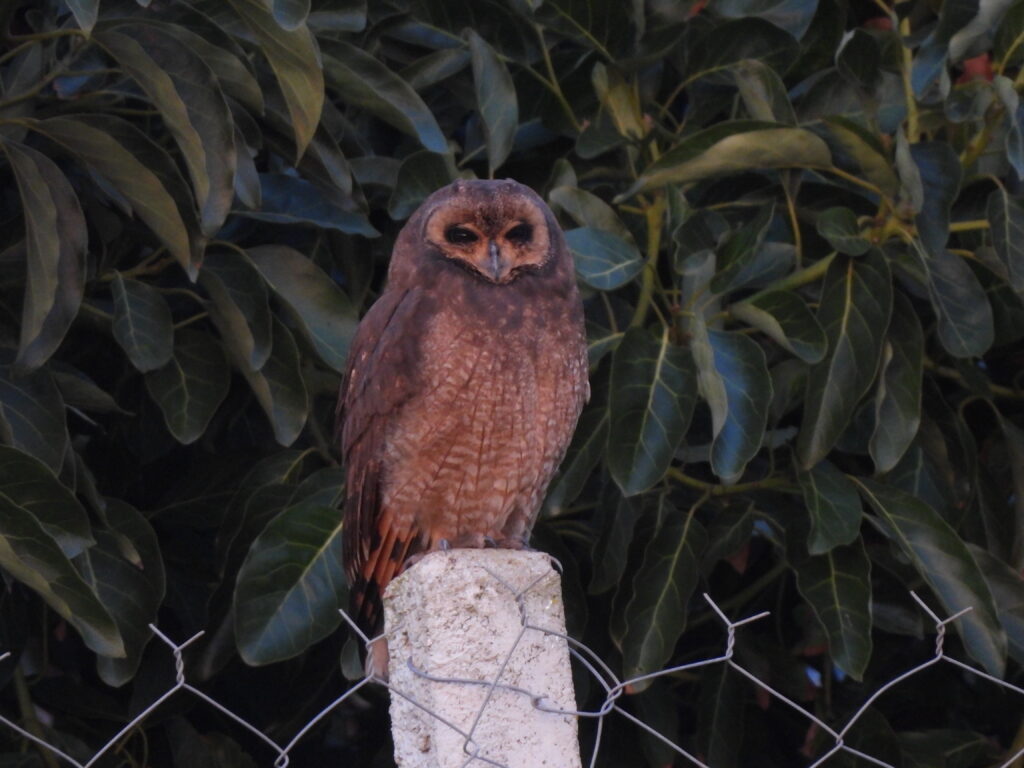
Today, the marsh owl occurs in only a handful of locations in Morocco, and semingly nowhere else within the Western Palearctic. While Kebir recalled several hundreds of individuals inhabiting Merja Zerga when he was younger, this former stronghold now supports just 10–12 pairs. This is likely the most endangered nocturnal raptor in the entire Western Palearctic, and responsible ecotourism initiatives may become a valuable conservation tool for this taxon.
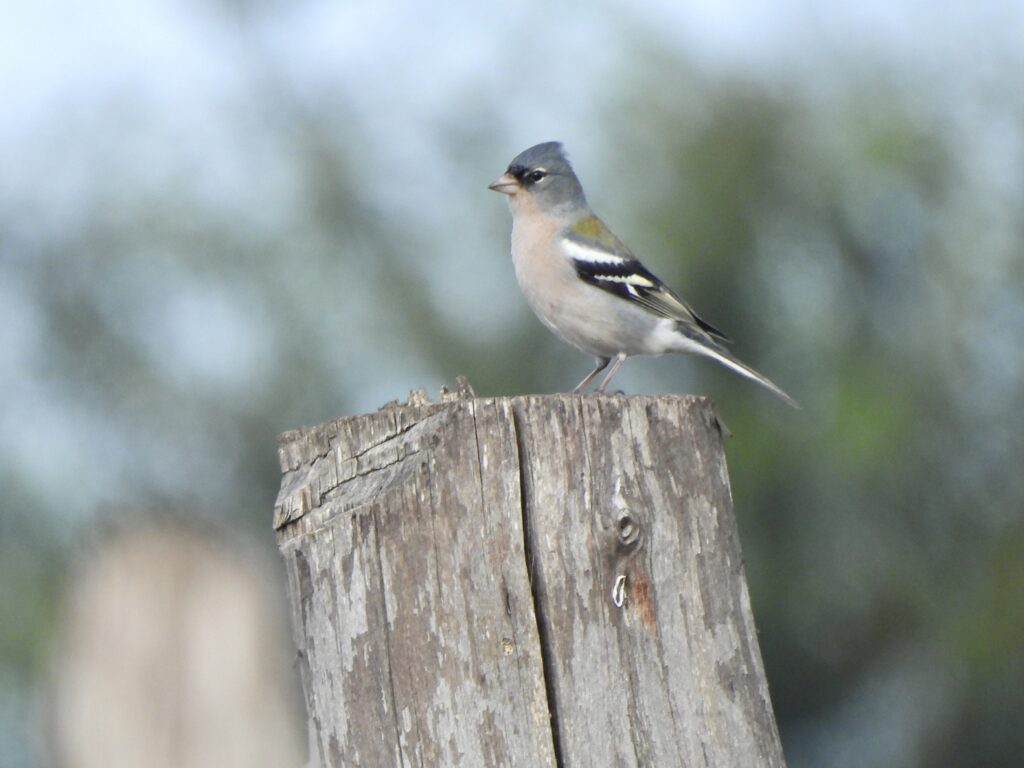
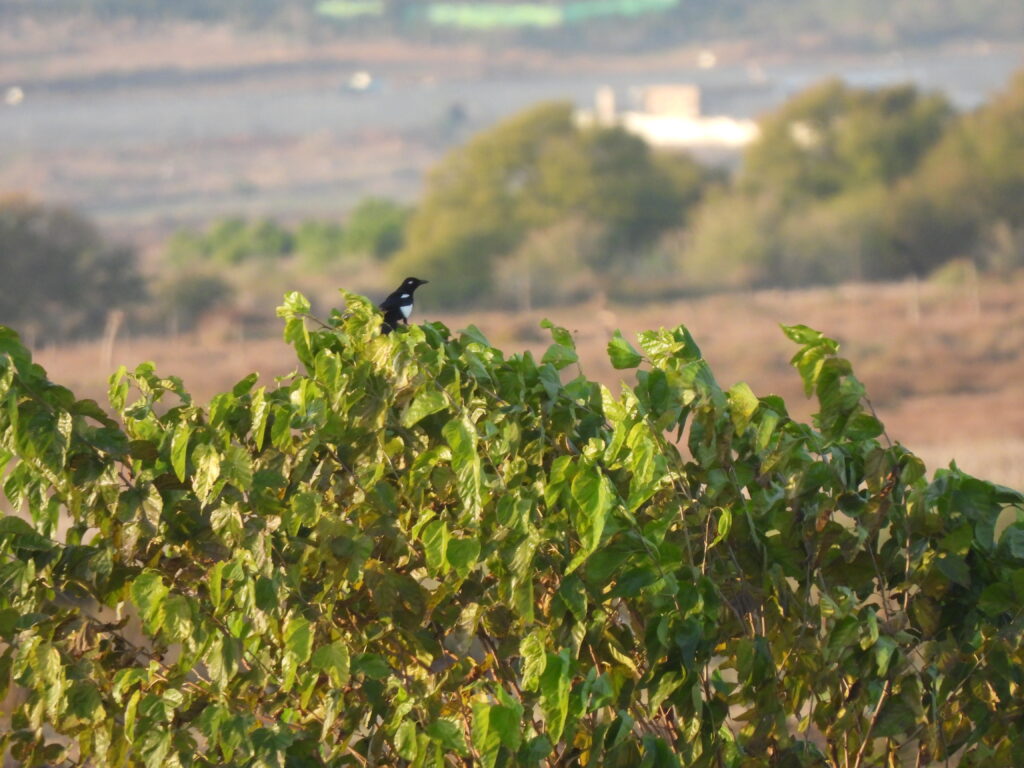
We drove our rental car to the site with our guide. Singing common bulbuls (Pycnonotus barbatus), calling African chaffinches (Fringilla spodiogenys) and flocks of meadow pipits (Anthus pratensis) foraged in berry fields flanked by avocado trees, patrolled by kestrels (Falco tinnunculus). Far out in the lagoon we could make out numerous common shelducks (Tadorna tadorna), white storks (Ciconia ciconia) and glossy ibises (Plegadis falcinellus). We were particularly pleased to see two Maghreb magpies (Pica mauritanica) flying across the fields — a scarce species at this latitude.
A fenced strawberry field serves as a winter roost for several marsh owls. They hide remarkably well among the vegetation, and we only spotted one individual sleeping barely 15 metres from us while it was still light.
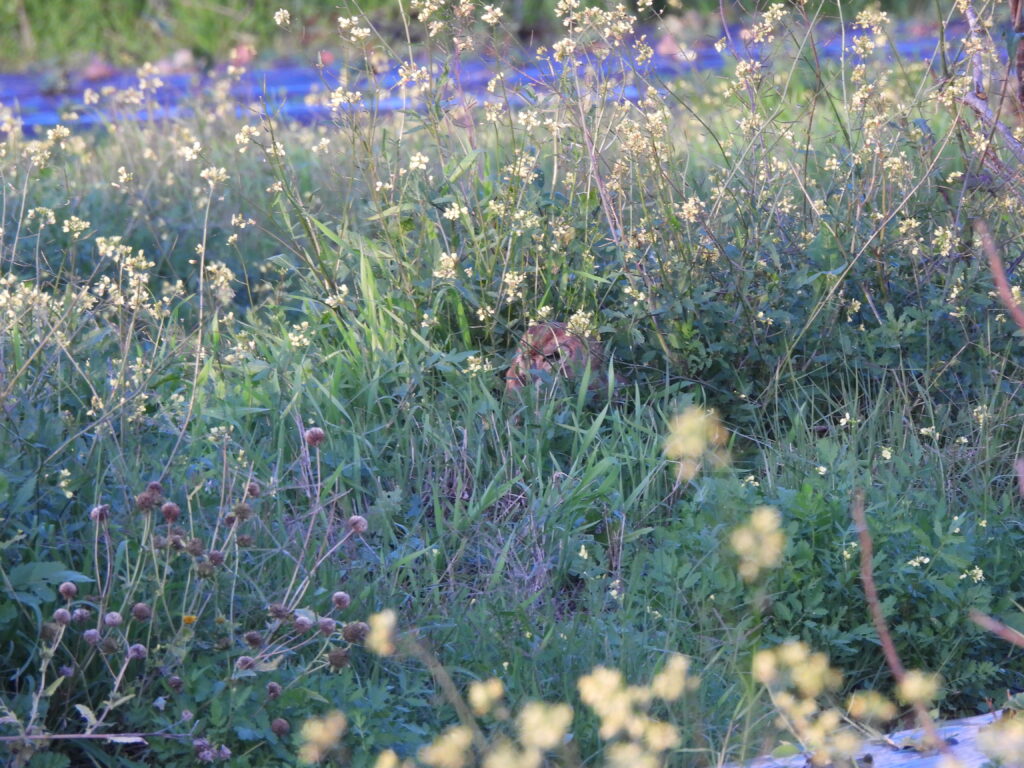
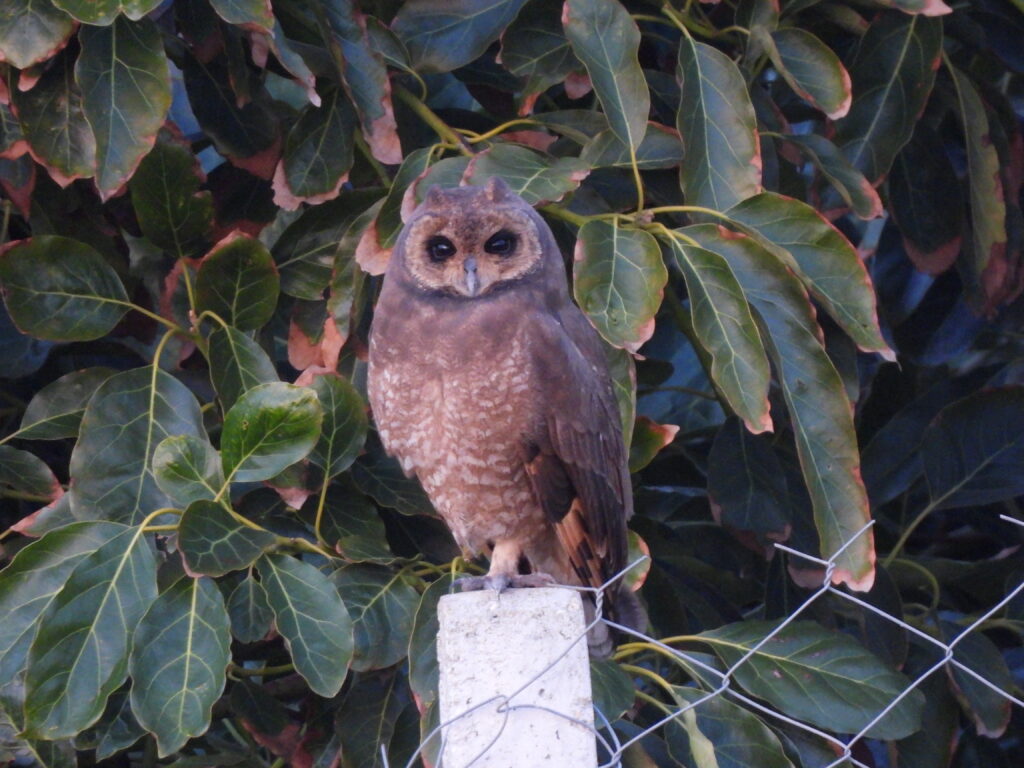
Later in the evening, a second bird suddenly flushed from the grass, startling the first and revealing a third individual concealed extremely close to us. All three flew towards the fence posts on the opposite side of the field, where two of them perched, offering prolonged views — owls sitting on fence posts with avocado trees in the background, just like many of the images of the species online, taken in Merja Zerga.
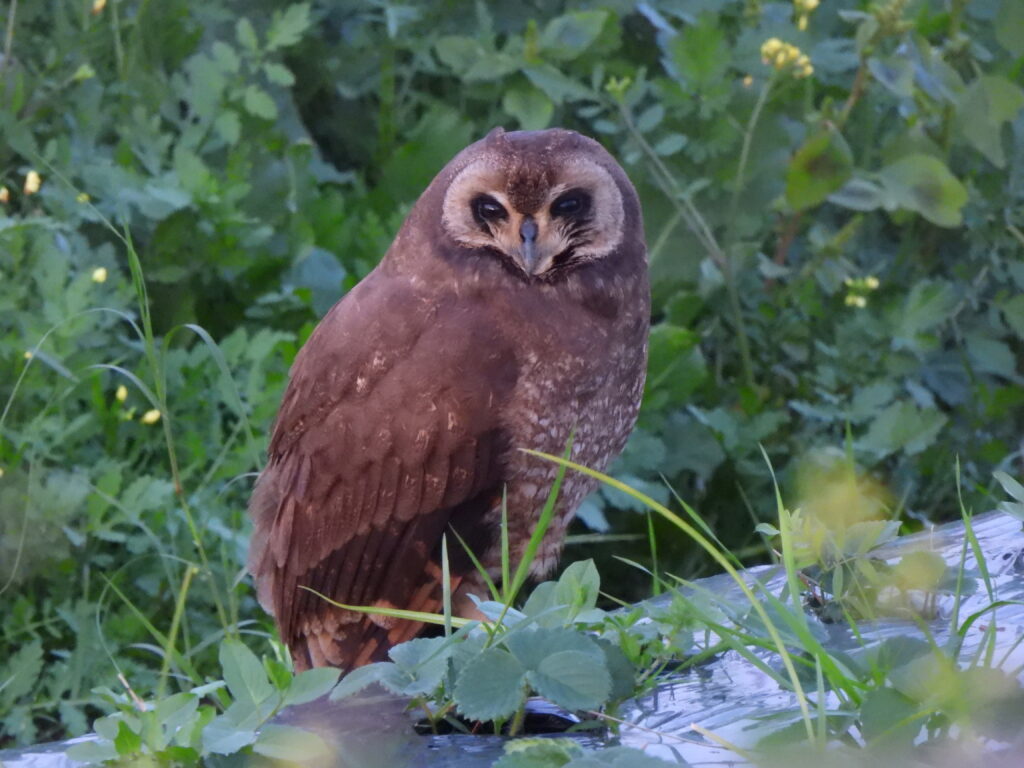
Following our guide’s instructions, we carefully backed up, as two additional birds had settled in the open on the ground just a few metres away. The haunting combination of black eyes and maroon-brown plumage appeared even more striking against the green and yellow of flowering wall-rocket.
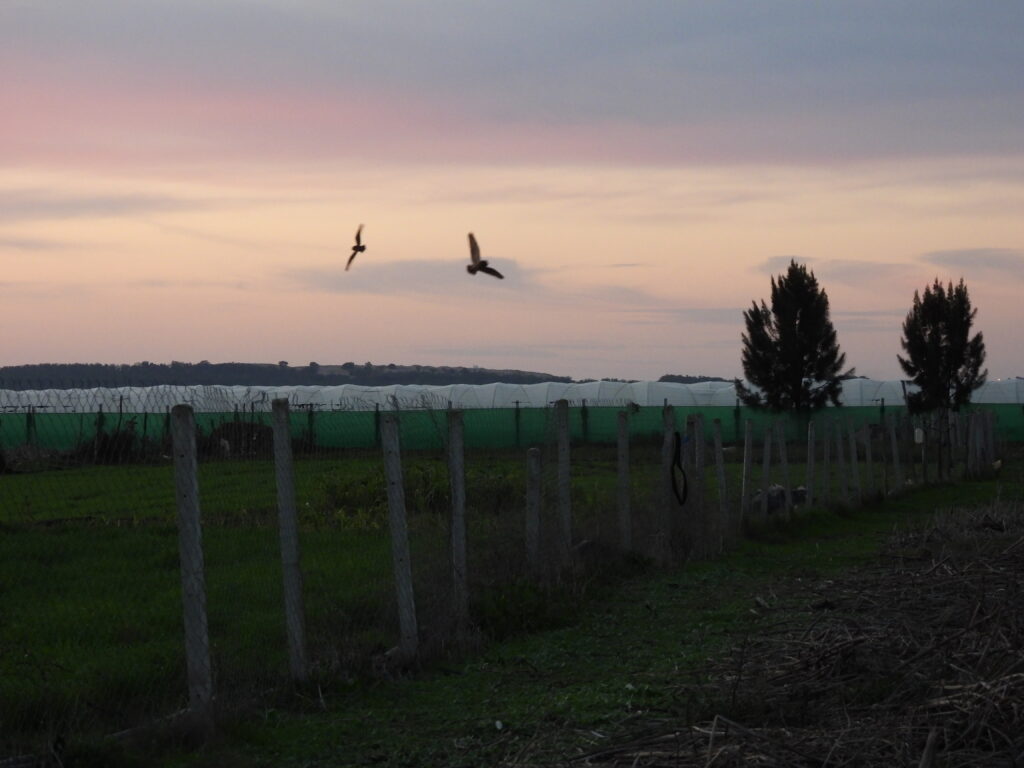
As the sun set and the light faded, seven birds suddenly took flight together, calling and engaging in brief chases and acrobatic manoeuvres. Some later perched again on nearby posts, while two little owls (Athene noctua) also started to become active nearby.
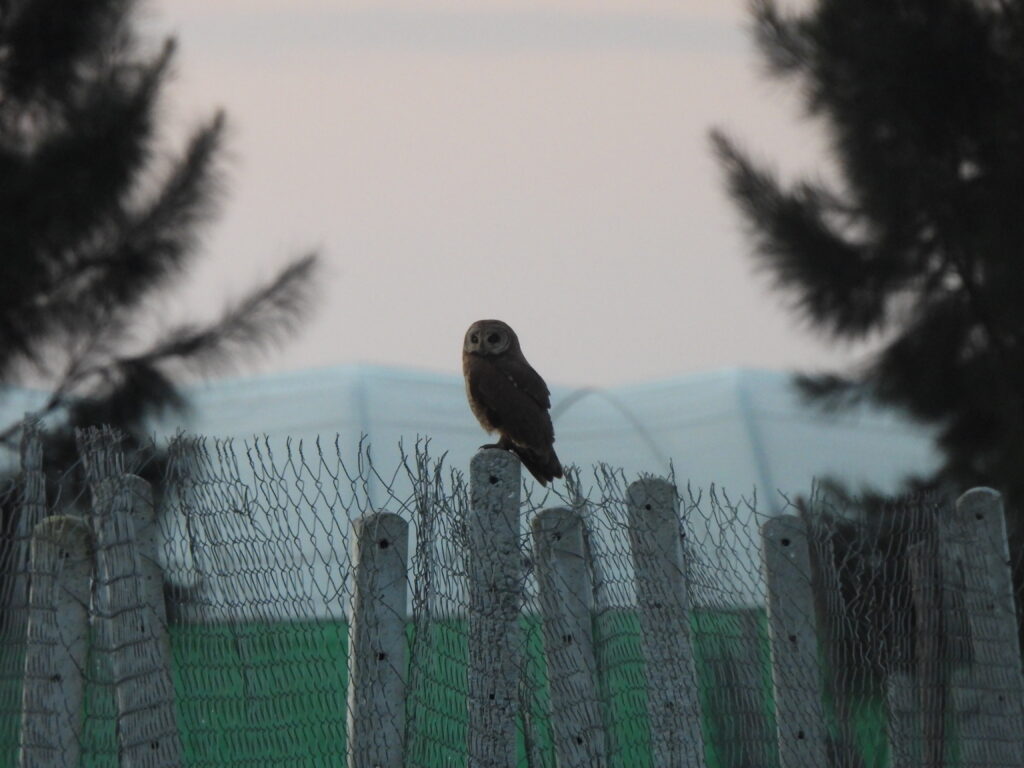
A few minutes later, all the birds resumed their spectacular flights, circling against the pink sky and slowly drifting farther away until, as Darío likes to say, they “vanished into the sunset”. The scene was truly poetic.
The marsh owl was our main target for the trip, and this extraordinary evening far exceeded our expectations. Spending time at close range with some of the last Moroccan marsh owls, appreciating every detail of their plumage and behaviour, was unforgettable. The night was perfectly capped by a last-minute sighting of a western barn owl (Tyto alba) flying into the avocado trees at night as we drove away. Merja Zerga lived up to our expectations — and left us hoping that protection can still be reinforced for its last remaining high-quality habitats.