Once again heading north, I joined Rodrigo “Roi” Benavente, Inma Ibáñez, Jorge Verdú and Darío Gijón to close and open a new year yet again in full birding mode. This time, we chose Santoña, an estuary facing the Cantabrian Sea which attracts thousands of migrating and wintering flocks and waders. Even if we had all been in the surroundings several times, we were hyped to spend some days visiting the actual Ría de Santoña for the first time. While the mildness of winter meant many northern species were nowhere to be seen, we were treated to typical but stunning local specialties combined with some major surprises.
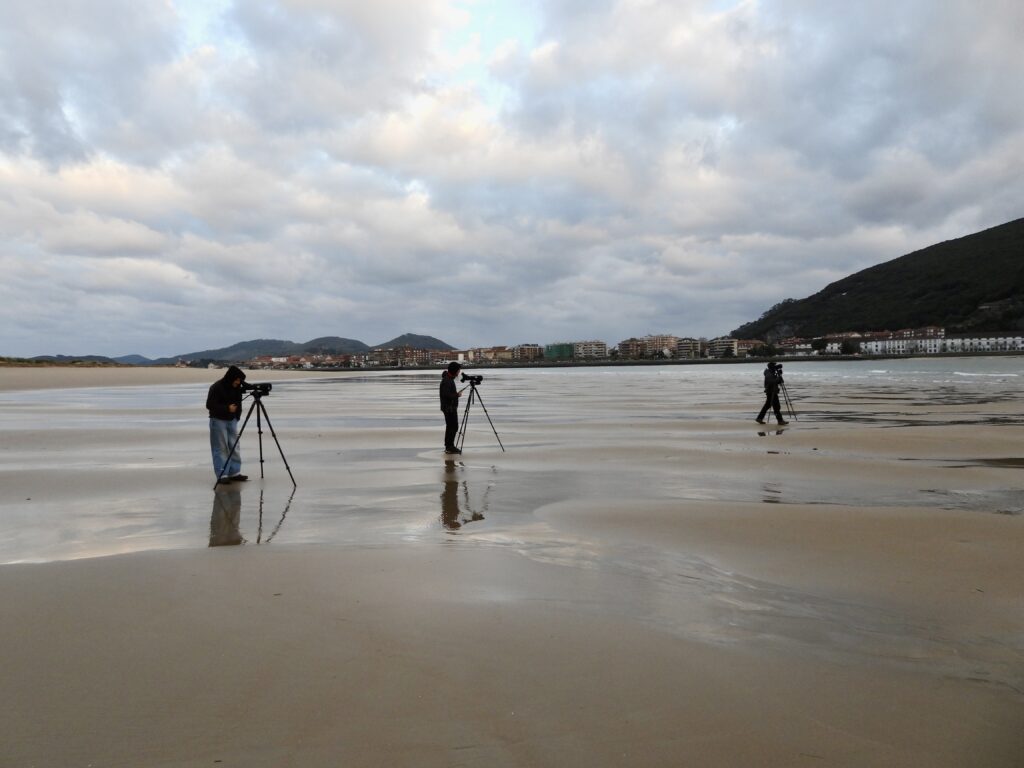
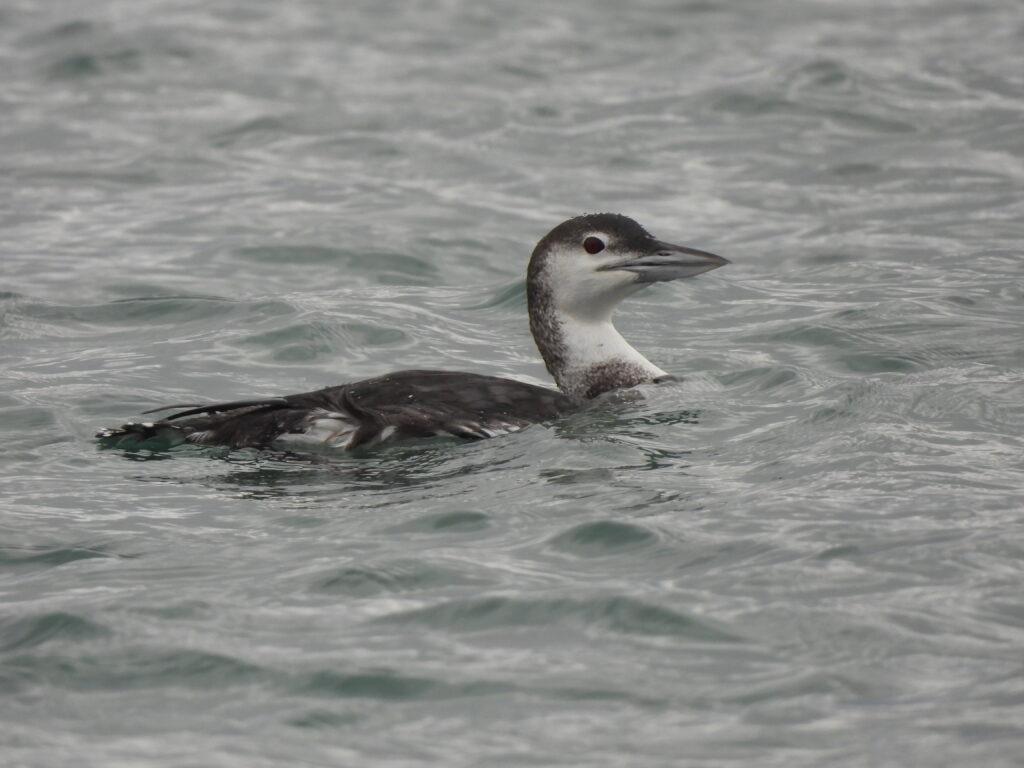
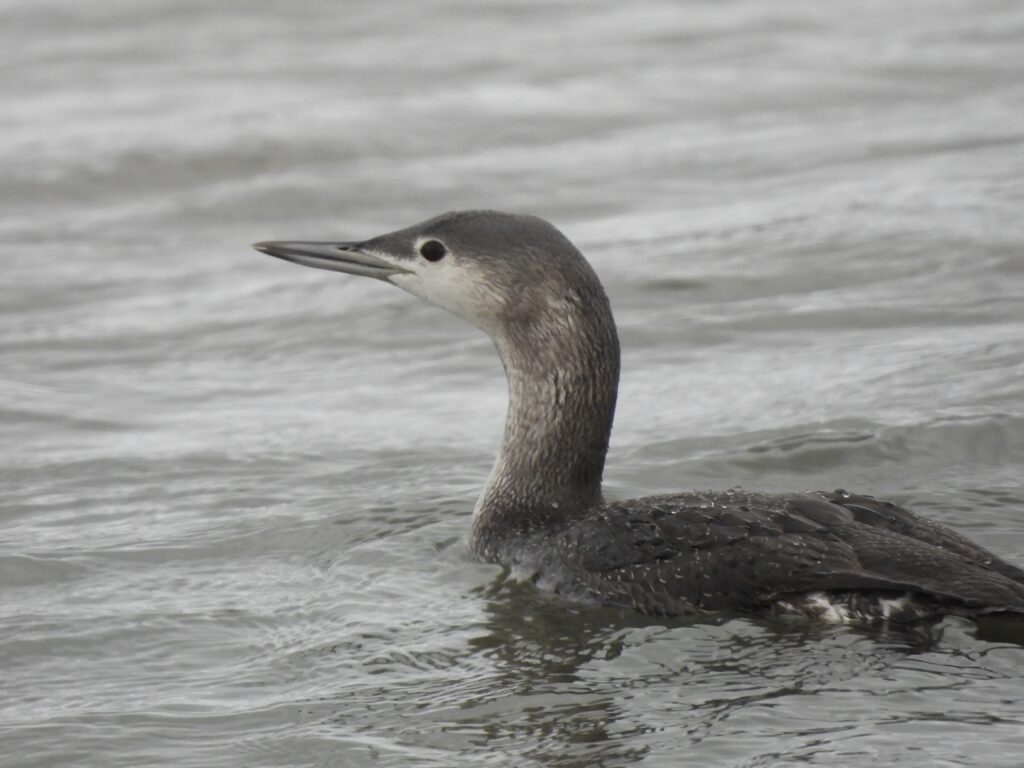
New Year’s Day started early at Playa del Puntal, Laredo. We enjoyed close views of several common loons (Gavia immer) and a red-throated loon (Gavia stellata) foraging on the sea with great cormorants (Phalacrocorax carbo). Over the following days, we would enjoy striking views of both loon species at close distance in this spot.
We scouted the whole coastline, with a very poor understanding of what our best birding windows were depending on the tides — this whole concept is quite complicated when visiting a new area, let alone for a group of folks from the Mediterranean. This allowed us to connect with several gulls and waders, eared grebes (Podiceps nigricollis), great crested grebes (Podiceps cristatus) and the local male common eider (Somateria mollissima) at La Arenilla.
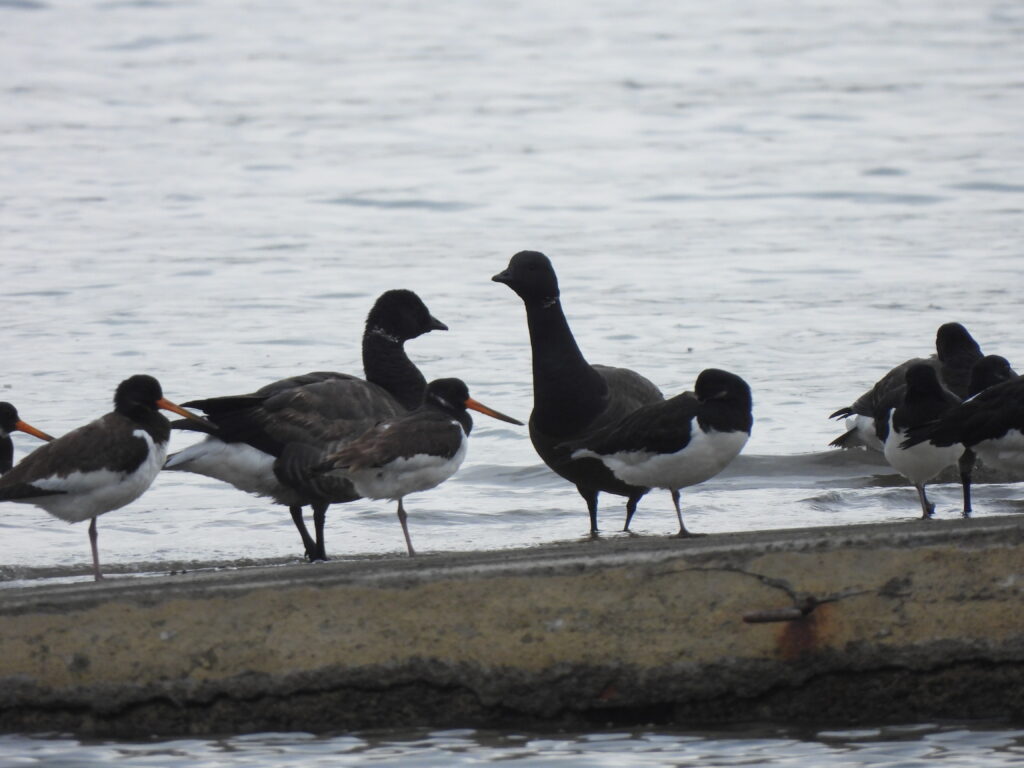
In the very center of the lagoon, we scoped through flocks of hundreds of waterfowl including wigeons (Mareca penelope) and pintails (Anas acuta), plus thousands of brant geese (Branta bernicla) — a species not too easy to see elsewhere in Spain. The sight (and often sound) of these massive flocks would accompany every day of our visit. At times, we would see part of these flocks take off, flushed by raptors including the introduced white-tailed eagle (Haliaeetus albicilla). Truly an atypical image for a Spanish wetland.
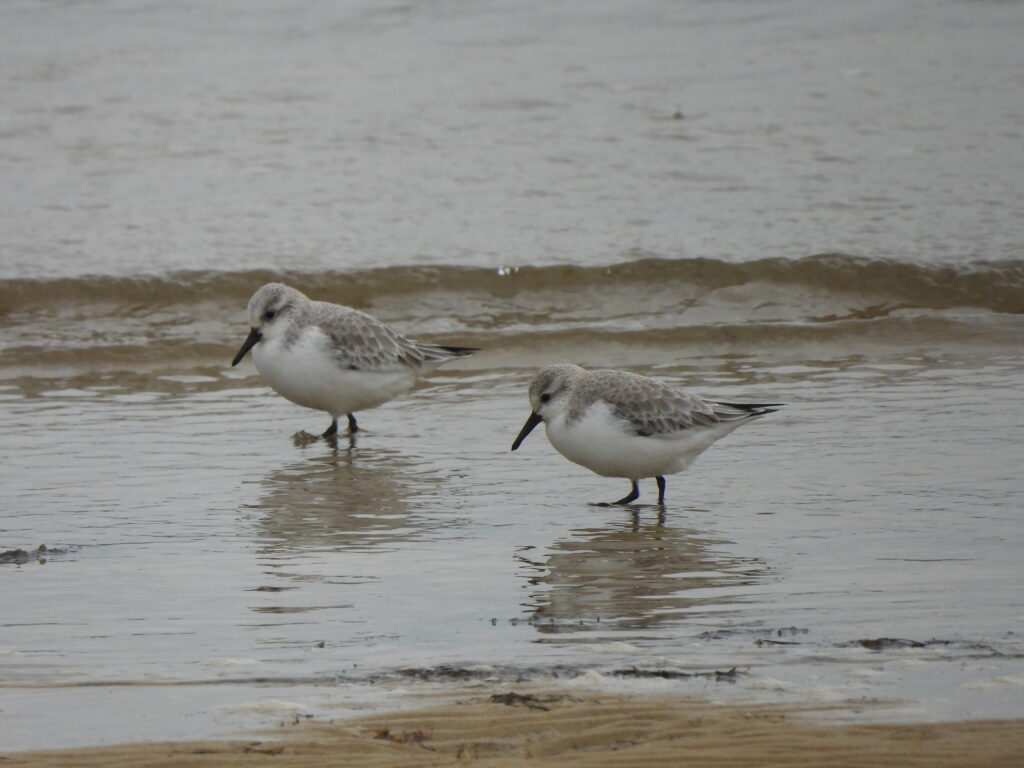
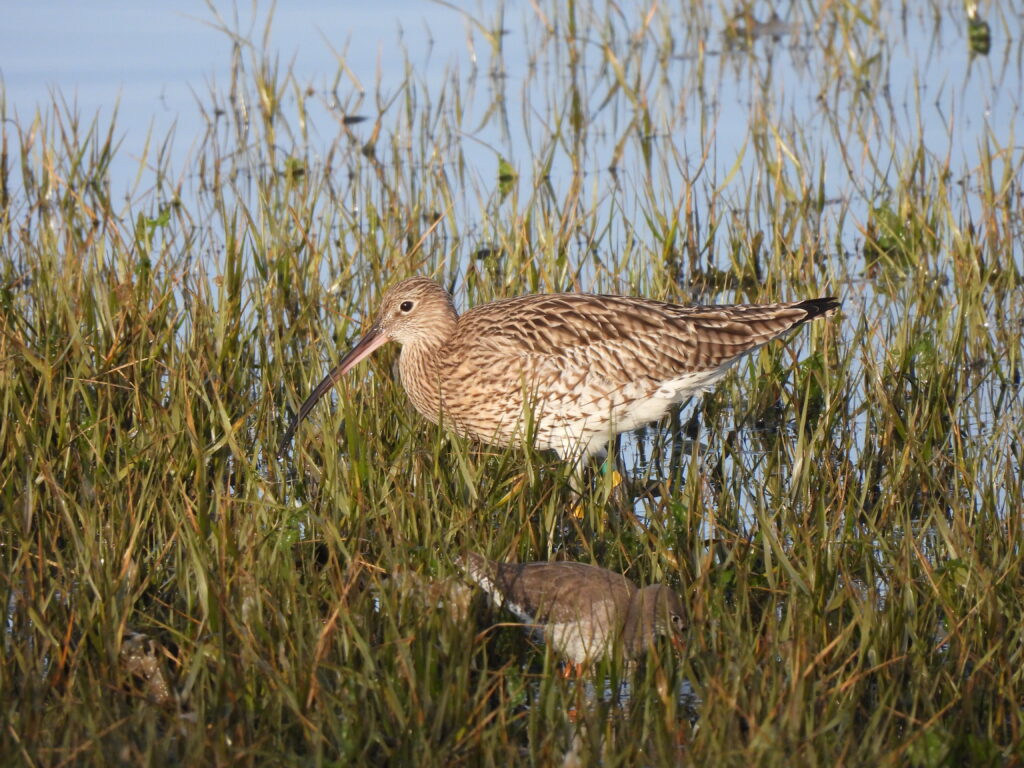
We found a great place to end the day, during high tide, to be Cicero. Good numbers of waders foraged at very close range along the shore, including grey plovers (Pluvialis squatarola), loud curlews (Numenius arquata) and whimbrels (Numenius phaeopus), common redshanks (Tringa totanus) and passing flocks of dunlins (Calidris alpina), sanderlings (Calidris alba) and ruddy turnstones (Arenaria interpres).
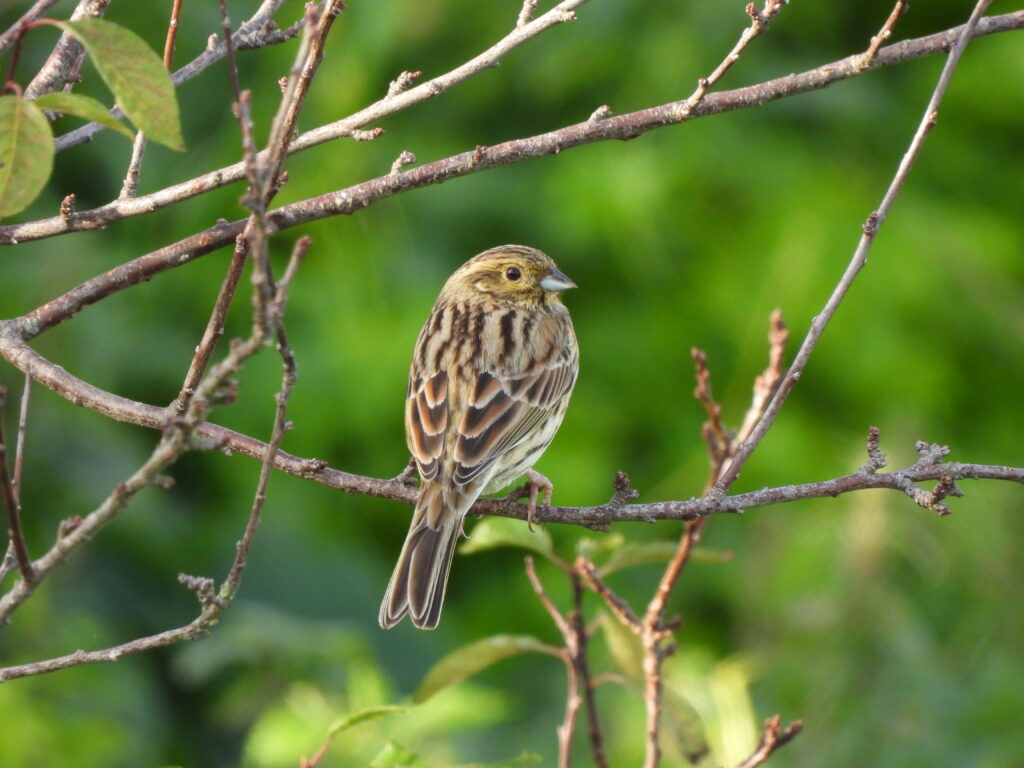
The vegetation around the boardwalk included a roost of house sparrows (Passer domesticus) and good numbers of cirl buntings (Emberiza cirlus), some of them striking poses at close range. Far in the Ría, we connect with distant red-throated loon, common loon and horned grebe (Podiceps auritus) in what perhaps is the most reliable spot for this former rarity in the country.
We visited the Port of Laredo, where we had already connected with a long-staying 3-cy “Cape” vetula kelp gull (Larus dominicanus) back in August with Darío and Jorge. Being a lifer for Inma and Roi, we quickly connected with the bird at the very same location. We could notice the advance in plumage moult, now being a 4-cy bird with no black in the tail and a more adult-like look.
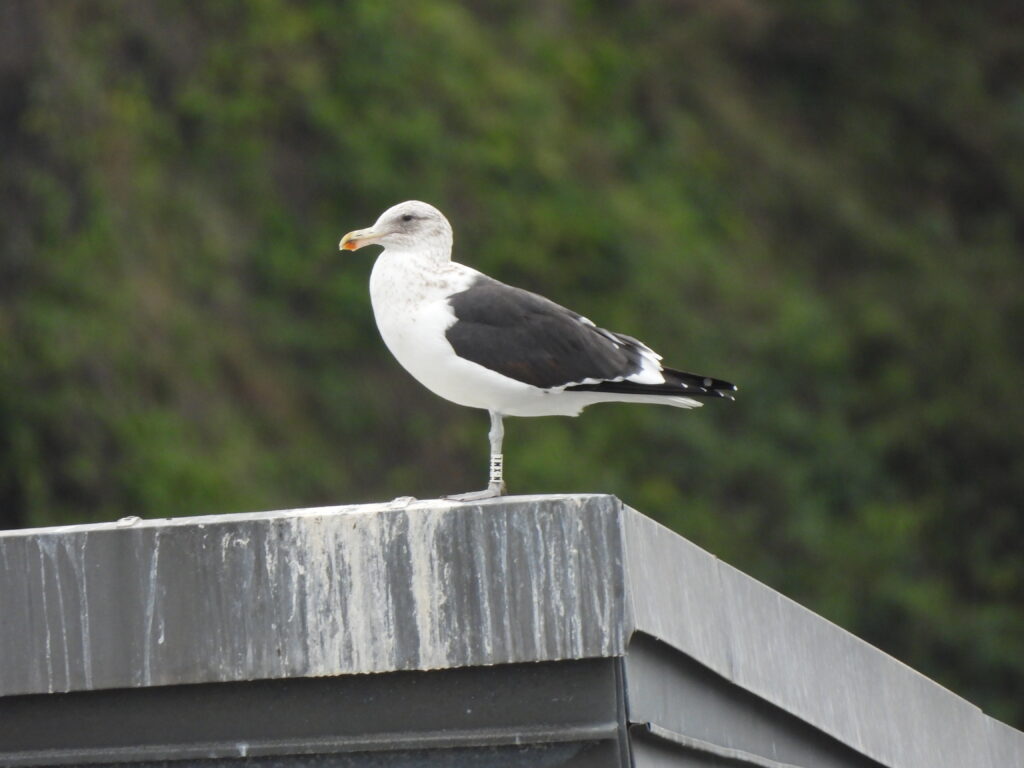
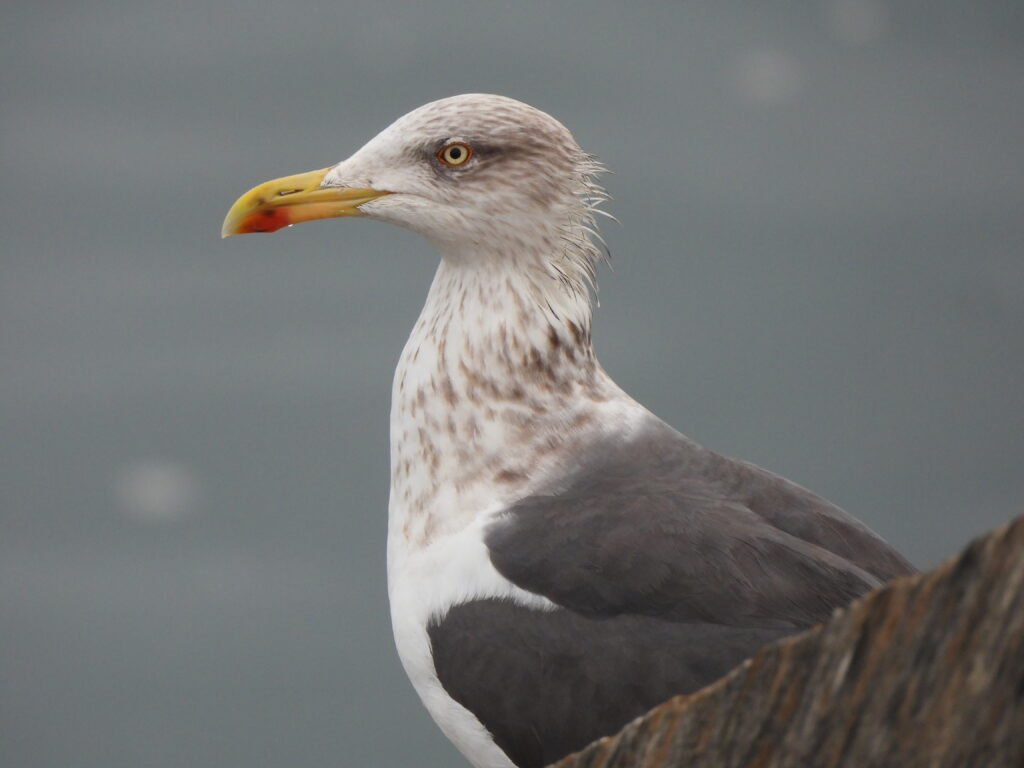
A treat of this new visit to Laredo was being able to compare the Cape gull side-by-side with several yellow-legged gulls (Larus michahellis), great black-backed gulls (Larus marinus) and lesser black-backed gulls (Larus fuscus). Several picturesque shags (Gulosus aristotelis) joined the party too. Flocks of hundreds of wigeons flew out of the Ría and some gannets (Morus bassanus) foraged out at sea and even inside Laredo Bay.
We were a bit disappointed during our visits to the local ports, as winter storms usually drag alcids, marine ducks and gulls in. The mildness of winter thus far played against us. However, a couple of visits to the Port of Santoña provided fly-by views of calling European rock pipits (Anthus petrosus) making it in and out of the bullring — a national lifer for all of us.
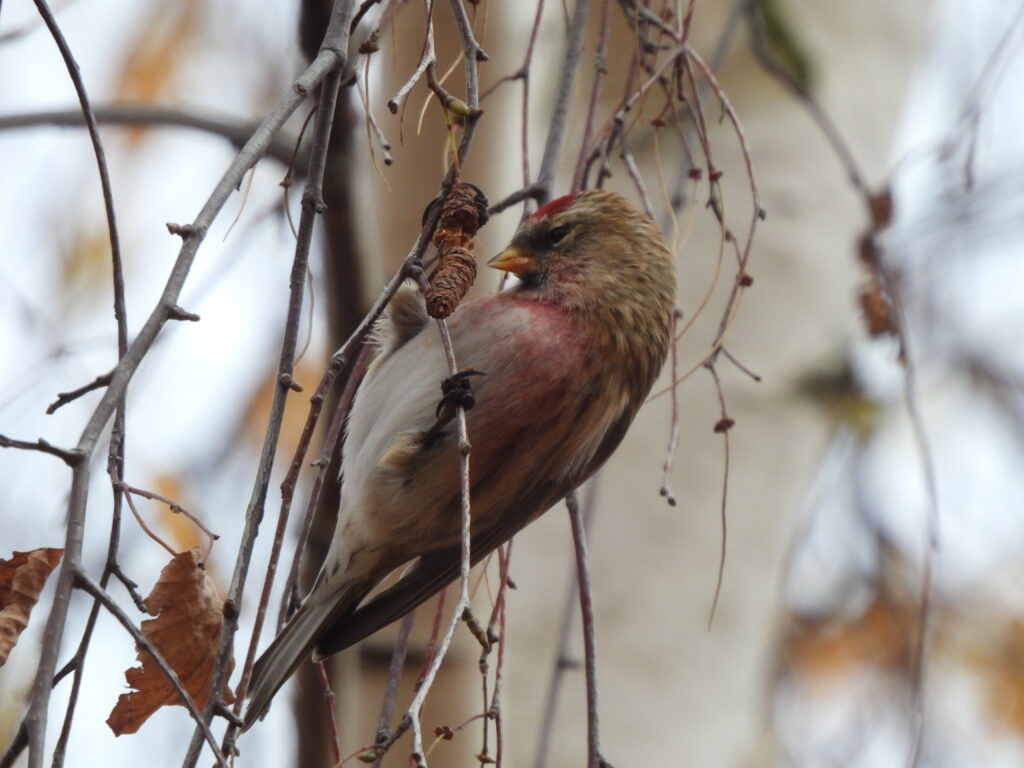
On our days in the area, we did several excursions to nearby locations trying to chase rarities and local specialties. Just while driving in, we stopped by Gasteiz, where a flock of redpolls (Acanthis flammea) had been spotted in an urban green area. Indeed, some 15 birds foraged in the birches surrounding a football field. A massive influx of this national rarity has reached northern Spain, with flocks reported in several cities.
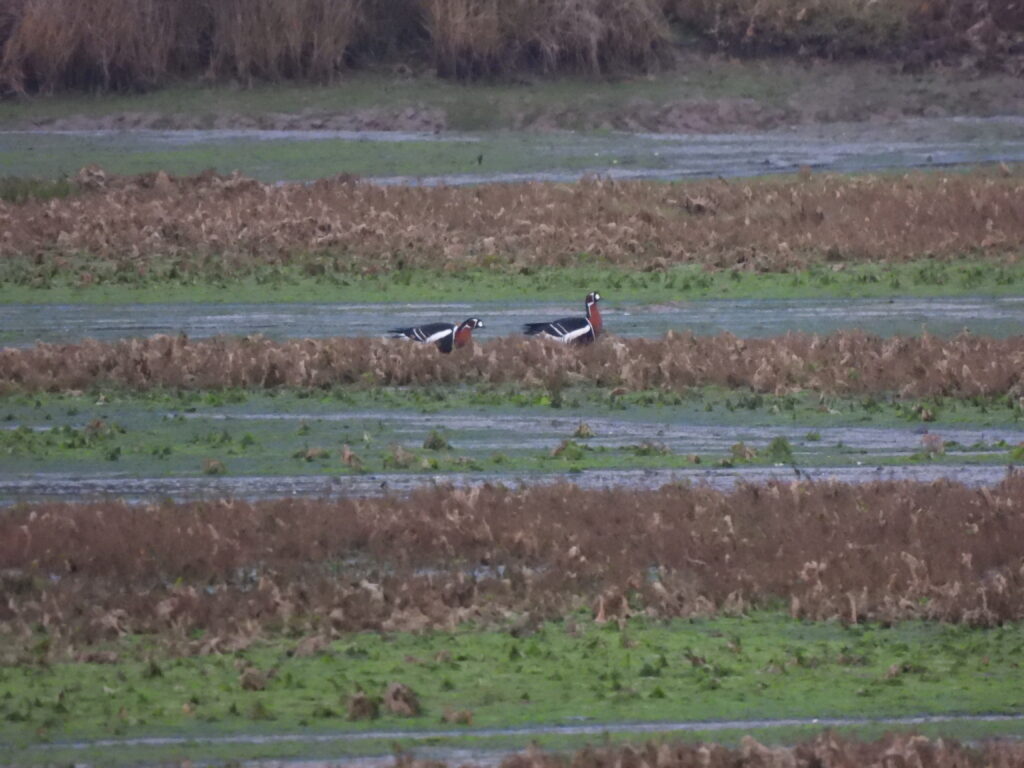
One such outing was already on our first day, on New Year’s Eve, when we drove all the way to Ría de Villaviciosa in Asturias to connect with the mega red-breasted geese (Branta ruficollis) that showed up for several days during our stay. We not only connected with these stunning geese, but also enjoyed a nice selection of birds including some we would struggle to find elsewhere, namely bullfinch (Pyrrhula pyrrhula) and redwing (Turdus iliacus). Another highlight of the day, the local white-tailed eagle also made a stellar appearance.
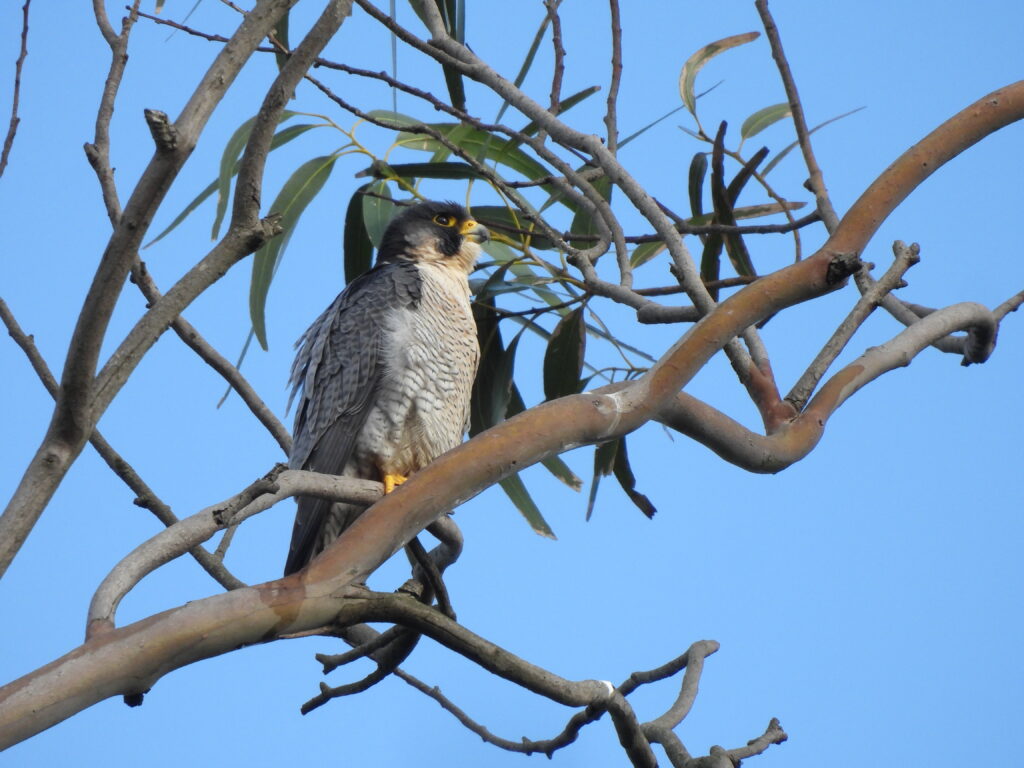
We also visited Santander and its surroundings. The Cabo Menor area provided a mixed flock of ruddy turnstones and purple sandpipers (Calidris maritima). While walking through the green area, we got striking views of an obliging peregrine falcon (Falco peregrinus) — I would later learn that Cantabria has one of the world’s highest densities of this raptor.
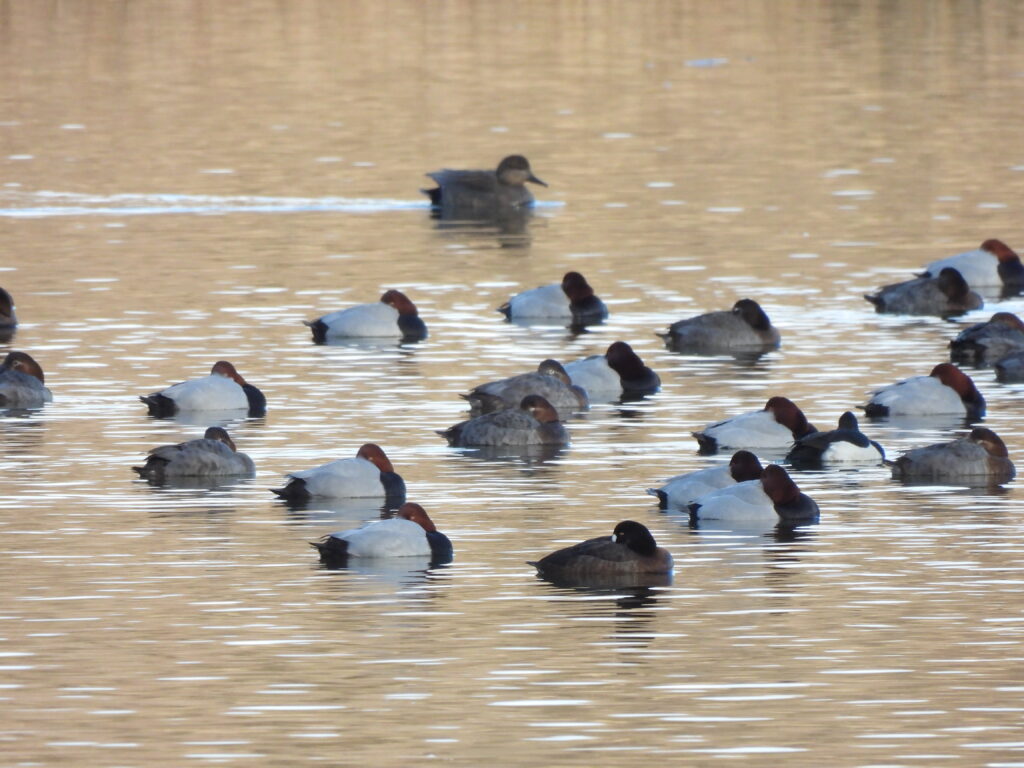
Just a bit further inland, Marismas Blancas seemed to be a haven of freshwater favored by good numbers of common pochards (Aythya ferina) and tufted ducks (Aythya fuligula). We paid a couple of visits to this wetland because a female greater scaup (Aythya marila) had been in the area for some time. The bird put on a show on both our visits.
On our first visit, where we met Guillermo Piñal, Gonzalo Pardo and other birders, Roi managed to connect with one of the two local Eurasian bitterns (Botaurus stellaris) hiding in the reeds under faint light. We all struggled to see it as it preened and hid, before taking off with some gadwalls (Mareca strepera) and teals (Anas crecca) quite late.
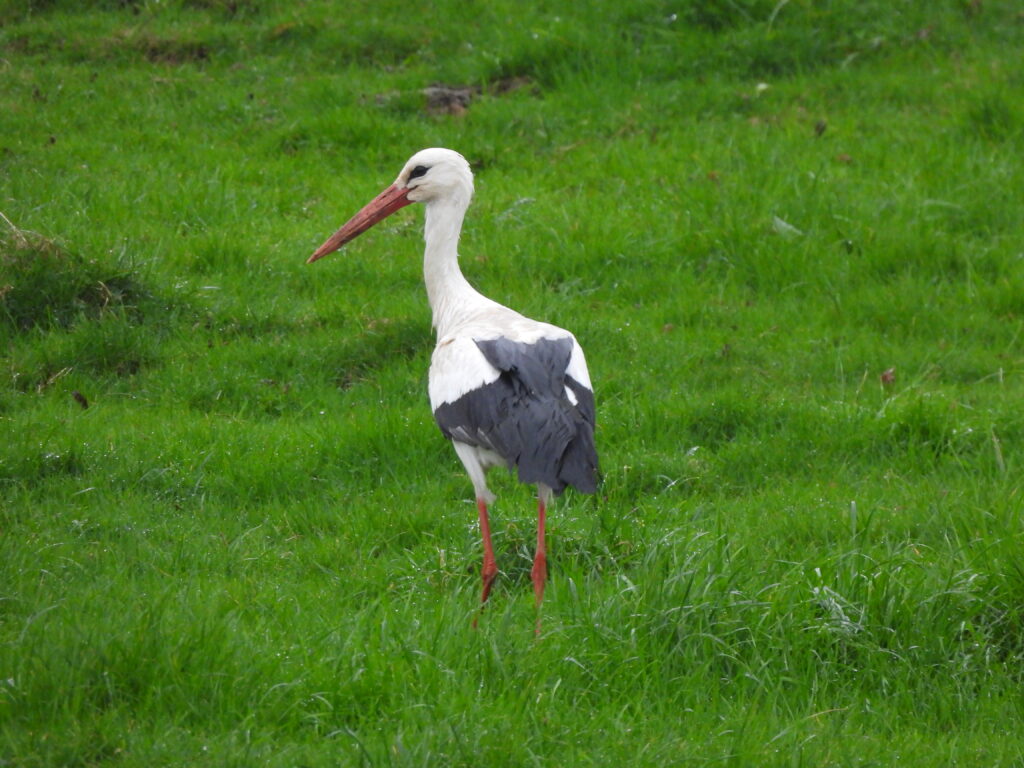
We also visited Marismas del Conde, on the opposite side of Santander Bay. A couple of local rarities had been reported over the last weeks. A group of flamingos (Phoenicopterus roseus) was the first we spotted, being among the only birds we saw from the watchtower, along with an osprey (Pandion haliaetus). It took longer, but Darío managed to scope a black-winged kite (Elanus caeruleus) in the surroundings, close to a field where a white stork (Ciconia ciconia) was feeding with numerous cattle egrets (Ardea ibis).
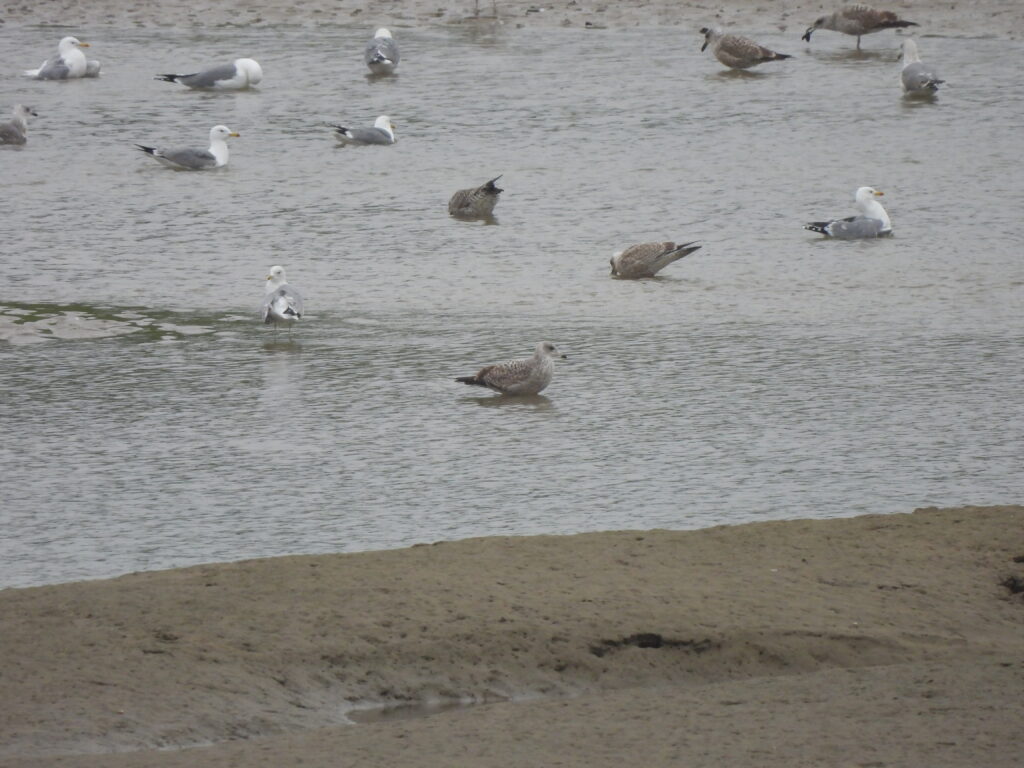
Because we were based in Arnuero, near Cabo de Ajo, we also explored the surroundings. Ría de Ajo at low tide allowed us to scope through flocks of dozens of gulls. This was a great exercise to connect with Caspian gulls (Larus cachinnans) and herring gulls (Larus argentatus) of different ages among the more abundant yellow-legged, lesser and great black-backed and black-headed gulls (Chroicocephalus ridibundus). More noticeable were a couple of common gulls (Larus canus) within the group.
However, the Santoña area provided the best encounters of the whole trip. Flocks of oystercatchers (Haematopus ostralegus) and brant geese in Playa del Regatón, close encounters with common loons in Playa del Puntal and different flocks of waders and ducks throughout the lagoon were truly awesome. No auks or far-north gulls this time due to previous weather conditions, but we had a blast on this trip.