The hypocolius (Hypocolius ampelinus) is one of those birds in the guidebooks that one dreams of seeing one day. It belongs to a monotypic family, thus drawing the attention of those interested in taxonomy or aiming to connect with all the world’s bird families. Most closely related to Neotropical silky-flycatchers, it also happens to be related to waxwings. These “desert waxwings” have an irregular distribution across the Middle East, wintering at a few stakeouts in different countries around the Persian Gulf. Therefore, when Aina Rossinyol from Otus Wildlife Tours and I happened to have a 20‑hour layover at Doha International Airport on our way to Kenya back in January 2024, I thought this was my best shot at looking for the mythical hypocolius.
Aina and I cooperatively planned a full day of birdwatching, hiring a car right at the airport and soon heading towards Irakhiya Farms, one of Qatar’s most renowned birding locations. After reading about the area, we expected to encounter closed fences with post guards we would have to haggle with. Instead, all we found were open gates leading to a set of circular croplands, some of which (mainly those in the core area) held water. This wetland would not be our best shot for the desert waxwing, but once in Qatar we had to pay a visit regardless.
It did not take long for us to connect with the first local specialties. A flock of waders rested along a muddy shore, including ruffs (Calidris pugnax), Temminck’s stints (Calidris temminckii), little stints (Calidris minuta), marsh sandpipers (Tringa stagnatilis), northern lapwings (Vanellus vanellus) and red-wattled lapwings (Vanellus indicus).
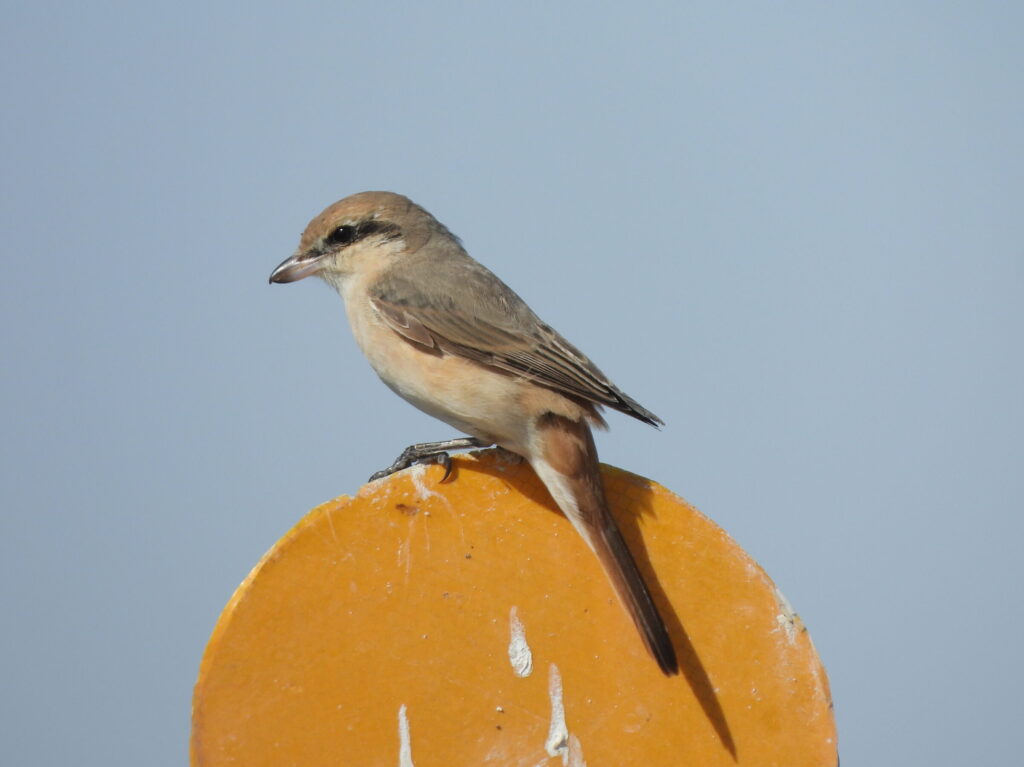
The reeds were inhabited by singing clamorous reed warblers (Acrocephalus stentoreus) that remained out of sight. Wintering pallid harriers (Circus macrourus), marsh harriers (Circus aeruginosus), greater spotted eagles (Clanga clanga) and kestrels (Falco tinnunculus) did make an appearance. An obliging isabelline shrike (Lanius isabellinus) in roadside shrubs and posts stole the show.
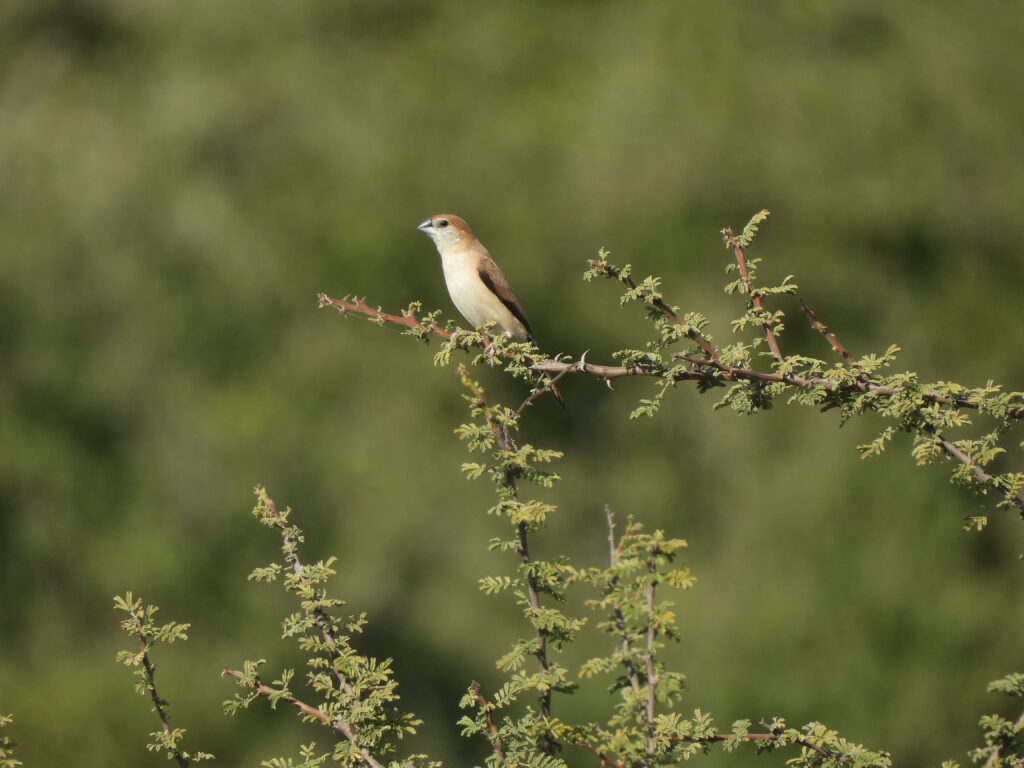
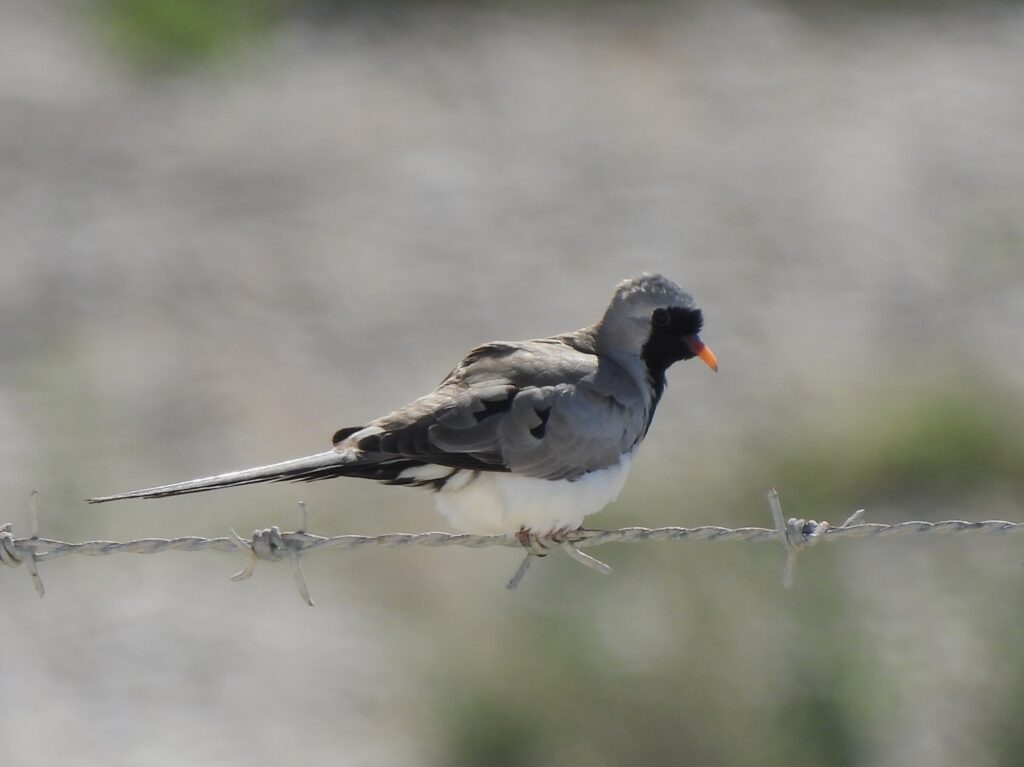
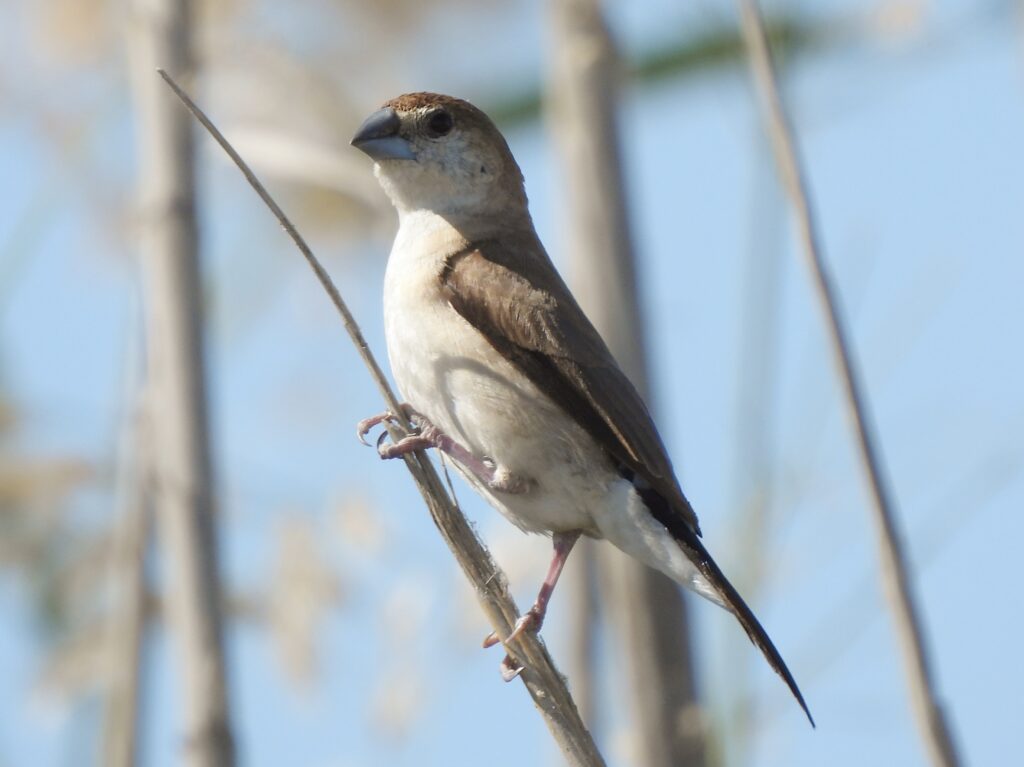
Additional highlights came in the form of small flocks of Indian silverbills (Euodice malabarica) in the reeds and a few Namaqua doves (Oena capensis) perched on the cables surrounding the farm.
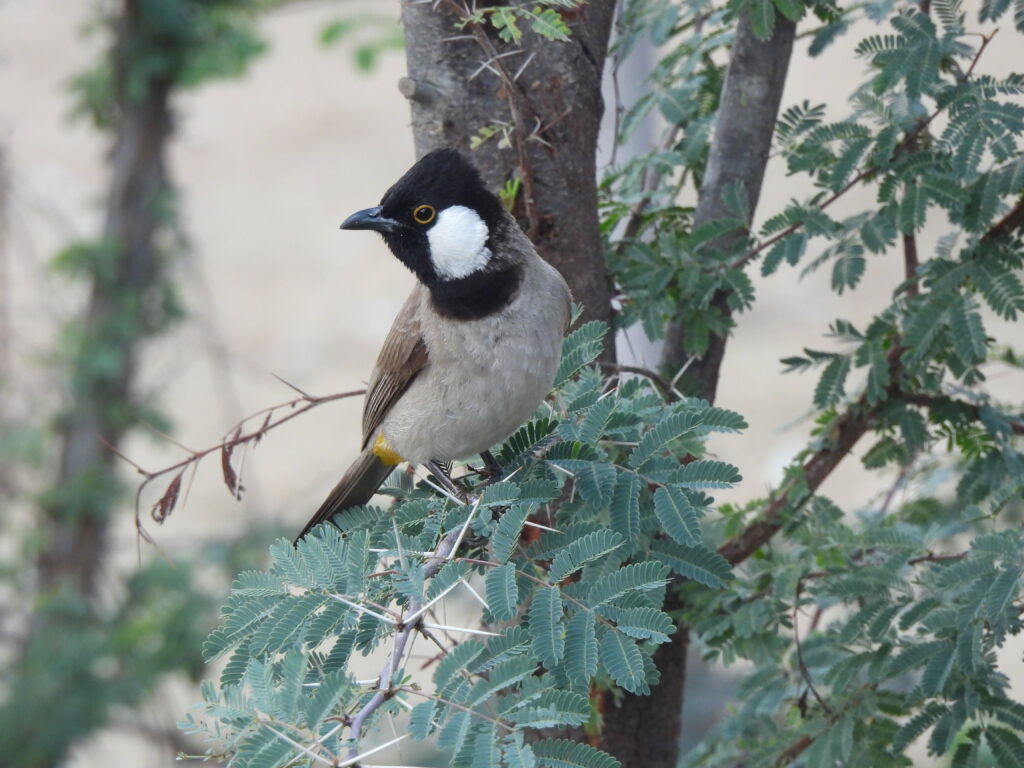
Back on the road, we headed to the only spot in the country where hypocolius had been reported on eBird that season — and on several dates. This involved diverting from highways onto secondary roads, which allowed us to connect with more birds along the way. We noted fly‑by common mynas (Acridotheres tristis), white-eared bulbuls (Pycnonotus leucotis) and laughing doves (Spilopelia senegalensis). On a couple of occasions, we noticed large falcons flying over wastelands next to the road. I quickly realized falconry is a big thing here, as numerous 4×4 cars with a single driver and several falcons on the seats shared the same unpaved roads with our rather humble rental car.
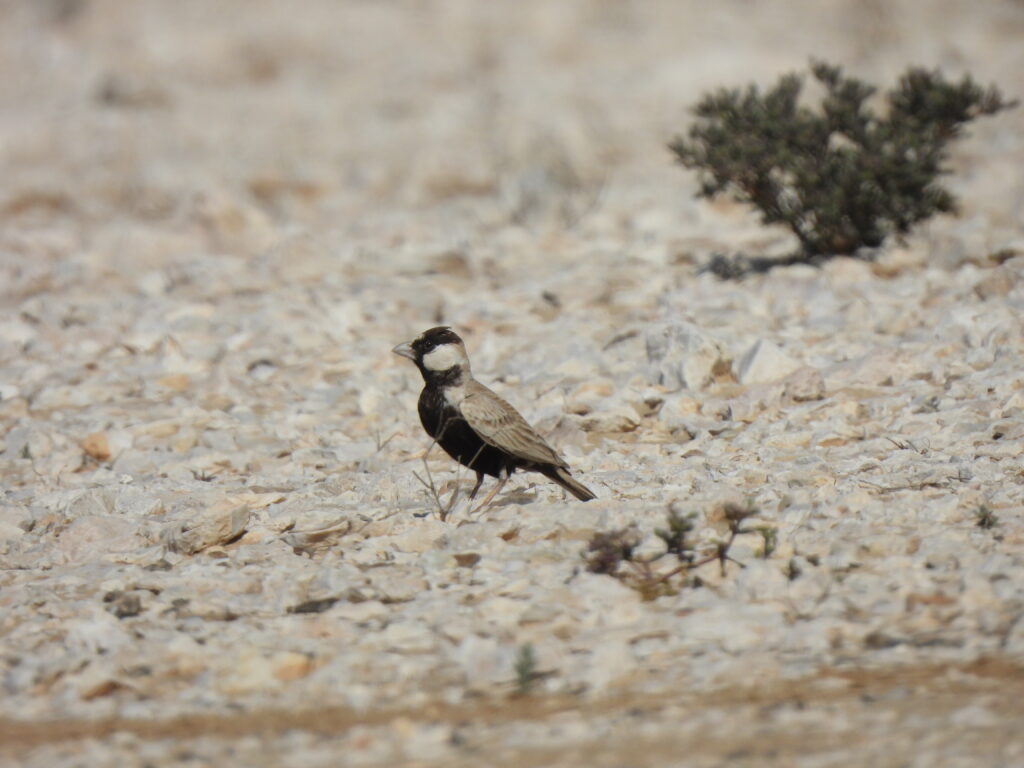
We headed towards the northwest of the country. A couple of stops for scenic pictures while driving unpaved roads on the way to Al Wakra village resulted in several territorial black-crowned sparrow‑larks (Eremopterix nigriceps). We enjoyed fantastic views of these small but nicely patterned larks, in contrast with some larger, duller crested larks (Galerida cristata) also present.
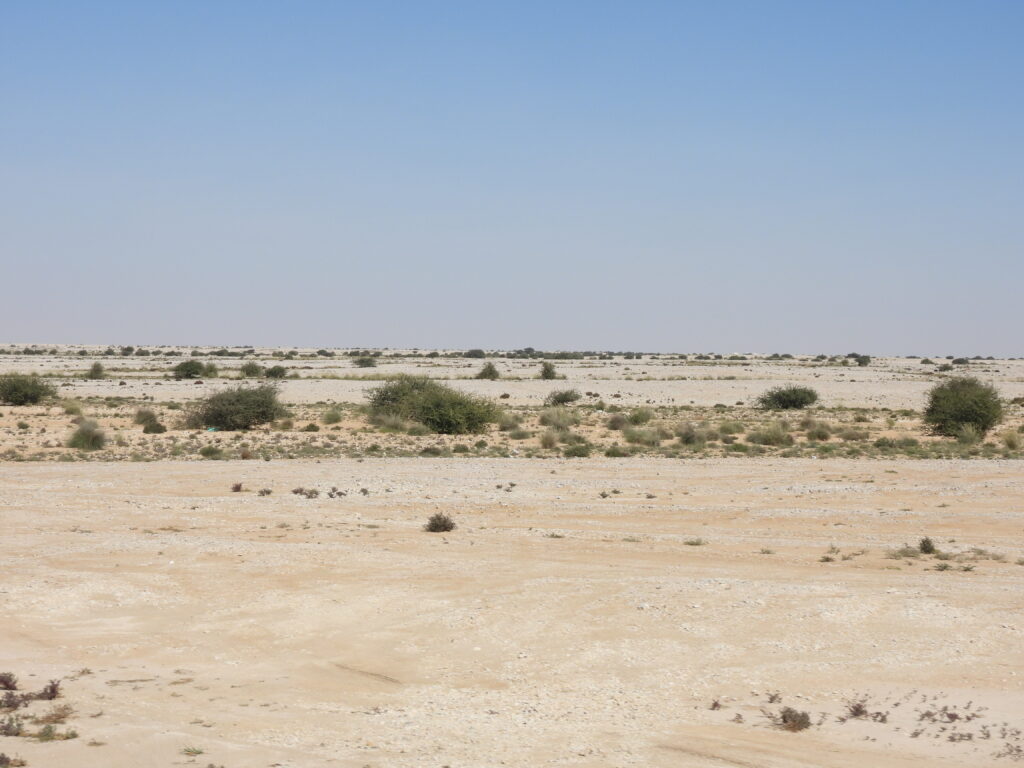
We parked the car on the outskirts of Al Wakra once the road became too tricky for our rental car. Our target spot, some sort of oasis with greener shrubbery in the middle of the desert, was still some 20 minutes’ walk away under the sun (of January, for what it’s worth). Already upon arrival, we connected with Egyptian spiny‑tailed lizards (Uromastyx aegyptia) and flushed a flock of introduced gray francolins (Ortygornis pondicerianus).

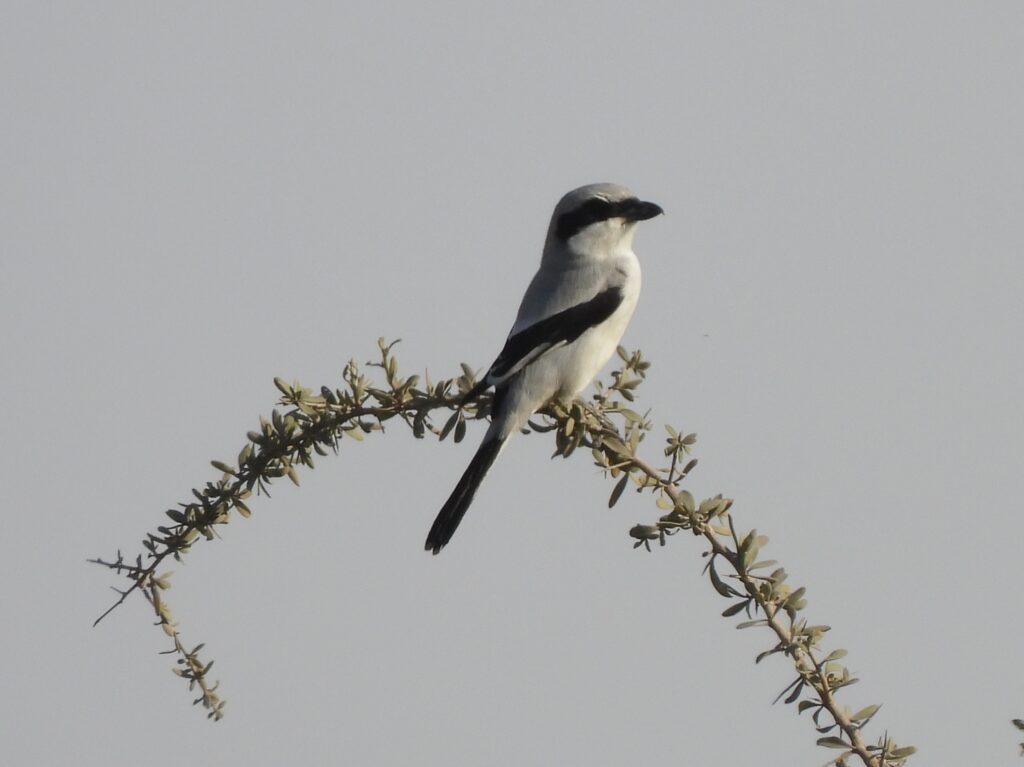
Our walk to the oasis was fast and uneventful. We soon reached an area with increasingly tall, dense shrubs. Here we could hear different birds, including delicate prinia (Prinia lepida), blackcap (Sylvia atricapilla) and others I was not able to identify at the time. Some individuals of the Arabian aucheri form of great grey shrike (Lanius excubitor) sat on top of twigs.
As we moved deeper into the oasis, we checked every bird flying over. The number of fly‑by laughing doves and Eurasian collared doves (Streptopelia decaocto) kept us on edge. However, after some patience, Aina eventually connected with a flock of distinctive, elegant, long‑tailed birds with a pied wing pattern. There they were.
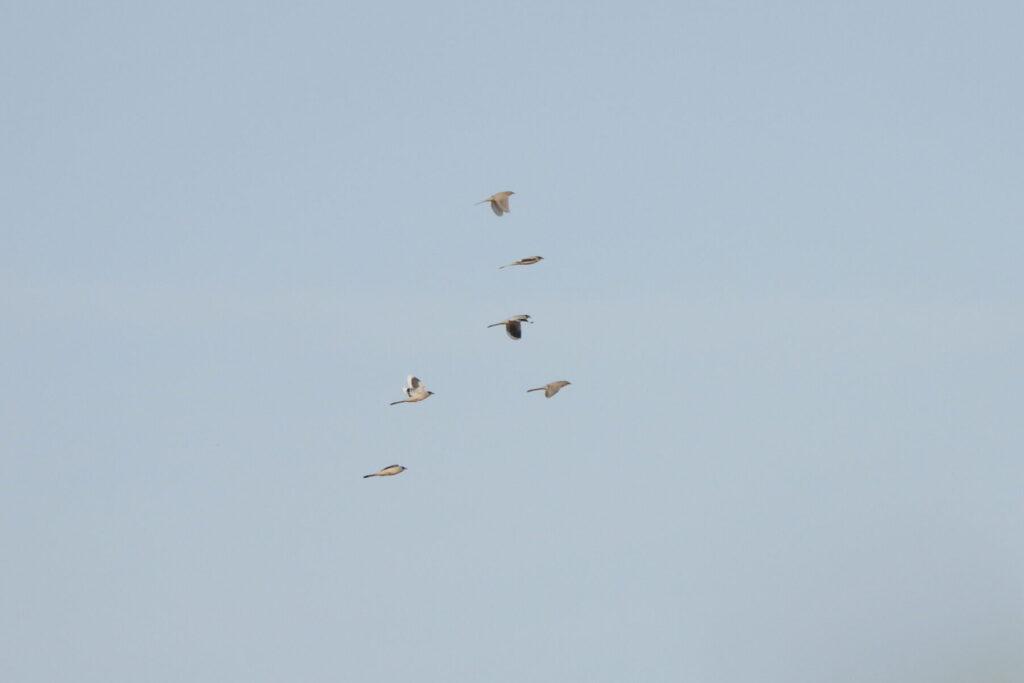
We had a brief but very exciting encounter with the hypocolius, flying back and forth between bushes. The birds stayed mostly out of sight, best seen as they flew over, although they offered quick peeks from bush tops. Our whole observation lasted only a few minutes; after that, we did not reconnect with them.
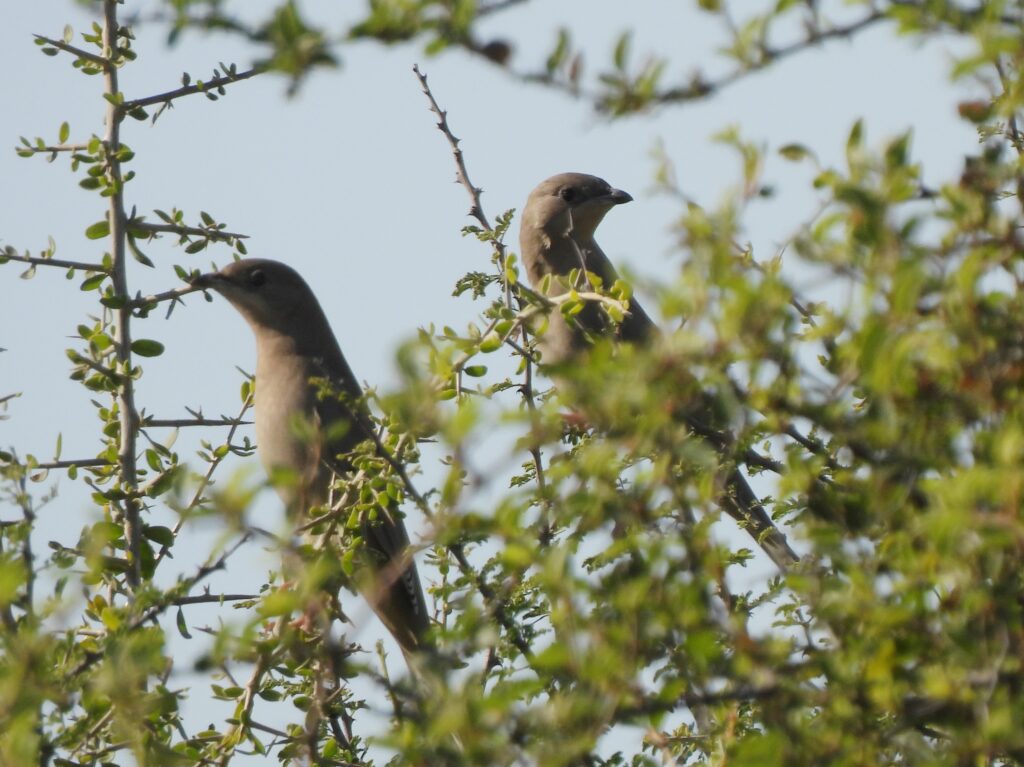
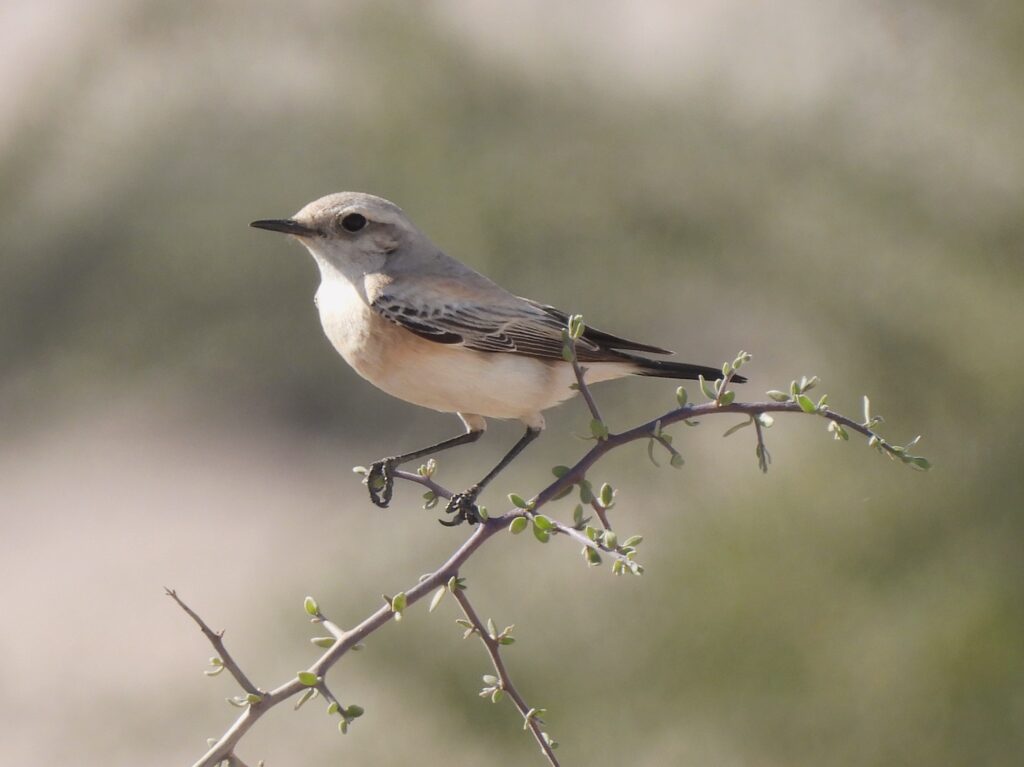
Still, we were fully satisfied. I had long explained to Aina all I knew about the natural history and phylogeny of this puzzling, elegant desert‑dweller, and I felt we were both equally excited. At the time, the hypocolius became my world bird #500. That number, however, quickly increased on our walk back to the car, as I connected with two obliging lifers: desert wheatear (Oenanthe deserti) and isabelline wheatear (Oenanthe isabellina).
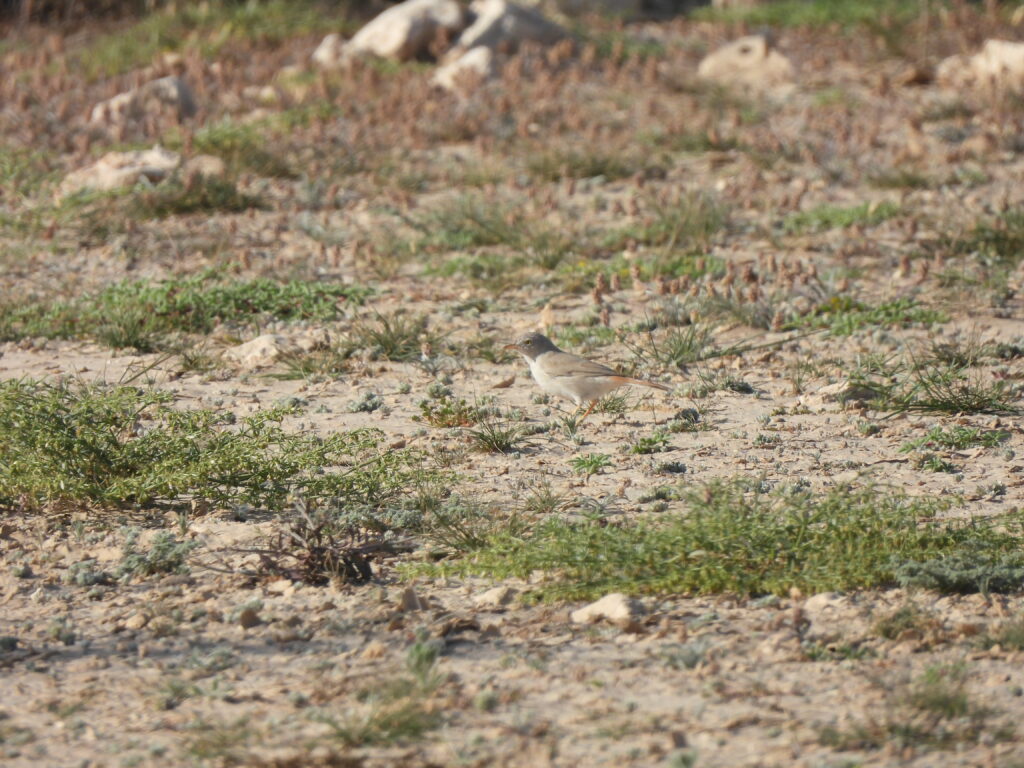
While trying to photograph the latter, I noticed with the naked eye a small shadow moving next to it, but I could not understand what cast it. Only after some effort, focusing with my camera, did I realize it was an Asian desert warbler (Curruca nana), perfectly blended with the ground color and seemingly following the wheatear wherever it went. For such a small, completely brown, unassuming warbler, connecting with this species was a huge surprise and added to the overall feeling of success.
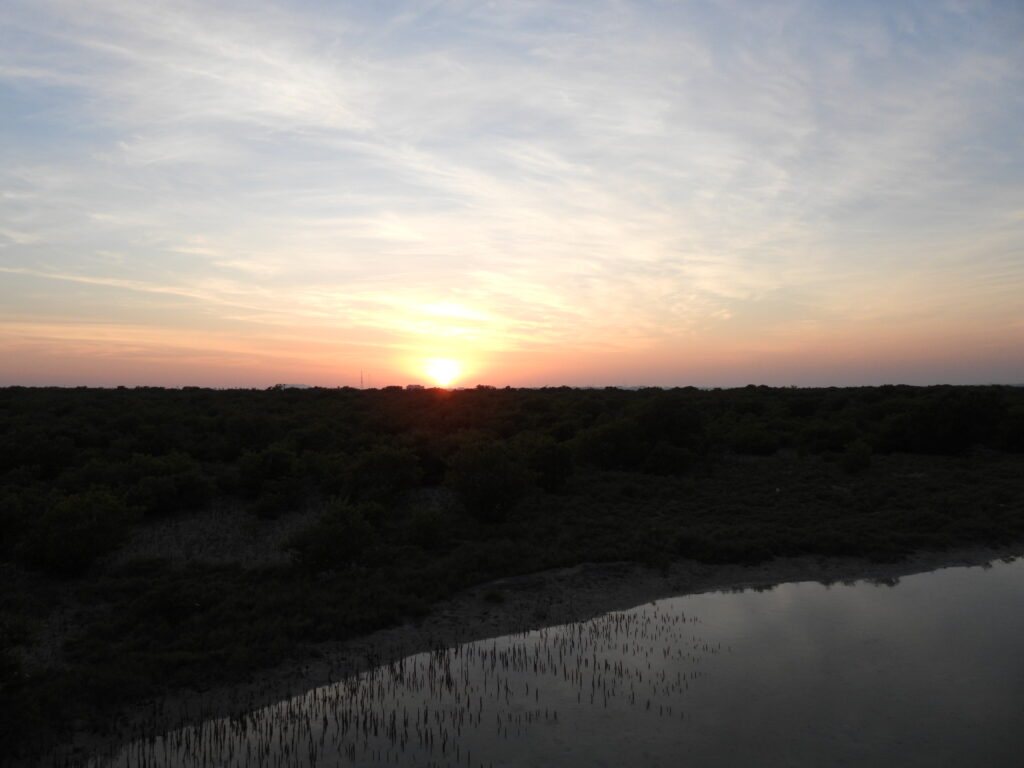
We took it more calmly for the rest of the day, heading to Purple Island on the northeast coast to enjoy the sunset. The views were truly amazing. A boardwalk with watchtowers connects a parking lot on the peninsula to a sandy island through a mangrove forest.
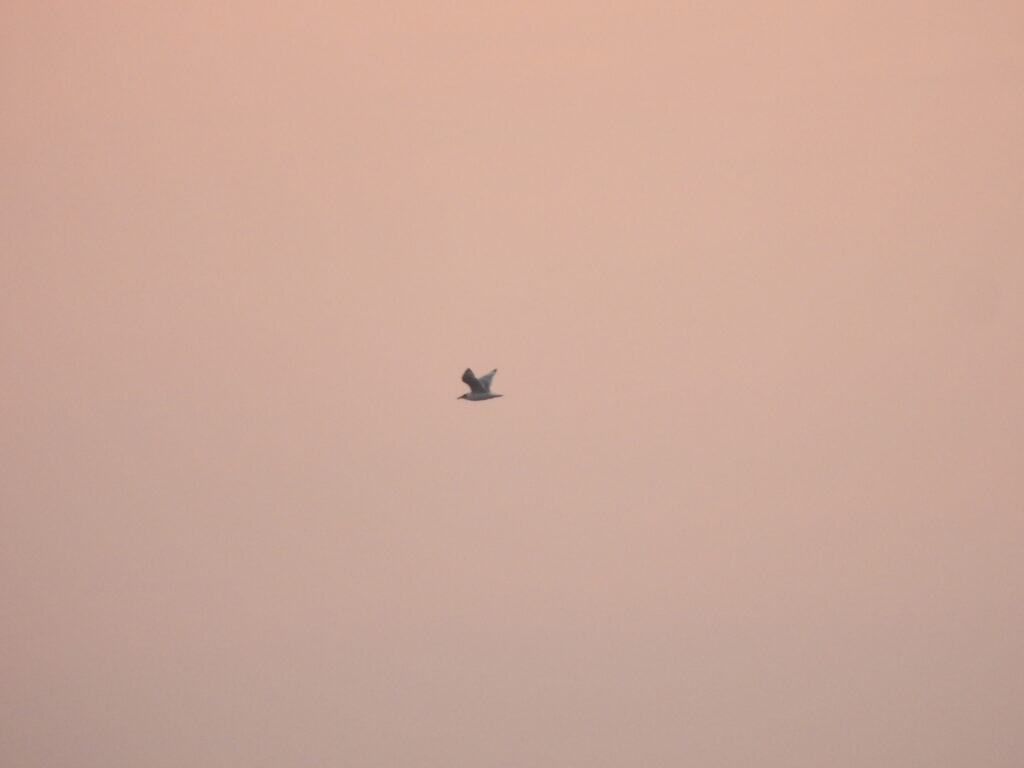
Walking to Purple Island provided very distant views of some interesting birds. This included large flocks of cormorants that I sadly had to leave unidentified, as they could potentially have been region‑endemic Socotra cormorants (Phalacrocorax nigrogularis), but I could not rule out great cormorants (Phalacrocorax carbo). However, I did connect with an equally distant but massive Pallas’s gull (Ichthyaetus ichthyaetus) in winter plumage, flying high against the pink sky.
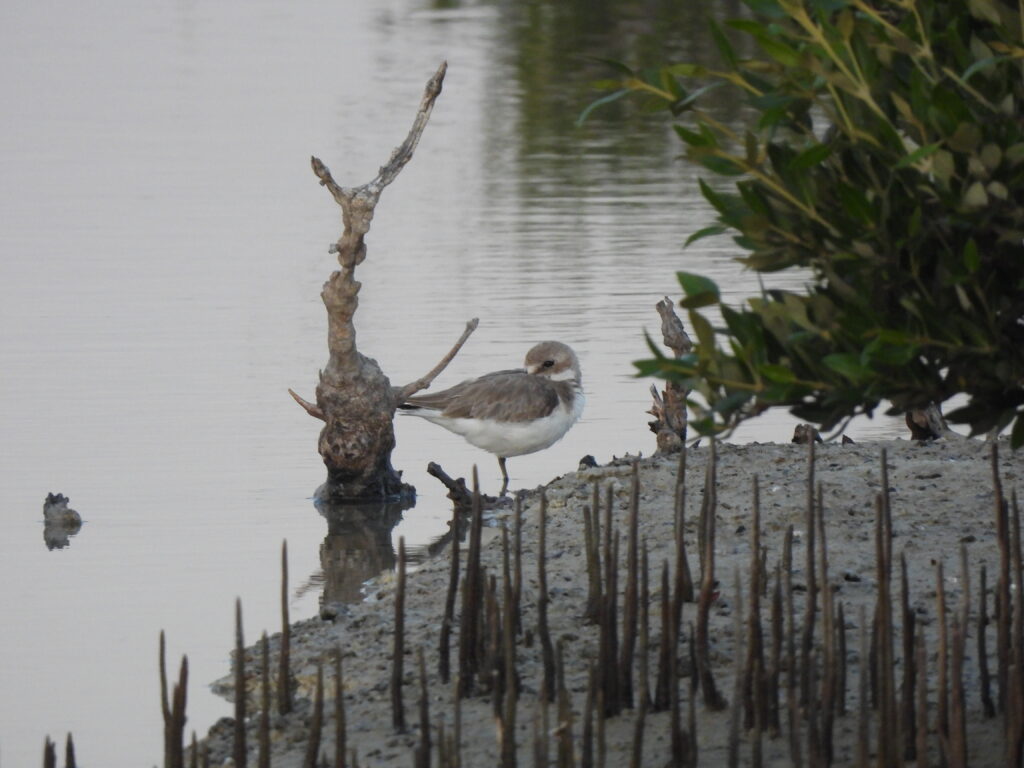
Sunset on Purple Island was truly scenic. A number of waders were present along the shore, including at least one greater sand plover (Anarhynchus leschenaultii) and a common ringed plover (Charadrius hiaticula) among some unidentified plovers and pips. Shallow waters further offshore held small flocks of flamingos (Phoenicopterus roseus), curlews (Numenius arquata), black‑tailed godwits (Limosa lapponica), dunlins (Calidris canutus) and oystercatchers (Haematopus ostralegus).
Birdwatching in new places is usually a matter of choosing the right sites, doing some research and having some luck. Even though I tried to familiarize myself with the potential birds beforehand, I found very little information about birding in Qatar on such a short timeframe, and it was hard to know whether we had chosen the right places. Still, I feel we struck gold on the luck component: Qatar delivered our long‑wanted desert waxwing, the mythical hypocolius, along with numerous unexpected bonus birds over the course of a single day.