I have had the chance to visit Helsinki for the last few days, mainly thanks to Joséphine Couet, who invited me to her PhD defence and karonkka. Her findings while working in the Helsinki Lab of Ornithology, showing how mountain birds are shifting their ranges uphill, are concerning, but her work progress is truly inspiring. It was great catching up with friends after so long, especially with Mebin Varghese, Lucas Bogaert and Quique de Dios who kindly hosted me during these days, and Amaia Gonzaga who I shared the journey with. I allocated some time every day to go out birding during one of the most intense cold breezes of the last winters. Prolonged temperatures around -20ºC were quite hard to handle. However, almost constant sunny skies and snow provided a fantastic landscape, picturesque in every corner.
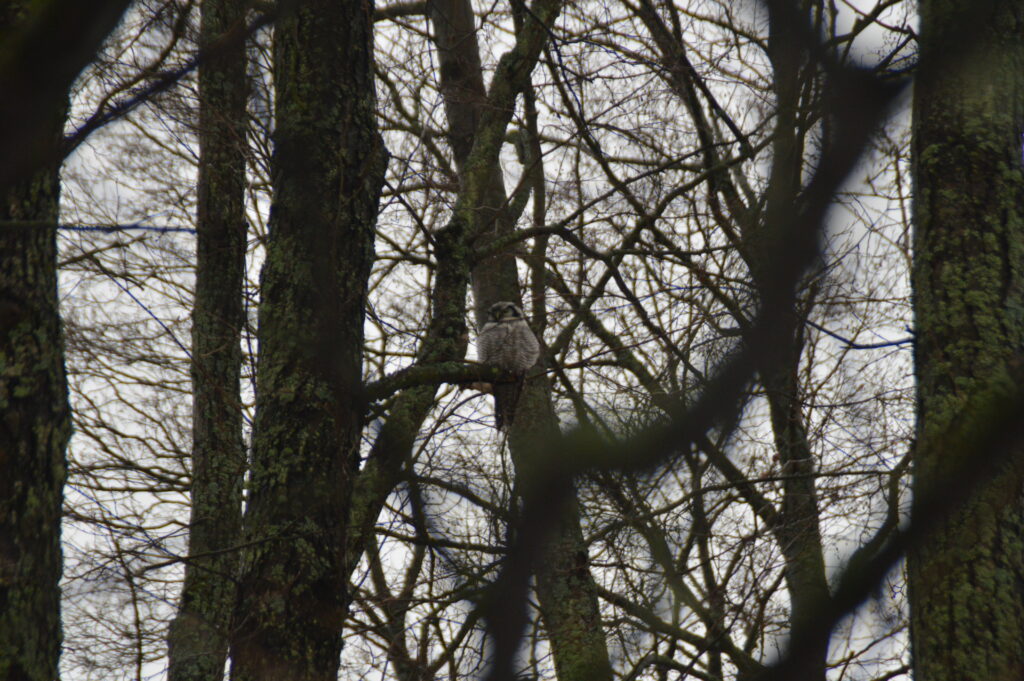
Helsinki in winter is, due to obvious reasons, quite depleted of birds. Snow usually starts falling between November and December and soils remain covered in snow and ice until April. However, cold breezes often bring rare visitors from distant places further north and east. During my previous winters in town, this has been the case for owls, including northern hawk-owls (Surnia ulula) wintering in Viikki forest and surroundings repeatedly, and sporadic sightings of Ural owls (Strix uralensis), great gray owls (Strix lapponica) and boreal owls (Aegolius funereus). Some of these birds are often a flower of a day, but over the years I managed to connect with all of these owl species (read about it here).
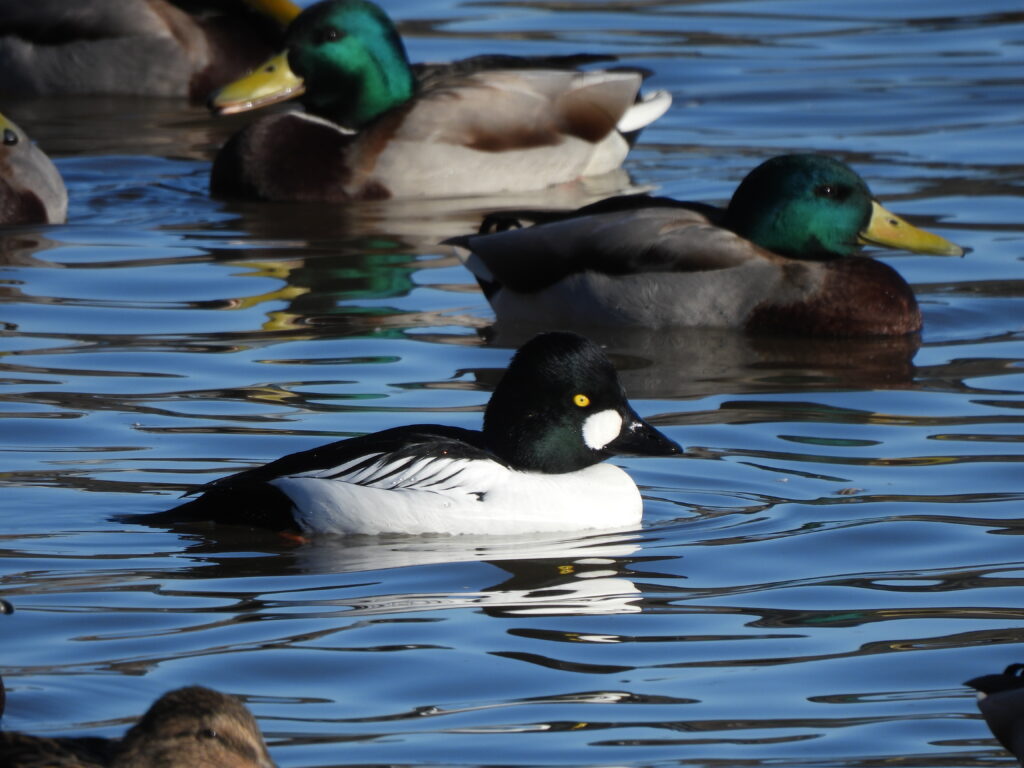
A great place to connect with birds in Helsinki over winter is within the very few places where water remains unfrozen. This is the case for a small part of Eläintarha beach in Töölö Bay, right next to the train rails near the central railway station. Either the motion of the trains or that of waterfowl keeps the water unfrozen. In the past, I have here connected with some of the very few common goldeneyes (Bucephala clangula), tufted ducks (Aythya fuligula), gadwalls (Mareca strepera), teals (Anas crecca), common mergansers (Mergus merganser), mute swans (Cygnus olor) and Canada geese (Branta bernicla) that dare to stay at these latitudes over winter, all within thousands of mallards (Anas platyrhynchos) in a very reduced space.
Most of the bird activity in winter is relegated to feeders. A number of these feeders are installed across the city during the winter months, favoring different sets of species: mainly house sparrows (Passer domesticus) downtown, more great tits (Parus major), blue tits (Cyanistes caeruleus) and blackbirds (Turdus merula) in green areas, yellowhammers (Emberiza citrinella) in fields, and more. These feeders are the main sustenance for the odd fieldfare (Turdus iliacus), robin (Erithacus rubecula), chaffinch (Fringilla coelebs) or goldfinch (Carduelis carduelis) that might have not left when it was time.
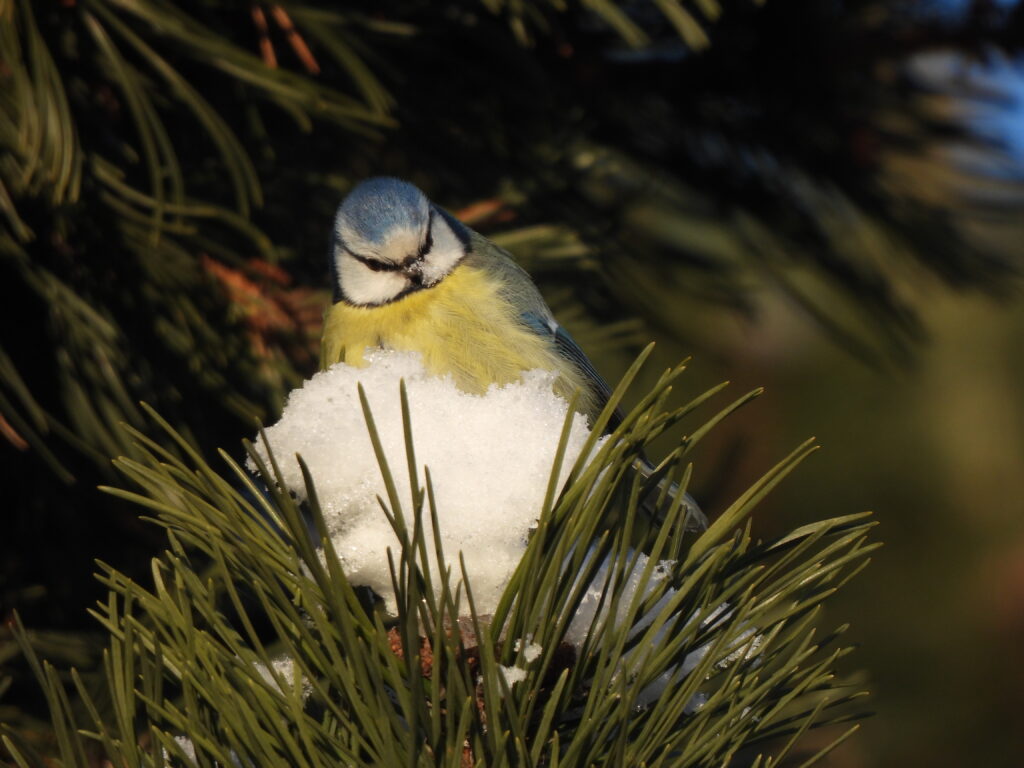
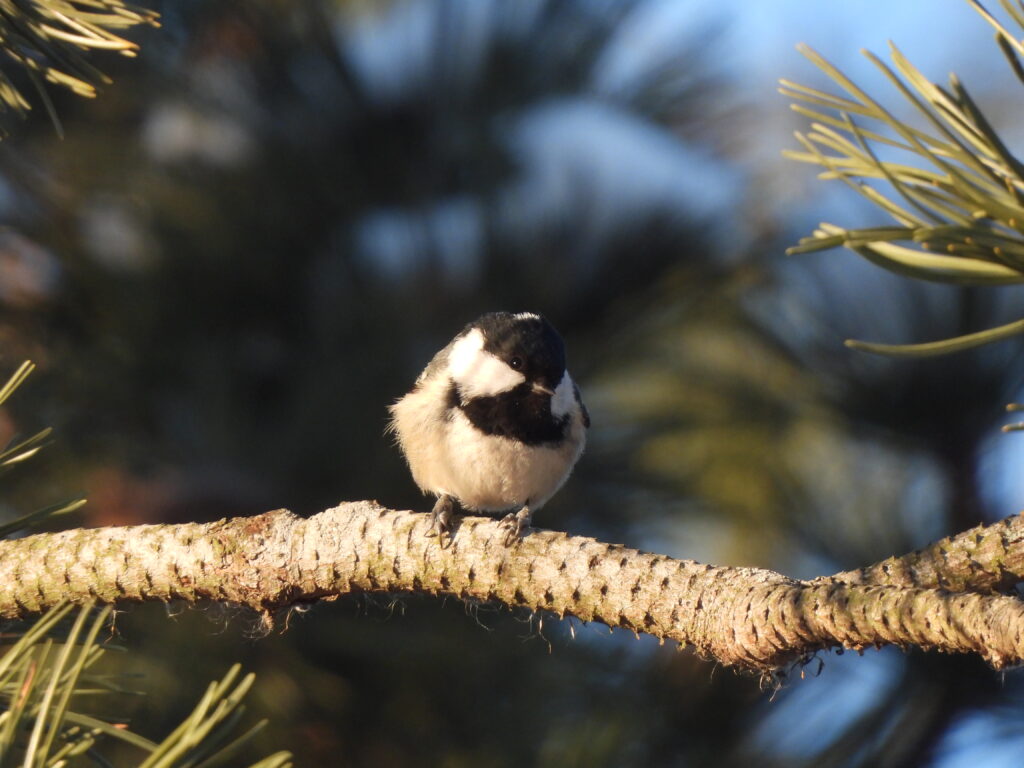
Mainly working remotely from the Global Change and Conservation Lab office at the University of Helsinki, I walked the fields and forests in Viikki with Lucas, Amaia and Mihika Sen looking for birds during work breaks. This included visiting some of these feeders. On the way, we connected with the always-present hooded crows (Corvus corone), magpies (Pica pica) and jackdaws (Corvus monedula). I was happy to see the local pair of great spotted woodpeckers (Dendrocopos major) still foraging at their spot near Keinumäki. In that area, we indeed connected with yellowhammers, chaffinches and greenfinches (Chloris chloris) among great and blue tits. However, I was glad to note good numbers of coal tits (Periparus ater), which had not been particularly numerous during my previous times in the city.
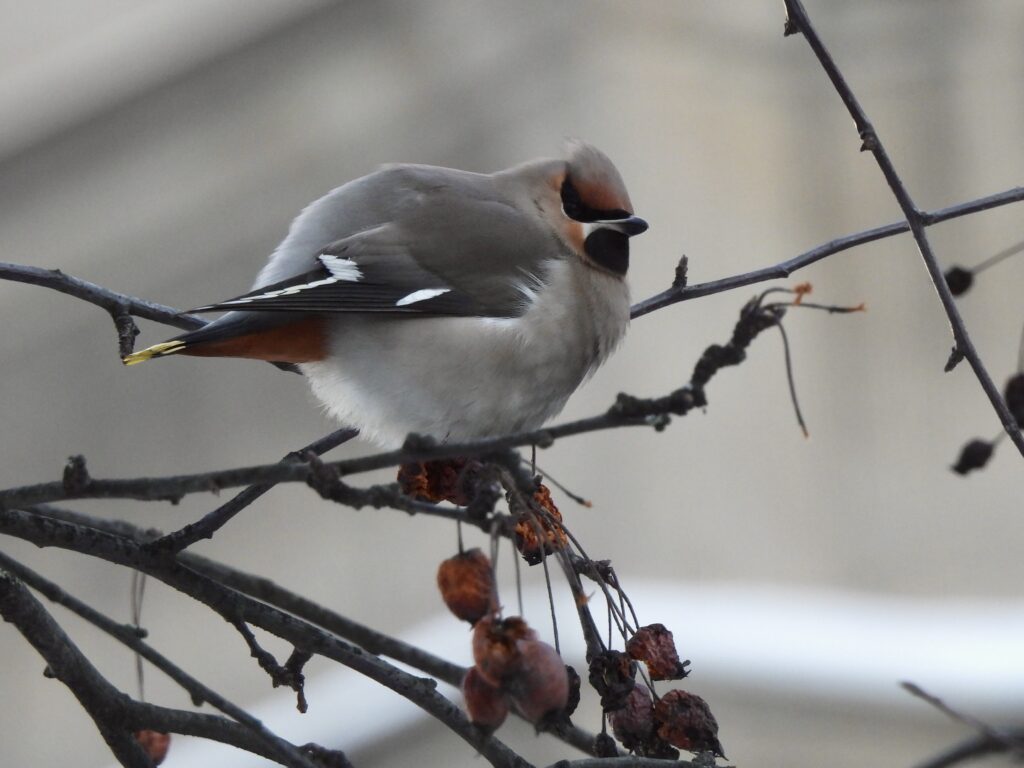
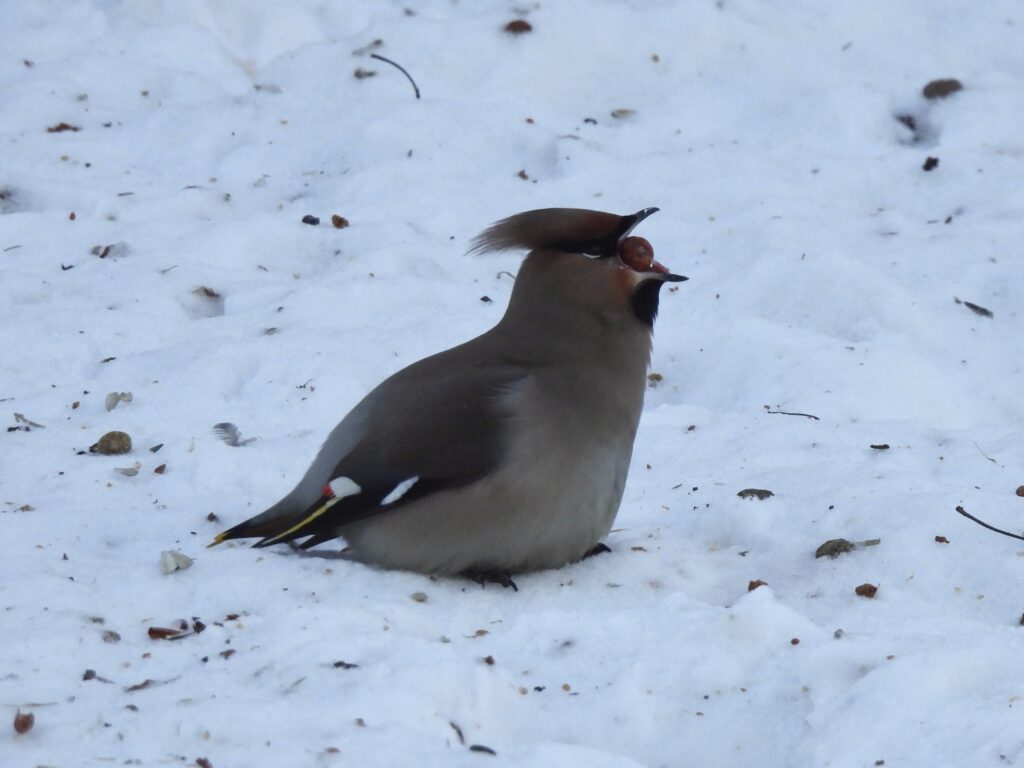
Another feeder I visited was the one in front of the Finnish Natural History Museum, downtown next to Kamppi station. Joséphine texted me about some Bohemian waxwings (Bombycilla garrulus) in the area after days of failed attempts at locating them. It is not too common for these birds to stay over winter, but somehow several flocks seem to have settled in the city this particularly cold season. Indeed, five of these fluffy balls of color foraged around the feeder, calling like tinker bells, feeding on the few berries left on the bushes, basking in the winter sun on top of the trees and hopping on the snow, all in the middle of the city. One never gets tired of these birds.
Winter is also time for woodpeckers. I remember when Darío Gijón visited back at Christmas 2023–2024, we casually bumped into a white-backed woodpecker (Dendrocopos leucotos) while walking from Viikki to Lammassaari after connecting with the local hawk-owl. Right after he left Finland, Malmi Cemetery next to my neighborhood had a vagrant two-barred crossbill (Loxia leucoptera) as well as a nuthatch (Sitta europaea), quite uncommon in Helsinki. On that same day I twitched both, and while putting the garbage away at home, my lifer gray-headed woodpecker (Picus canus) came in front of me, a male suddenly flying into some trees from the feeder at my neighbor’s balcony.
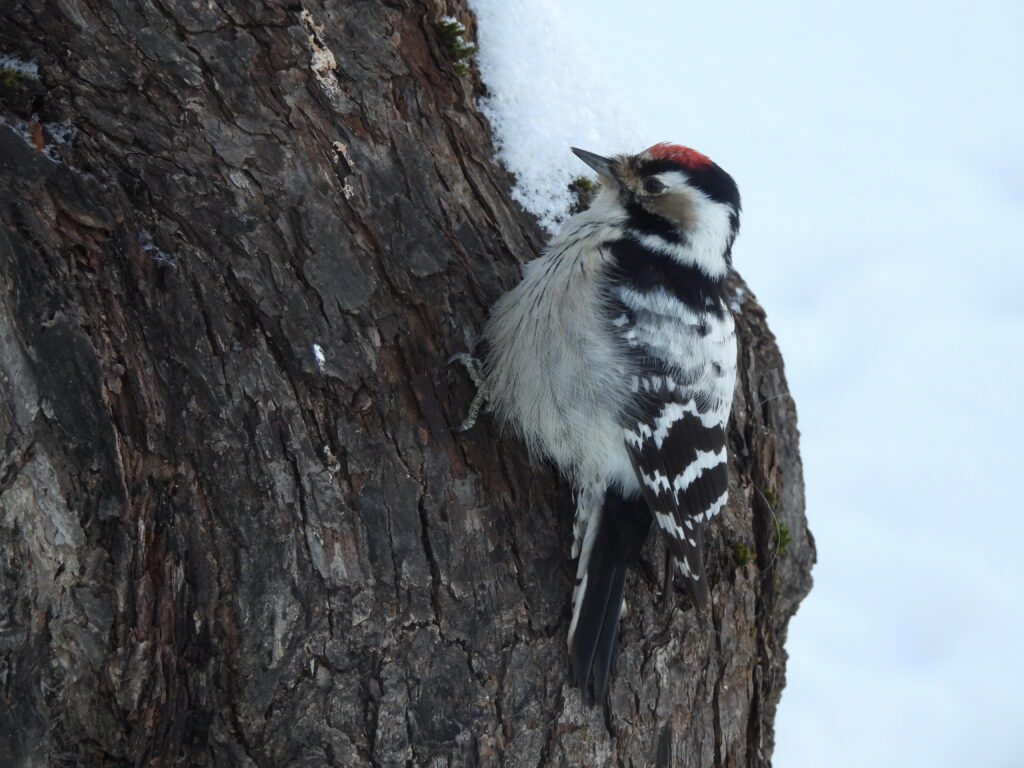
I did not connect with these species this time, but still had an awesome time with woodpeckers. The first happened during a quick visit to the usually birdy Lauttasaari neighborhood as an initial but failed attempt to connect with waxwings. I noticed some pecking sounds right next to me, soft and only audible when I stopped walking on the snow. A confiding male lesser spotted woodpecker (Dryobates minor) pecked on the bark at the base of the trunk of the tree next to me, completely unwary of my presence. These little peckers often behave this tame, offering awesome views.
The big woodpecker adventure, however, came on the weekend. Amaia, Quique, Lucas, Mebin and I joined Valeria Valanne and Giorgio Zavattoni in the best preserved old-growth forest within Helsinki, Haltiala Forest. Now turned into a cross-country ski station, we had to be careful to navigate the paths while looking for our targets. Few birds are usually seen away from feeders, but some flocks of red crossbills (Loxia curvirostra) obliged, opening pine cones on top of the canopies. These were nice and felt like a consolation prize after repeatedly dipping the parrot crossbill (Loxia pytyopsittacus) flock that had been seen in the Macedonian pines of a street in Kannelmäki, where I had seen nutcrackers (Nucifraga caryocatactes) in previous winters.
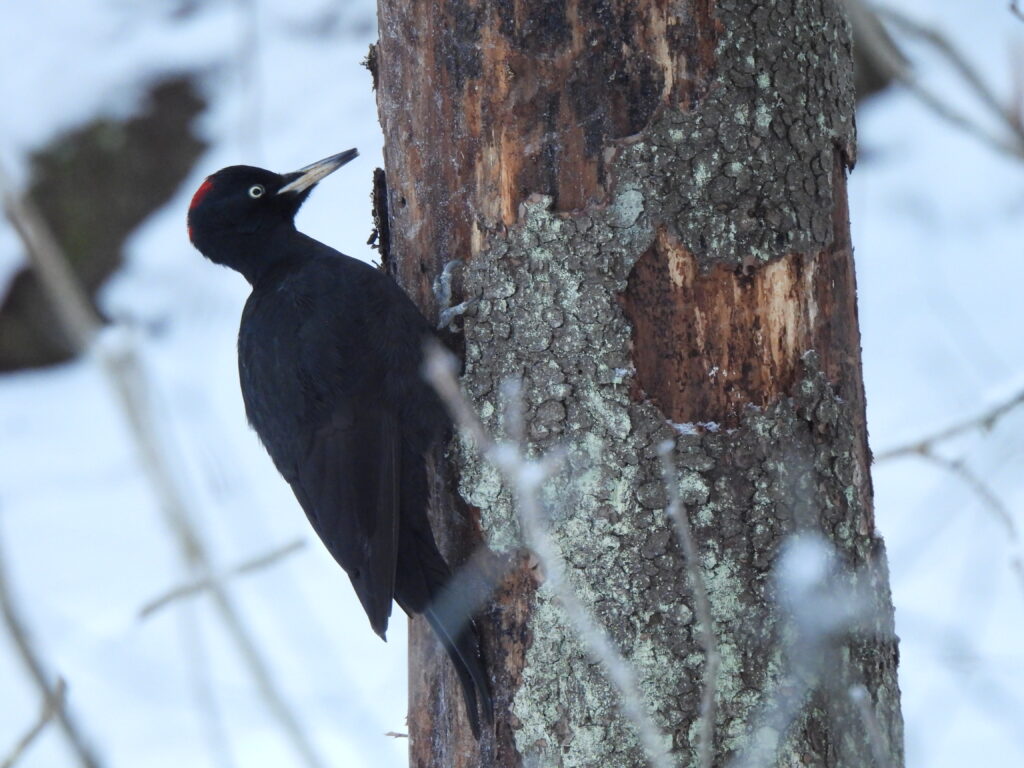
Moving on into the forest, we bumped into the majestic presence of several extremely confiding black woodpeckers (Dryocopus martius). These birds had completely removed the outer bark of many trees in the surroundings. Some unaware treecreepers (Certhia familiaris) seemed to like this, as they would forage on the trunks cleared of bark, often next to the gigantic black woodpeckers in a funny scene.
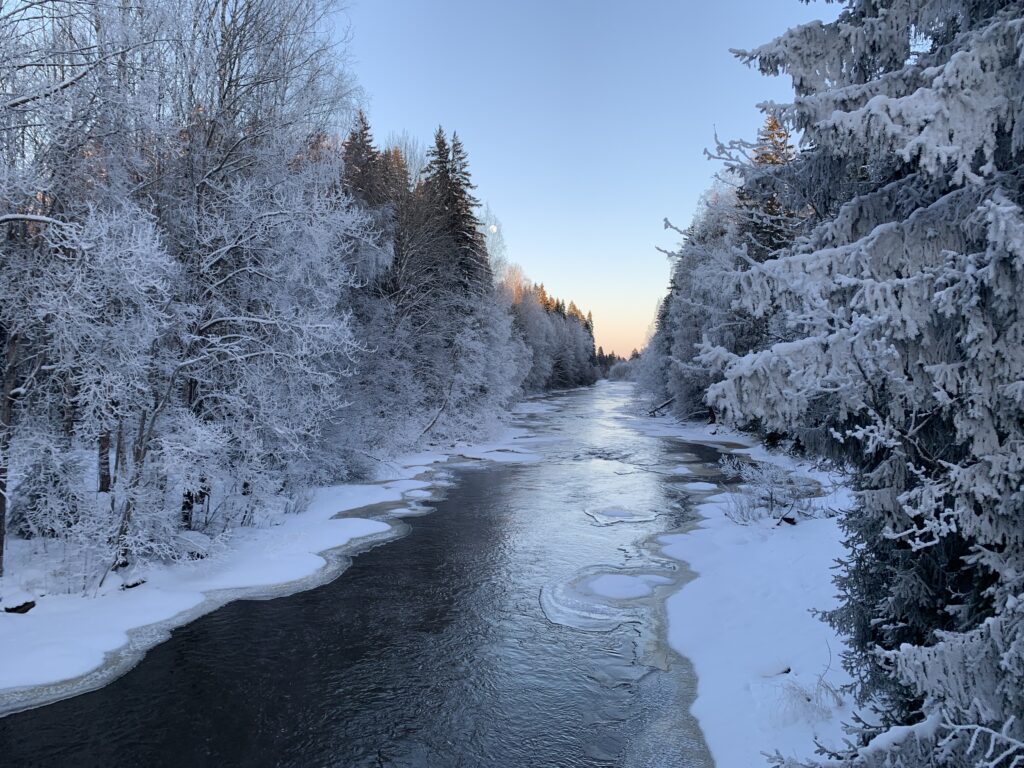
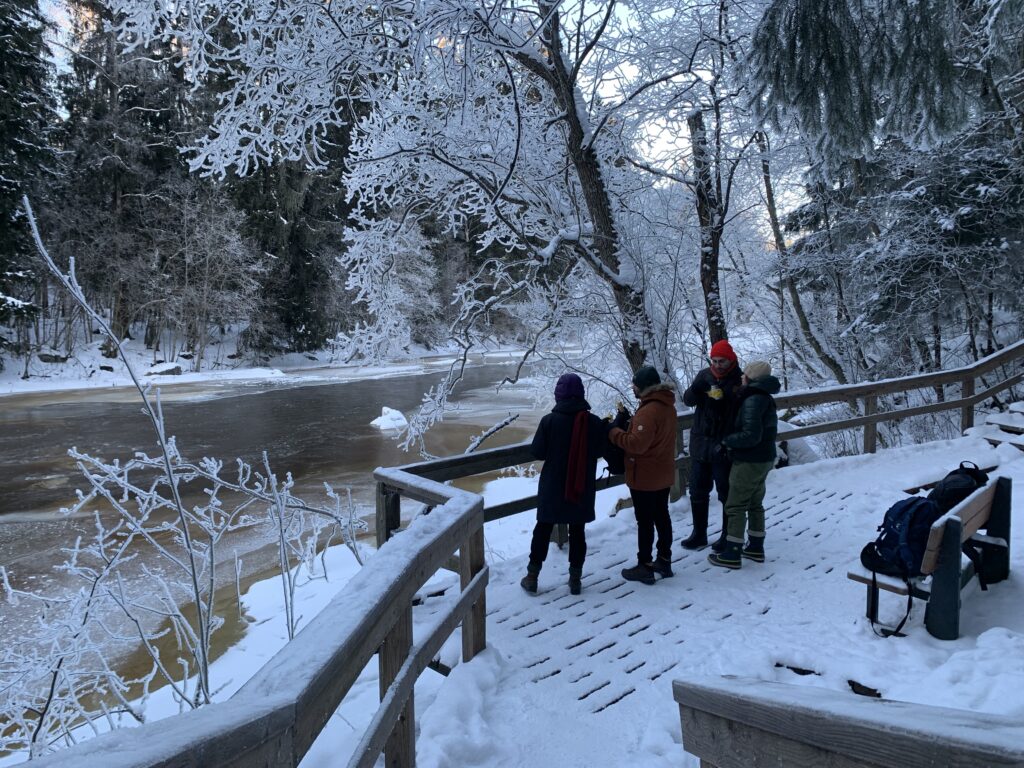
We made it into the area where our main target of the day had been reported for weeks, to no avail. The woodpecker we were looking for had not been seen that day as of then. Local birders told us that, unlike the black woodpeckers we had just seen, this species is quiet and wary, proving harder to see. We did a long wait at extremely freezing temperatures until we could handle it no more. Still hopeful, we left the area towards Pitkäkoski, a creek flowing north of the forest. Luckily, walking warmed us up again and the landscape became impressive. The river flowed surrounded by frozen shores and trees covered in frost and snow. We had a quick lunch on the spot and connected with a white-throated dipper (Cinclus cinclus) plunging in the distance, among one of the few areas in town where the water was not yet frozen.
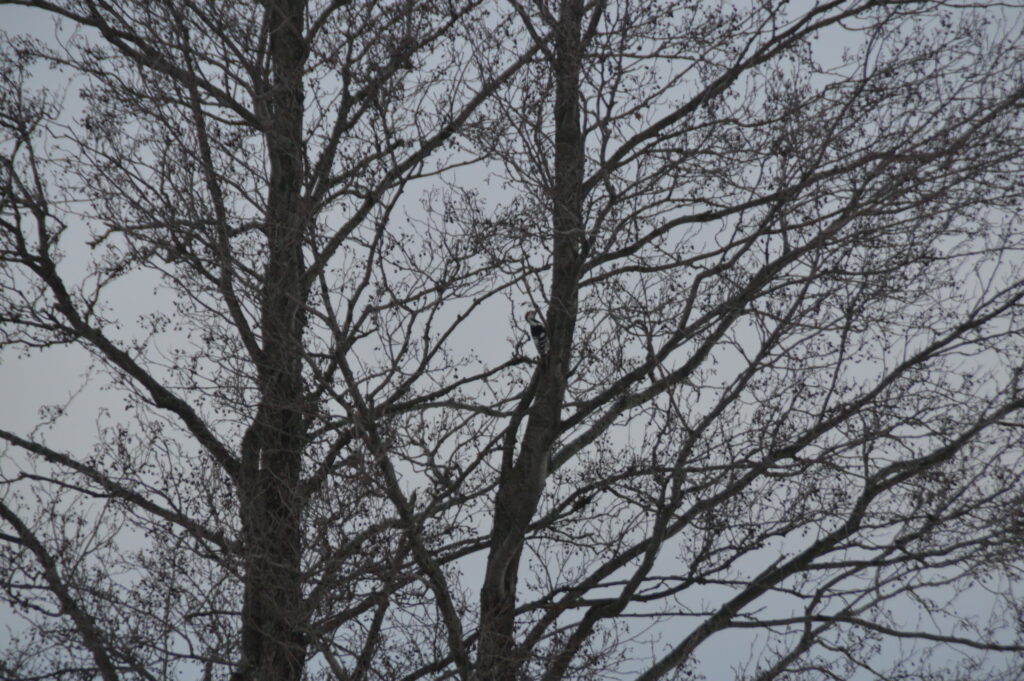
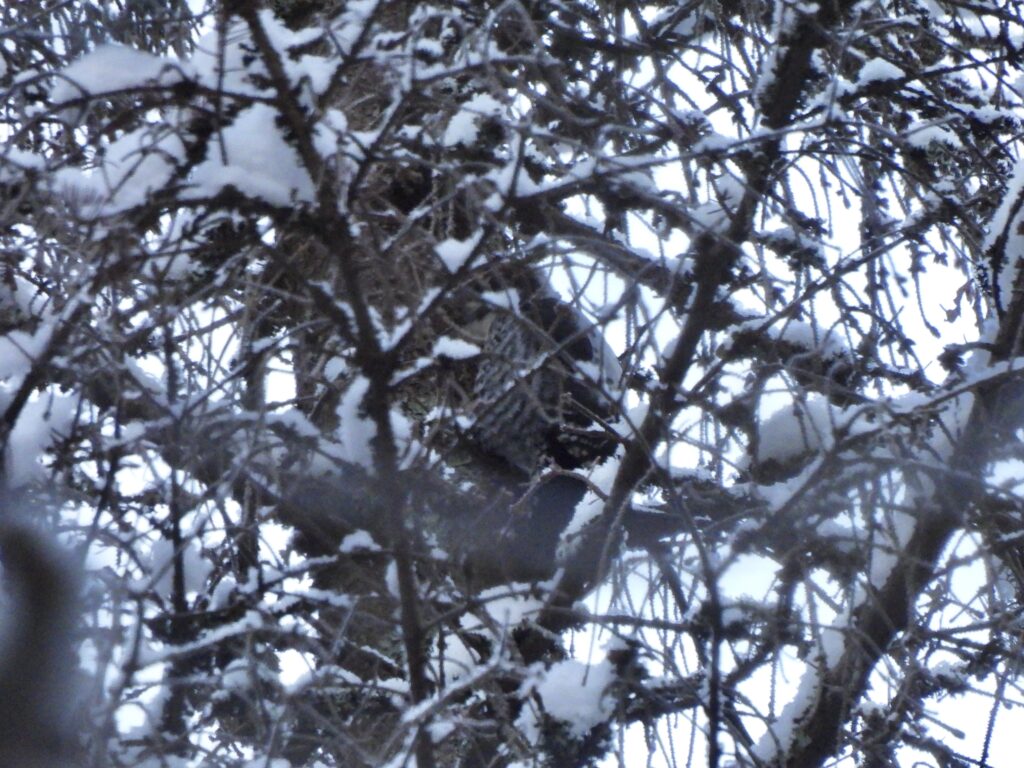
Days are not too long in winter and we rushed back through the forest to pay one last-minute visit to the woodpecker stakeout on our way back home. Black woodpeckers pecked loudly, but Giorgio wisely followed the softer foraging pecks coming from inside the forest, more reminiscent of a great spotted woodpecker. It took surprisingly long, but Amaia eventually located the bird very high up in the canopy in the fading light of sunset (iltarusko, in Finnish). After some initial doubts, my friends managed to secure better views and I took a couple of poor shots. A three-toed woodpecker (Picoides tridactylus), an old-growth forest specialist that had eluded me for years, pecked on the bark in front of us for a short time before flying away and disappearing. This rare bird for Helsinki was one of my most exciting pending lifers, meaning a nemesis coming to an end, and my connecting with all woodpecker species in the Western Palearctic. We were all very excited, barely believing that this would be the last bird that the light allowed us to see during a long, freezing but successful day in the forest.
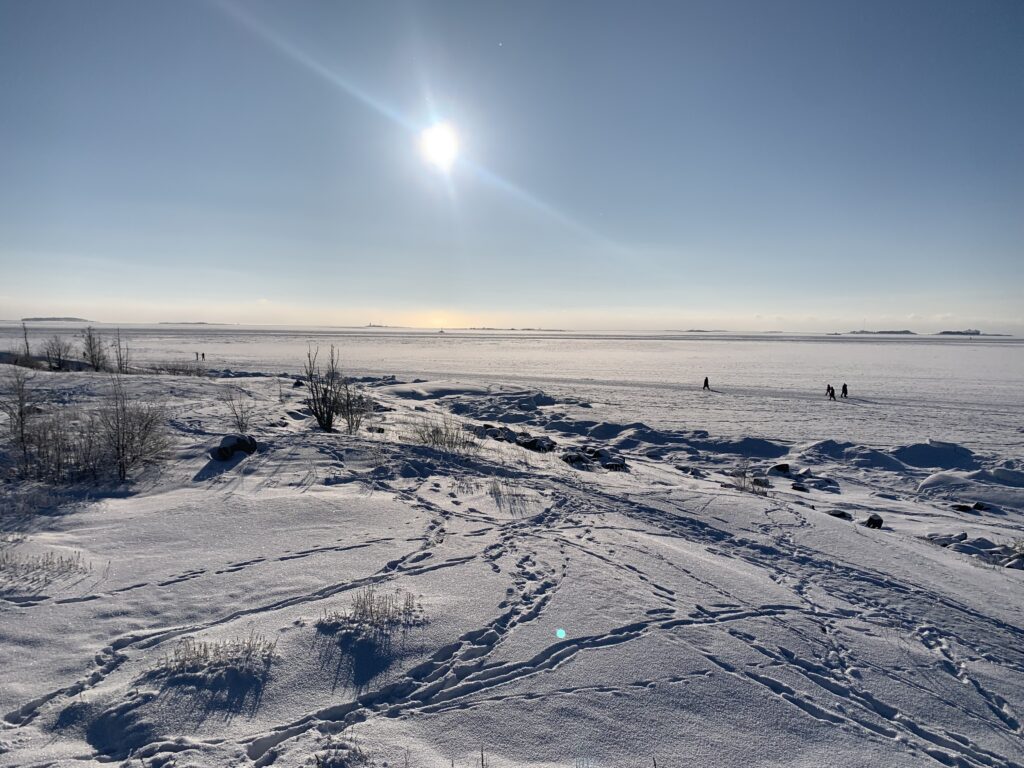
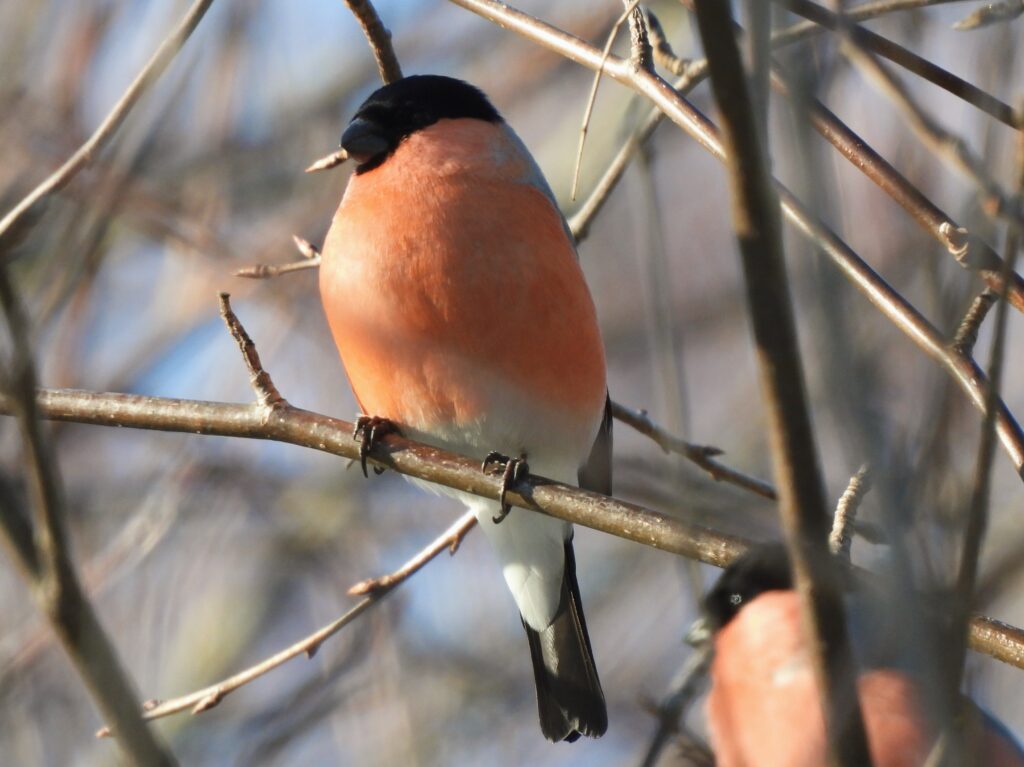
Still hyped, Amaia, Giorgio, Valeria and I planned to walk on the frozen Baltic Sea the following day to connect with some new potential lifers. Sadly, the flock of twites (Linaria flavirostris) that had shown up on Harakka Island and stayed for a couple of days was not relocated on Sunday. As a consolation prize we got nice views of bullfinches (Pyrrhula pyrrhula), a quite widespread species in green areas of Helsinki in winter, often heard but usually staying hidden up in the canopy.
We moved on to a forested area next to Pasila. Helsinki is crossed by a forest corridor from Töölö Bay in the city center north across Haltiala Forest and into Nuuksio National Park. A bird feeder has been a stakeout for a long-staying nutcracker for some days. Our visit on Sunday afternoon failed, although we connected with a European hare (Lepus europaeus), a yellow-necked mouse (Apodemus flavicollis), a bank vole (Clethrionomys glareolus) and a brown rat (Rattus norvegicus). However, a new visit earlier on Monday resulted in brief, distant views of the nutcracker, which I first noticed calling while waiting for it at the feeder — where it never came. Instead, a red squirrel (Sciurus vulgaris) made it into the now long list of mammals seen at this spot.
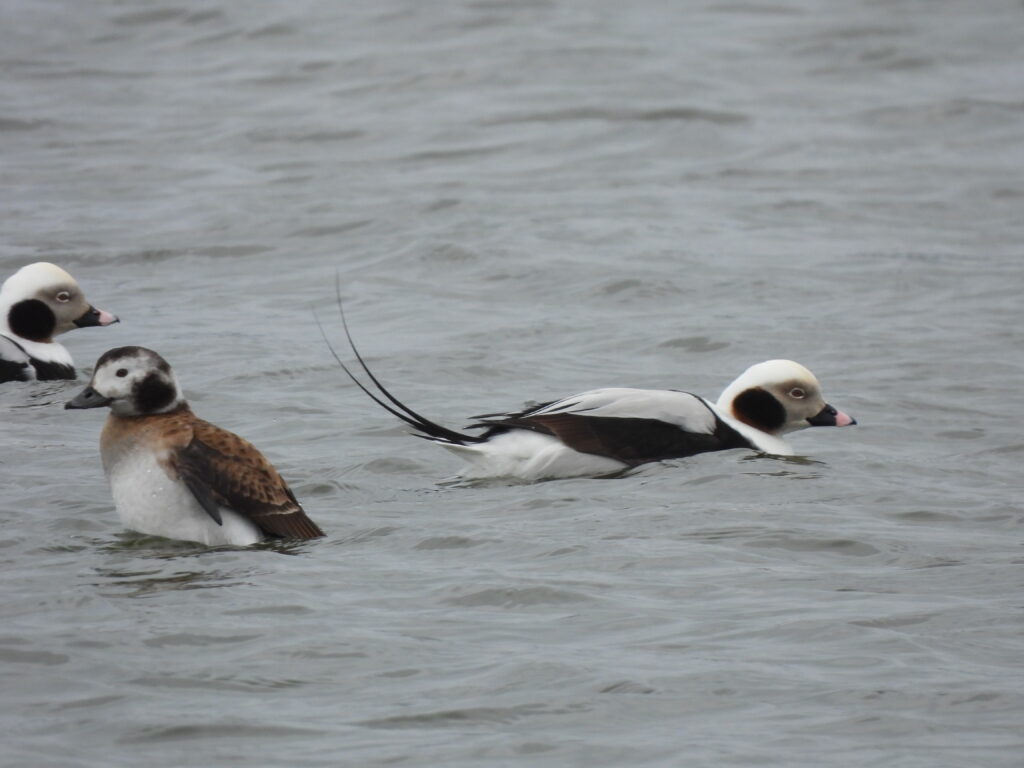
My experience of winter in Finland while living there differed a bit from that of such a short trip in a cold breeze. I remember connecting with flocks of long-tailed ducks (Clangula hyemalis) as well as some red-breasted mergansers (Mergus serrator) and even greater scaup (Aythya marila) in the waters surrounding Lauttasaari, plus some great black-backed gulls (Larus marinus), herring gulls (Larus argentatus) and common gulls (Larus canus) here and there. This time around, with kilometers of Baltic Sea completely frozen, I only connected with an extremely distant flock of long-tailed ducks while scoping the open sea that my optics allowed me to see from Lammassaari’s southern end.
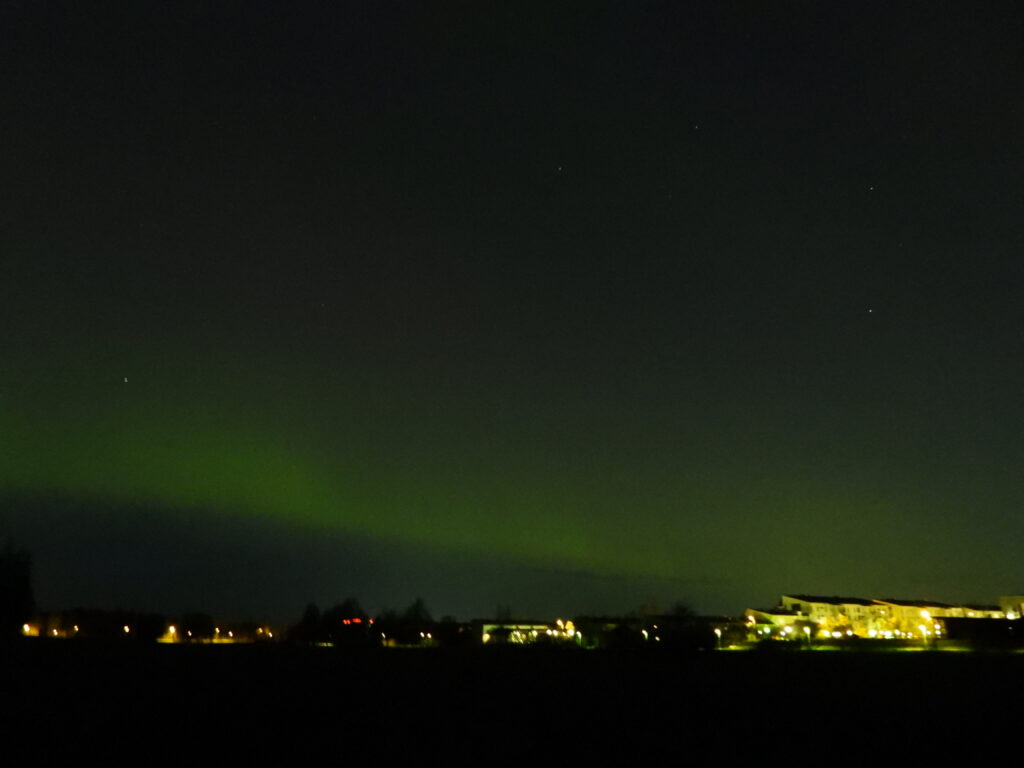
Another difference was missing out on northern lights. Living in Helsinki allowed me to witness some incredible Aurora borealis shows on a dozen occasions, often accompanied by friends who did not mind spending hours in freezing temperatures in the middle of the night. Northern lights are a regular occurrence at this latitude, but my friends and I appreciated every chance we had to watch them (based on prediction models and cloud cover). Every show of lights was different from the rest, but watching curtains of colors moving through the immensity of the sky was never disappointing. Skies were extremely clear throughout my stay this time, but predictions were not favorable.
I initially planned on writing about the difficulties of birdwatching in the rough winter of Helsinki, following up with the more positive posts I wrote about birding the city in summer (read about it here) and autumn (read about it here). However, being back in this place so close to my heart brought me the joy and sense of anticipation of this winter-lover’s paradise. Conditions can be rough, but Helsinki can be indulgent to those brave enough, and become a great place to connect with northbound specialties.