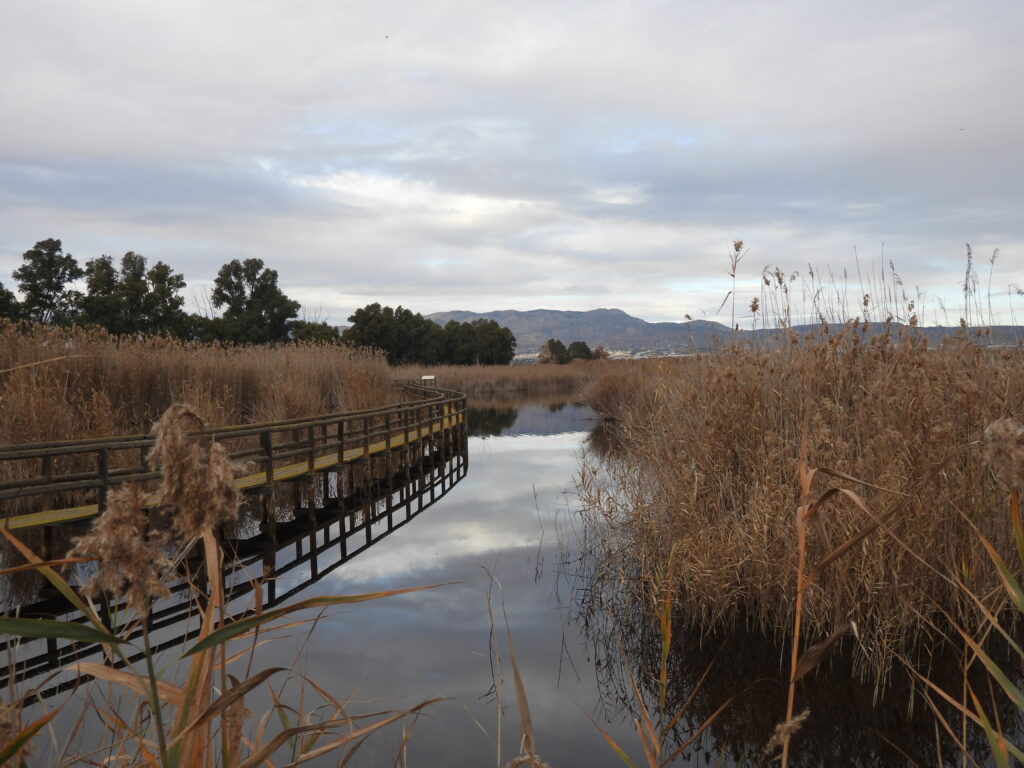
Fieldwork often brings us to fantastic places, and El Hondo Natural Park is a particular joy at this time of the year. Today, I joined Tati Pessano, Darío Gijón and Marcos Real — who kindly shared some of his pictures for this post — and enjoyed a full day in the park and its surroundings, trying to exploit all its potential in the middle of winter. This place holds a number of birds that would otherwise spend the winter in very distant places, but our encounters today outscored any of our expectations.
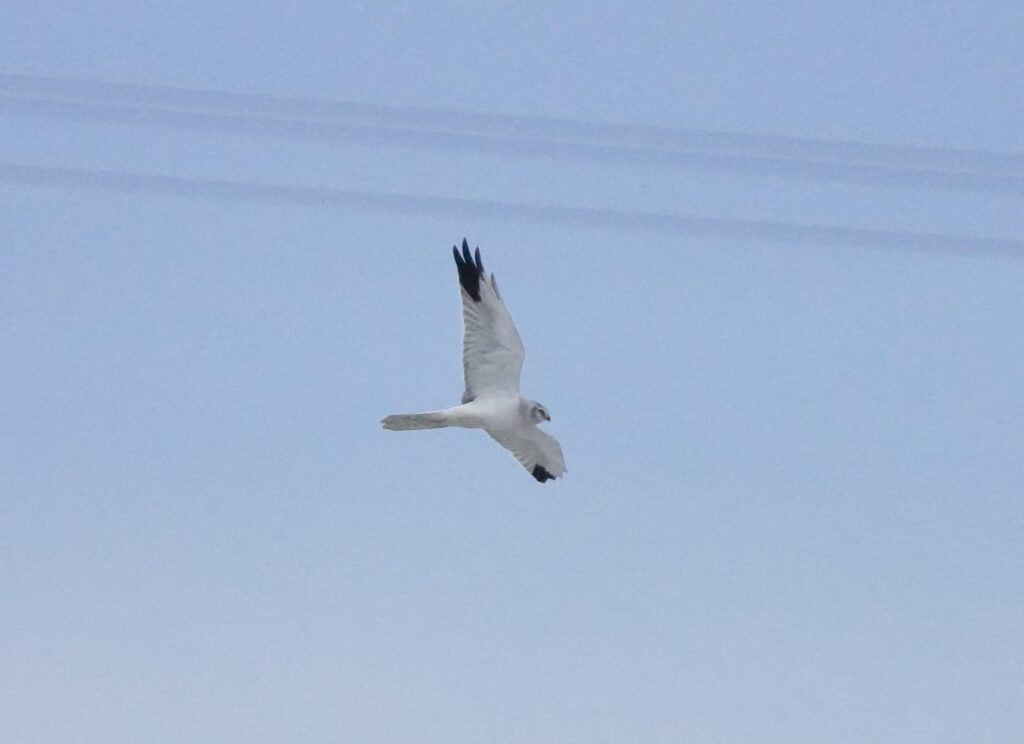
We started the day scoping some fields east of the park, where we connected with early flocks of golden plovers (Pluvialis apricaria), skylarks (Alauda arvensis) and crag martins (Ptyonoprogne rupestris). It took some waiting until the star of these fields showed up: an adult male pallid harrier (Circus macrourus) flying in very fast and low. Formerly a national rarity from Eastern Europe and Central Asia, this long-staying individual has spent the last three winters in the area, this being its first sporting full adult plumage. The bird patrolled at high speed through the bushes and circled the whole area around us, eventually disappearing in the distance after a brief but exciting observation.
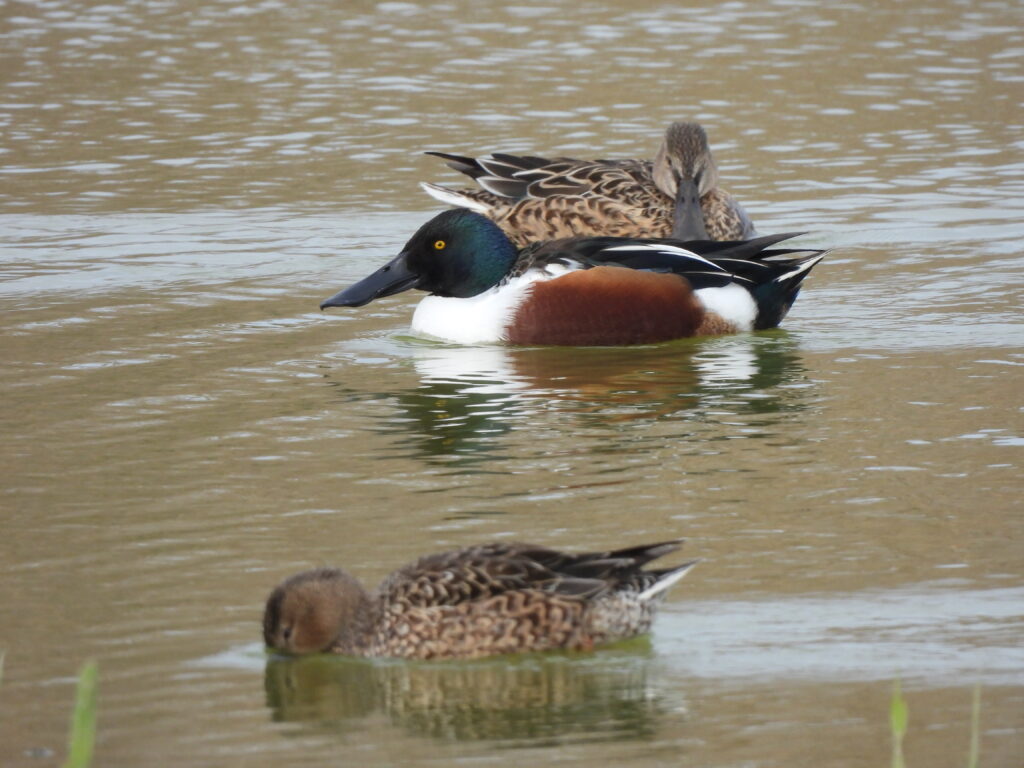
We then moved on to the core of El Hondo, a private area inside the natural park only accessible to the public on weekends — where we have several running experiments. Waterfowl numbers are visibly lower than in previous years, but we still managed to connect with hundreds of shelducks (Tadorna tadorna), shovelers (Spatula clypeata), pintails (Anas acuta) and red-crested pochards (Netta rufina), dozens of teals (Anas crecca), mallards (Anas platyrhynchos) and common pochards (Aythya ferina), plus some gadwalls (Mareca strepera), wigeons (Mareca penelope) and a white-headed duck (Oxyura leucocephala).
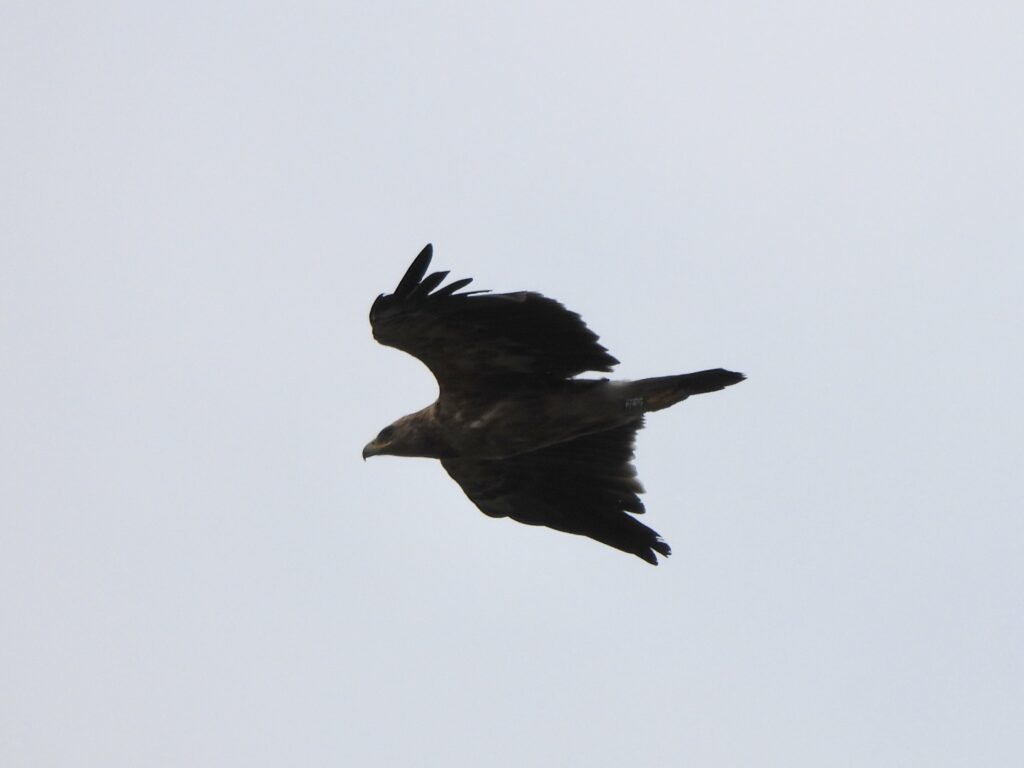
A merlin (Falco columbarius) and several marsh harriers (Circus aeruginosus) watched over the lake. Later in the morning, we connected with several booted eagles (Hieraaetus pennatus), osprey (Pandion haliaetus), common buzzard (Buteo buteo) and yet another eastern specialty. El Hondo is widely known to host several individuals of greater spotted eagle (Clanga clanga), a national rarity, every winter. This time, three adults (two nominate and one of the rare fulvescens morph, radio-tagged and returning after several winters) and a juvenile have been spotted. They usually rest along the eucalyptus tree line inside the park, and we connected with birds of all these plumages during the day in different areas of El Hondo.
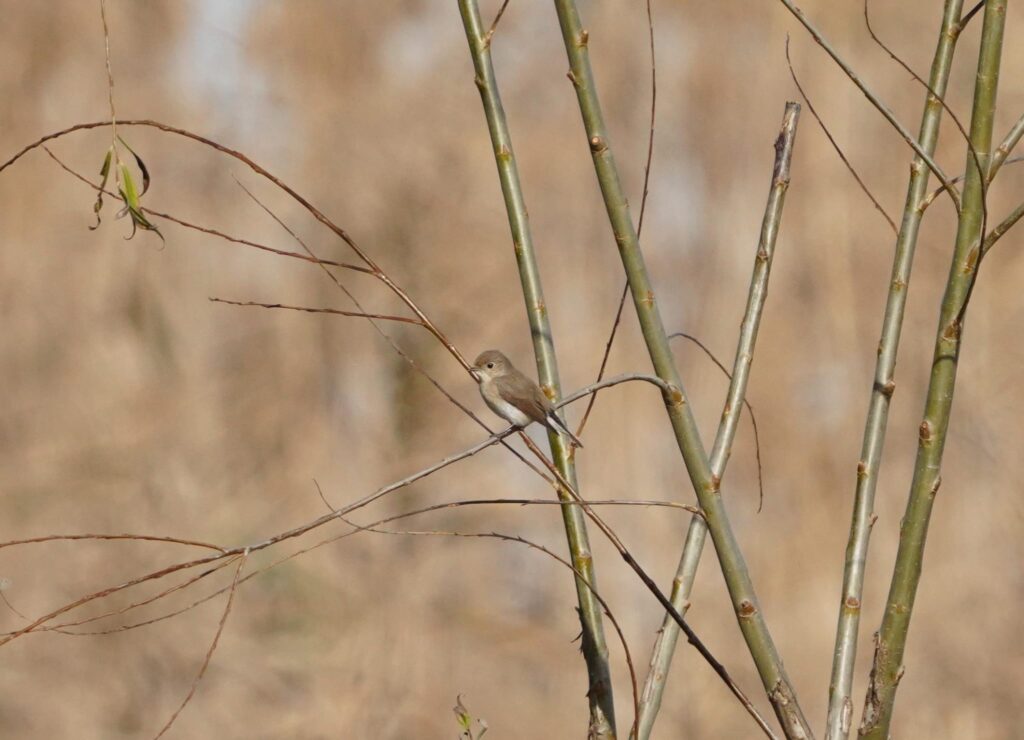
The biggest surprise came while looking for a greater spotted eagle from the car as we drove along the eucalyptus line road. I was sitting on the wrong side of the car, meaning I would not get eyes on a nominate adult perched on a nearby tree. Instead, I focused on the passerines in the reeds. Among the numerous chiffchaffs (Phylloscopus collybita), one bird stood out like a sore thumb. With the naked eye, I noticed a small, round, brown, drab bird flying between willows on the other side of a ditch parallel to the road. The observation was very brief but enough for me to catch distinctive white flashes on the tail and a flycatcher-like jizz when perching. I quickly asked Tati to pull over and alerted everyone to my finding of a flycatcher on a date when none are regular in the area. I saw the bird perch for a couple of seconds, wagging its tail, before it flew into the reeds — to my surprise. I immediately thought this bird could only be one thing. Sadly, none of my friends managed to connect with it properly at that moment.
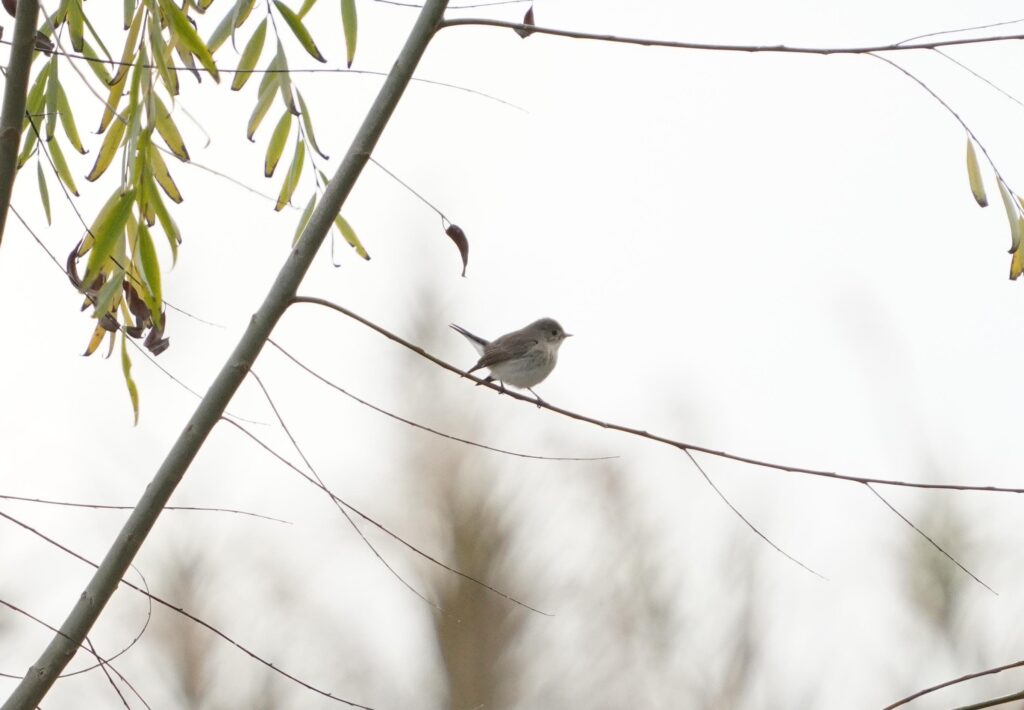
We all quickly got out of the car and scoped every small passerine in the surroundings for a good while. During some tense minutes, I kept thinking how no regular species matched the features I had observed. Marcos eventually relocated the individual relatively low in the vegetation on the roadside, back on our side of the ditch. The bird was restless, calling “zrrrt” repeatedly as we all put great effort into connecting with it. Testimonial pictures only came after some effort, but they confirmed my initial impression: a red-breasted flycatcher (Ficedula parva), yet another national rarity and the first of its species in Alicante in 10 years. This is, to our understanding, the first record of the species in a wintering context and outside the postnuptial migration period in Comunitat Valenciana. Thanks to Joan Balfagón and Martín Rey for the insights!
With great excitement, we moved on to the Visitor Center, where we had lunch among a flock of sparrows that included a stunning male Spanish sparrow (Passer hispaniolensis) — another long-staying individual of a locally scarce species. Shovelers were displaying, and good numbers of marbled ducks (Marmaronetta angustirostris) and red-knobbed coots (Fulica cristata) made for a rewarding visit to the spot. Connecting again with an adult greater spotted eagle on this side of the park was also very welcome.
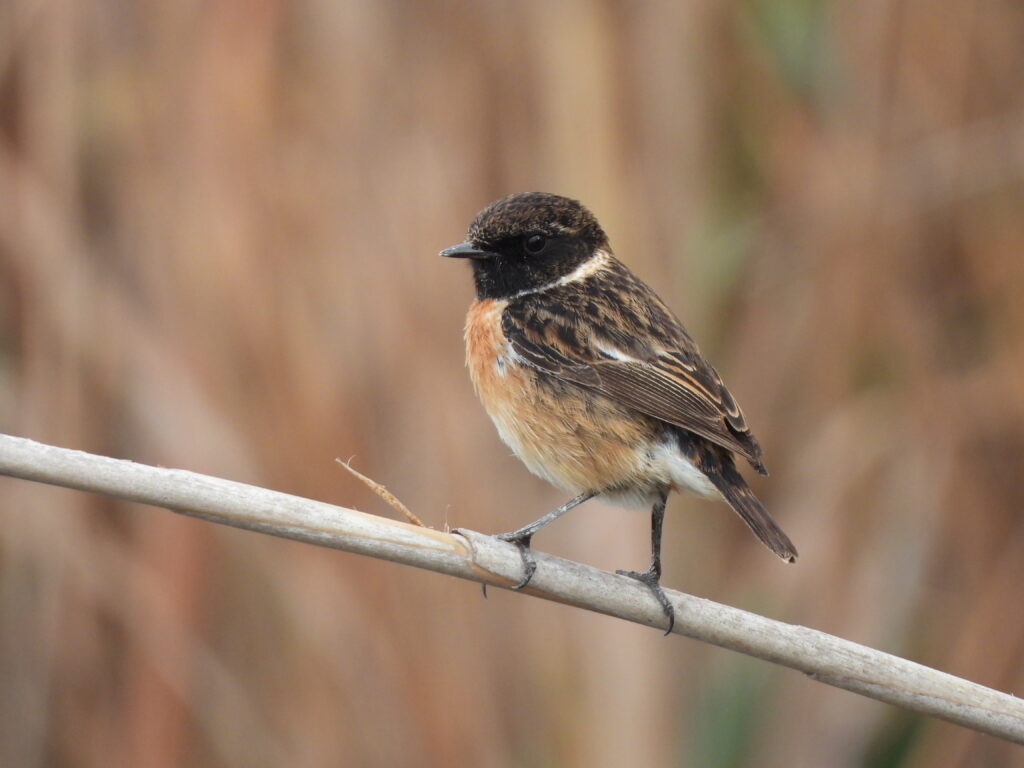
We then drove through the fields, as usual watched by Iberian grey shrikes (Lanius meridionalis) and stonechats (Saxicola rubicola). We connected with small flocks of golden plovers and stock doves (Columba oenas), as well as the few common cranes (Grus grus) present this season.
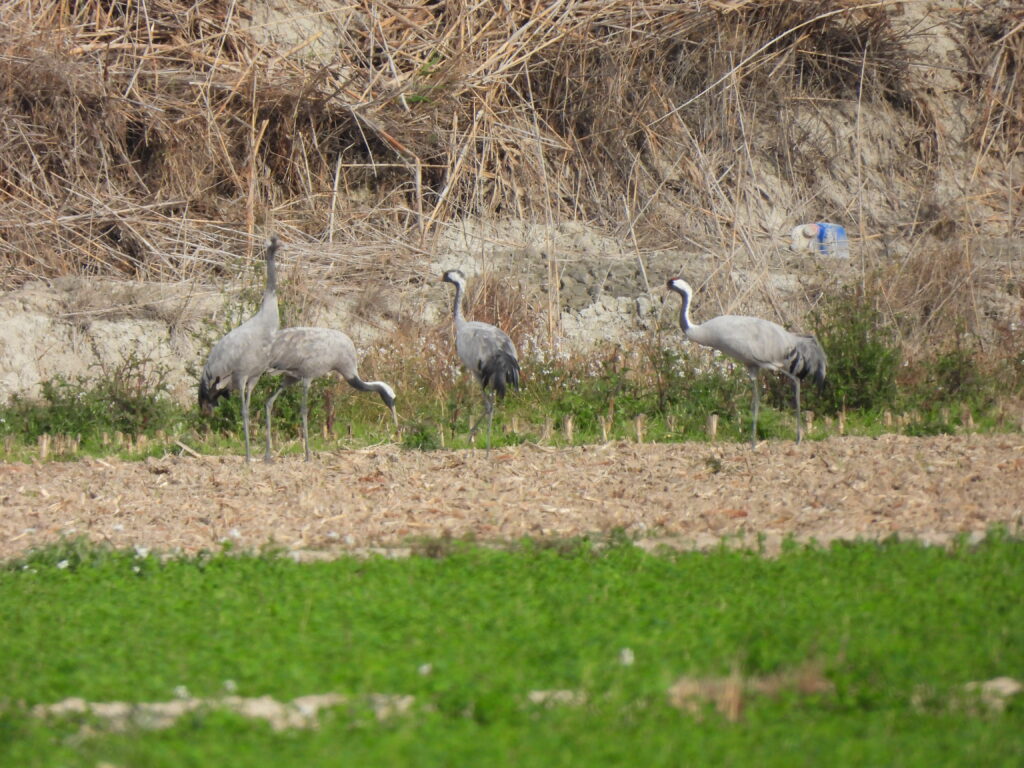
We finished the day catching up with Mario Marcos at the bird towers south of the park, scoping through flocks of shovelers and pochards, watching the cranes, ospreys, greater spotted eagles and other birds fade into the sunset, and listening to the haunting calls of local Eurasian eagle owls (Bubo bubo) and stone-curlews (Burhinus oedicnemus). We initiallt focused to see how many species could we connect within El Hondo à la Big Day — and got a fantastic 93 species — but the surprises along the way completely changed our focus. The scenic sunset was a typical but gorgeous wrap-up of a fantastic, out-of-the-norm day with friends.