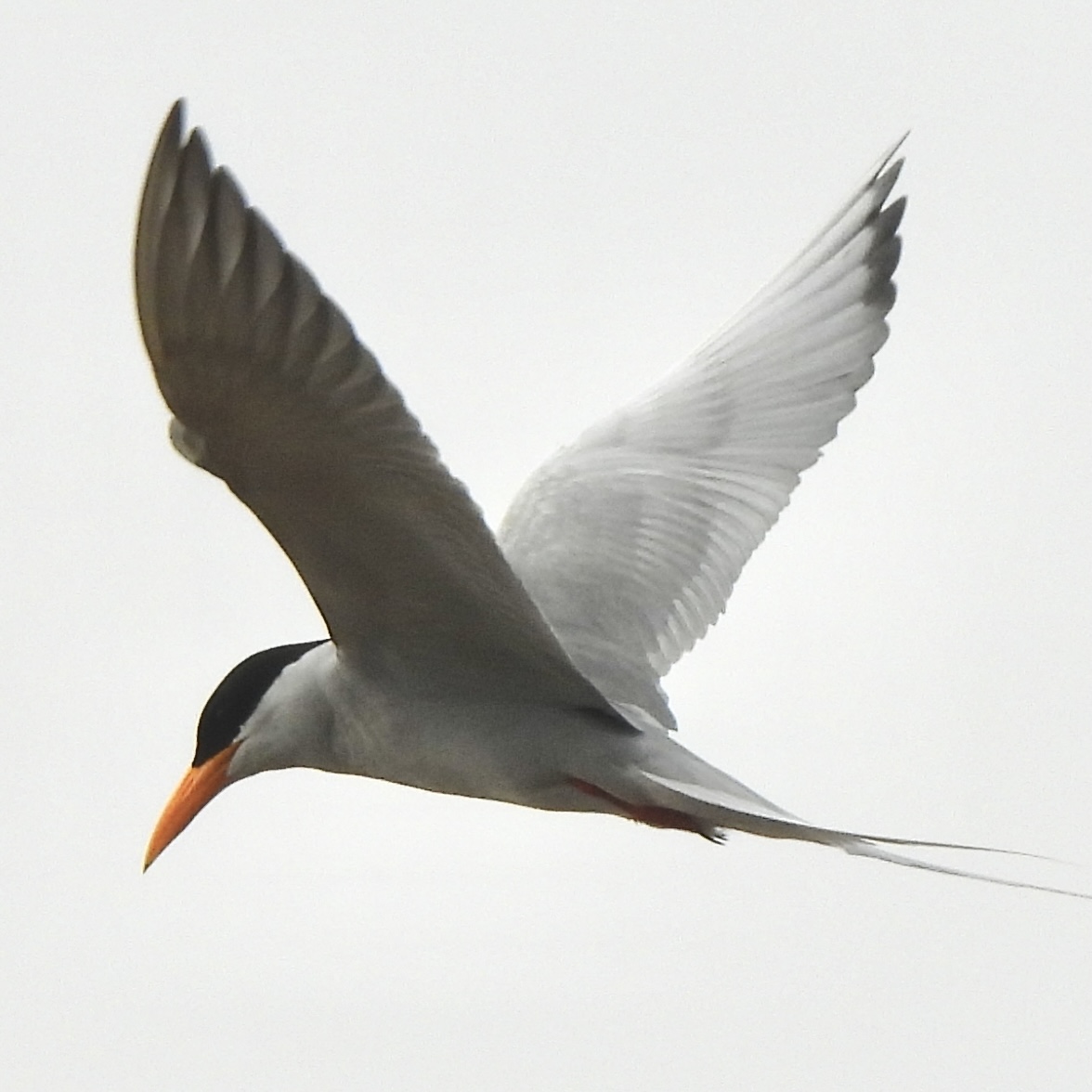
Nairobi, the capital city of Kenya, is often seen merely as a gateway to the savanna. However, on or our 2024 course trip with the University of Helsinki, Aina Rossinyol and I arrived a couple of days before our classmates joined us. This allowed us to get a first glimpse of the biodiversity of Kenya without even leaving Nairobi.
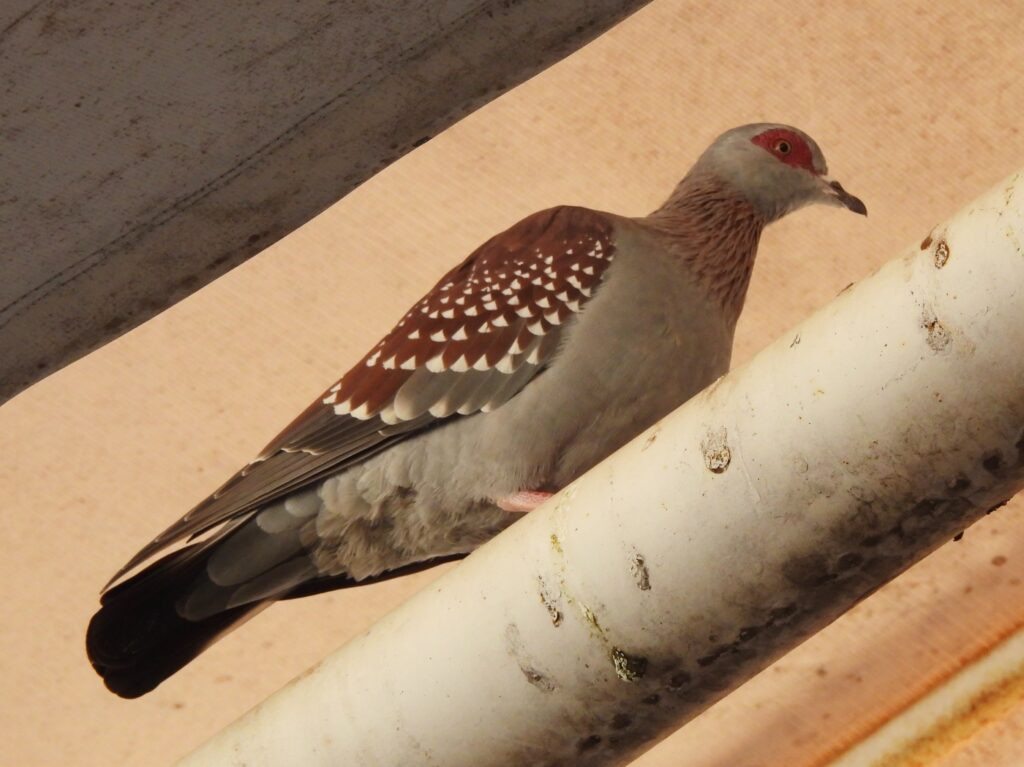
Our birding journey began the moment we touched down at Jomo Kenyatta International Airport. While waiting for our transfer, we immediately connected with several aerial species circling the terminal. This included little swifts (Apus affinis), African palm swifts (Cypsiurus parvus), and red-throated crag martins (Ptyonoprogne rufigula). In the nearby trees and structures, pied crows (Corvus albus), speckled pigeons (Columba guinea), and common bulbuls (Pycnonotus barbatus) were abundant. One of the first highlights was seeing the stunning superb starlings (Lamprotornis superbus) foraging on the ground. We also managed to find red-winged starlings (Onychognathus morio), which turned out to be our only sighting of the trip.
A cab drove us to our accommodation. On the several taxis we lifted, we were driven through the border between the city and the savanna: the boundaries of Nairobi National Park. The drive south toward the Karen area provided a scenic introduction to the region’s wildlife, as the road borders the fences of Nairobi National Park. From the car, we managed to spot long-tailed fiscal (Lanius humeralis), some large flock of helmeted guineafowl (Numida meleagris) and a majestic gray crowned crane (Balearica regulorum). This was only a first glimpse of what would come on the following days driving through the savanna of central and western Kenya.
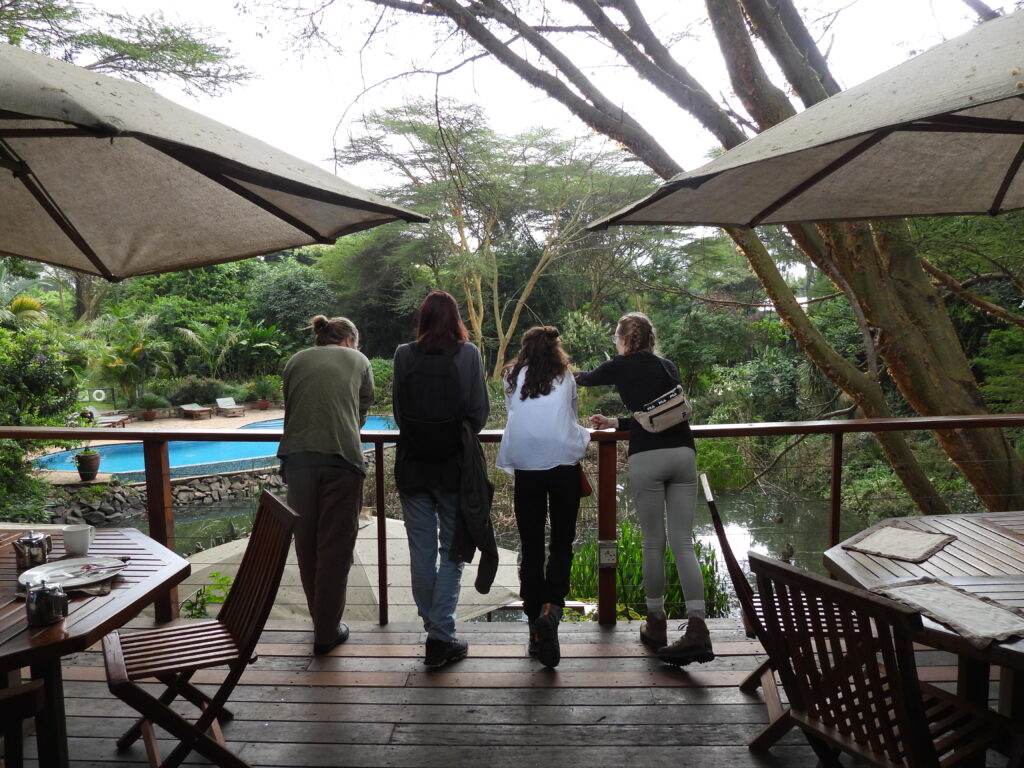
For our stay in Nairobi, we had chosen Wildebeest Eco Camp. This fantastic lodge at the southwest end of town has a set of cabins and tents surrounded by a large garden where large acacias are mixed with more dense woody vegetation. A central lagoon by the restaurant and next to the pool was the cherry on op.

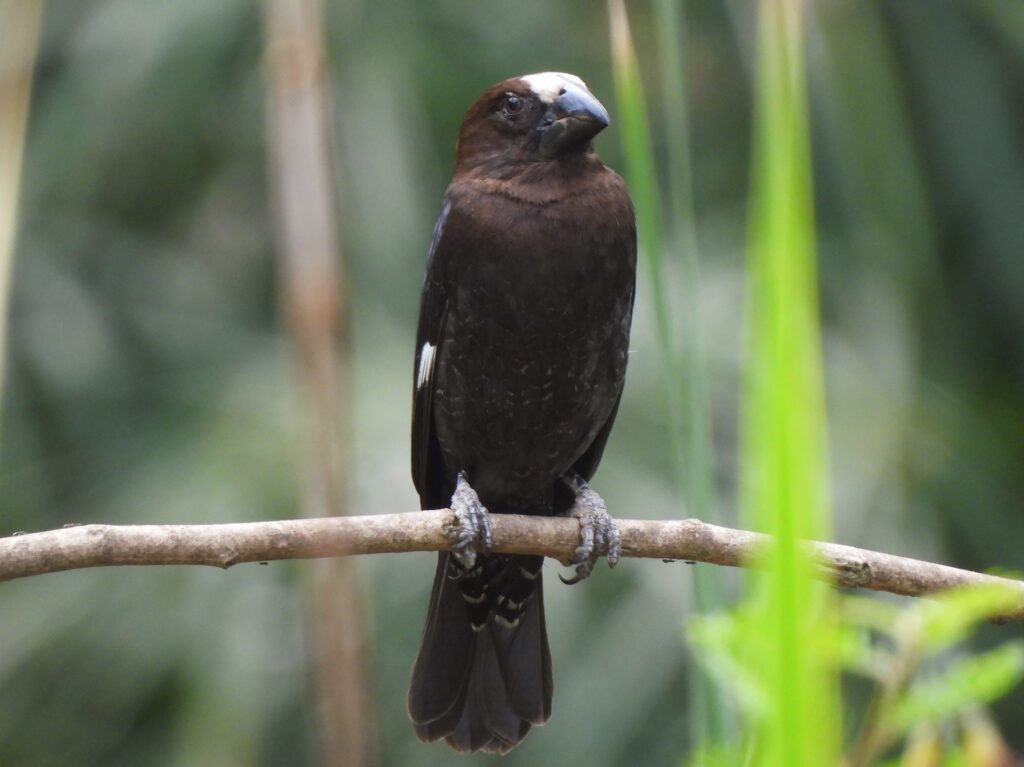
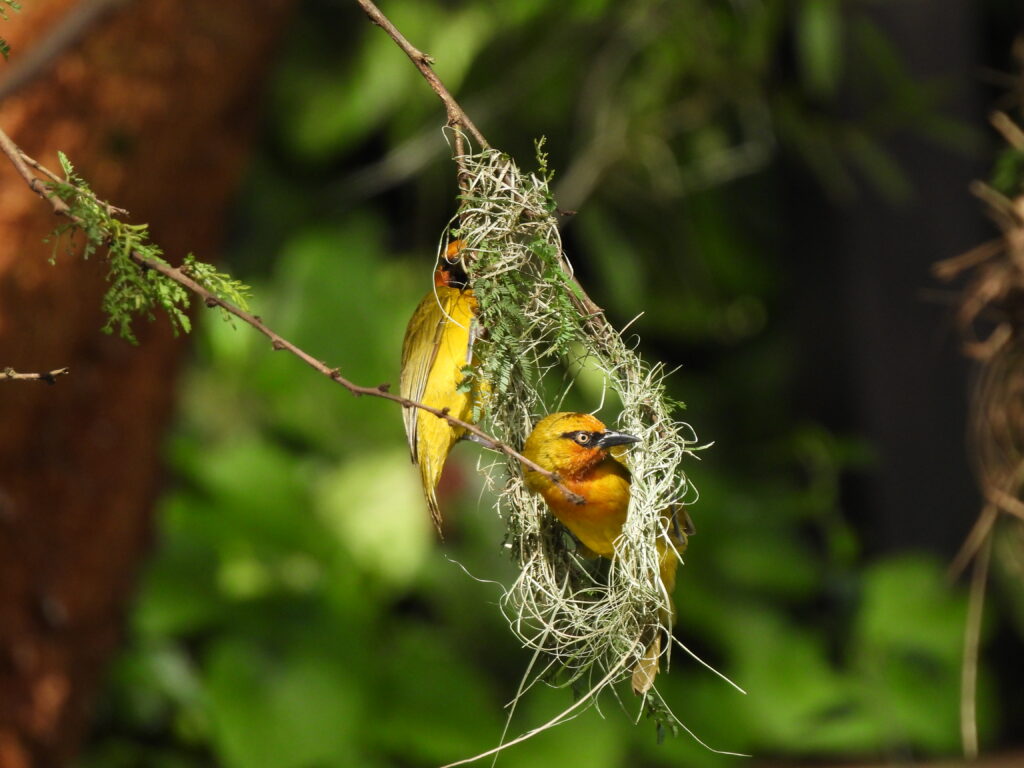
Because of our early arrival — and despite of the sleep loss after long traveling —, we had to wait some time until our rooms were ready. However, the bird activity all around kept me awake. We spent hours strolling through the vegetation throughout the gardens, connecting with our first African birds. First walking around the lagoon, the reeds and trees surrounding it were bustling with activity. We observed grosbeak weavers (Amblyospiza albifrons) caring for chicks, spectacled weavers (Ploceus ocularis) meticulously working on their nests and hidden gray-capped warbler (Eminia lepida) singing from the vegetation.
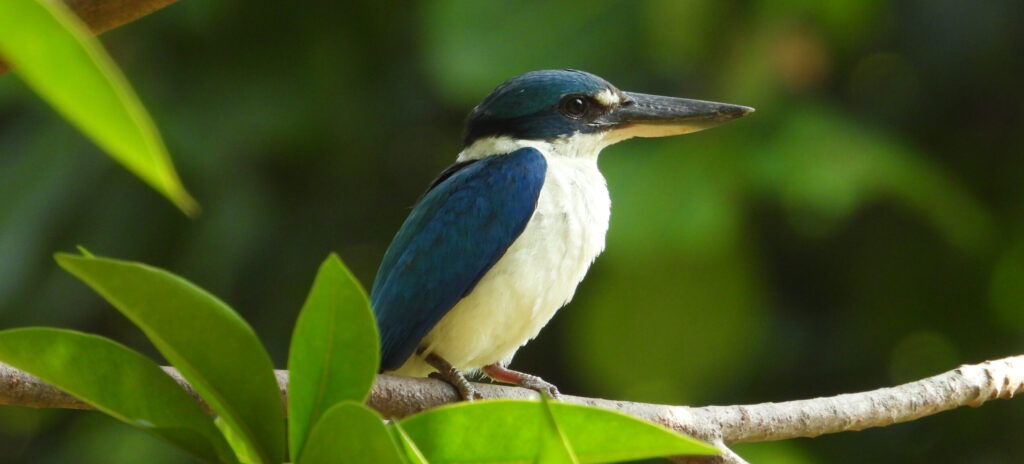
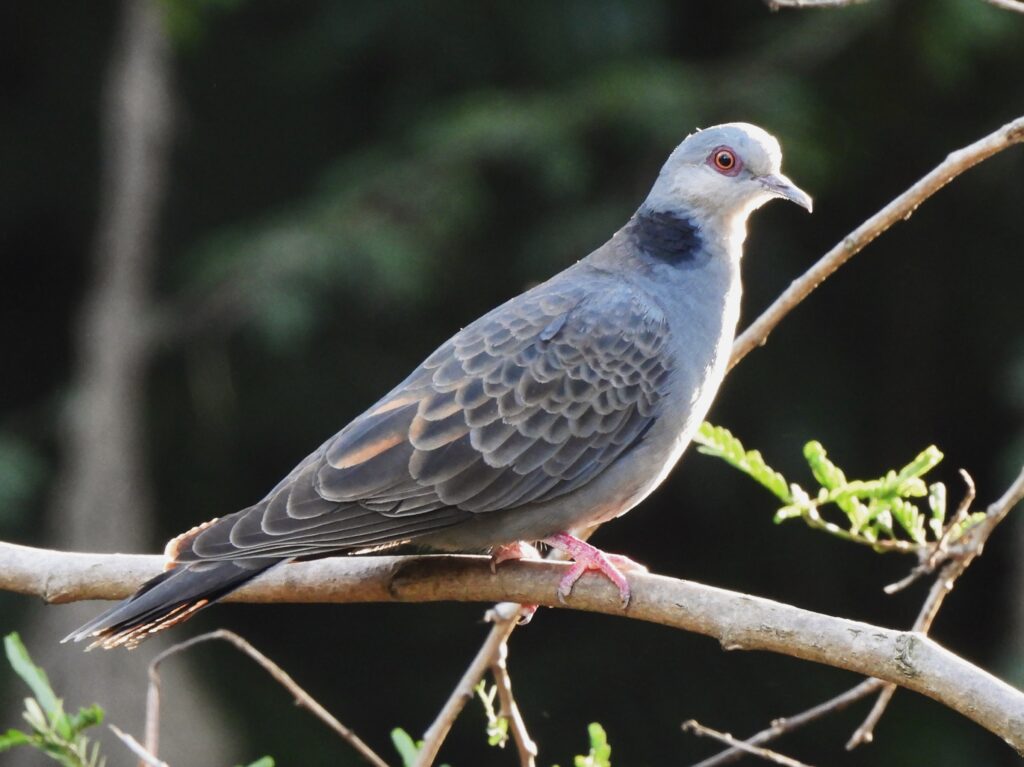
Dusky turtle doves (Streptopelia lugens) kept coming down for a sip of water. Meanwhile, Cape robin-chats (Dessonornis caffer) foraged among the rocks by the pool. A great sight was that of malachite kingfishers (Corythornis cristatus) posing beautifully for us.
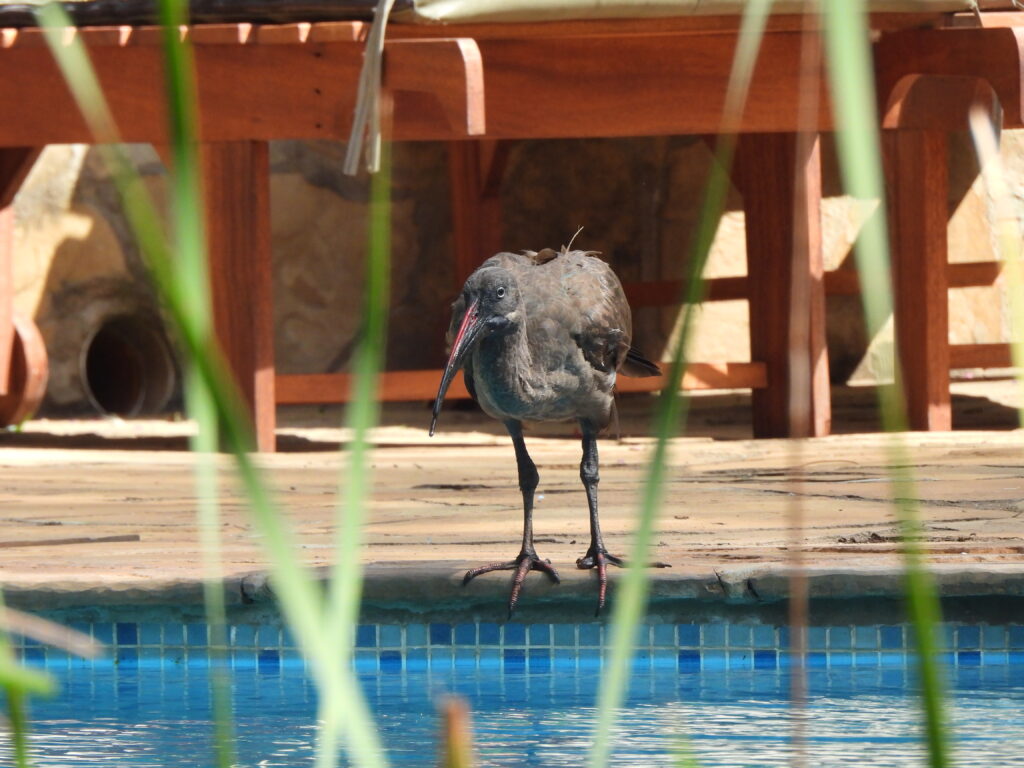
The grassy areas were the feeding grounds for vocal hadada ibis (Bostrychia hagedash), whose loud screams became a constant soundtrack to our stay. White-browed sparrow-weavers (Plocepasser mahali) also joined them on the lawn.
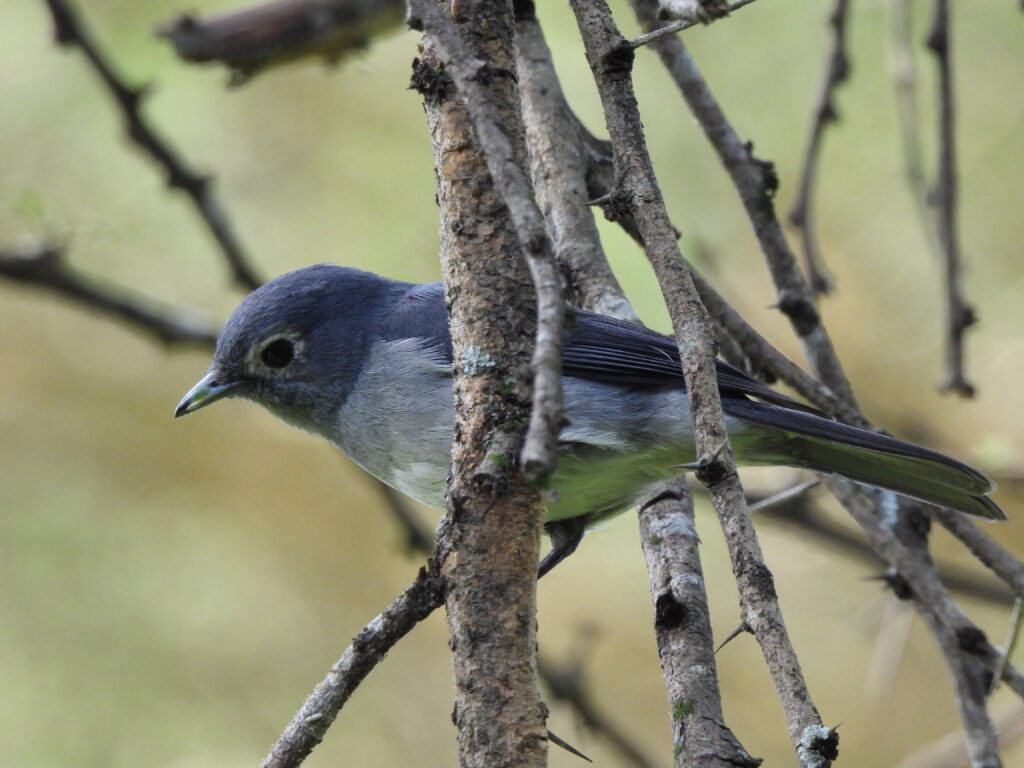
In the thickets, we located white-eyed slaty-flycatchers (Melaenornis fischeri), willow warblers (Phylloscopus trochilus), and Baglafecht weavers (Ploceus baglafecht). Some red-eyed doves (Streptopelia semitorquata) also made an appearance.
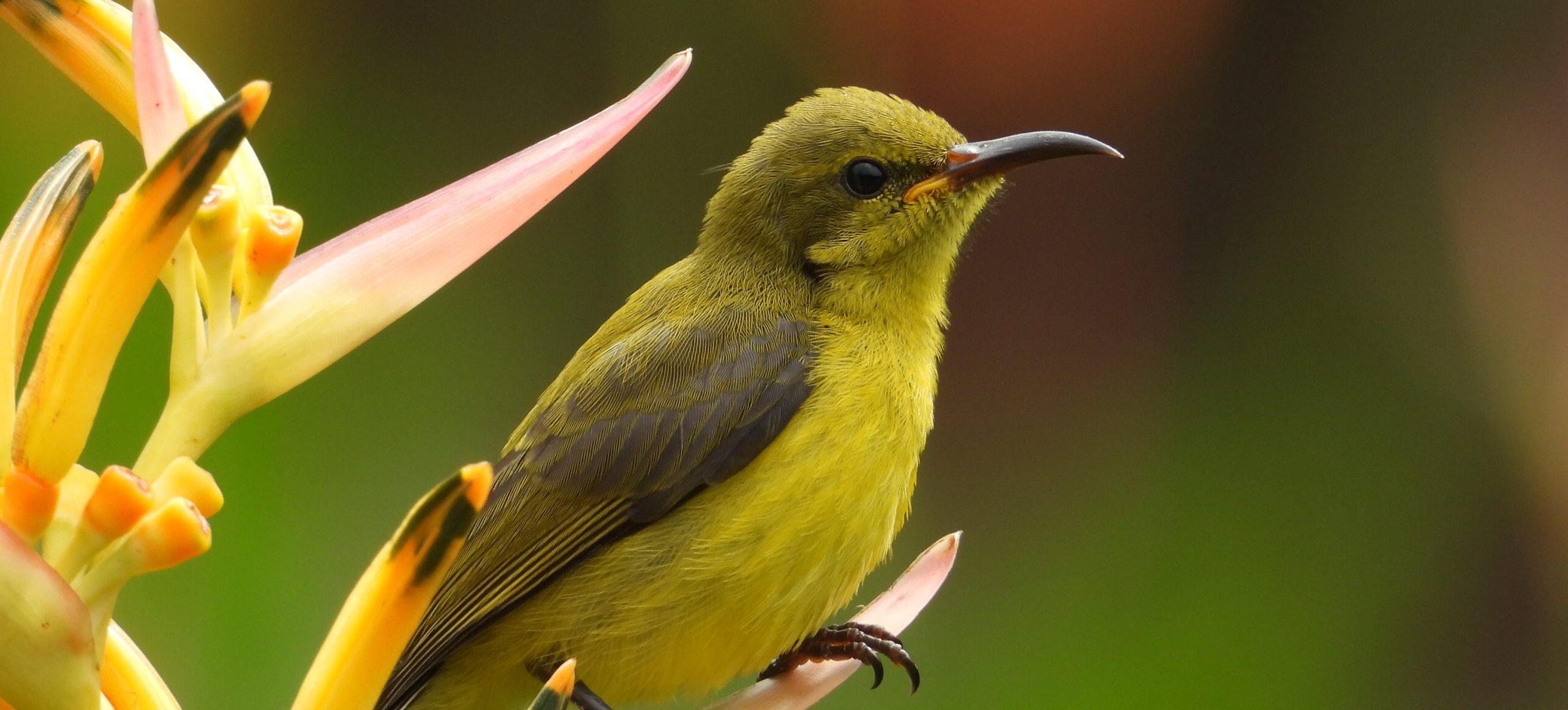
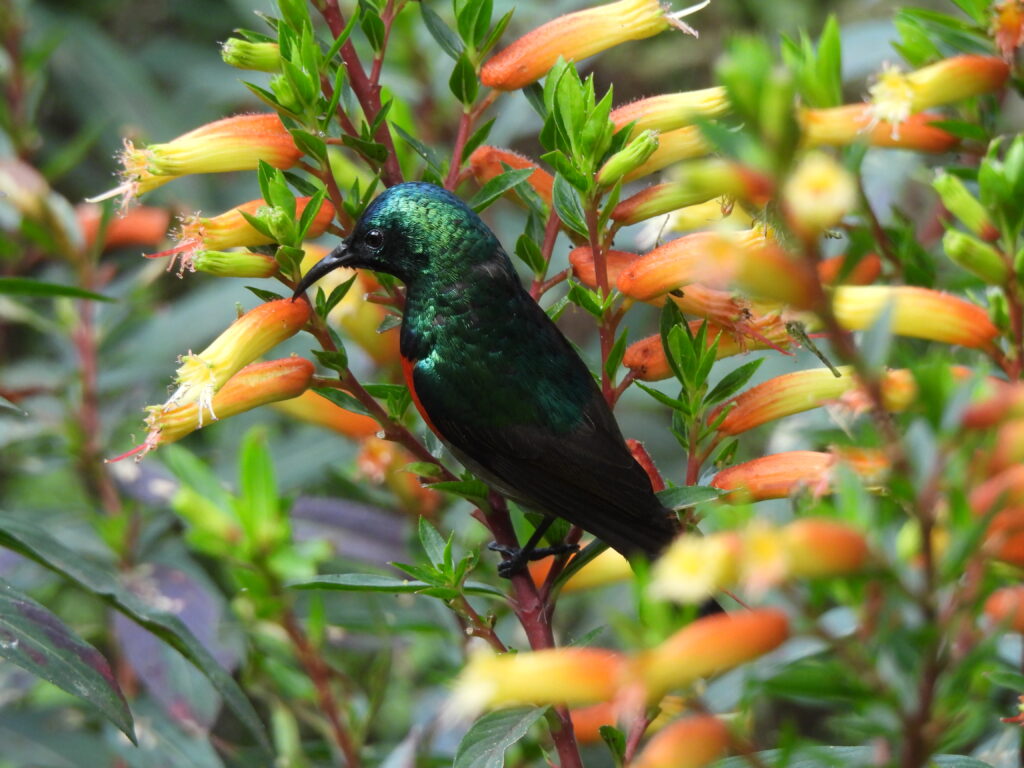
The chill-out area was surrounded by flowering bushes that served as a battlefield for shimmering sunbirds. We watched amethyst sunbirds (Chalcomitra amethystina), variable sunbirds (Cinnyris venustus), bronze sunbirds (Nectarinia kilimensis), and northern double-collared sunbirds (Cinnyris reichenowi) behave quite aggressively towards others. While enjoying the sunbird show, we also found several speckled mousebirds (Colius striatus) playing hide-and-seek.
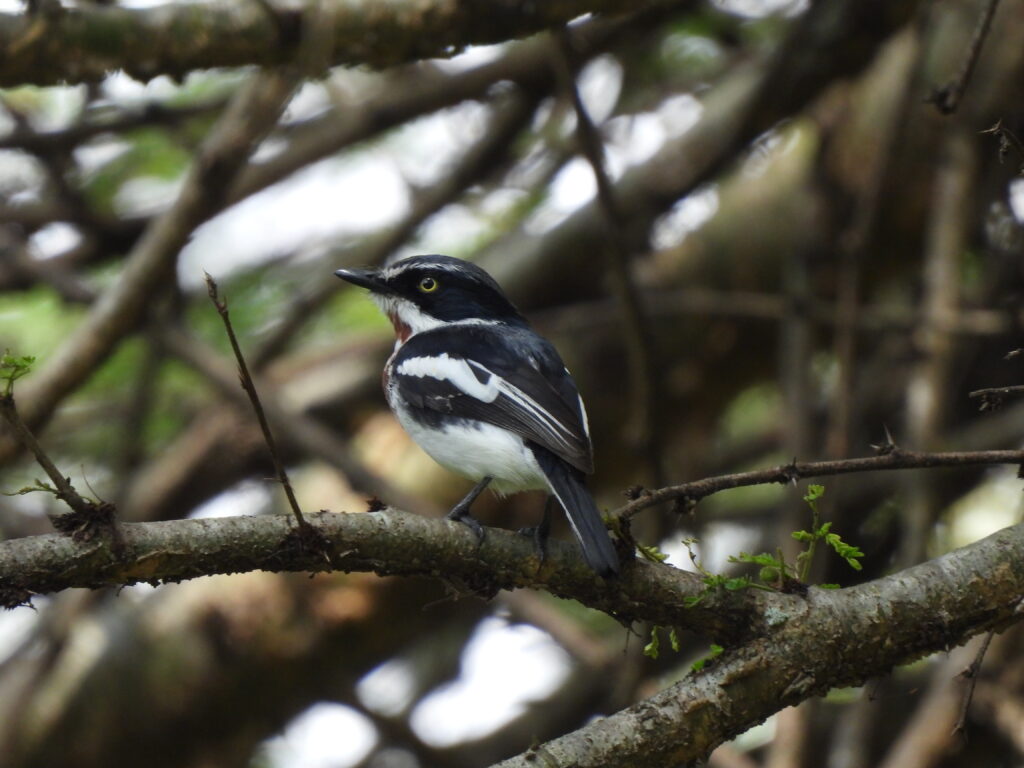
The more open Acacia trees near the reception area yielded even more specialties. We spotted our first chinspot batis (Batis molitor) and cinnamon-chested bee-eaters (Merops oreobates) close to the pool, whereas a larger Acacia-covered area closer to the main gate featured bleating camaroptera (Camaroptera brachyura), brown parisoma (Curruca lugens), buff-bellied warbler (Phyllolais pulchella) and scarlet-chested sunbird (Chalcomitra senegalensis).
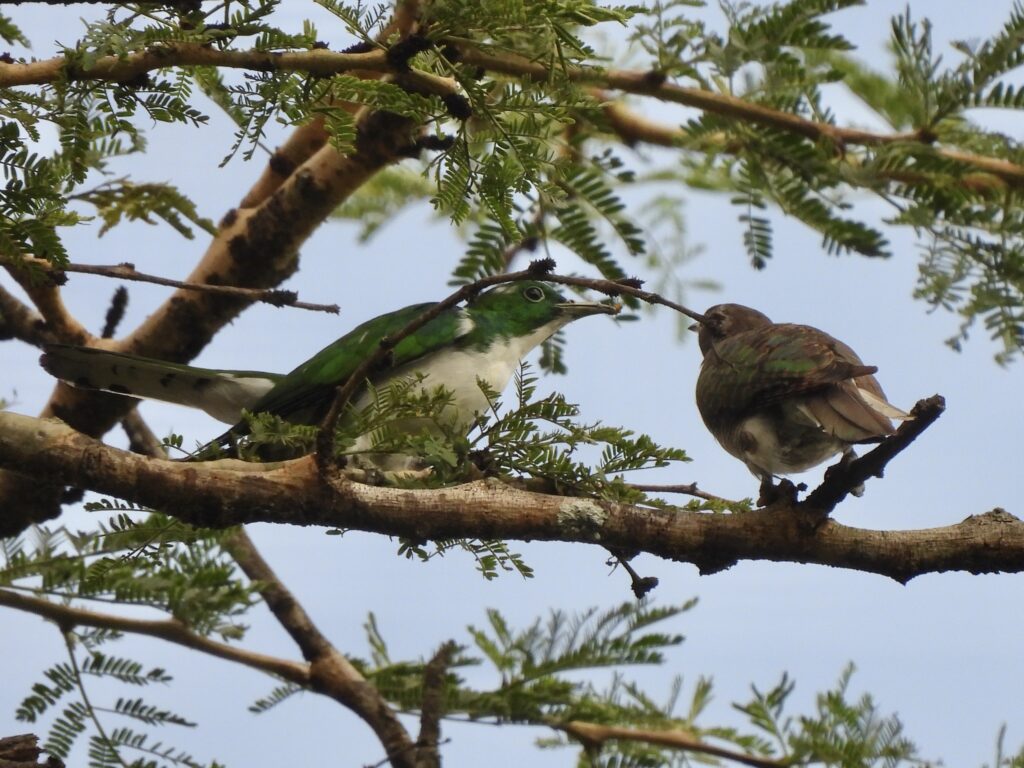
Following some interesting calls yielded an unexpected sight. A stunning, emerald-green adult Klaas’s cuckoo (Chrysococcyx klaas) flew into a tree to feed a begging youngster — again, the only birds of this species we saw throughout our time in Kenya.
By the time our rooms were ready, we found ourselves following a troop of vervet monkeys (Chlorocebus pygerythrus) and a blue monkey (Cercopithecus mitis) close to the reception. It is almost unconceivable what just few hours on a single garden can yield in Nairobi.

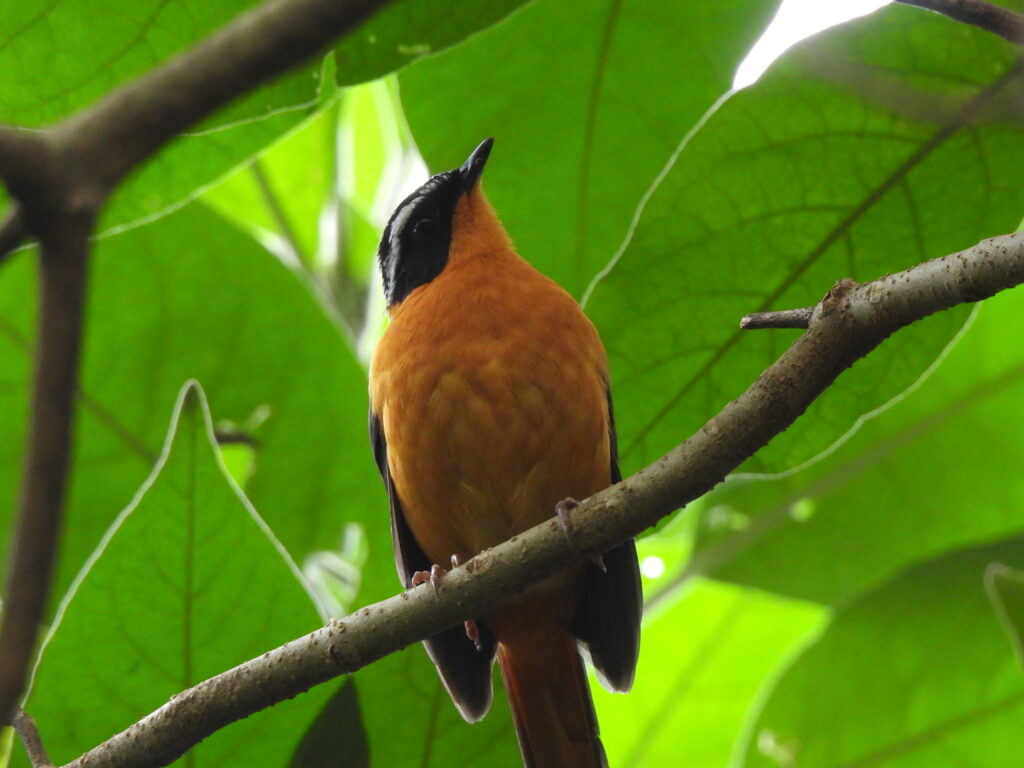
Our tent area, shaded by thick vegetation, was home to white-bellied tits (Melaniparus albiventris) and several Rüppell’s robin-chats (Cossypha semirufa). We also found our only cardinal woodpecker (Dendropicos fuscescens) of the trip here. Abyssinian thrushes (Turdus abyssinicus) were common sights hopping through the leaf litter.

A long-awaited (and long itself) nap transported us to the dark. Night walks in the gardens revealed Jackson’s chameleons (Trioceros jacksonii), African common toads (Amietophrynus regularis) and even large Kilimanjaro mustard baboon spiders (Pterinochilus chordatus) — a large tarantula with a rather funny name.

On our second day, our classmates showed up in the city. Once most of us together, the whole group navigated Nairobi’s notorious traffic — where marabou storks (Leptoptilos crumenifer) were seen in good numbers in some areas — to reach Karura Forest. The world’s second largest urban forest covers over 1,000 ha of Nairobi with montane broadleaf forest. Although I eventually dipped on most of my targets on site, it was nice to stroll some of Karura trails while catching up with friends after months. Entering Karura takes paying for an entrance fee, but no guides or vehicles are required.
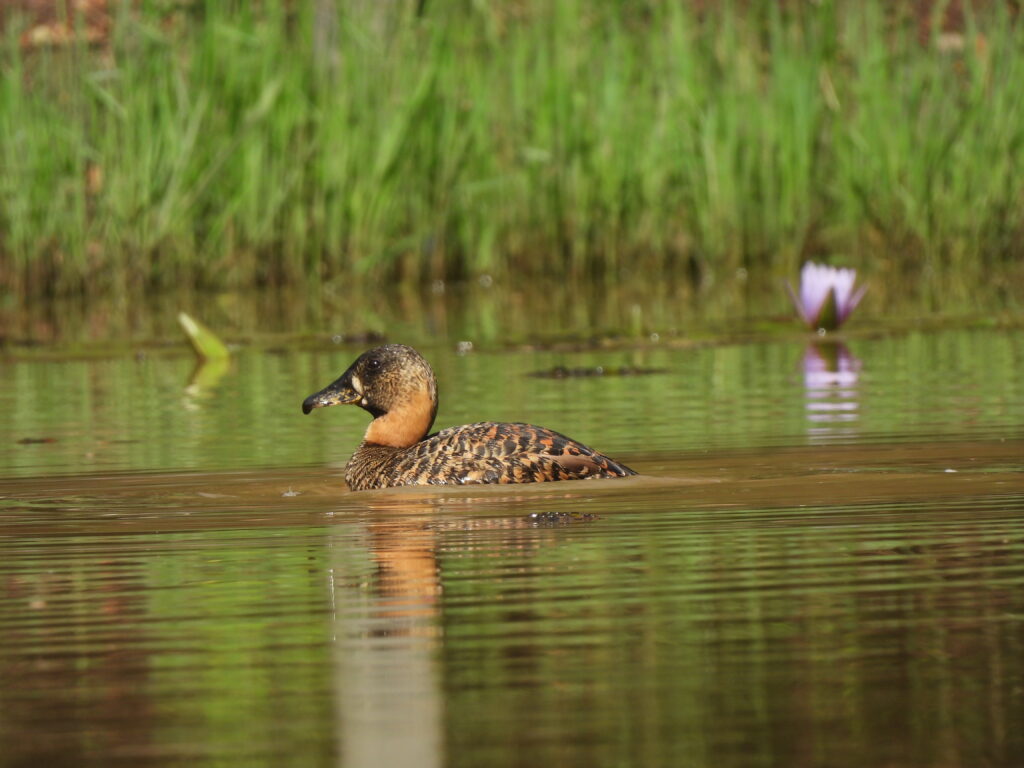
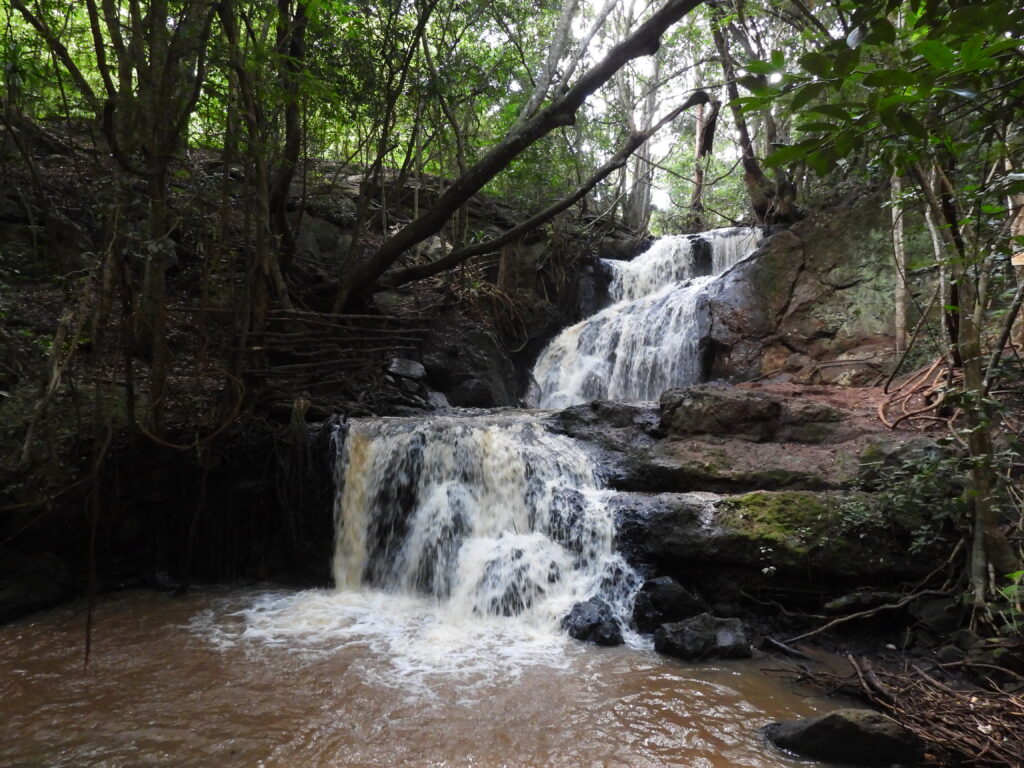
This massive urban forest features ponds, waterfalls, and caves. The lily ponds were incredibly productive, hosting little grebes (Tachybaptus ruficollis), black-headed herons (Ardea melanocephala) and families of white-backed ducks (Thalassornis leuconotus) in one of the prime locations to connect with the species.
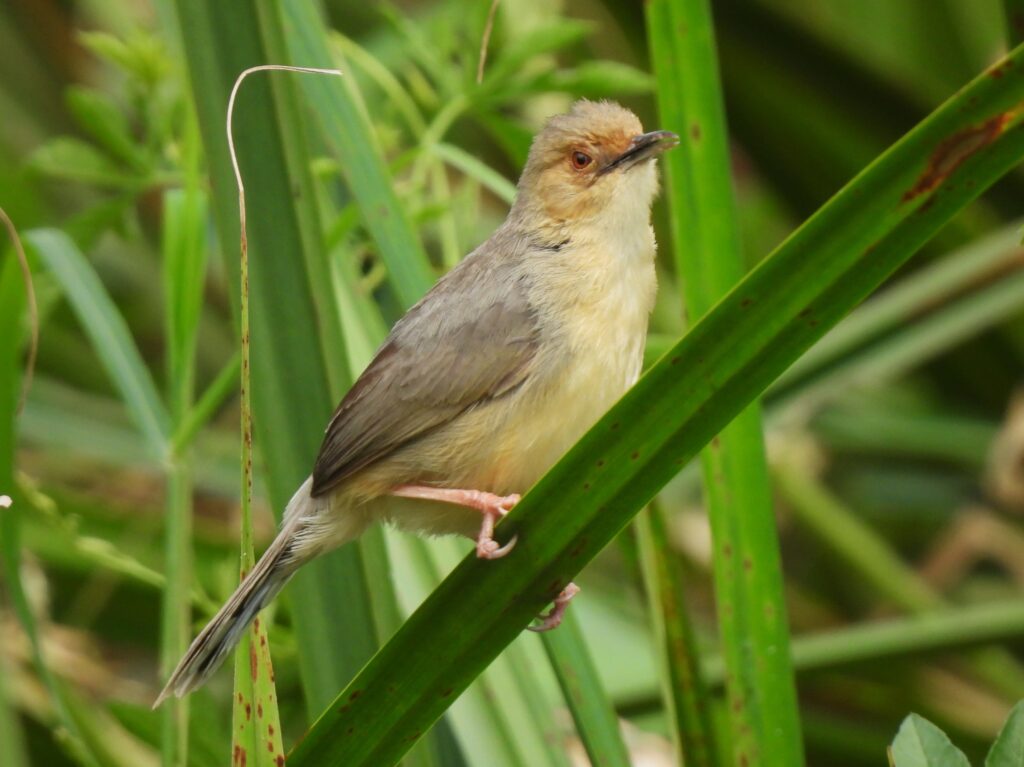
Among the passerines hiding, I connected with lesser swamp warbler (Acrocephalus gracilirostris), singing cisticola (Cisticola cantans) and red-faced cisticola (Cisticola erythrops) in the aquatic vegetation. Flying over, a common buzzard (Buteo buteo) circled alongside black sawwings (Psalidoprocne pristoptera) and lesser striped swallows (Cecropis abyssinica).
Grassland areas around these ponds provided good numbers of cinnamon-breasted bee-eaters, African pied wagtails (Motacilla aguimp), the odd golden-breasted bunting (Emberiza flaviventris). and a family of Egyptian geese (Alopochen aegyptiaca) near the picnic area. Some ponds in the mud were completely covered in butterflies of all sizes, shapes and colors.

Birding inside the dense forest was more challenging — perhaps even more being a large group. In the clearings, we found African dusky flycatchers (Muscicapa adusta) and spectacled weavers. A recording of a continuous call that I reviewed only months later back at home revealed an African emerald cuckoo (Chrysococcyx cupreus) — a species I did not manage to see while in Kenya. We also caught glimpses of suni (Neotragus moschatus), a tiny forest-dwelling antelope.
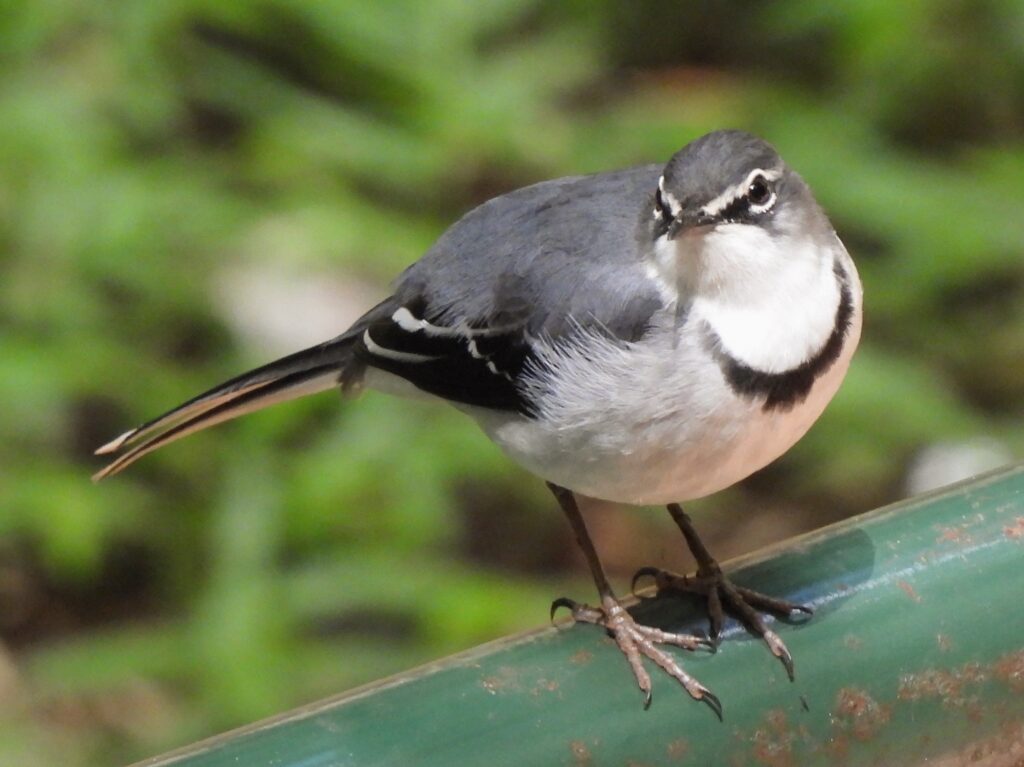
We walked along a trail leading to one of Karura’s renowned waterfalls. On the way, we walked by a scenic creek were a pair of mountain wagtails (Motacilla clara) put on a show briefly.
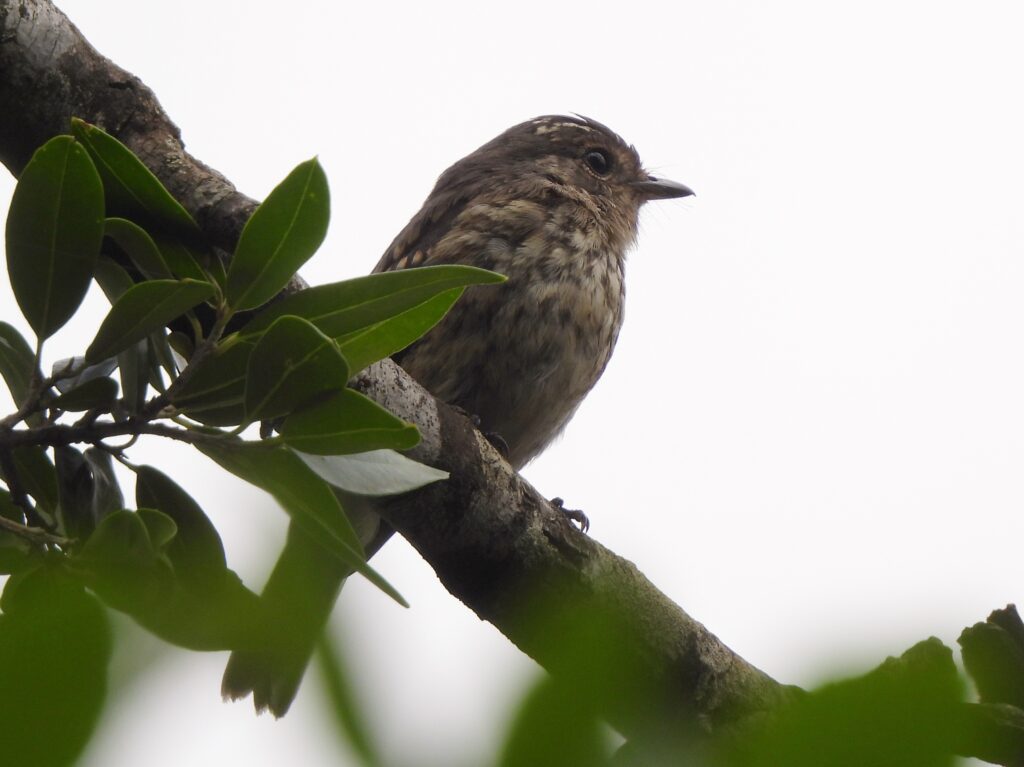
The day’s ultimate prize came while following the single mixed-species flock I saw during our brief visit. We were rewarded with views of a slender-billed greenbul (Stelgidillas gracilirostris) and the Kikuyu white-eye (Zosterops kikuyuensis) — the only Kenyan endemic seen during the entire trip.
Nairobi proved to be a fantastic fresh start for our time in Kenya (read about it here) and introduced us to the country’s bird diversity to an extent I did not expect beforehand. Even if navigating the city’s bustle and notorious traffic was an inseparable part of the adventure, the “Green City in the Sun” lived up to its name. The spontaneous idea of arriving just a couple of days earlier provided some awesome encounters. Hopefully a future visit to Nairobi will allow me to grasp more of its potential, perhaps providing some of Karura’s turacos and trogons, or visiting Nairobi National Park.