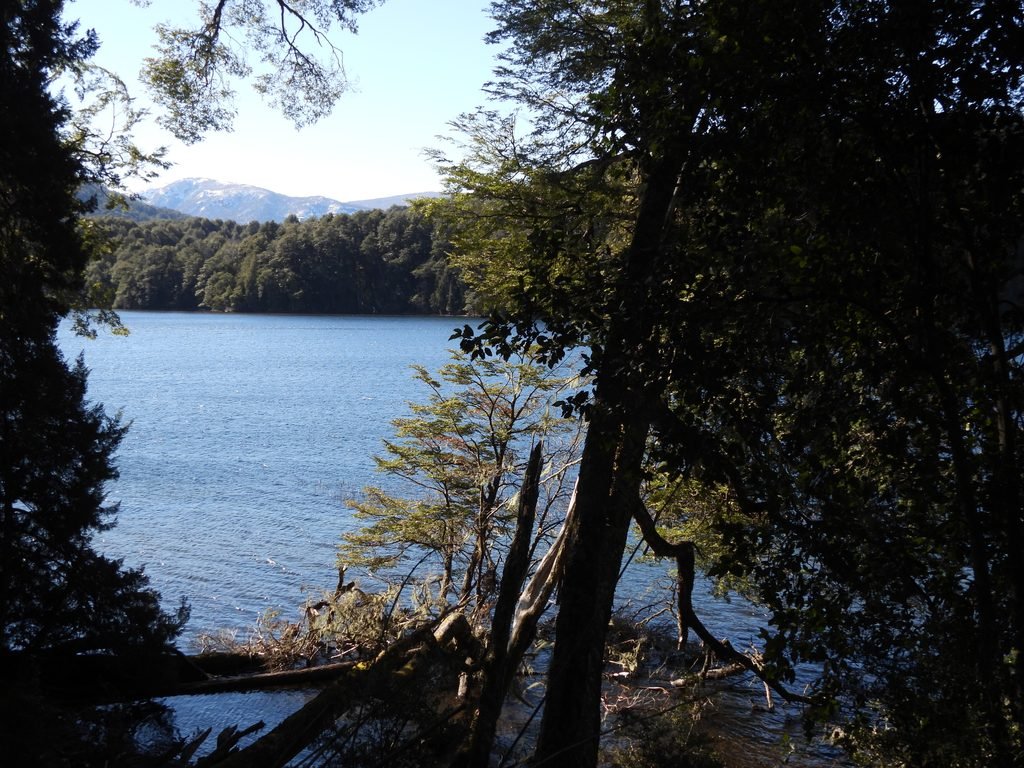
The Patagonian Andean forest is a habitat that long drew my attention, motivating me to move to Bariloche. Around town, the precipitation increases dramatically as one goes higher heading west for just few kilometers from the dry steppes, reaching up to 4,000 mm annually in the cold rainforests of Nahuel Huapi National Park.
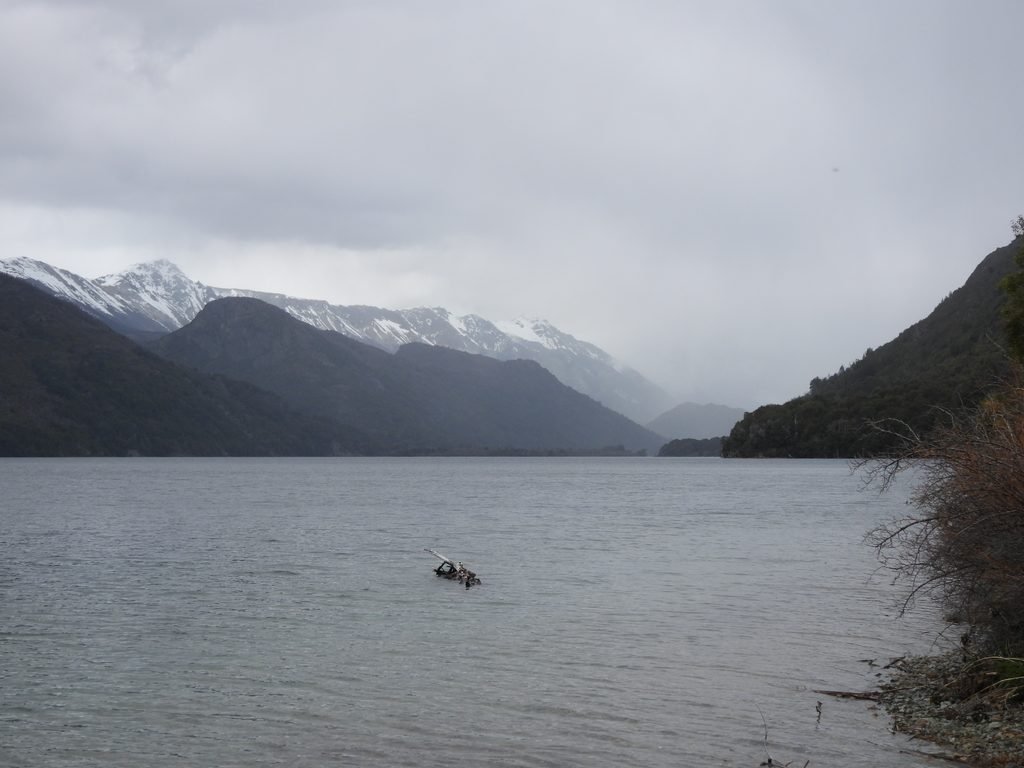
These forests are dominated by an epic Antarctic flora, including towering coihue (Nothofagus dombeyi), lenga beech (Nothofagus pumilio), Antarctic beech (Nothofagus antarctica) and Patagonian cypress (Fitzroya cupressoides), all anchored above an intriguing understory of bamboos and fruiting shrubs. These dense woodlands are the realm of elusive mammalian ghosts, such as the monito del monte (Dromiciops gliroides), the diminutive southern pudú (Pudu puda) and the secretive güiña cat (Leopardus guigna)—though all three eluded my sight.
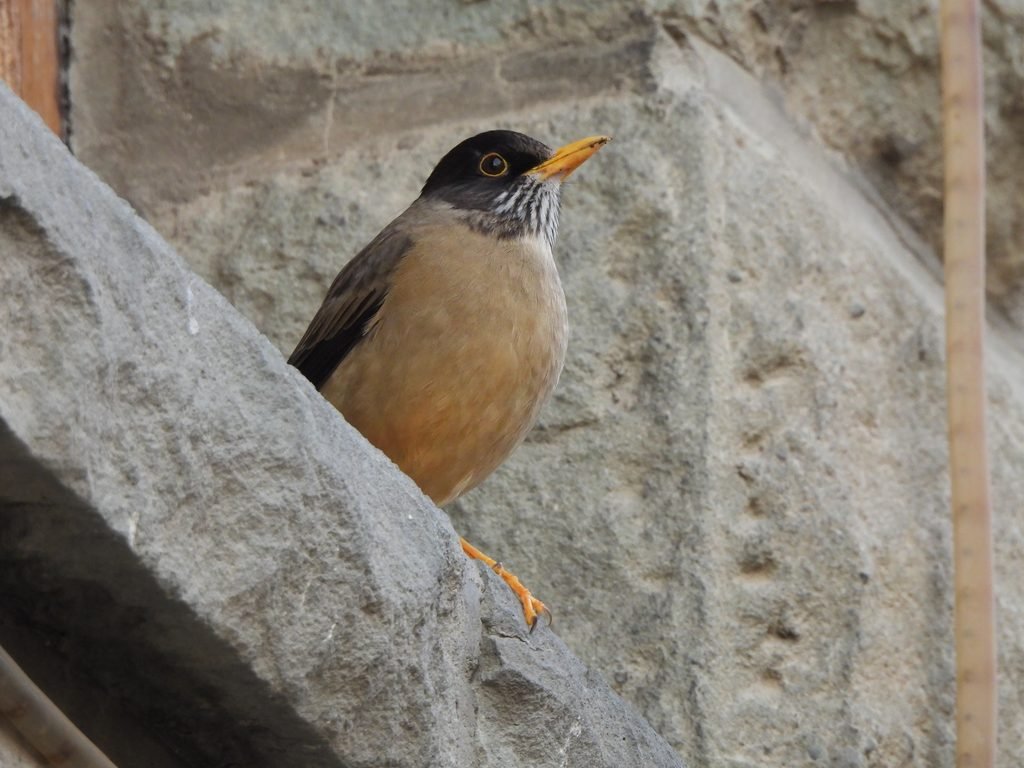
Fortunately, the avian inhabitants were far more obliging. In fact, several classic forest species are remarkably common right within urban gardens and residential neighbourhoods, where Patagonian sierra finch (Phrygilus patagonicus), Austral thrush (Turdus falcklandicus) and chimango caracara (Daptrius chimango) are daily companions.
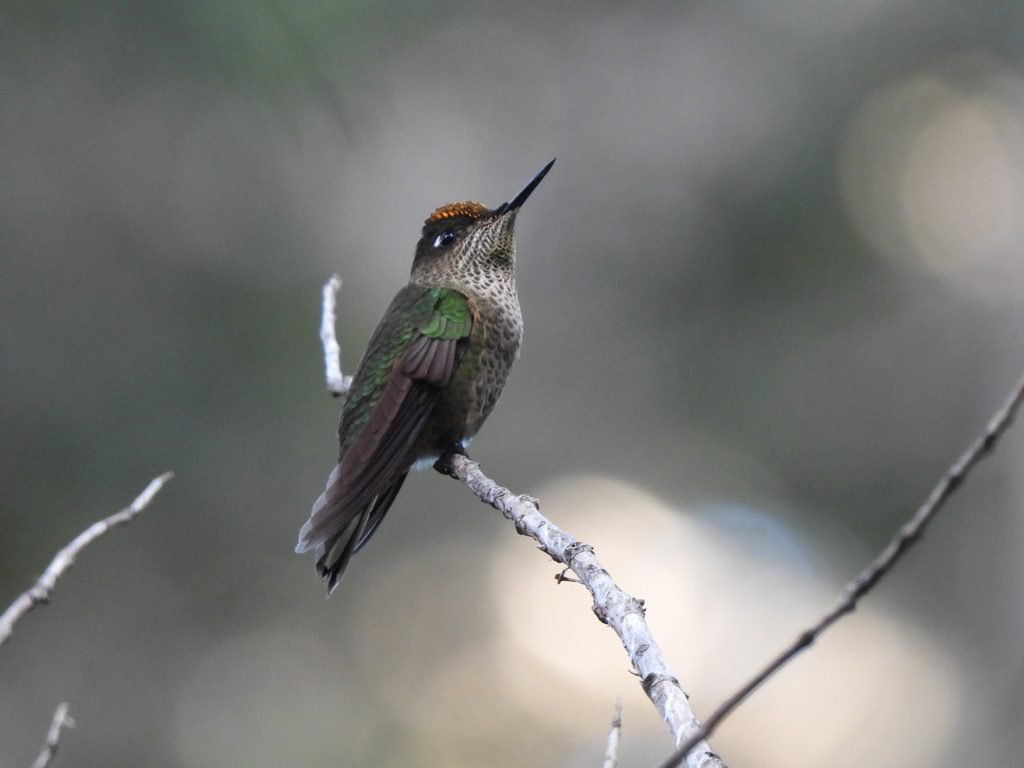
I moved in August and I am leaving Bariloche in November, and I am stunned to see how different “urban” species have switched over this short period. During the colder winter months, I would always hear and often see some green-backed firecrown (Sephanoides sephaniodes) visiting the flowering garden shrubs around my home on my way to work. As weeks past, these hummingbirds seemingly retreated into the forest as spring approached.
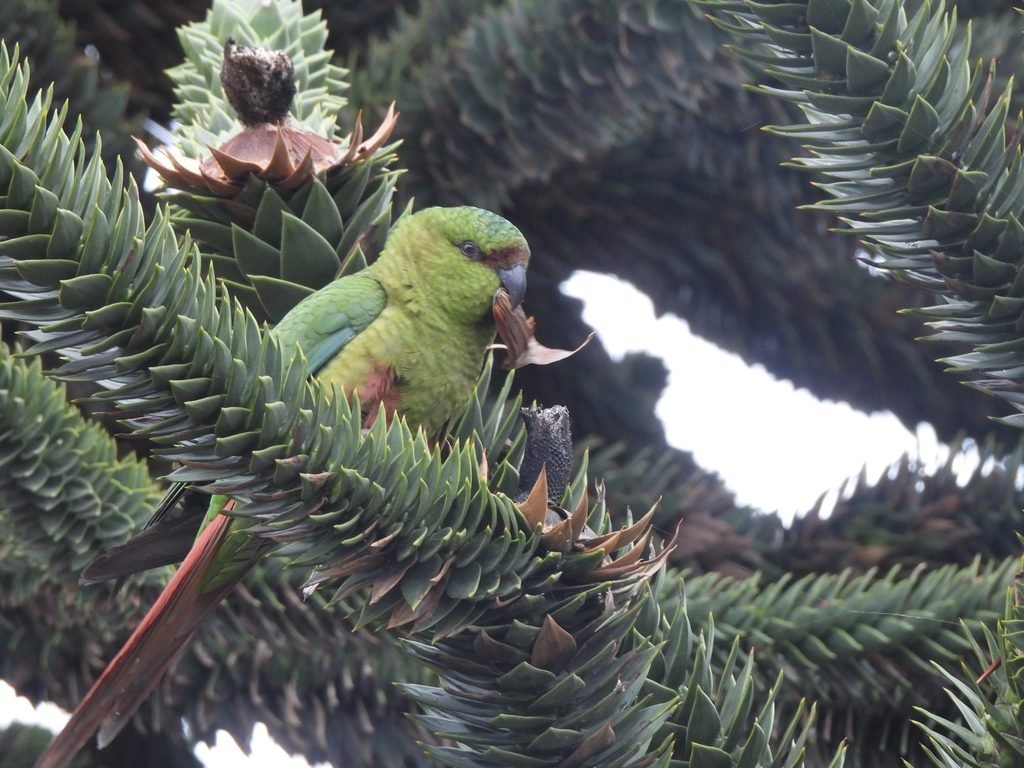
Likewise, several pehuen (Araucaria araucana) are planted in my nrighbourhood. Over winter, these trees were frequently joined by noisy groups of Austral parakeet (Enicognathus ferrugineus), which foraged for seeds before flying over the houses when the sun set.
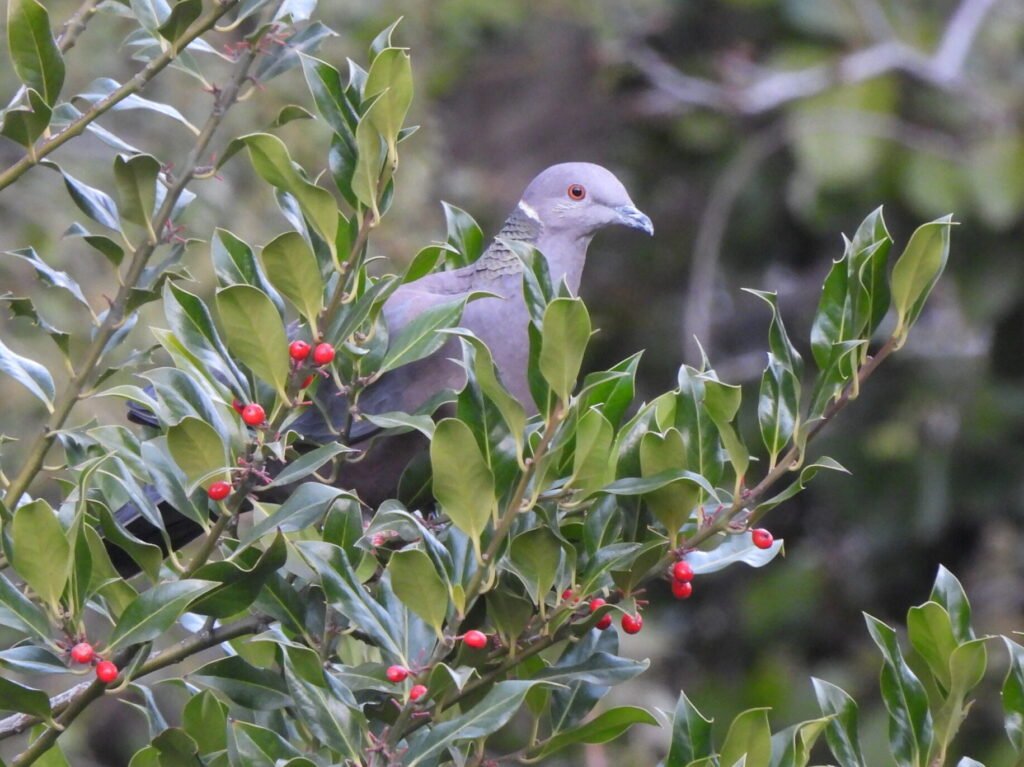
Other forest-dwelling birds seemed less abundant in general. I only got to see the Chilean pigeon (Patagioenas araucana) a handful of times, mostly either feeding on shrubs in gardens in town in small groups or in the forest west of town. Something similar happened with the Chilean hawk (Astur chilensis), of which a juvenile seldom showed up next to my workplace near Universidad del Comahue and an adult once showed up in the city centre.
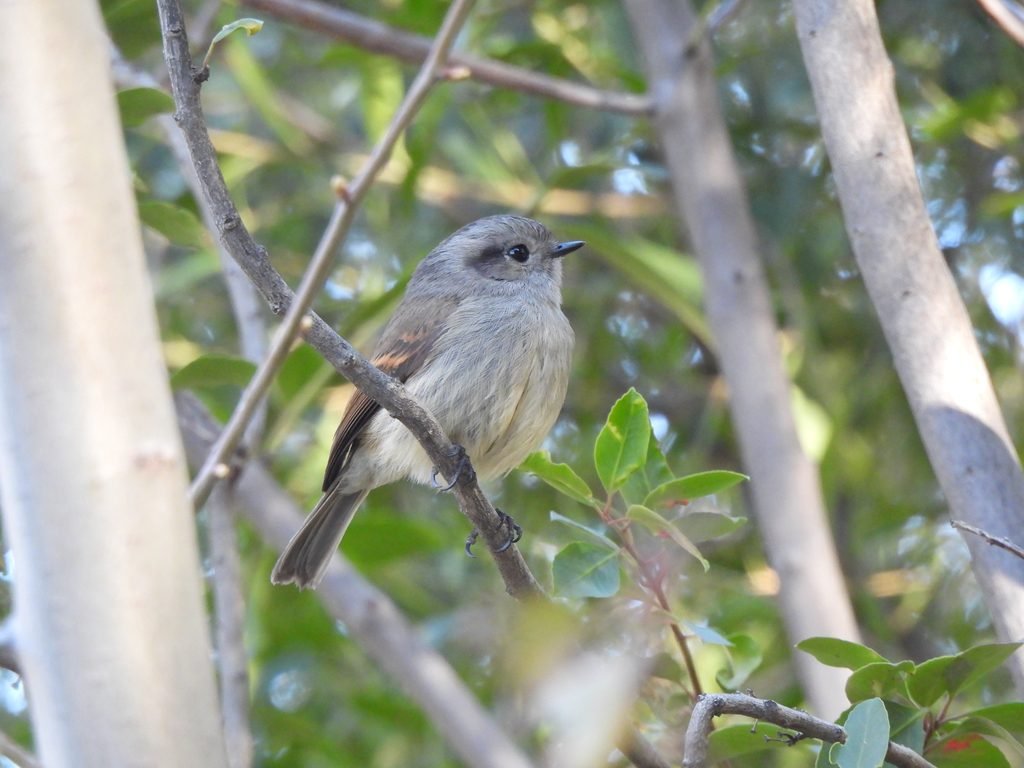
Smaller forest passerines also showed up in modest numbers. This included the resident plain-mantled tit-spinetail (Leptasthenura aegithaloides) and tufted tit-tyrant (Anairetes parulus), the summer visitor rufous-tipped plantcutter (Phytotoma rara) and the Patagonian tyrant (Colorhamphus parvirostris), which again showed up in town in winter but is best looked for in the forest in summer.
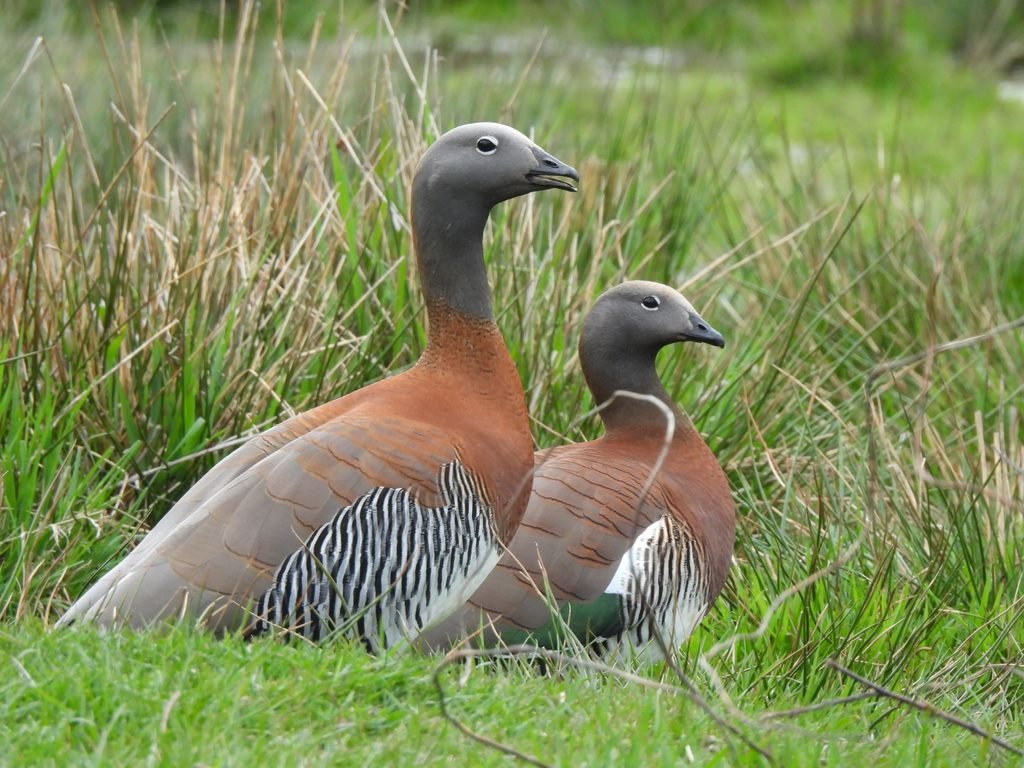
Interestingly, many birds in Bariloche seem to reach town through the shores of Lake Nahuel Huapi. The lake may act as a natural wildlife corridor, connecting the dense rainforests of Nahuel Huapi directly with the city coastline and the eastern steppe. This increased the diversity of birds in the city just by taking a short walk around Costanera in the city centre. One of the most charismatic birds of Bariloche, the ashy-headed goose (Chloephaga poliocephala), can be seen regularly grazing along these beaches.
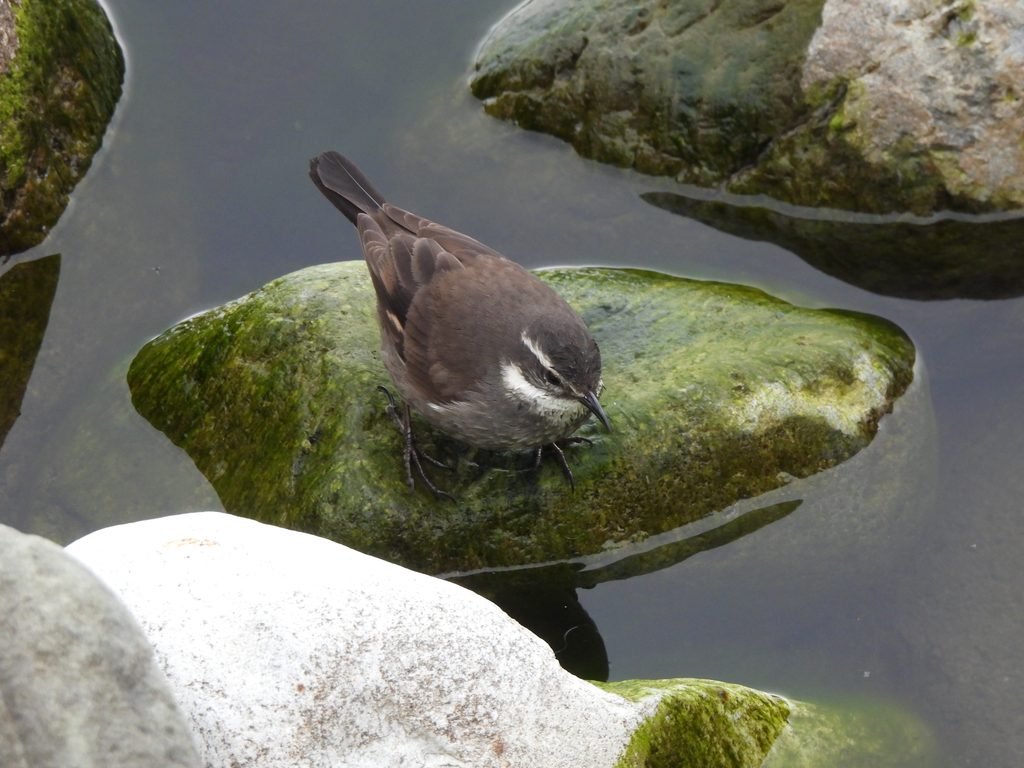
My near-daily walks along Costanera yielded a steady number of lake birds, including flying steamer duck (Tachyeres patachonicus), yellow-billed pintail (Anas georgica), yellow-billed teal (Anas flavirostris), Chiloe wigeon (Mareca sibilatrix), great grebe (Podiceps major), kelp gull (Larus dominicanus) and Chilean swallow (Tachycineta leucopyga). Interestingly, amidst the ubiquitous dark-bellied cinclodes (Cinclodes patagonicus), a grey-flanked cinclodes (Cinclodes oustaleti) seemed to have descended from the high Andes to settle along the coastline of Lake Nahuel Huapi in town, remaining there on its own for several years.
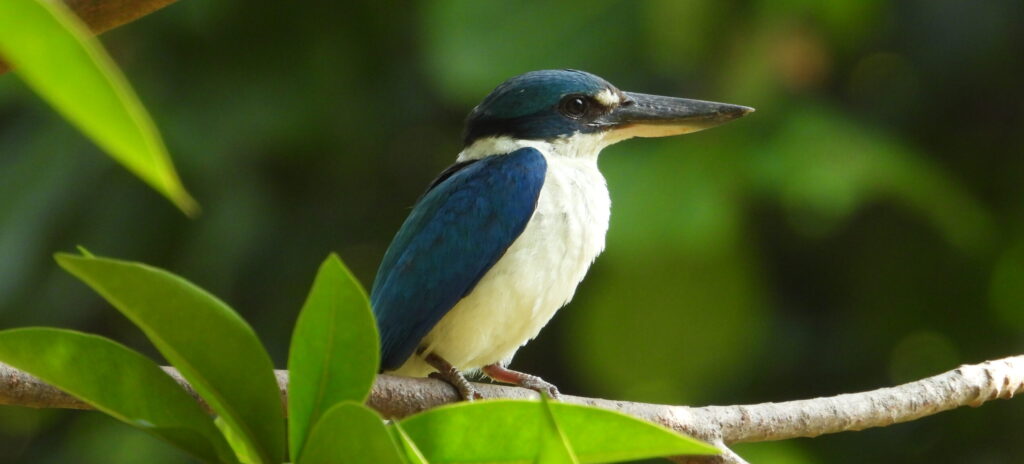
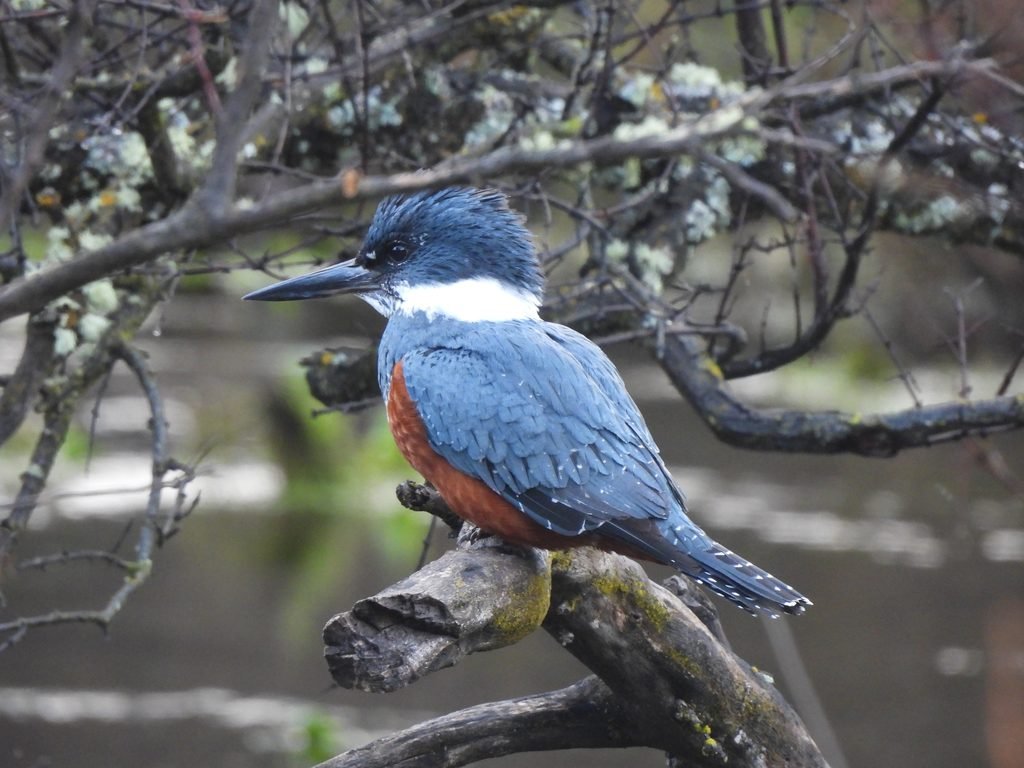
Out of town, certain patches hold old-growth forest remnants that dodged the severe wildfires of recent summers, preserving pristine pockets of Valdivian rainforest specialties. Reaching some of these moister, old-growth stands requires a car or a boat excursion to remote spots like Puerto Blest, Isla Victoria, or the forests near Cerro Tronador inside Nahuel Huapi National Park. Tronador serves as a stronghold for the notoriously skulking ochre-flanked tapaculo (Eugralla paradoxa)—a true ghost that I repeatedly attempted to see, but only ever managed to hear calling from the dense underbrush. However, this extensive woodland is crossed by crystal-clear lakes and rivers with riverbanks that prove excellent for belted kingfisher (Megaceryle torquata).
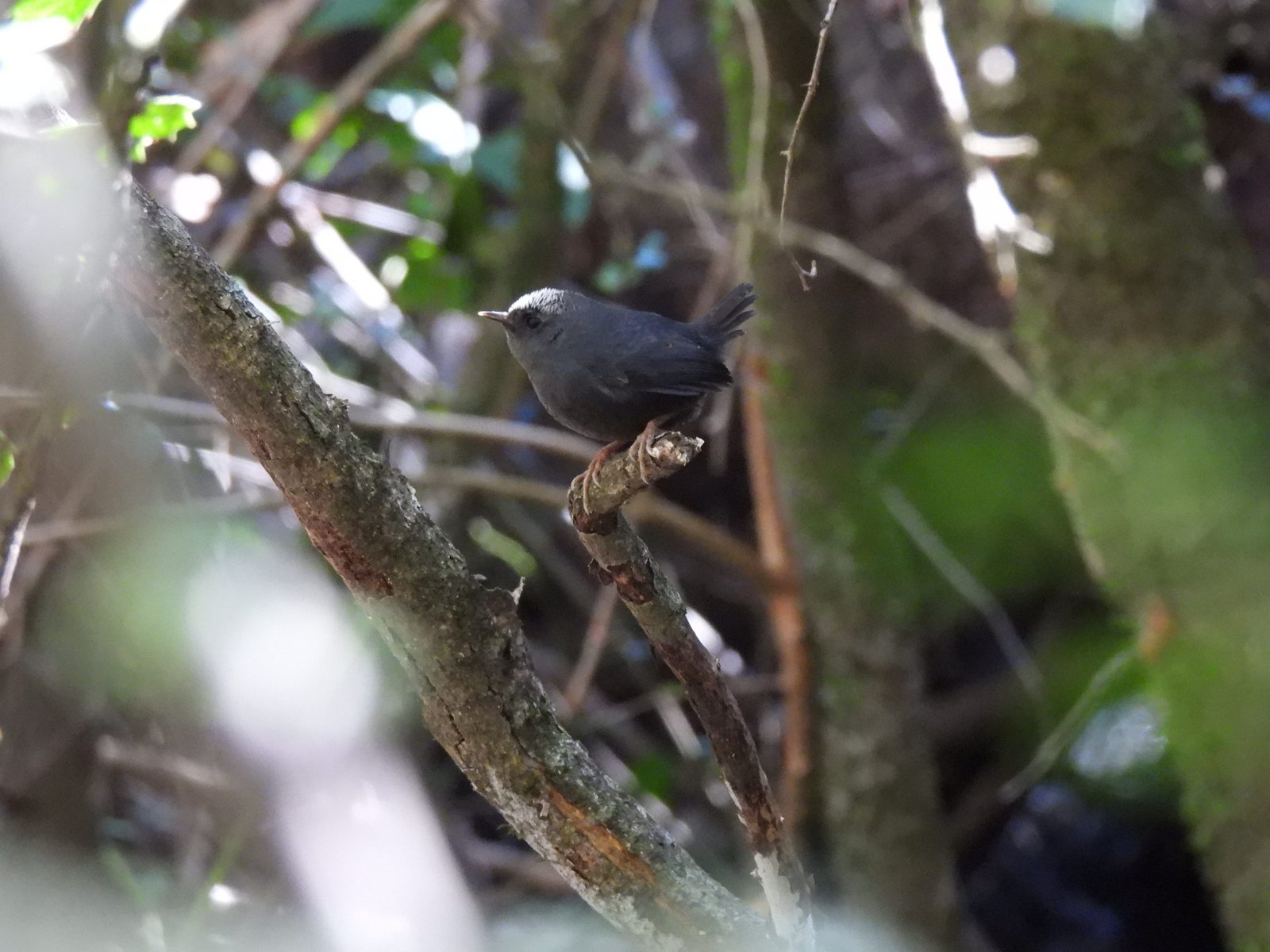
Fortunately, exceptional forest habitat is easily accessible right from Bariloche by taking a local bus to Llao Llao. Stepping off into the shade of giant coihues surrounded by dense thickets of colihue bamboo (Chusquea culeou), the atmosphere is immediately filled with the frog-like song of Magellanic tapaculos (Scytalopus magellanicus), the resonating “cock-a-doodle-doo” of chucao tapaculos (Scelorchilus rubecula) and the strange but namesake calls of black-throated huet-huet (Pteroptochos tarnii).
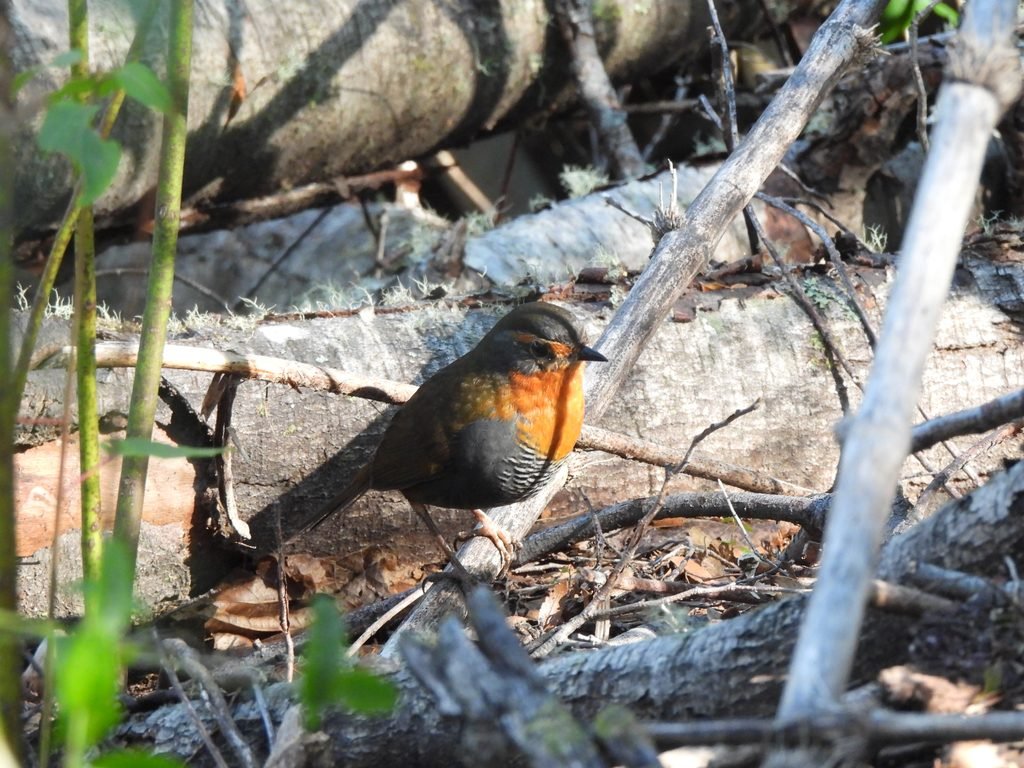
These tapaculos of cold rainforests are high prized, and I deployed many visits to Llao Llao to try and see all of them. Hidden within the dark bamboo tangles, the skulking Magellanic tapaculo provided me the best views on different occasions, mostly of white-capped individuals. Although elusive, certain places had inquisitive chucao tapaculos that either foraged in trails or approached me when I stopped for a snack or a mate, often remaining invisible in the thick understory — or at least, for as long as the camera was out. I heard this is also true for huet-huets in certain places, although I only managed to see it once after repeated visits of playing the waiting game for long time.
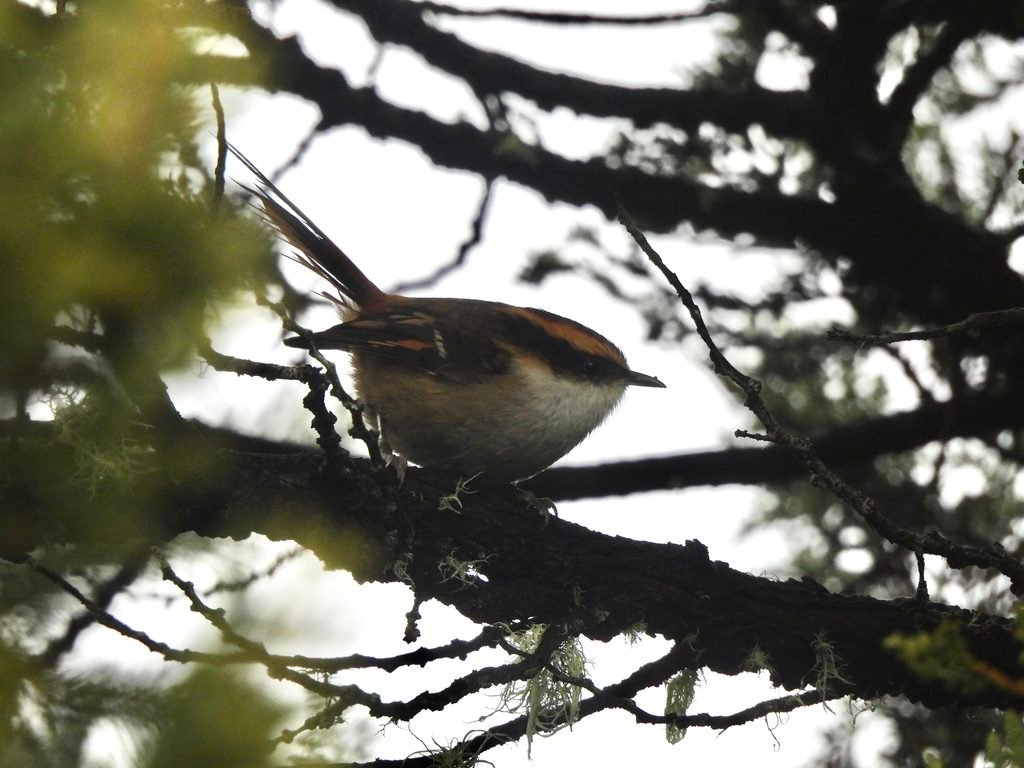
Other typical forest passerines are not much easier to observe, although some are particularly abundant, such as the omnipresent thorn-tailed rayadito (Aphrastura spinicauda) or the summer visitor white-crested elaenia (Elaenia albiceps). Active mixed-species feeding flocks move through the canopy often, pairing these abundant birds with white-throated treerunners (Pygarrhichas albogularis), Patagonian sierra finches or house wren (Troglodytes musculus). Specialized understory inhabitants like Des Murs’s wiretail (Sylviorthorhynchus desmursii) and Patagonian forest earthcreeper (Upucerthia saturatior) proved even more skittish but obliged in different occasions.
Instead, birds in forest clearings allowed for better views. Around Llao Llao, the shrubby area around Puerto Pañuelo provided some memorable birding. There I saw my first of several Chilean flickers (Colaptes pitius) and Austral blackbirds (Curaeus curaeus). In addition, my very first Austral pygmy-owl (Glaucidium nana) flew into a pole in a not-too-different fashion than that of the abundant rufous-collared sparrows (Zonotrichia capensis).
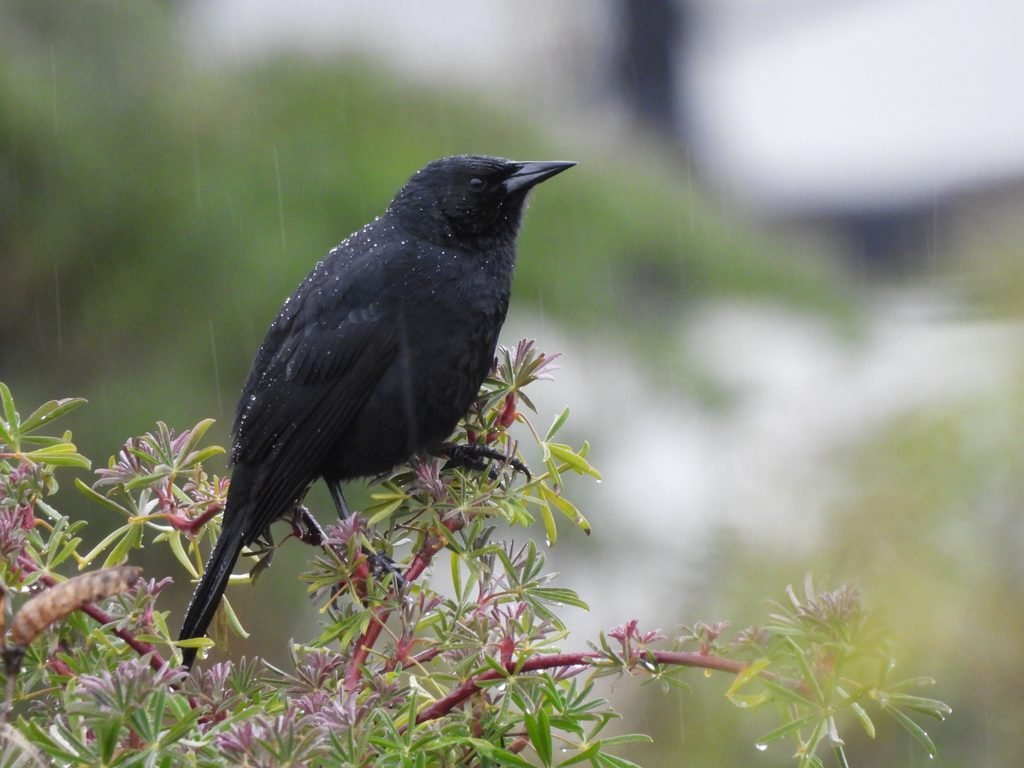
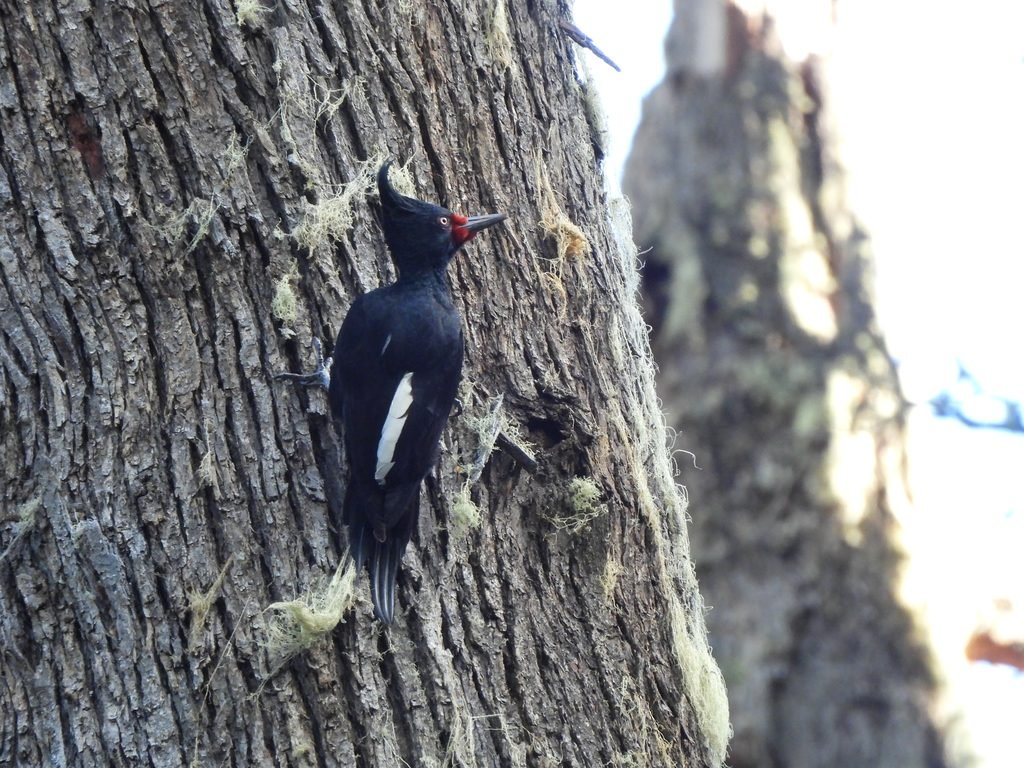
Without a doubt, the undisputed flagship of these temperate rainforests is the magnificent Magellanic woodpecker (Campephilus magellanicus). Over my time around Bariloche, I enjoyed wonderful views of this giant woodpecker in various woodland patches, including Casa de Piedra, Cerro Catedral and Cerro Otto.
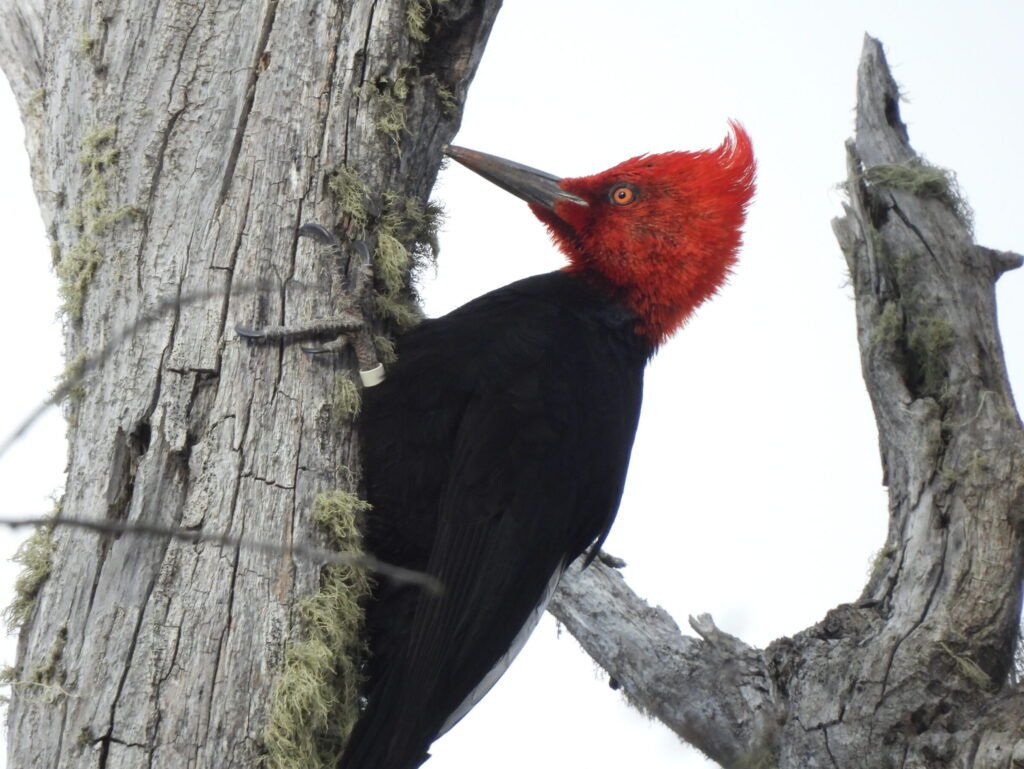
Yet more thrilling encounter took place within Llao Llao forest. While I had previously observed family groups foraging quietly, I once bumped into multiple individuals engaging in intense territorial displays. Watching several Magellanic woodpeckers calling loudly and pounding powerful drumming signals across these ancient trunks was nothing short of breathtaking.
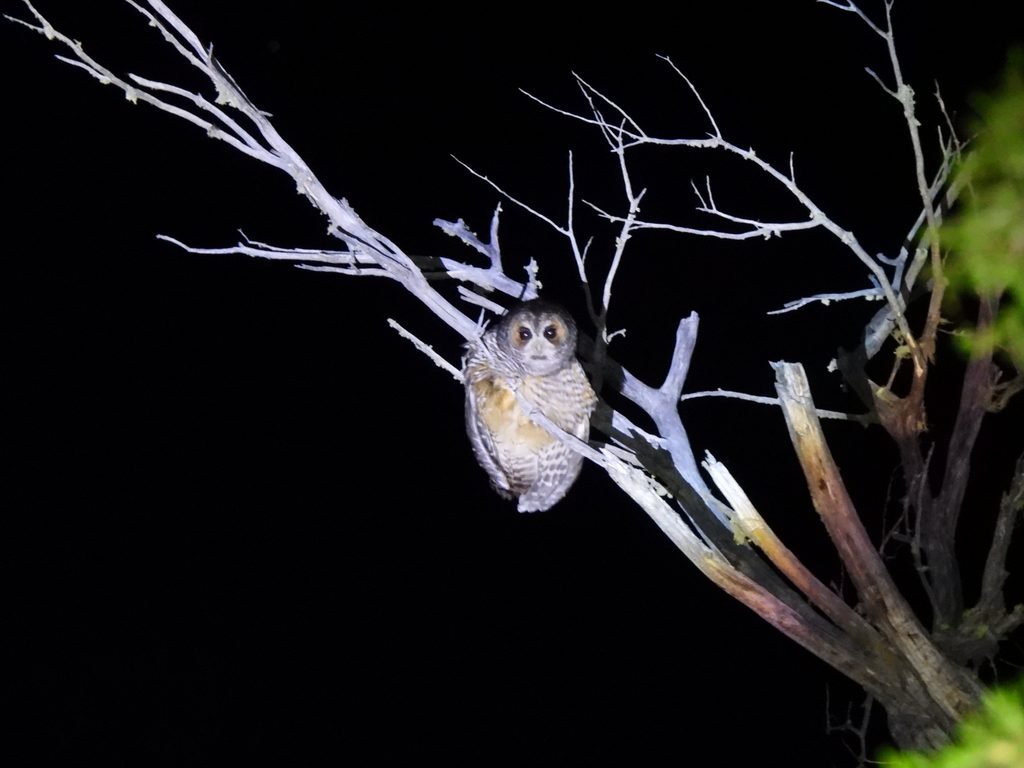
My final lifer in the forest also occurred in Llao Llao. Joining Tati Pessano and Kenneth Roberts on a night excursion, we successfully located a stunning rufous-legged owl (Strix rufipes) — one of my most sought-after forest targets — thanks to the sharp fieldwork expertise of Kenneth and his friend, who had also recently spotted a monito del monte nearby.
Another long awaited bird, the white-throated hawk (Buteo albigula), showed up on my last day in Bariloche, when two birds flew over a lenga forest in Cerro Ventana on a day without birdwatching gear, after numerous attempts to locate it, fully equipped. This still leaves with several other birds that these dreamy forests kept as secrets. The evocative Antarctic flora of these woodlands and its inhabitants leave a deep impression. There is just so much left to know in Patagonia, but the landscapes and creatures living in the forests of Nahuel Huapi and further west are among those that left me most intrigued, and I hope I will get to know more out of them in the future.