Some days ago, my colleagues Jorge Madrid and Jose Manuel Zamora from Asociación Ulula (which aims at researching, conserving and outreaching about nocturnal birds) organized a birdwatching day in the Murcia region with workmates. Most of the day involved monitoring owl nests, but we also set aside some time to visit a couple of birding hotspots in the region.
We set off ringing Eurasian eagle-owl (Bubo bubo) chicks, surrounded by the songs of common cuckoos (Cuculus canorus), red-legged partridges (Alectoris rufa), and Thekla’s larks (Galerida theklae). Some red-rumped swallows (Cecropis rufula) and stock doves (Columba oenas) were also present around the site.
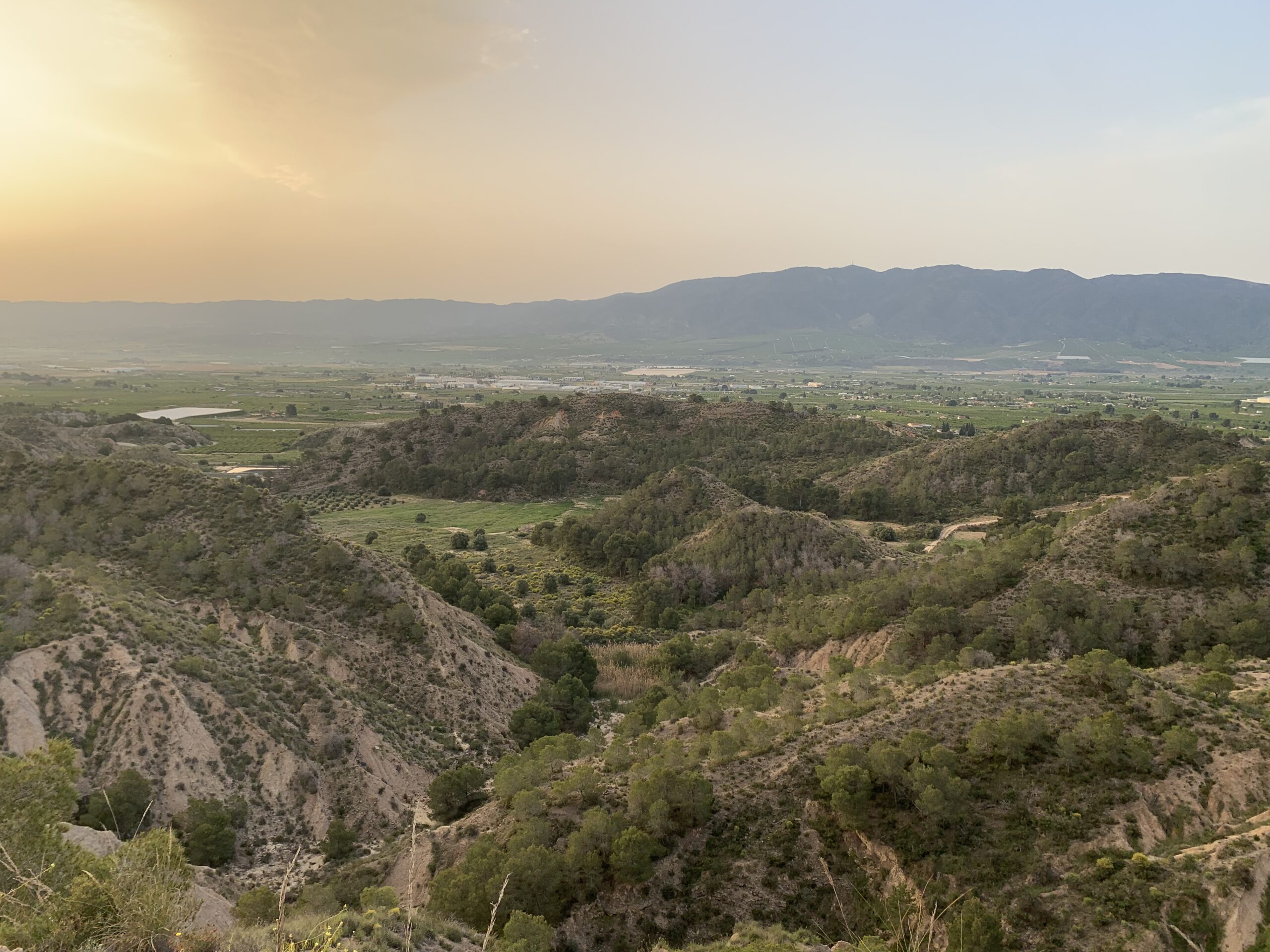
We then moved on to Saladares de Guadalentín, the place I was most excited about. We slowly drove the dirt roads of this dryland area in different cars, stopping frequently around the crops. These pauses produced groups of lesser kestrels (Falco naumanni), singing common quails (Coturnix coturnix), several greater short-toed larks (Calandrella brachydactyla), some passing booted eagles (Hieraaetus pennatus), a golden eagle (Aquila chrysaetos), and even a lingering northern lapwing (Vanellus vanellus) remarkably late in the season.
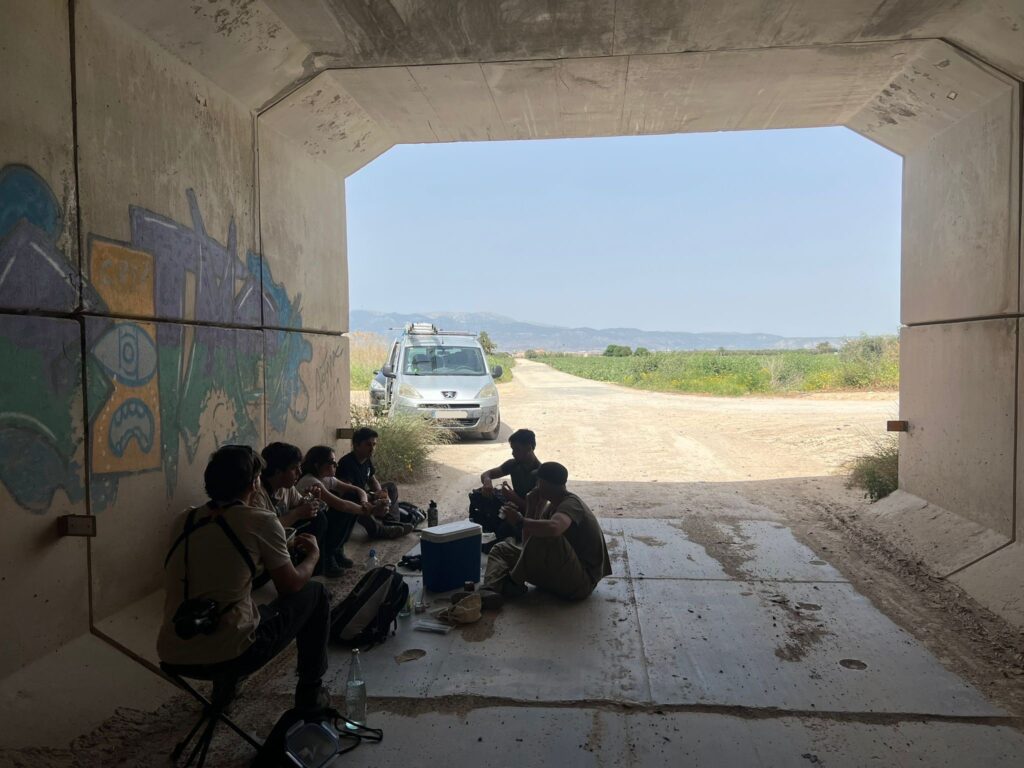
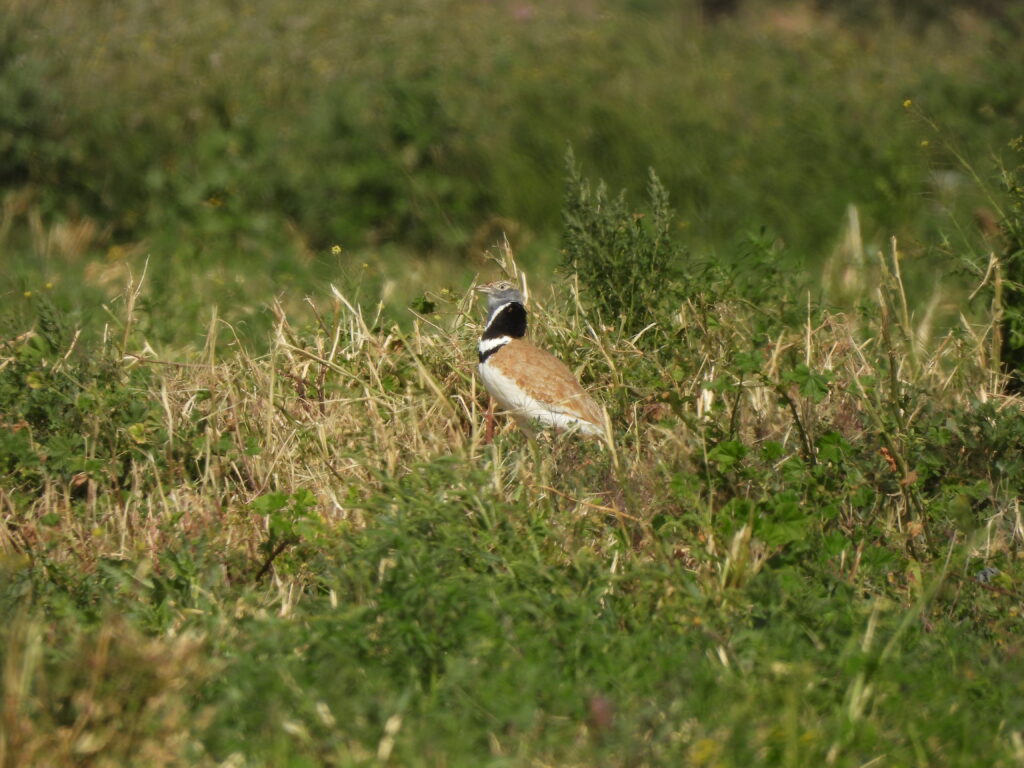
The main targets, however, took a bit more driving. The first came as a spectacular male little bustard (Tetrax tetrax) displaying in a field right beside the road. As soon as we stopped, we heard a second male calling nearby while watching the first bird display.
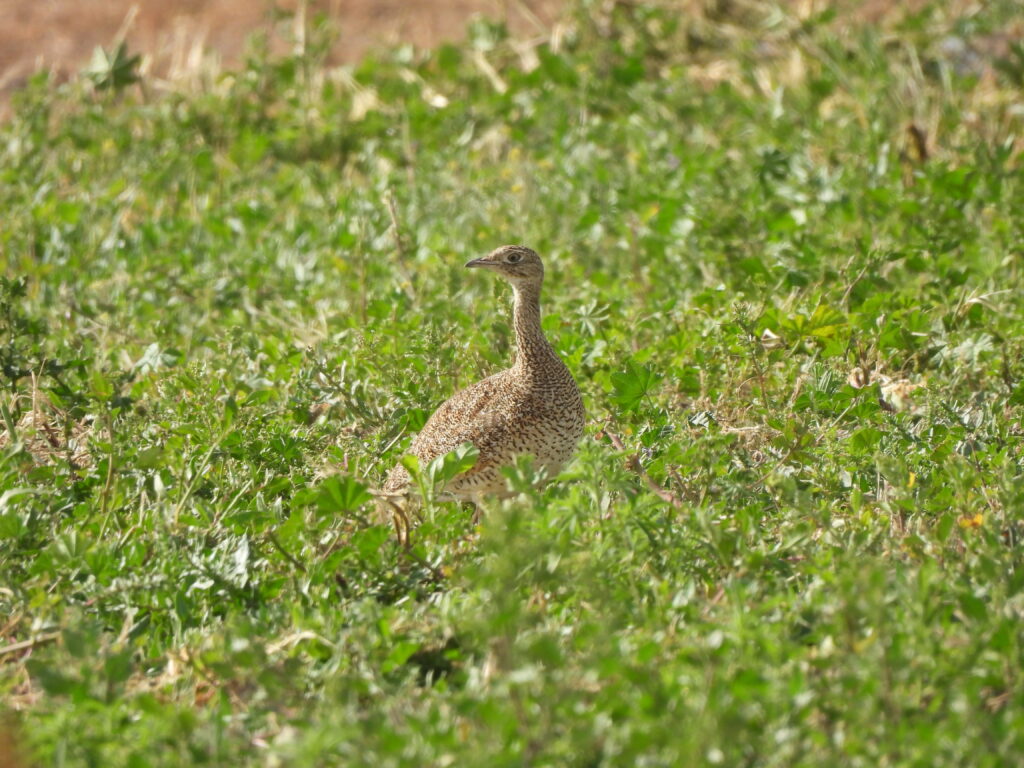
Later on, we encountered another male that unfortunately flew off after only a couple of minutes of observation from the car. To our surprise, there was also a female concealed in plain sight in the field on the other side of the road. Although much plainer than the male, the female’s plumage was beautiful in its own subtle way.
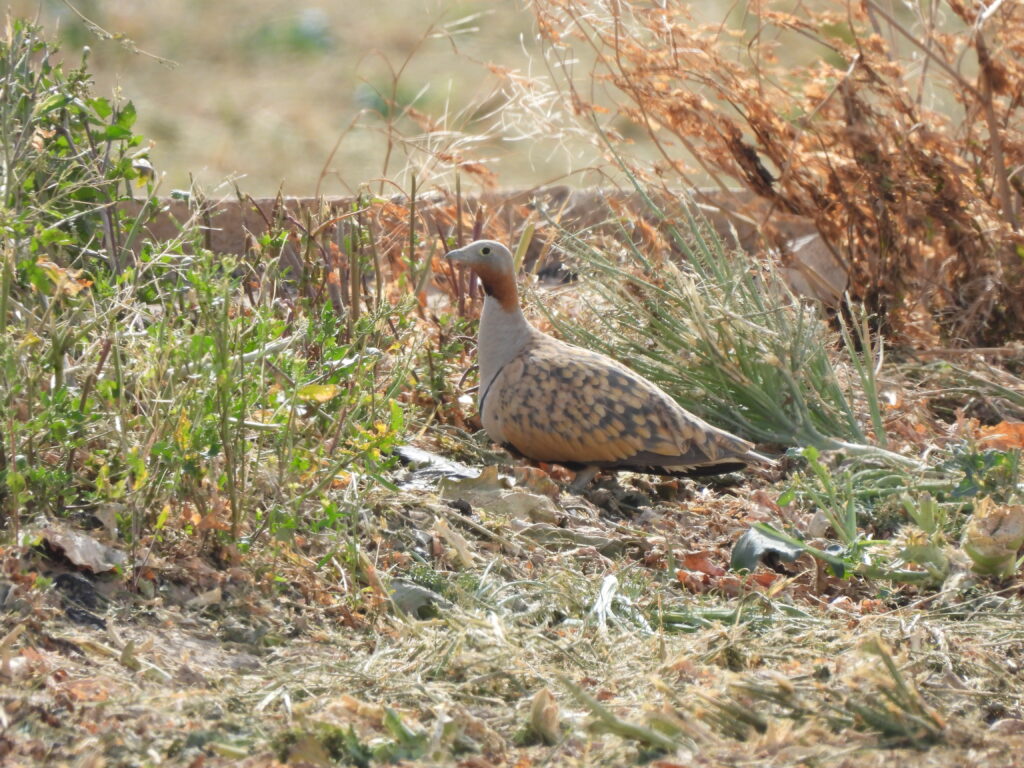
Close to that same area, we connected with our other major target. After brief views of distant flocks, hearing calls scattered across the plains, and several frustratingly distant encounters elsewhere, it felt incredible to finally observe a pair of black-bellied sandgrouse (Pterocles orientalis) at point-blank range.
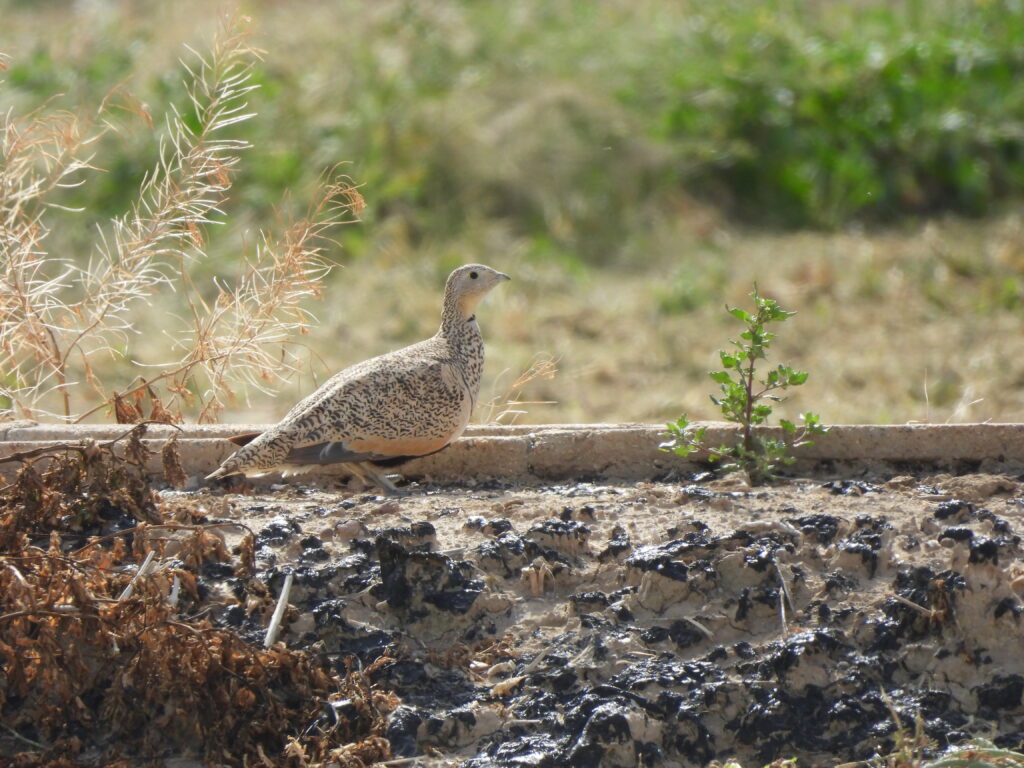
We first noticed the female, which looked particularly elegant to me. Somehow, I had mostly seen males before and never paid much attention to the female’s appearance in guidebooks. Still, even after we found the striking male resting beneath nearby bushes, I remained fascinated by the female’s delicate plumage.
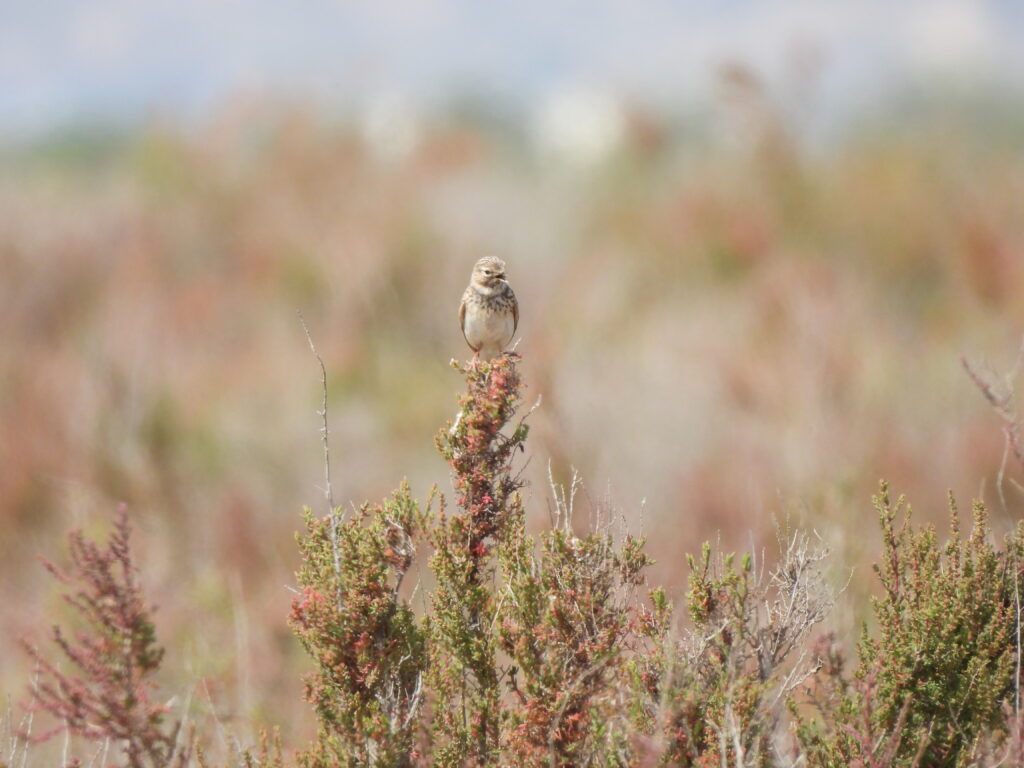
Besides cropland, Saladares de Guadalentín also preserves important expanses of the dry shrublands the area is named after. Here we observed several Mediterranean short-toed larks (Alaudala rufescens) and spectacled warblers (Curruca conspicillata), along with a few more little bustards — which made us feel quite fortunate considering how scarce these birds are.
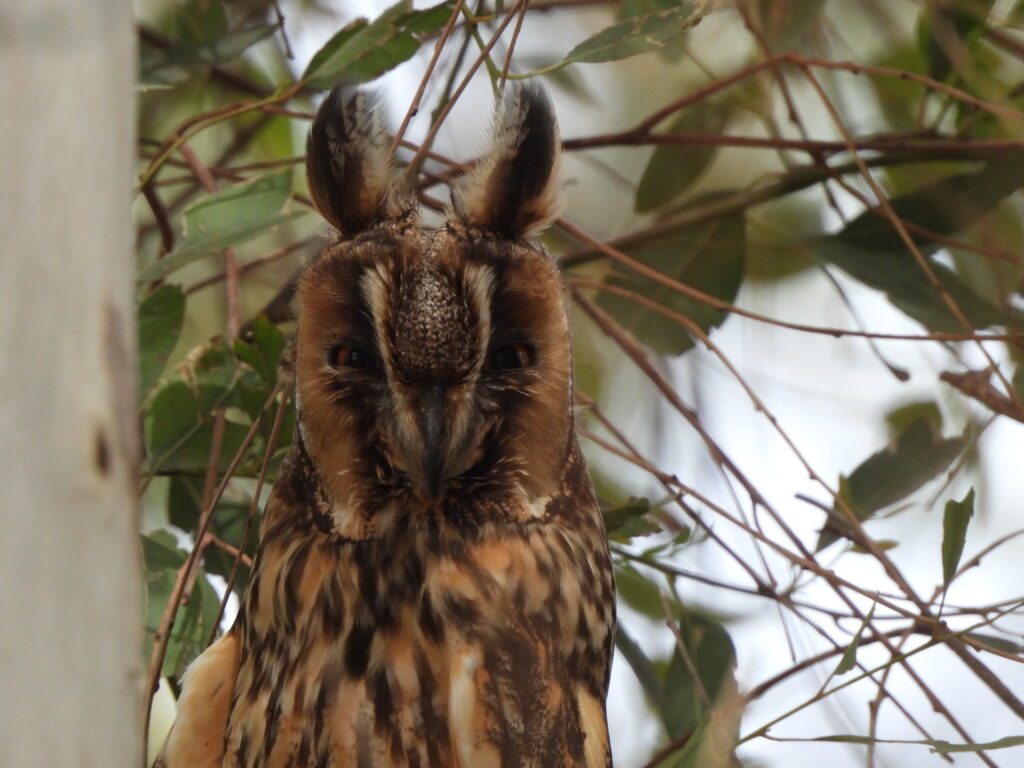
We later searched for a couple of long-eared owl (Asio otus) nests along the Guadalentín riverbed, where Darío skillfully spotted a passing Eurasian hobby (Falco subbuteo), surprisingly early in the season.
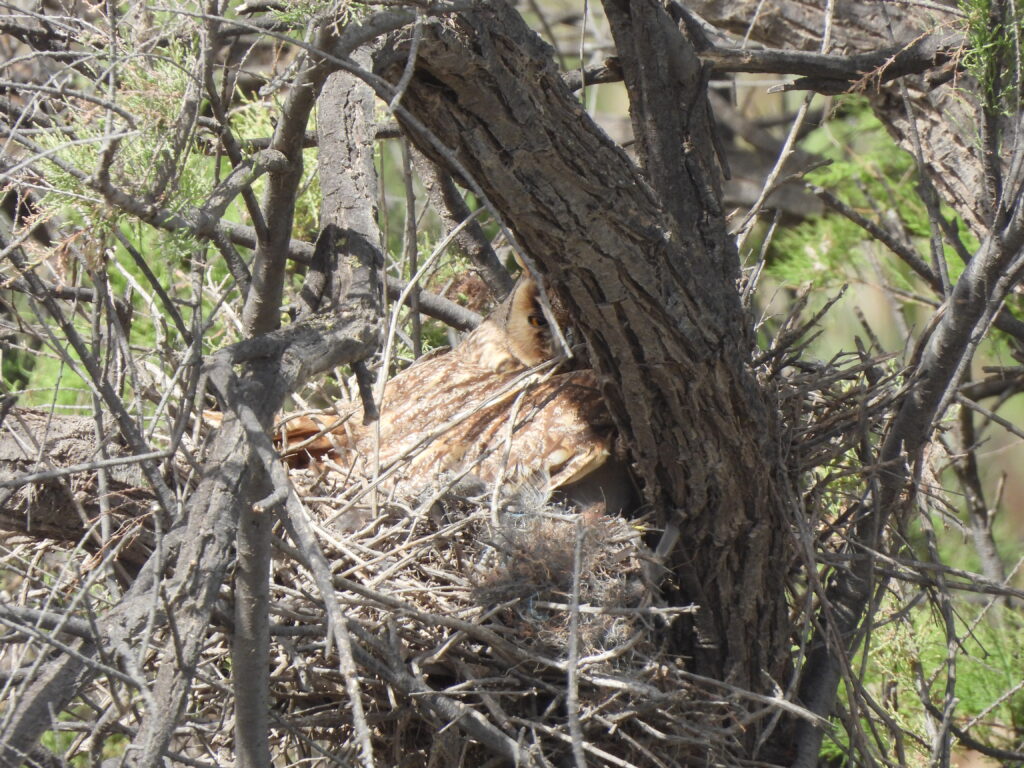
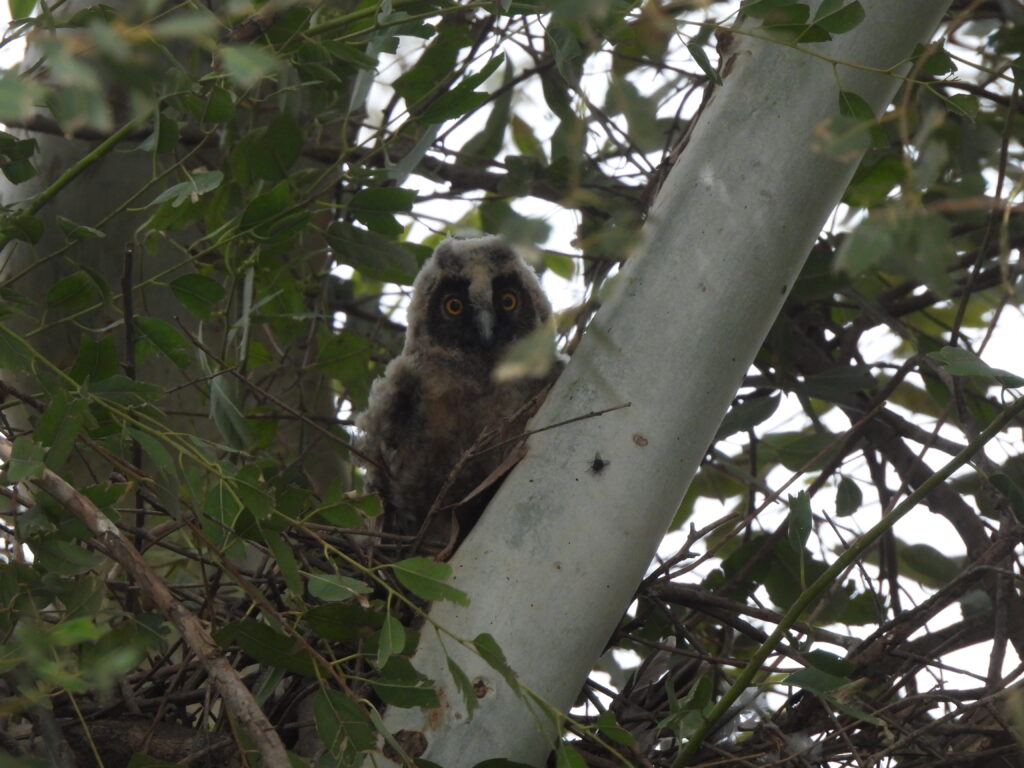
In fact, we spent several hours monitoring nests and ringing young long-eared owls throughout the region later in the day. Some nests had been established on platforms installed by Asociación Ulula throughout suitable farmland areas in Murcia.
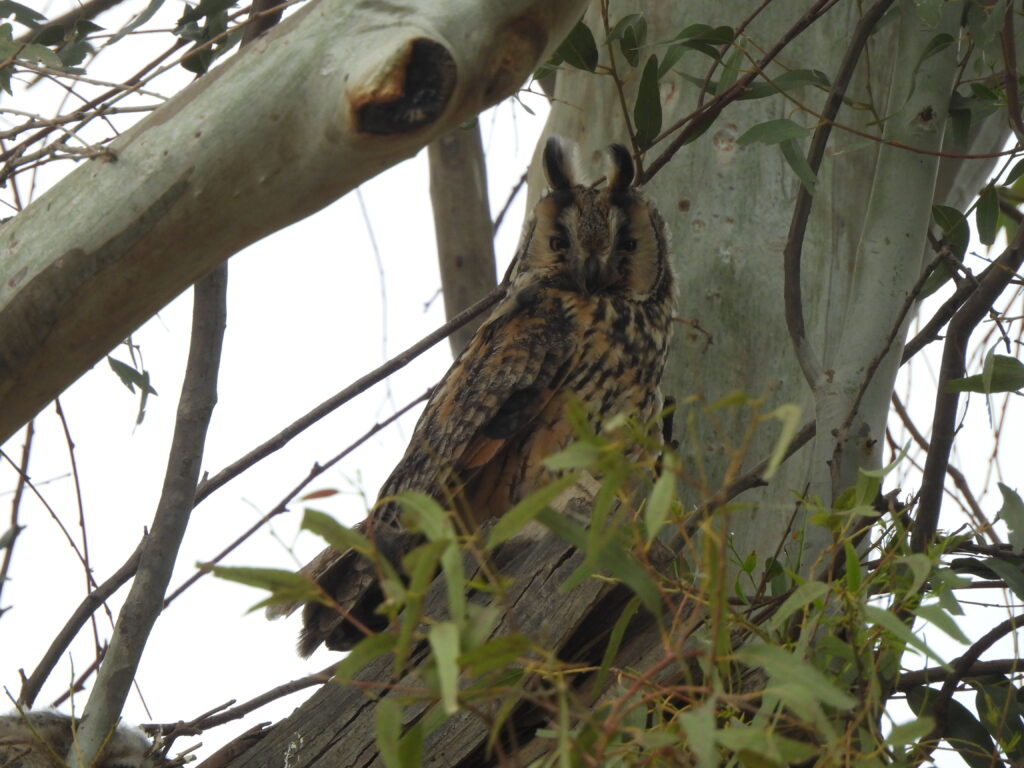
The density of territories in the area genuinely surprised me. In one section alone, three active nests were located remarkably close together, while another pair had nested in a tree inside a household garden. The local population of these nocturnal raptors seems to thrive in Murcia, which was striking to me coming from an area where the species is much less abundant.
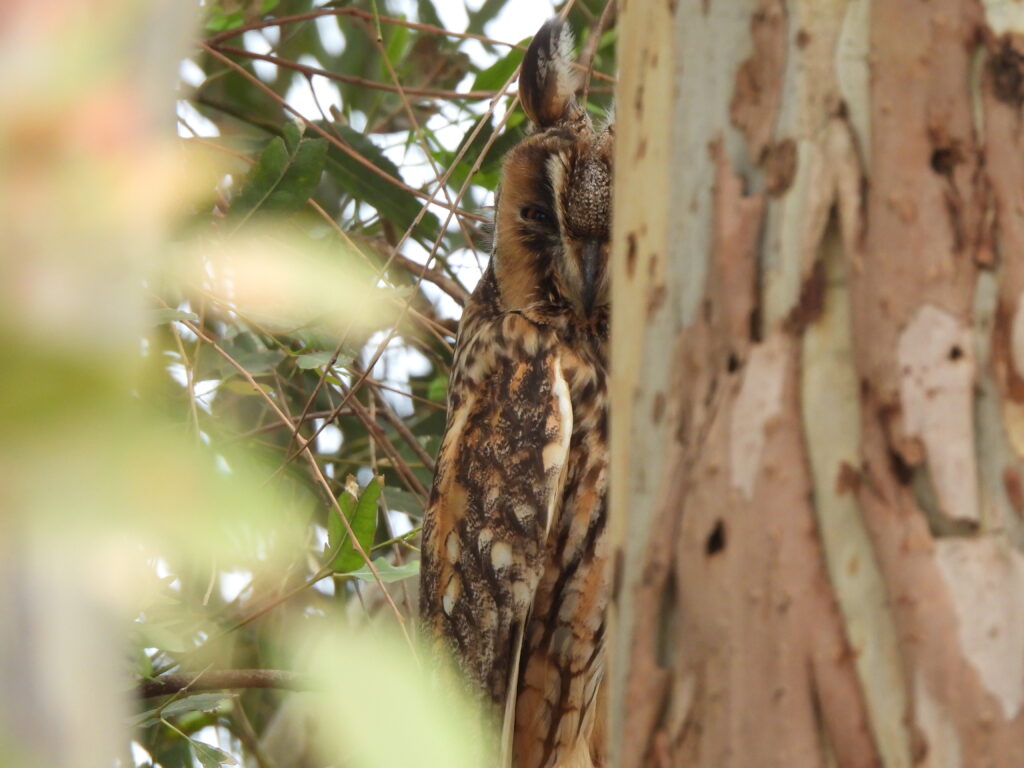
Because I had never actually seen a long-eared owl nest before—only fledged juveniles after leaving the nest—I had never realized how closely adults may roost nearby. Even more impressive is the incredible confidence these birds place in their camouflage. We enjoyed excellent views of several adults close to their nests, often females sitting right beside them while males remained perched slightly farther away.
We wrapped up the day by visiting the lagoons of the Alhama de Murcia wastewater plant, which recently underwent an ecological restoration program and now hosts a remarkable diversity of waterbirds.
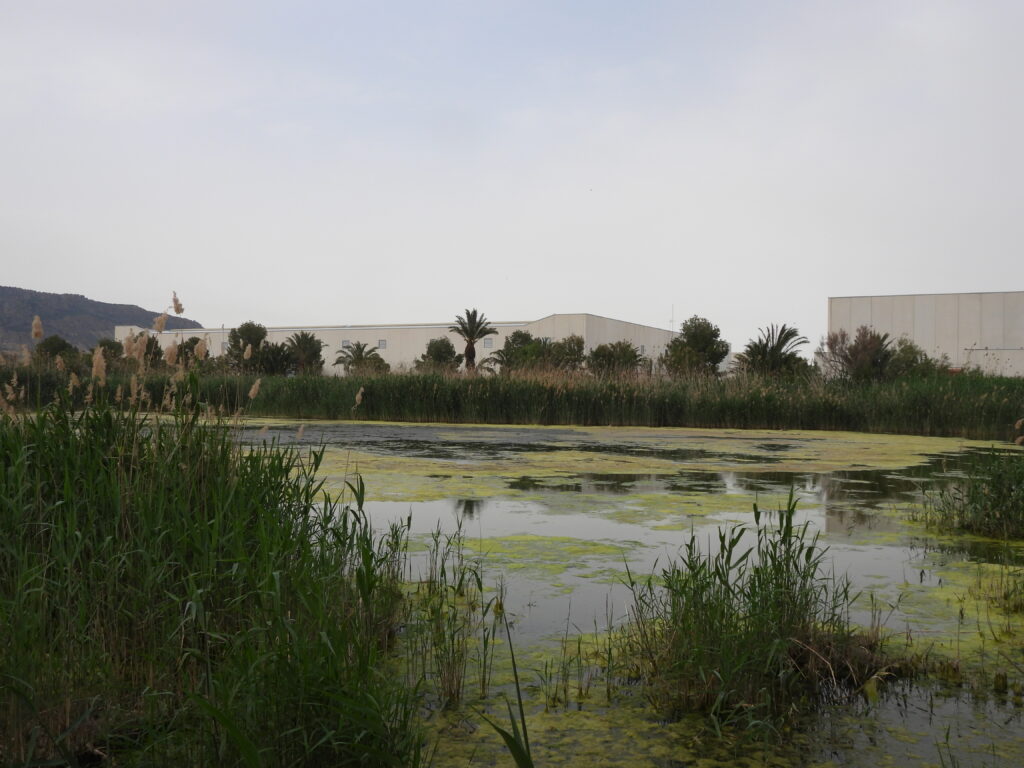
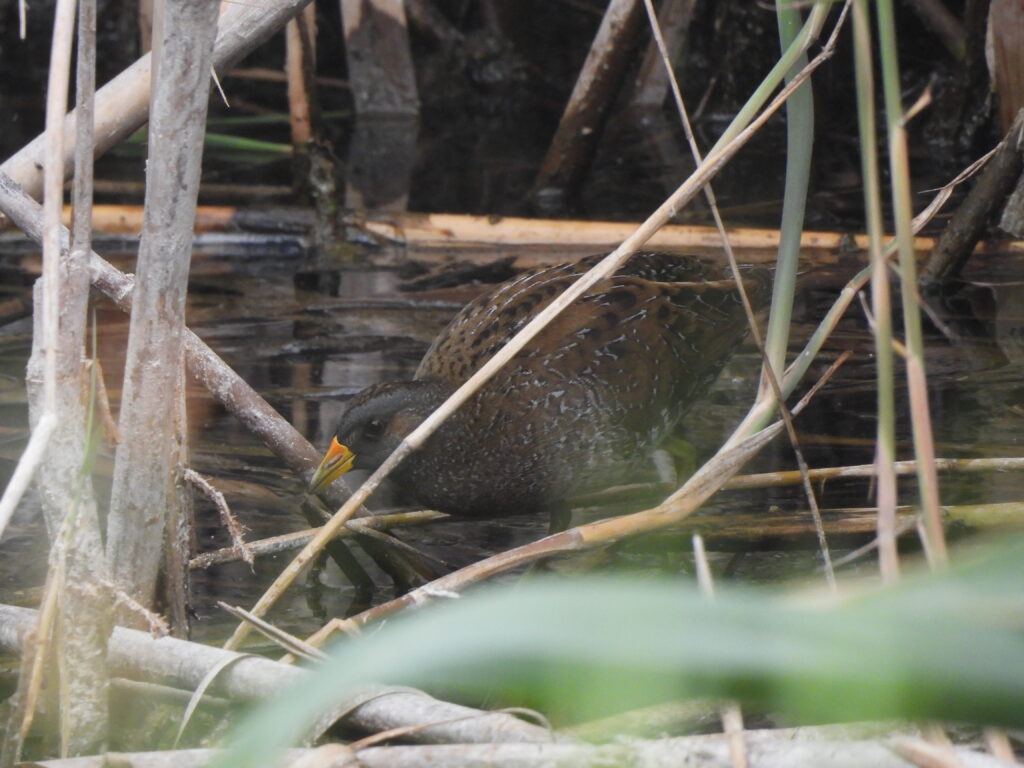
Despite our short visit, we connected with several ferruginous ducks (Aythya nyroca), common pochards (Aythya ferina), white-headed ducks (Oxyura leucocephala), black-crowned night herons (Nycticorax nycticorax), and squacco herons (Ardeola ralloides). Flocks of hirundines included sand martins (Riparia riparia), while the muddy edges held some waders such as wood sandpipers (Tringa glareola) and green sandpipers (Tringa ochropus). However, the true star of the show was a lingering spotted crake (Porzana porzana), which had been frequenting a small opening in the reeds for several days.
The day left us even more intrigued by the diversity of birds and ecosystems in our neighboring region of Murcia. Not only did we enjoy outstanding views of several steppe specialties, but we also learned a great deal about owl ecology and conservation work. I am especially grateful to Josema and Jorge for organizing such a memorable day—and already looking forward to the next one.