Ranomafana is mostly known internationally as a wildlife haven protected under a National Park. However, at a domestic level, Ranomafana (in Malagasy, “hot waters”) is perhaps best known for the popular hot springs in the namesake village just east of the rainforest. During my expedition to the area, I initially surveyed sites outside the protected area due to delays in the permit required to conduct research inside the National Park. What I found instead was a vibrant, colourful village surrounded by croplands and gardens, which provided some of my first encounters with Madagascar’s unique wildlife.
Many members of the Centre ValBio staff are locals from Ranomafana who commute daily, so CVB runs a bus between the station and the village several times a day. My team often chose to walk the road downhill in the mornings, which allowed me to enjoy repeated views of red-fronted lemurs (Eulemur rufifrons) and red-bellied lemurs (Eulemur rubriventer), as well as my only encounter of the expedition with Madagascar starling (Hartlaubius auratus). The never-ending song of Madagascar cuckoos (Cuculus rochii) blend with the screeching calls of greater vasa parrots (Coracopsis vasa) as one approaches the village from the rainforest.
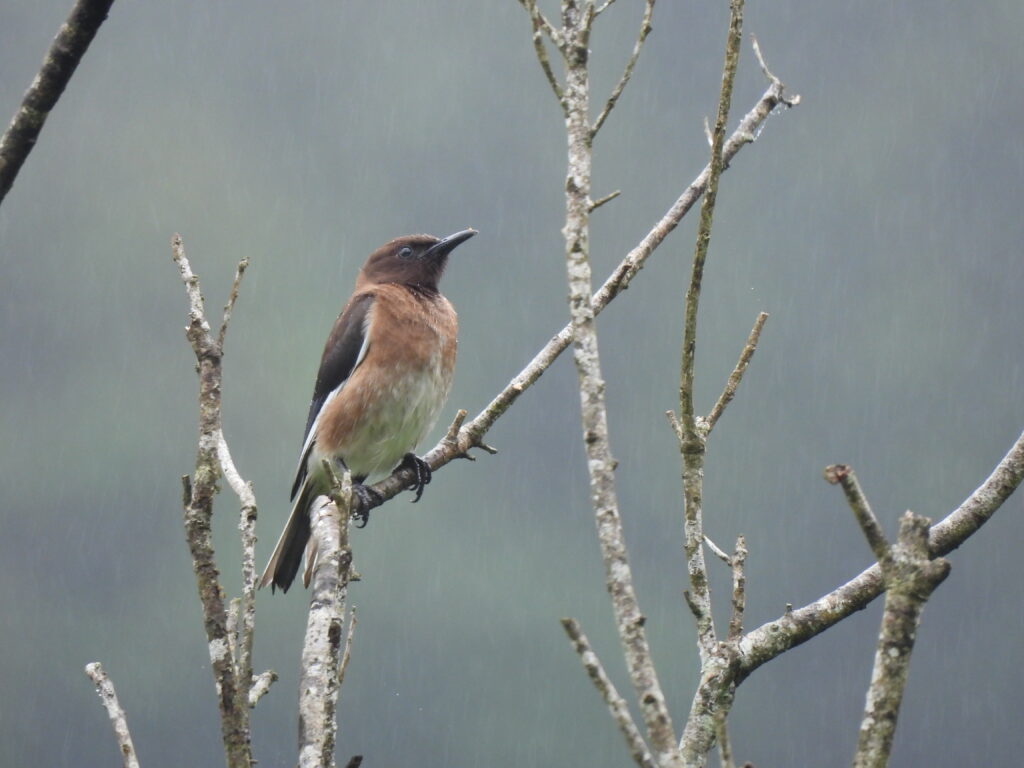
The road passes through the small village of Ambatolahy, whose chief we met to obtain permission to survey several locations around the settlement. While exploring the barren slopes surrounding the village, I connected with the Malagasy sibilla form of African stonechat (Saxicola torquatus). Many CVB staff also come from Ambatolahy, and we were fortunate to be invited to a famadihana, the “turning of the bones” ceremony — a joyful celebration of music and colour in which the remains of an ancestor are exhumed and honoured throughout the night. Having long read about this ritual, witnessing it in person felt truly magical.
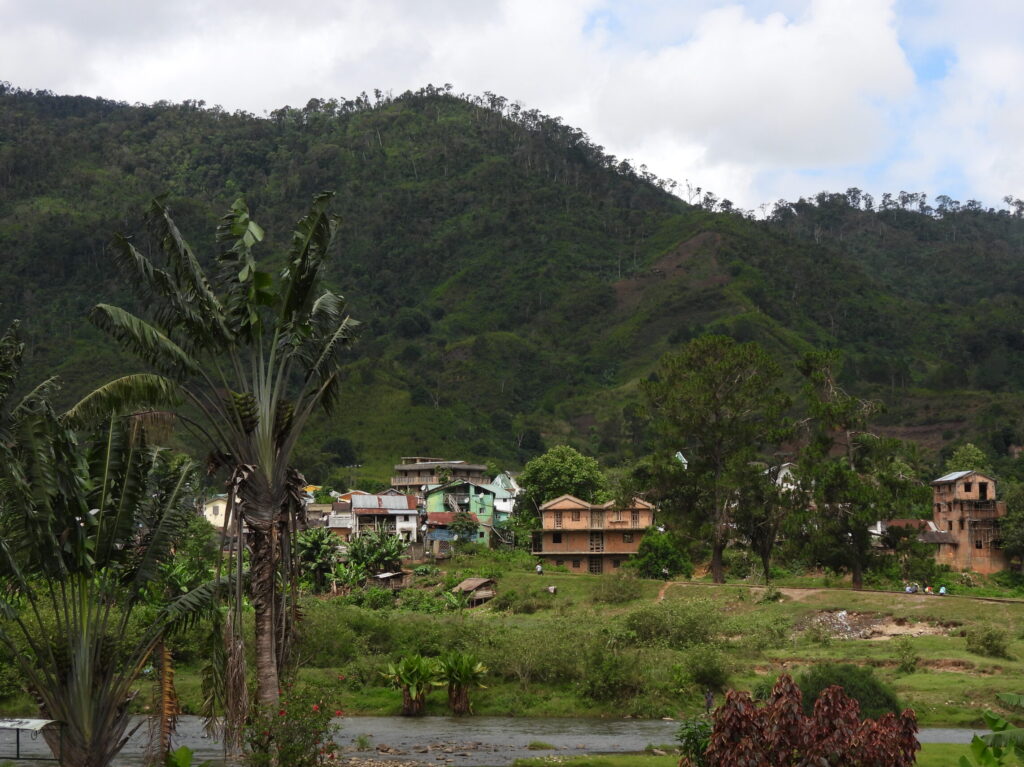
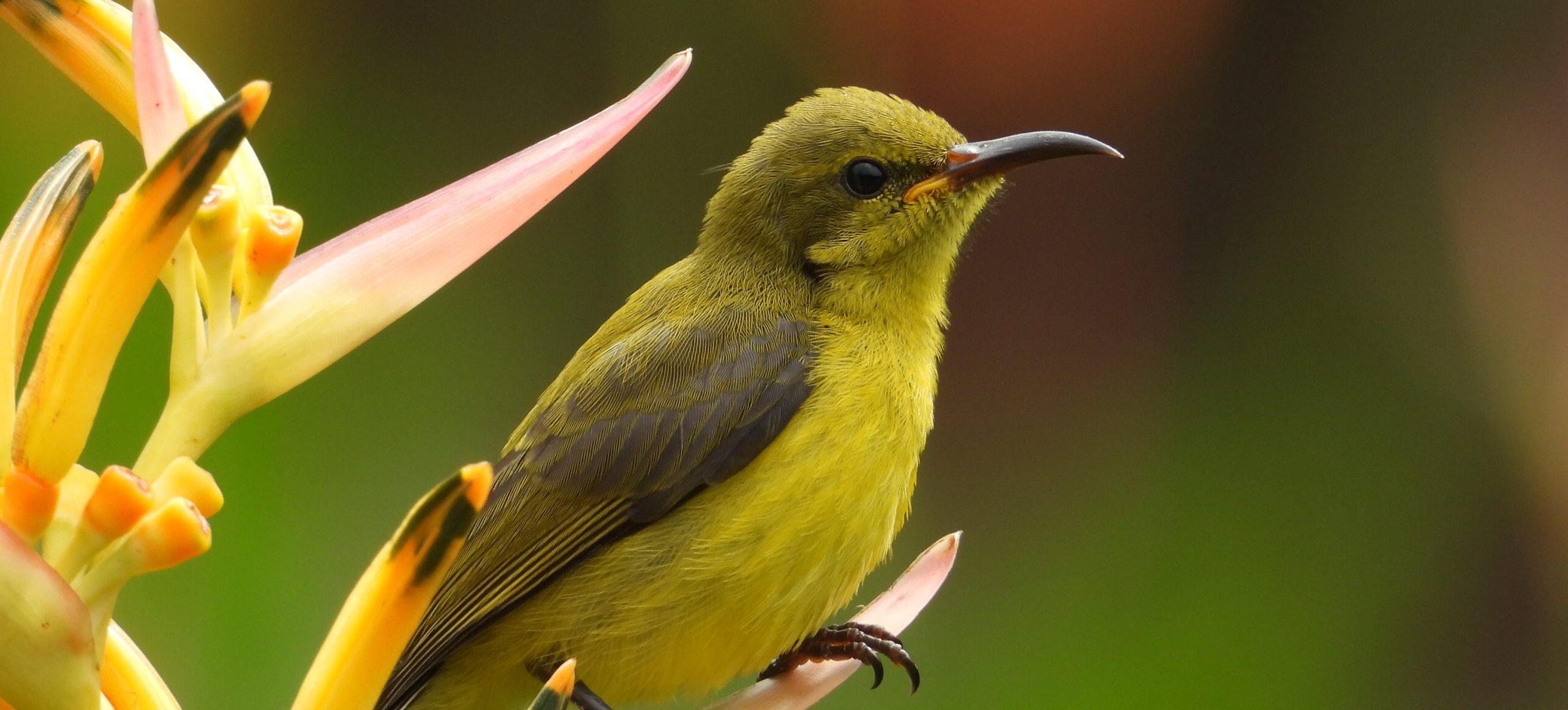
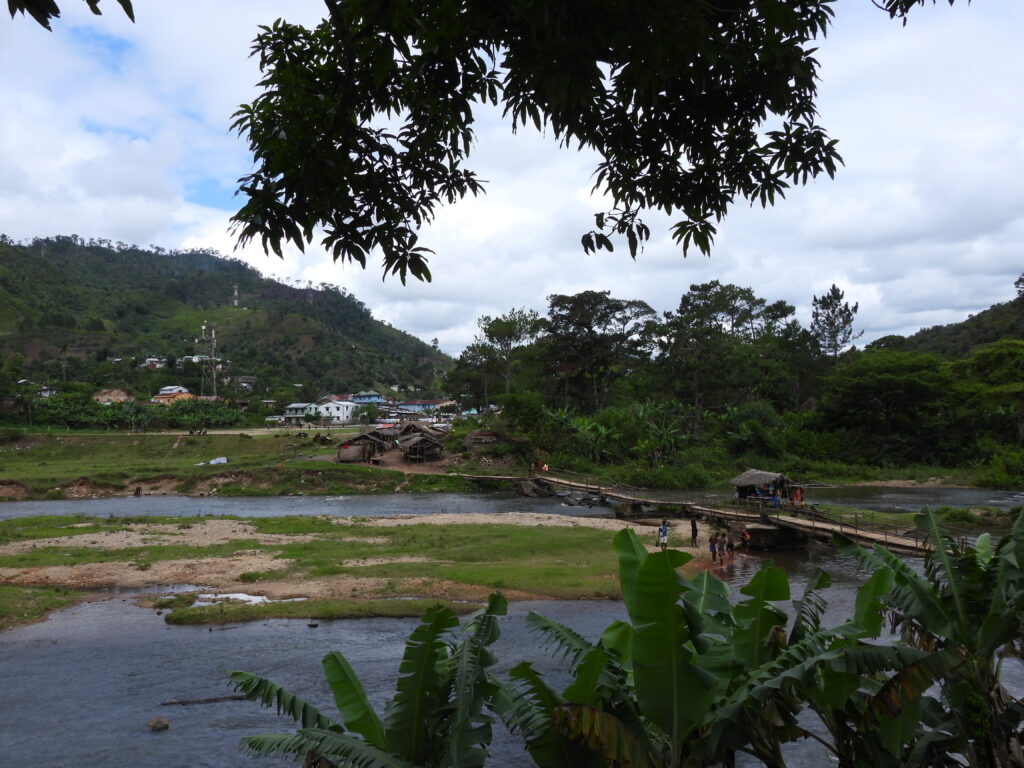
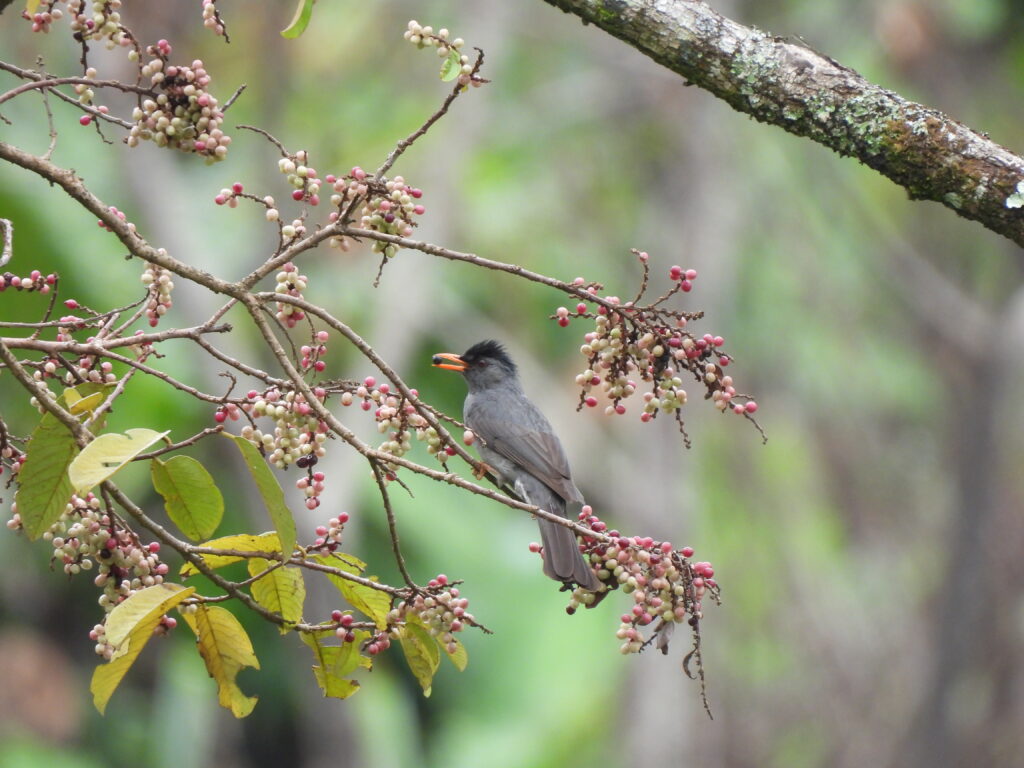
Ranomafana village is crossed by a bridge over the Namorona River, repeatedly destroyed by hurricanes and torrential rains and rebuilt using logs and wooden planks. On the far side, a well-kept garden offers beautiful views of the colourful village set against a rugged landscape. Large trees hosted Malagasy bulbuls (Hypsipetes madagascariensis), Madagascar white-eyes (Zosterops maderaspatanus), souimanga sunbirds (Cinnyris souimanga) and broad-billed rollers (Eurystomus glaucurus). Introduced species such as common mynas (Acridotheres tristis) and feral pigeons (Columba livia) were also present. The garden was bordered by rice paddies, alive with dozens of dragonflies darting back and forth.
Walking through the streets of Ranomafana village was always full of surprises. On weekends, the market fills the village with stalls selling all kinds of goods. On one occasion, I encountered a small crowd gathered around a tree, where a man was holding a long bamboo pole pointing into the branches. He was keeping several Parson’s chameleons (Calumma parsonii), the heaviest chameleon species in the world, feeding on the tree — about eight individuals in total — and collecting small tips from curious onlookers.

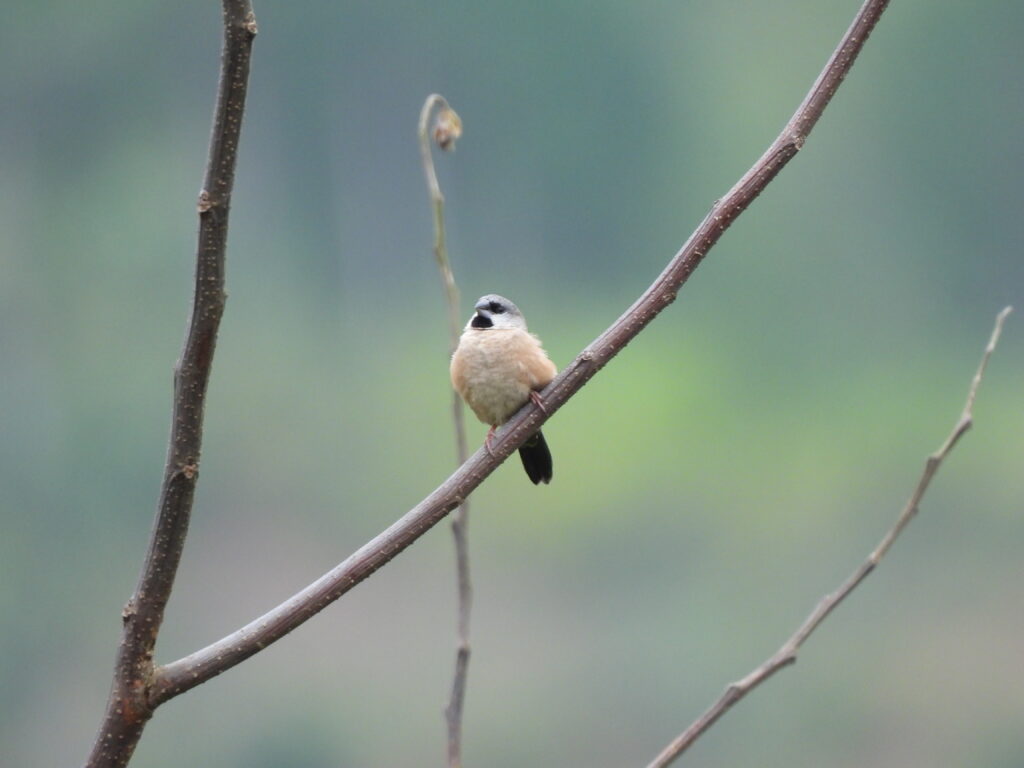
Further east, the same road leads to Ranomafana Arboretum. Although I did not have time to visit the arboretum itself, several of my sampling points were located on the surrounding slopes, covered in dense shrubs and ferns. Cropland trees were favoured by small flocks of Madagascar munias (Lepidopygia nana), Malagasy palm swifts (Cypsiurus gracilis) and Malagasy coucals (Centropus toulou), among others. In a more open area bordered by shrubs, I once flushed a pair of Madagascar partridges (Margaroperdix madagarensis).
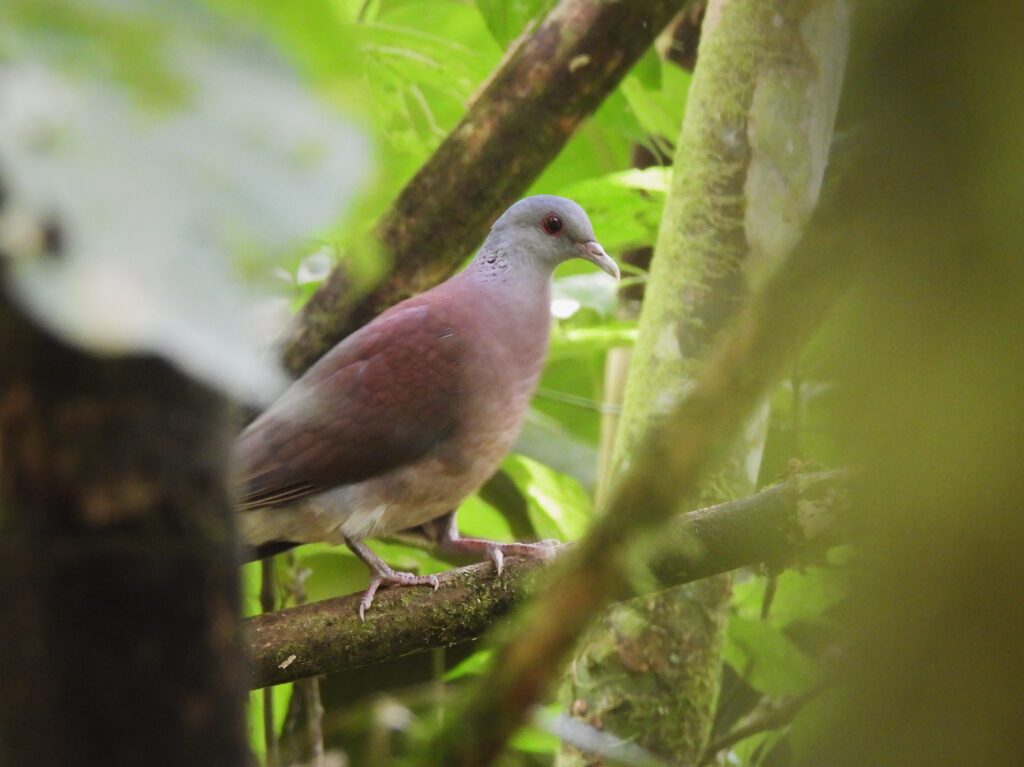
Denser vegetation around the village provided views of Malagasy turtle doves (Nesoenas picturatus), chabert vangas (Leptopterus chabert) and spectacled tetrakas (Xanthomixis zosterops). The calls of Malagasy brush warblers (Nesillas typica) could be heard rising from the thick understory.
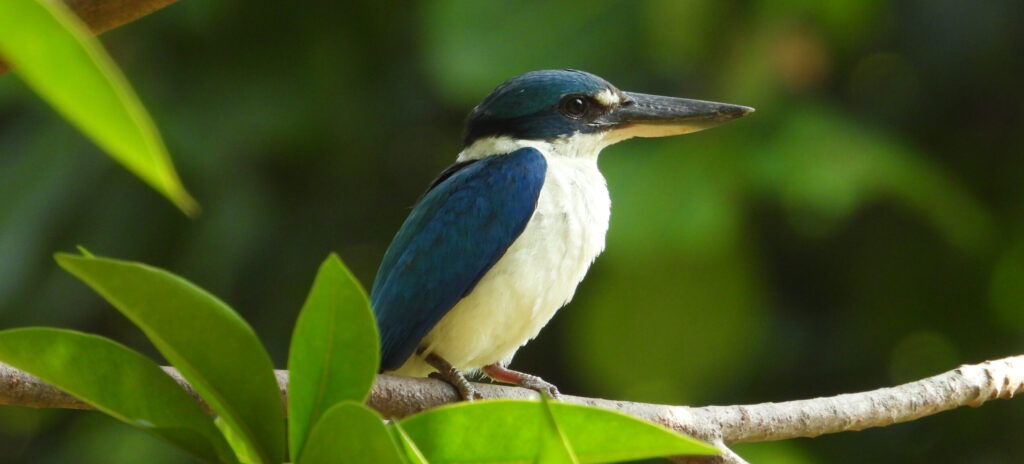
On one of our surveying outings, while leaving the forest, we stumbled upon a beautifully kept garden owned by a local couple several hundred metres east of the village. They warmly welcomed us and proudly showed us the different areas they had created and the plants they carefully tended. A narrow path crossed two rice paddies with flowing water where they raised tilapia, and there we connected with a Malagasy kingfisher (Corythornis vintsioides) and a moorhen (Gallinula chloropus).
The charm of Ranomafana left a lasting mark on me during the many visits I made to the village on my free days throughout the month I spent based near the National Park. Beyond the forest and its iconic wildlife, it was the everyday life of the village — its people, sounds, rituals and small encounters with nature — that gave Ranomafana its soul, and made it feel as memorable as the rainforest itself