Back in 2023, I stayed for about a month at Centre ValBio (CVB), right in the heart of the montane rainforest of Madagascar’s eastern escarpment in the heart of Ranomafana National Park. This research station serves as a campus of Stony Brook University and provides cutting-edge facilities and accommodation for researchers in an otherwise very remote location. Prize-winning architecture, all surrounded by rainforest. Luckily, breaks between fieldwork allowed me to explore part of the forest’s diversity straight from CVB.

Reaching CVB from Antananarivo’s Ivato International Airport involves a long 11-hour drive through seemingly endless grass-covered plains and hills, largely barren due to man-made fires. Madagascar’s wildlife loss crisis is starkly evident for most of the journey, with only the final stretch entering the highland forests — a remnant of biodiversity in an otherwise degraded landscape. By the time I reached the Ranomafana area and checked in at CVB, it was already dark. The jungle was alive with the sounds of frogs, crickets and countless other creatures. It was only the following morning, however, that I began to truly grasp the diversity surrounding the station.

The views around CVB are otherworldly. The research station lies next to the RN25 road connecting Ranomafana village and the east coast with the RN7, which leads to Antananarivo or Toliara. Yet once inside the campus, the soundscape is dominated by running water rather than traffic. The Namorona River cascades downhill in a series of dreamy waterfalls, marking the boundary of Ranomafana National Park. The surrounding hills were patrolled by a usually vocal pair of Madagascar buzzards (Buteo brachypterus) on clear days. At times, fog drifted thick and humid through the valley, cloaking everything and leaving only Malagasy swifts (Apus balstoni) slicing through the mist. Even then, the calls of Madagascar cuckoos (Cuculus rochii), cuckoo-rollers (Leptosomus discolor) and greater vasa parrots (Coracopsis vasa) filled the air.
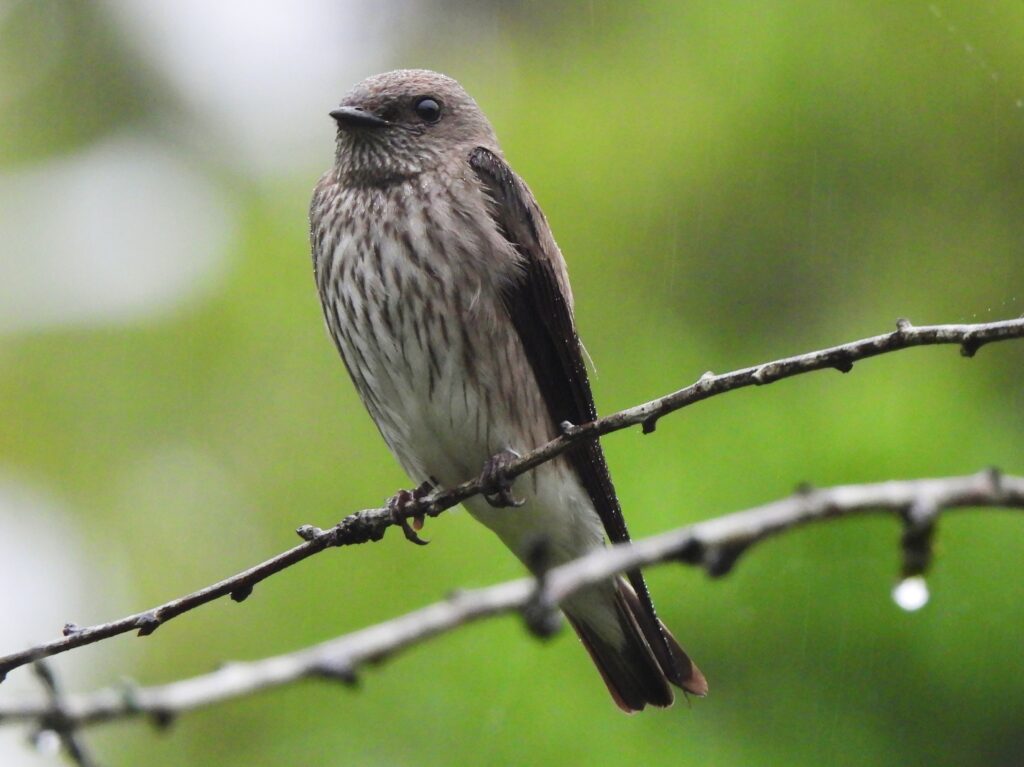
Right at the gate, a small colony of nesting Mascarene martins (Phedina borbonica) seemed to welcome us every day when we returned from fieldwork, and to wish us luck whenever we left. This was the only non-endemic bird species recorded at CVB, as it also breeds on Réunion and Mauritius, and part of the Malagasy population migrates to continental Africa outside the breeding season.
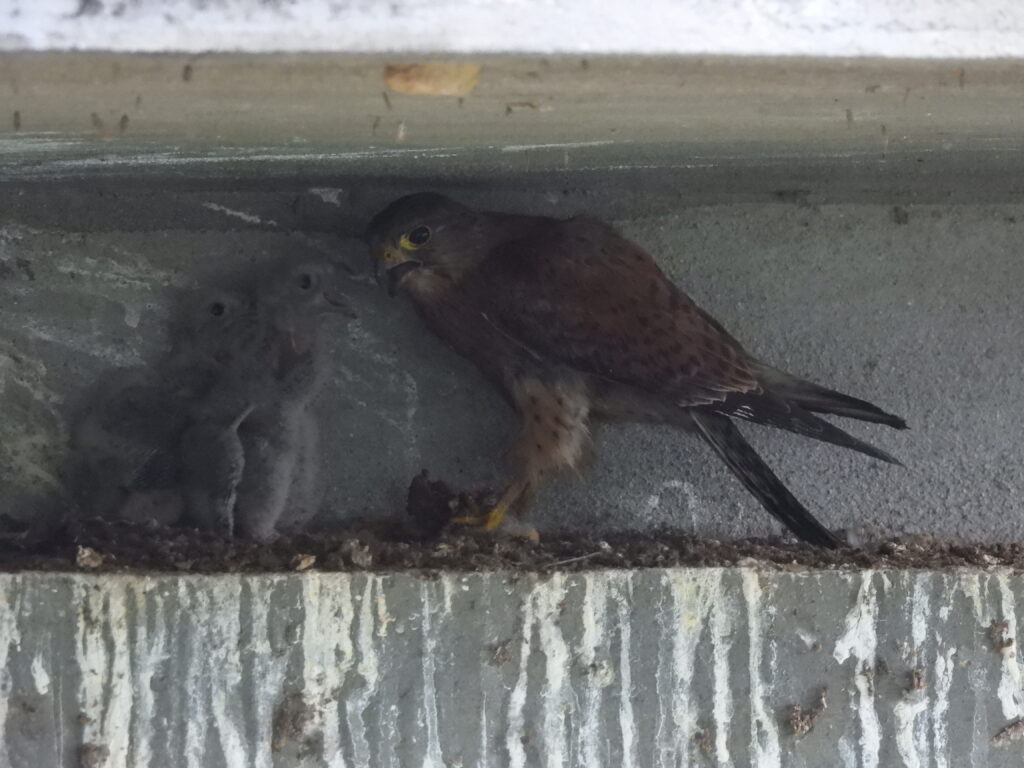
The main building, NamanaBe, was where researchers spent most of their time — transferring data from field forms, socializing, sleeping or attending guest lectures. The building hosted a rufous-coloured pair of Malagasy kestrels (Falco newtoni), which nested on ledges just below the flat where my bedroom was located. Watching their three chicks grow from tiny hatchlings to fledglings and eventually leave the nest over the course of my stay was utterly captivating.
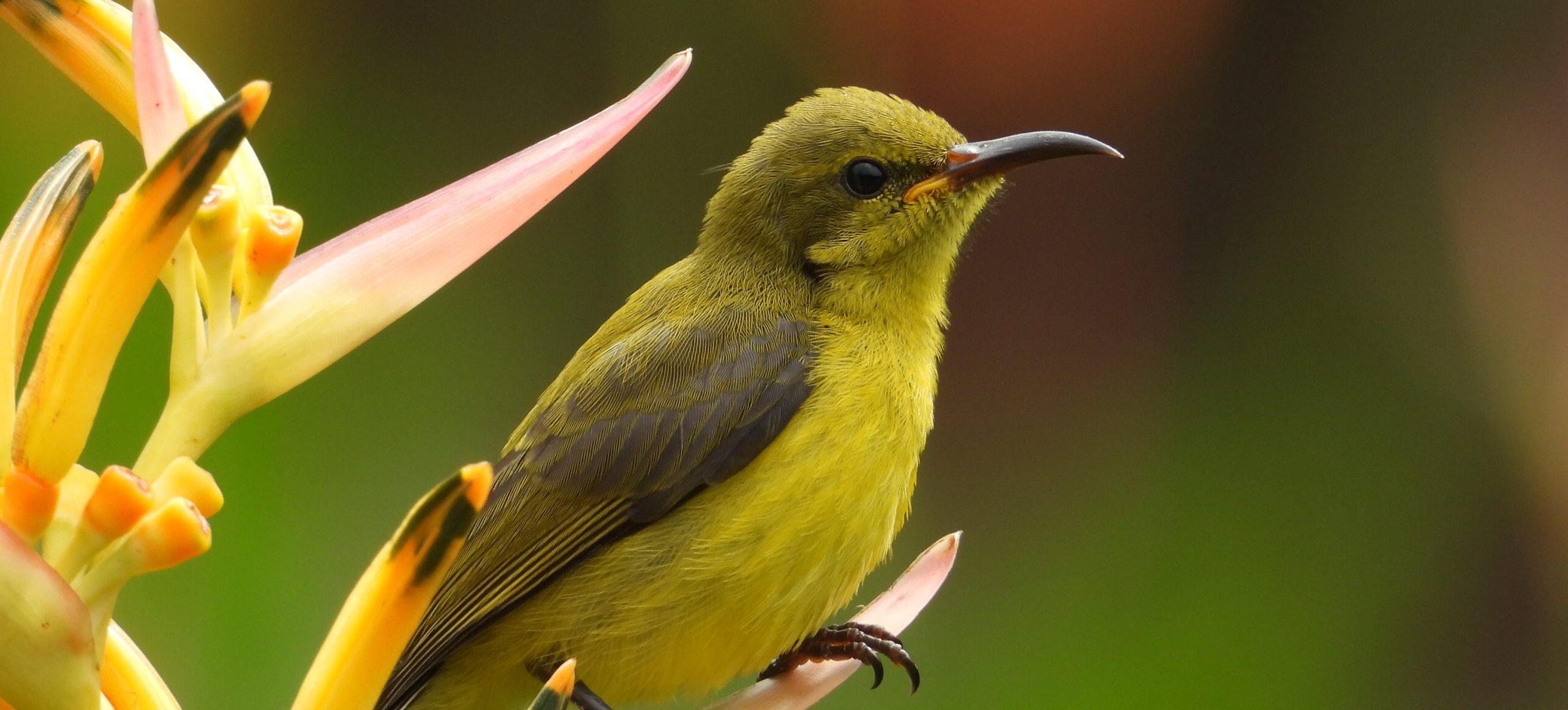
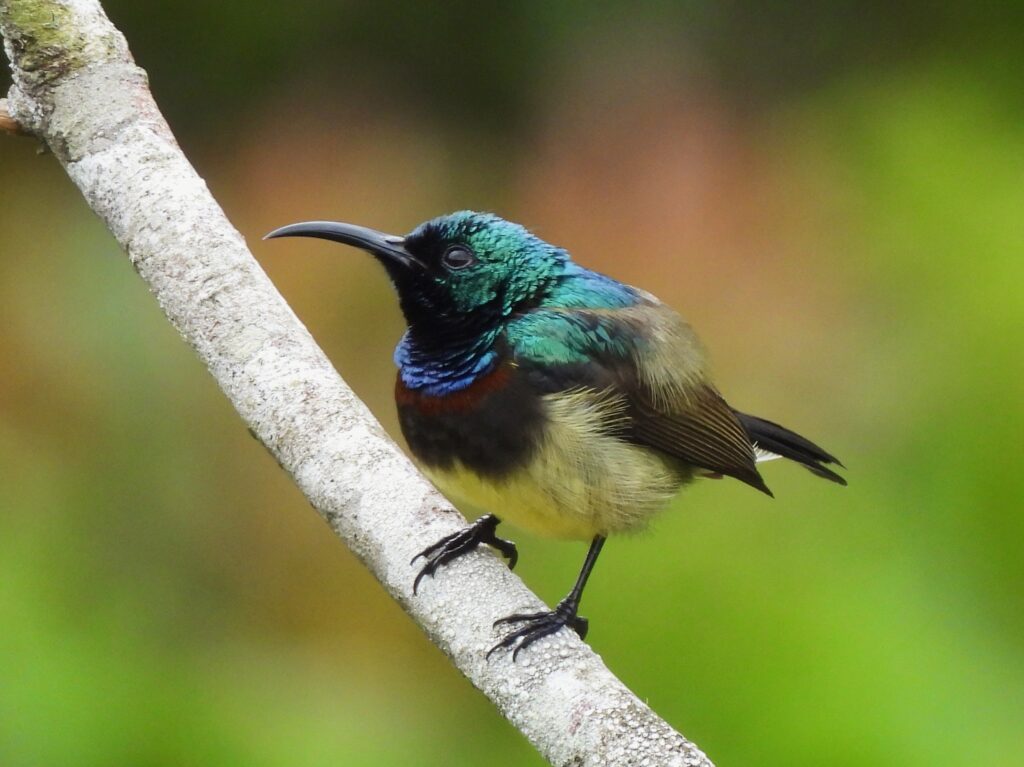
After fieldwork, researchers and interns often gathered on the NamanaBe balcony to relax and grab a drink. A crested drongo (Dicrurus forficatus) regularly perched on the railing when no one was around. Nearby, pairs of Malagasy sunbirds (Cinnyris notatus) and souimanga sunbirds (Cinnyris souimanga) defended territories in dead trees opposite the building, offering excellent views of these colourful, iridescent gems.
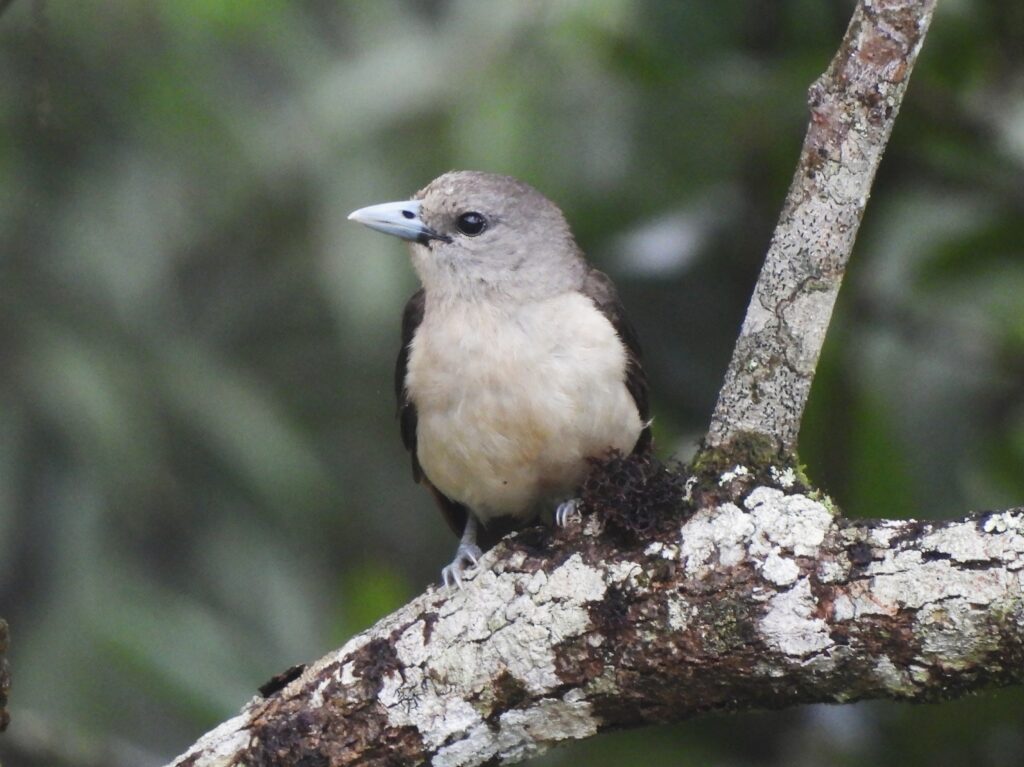
In fact, NamanaBe provided some superb birding moments during the rare days off. Mixed flocks foraging at the forest edge gave me my first looks at Madagascar white-eye (Zosterops maderaspatanus), Madagascar cuckooshrike (Ceblepyris cinereus), white-headed vanga (Artamella viridis), tylas vanga (Tylas eduardi) and Madagascar blue vanga (Cyanolanius madagascarinus).
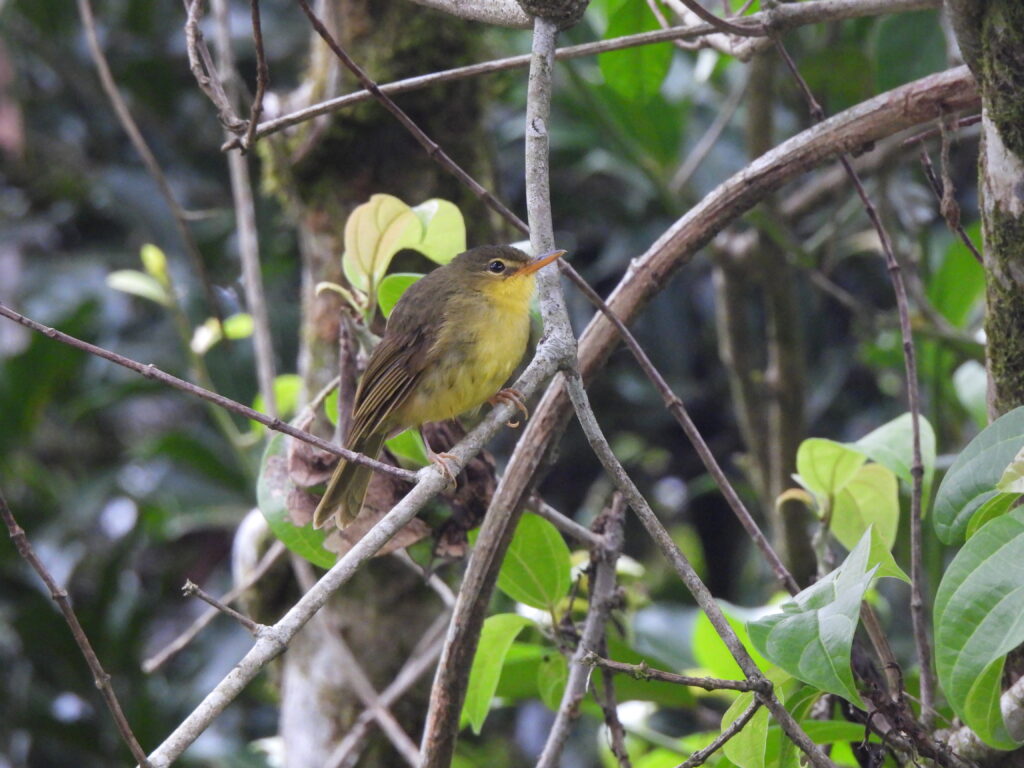
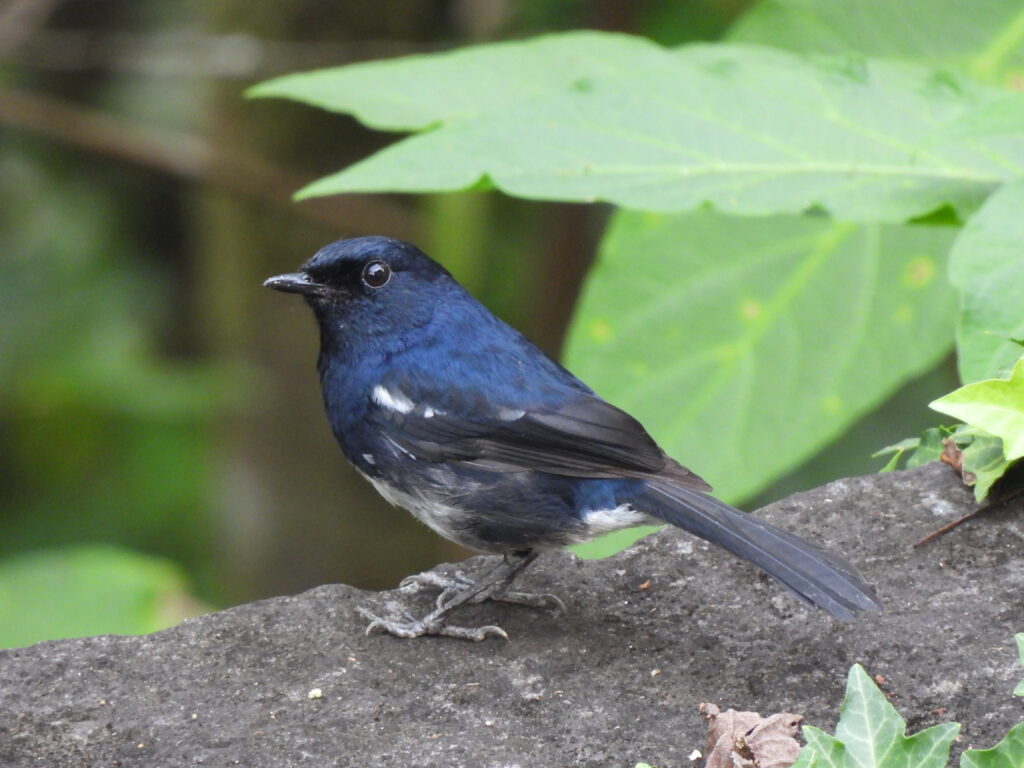
When birding around the building became this rewarding, I often wandered further along the garden edge. A pair of Madagascar magpie-robins (Copsychus albospecularis) was almost always present — one individual notably dark, reminiscent of the form albospecularis, unlike the pied inexspectata. Here I also connected with stripe-throated jery (Neomixis striatigula), spectacled tetraka (Xanthomixis zosterops) and my very first Tjiasmanto’s chameleon (Calumma tjiasmantoi), a narrow endemic to Ranomafana described only as recently as 2020.
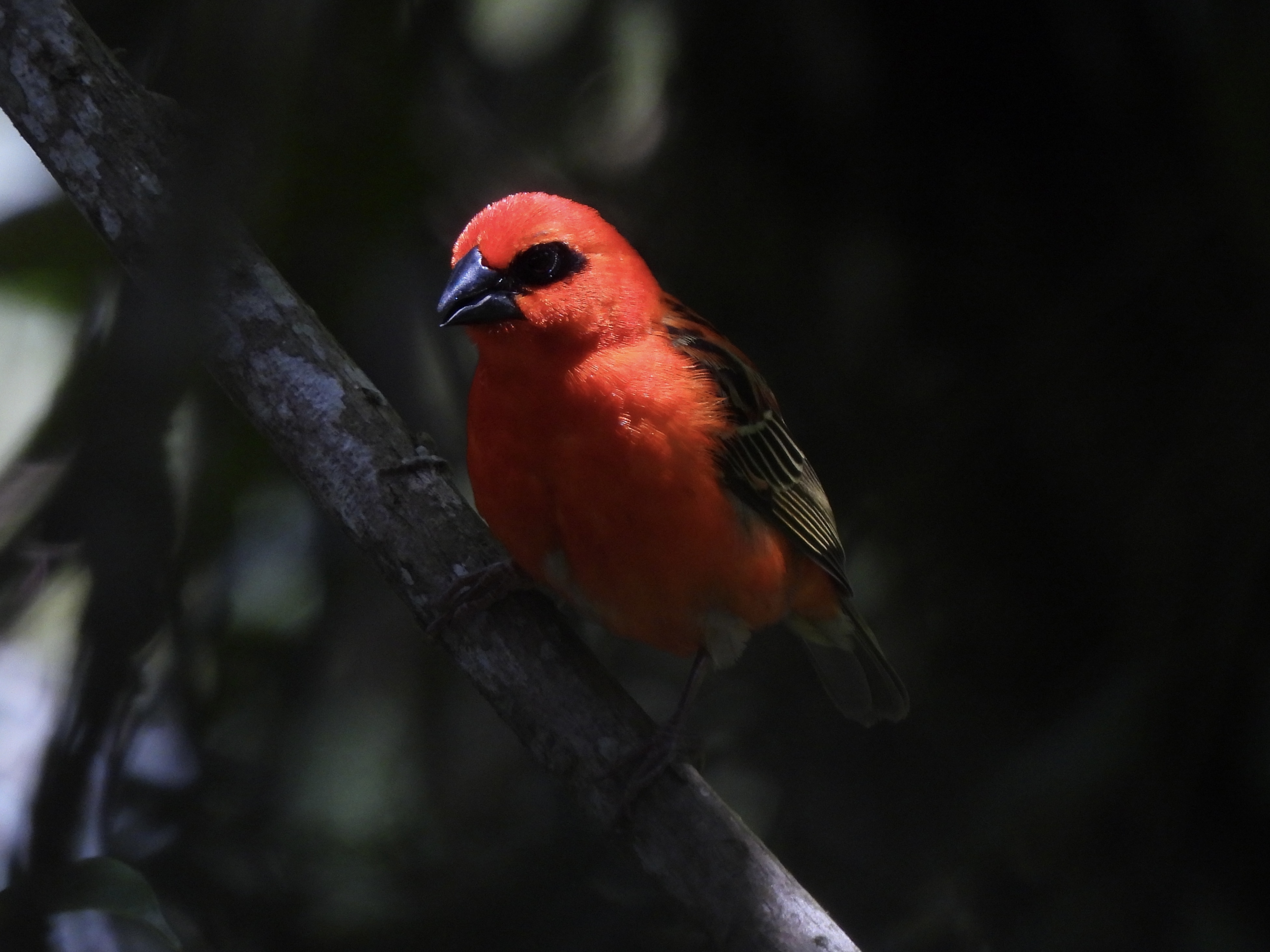
The restaurant, where we shared meals and celebrated events ranging from Malagasy festivities to American Thanksgiving, is located on the opposite side of campus. Red fodies (Foudia madagascariensis) and Malagasy bulbuls (Hypsipetes madagascariensis) frequented the area. CVB’s director Patricia Wright kindly showed me a Nelicourvi weaver (Ploceus nelicourvi) nest right on the restaurant balcony, and we enjoyed watching these skilled builders while having breakfast. Over time, I also spotted red-bellied lemurs (Eulemur rubriventer) and red-fronted lemurs (Eulemur rufifrons) from that balcony’s spectacular viewpoint.
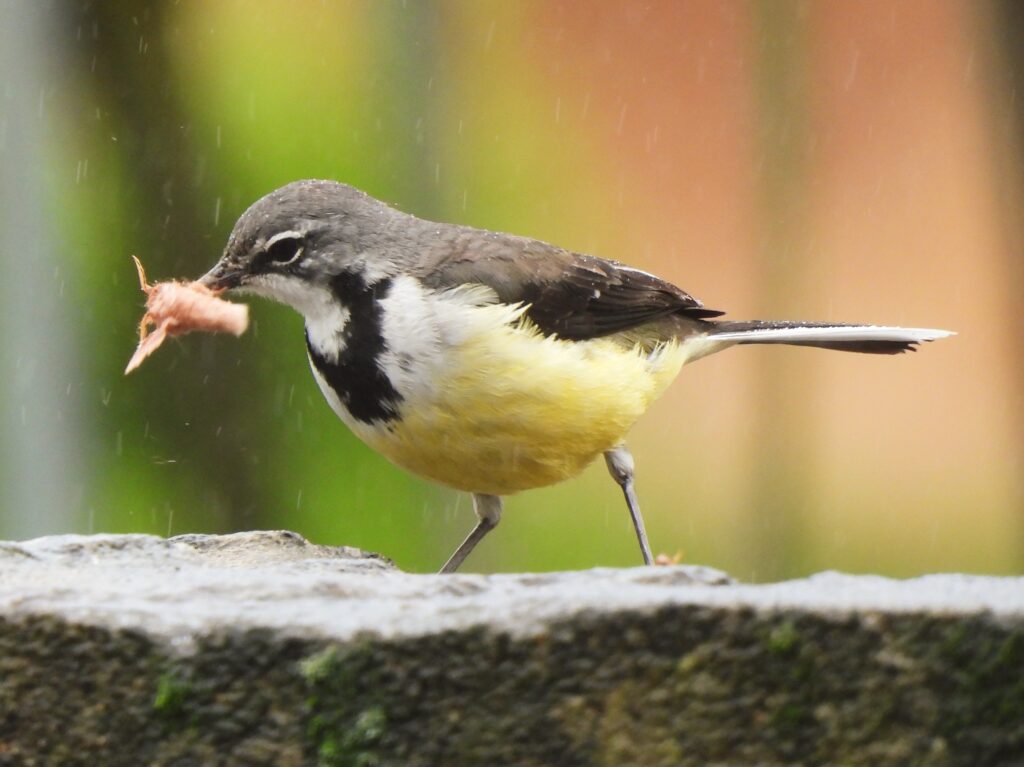
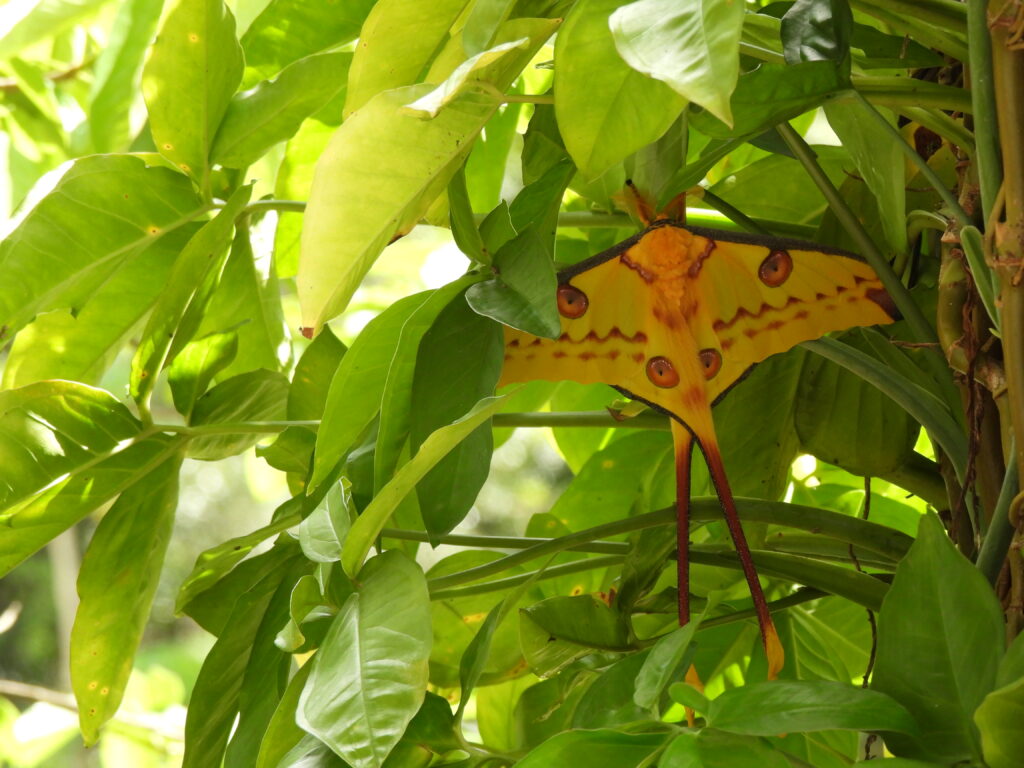
A pair of Madagascar wagtails (Motacilla flaviventris) called and flew back and forth between buildings everyday, hunting insects attracted to lamps or windows at night. So seemed to do some colorful peacock day geckos (Phelsuma quadriocellata) and other reptiles. In fact, the amount of these creatures attracted to the campus was overwhelming, concerning at times. We experienced flying ant swarming days, but generally had a plethora of large beetles, moths, dragonflies and katydids attracted to the facilities. This included awesome encounters with Madagascar emperor moths (Bunaea aslauga) and the mythical Madagascar comet moth (Argema mittrei).
The entry to Madagascar National Parks at might is strictly forbidden with only few exceptions, but walking the roadside out of CVB did the trick. I joined colleagues on short night walks several nights, when we got numerous stick insects, moths and frogs on the spotlight, as well as O’Shaughnesy’s chameleons (Calumma oshaughnessyi) and a white-banded tree snake (Phisalixella arctifasciata). No nocturnal lemurs or sleeping birds around CVB for me sadly!
Staying in CVB, in the middle of the forest, felt like a dream. This hotspot of research holds some of the world’s leading experts in Malagasy wildlife, both foreign and especially local, so breaks in the station during fieldwork were extremely productive. Most of what I learned while in Madagascar was while looking for birds and other creatures through the lens of others.