Patagonian waters are extremely productive, bringing thousands of penguins, sea lions, whales and other marine predators to breed very close to shore every year. Periodically, mass-mortality events decimate their populations: avian influenza kills thousands of pinnipeds and seabirds, carnivores prey on hundreds of penguins, or large numbers of cetaceans die en masse over short periods. All these phenomena bring tonnes of marine nutrients across the sea-land interface and into terrestrial ecosystems. Tati Pessano and I work on carrion ecology, and we got the chance to plan a fieldwork campaign in a pristine Patagonian coastal ecosystem, trying to disentangle the connections between biodiversity, nutrient pulses and waves of mortality.
We got the chance to work in Islote Lobos National Park, a protected area established only in 2022, still off the beaten track and virtually off-limits to tourists at the moment. Islote Lobos is located in the San Matías Gulf, north of Península Valdés in the coastal portion of Río Negro Province. This park protects large colonies at the northernmost edge of the range of some seabird species on a set of islands that are connected to the continent only during low tide — allowing researchers, but also herbivores and predators, to enter and impact them. These seabirds occur next to some stunning monte specialties, as this ecoregion, endemic to Argentina, stretches south into these very lands.
Logistics for fieldwork were rustic but straightforward: a base camp was home for all the researchers, and we could only enter or leave Islote Lobos with the park rangers, since the National Park is fully surrounded by private rangeland and the situation between land protection and private property is rather complex in the area.
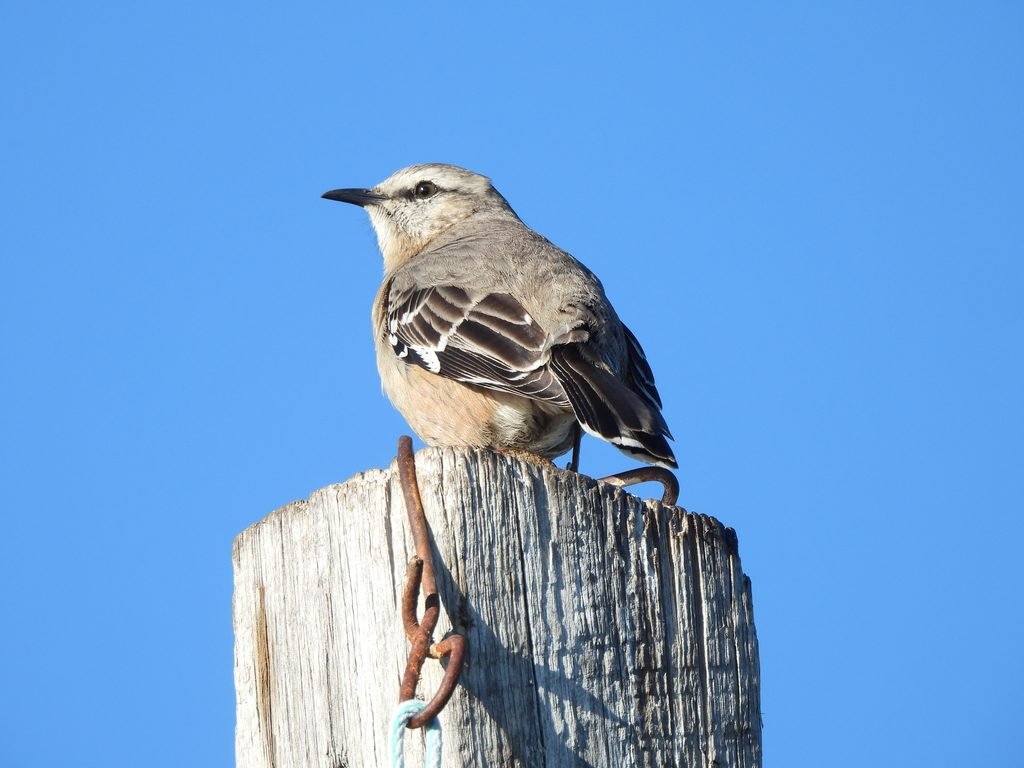
Tati and I joined a group of four inspirational women in science working with penguins, passerines and waders, and spent a week sharing camp and fieldwork with them. We also enjoyed the company of two of the local rangers, and some camp guests, including a rufous-collared sparrow (Zonotrichia capensis) that kept fighting its own reflection on a metallic sheet and a rather annoying Patagonian mockingbird (Mimus patagonicus) that woke us up with its loud, robotic song before sunrise every day. Although it didn’t linger, I bumped into a scissor-tailed nightjar (Hydropsalis torquata) on the first morning while visiting the toilet before dawn.
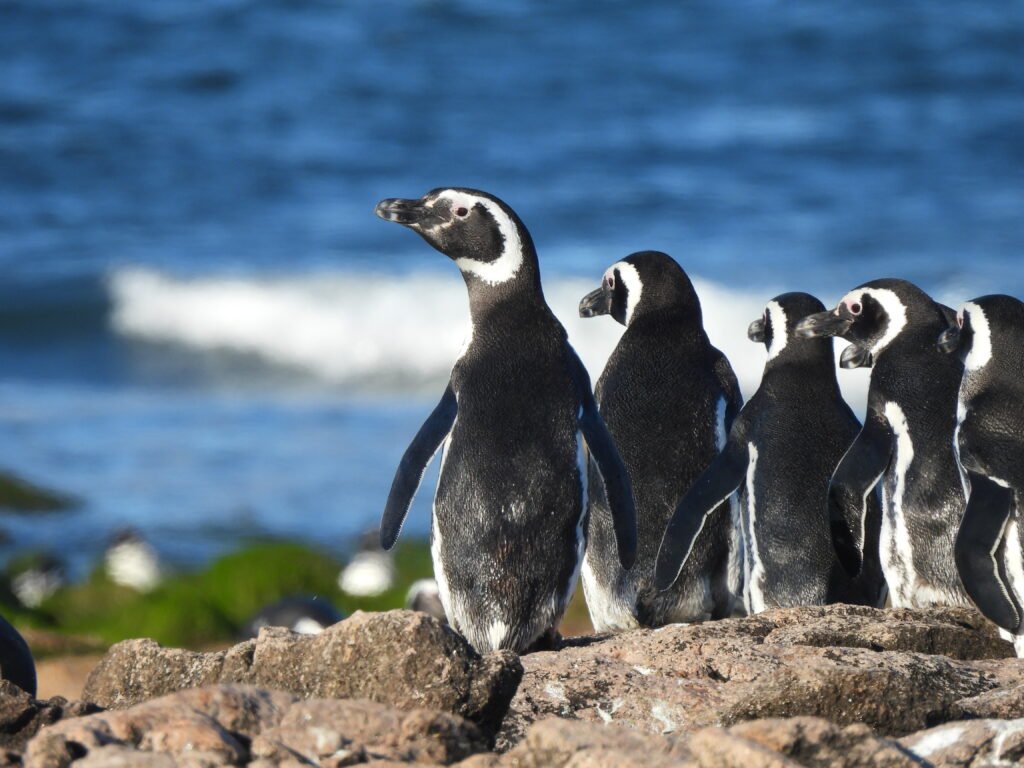
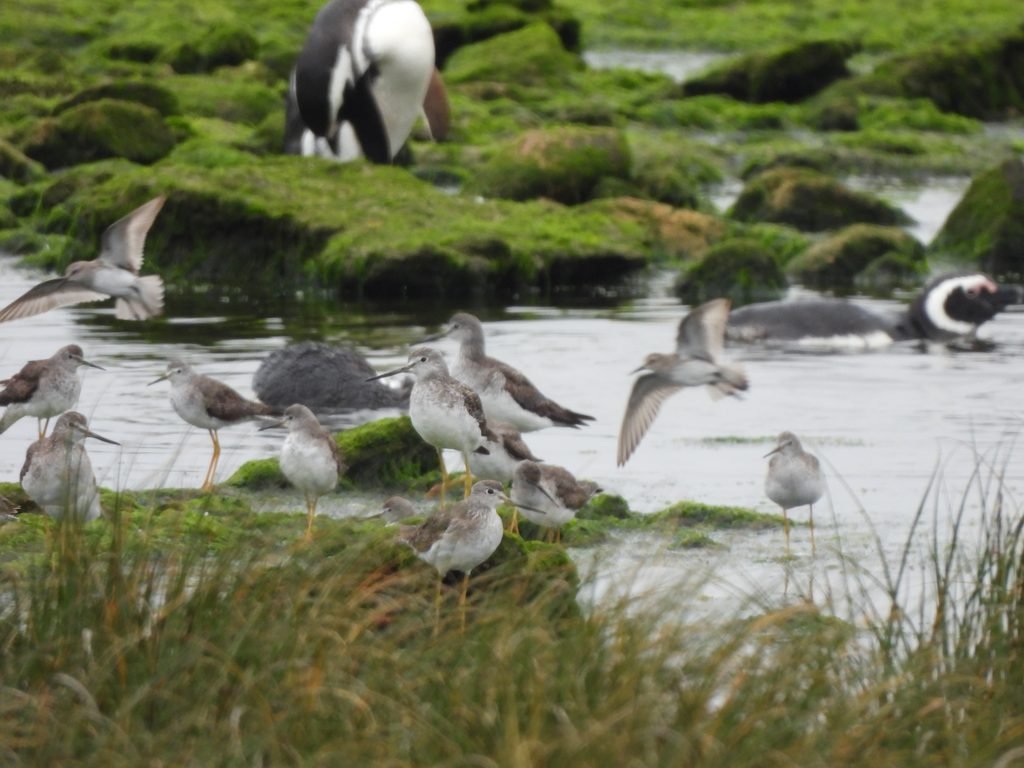
Our quest for carcasses first brought us to the islands as we tried to uncover the long-term effects of mass mortalities on the ecosystem. The largest of them all, Isla Pastosa, holds a large breeding population of Magellanic penguins (Spheniscus magellanicus) and South American sea lions (Otaria flavescens). Reaching the island takes a 20-minute walk over the kelp-covered intertidal area during low tide — a walk surrounded by white-rumped sandpipers (Calidris fuscicollis), lesser yellowlegs (Tringa flavipes), greater yellowlegs (Tringa melanoleuca), ruddy turnstones (Arenaria interpres), American golden plovers (Pluvialis dominica) and grey plovers (Pluvialis squatarola).
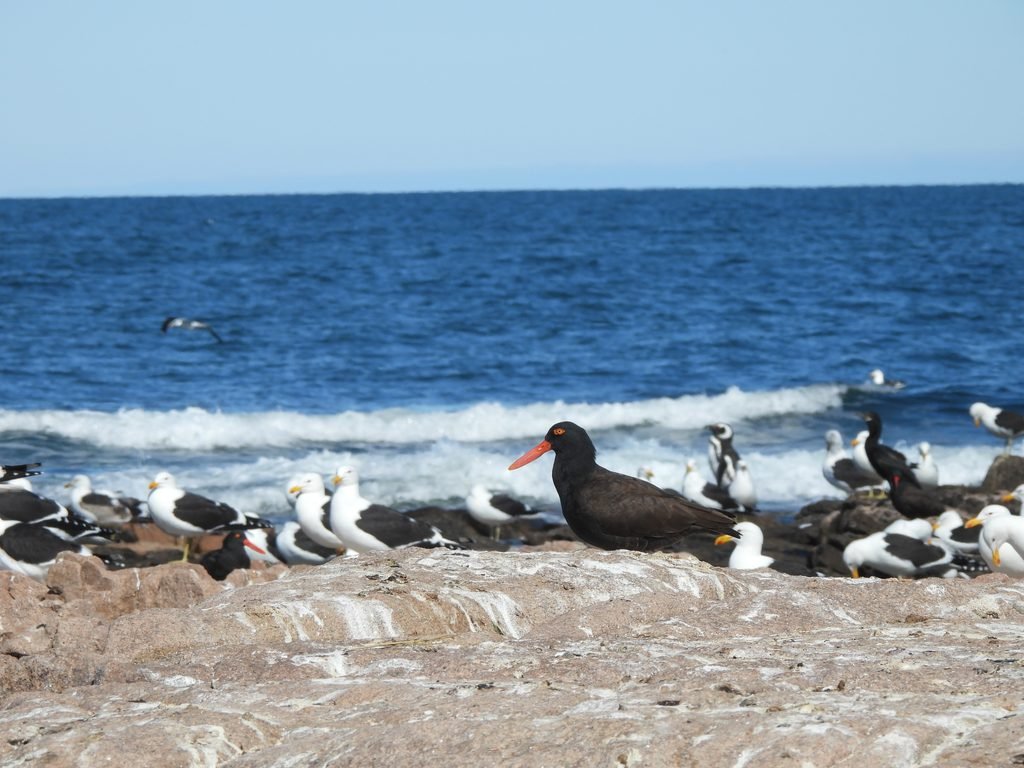
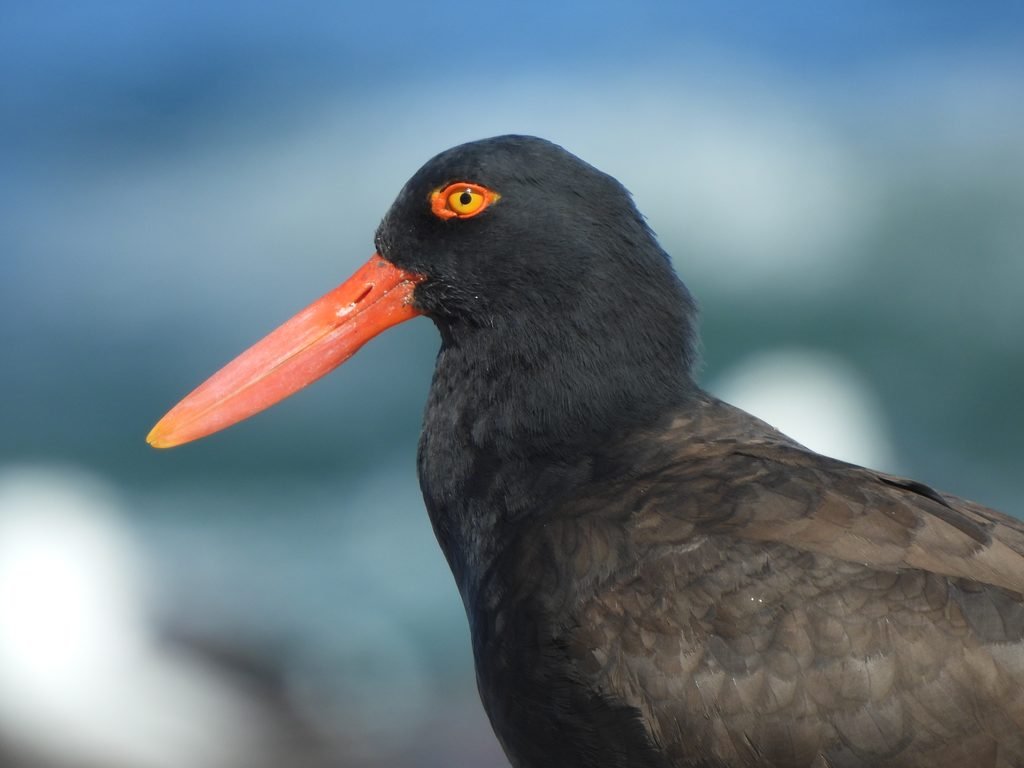
Working in the seabird colony is an overwhelming experience. The sound of thousands of penguins and kelp gulls (Larus dominicanus) is completely deafening. Blackish oystercatchers (Haematopus ater) and American oystercatchers (Haematopus palliatus) defended their nests as they laid the first eggs of the season.
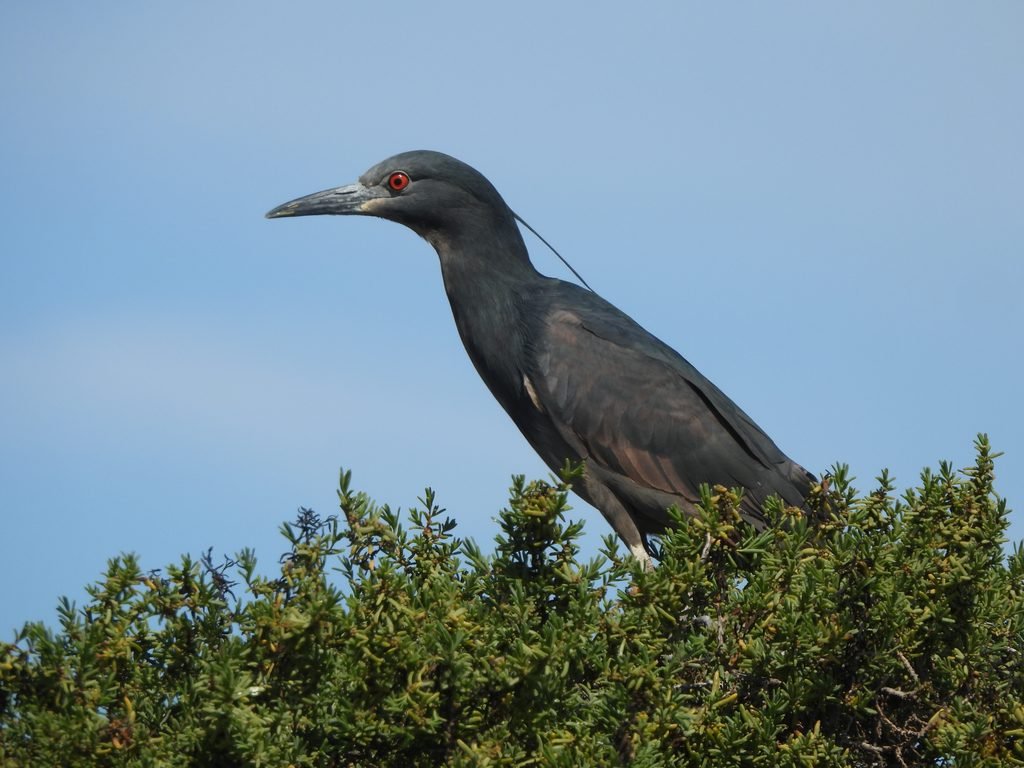
On the other side of the island, a heronry featured several birds that left us in awe. Among numerous black-crowned night-herons (Nycticorax nycticorax), a number of individuals showed some sort of dark phase or melanistic plumage, featuring a deep dark blue tone overall, except for a dark red eye and whitish parts around the bill and throat. These stunning birds seem to occur in significant numbers in the archipelago, as we also saw some dark individuals in Islote de los Pájaros — where good numbers of cocoi herons (Ardea cocoi), great egrets (Ardea alba) and Neotropic cormorants (Nannopterum brasilianum) also breed.
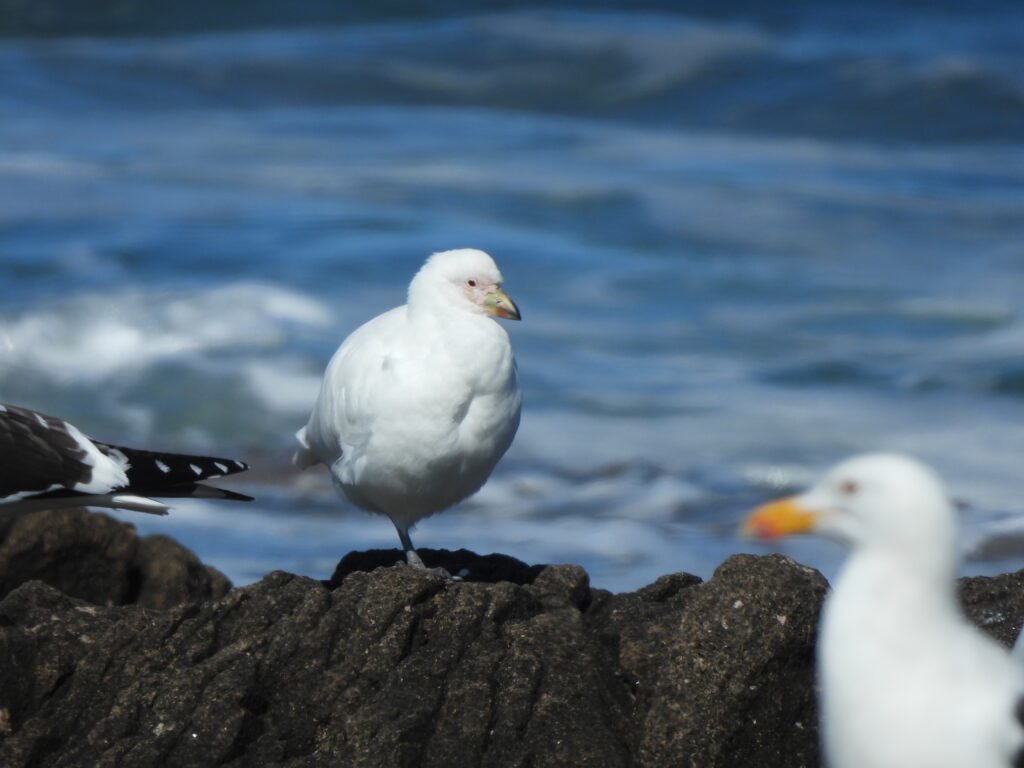
The sides of the islands facing the ocean were particularly teeming with life. Hundreds of sea lions resting on Isla Pastosa were guarded by snowy sheathbills (Chionis albus) at all times. It is hard to believe that these unique Antarctic birds maintain such pure white plumage considering that they munch on sea lion poop and carrion. They surely did remind a bit of pigeon, justifying their local name “paloma antárctica” (Antarctic dove).
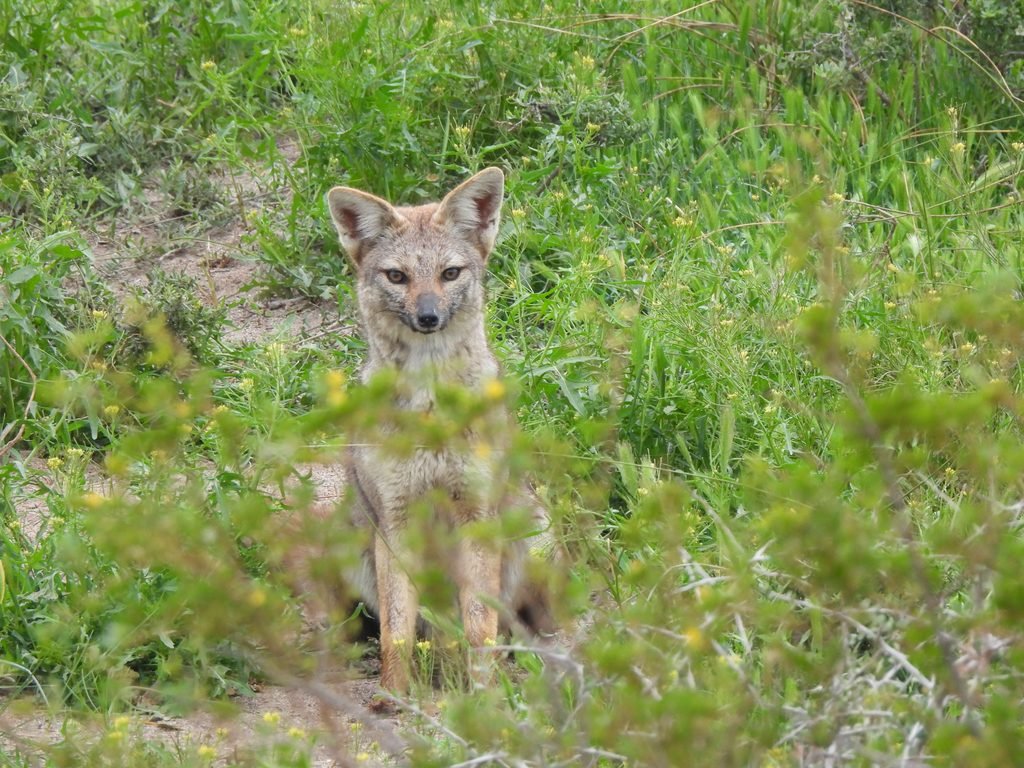
However, sheathbills were not the only scavengers on the island. While we were preparing our material to monitor scavenging on a freshly dead penguin, a grey fox (Lycalopex griseus) emerged from a nearby bush and kept following us throughout the tiny island all day long. Despite the very limited contact with humans that this fox must have experienced, it remained confiding and inquisitive.
Besides, the carcasses we found had been eaten by black vultures (Coragyps atratus) and turkey vultures (Cathartes aura), which had no problem crossing the waters separating the islands from the shore. For the sake of our work, we understood that these vultures are likely the main pathway driving marine nutrients far inland, beyond these carcass-infested islands.
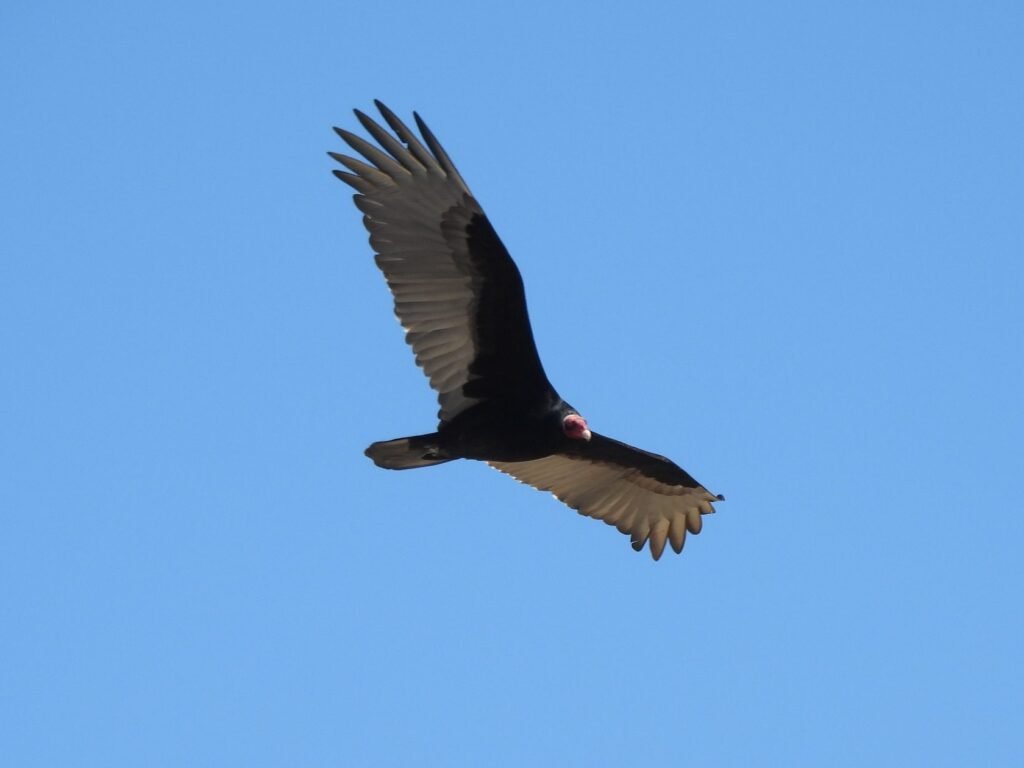
Beyond surveying Isla Pastosa and Islote Pájaros, our fieldwork also involved beach walks along the continental coast, looking for stranded carcasses. A single male guanaco (Lama guanicoe) shared our transect and was not happy about us choosing to walk his pathways. Not only that, we crossed fresh puma (Puma concolor) footprints on the beach! After finding remains of a striped owl (Asio clamator), a dolphin, a couple of whales and numerous penguins, sea lions and imperial cormorants (Leucocarbo atriceps), we walked back to camp at sunset, when Tati spotted a Humboldt’s hog-nosed skunk (Conepatus humboldtii) right in front of us.
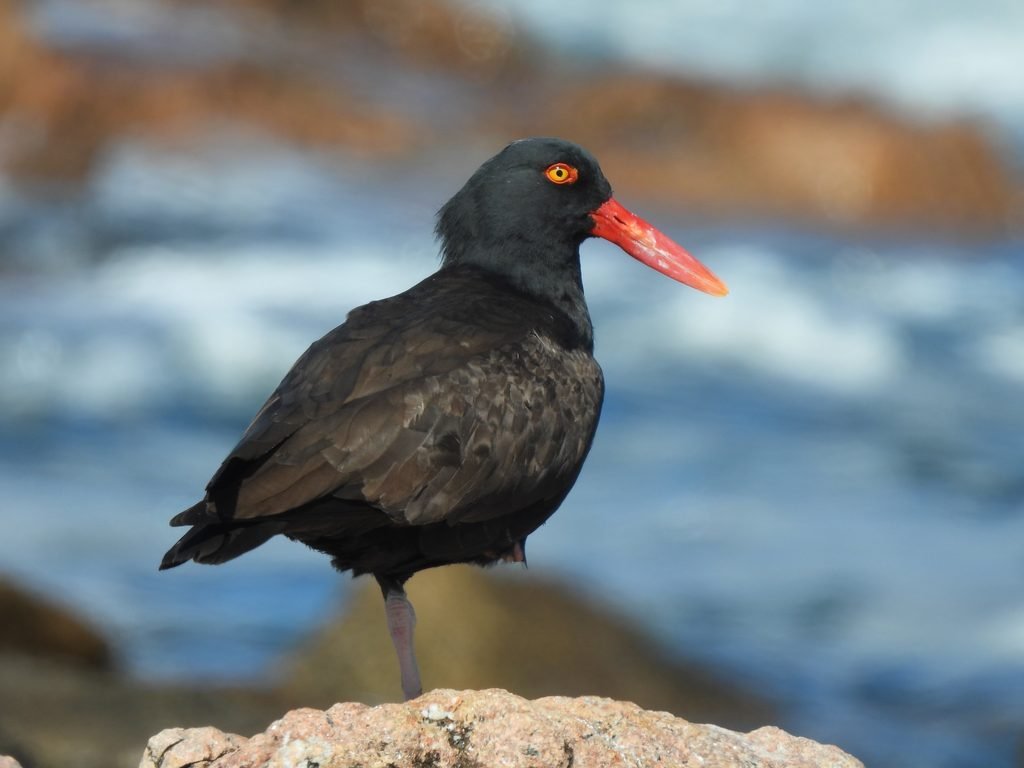
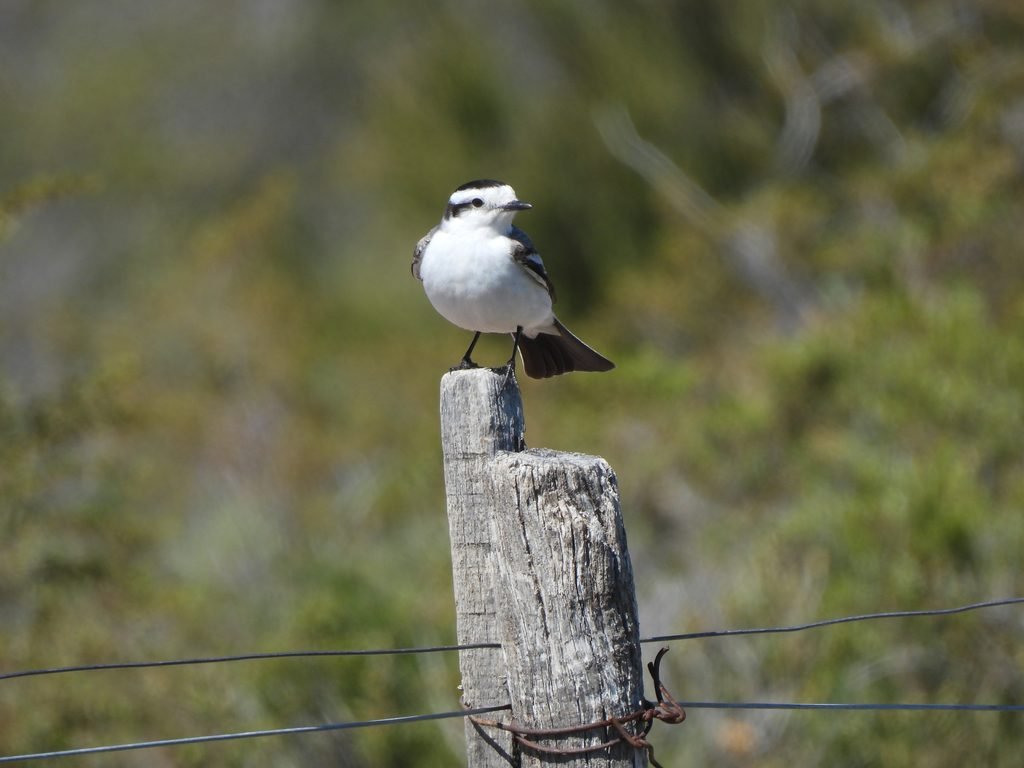
We finished fieldwork well over a day before we could leave the park, leaving us some precious time to get acquainted with the numerous monte specialties that could be found in Islote Lobos National Park. Our last time on Isla Pastosa featured the first of many crowned monjitas (Neoxolmis coronatus), and we bumped into a female white-winged black tyrant (Knipolegus aterrimus) as we walked back.
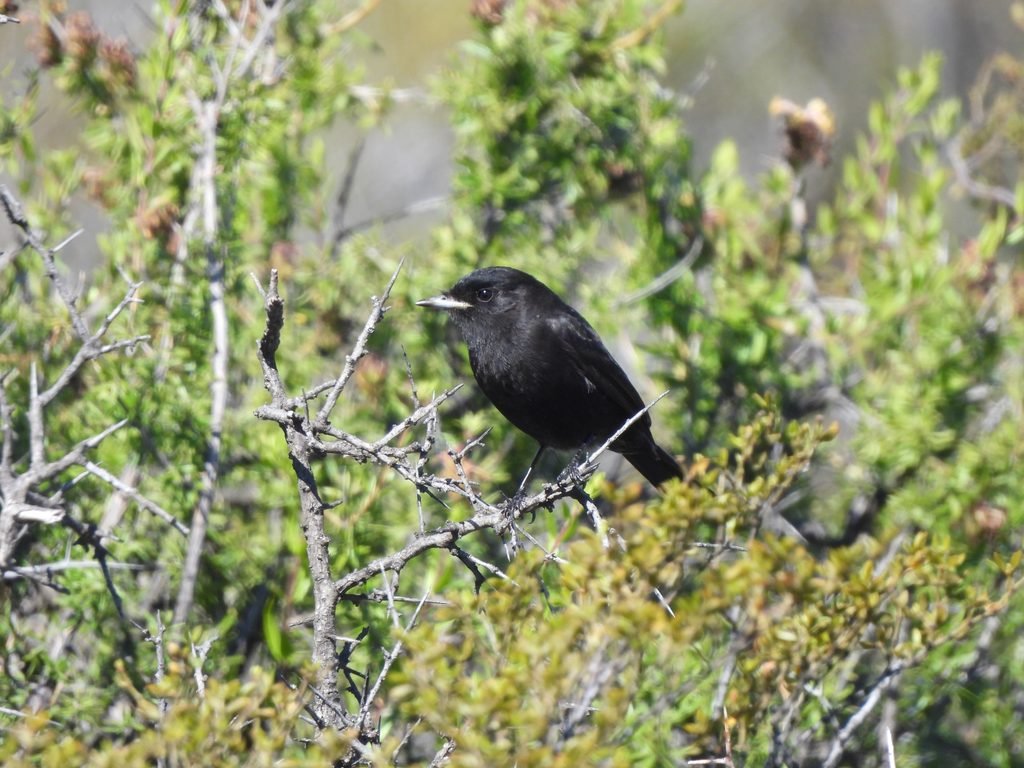
In fact, after finding different male black-tyrants, we bumped into a bird displaying on a shrub, switching branches with short hops and twirls while singing. This behaviour and this song are the best features for identifying males of the localized Hudson’s black tyrant (Knipolegus hudsoni) from the otherwise indistinguishable white-winged black-tyrant. Yet another monte target bagged!
Later, we joined Silvina Ippi’s efforts to try to locate the few yellow cardinals (Gubernatrix cristata) in the park. This highly sought-after bird is being pushed towards extinction by poachers due to a longstanding tradition of keeping the species as a cage songbird. Dozens of these endangered birds are seized from the illegal trade, but low densities and a poor understanding of population genetics limit the effectiveness of releases as a measure to safeguard the species.
Silvina showed us some areas where these birds had been reported by the rangers over the previous months. I was stunned to learn that a small woodland of chañar (Geoffroea decorticans) seemed to be the cardinal’s preferred nesting habitat. The soils of this little chañar forest were covered in a thick carpet of tall nettles and cruciferous plants, and some chañar trunks were painted white. Silvina explained that this little woodland is a vulture roost. However, we did not find vultures or cardinal in this woodpatch. Instead, several white-banded mockingbirds (Mimus triurus), house wrens (Troglodytes musculus), stripe-crowned spinetails (Cranioleuca pyrrhophia) and Straneck’s tyrannulets (Serpophaga griseicapilla) were present.

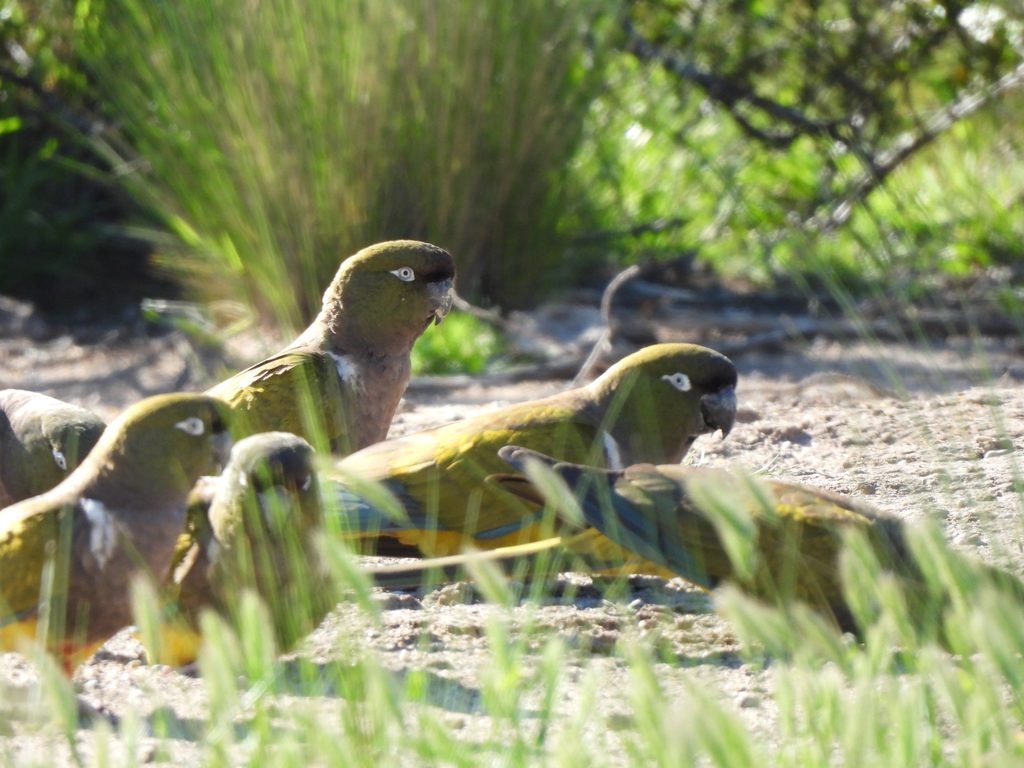
Another walk through a potentially good area for the cardinal brought us to a partially flooded monte area. Besides more crowned monjitas and a number of grey-bellied shrike-tyrants (Agriornis micropterus), here we noted our only band-tailed earthcreepers (Ochetorhynchus phoenicurus) of the field campaign. Flocks of burrowing parrots (Cyanoliseus patagonus) flew over throughout.
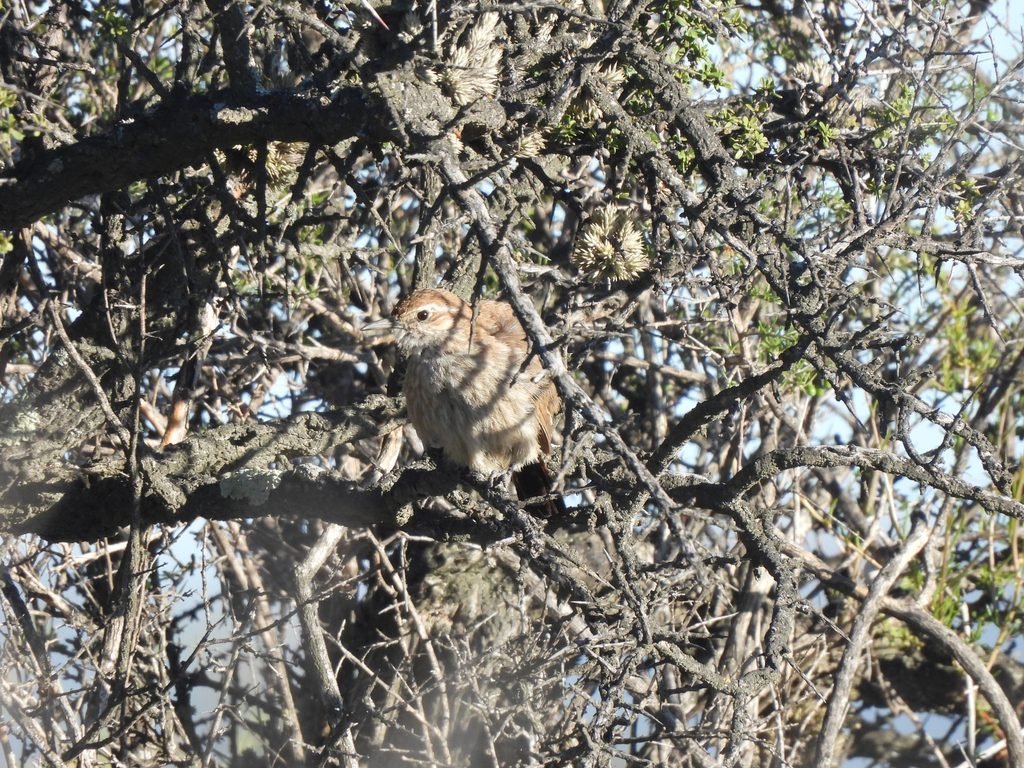
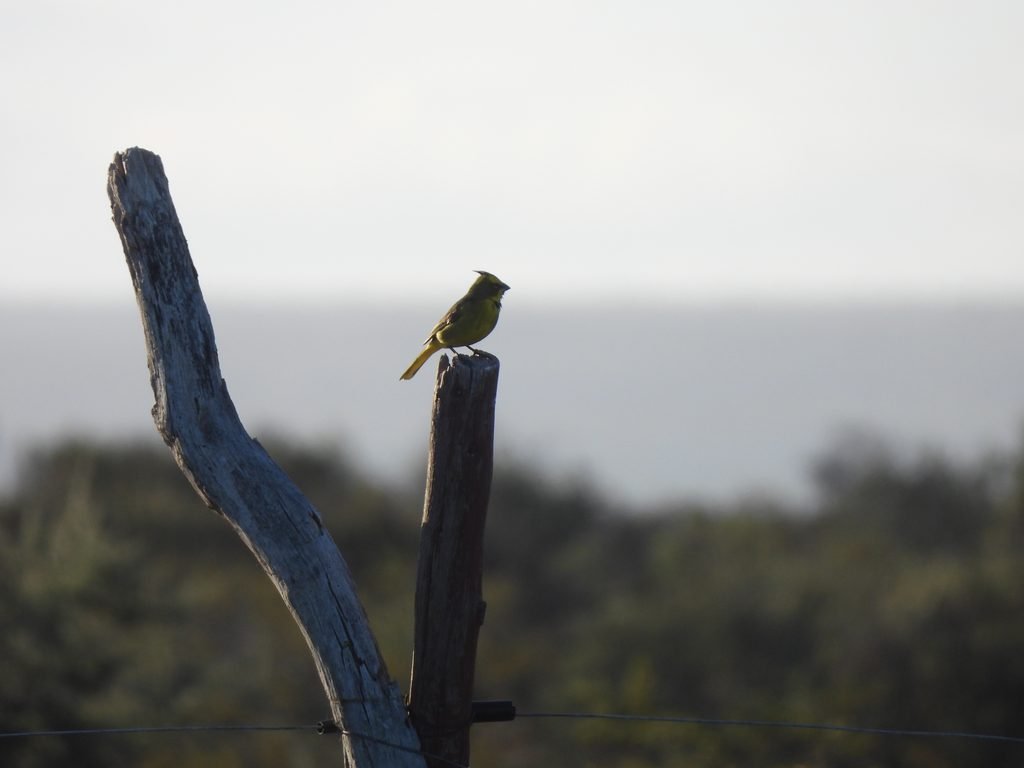
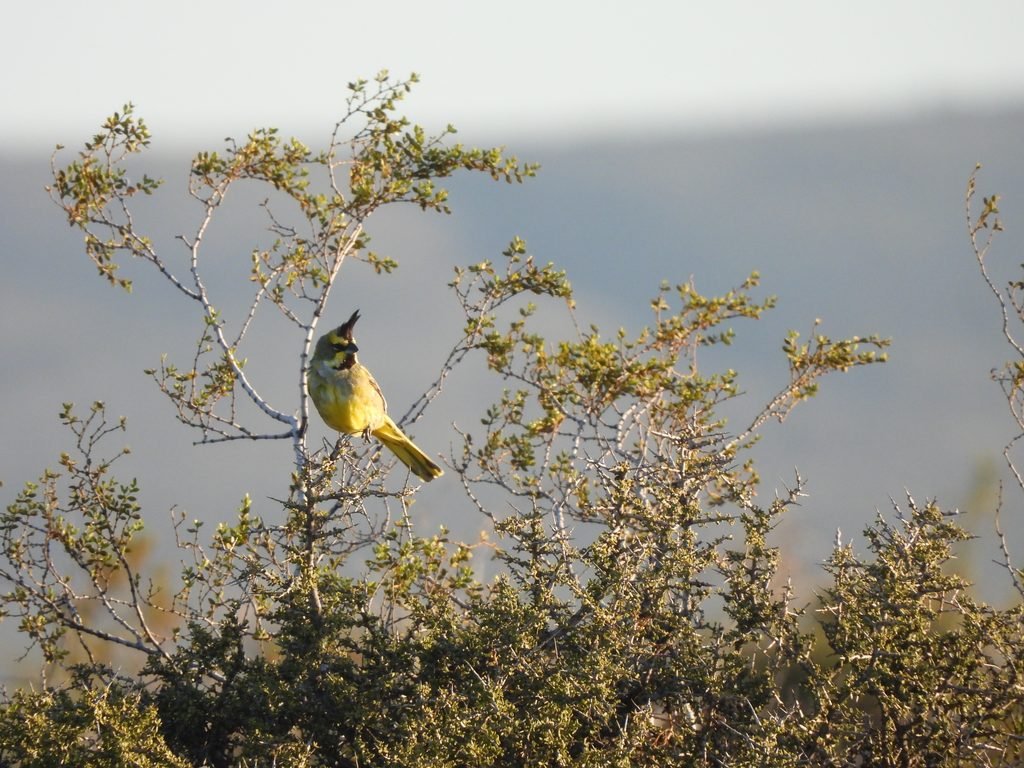
Finally, we found our first yellow cardinal, a calling male near another water body with numerous crested ducks (Lophonetta specularioides). This is arguably one of Argentina’s most charismatic inhabitants, with a shining yellow glow, a long black crest and a sweet song comparable only to that of the omnipresent diuca finches (Diuca diuca).
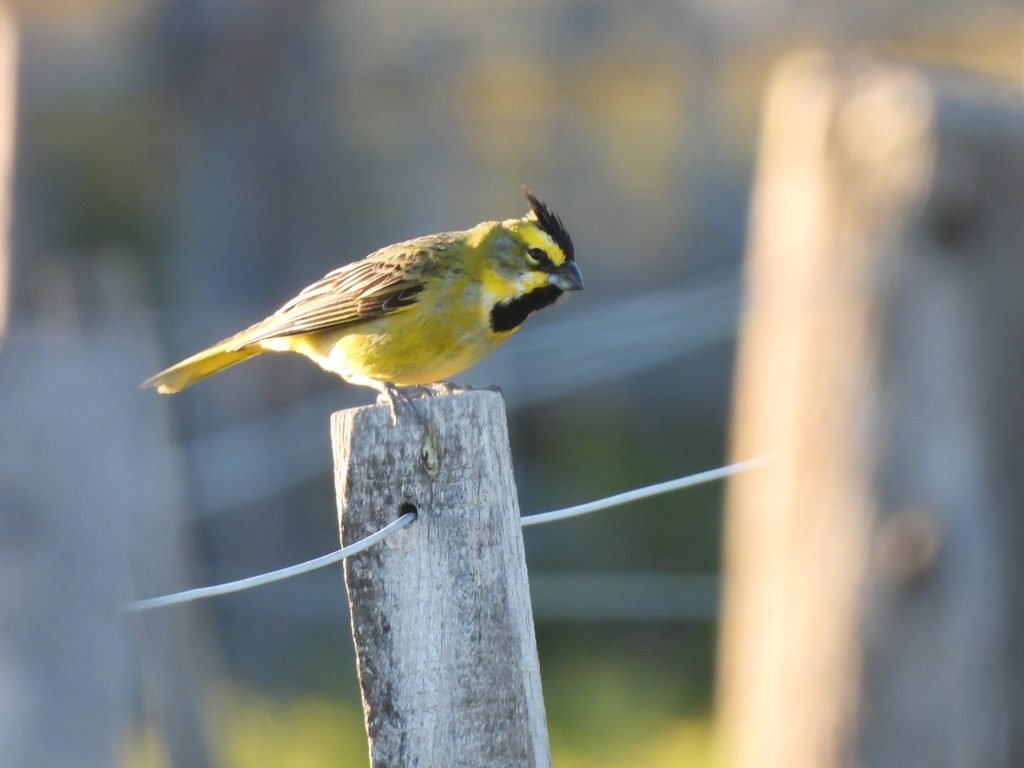
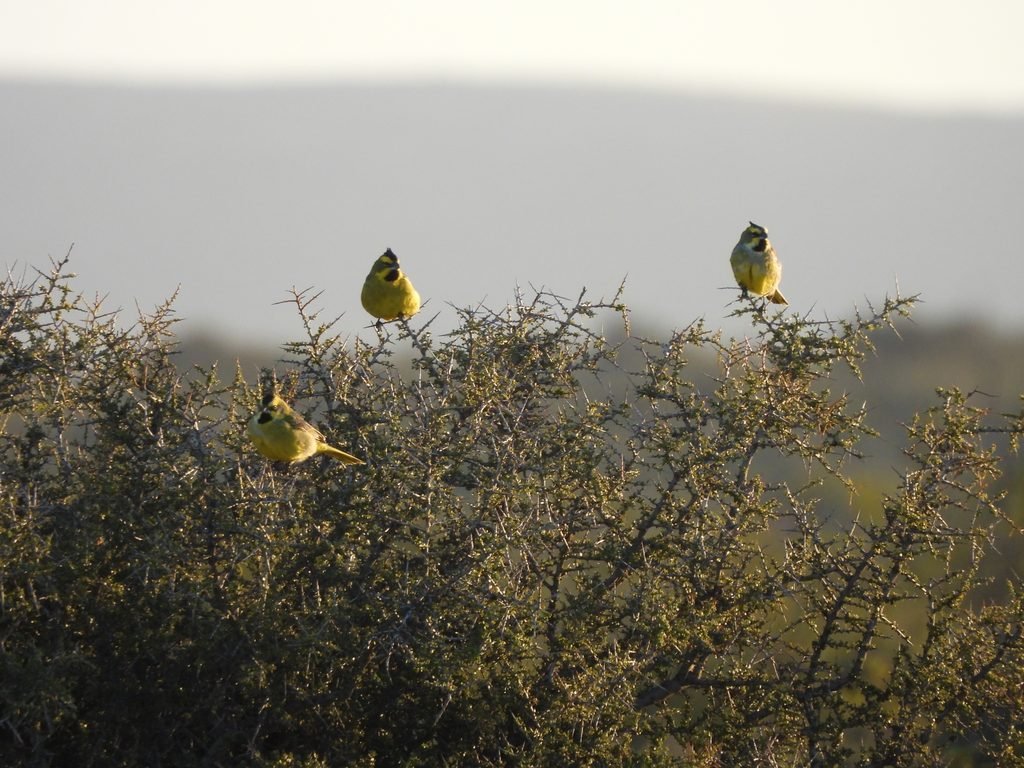
Filled with excitement, we moved on to another potentially good location for cardinals, where we found three different males foraging together. One male showed full green and yellow plumage, while the other birds had small patches of white mixed into their plumage. The incredible beauty of these birds is but a curse, sadly pushing their populations towards extinction.
On our last day in the field, we walked several kilometres through monte trying to find the sandy gallito (Teledromas fuscus), a skulking tapaculo endemic to the monte desert that I briefly heard close to camp but never connected with again. On the way, we encountered numerous white-tipped plantcutters (Phytotoma rutila), golden-billed saltators (Saltator aurantiirostris) and a checkered woodpecker (Veniliornis mixtus). Finally, we bumped into another monte endemic, the nondescript female of the carbonated sierra finch (Rhopospina carbonaria). But alas, the sandy gallito never showed up.
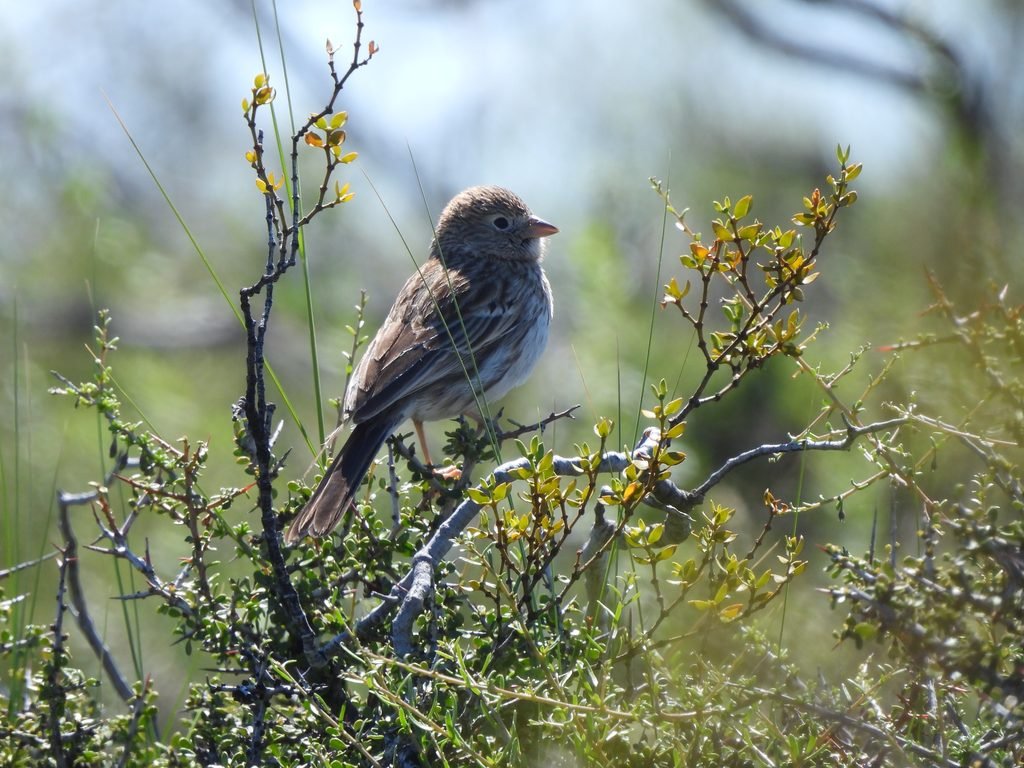
Tati and I left the park southwards after lunch, but the ranger who drove us couldn’t reach the landowner of the rangeland south of the park. After an hour of driving, we found ourselves in front of a closed gate with no key in sight. The 2-hour-and-30-minute detour we took just to exit the park showcased the complex situation between these landowners and the rangers working inside the park. However, it also meant that we got some last-minute sightings, including a chaco earthcreeper (Tarphonomus certhioides), a couple of burrowing owls (Athene cunicularia), a group of three Patagonian maras (Dolichotis patagonum) and a much-appreciated sandy gallito that finally crossed the road in front of us in the last minute, briefly sitting on the roadside just after we chatted about this skulking endemic with the ranger. Speak of the devil!
Islote Lobos National Park is a complex place full of contrasts. Tati and I strove to understand some of the connections between the deafening colonies of penguins and sea lions on the islands and the calm, quiet vastness of the monte desert. A short fieldwork campaign delivered a picture of coastal Patagonian biodiversity, including several monte specialties endemic to Argentina. But more than that, this campaign was full of memorable moments that will remain among the top highlights of my PhD journey.