The Humboldt Current holds some of the most productive waters worldwide. Upwelling off the coasts of Chile, Peru and Ecuador raises nutrient levels, cascading into incredible activity at all trophic levels. From a birdwatcher’s standpoint, this oceanic highway offers a great opportunity to connect with most of the Pacific Ocean seabirds at close range from the shore.
Pelagic trips off Chile have been a personal dream for a long time, even more so after the incredible experience of being surrounded by hundreds of albatrosses last July in South Africa (read about it here). When I figured I had to visit Chile to renew my migratory status in Argentina, I planned a short trip around the date of one of Quintero Wild’s trips off Quintero, just north of Valparaíso and near Santiago. Tati Pessano tagged along, and we had the best time.
Quintero Wild’s CEO Nicolás Araya is a great guide and birder. He kindly shared some suggestions for looking for Humboldt’s penguin (Spheniscus humboldti) and sea otter (Lontra felina) in Quintero, along the scenic coastal urban trail between the harbour and Cueva del Pirata. We eventually failed to find either, but saw many Humboldt Current specialties from town on the afternoon after our arrival, the day before the pelagic tour.
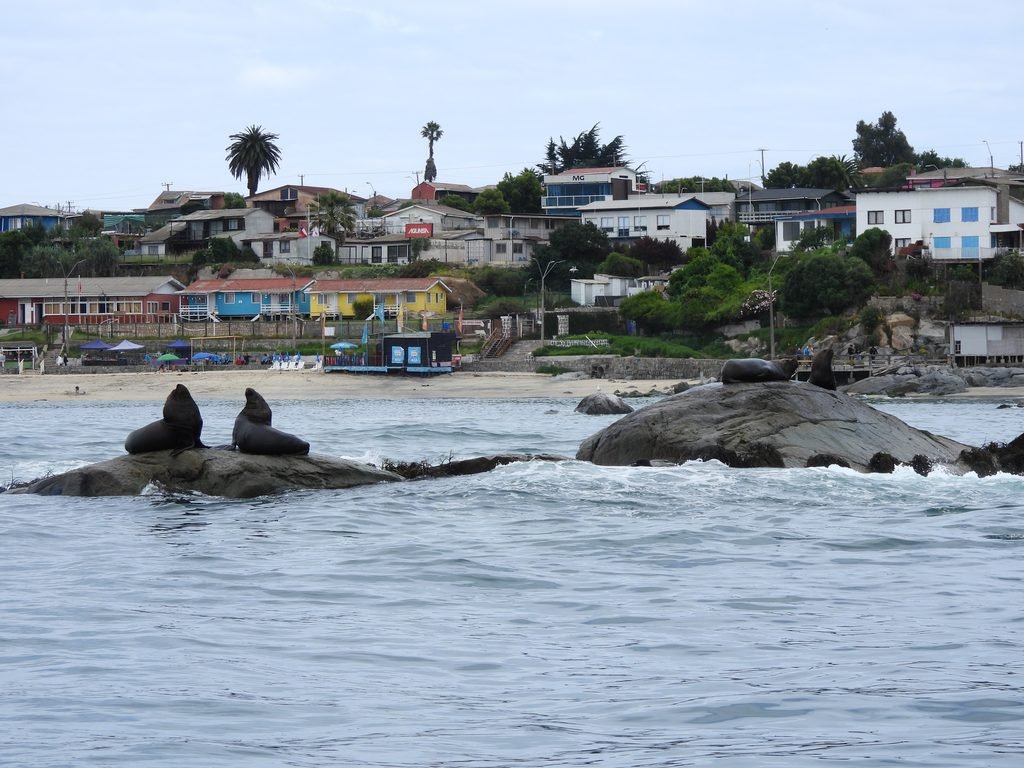
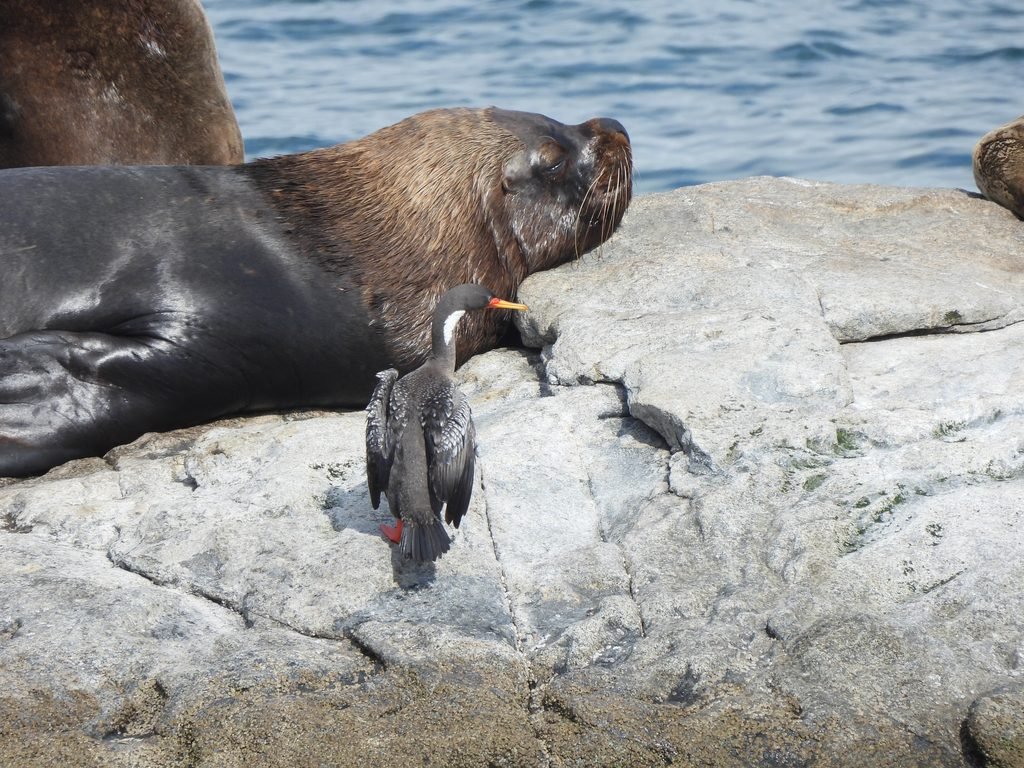
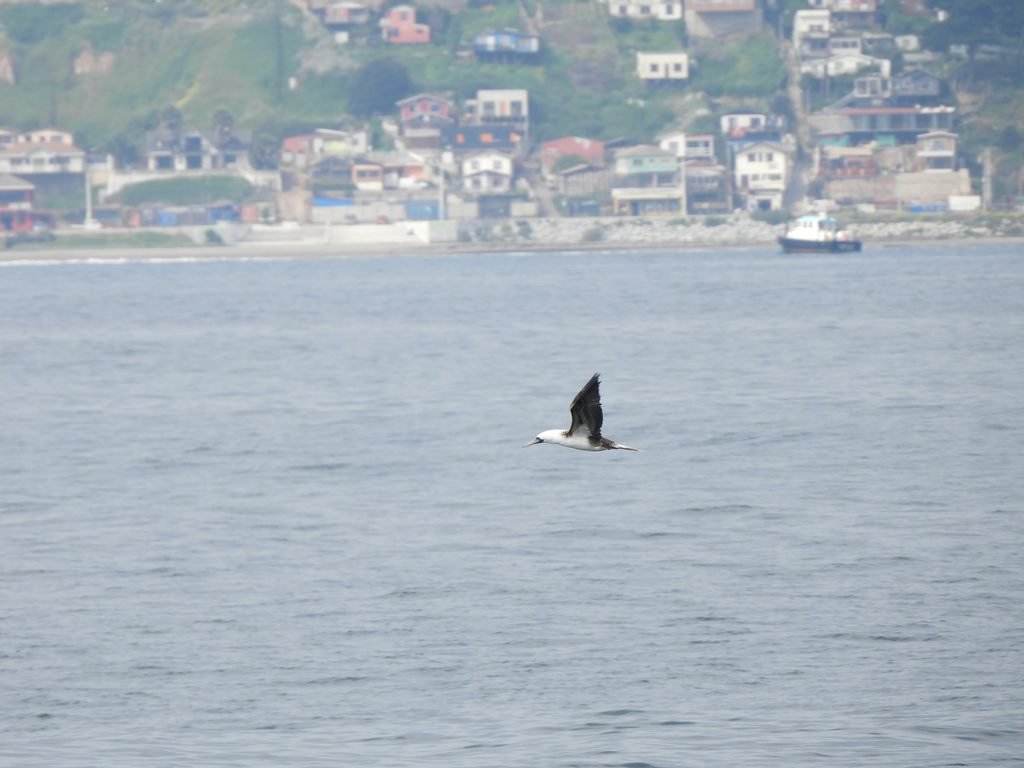
Even before reaching the shore, large flocks of Peruvian boobies (Sula variegata) flew over, as did kelp gulls (Larus dominicanus). Once at the shore, guanay cormorants (Leucocarbo bougainvilliorum) and Neotropic cormorants (Nannopterum brasilianum) joined the party. Several South American sea lions (Otaria flavescens) rested on some large boulders. One small group of sea lions was visited by a red-legged cormorant (Poikilocarbo gaimardi), arguably among the best cormorant species.
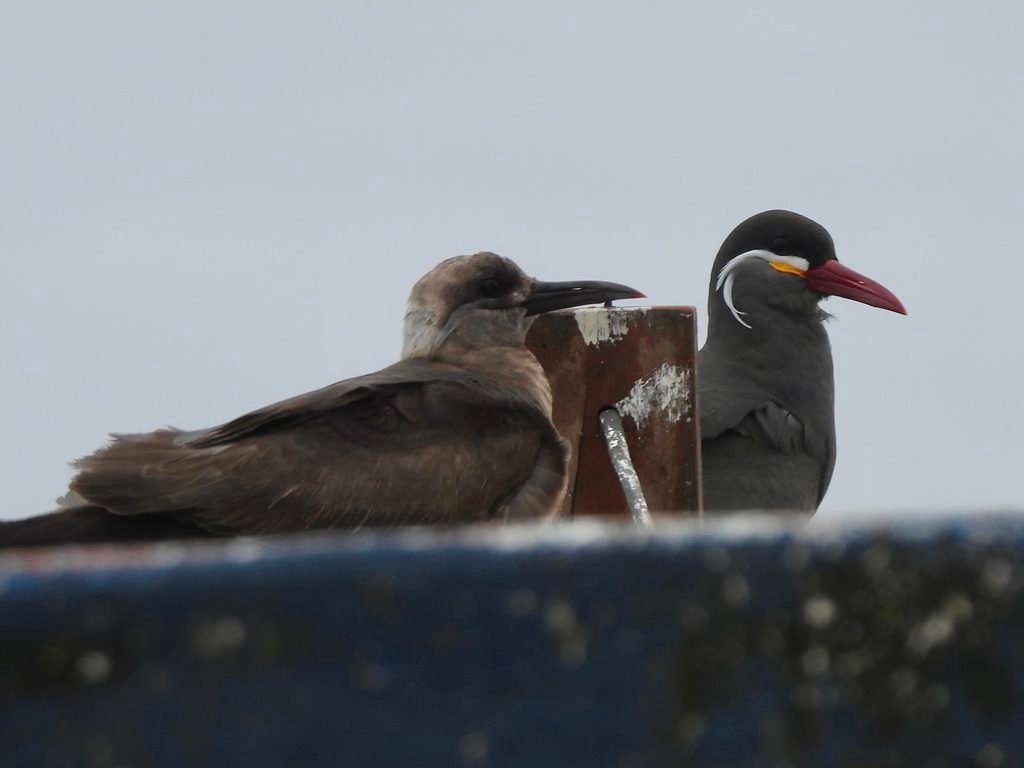
Tati noticed that a line of dark dots on a distant yellow structure at sea was indeed a flock of Inca terns (Larosterna inca) sitting alongside South American terns (Sterna hirundinacea). This lifelong dream bird occurred in good numbers at some distance in the waters surrounding Quintero. Although Nico advised us to visit nearby Concón for better views, we were eventually satisfied with dozens of these stunners following our boat the next day.
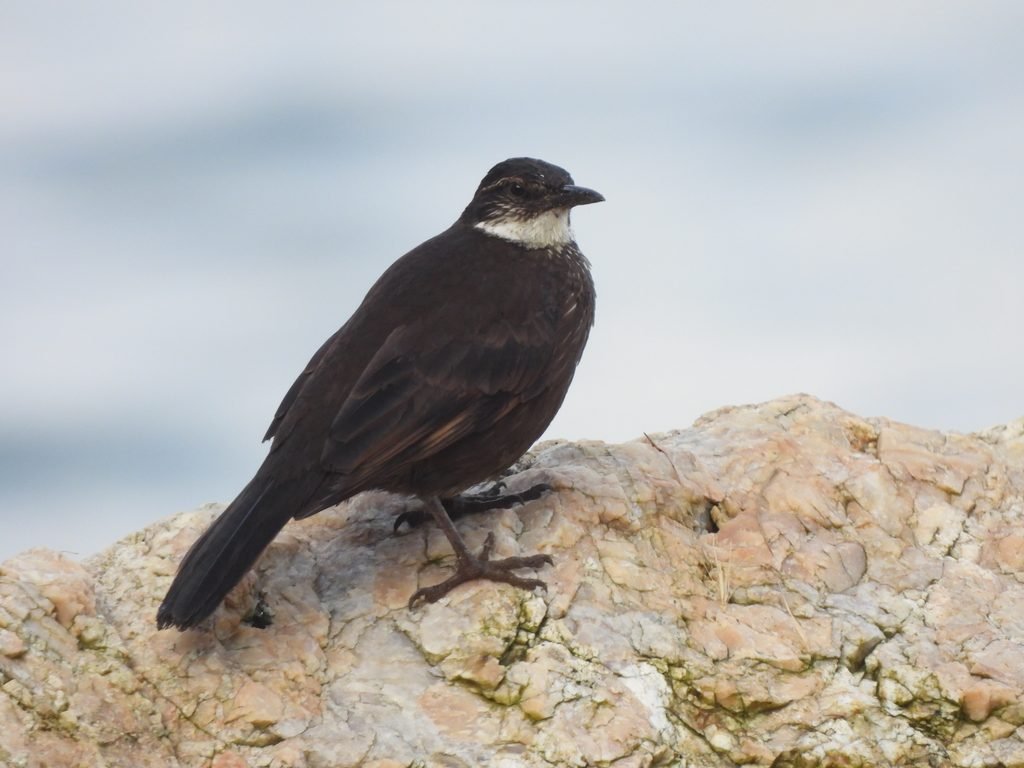
Back at our coastal walk, we soon connected with another local specialty, the endemic Chilean seaside cinclodes (Cinclodes nigrofumosus). The large size and deep, dark colour of this bird caught my attention in the several individuals we encountered.
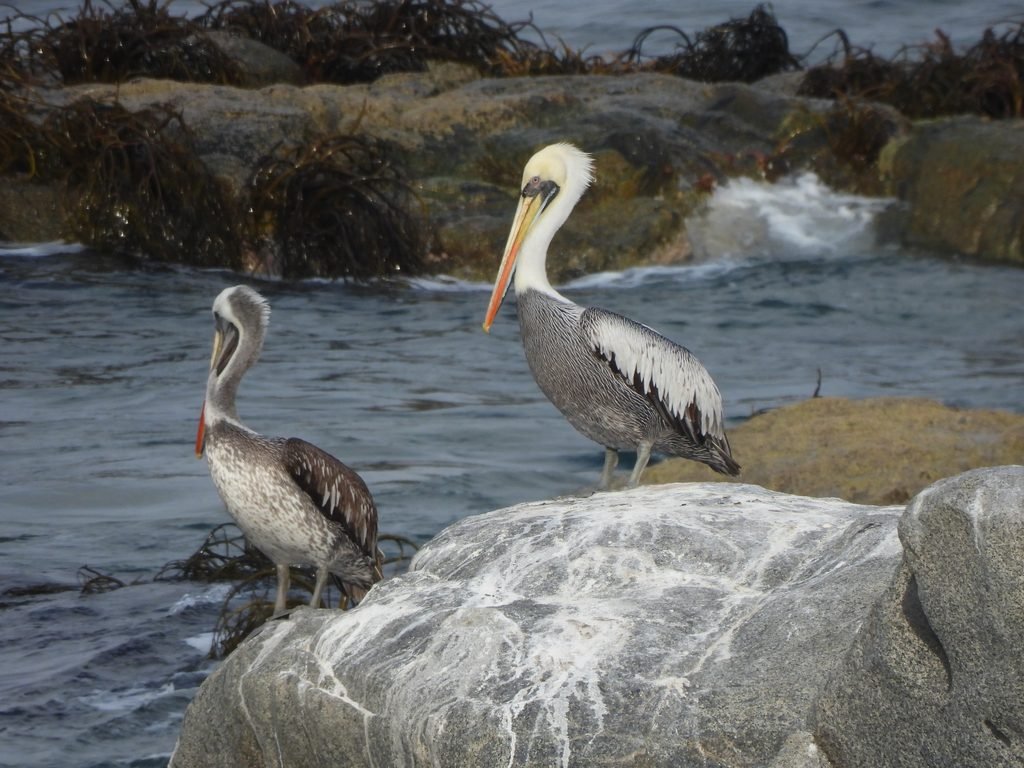
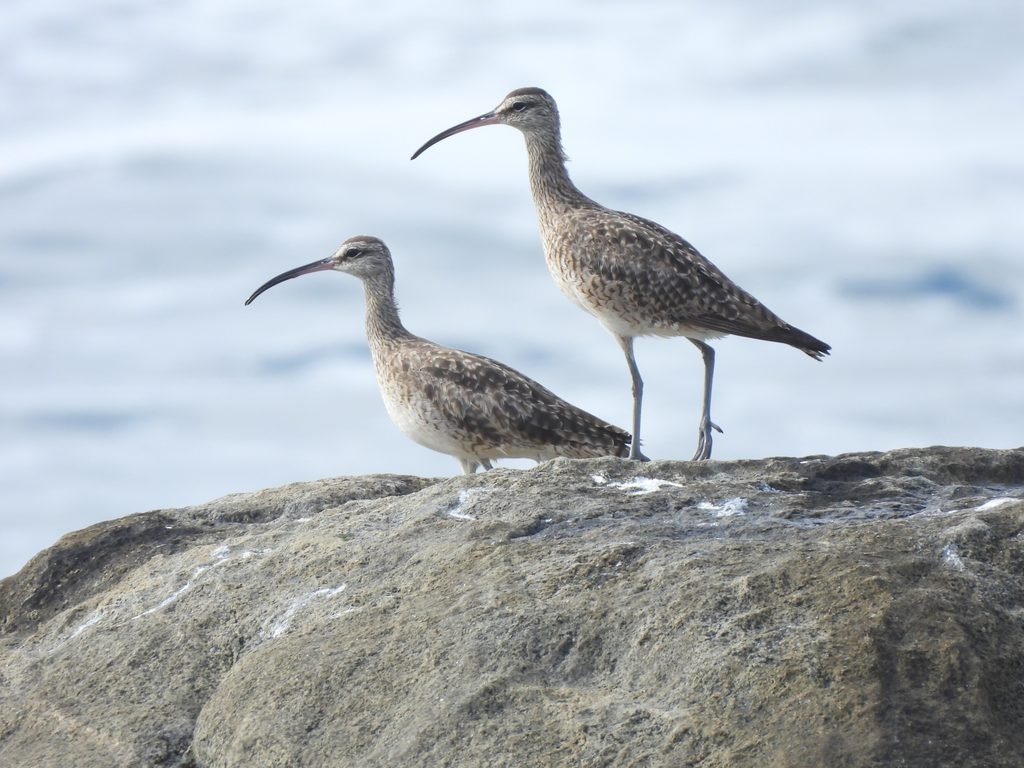
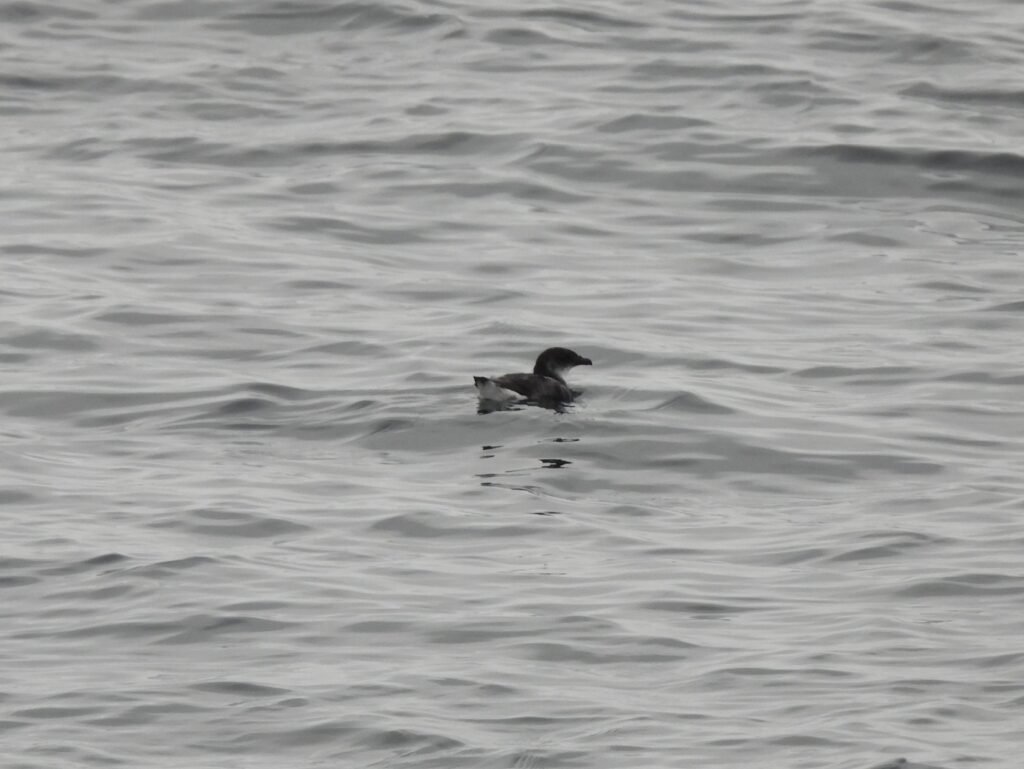
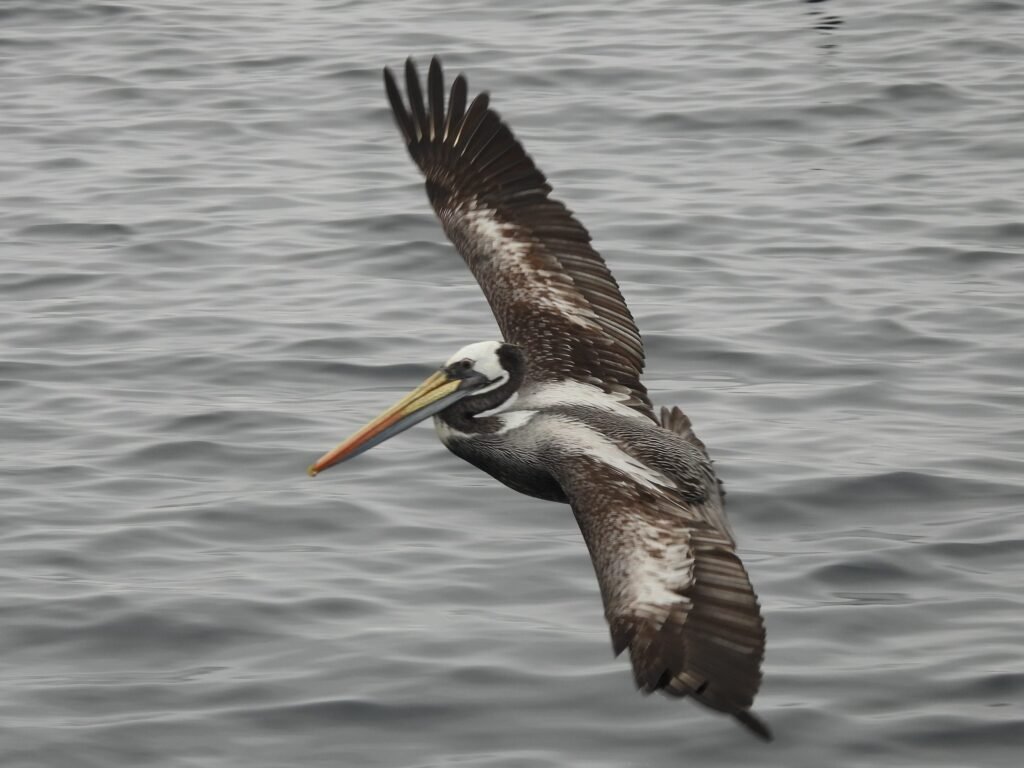
The shore still produced some more goodies, including several Peruvian pelicans (Pelecanus thagus), blackish oystercatchers (Haematopus ater) and Hudsonian whimbrels (Numenius hudsonicus). Gazing out at sea, we could see flocks of sooty shearwaters (Ardenna grisea) and several Peruvian diving petrels (Pelecanoides garnotii): small birds flapping their little wings rapidly, just like auks.
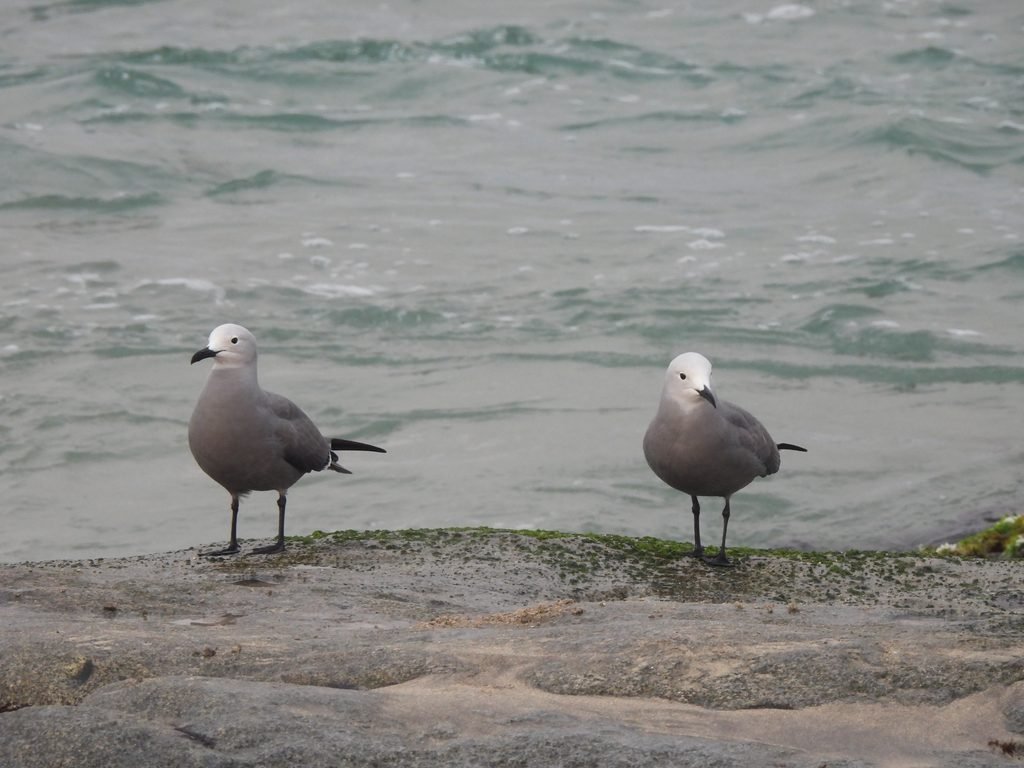
Another stunner of this walk was the grey gull (Leucophaeus modestus), another Humboldt Current endemic that only breeds far inland in the barren Atacama Desert. Small flocks of these gulls flew high overhead, mostly in the northernmost area of Quintero. However, as it got late, several individuals scattered along different beaches. Despite being grey, these birds are far from looking plain.
Our pelagic day started at the meeting point in Quintero harbour at 07:00. We all quickly hopped on the boat and chatted extensively with Nico and local birders — thanks, everyone, for the good atmosphere! Nico is a true master, and we chatted about some of the expected species here and in other areas of Chile. As we chatted and started finding birds, I began to put things into perspective: while this area seems great for albatrosses, both the far north and south are more productive in terms of storm petrels. Still, the calm waters and absence of wind promised a pleasant but uncertain tour.
Birds were present around the boat for as long as we sailed, often in modest numbers. Soon after leaving town, we encountered the first sooty shearwaters and Peruvian diving petrels. Schools of eastern Pacific bonito (Sarda chiliensis) attracted loose flocks of terns.
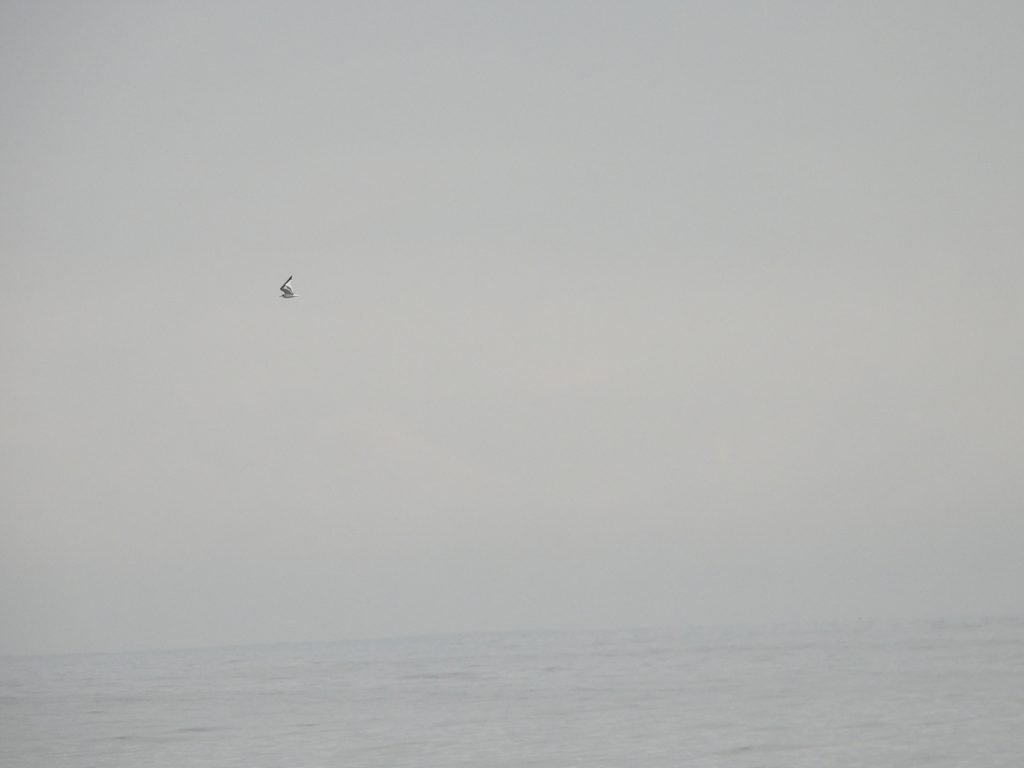
Still relatively close to the shore, I picked out a distant bird while scoping the horizon. When I secured views of its unmistakable wing pattern, I called everyone’s attention. A distant Sabine’s gull (Xema sabini) flew south in front of our boat. Luckily, I managed to snap a few record shots to everyone’s relief, as apparently most had only connected with a distant blob above the horizon. This stunning pelagic species was a big prize that had always been on my mind while seawatching, and finding it at some distance felt rewarding. Plus, this species is rarely recorded in Central Chile.
The first black-browed albatross (Thalassarche melanophrys) flew between Quintero and our boat when we were still relatively close to shore. However, things started getting interesting when the boatmen began throwing fish remains into the ocean. Soon after, swarms of dozens of shearwaters, terns, pelicans and other seabirds gathered around us.
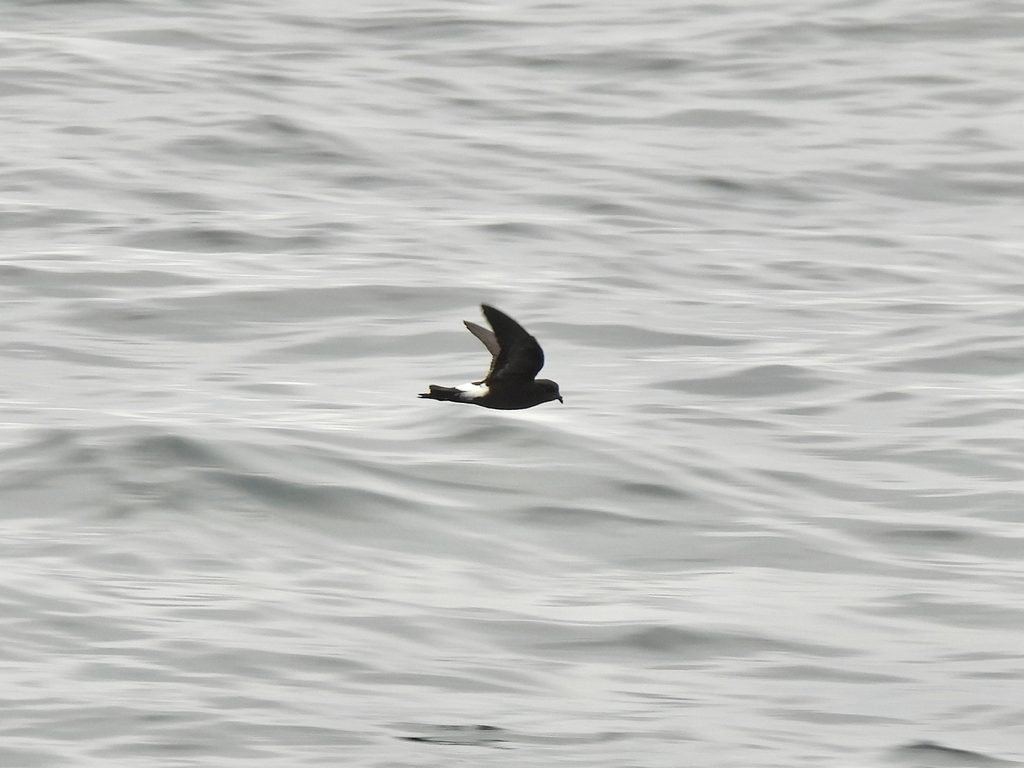
I was particularly struck by the numbers of storm petrels seen during the pelagic trip. At times, we were surrounded by over 20 individuals in all directions. Nico and other folks explained that birds closest to the shore are likely “Fuegian” chilensis storm petrels, which tend to show some white on the belly and underwing. Further out in pelagic waters, “Subantarctic” oceanicus storm petrels are more numerous. In addition, Andean “barrosi” storm petrels breed in the Andean mountains closest to this area and are also expected in these waters. These cryptic taxa are currently all considered Wilson’s storm petrels (Oceanites oceanicus) under AviList 2026, but further taxonomic work is underway.
Once we reached a good distance from the coastline, albatrosses started showing up in good numbers. Black-browed and Salvin’s albatrosses (Thalassarche salvini) were the most abundant ones. We enjoyed great views of a variety of age groups of both species.
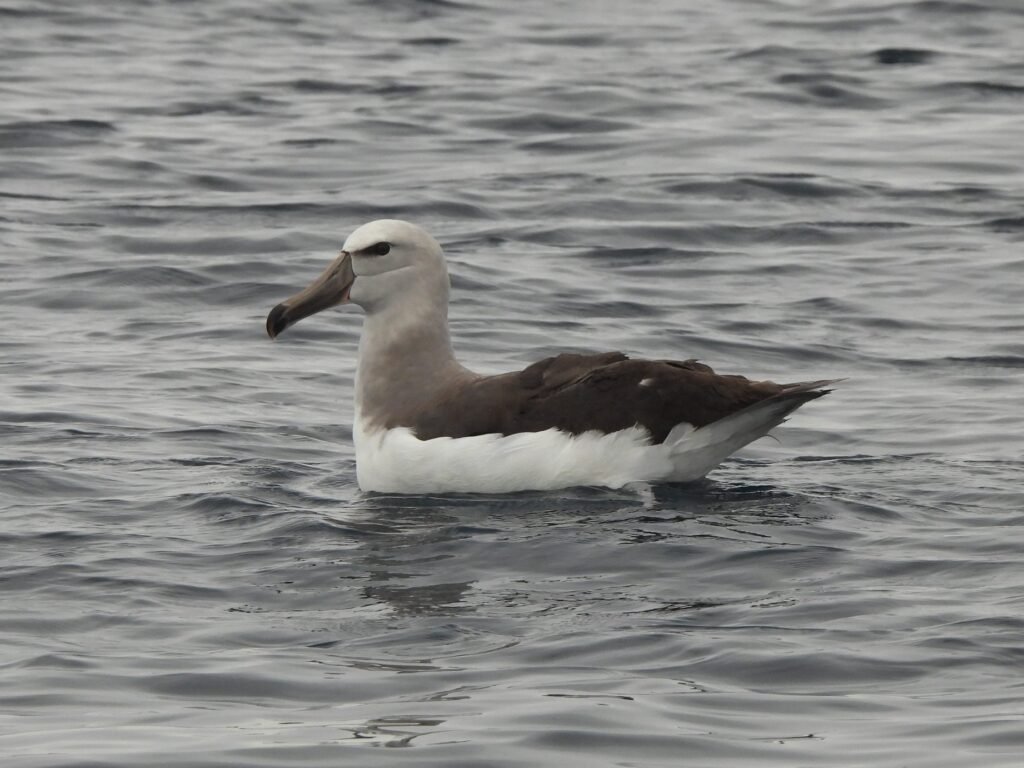
Suddenly, the majestic figure of an adult northern royal albatross (Diomedea sanfordi) showed up on the horizon. Everything else stopped for a second. This gigantic bird slowly flew closer to our boat and past all of us, cutting through the air effortlessly despite its massive size. I got the impression that its head was particularly massive as it flew too close for my camera to handle.
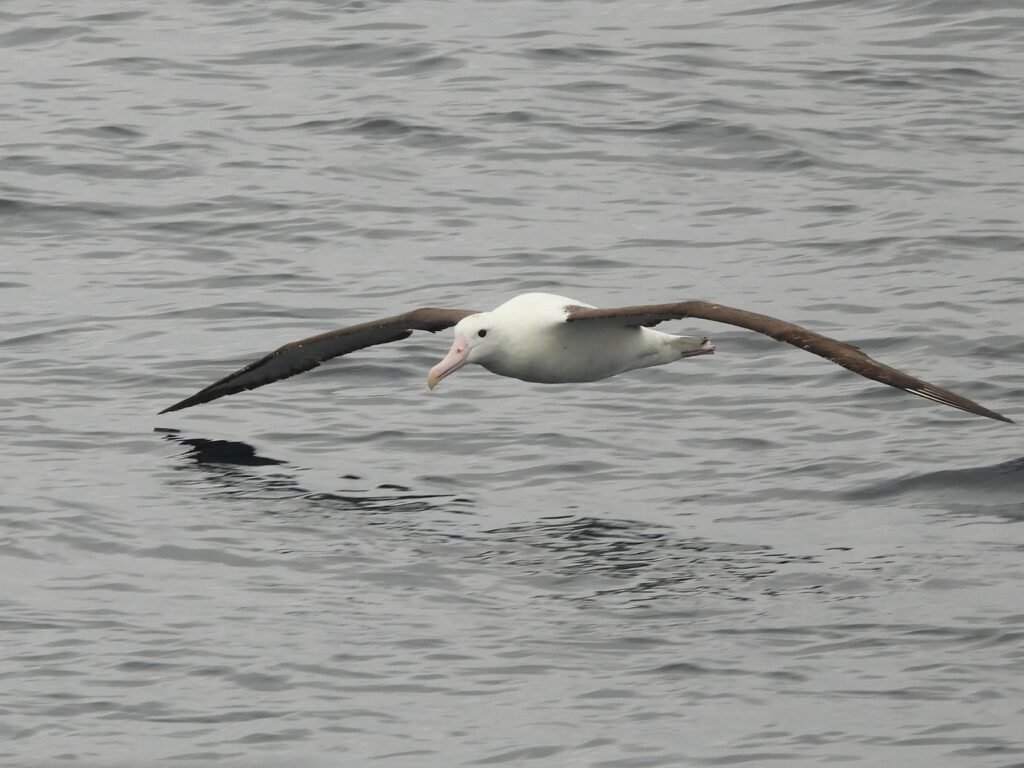
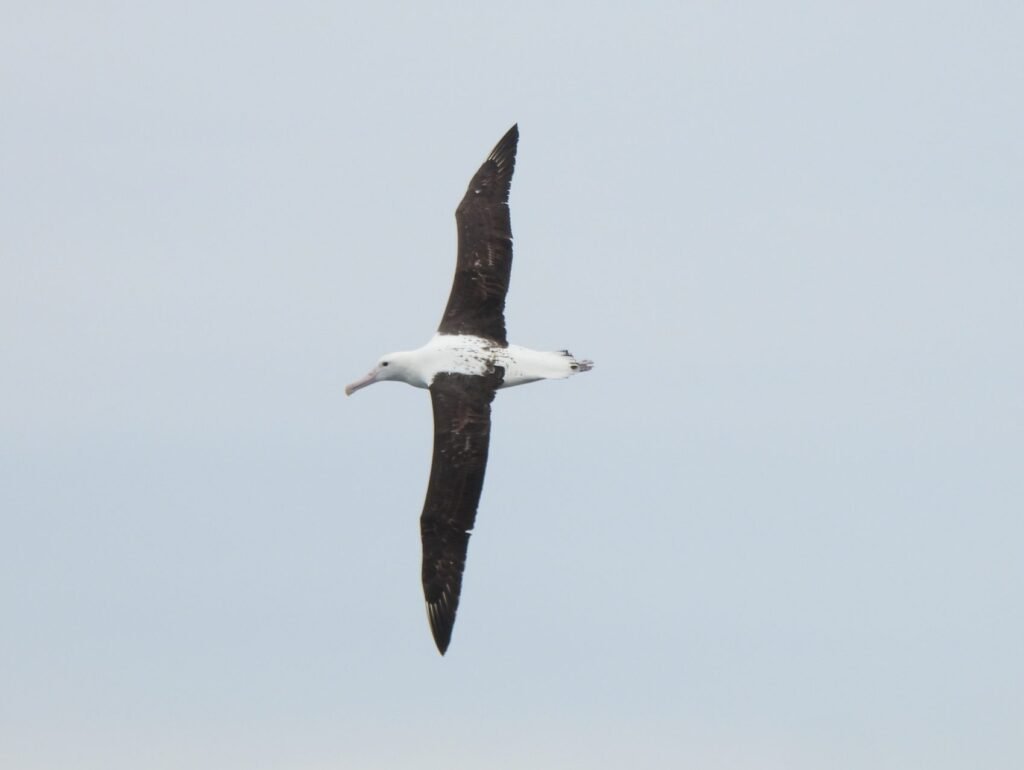
This giant of the seas was my first-ever Diomedea. This species breeds mostly on islands off New Zealand but embarks on circumpolar flights across the Antarctic Ocean for years, venturing north through the Humboldt Current. This stunning bird flew around the boat a couple of times, never sitting on the water and eventually vanishing. Another true dream bird seen today.
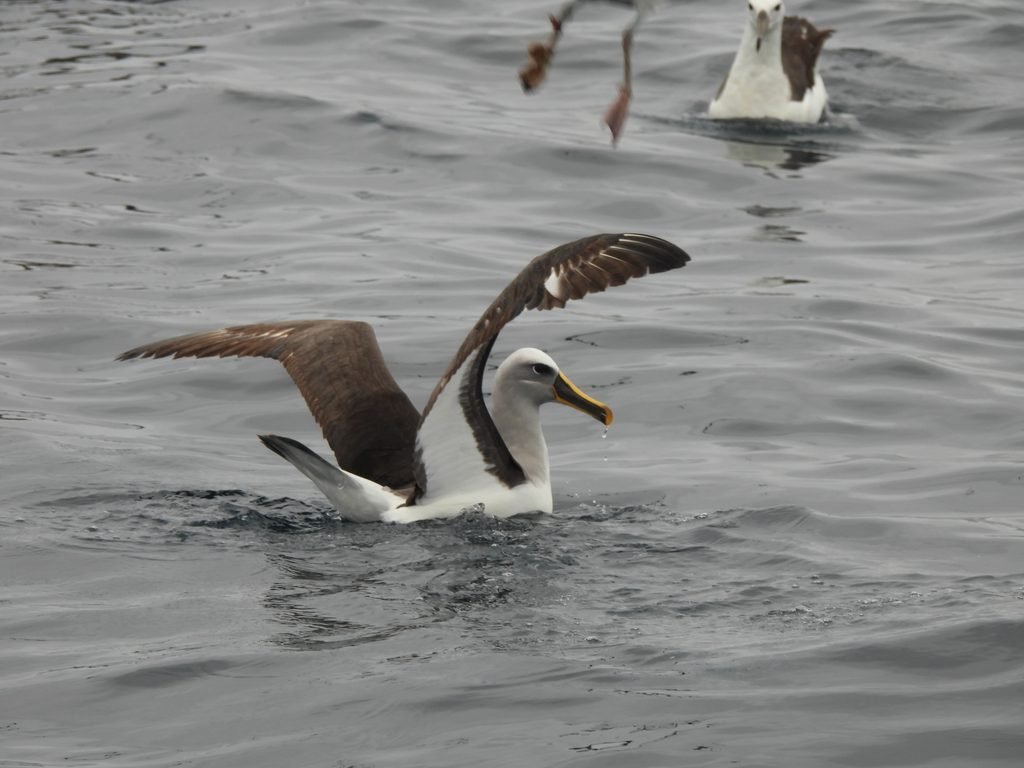
Tati spotted the first of several Buller’s albatrosses (Thalassarche bulleri), which were incredibly elegant with their colourful bill patterns. Opposite to the northern royal albatross, Buller’s albatrosses were significantly smaller than the rest of albatrosses, making them quite distinctive and beautiful.
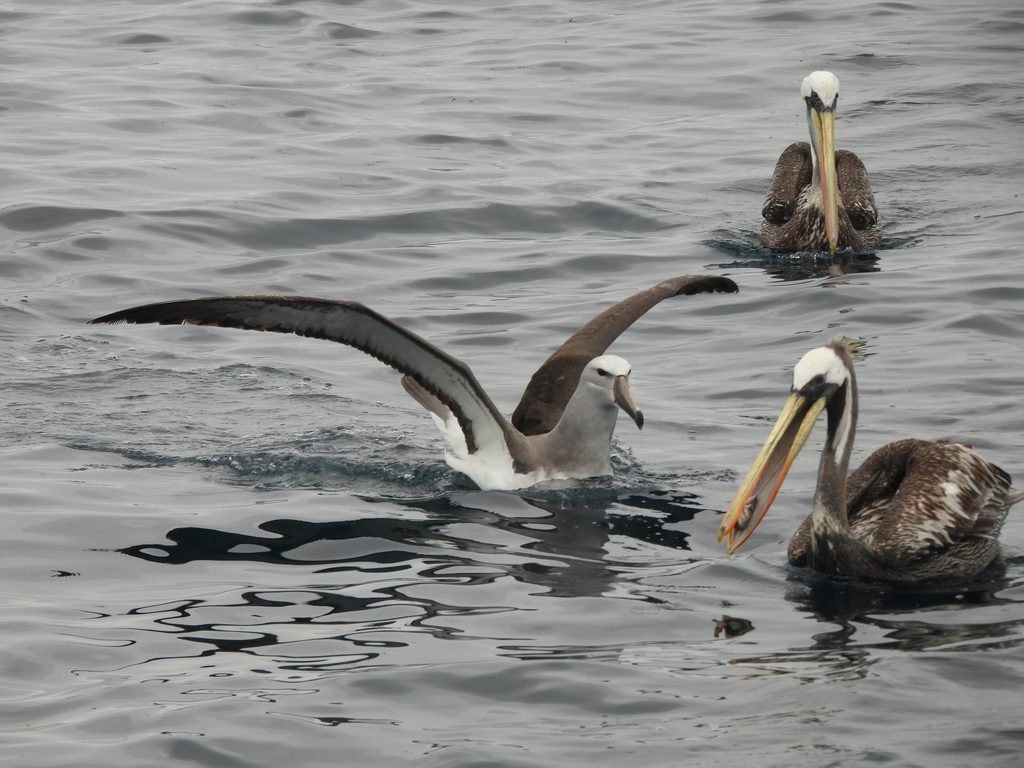
Bird activity was quite high at times, with half a dozen pelicans waiting for fish and several dozen Inca terns, sooty shearwaters and pink-footed shearwaters (Ardenna creatopus) looking for scraps. A couple of Chilean skuas (Stercorarius chilensis) showed up to steal food from others. At a certain point, some Franklin’s gulls (Leucophaeus pipixcan) and an elegant tern (Thalasseus elegans) joined the party, too.
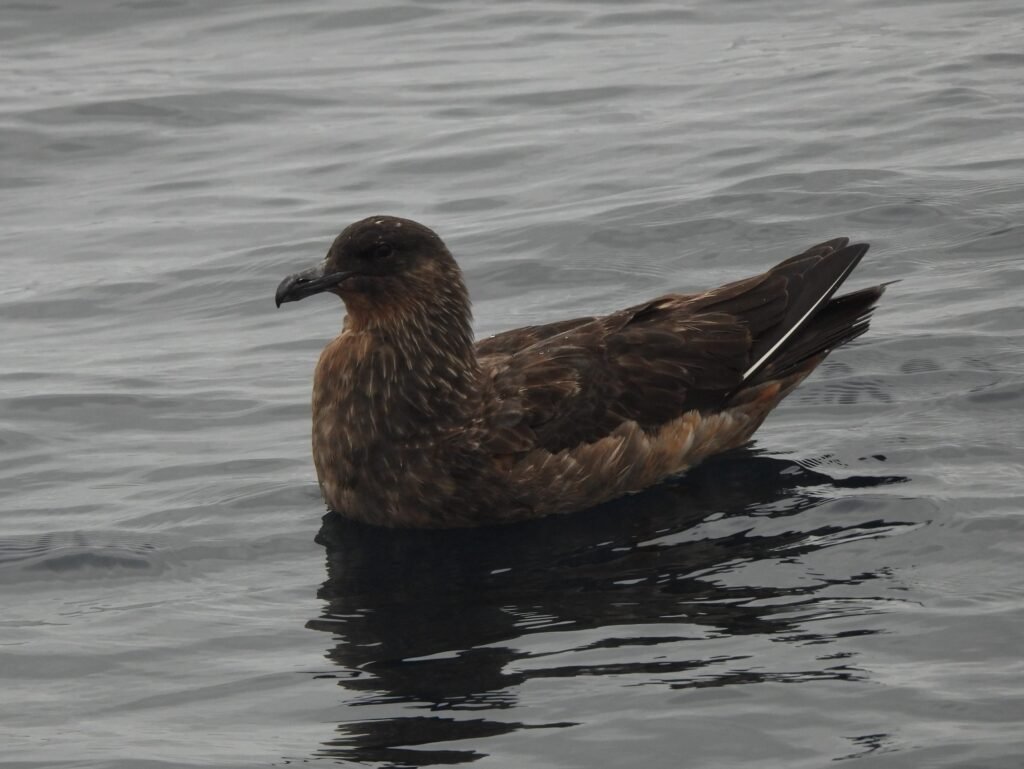
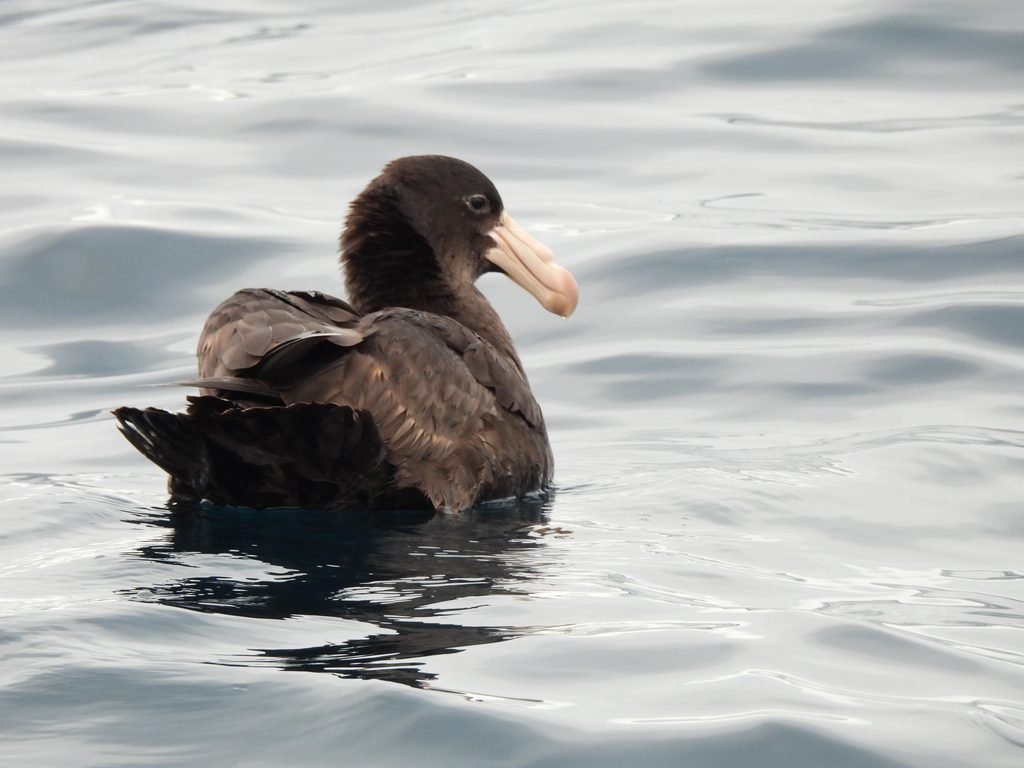
Instead, petrels came in dribs and drabs. We saw no Fulmarus or Pterodroma petrels during this pelagic tour, but the more typical Macronectes and Procellaria petrels obliged. The northern giant petrel (Macronectes halli) seems to be dominant among the two giant petrels in these waters, and we saw several of those.
Among the Procellaria petrels, we connected with several white-chinned petrels (Procellaria aequinoctialis), some of which posed for pictures by waiting for food scraps close to the boat.
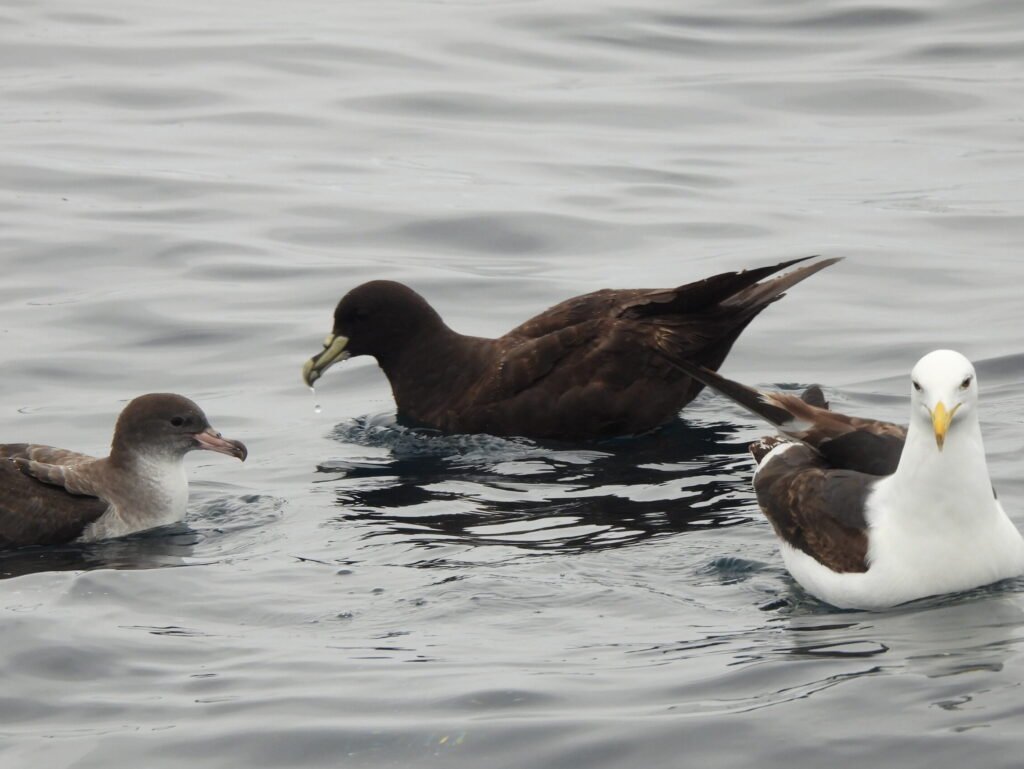
However, the prolonged observation of several Westland petrels (Procellaria westlandica) was much appreciated. This thin-billed petrel, with a black tip to the bill, only breeds in a restricted area of continental New Zealand — again, like several of the species seen during the day. The distances these seabirds cover to forage never cease to amaze me.
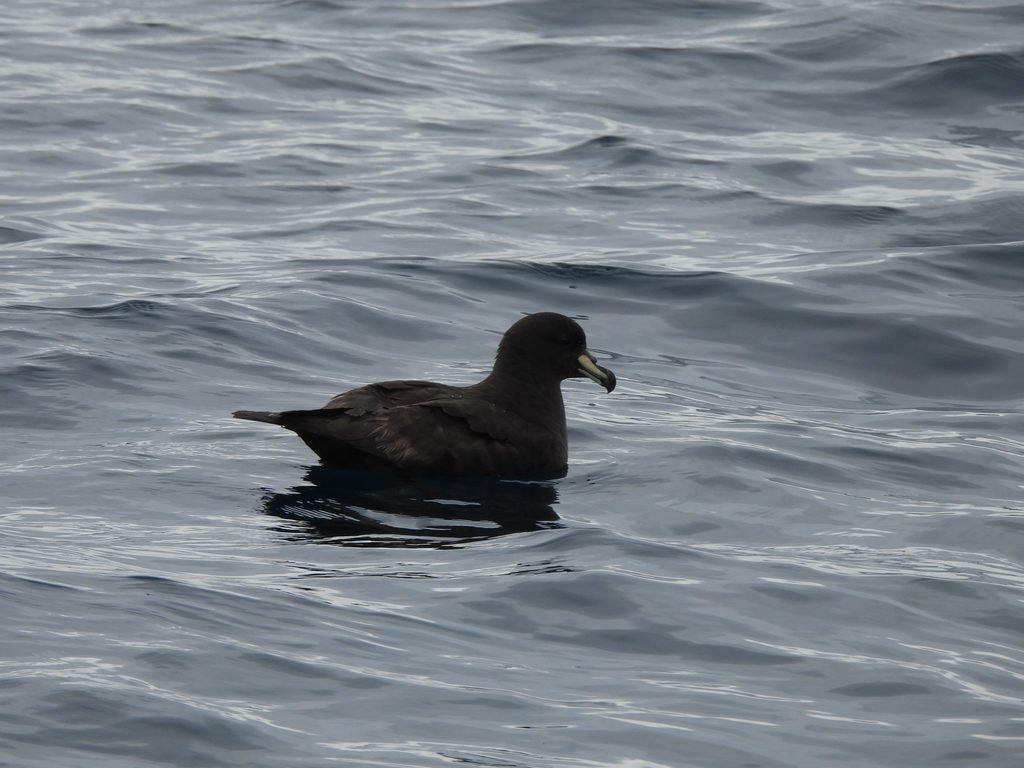
The show of albatrosses, pelicans, terns and petrels lasted for quite a while — although Tati and I did not want it to end! Somebody in the group said that the flock seemed to be starting to disperse, but we still wanted to linger as we photographed Westland petrels and Buller’s albatrosses.
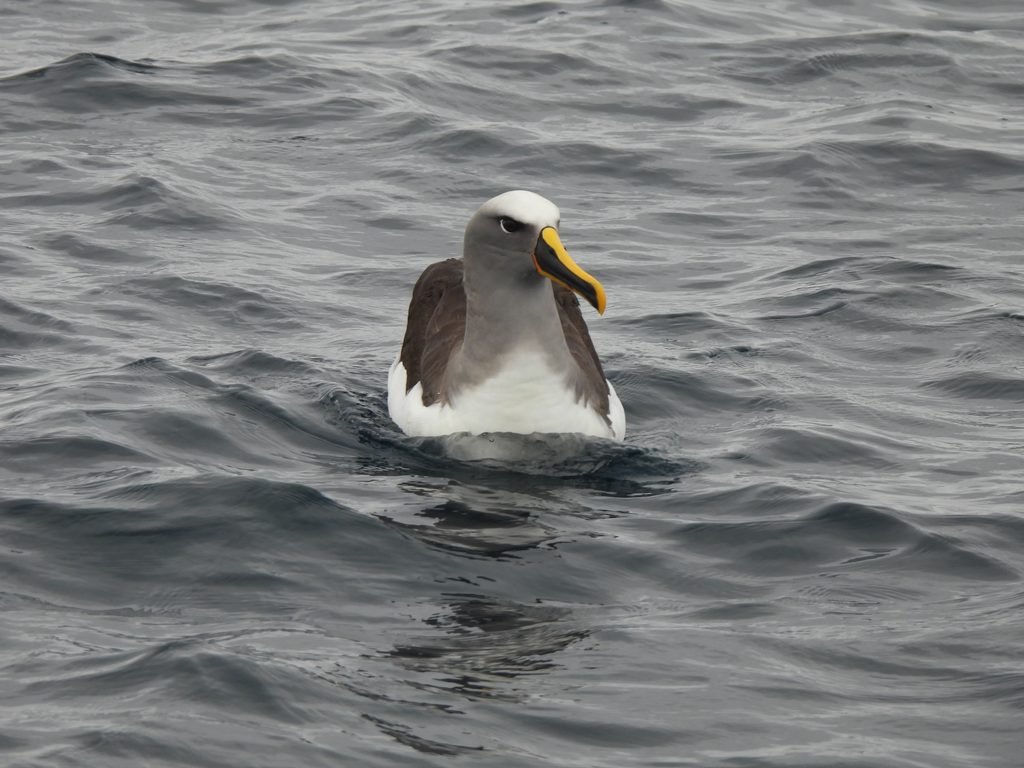
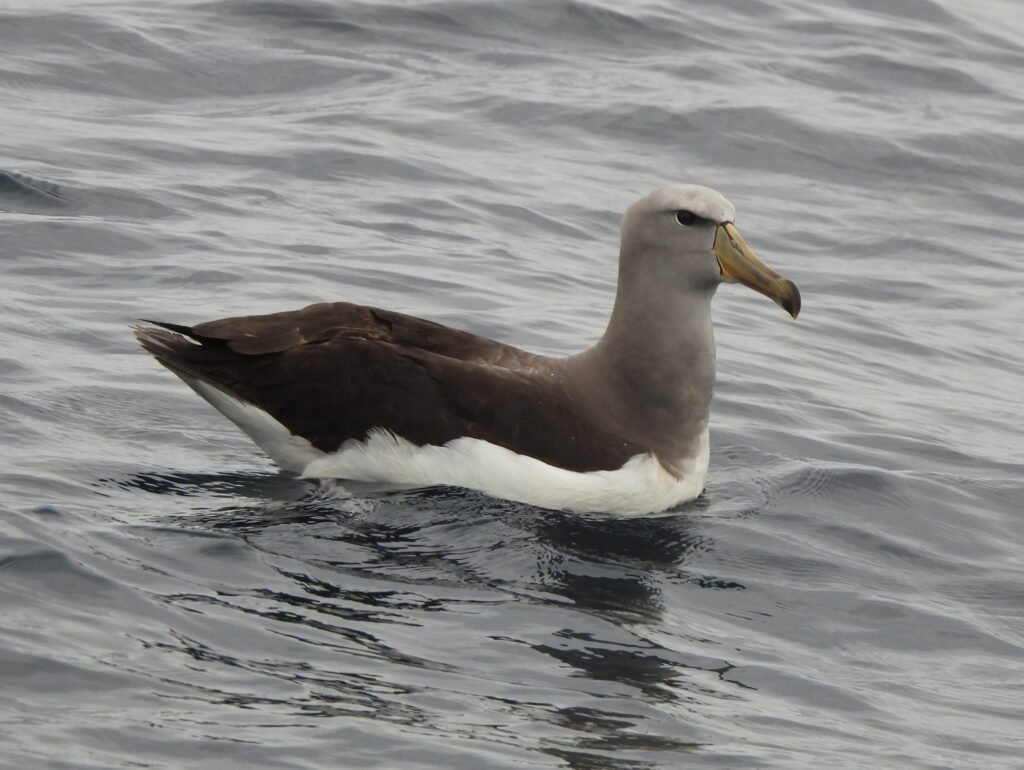
At the last minute, Gonzalo González picked up the top bird of the pelagic: a Chatham albatross (Thalassarche eremita). Next to some Salvin’s and black-browed albatrosses, an albatross caught our attention with its relatively large bill in a uniform yellowish hue and its dark head.
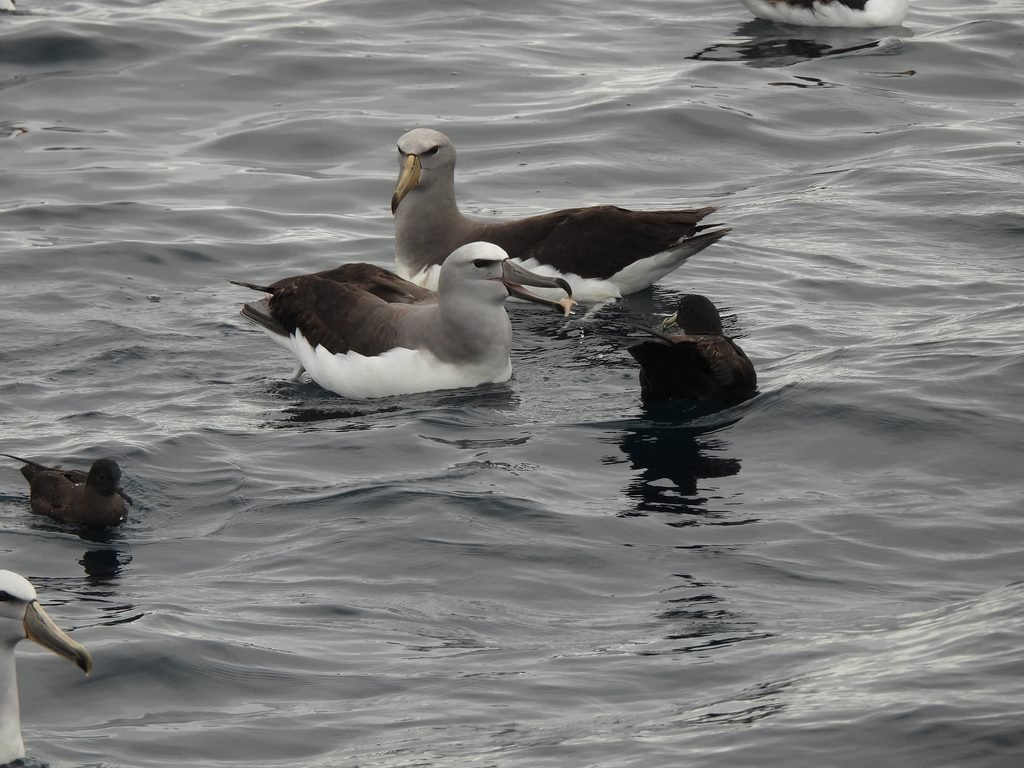
I had been thinking about this species as an exciting but remote possibility on this tour. At this point, it should not come as a surprise, considering that other birds seen during the day may also come from the Chatham Islands or beyond. However, the reduced global population of this species, its incredible looks and the low chances of seeing one on this side of the Pacific gave it a special aura in my mind.
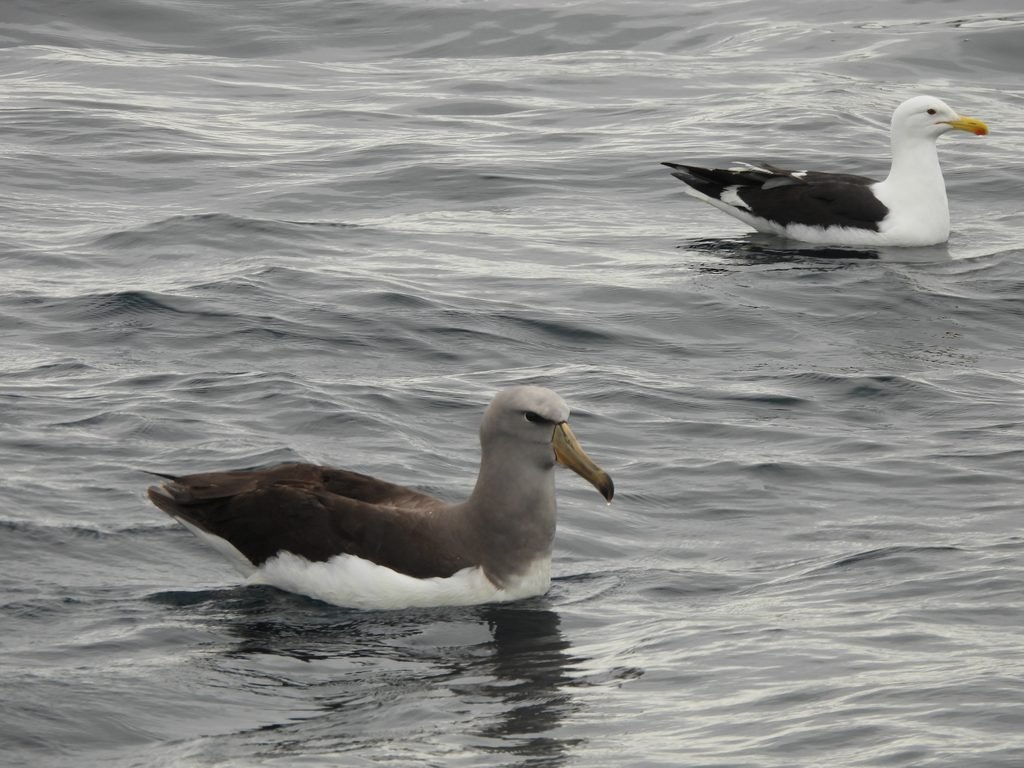
Beyond its significance, the bird also obliged by sitting for a long time next to other albatross species, allowing perfect comparisons, and approaching the boat looking for the very last fish scraps. This subadult Chatham albatross ended up being my top bird on my short trip to Chile.
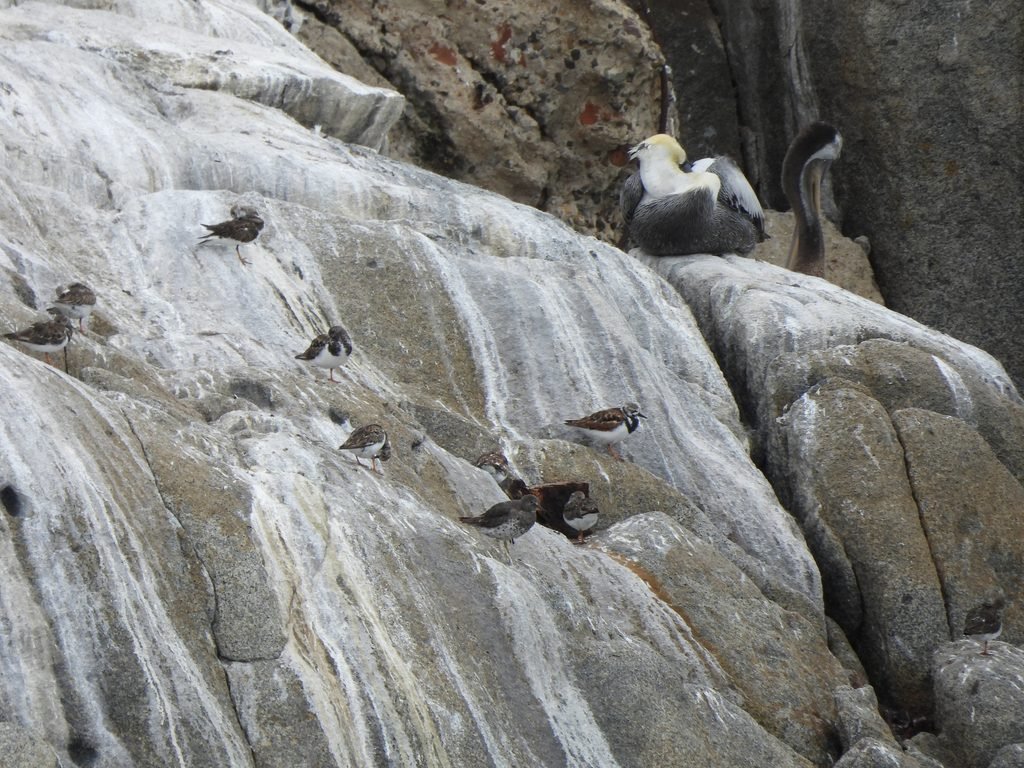
The way back felt glorious after an epic outing, and Tati and I tried to squeeze in some last-minute searches for penguins, otters or red-necked phalaropes (Phalaropus lobatus), but all of them eluded us. Instead, a flock of ruddy turnstones (Arenaria interpres) back at the pier held a single surfbird (Calidris virgata) among them, which we had also hoped to see.
This pelagic trip hooked Tati and me even more on seabirds. Some 20 lifers later, I can only hope I will soon be able to join the fantastic Quintero Wild pelagic tours again elsewhere, hopefully in northern Chile and alongside Nico, for some more dreamy seabird targets!