Darío Gijón and I are currently visiting Morocco in search of some of the local specialties of the north of the country — a region incredibly similar in landscape and climate to much of southeastern Spain, where we come from. Winter activity seems to concentrate in wetlands, so one of our first stops of the trip was Merja de Fouwarate, a complex of lagoons on the outskirts of Kenitra. The weather was not on our side, with overcast skies and intermittent drizzle, but the site delivered outstanding birds regardless.
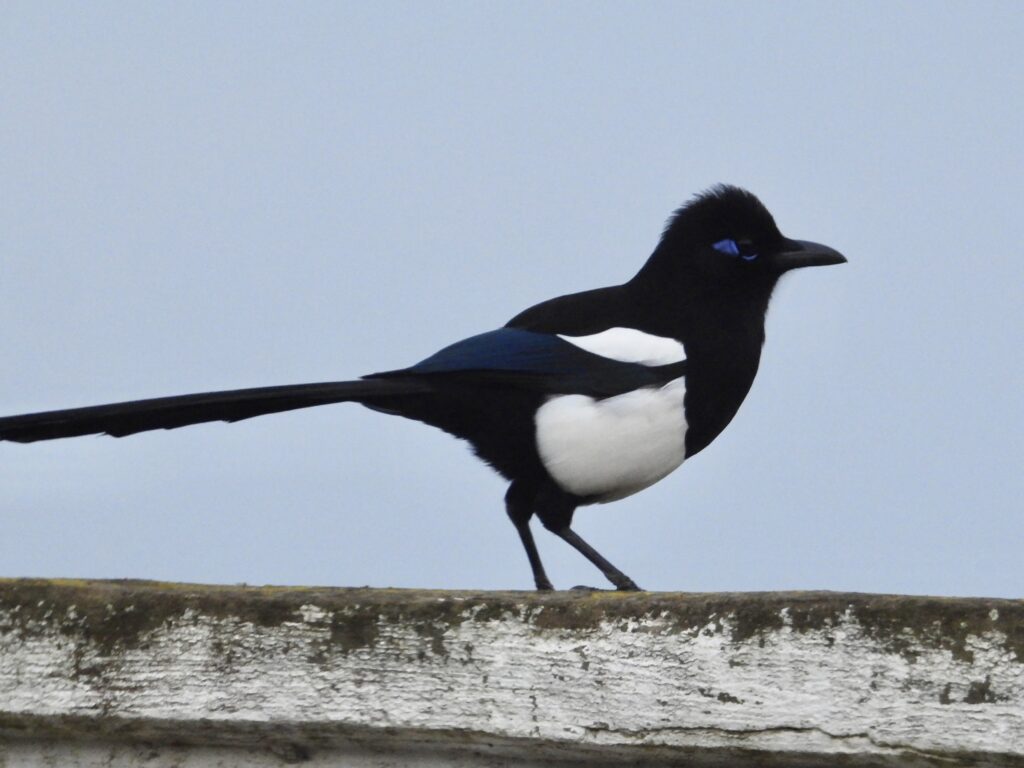
While driving just a few hundred meters before reaching the turnoff where we planned to park the car, we bumped into one of my main targets of the trip. Two obliging Maghreb magpies (Pica mauritanica) flew onto the wall flanking the trafficless road at daybreak and provided fantastic views. In my opinion, this is one of the most stunning members of its genus, with a distinctive blue patch of bare skin behind the eye. Unlike its widespread Eurasian relative, and like other recent splits within this complex, the Maghreb magpie is confined to a relatively small and disjunct range, mostly along the Atlantic side of Morocco, with some individuals reaching Algeria and Tunisia. In fact, we feared this would be the only place in our itinerary where we could connect with this species, as it is rare or absent farther north and east.
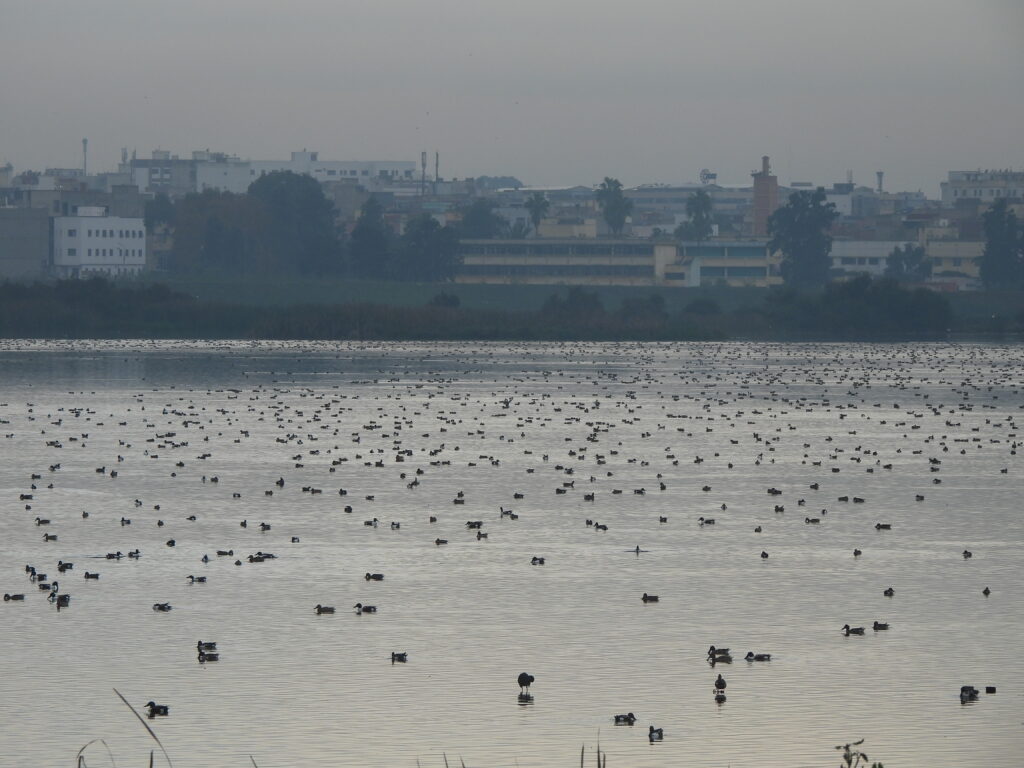
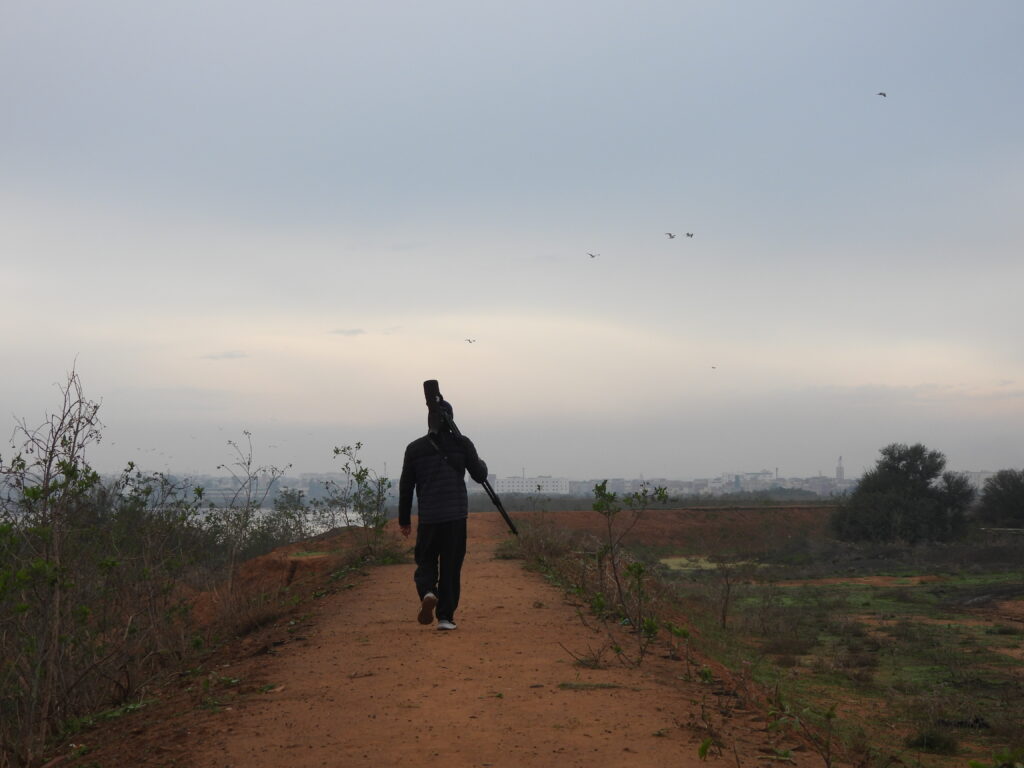
We parked the car on a waste ground just northeast of the wetland. I carried the scope uphill to reach a viewpoint that allowed us to overlook a large proportion of the marsh. Unfortunately, this was not well received by the waterfowl, which took off in flocks of thousands — only a few directly flushed by us, but most following the general stampede.
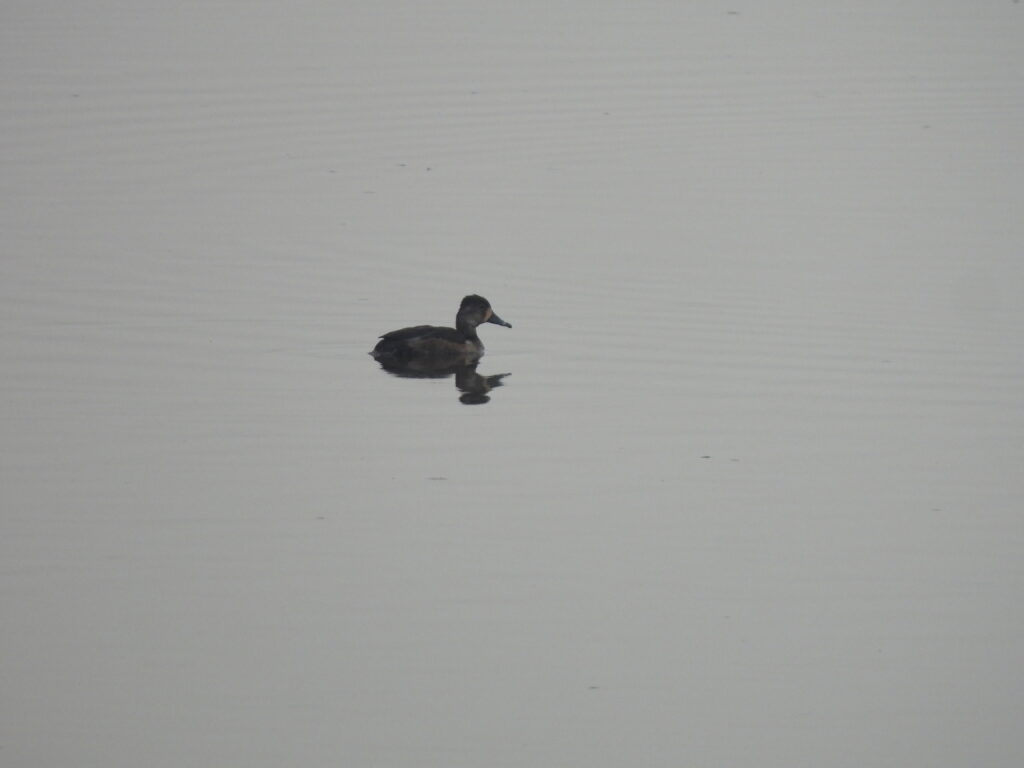
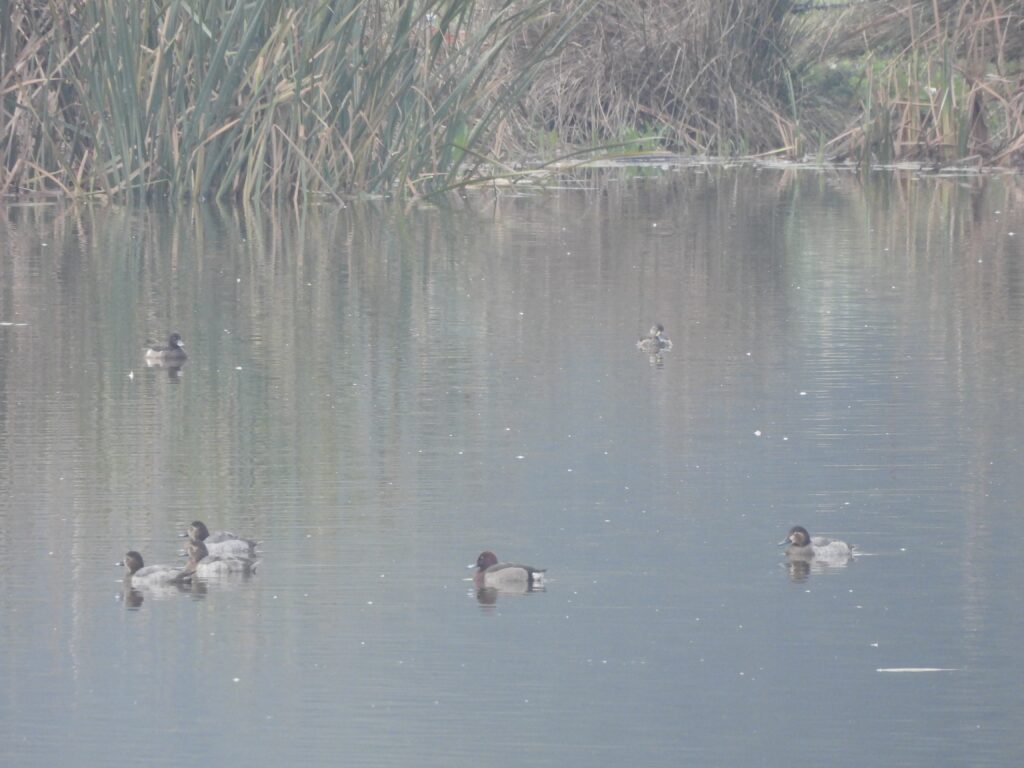
We were quite worried that we might have lost our chances of properly scoping the ducks, so we started working through the few dozens that had remained in the Merja (the northeastern, smaller lagoon of the wetland). As is often the case in wetlands back home, pochards were among the species that stayed while most others were circling high above in fear. Among several dozens of common pochards (Aythya ferina) and ferruginous ducks (Aythya nyroca), an obvious male tufted duck (Aythya fuligula) was accompanied by a bird we were definitely not expecting: a ring-necked duck (Aythya collaris), a North American species completely out of range, which Darío spotted almost immediately upon arrival.
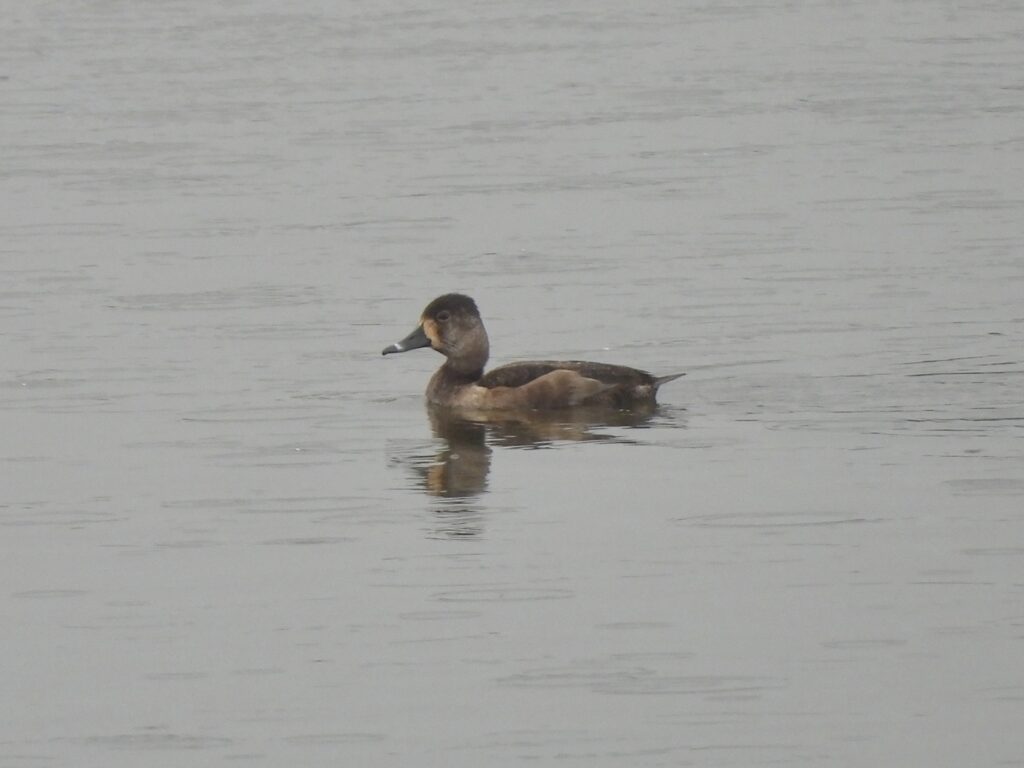
The presence of this Nearctic diving duck in the Western Palearctic has increased over the last 50 years and it is now regular in much of Western Europe. In Morocco, however, there are fewer than 30 historical records of the species, despite the country lying at a latitude equivalent to most of its wintering range in North America. Either way, this was an unexpected lifer for both Darío and me, and we enjoyed it throughout the morning as the bird cooperatively swam closer to us.
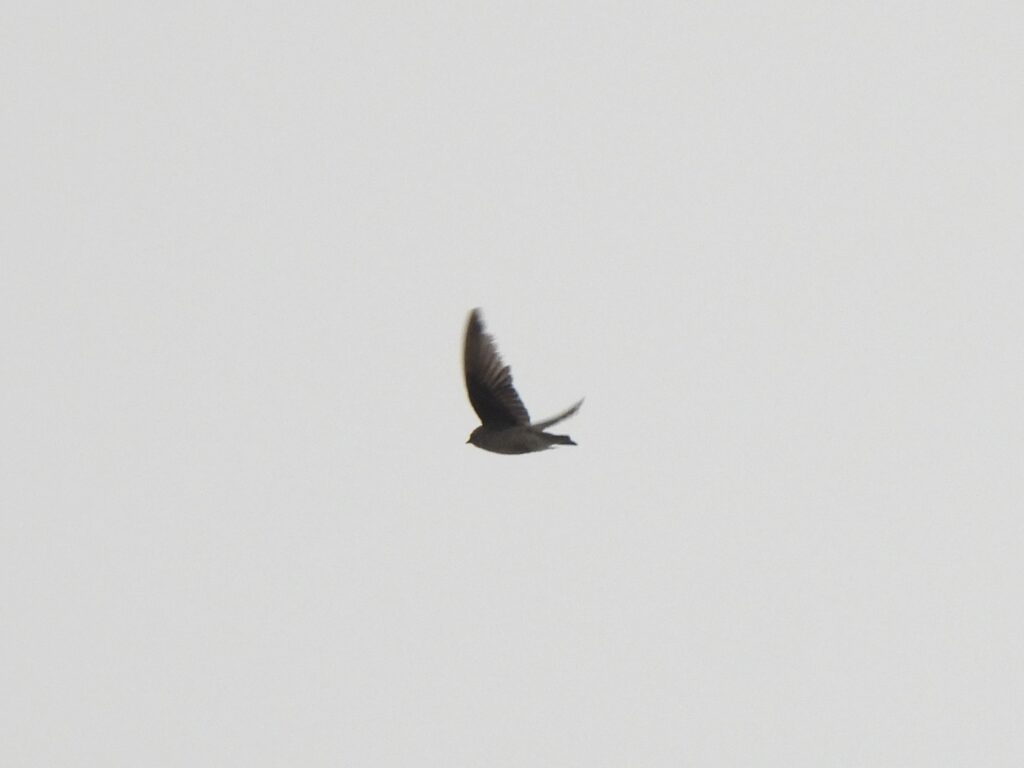
Small flocks of hirundines passed over the Merja during the day. Most were wintering barn swallows (Hirundo rustica), but we also managed to connect with several individuals of another local specialty: plain martin (Riparia paludicola). Morocco holds the best — and often the only — Western Palearctic populations of several otherwise widespread species, and this drab, tiny swallow is one of them, most reliably found in Atlantic coastal marshes. While I had seen this species in good numbers in Kenya, it was a lifer for Darío, and we enjoyed excellent views of multiple individuals. We also located two little swifts (Apus affinis), another Moroccan treat.
The wetland was full of life. The air was filled with the calls of meadow pipits (Anthus pratensis), white wagtails (Motacilla alba), stonechats (Saxicola rubicola) and zitting cisticolas (Cisticola juncidis) from the fields; Eurasian coots (Fulica atra) and red-knobbed coots (Fulica cristata) from the waters of the Merja; and distant waterfowl and lesser black-backed gulls (Larus fuscus) from the larger lagoon. The fields behind the Merja were full of white storks (Ciconia ciconia), while several raptors flew over looking for prey, including five marsh harriers (Circus aeruginosus), a sparrowhawk (Accipiter nisus) and a kestrel (Falco tinnunculus).
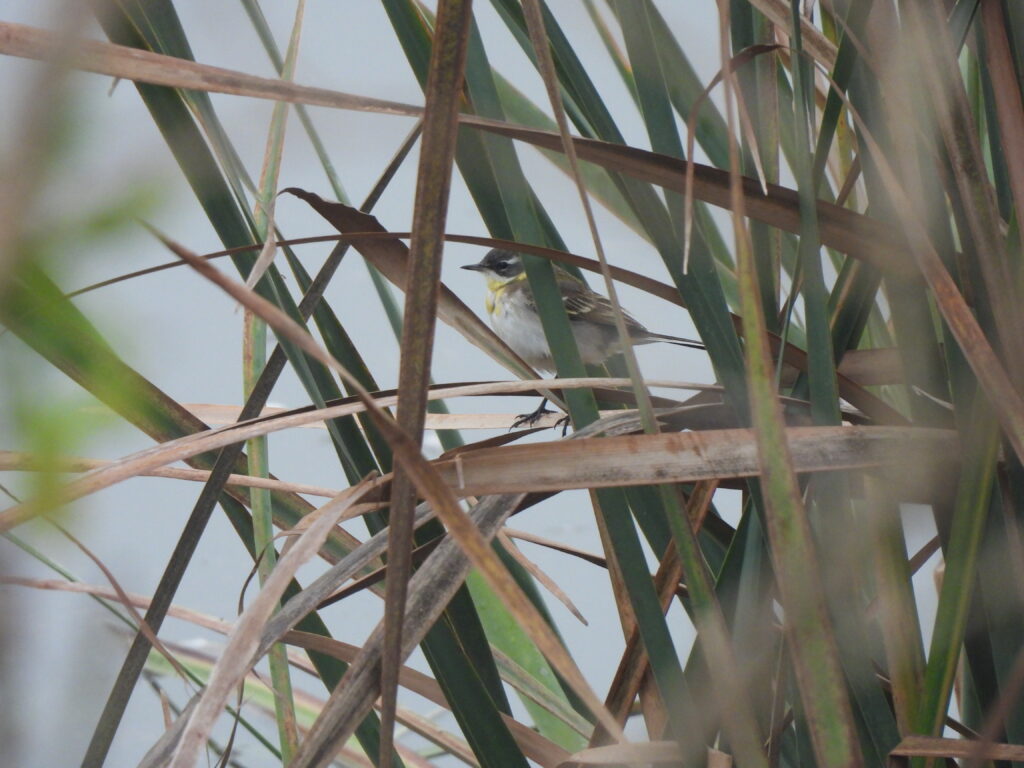
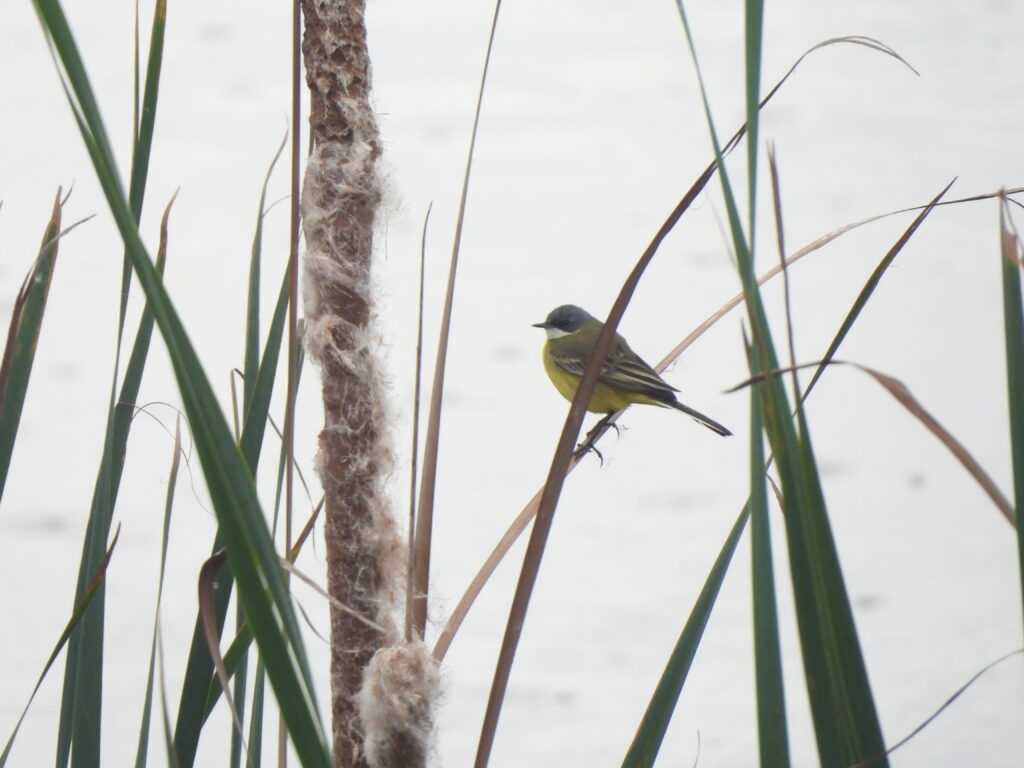
The calls that caught my attention the most, however, were those of about a dozen of western yellow wagtails (Motacilla flava) flying back and forth along the muddy shore, reeds and tamarisks. The birds were extremely vocal, and some of the calls sounded unfamiliar compared to those I usually hear during migration in Spain. Several individuals obliged with good views through the vegetation.
Waterfowl flocks slowly returned from the sky as time passed, gathering in the thousands in the larger contiguous lagoon. Numbers of shovelers (Spatula clypeata) were impressive, but perhaps not as striking as the abundance of white-headed ducks (Oxyura leucocephala) and marbled ducks (Marmaronetta angustirostris), both globally threatened species, just like the pochards and ferruginous ducks also present in large numbers. Among the latter, we connected with at least three male common pochard × ferruginous duck hybrids. Additionally, Darío spotted two garganeys (Spatula querquedula) — rare wintering visitors in the area.
Scoping the waterfowl also produced good numbers of mallards (Anas platyrhynchos) and teals (Anas crecca), several gadwalls (Mareca strepera), pintails (Anas acuta) and red-crested pochards (Netta rufina), as well as little grebes (Tachybaptus ruficollis) and eared grebes (Podiceps nigricollis). On one full scan of the wetland, I connected with the day’s only wigeon (Mareca penelope) and yet another Nearctic species: a blue-winged teal (Spatula discors). This male had been found on 10 December by fellow Spanish birders Pedro Arratíbel, Javier Pi and Jorge Peláez, as relayed by our colleague Martín Rey, who unfortunately could not visit the area while travelling with them. This bird was apparently Morocco’s 13th historical record. Both of us only connected with it briefly, as joggers repeatedly flushed parts of the flocks.
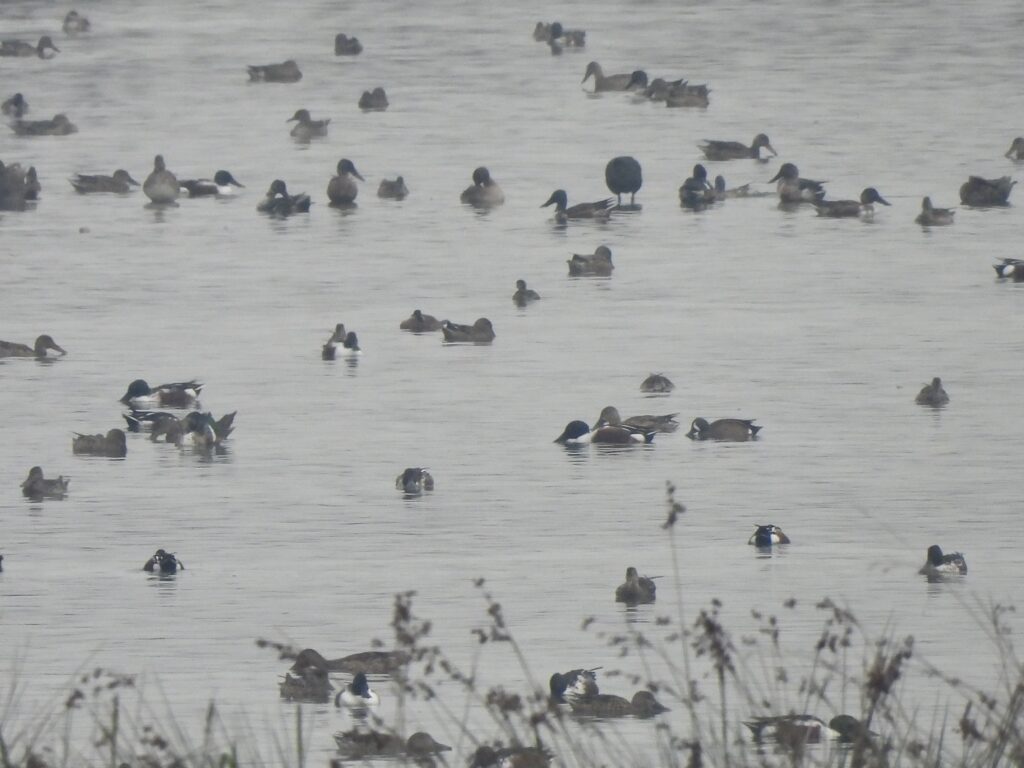
Because we share one telescope, I approached the shore of the Merja during scoping breaks to check the vegetation. Along the lagoon edge, I connected with several purple swamphens (Porphyrio porphyrio), black-winged stilts (Himantopus himantopus), ruffs (Calidris pugnax), moorhens (Gallinula chloropus), a black-tailed godwit (Limosa limosa), a green sandpiper (Tringa ochropus) and common snipes (Gallinago gallinago). Darío also connected with a bluethroat (Luscinia svecica) along the ditch separating the lagoons.
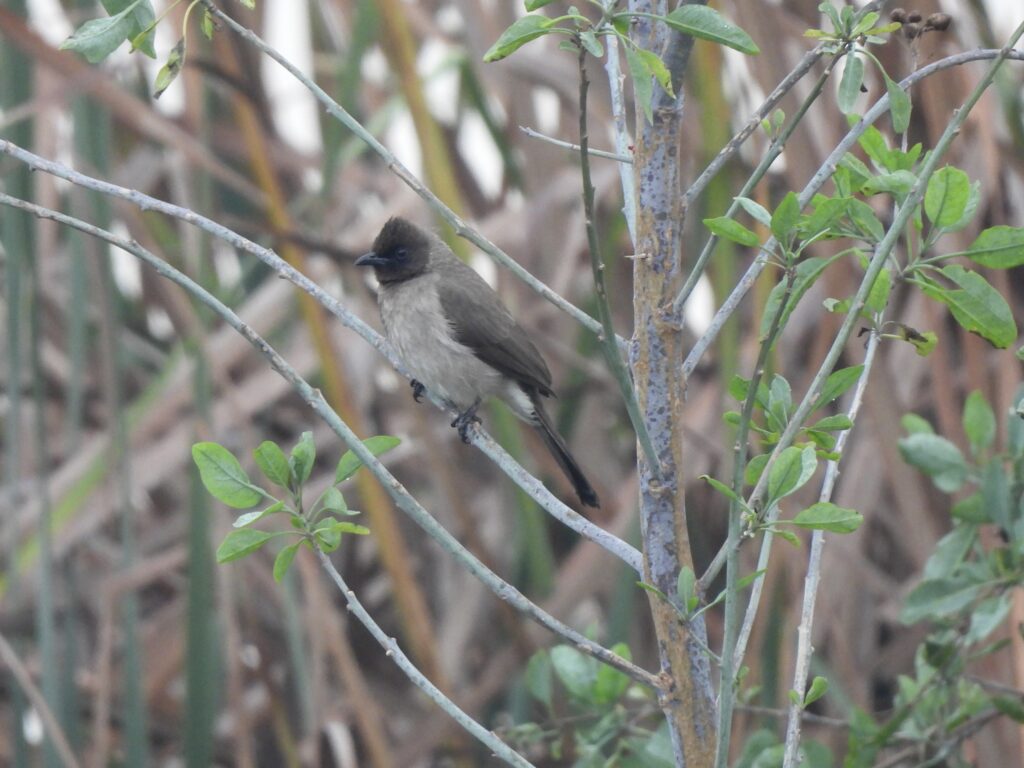
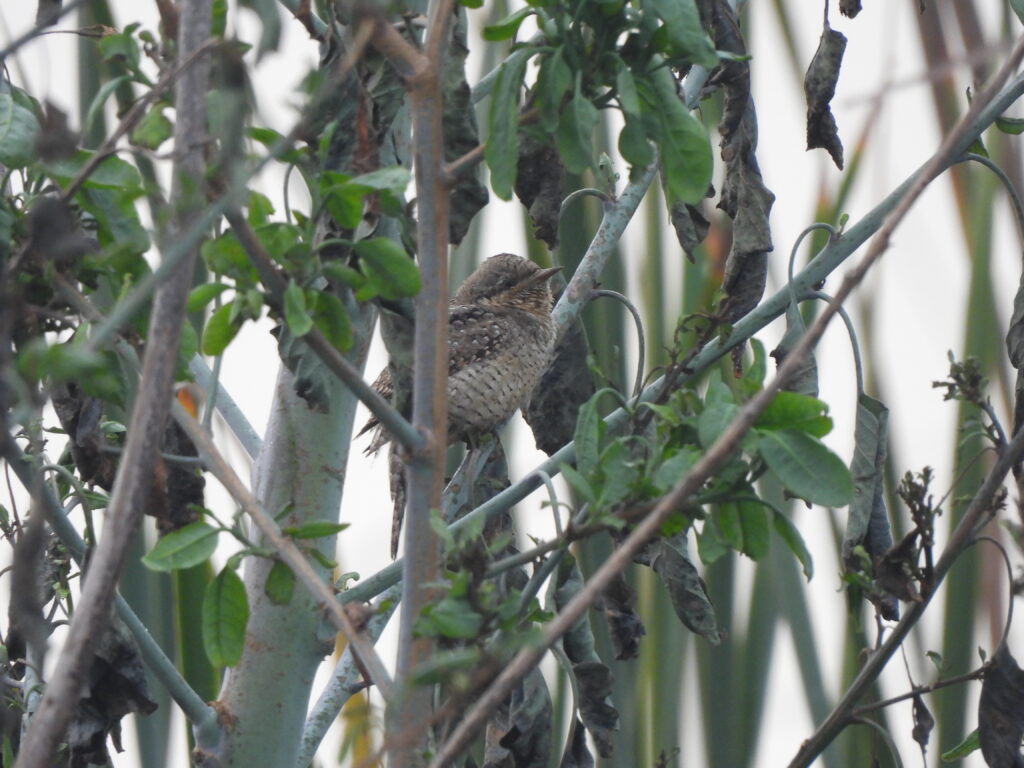
The vegetation held plenty of activity as well. Numerous common chiffchaffs (Phylloscopus collybita) were joined by goldfinches (Carduelis carduelis), blackbirds (Turdus merula), song thrushes (Turdus philomelos), robins (Erithacus rubecula) and several siskins (Spinus spinus) roamed in the bushes, and common reed warblers (Acrocephalus scirpaceus) called from the reeds. Common bulbuls (Pycnonotus barbatus) and African chaffinches (Fringilla spodiogenys) gave excellent views — both additional Moroccan specialties — but I was most excited to enjoy close views of a wryneck (Jynx torquilla) that Darío had located from above, flying straight into the shrub next to me.
The numbers of waterfowl wintering at Merja de Fouwarate were absolutely impressive, especially considering the abundance of globally threatened species. Despite its proximity to large cities such as Rabat or Casablanca, the area lies off most birding itineraries in Morocco, which tend to focus farther south. However, the presence of several local specialties and the constant potential for surprises among the waterfowl fully justify a visit. As we watched hundreds of birds flying across the sky or swimming at great distances at all times, Darío and I left Fouwarate wondering how many more surprises might still be waiting to be found there.