During our time in Kenya, our first sight of the recently split Maasai giraffe (Giraffa tippelskirchi) happened on the road while driving from Laikipia county to our next destination, not far from Naivasha. Not only did the giraffe species shift, but also the entire landscape. Savanna gave place to groves of endemic Euphorbia bussei trees dominating open woodlands.
As we approached the city, vast flower farms — now the region’s primary economic engine — dominated the view. Our time in Kenya was part of a University of Helsinki human-wildlife conflict field course. We soon learned that the shift to flower farming has displaced many, leading to social challenges and new, often dangerous, interactions between locals and large mammals.
We deployed some days to understand these and other wildlife-human conflicts in the region. We were based at the Kenya Wildlife Service and Training Institute (KWSTI), a sprawling campus where students train for careers in National Parks. The grounds were surprisingly wild; impalas (Aepyceros melampus), elands (Taurotragus oryx), and warthogs (Phacochoerus africanus) roamed freely among the classrooms.

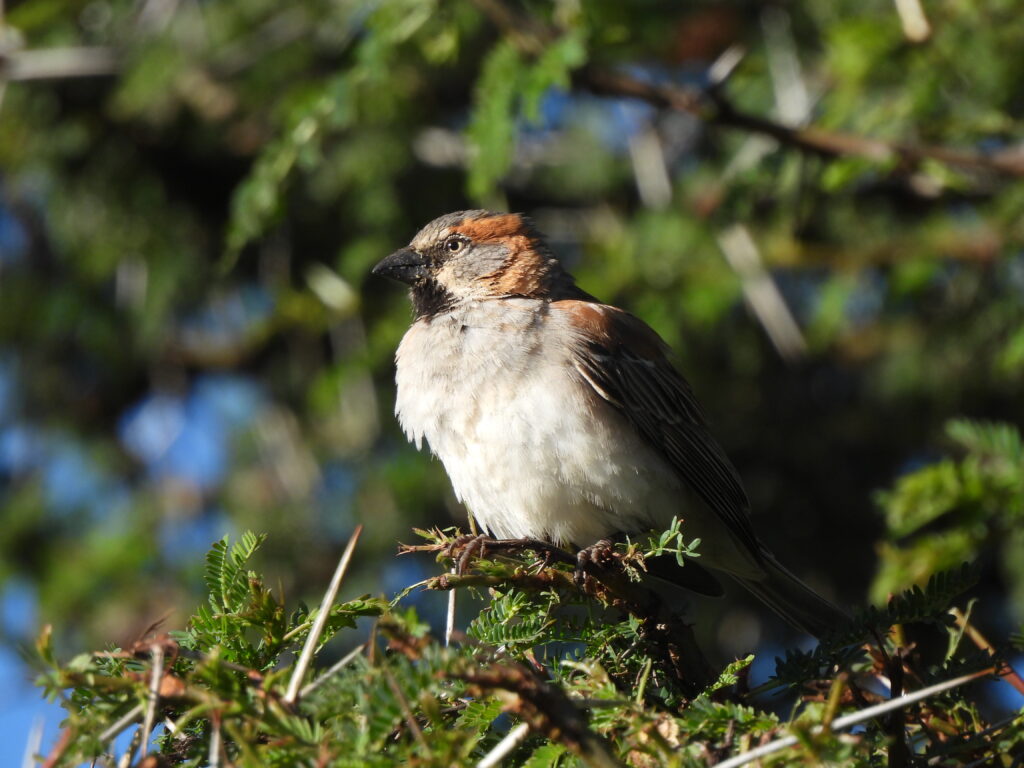
Birding the campus was immediately productive. A flock of Nyanza swifts (Apus niansae) was found nesting in the cavities of one of the buildings. In the surrounding vegetation, I noted Kenya sparrows (Passer rufocinctus), brimstone canaries (Crithagra sulphurata), streaky seedeaters (Crithagra striolata), and the vibrant purple grenadier (Granatina ianthinogaster) just walking from our vehicle to my room.
On the wires above the sports areas, I could connect with white-fronted bee-eaters (Merops bullockoides) and red-throated rock martins (Ptyonoprogne rufigula) right at sunset. We were advised to stay alert and avoid going out at night; buffalos (Syncerus caffer) moved through some areas of campus after dark.

Our only full day in the area happened to be the most birdwatching-focused of the whole trip, which was by no means focused on birds. We sailed Lake Oloiden, a satellite lake of Naivasha where Asociación Bio+, the organizers of our field course, has launched a unique conservation project. The initiative trains former unlicensed fishermen as ecotourism guides, utilizing their deep knowledge of the lake’s ecology.
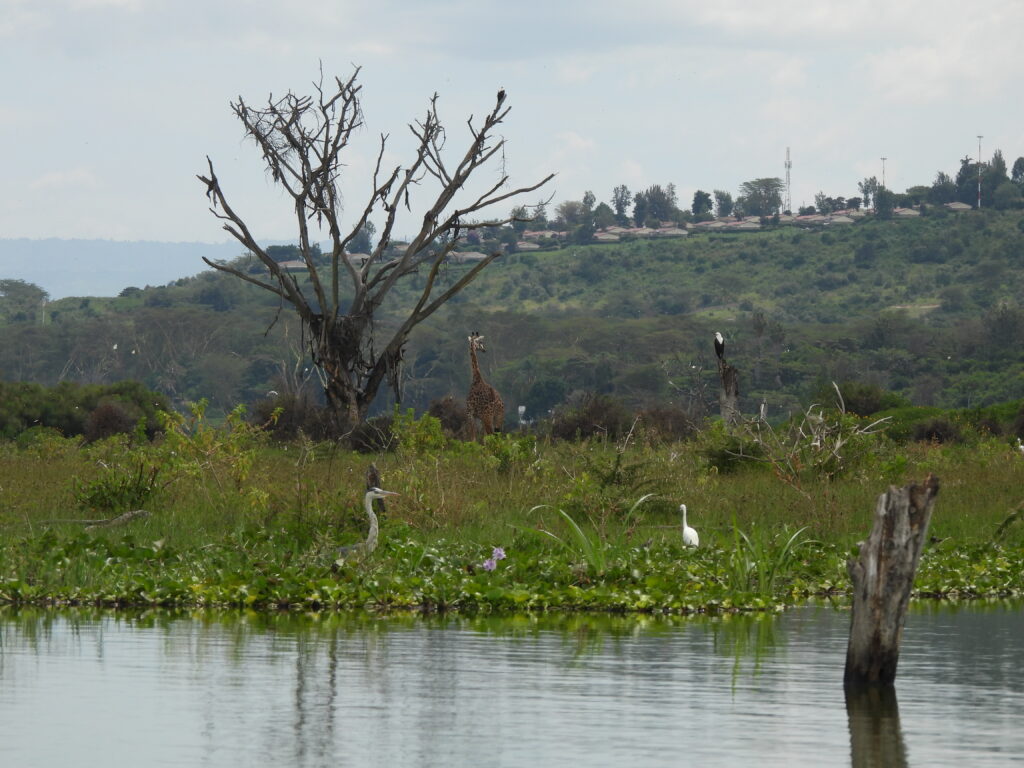
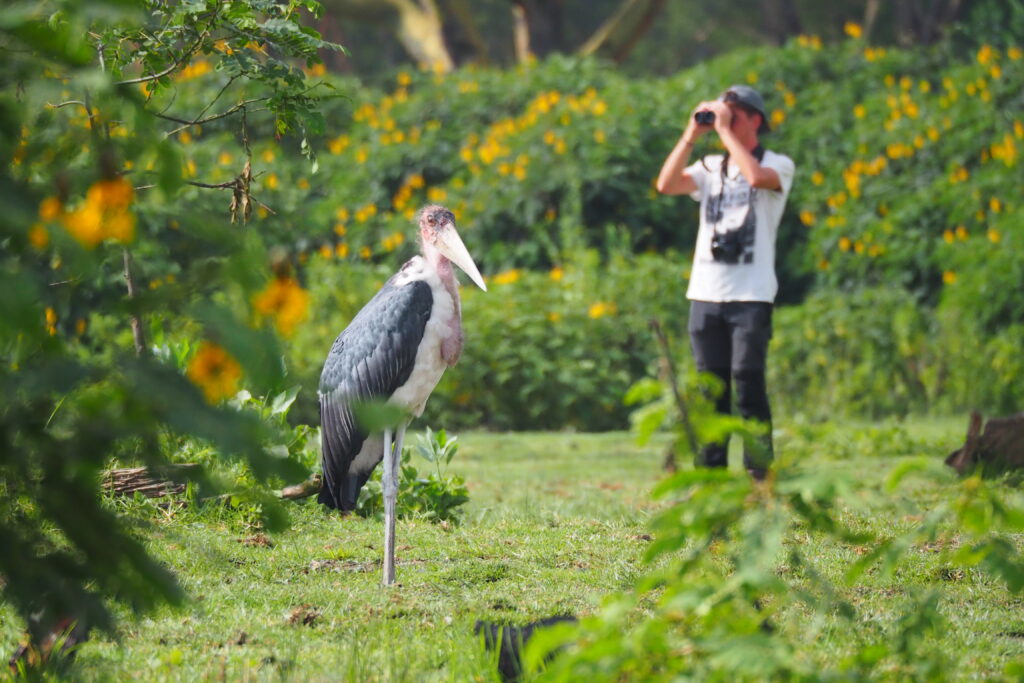
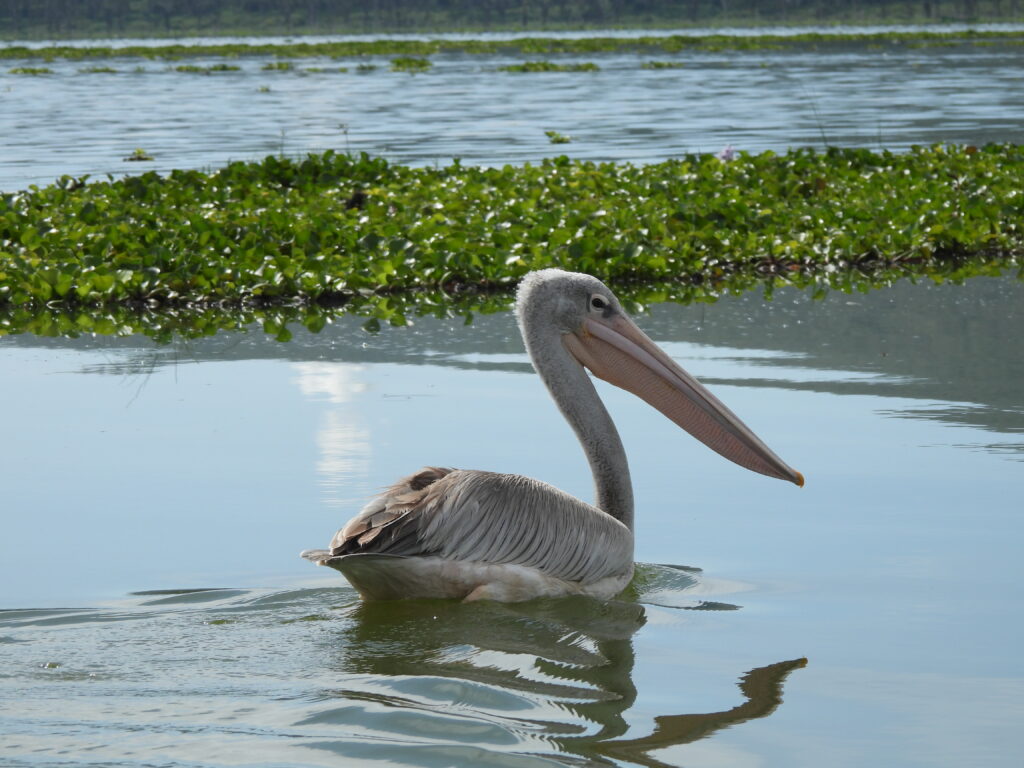
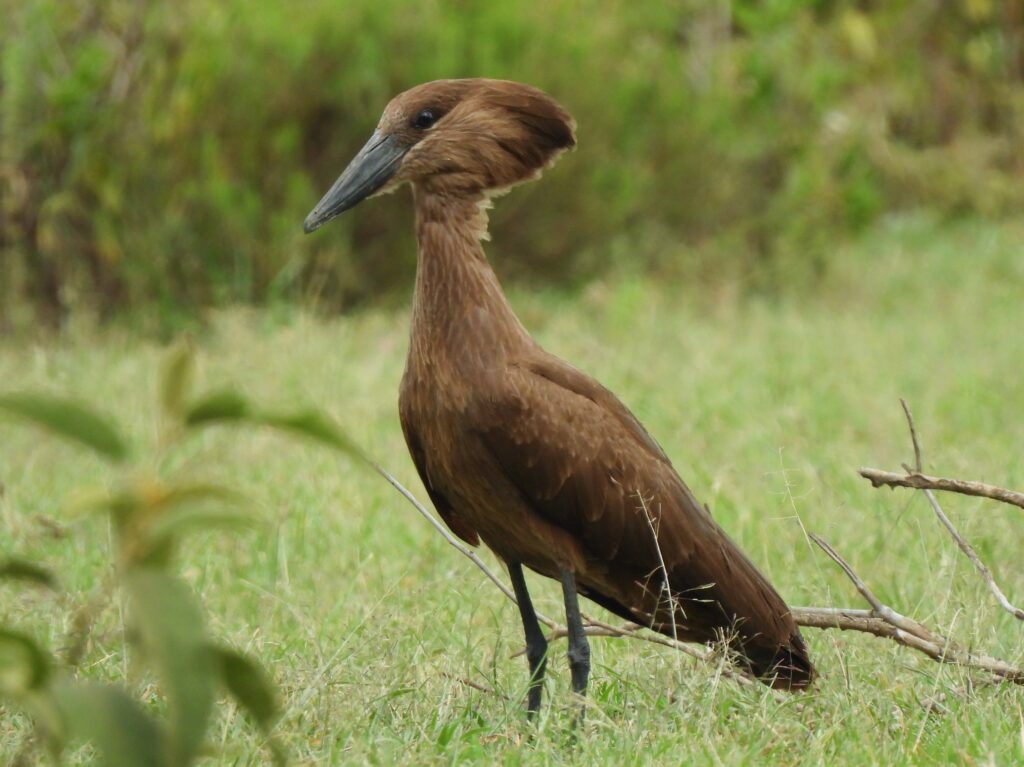
A small beach was all that was left open — that is, not fenced and built as resort land. However, this small area was full of life. Just upon arrival, I could see large numbers of hamerkops (Scopus umbretta), marabou storks (Leptoptilos crumenifer), and pink-backed pelicans (Pelecanus rufescens).
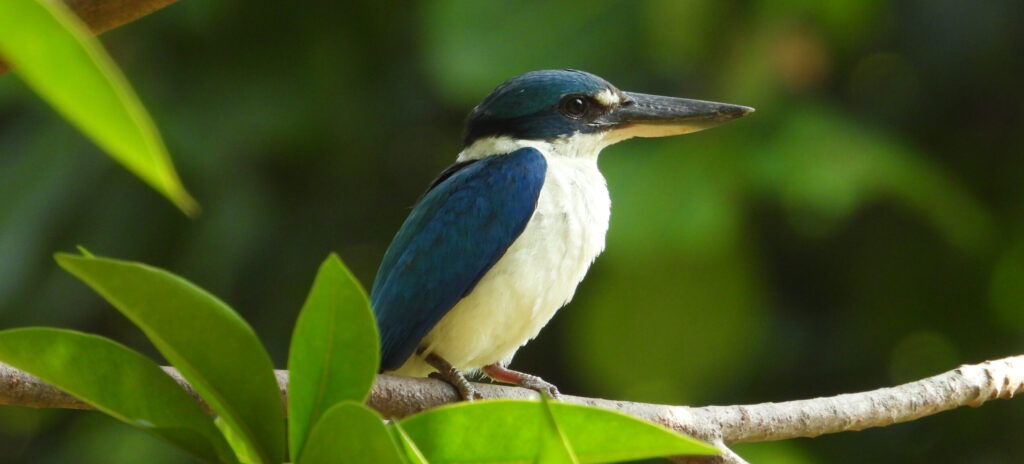
Upon further inspection, it did not take long to find some lifers foraging the coastal waters: yellow-billed egrets (Ardea brachyrhyncha) and giant kingfishers (Megaceryle maxima) — a beast of a kingfisher.
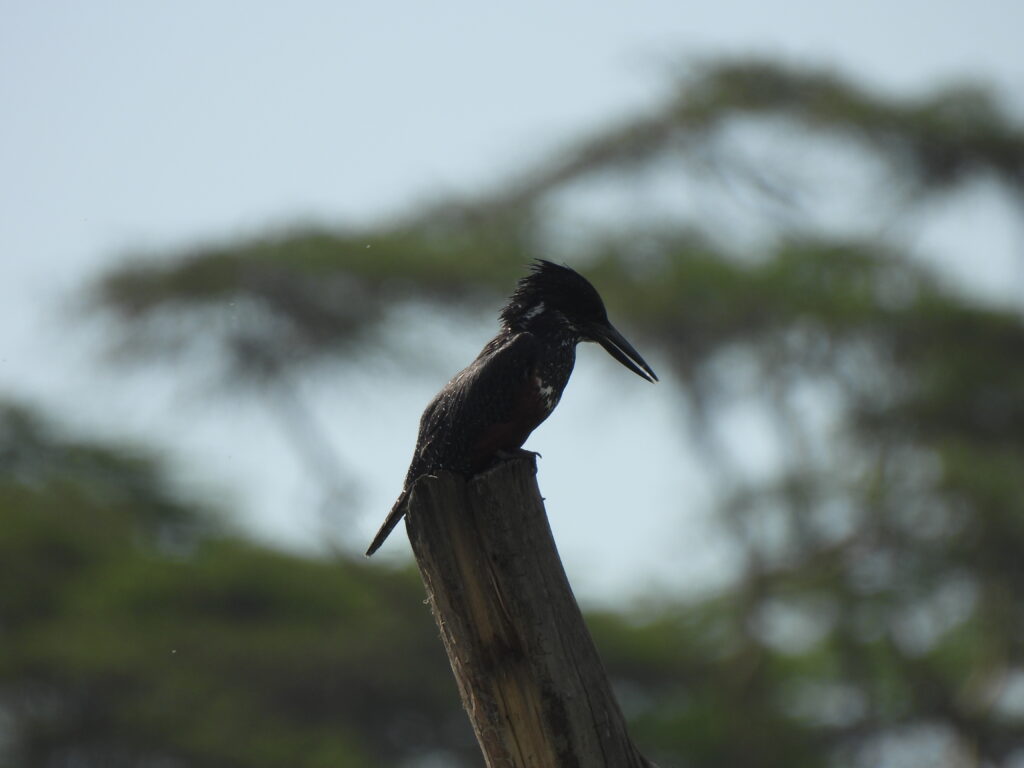
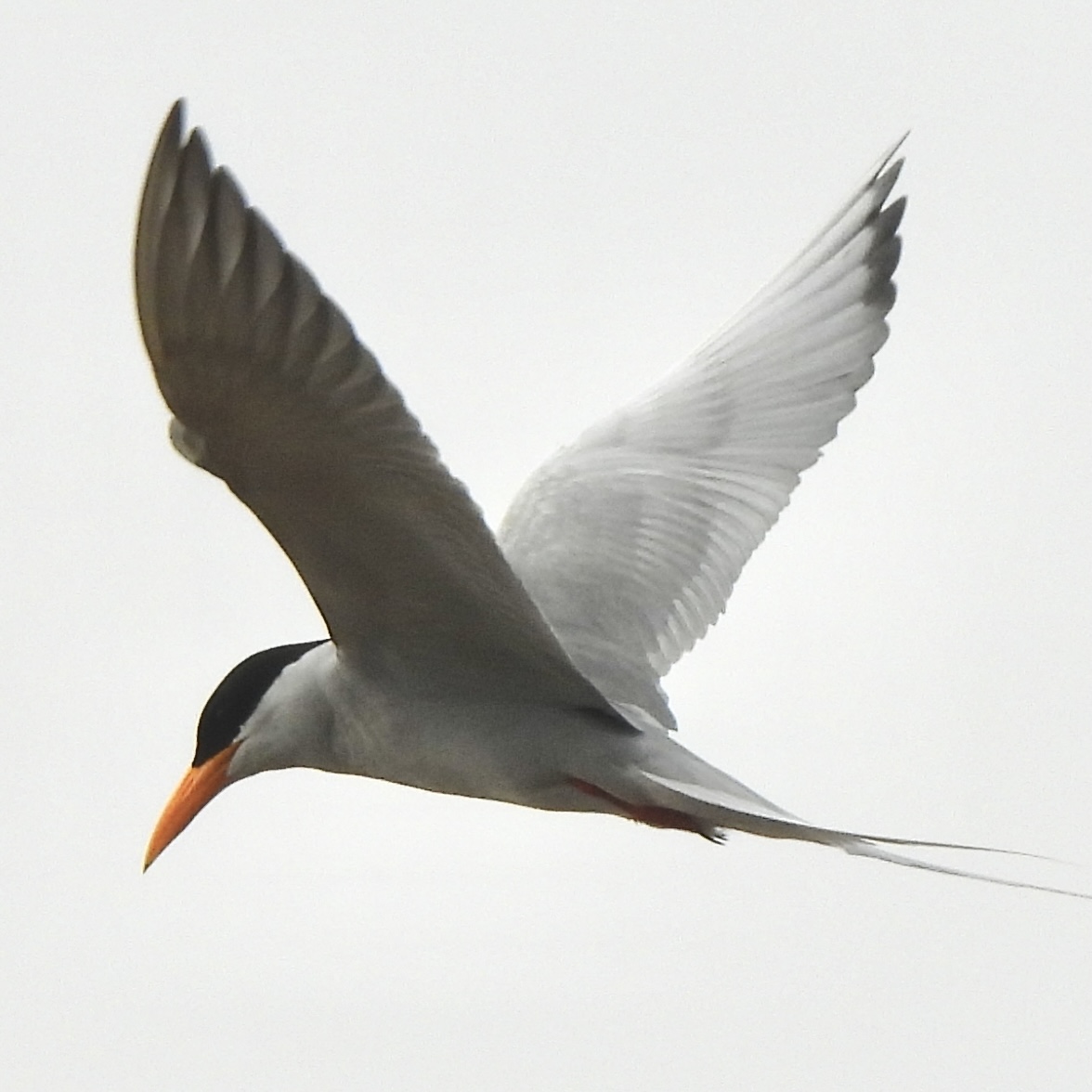
The lake’s water level was exceptionally high, connecting it to Lake Naivasha. This change has brought in freshwater to an otherwise hypersaline lake, bringing along an influx of fish, and an abundance of territorial hippos (Hippopotamus amphibius). While we interviewed locals about the fatal hippo conflicts in the area, we were surrounded by gull-billed terns (Chlidonias hybrida) and gray-headed gulls (Chroicocephalus cirrocephalus) and even by hippos close to the shore.
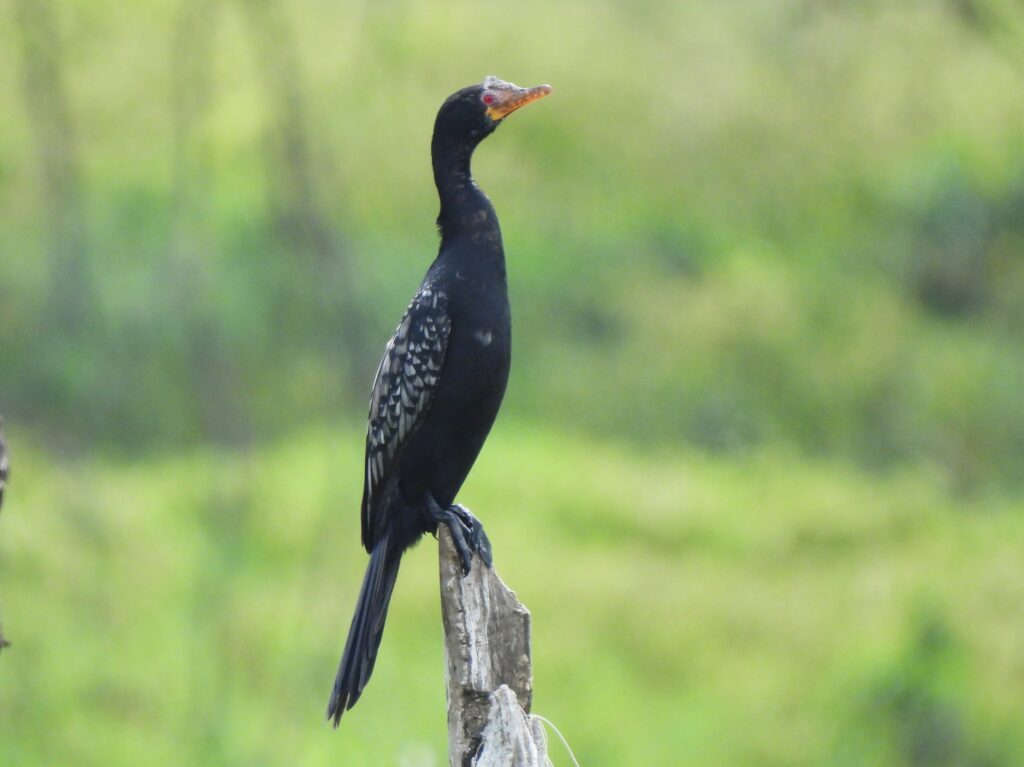
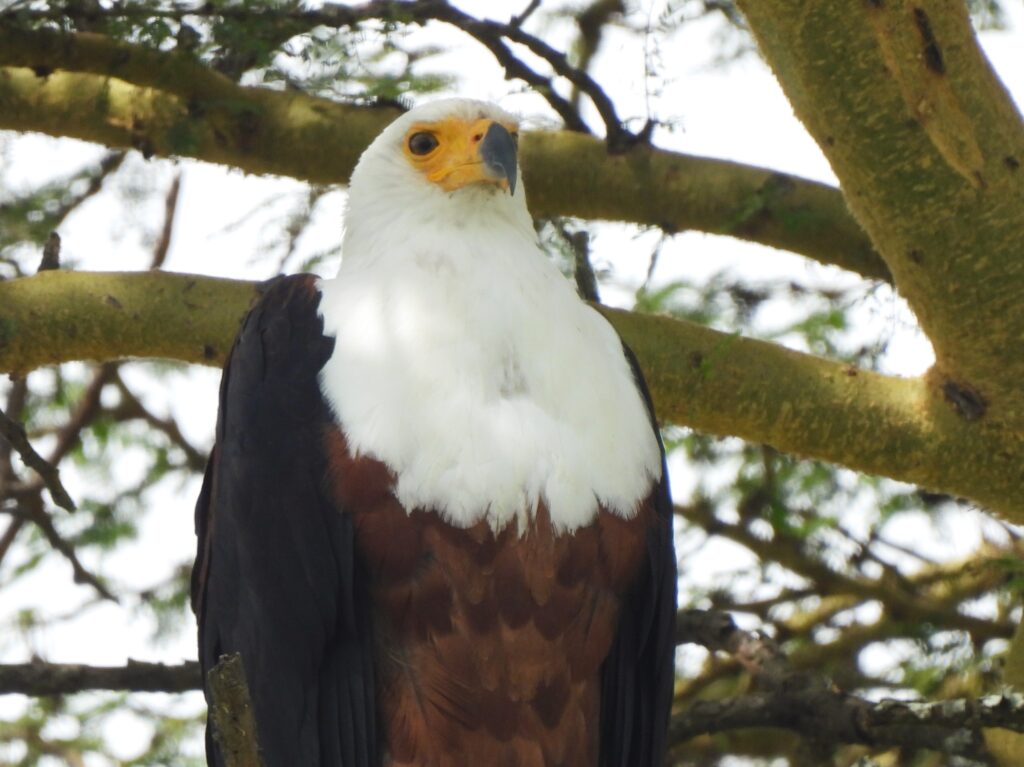
Besides our work interviewing the community, we had the chance to experience the livelihood of many of the former fishermen by hopping on boats and being guided through Lake Oloiden, looking for birds. We witnessed the world’s highest density of African fish eagles (Icthyophaga vocifer), with pairs perched on many trees along the way.
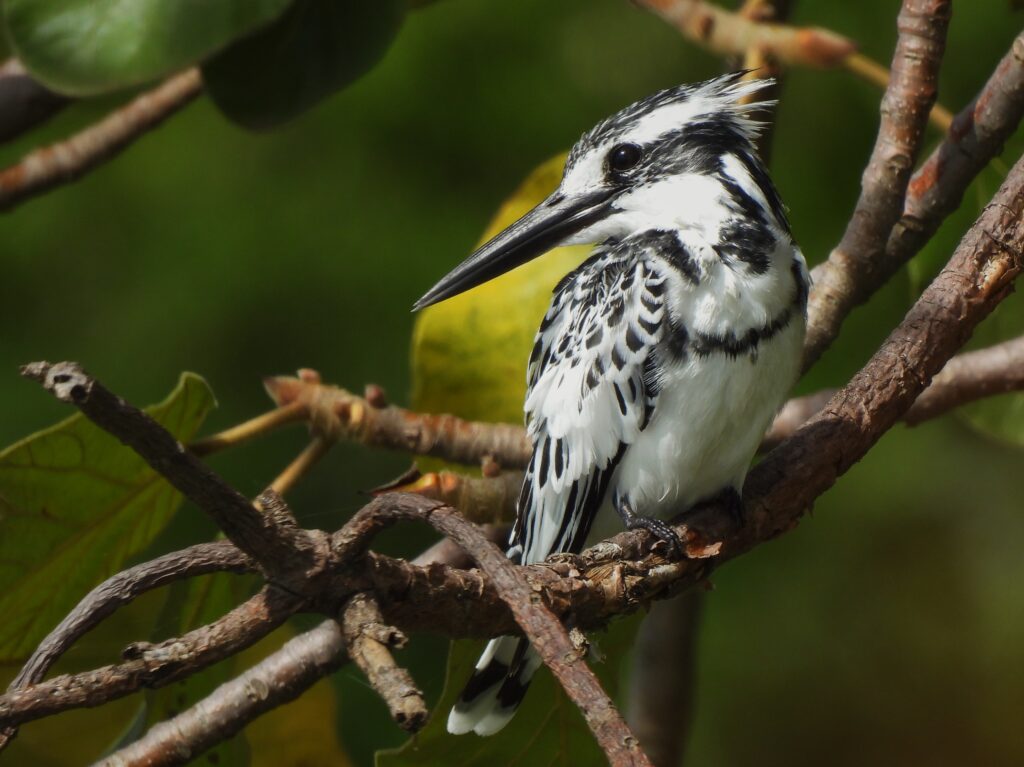
The sight of several pied kingfishers (Ceryle rudis) and some malachite kingfishers (Corythornis cristatus) caught the attention of most of us. The sky was filled with large flocks of brown-throated martins (Riparia paludicola) and barn swallows (Hirundo rustica).
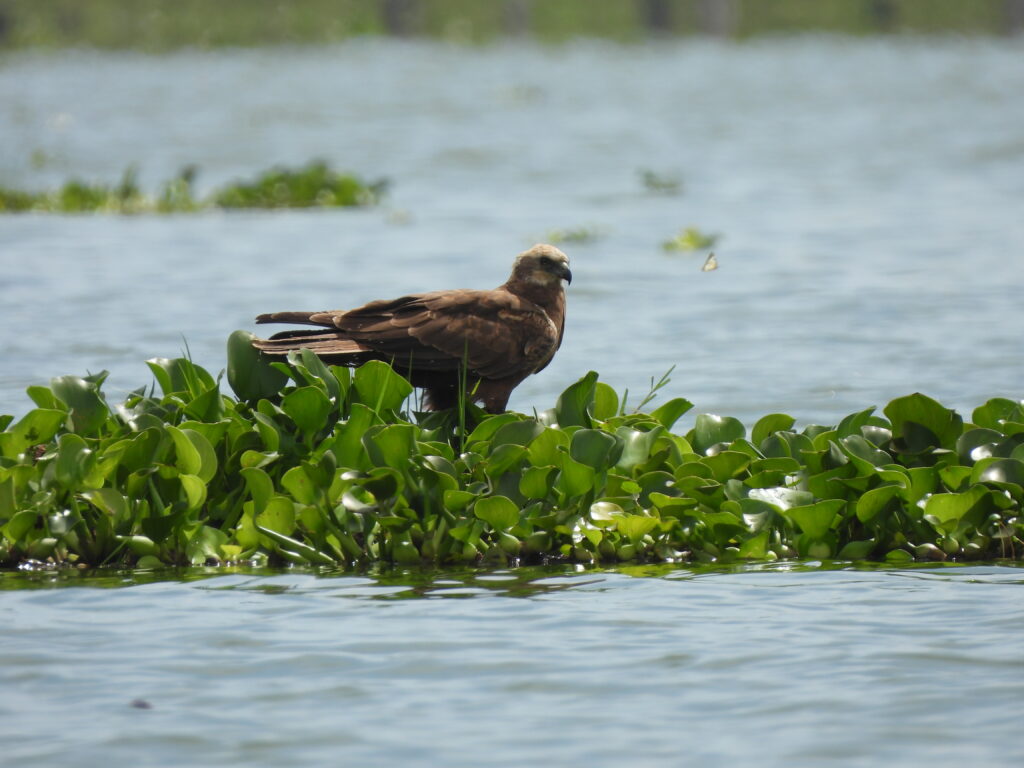
Among raptors, we connected with an important number of western marsh harriers (Circus aeruginosus) and some ospreys (Pandion haliaetus). A bonus came as an unexpected white-backed vulture (Gyps africanus) soaring high over the lake.
A common thread of most of our boat tour was herds of hippos swimming in the waters. Their size and sounds — and the infamous behavior explained by locals — were imposing. However, flocks of Egyptian geese (Alopochen aegyptiaca) and some African jacanas (Actophilornis africanus) did not seem to mind and foraged at minimal distance from the giants.

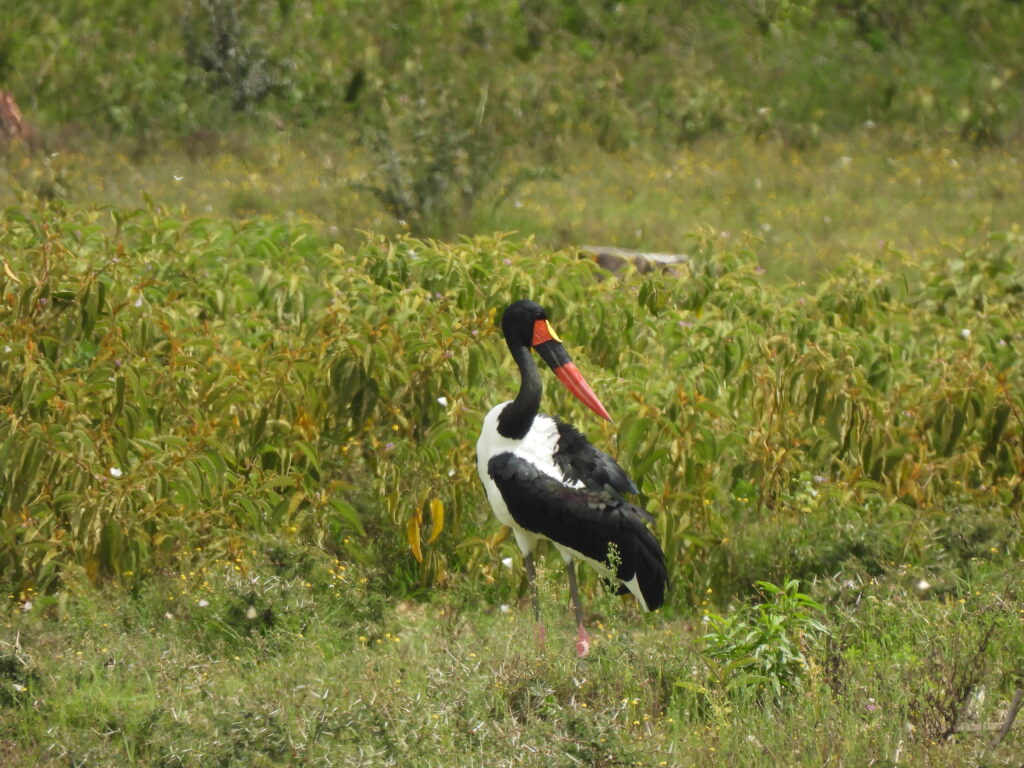
At a certain point we sailed past all resorts, into a wilder area. The sky was completely covered in thousands of small pierid butterflies. This gave some beautiful scenes of vervet monkeys (Chlorocebus pygerythrus), plains zebras (Equus quagga), impalas (Aepyceros melampus) and giraffes as if surrounded by sparkle. The same applied to two impressive saddle-billed storks (Ephippiorhynchus senegalensis), a stunning species I was very happy to see.
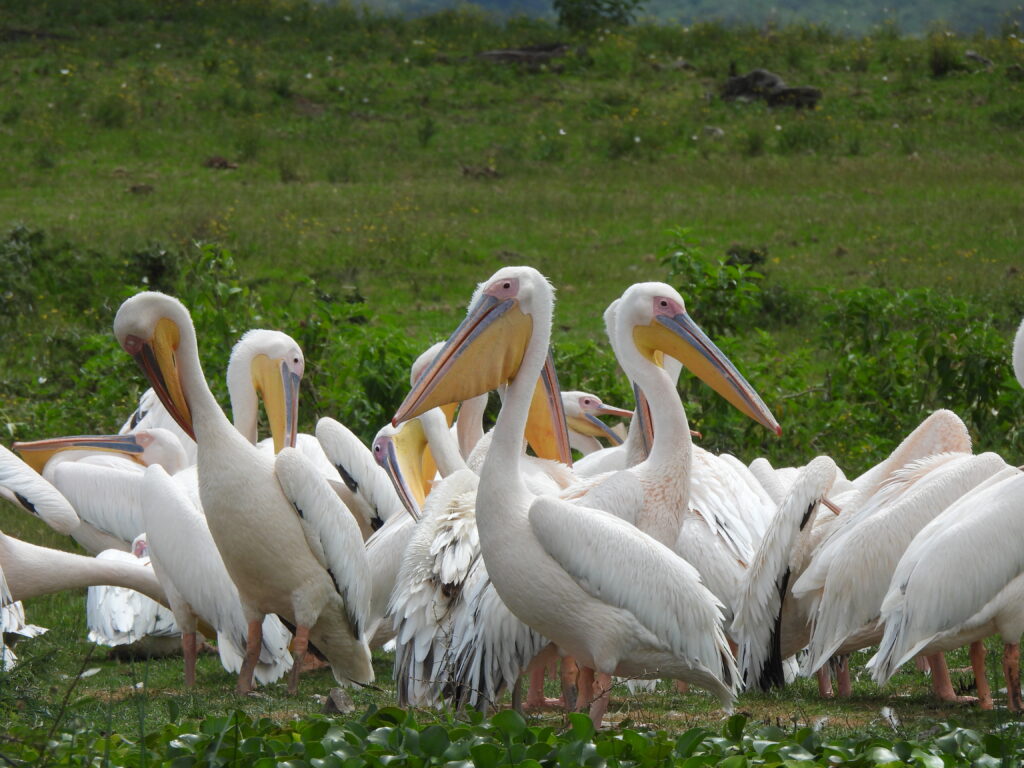
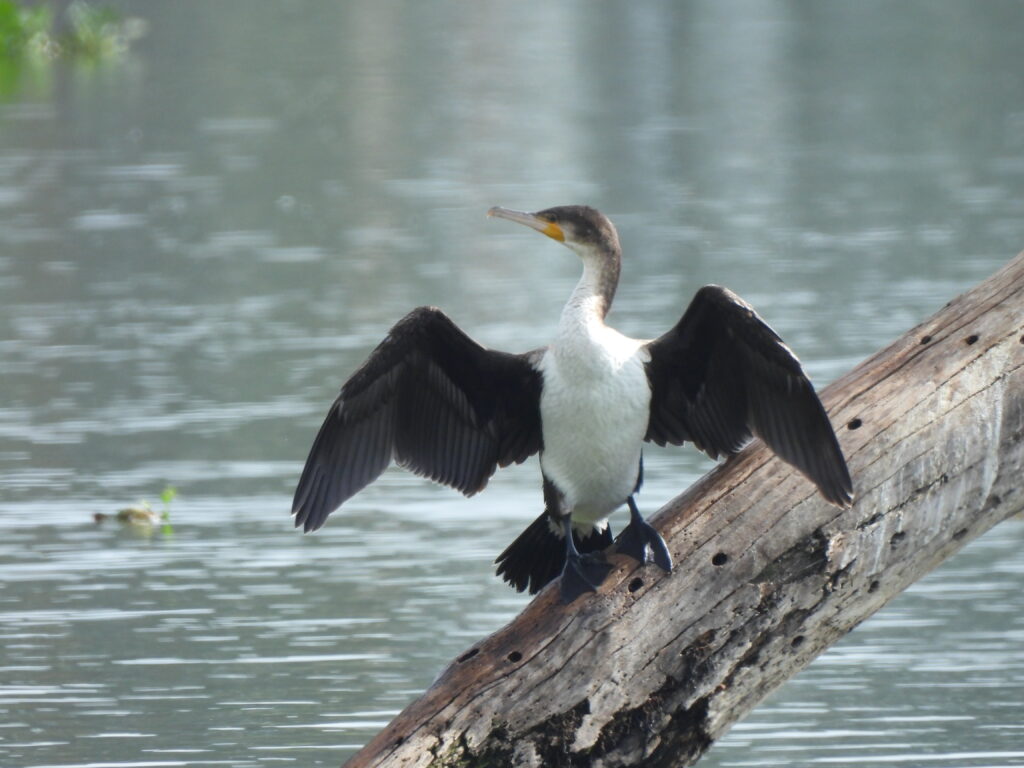
A major highlight was a mixed colony of great white pelicans (Pelecanus onocrotalus) surrounded by a number of individuals of the African white-bellied lucidus form of great cormorants (Phalacrocorax carbo), and some reed cormorants (Microcarbo africanus).
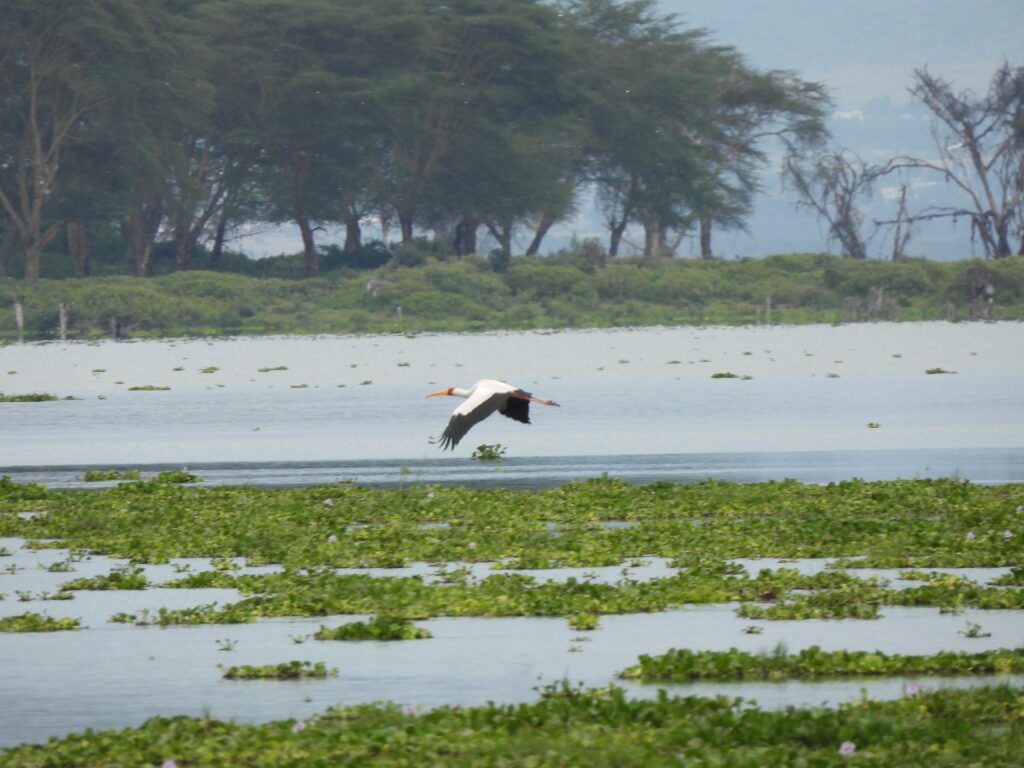
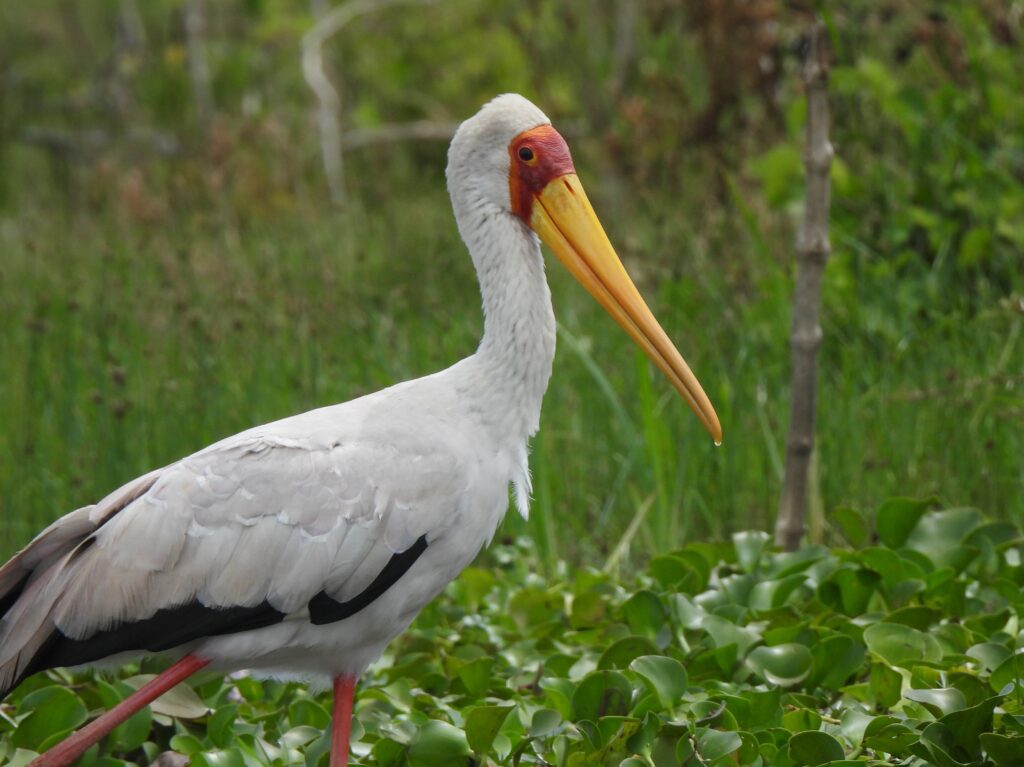
The whole trip reached its peak when we sailed through the land strip separating Lake Oloiden from Lake Naivasha. Yellow-billed stork (Mycteria ibis) and goliath heron (Ardea goliath) were two new lifers observed among dozens of birds and mammals.
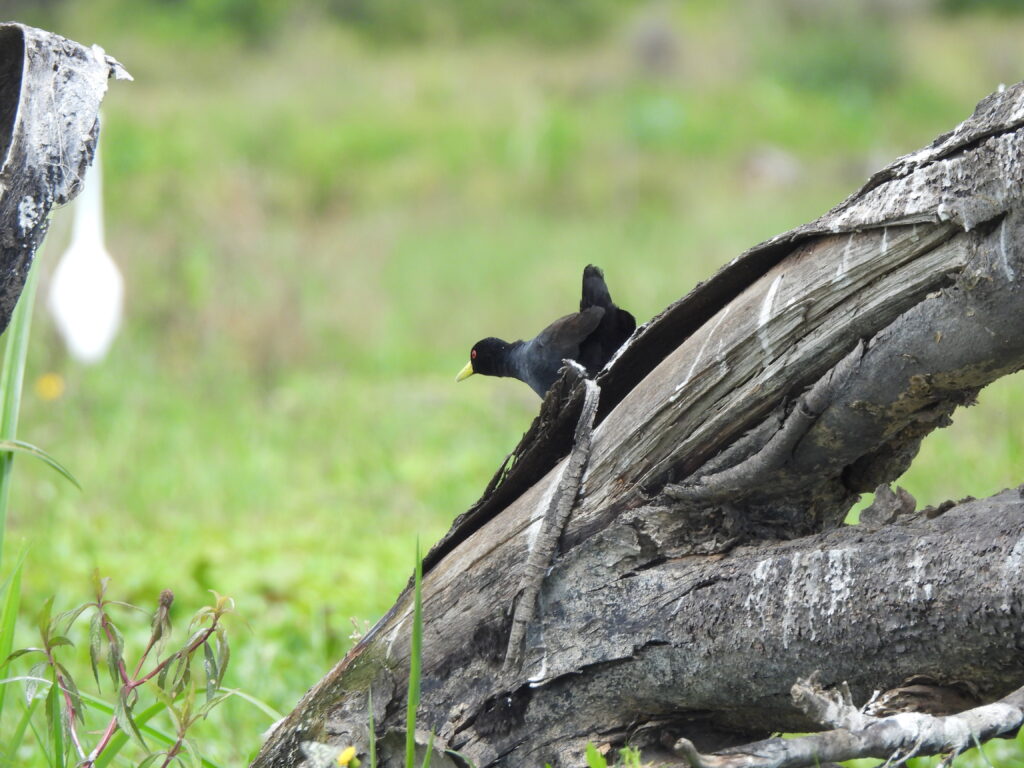
Despite most of them being large and majestic, we also noticed some smaller suspects, such as a black crake (Zapornia flavirostra) walking on the vegetation.
Plus, not all birds were new, as some species often reach Europe as far south as the region I come from — including the localized red-knobbed coot (Fulica cristata) and the vagrant lesser flamingo (Phoeniconaias minor), both local residents here.
In the afternoon after the productive sailing and some long discussions with locals, we visited the Naivasha Raptor Center at Kilimandege Sanctuary. Director Shiv Kapila introduced us to their vital work rescuing and breeding endangered scavengers.
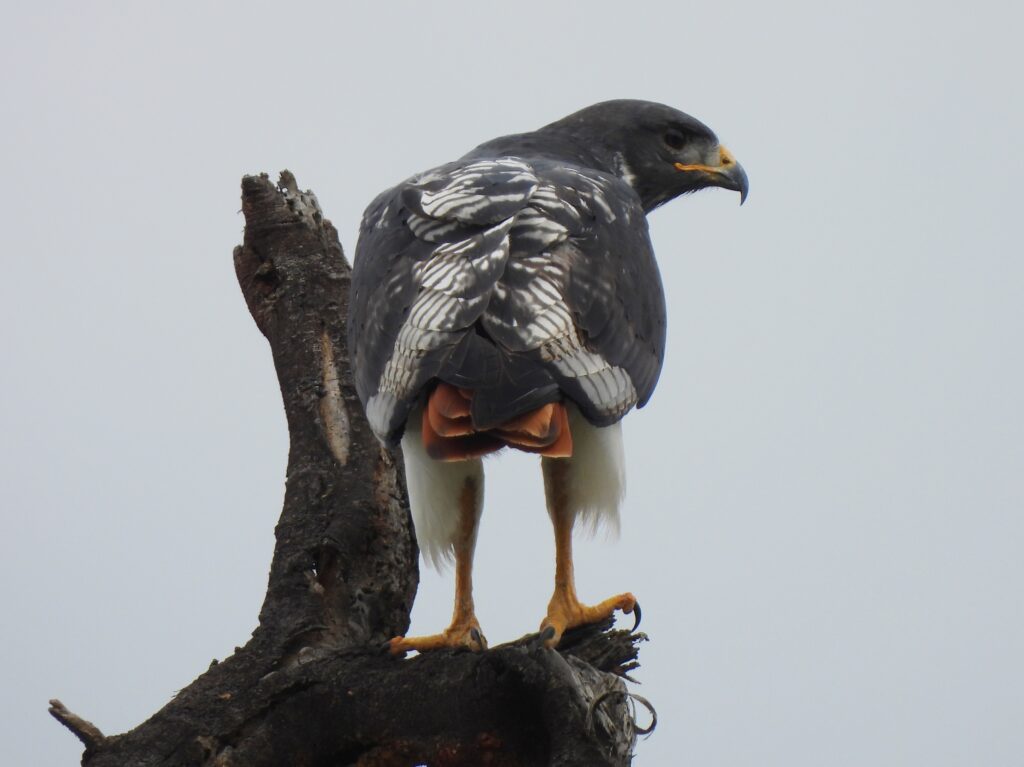
The sanctuary grounds were quite diverse. We watched a photogenic augur buzzard (Buteo augur) next to the door — a species currently declining due to new metal power poles across Kenya.
Other sightings during our visit included the African africana form of hoopoes (Upupa epops), anteater chats (Myrmecocichla aethiops) and a yellow-breasted apalis (Apalis flavida) near the owl cages.
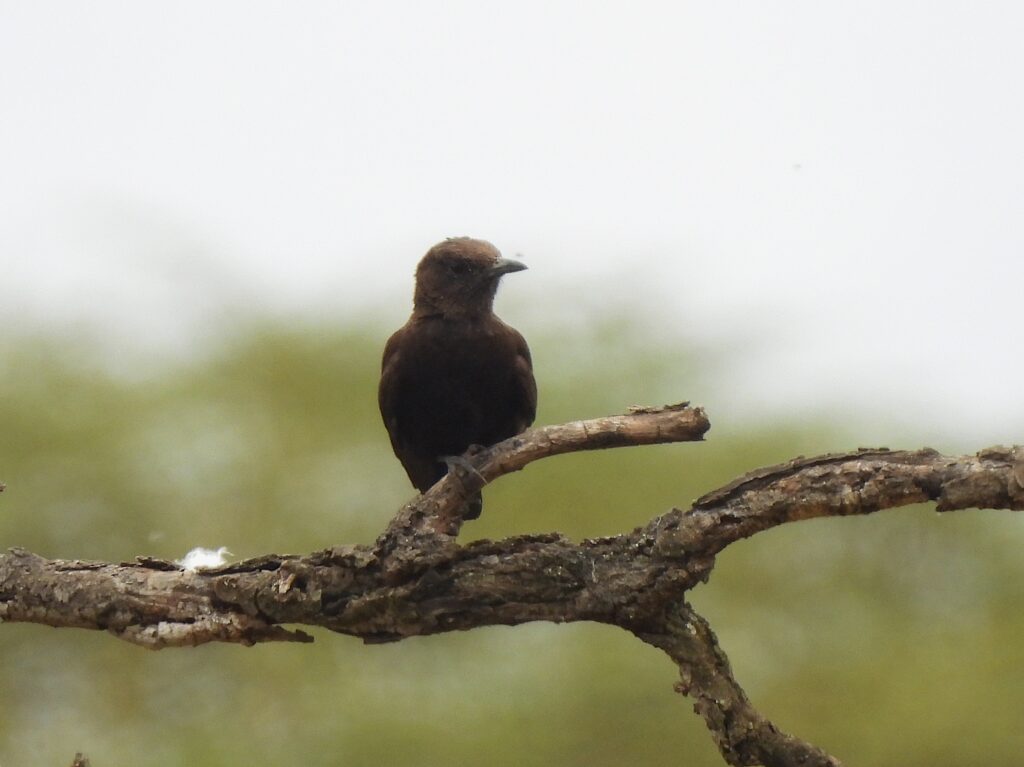
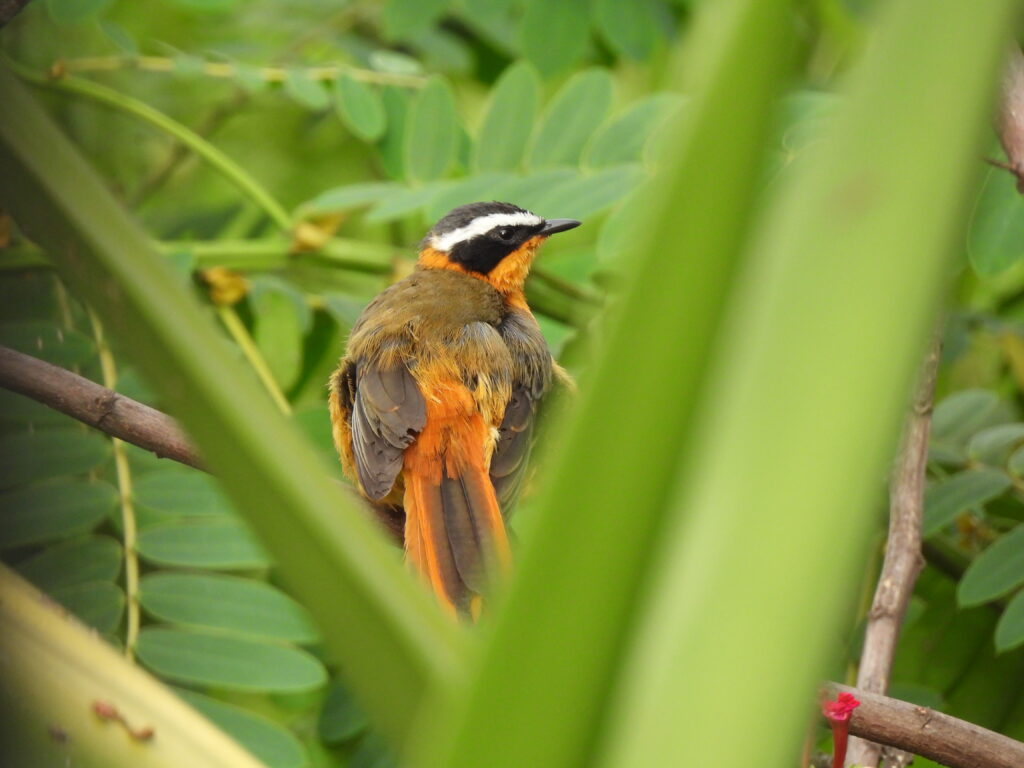
To wrap up an intense day, we visited Sopa Lodge — a timely visit during our course, considering that a tourist had been recently killed by a hippo after trespassing the edge of the garden. Indeed, its lush gardens overlooking the shores of Lake Naivasha are full of life and provided a brief but beautiful recess. The trees were filled with birds, including white-browed robin-chat (Cossypha heuglini), white-browed coucals (Centropus superciliosus), yellow-rumped tinkerbirds (Pogoniulus bilineatus), southern black flycatchers (Melaenornis pammelaina), white-eyed slaty-flycatchers (Melaenornis fischeri) and Speke’s weavers (Ploceus spekei).
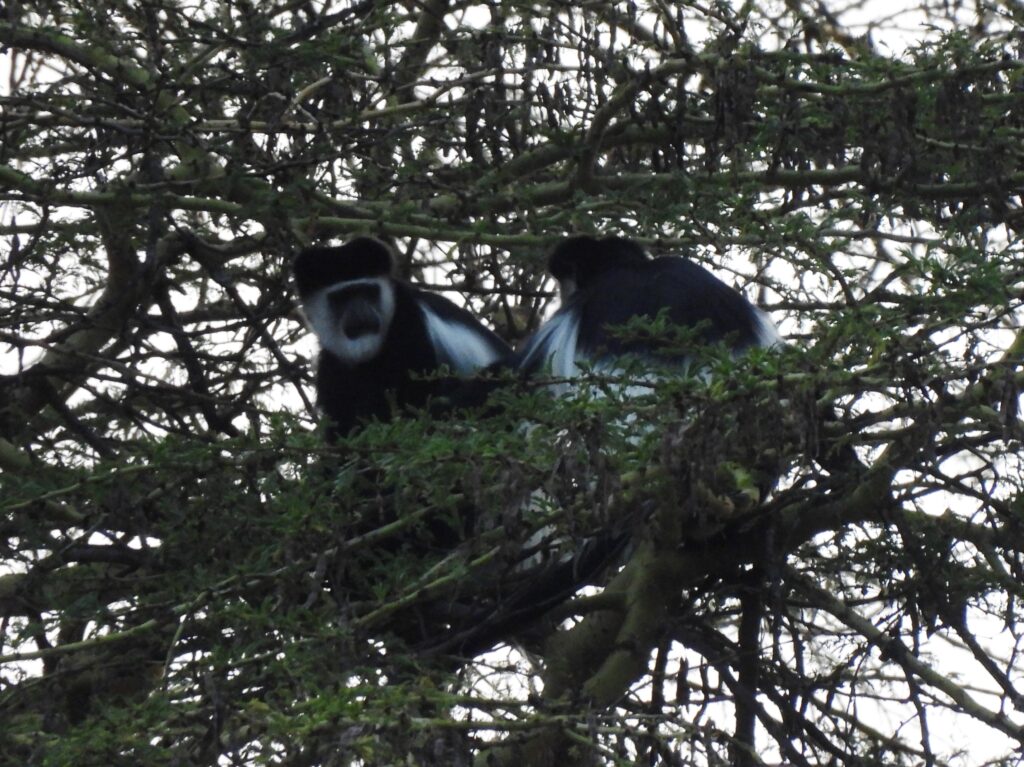
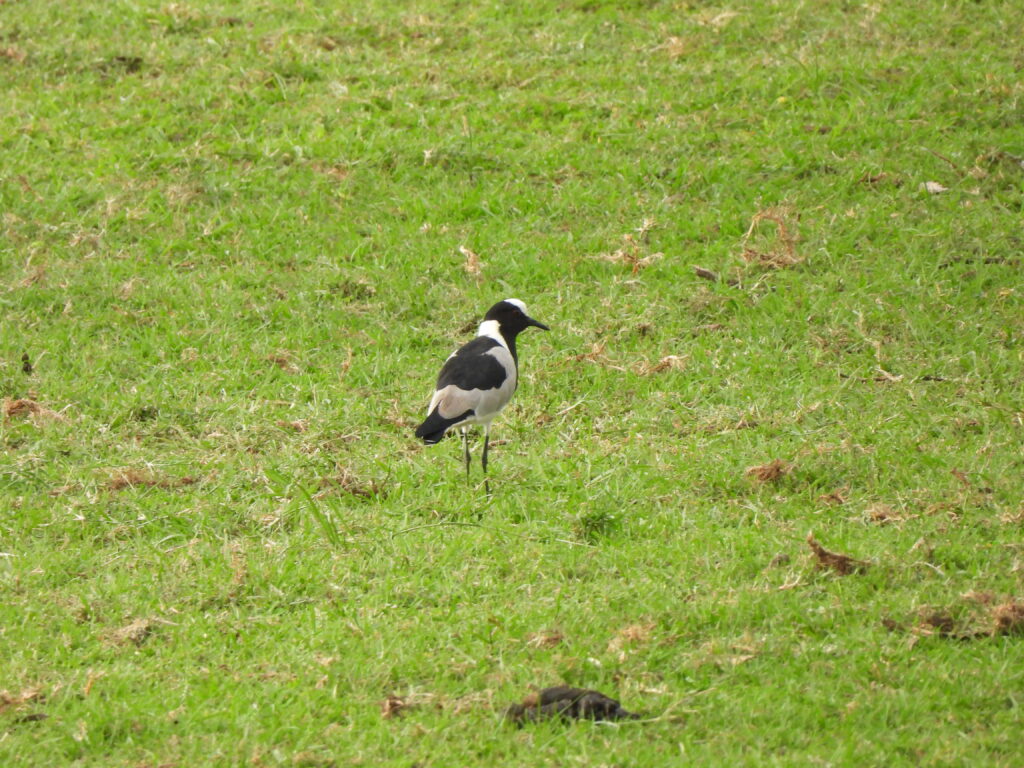
On the lawns, blacksmith lapwings (Vanellus armatus) and hadada ibis (Bostrychia hagedash) foraged alongside grazing plains zebras. These were not the only mammals present, as a troop of mantled guereza (Colobus guereza) watched us from a distant tree.
We also observed green wood hoopoes (Phoeniculus purpureus), lilac-breasted rollers (Coracias caudatus) and several lovebirds (Agapornis fischeri x personatus) which, as I learned, are a hybrid population of escaped origin rather than wild birds.
Before departing Naivasha the following morning, a final walk at KWSTI added great views of wire-tailed swallows (Hirundo smithii) and African red-rumped swallows (Cecropis melanocrissus).
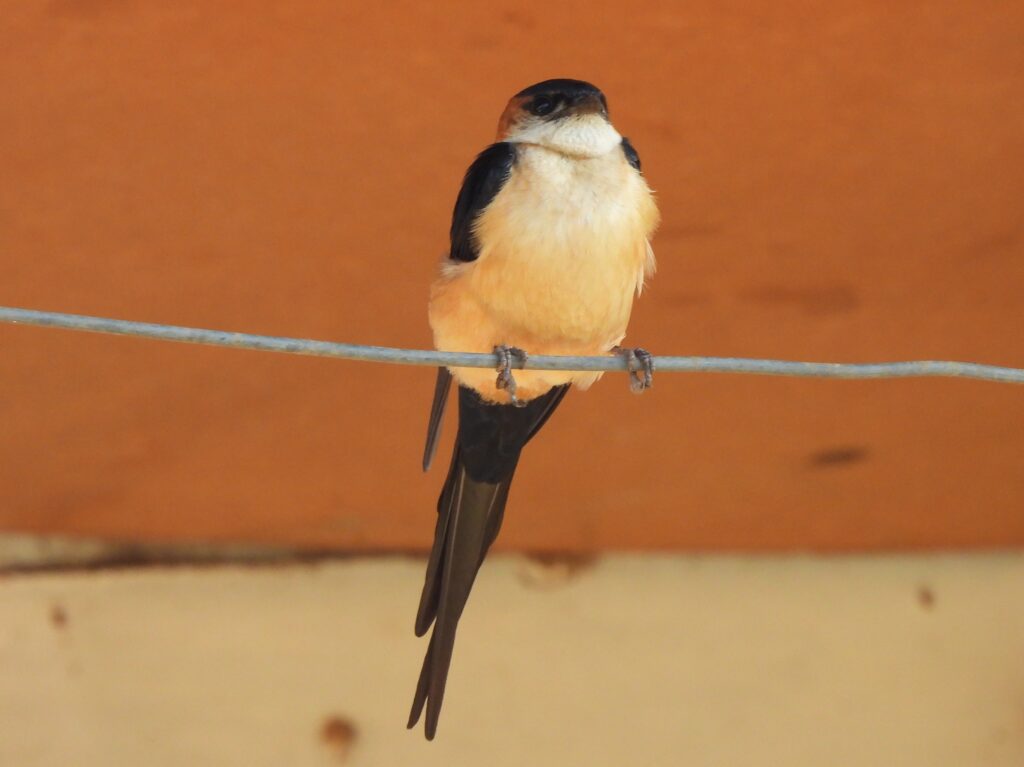
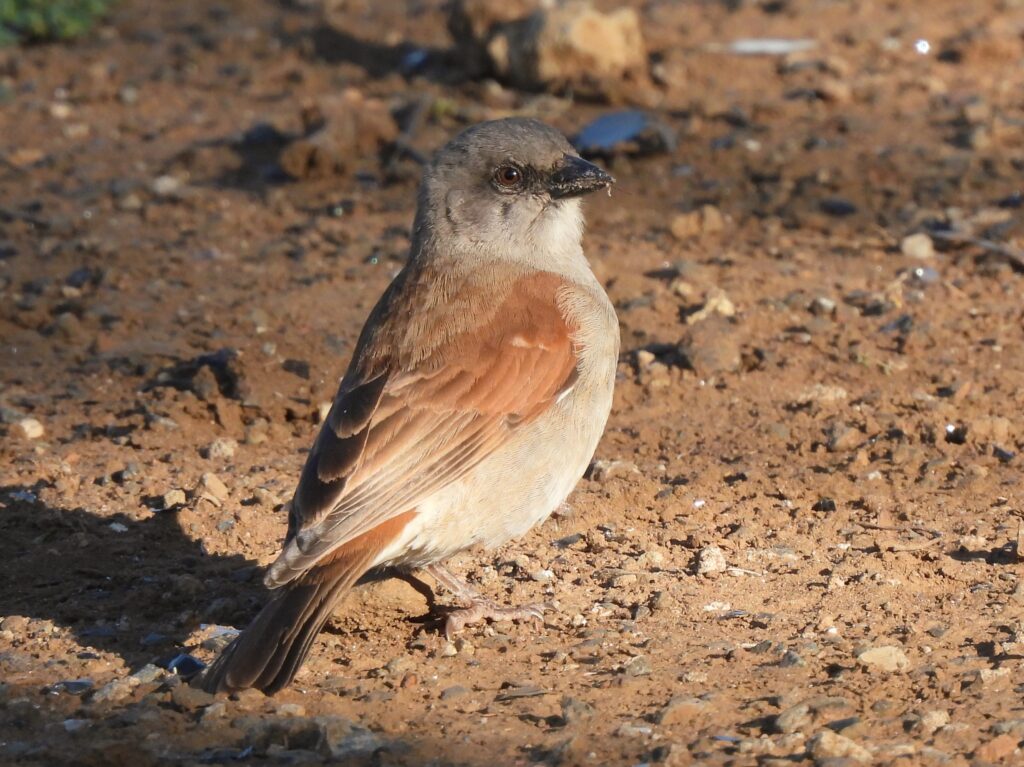
Following a herd of impalas drove me to a roost of black kites (Milvus migrans) of the yellow-billed aegyptius form. Closeby, I watched African gray flycatchers (Bradornis microrhynchus) feed their fledglings, plus small flocks of northern gray-headed sparrows (Passer griseus).
Ultimately, our time in Naivasha proved to be a deep dive into the “steep learning curve” of modern conservation. Naivasha left us with a fulfilling sense of the “birdy” potential of human-altered landscapes. I remember my time talking with locals in Oloiden as my first (of many, over the incoming years) realization of the power that birds and birdwatching have to bring sustainable income sources. Just a couple of days here after two weeks in the country provided a couple dozen lifers for me — showcasing the potential of the area.