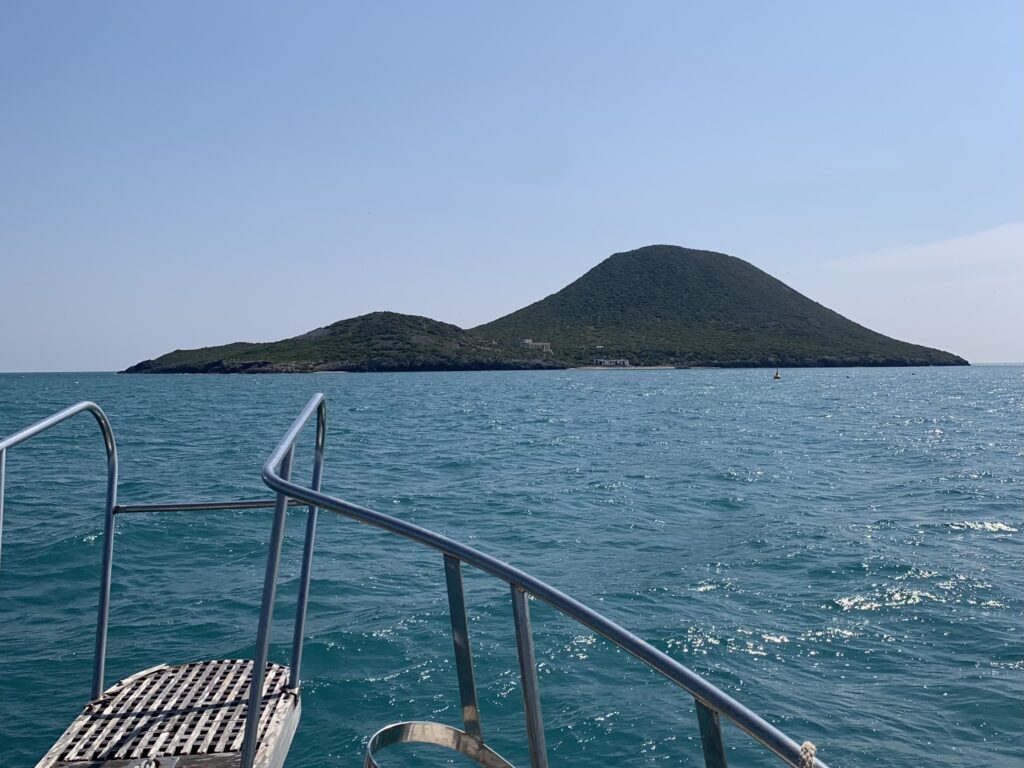
I travelled to Isla Grosa for the first time at the very start of the pre-nuptial migration bird ringing campaign, organized by Asociación de Naturalistas del Sureste. Located just 2.5 km off the coast of Murcia, opposite La Manga del Mar Menor, Isla Grosa is a small volcanic island shaped by steep cliffs, rocky slopes and low Mediterranean scrub. Its isolation, combined with strict protection as a nature reserve closed to the public, has allowed its ecosystems to remain largely undisturbed. After late winter rains, the island appeared unusually lush — its vegetation at a peak that transformed the landscape. With a past marked by pirates and later military occupation, today it stands as a quiet but ecologically rich outpost. Spending time here is a rare privilege, now restricted to ornithologists and researchers. Therefore, Mario Marcos, Pablo M. Avidad and I were very excited to spend the last week of March on this island of plenty.
Despite its modest size, the island supports an interesting biodiversity. Floral blooms were perhaps at their peak, with a thick carpet of spiny but green shrubbery spotted with colors of flowers of sword lilies (Gladious illyricus), desert thumbs (Cynomorium coccineum) and giant fennels (Ferula communis) — or, as we liked to call them, “fennels from the Cretacious”. Beneath the dense seasonal growth, we encountered Bedriaga’s skink (Chalcides bedriagai) and Montpellier snake (Malpolon monspessulanus).
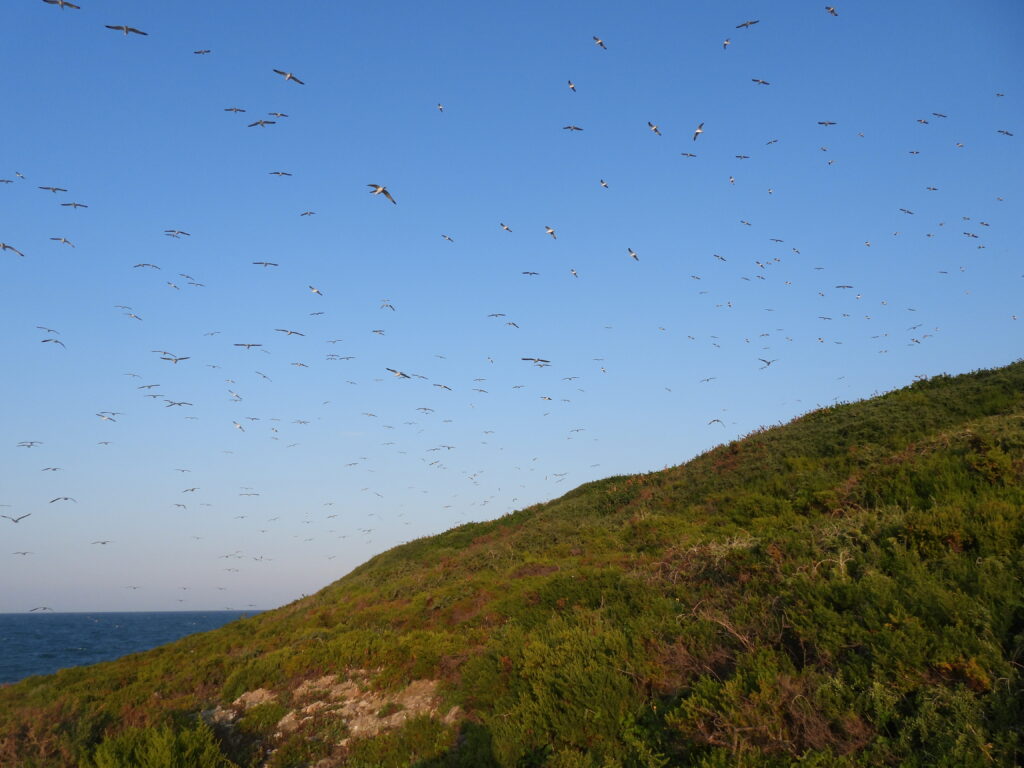
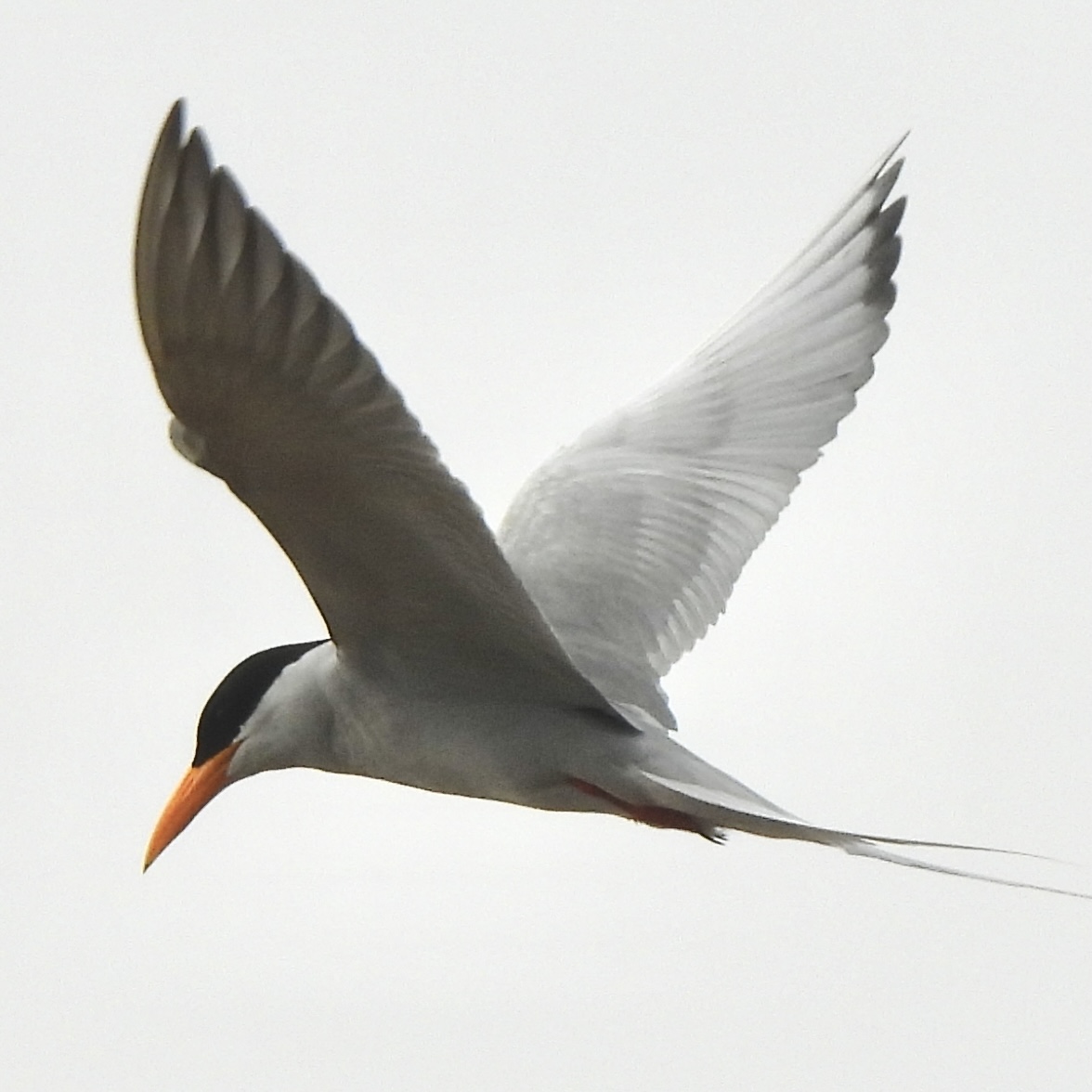
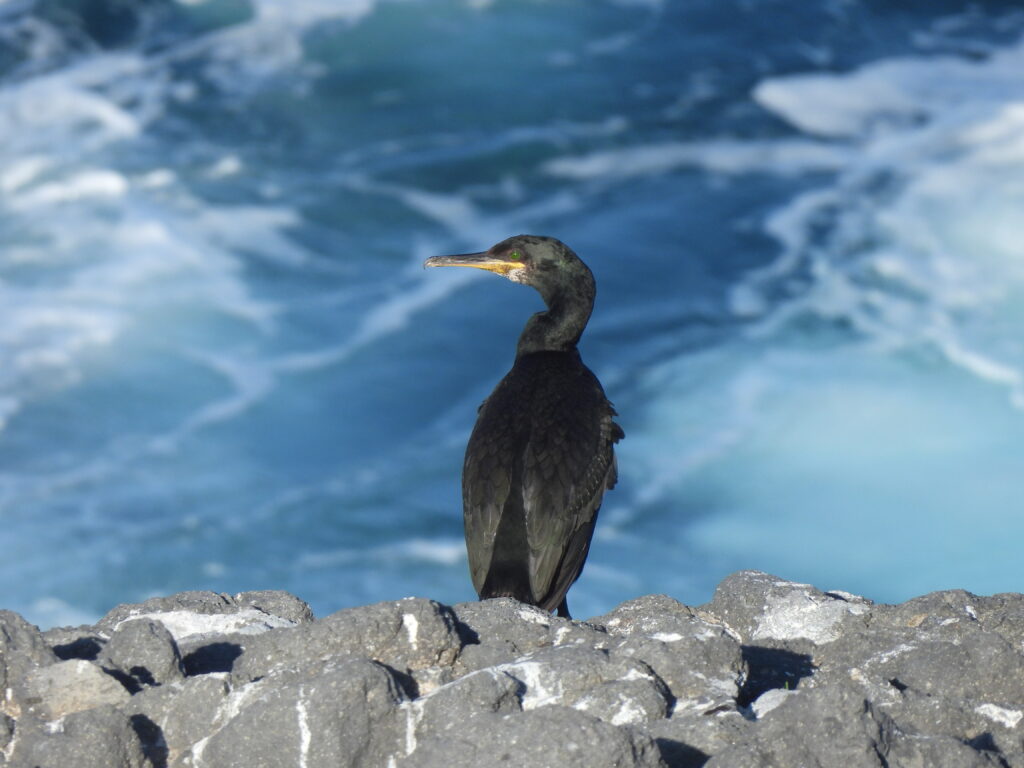
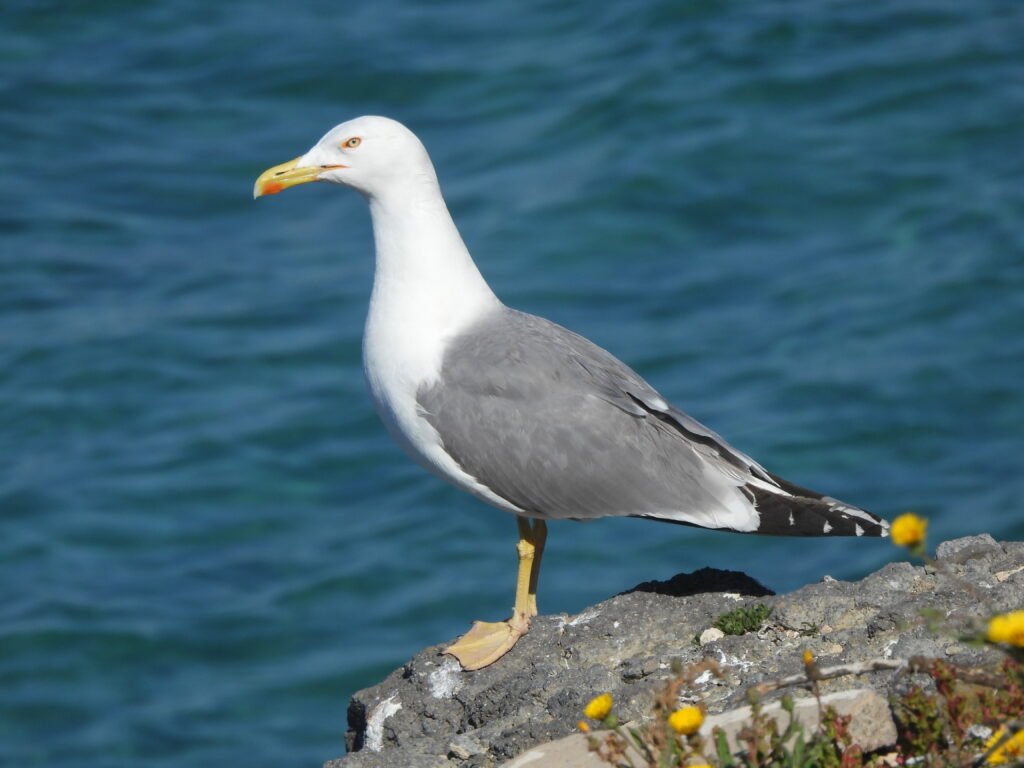
Seabirds dominate the island. The cliffs and surrounding waters held dozens of European shags (Gulosus aristotelis) and hundreds of yellow-legged gulls (Larus michahellis), many already incubating up to three beautifully spotted eggs per nest. Their constant calls formed an unbroken backdrop throughout our stay. Passing Northern gannets (Morus bassanus), Sandwich terns (Thalasseus sandvicensis), Scopoli’s shearwaters (Calonectris diomedea) and Mediterranean shearwaters (Puffinus yelkouan) reinforced the sense of isolation, a continuous reminder that we were surrounded by open sea despite being able to watch La Manga and the Iberian landscape from our location.
Isla Grosa is also an exceptional site for observing migration along the Spanish Levante, with an impressive record of rarities in recent spring seasons. Highlights have included Marmora’s warbler (Curruca sarda), icterine warbler (Hippolais icterina), Pallas’s leaf warbler (Phylloscopus proregulus), lesser whitethroat (Curruca curruca), collared flycatcher (Ficedula albicollis), olive-backed pipit (Anthus hodgsoni), little bunting (Emberiza pusilla) and laughing dove (Spilopelia senegalensis), all recorded during spring migration in recent years. This track record adds a constant sense of expectation to the daily work in the field.
Terrestrial birdlife is otherwise sparse, with Sardinian warbler (Curruca melanocephala) as the main resident species. During migration, however, the island shrubbery temporarily host a shifting assemblage of passerines. Arriving at the very beginning of the season allowed us to coincide with early migrants and reflect on how wind systems across North Africa, the Iberian coastline and the surrounding sea influence their movements.
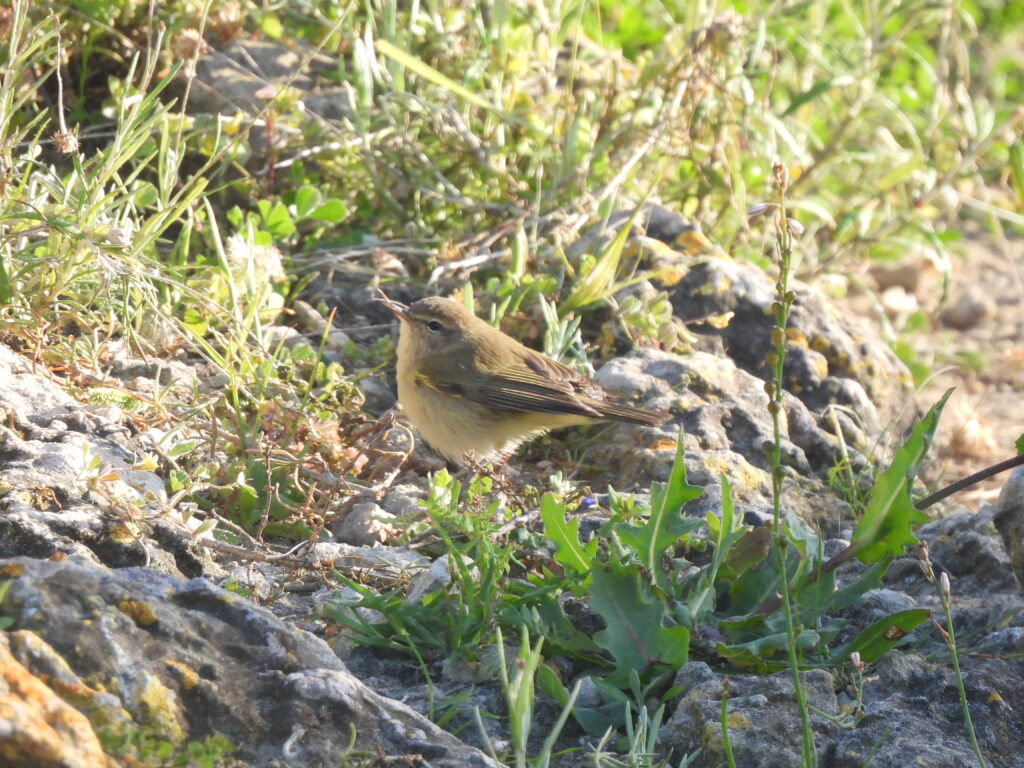
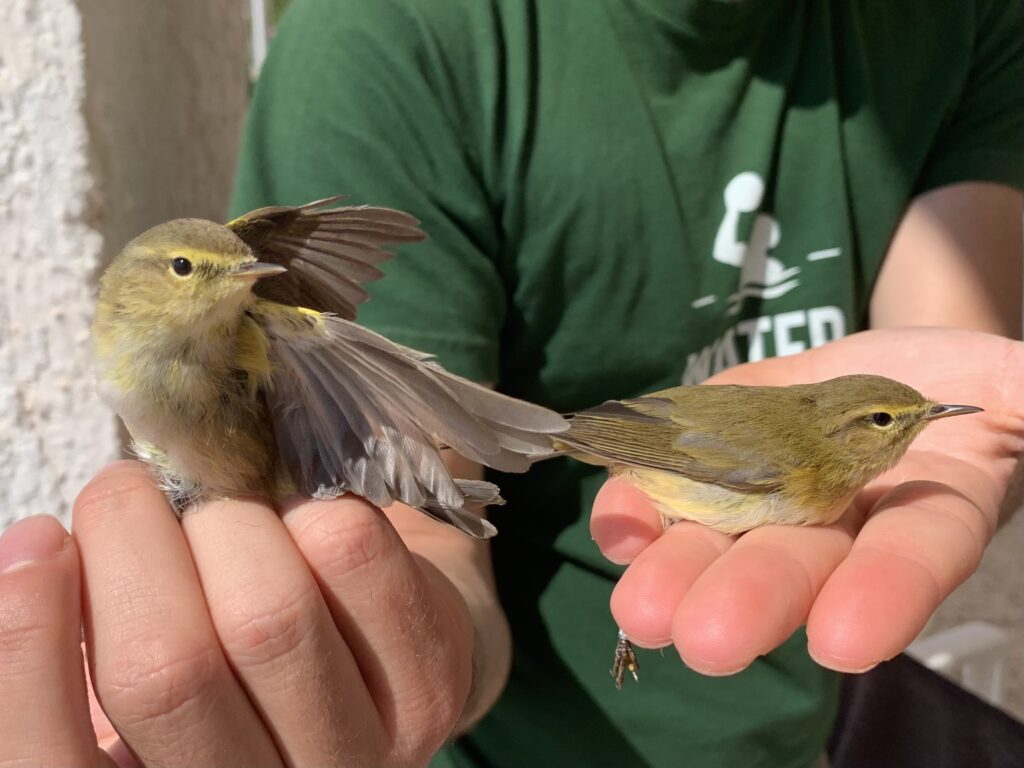
Throughout the week, small passerines moved through steadily. Common chiffchaff (Phylloscopus collybita) and willow warbler (Phylloscopus trochilus) were present in good numbers, while Iberian chiffchaff (Phylloscopus ibericus) appeared almost daily — a notable occurrence in this region, as this species is an uncommon, perhaps overlooked passage visitor elsewhere in Murcia. We detected the species both through ringing and by birds calling persistently around the house.
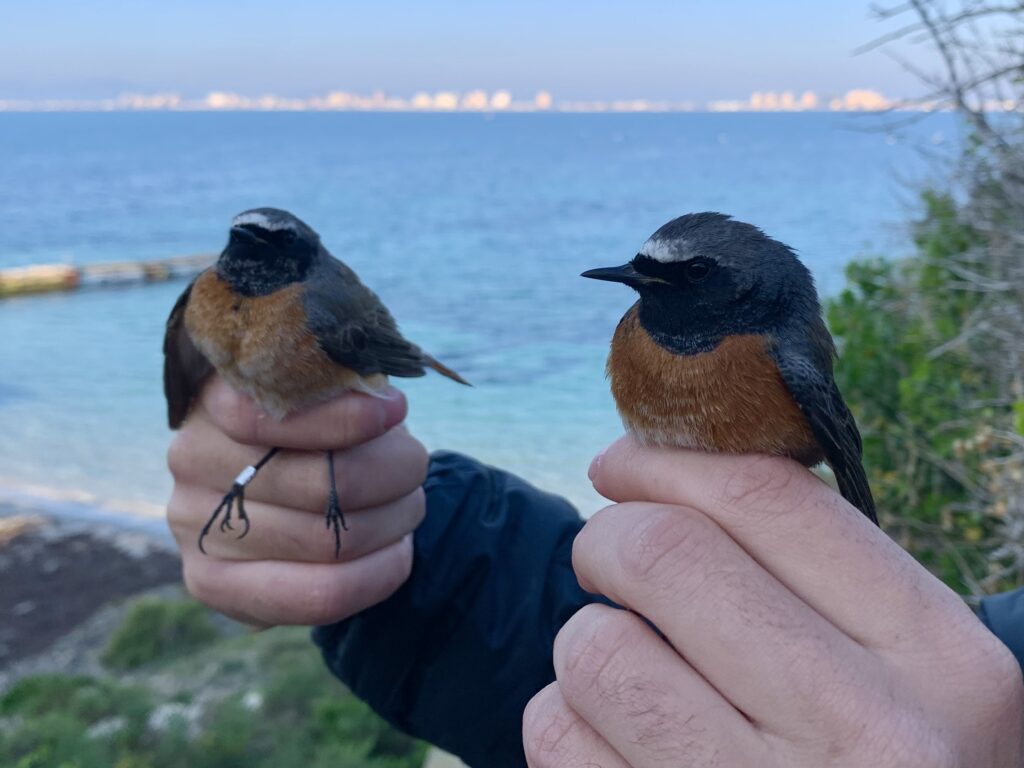
Some days brought good numbers of common redstart (Phoenicurus phoenicurus) and robins (Erithacus rubecula), and we ringed several blackcaps (Sylvia atricapilla) and western subalpine warblers (Curruca iberiae) throughout our stay. Hoopoes (Upupa epops) were a constant presence for some days, with frequent encounters and multiple individuals captured during the campaign.
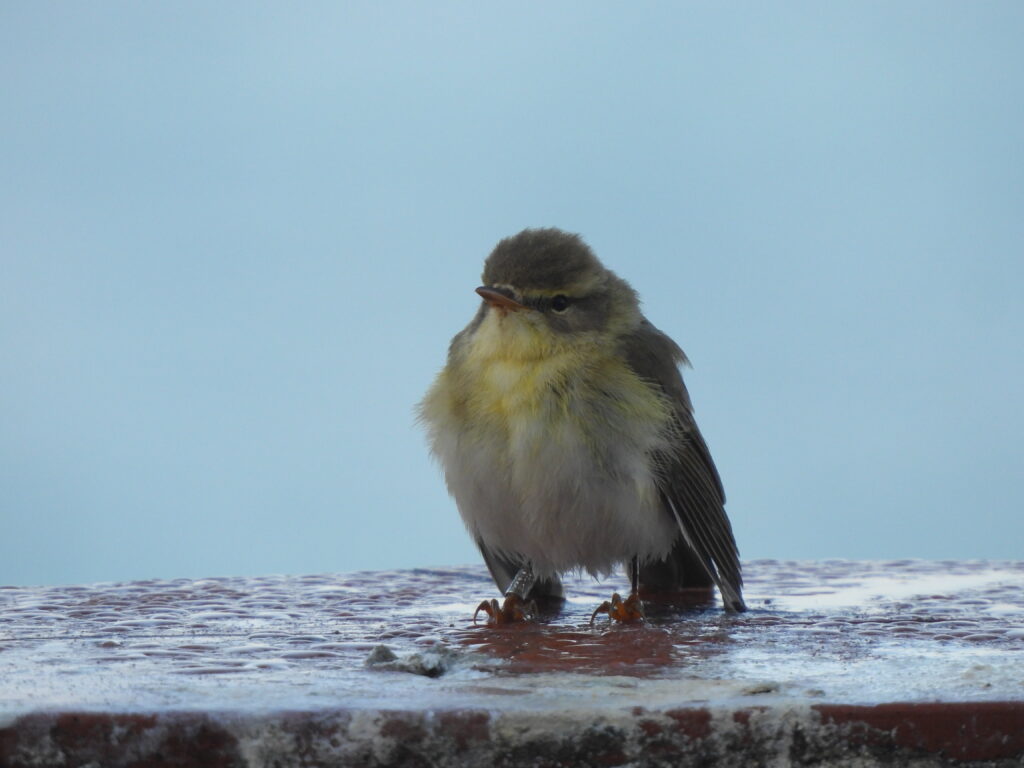
We also documented the arrival of several species for the first time this season. Pablo located a striking black-gorged male western black-eared wheatear (Oenanthe hispanica) was feeding among the sparse vegetation near the beach. Pipits passed overhead in low numbers, including tree pipit (Anthus trivialis) and meadow pipit (Anthus pratensis), one of which was ringed. The first common nightingales (Luscinia megarhynchos) were also captured, as well as a woodchat shrike (Lanius senator) that remained on the island for several days, notable for having large ticks clustered around its eye-ring. Besides flocks of pallid swifts (Apus pallidus) most evident at sunset, two black-crowned night-herons (Nycticorax nycticorax) showed up one night barking in front of the house.
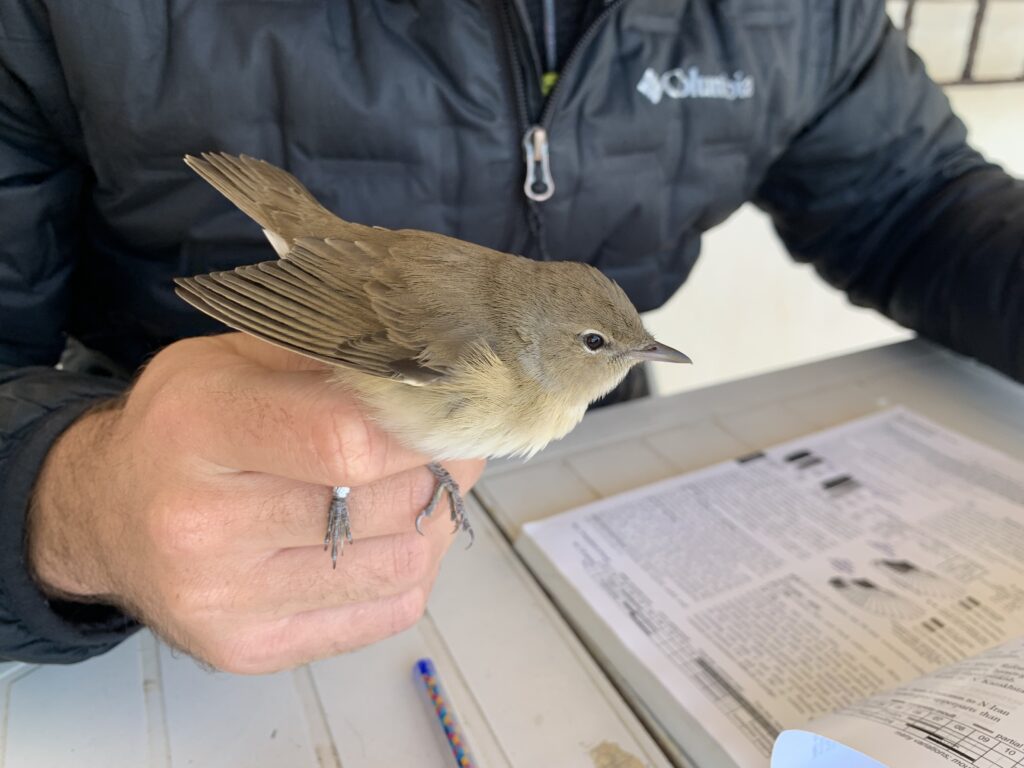
The main surprise came on March 26th, when a garden warbler (Sylvia borin) appeared in the nets. This individual represented the first record of the species in eBird in all Europe this year — remarkably early for a migrant that typically arrives several weeks later at these latitudes. Interestingly enough, after a period of reduced migratory activity but seemingly positive conditions for present passerines to continue migrating north, the same bird had stayed on the island for some days.
Isla Grosa stands out as a remarkable point for passerine migration. Its position, even if just a few kilometres offshore into the Mediterranean, seems to make a natural stopping point for exhausted migrants crossing from North Africa. The combination of isolation, habitat and geography creates the conditions for both steady passage and the occasional exceptional record. Experiencing this process firsthand was a rare privilege that sparked our interest on winds and passing birds, while enjoying great meals and stunning sunsets.