Tindaya has long been a magical place for the aboriginal people of Fuerteventura. For the aboriginals living in this island — among the oldest and driest of the Canary Islands —, this northwest corner played a vast role in their beliefs. The sacred mountain rises above vast plains that stretch all the way to the ocean, ending abruptly in dramatic cliffs.
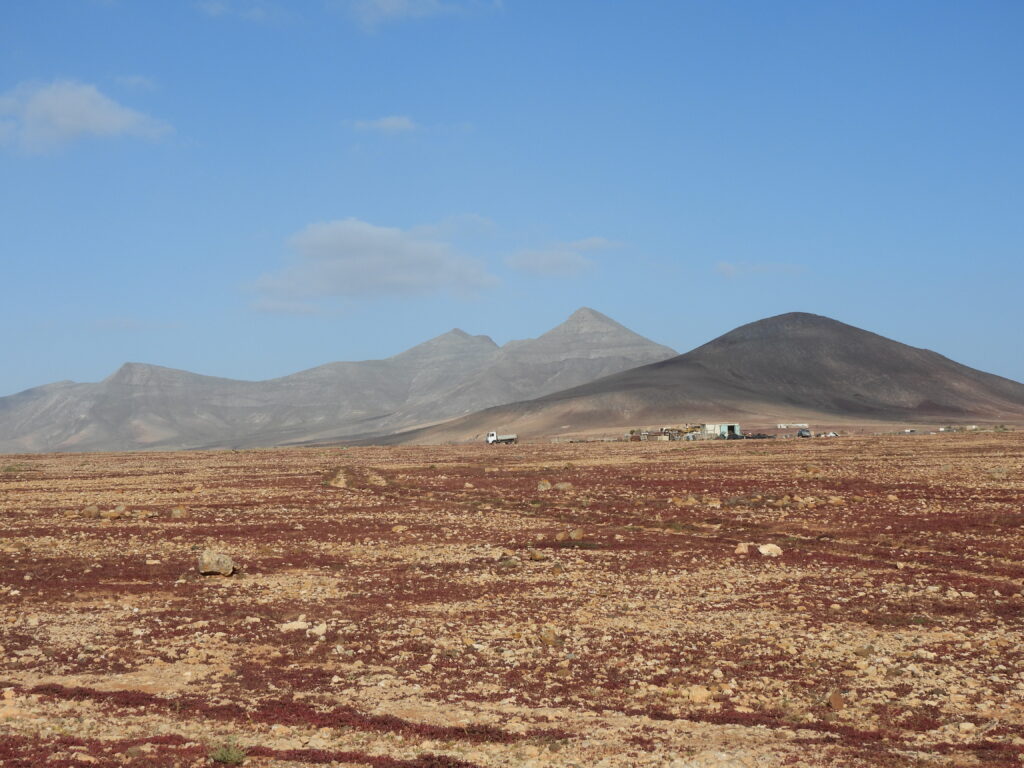
During a recent trip to Fuerteventura with Darío Gijón, we had the chance to explore these barren yet captivating plains in Tindaya, home to many of the island’s most sought-after bird species. These vast plains covered in red from the cosco (Mesembryanthemum nodiflorum) plants after the first rains in decades became our favorite spot on the island. Therefore, we visited the area several times over the course of our short stay on the island.
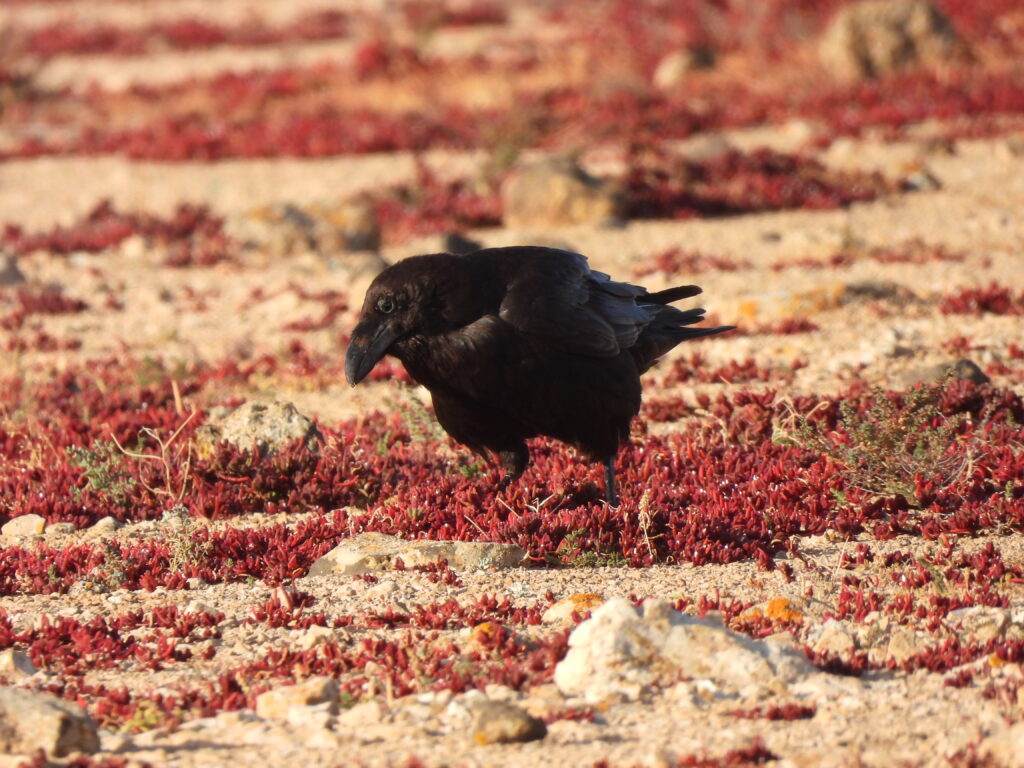
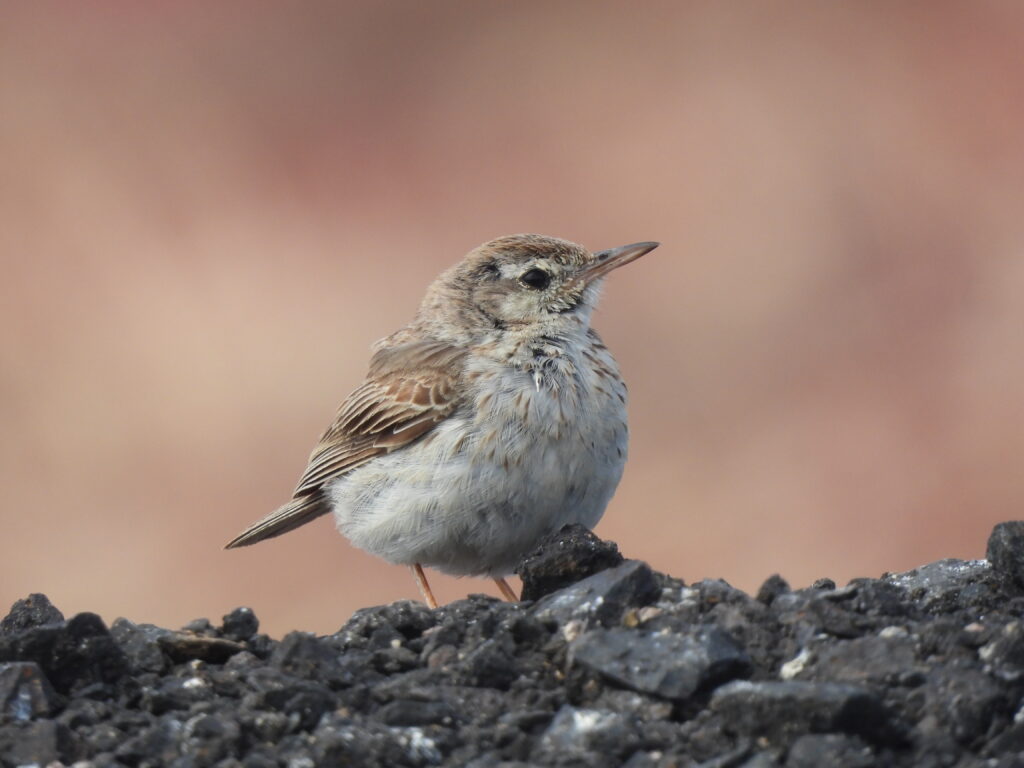
Driving slowly along unpaved gravel tracks at dawn, the air filled with the constant song of Mediterranean short-toed larks (Alaudala rufescens). Even before the sun rose above the sacred mountain of Tindaya, we were already picking up silhouettes and movement across the plains: local forms of common raven (Corvus corax), great grey shrike (Lanius excubitor), trumpeter finch (Bucanetes githagineus), common buzzard (Buteo buteo) and Egyptian vulture (Neophron percnopterus). The Berthelot’s pipit (Anthus berthelotii), endemic to Madeira and the Canary Islands, was also readily seen.
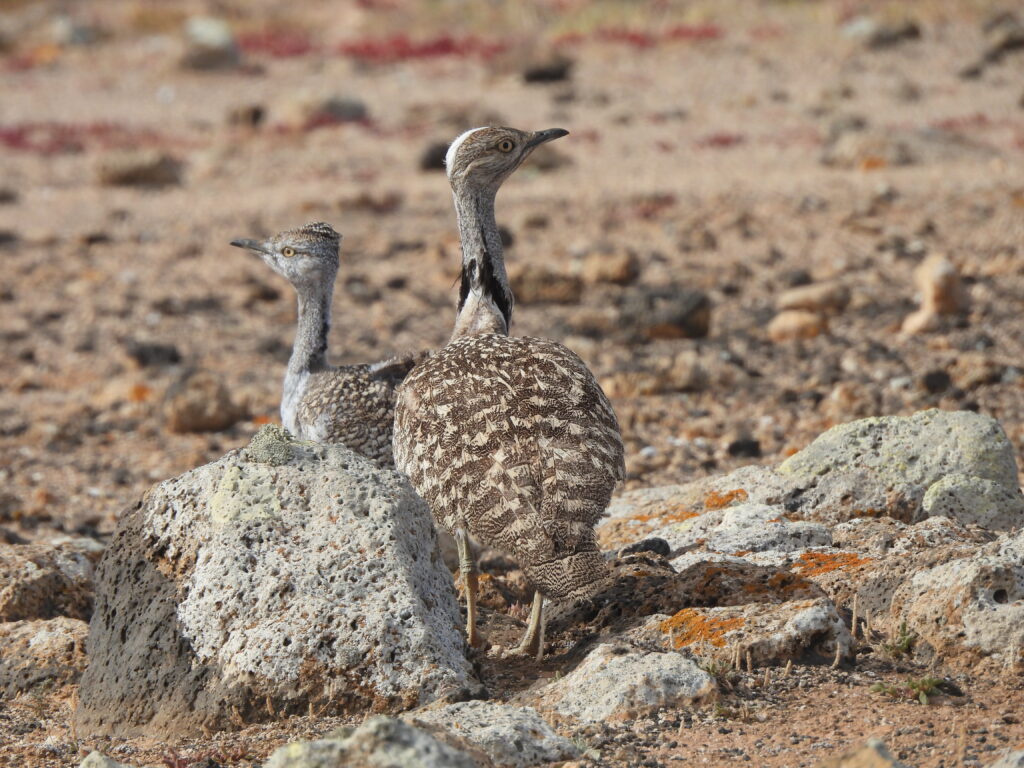
It didn’t take long to encounter the true star of these plains. A lone male African houbara (Chlamydotis undulata) appeared almost out of nowhere, its sandy tones blending so perfectly with the landscape that its large size felt oddly deceptive. It moved slowly, deliberately, eventually slipping behind low bushes while keeping a wary eye on us from the safety of our rental car. Later, we watched a group of four individuals cross the track ahead of us, equally cautious, walking away just as quietly into the steppe.
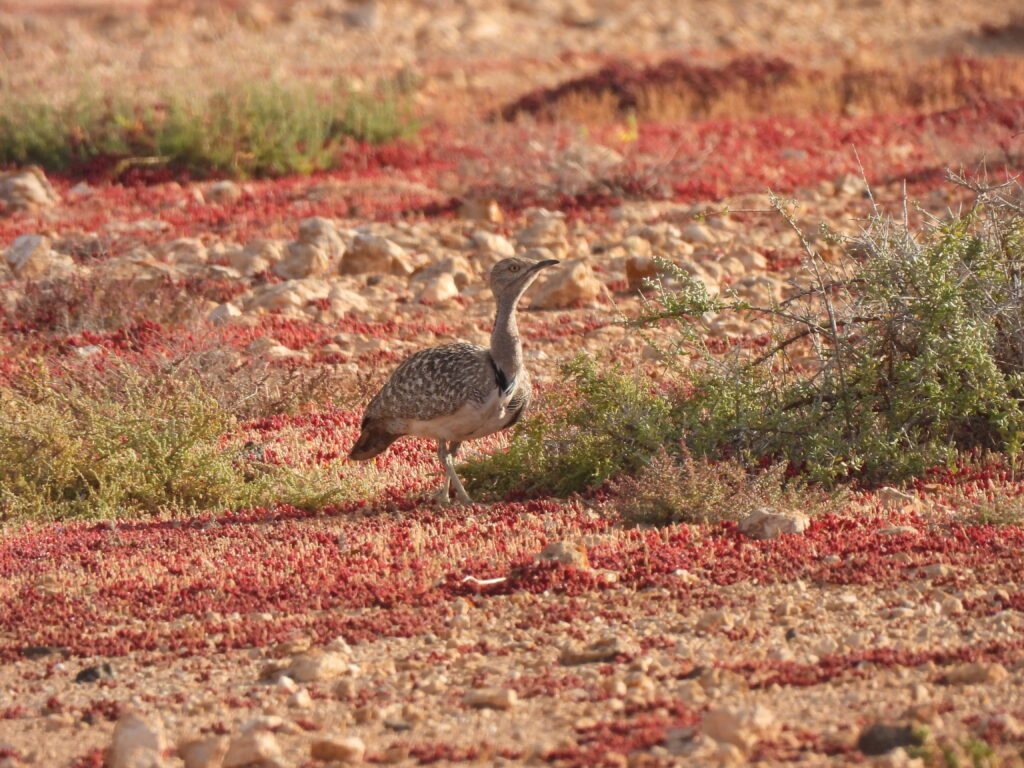
These birds belong to the Canary Islands form fuertaventurae, a highly endangered form restricted to Fuerteventura and Lanzarote. Elsewhere, the species occurs in scattered subdesert regions of the northern Sahara, making these island populations particularly special.
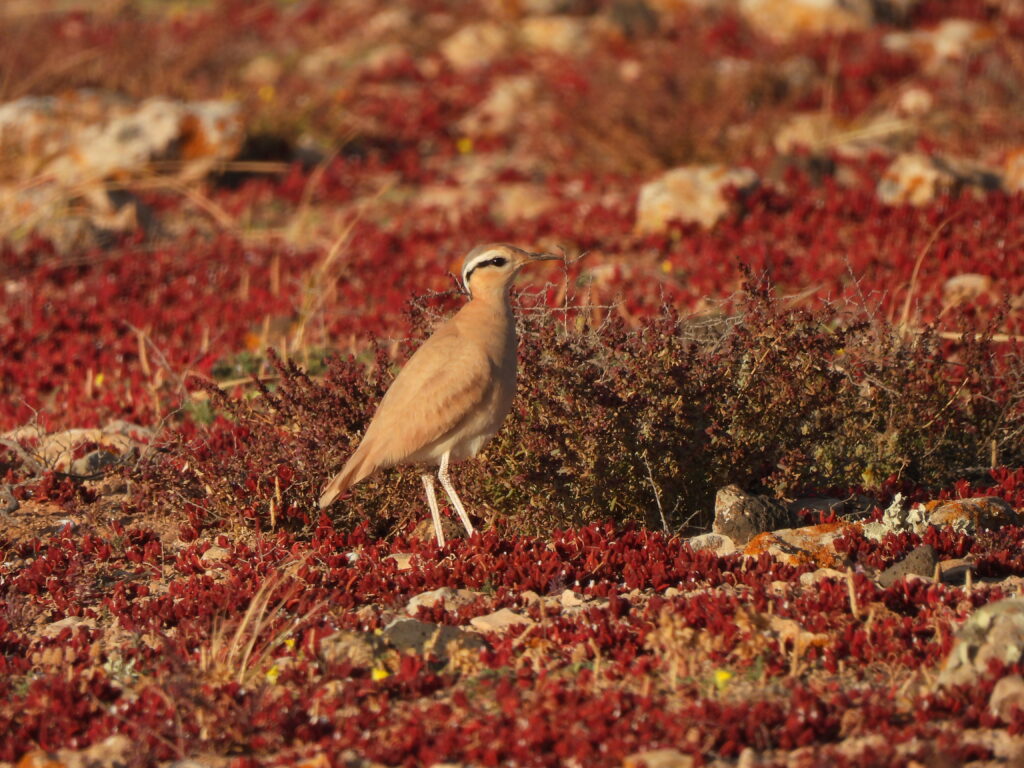
Another major highlight came in the form of cream-coloured coursers (Cursorius cursor), which we found in several pairs, some accompanied by one or two chicks at this time of the year. This elegant, desert-adapted wader is an exceptional rarity in mainland Europe, but occurs here in small, localized populations. Watching several families walk across the plains was a treat.
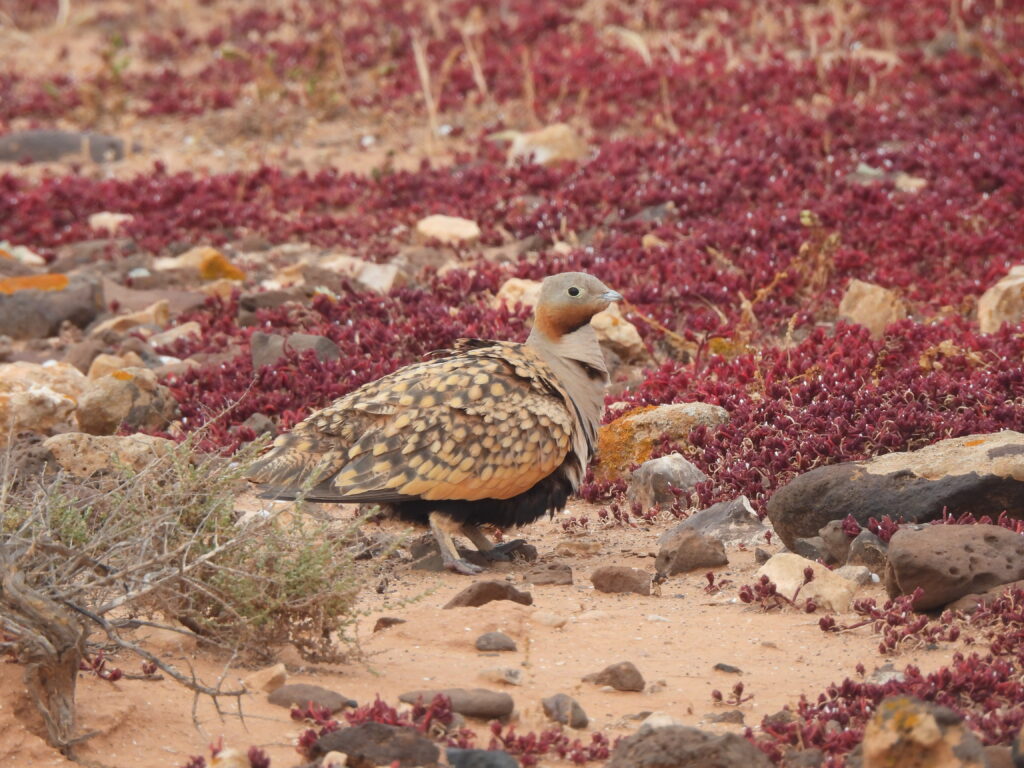
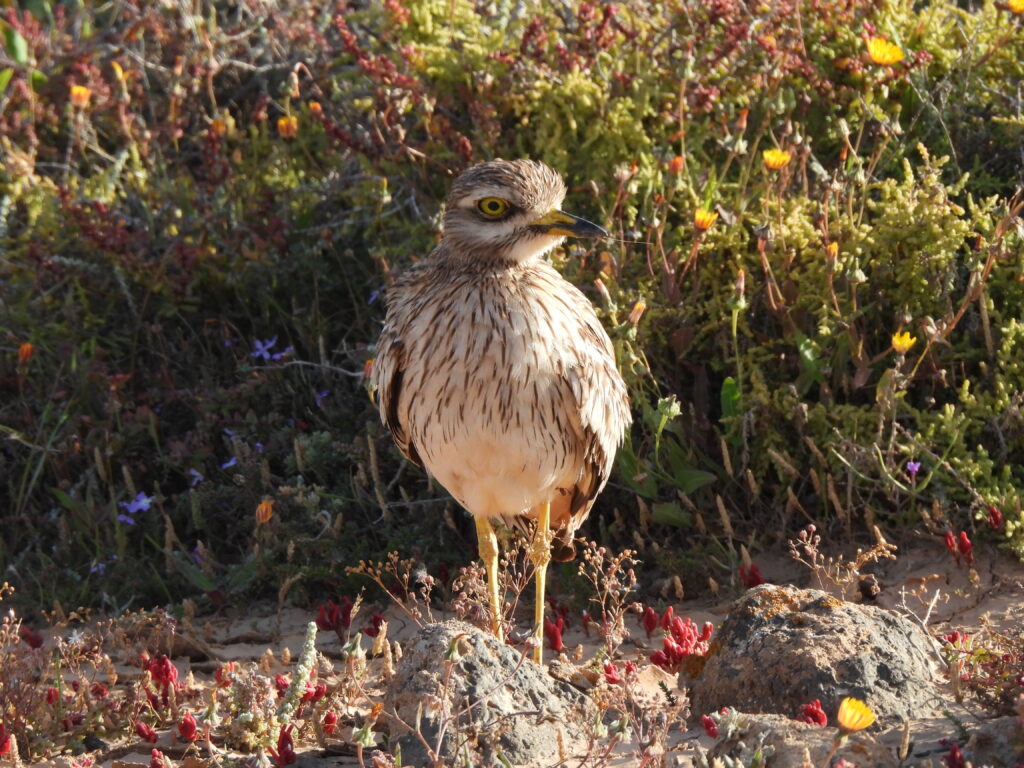
These plains also held other characteristic subdesert-dwelling species. Black-bellied sandgrouse (Pterocles orientalis) and Eurasian stone-curlew (Burhinus oedicnemus) showed remarkably well, adding to the sense of being in a truly arid landscape.
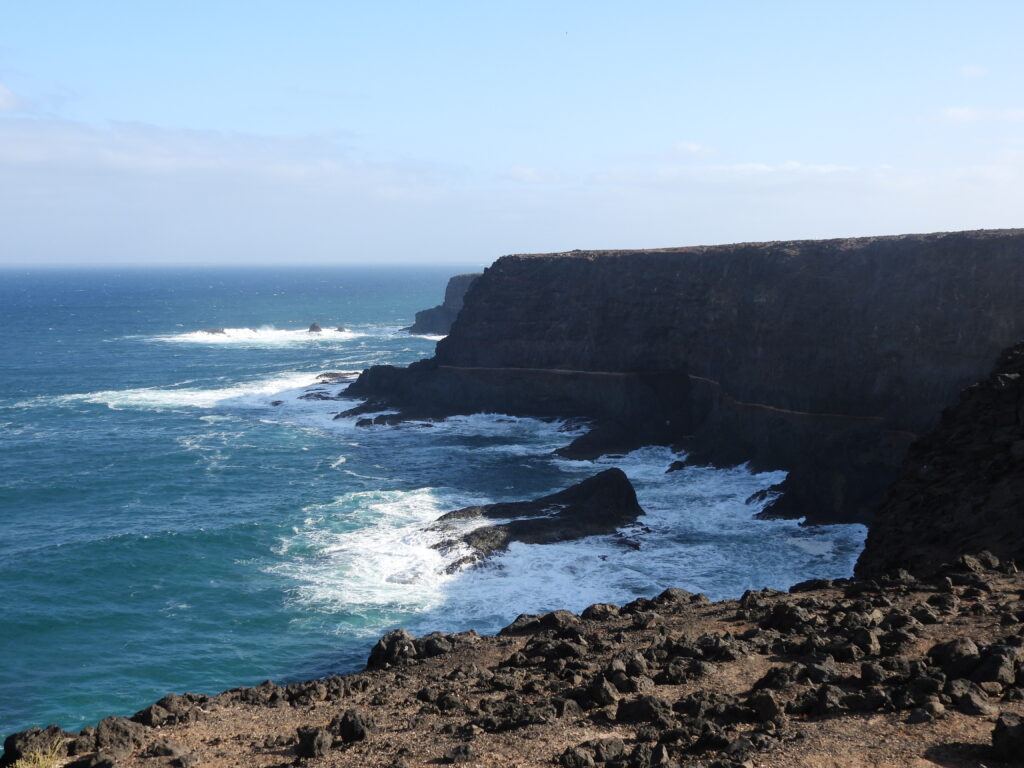
Eventually, our slow drive led us to the coast. We stopped at a strategic viewpoint overlooking the cliffs, where a pair of peregrine falcons (Falco peregrinus) of the Barbary pelegrinoides form held territory. Pallid swifts (Apus pallidus) scythed through the air over us, riding the strong winds along the cliff edge.
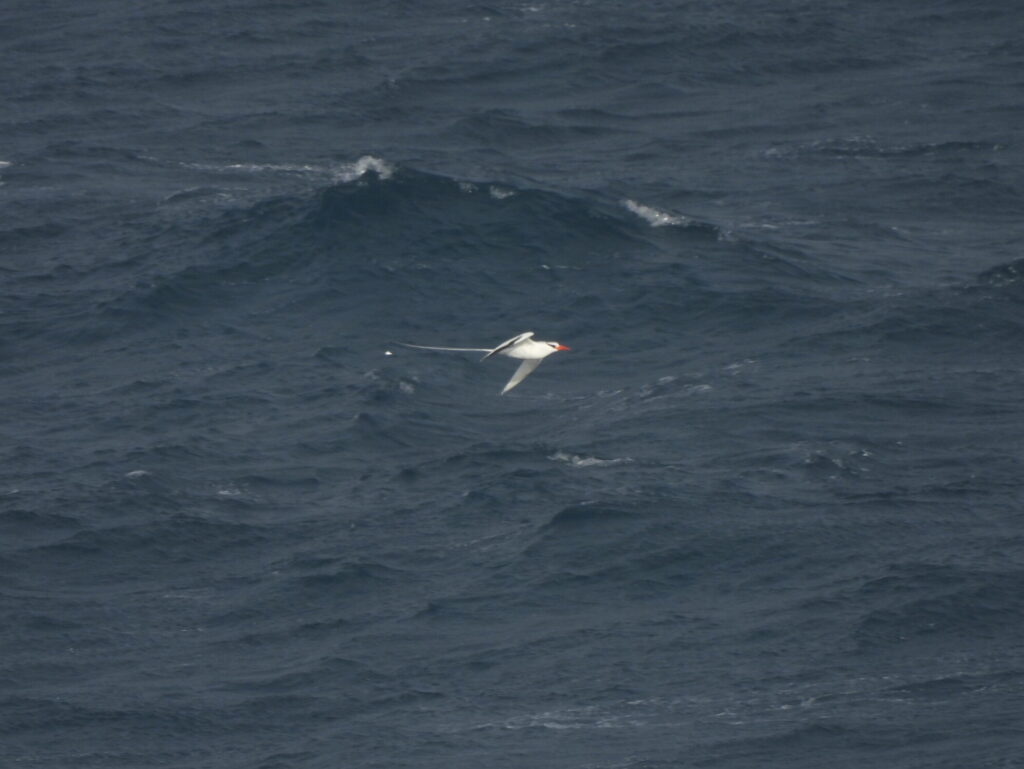
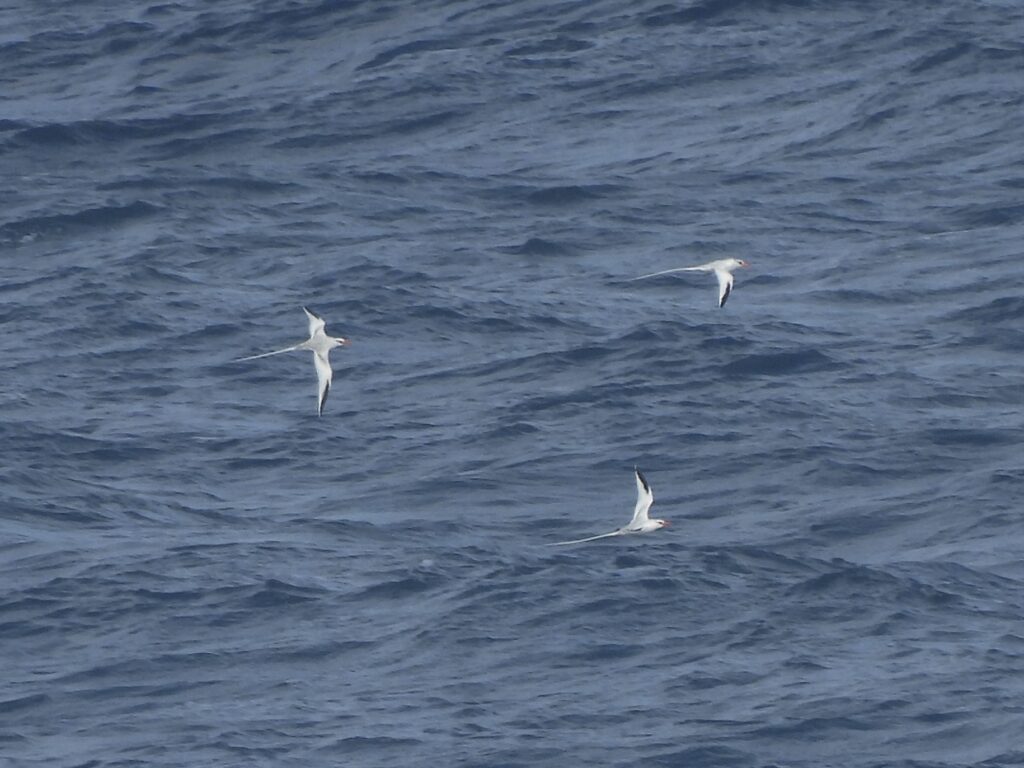
The ocean views were breathtaking. Powerful waves crashed against the base of the cliffs dozens of meters below. Cory’s shearwaters (Calonectris borealis) glided past at eye level, close enough to be followed with the naked eye. Then came the highlight: several red-billed tropicbirds (Phaethon aethereus) flying elegantly across the horizon.
After years of intermittent reproduction across the archipelago, the seemingly first stable population of the species has established itself on a little colony off-limits in nearby cliffs, where several pairs have been breeding for the last ten years. Watching these birds in Spanish waters felt almost surreal.
Not everything was magical and easy during our stay. Strong northerly winds swept the island throughout the trip, relentless and often exhausting, becoming an important drawback of our time here. Still, we were determined to make the most of it. One of our main goals was to experience the nocturnal activity of the shearwaters that breed in the area.
On two nights, Darío and I lay sheltered beneath stacked volcanic rocks or ruins under a sky full of stars. We stayed hours listening to the haunting calls of Cory’s shearwaters returning to their colonies. After long and patient effort while enjoying this maniacal show, we finally picked up the distinct calls of a Barolo shearwater (Puffinus baroli), a much scarcer, regionally endemic species and the last major target of our trip.
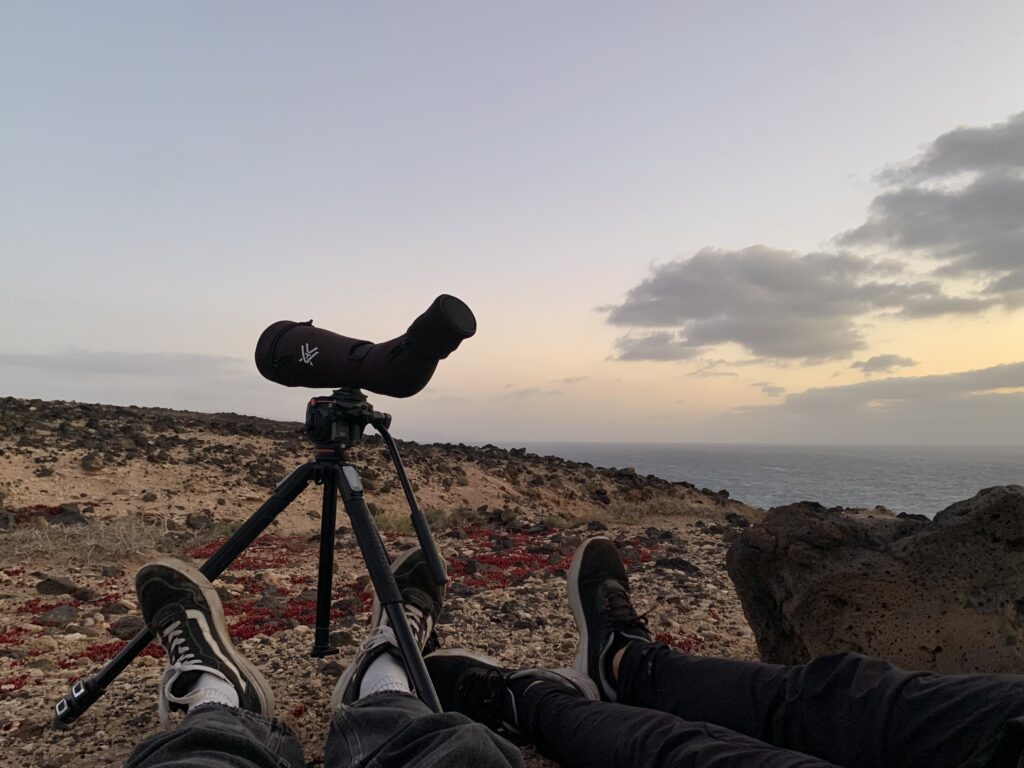
We got gripped by the magic in Tindaya, trying to unravel the little that is known about its meaning for the aboriginals of the island as we progressd finding our birds. By the end of our visit, we made our own impression about why Tindaya holds such cultural and spiritual significance. The shifting light, the vast open landscapes, the deep reds of the cosco following rare heavy rains and the unique birdlife all combine into something more than just a birding destination.