Planning a month-long trip to South Africa involved some discussions as to whether this or that place could provide better chances to try looking for this or that unassuming bird. However, there was something very clear when planning my recent trip to the country with Darío Gijón, Guillem de los Santos, Arnau and Miquel Rivera. We wanted to go on a pelagic trip in the mythical waters off Cape of Good Hope. This is no easy task — less so in July, in mid-winter —, as these rough waters can be highly unpredictable, causing numerous cancellations of routine pelagic trips and distressing many birdwatchers who eventually leave the country without their much-awaited petrels and albatrosses.
With this in mind, we wanted to play it safe. We planned to spend the last week of our trip in the Cape Town area, and booked a trip via Cape Town Pelagics on any of the days we would be around: if the weather was unpleasant on the first available day, then the company would try to rearrange the pelagic for the second day, and so on. This plan looked promising because we stayed in the area for a whole week, and it turned out to be straightforward because we had to book a private 8-pax boat tour for ourselves, being five of us — and likely not fitting the general pelagic trips of the company.
This worked like a charm. Just before flying into Cape Town from the other side of the country, we got notice that our pelagic trip was confirmed for our first day in town. On top of that, three other passengers filled up the boat and helped us split the cost (which we paid in advance and was later refunded). And indeed, the weather was calm and nice when we made it to Simon’s Town yacht club well before dawn. There, we already noted some of our first Cape Town ticks: the abundant kelp gulls (Larus dominicanus), hadada (Bostrychia hagedash) and sacred ibises (Threskiornis aethiopicus) and red-winged starlings (Onychognathus morio) set off early. Soon enough, we met captain Alan and guide Dave at 07:00 and hopped on the boat after a quick briefing with the rest of the passengers.
Already sailing, hundreds of Cape cormorants (Phalacrocorax capensis) sat on the pier of Simon’s Town. As we sailed through False Bay while the sun rose, we connected with fishing flocks of African penguins (Spheniscus demersus) and greater crested terns (Thalasseus bergii) plus several Cape fur seals (Arctocephalus pusillus) and humpback whales (Megaptera novaeangliae) — all of which drove us crazy. Later, it only took a few hundred meters off Cape of Good Point to connect with the first Cape gannets (Morus capensis), sooty shearwaters (Ardenna grisea) and white-chinned petrels (Procellaria aequinoctialis).
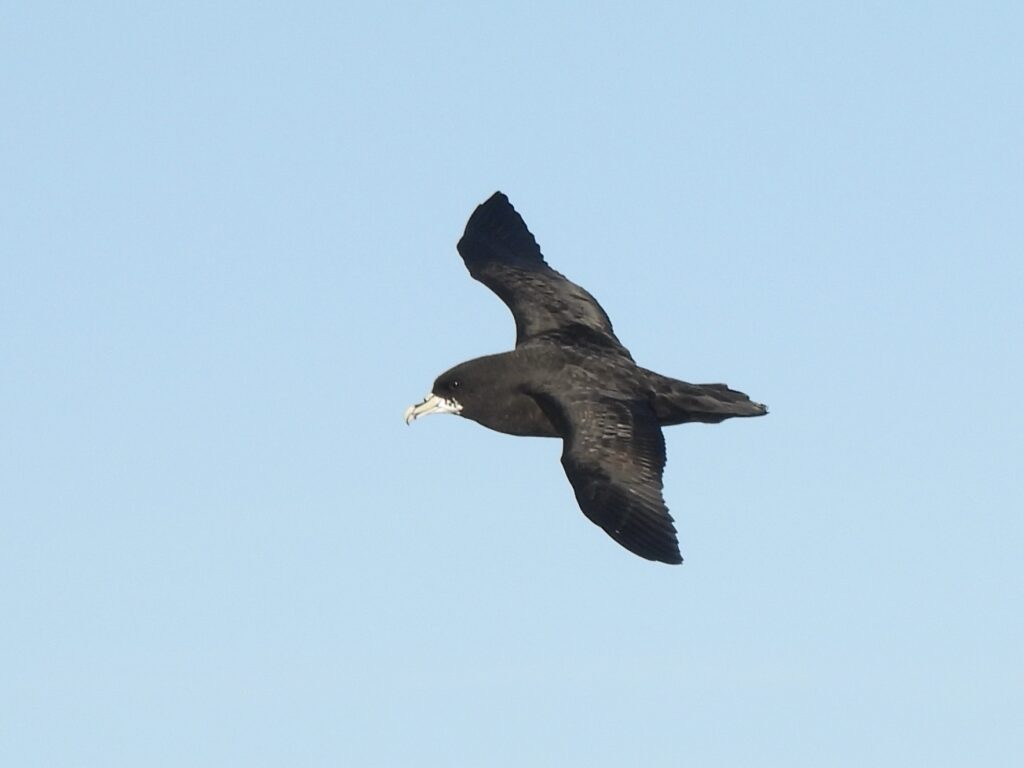
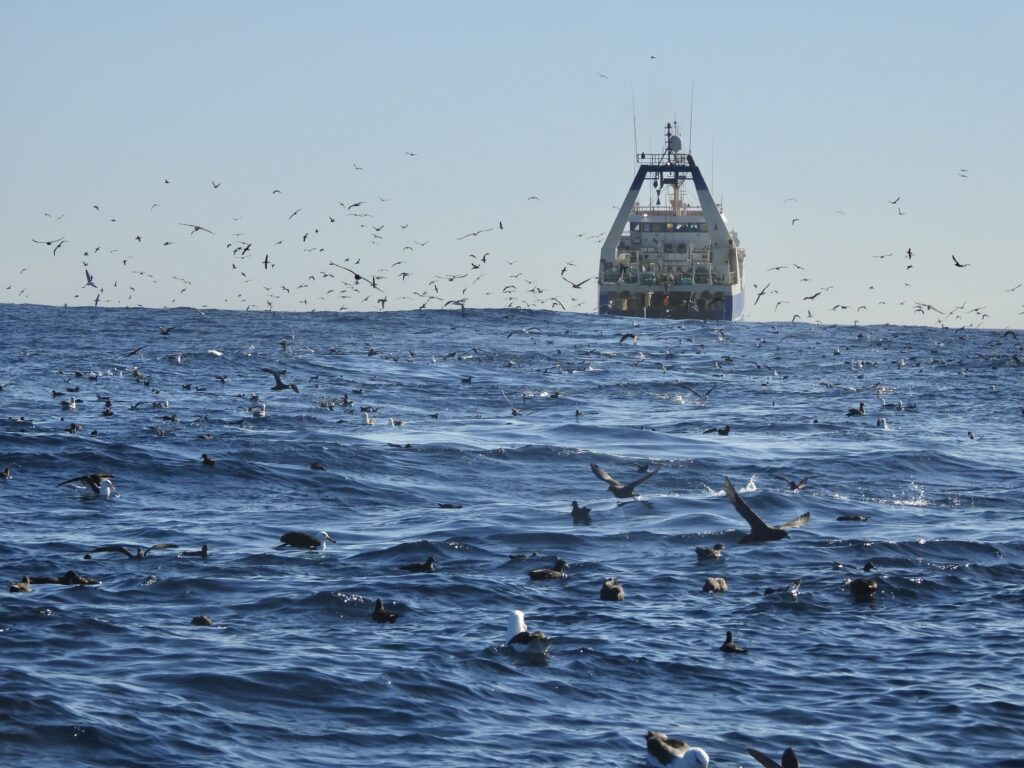
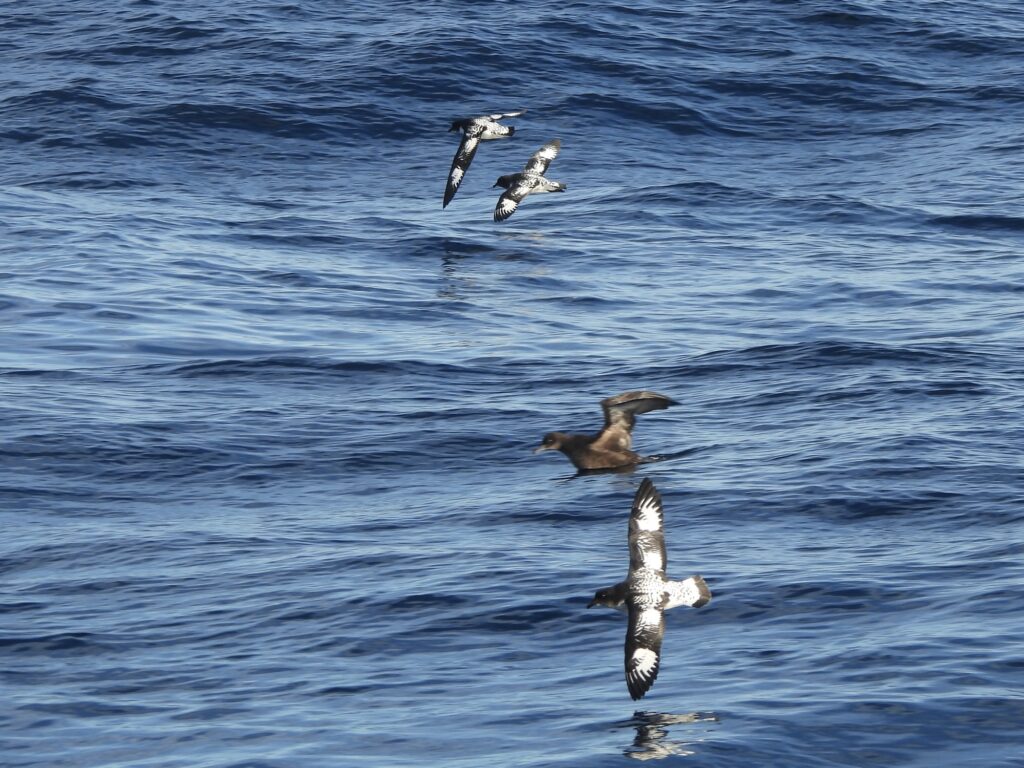
However, the best was yet to come. We sailed southwestwards for around an hour, connecting with a progressively increasing number of sooty shearwaters and white-chinned petrels, plus the odd southern giant petrel (Macronectes antarcticus) and pintado petrel (Daption capense) — both of which had us at the edge of our seats. A particularity of pelagic tours off Cape of Good Hope is that they generally do not use chum to attract birds, as is usually done in other seabird-rich regions. Instead, the crew works to locate fishing trawlers that are currently active in the area.
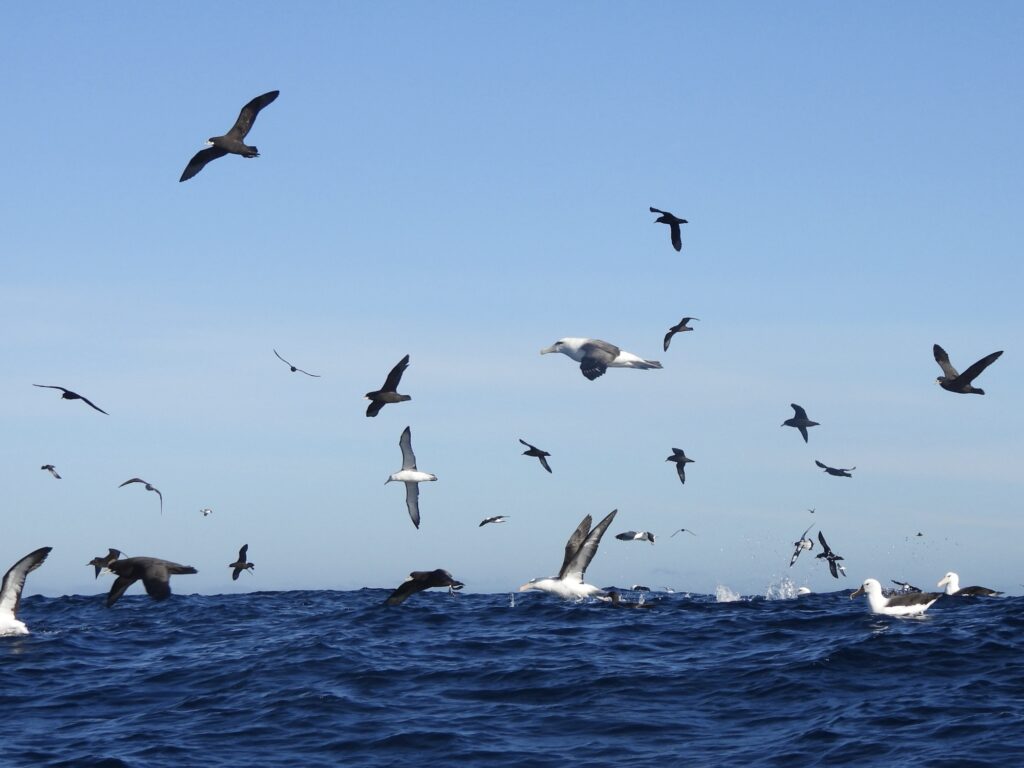
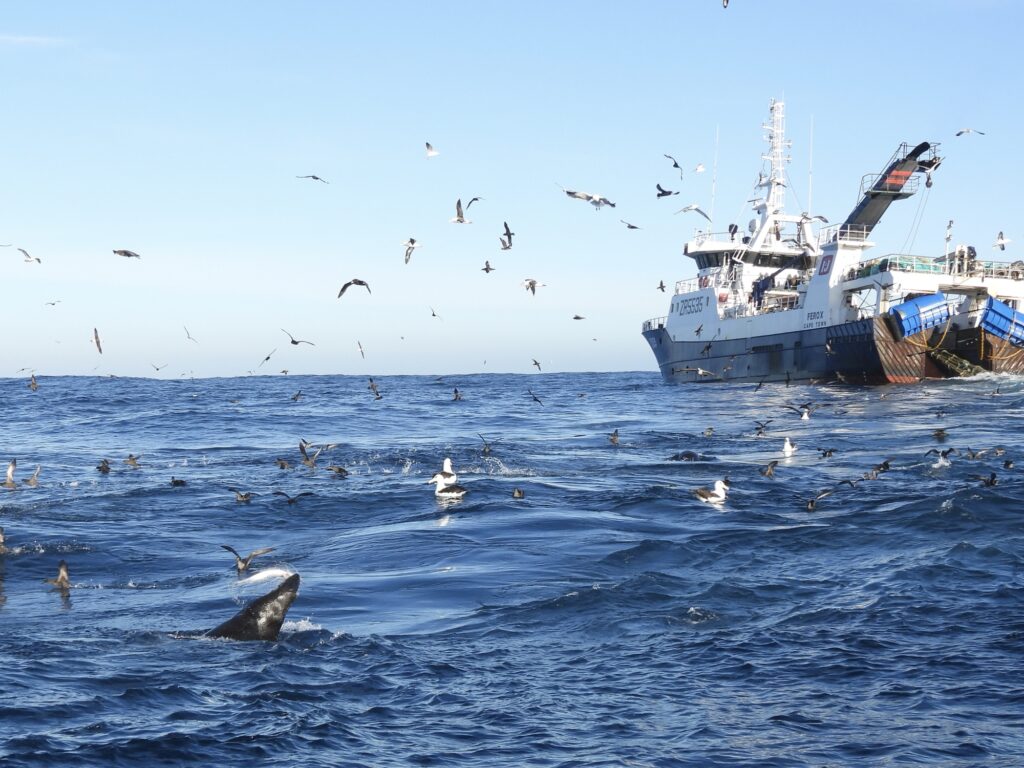
The crew informed us that finding trawlers is not possible on every outing — yet another layer of difficulty in having a successful pelagic tour in South Africa, as we learned from a friend who only a few days later went on a trip that did not connect with trawlers and had to rely on chum. However, we got lucky. As we approached a group of working trawlers, we entered into an incredible swarm of thousands of seabirds gathering, feeding on fish discards. Coming from seawatching in the Mediterranean, after just a few pelagic outings without even using chum, there are no words to describe the overwhelm of this scene.
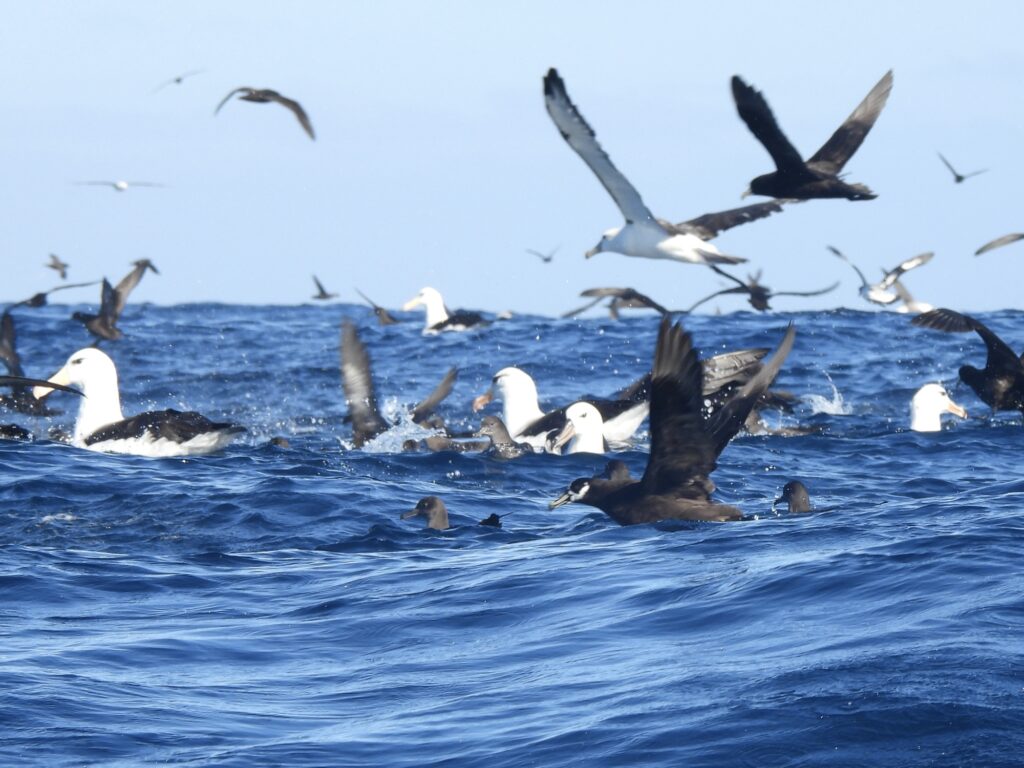
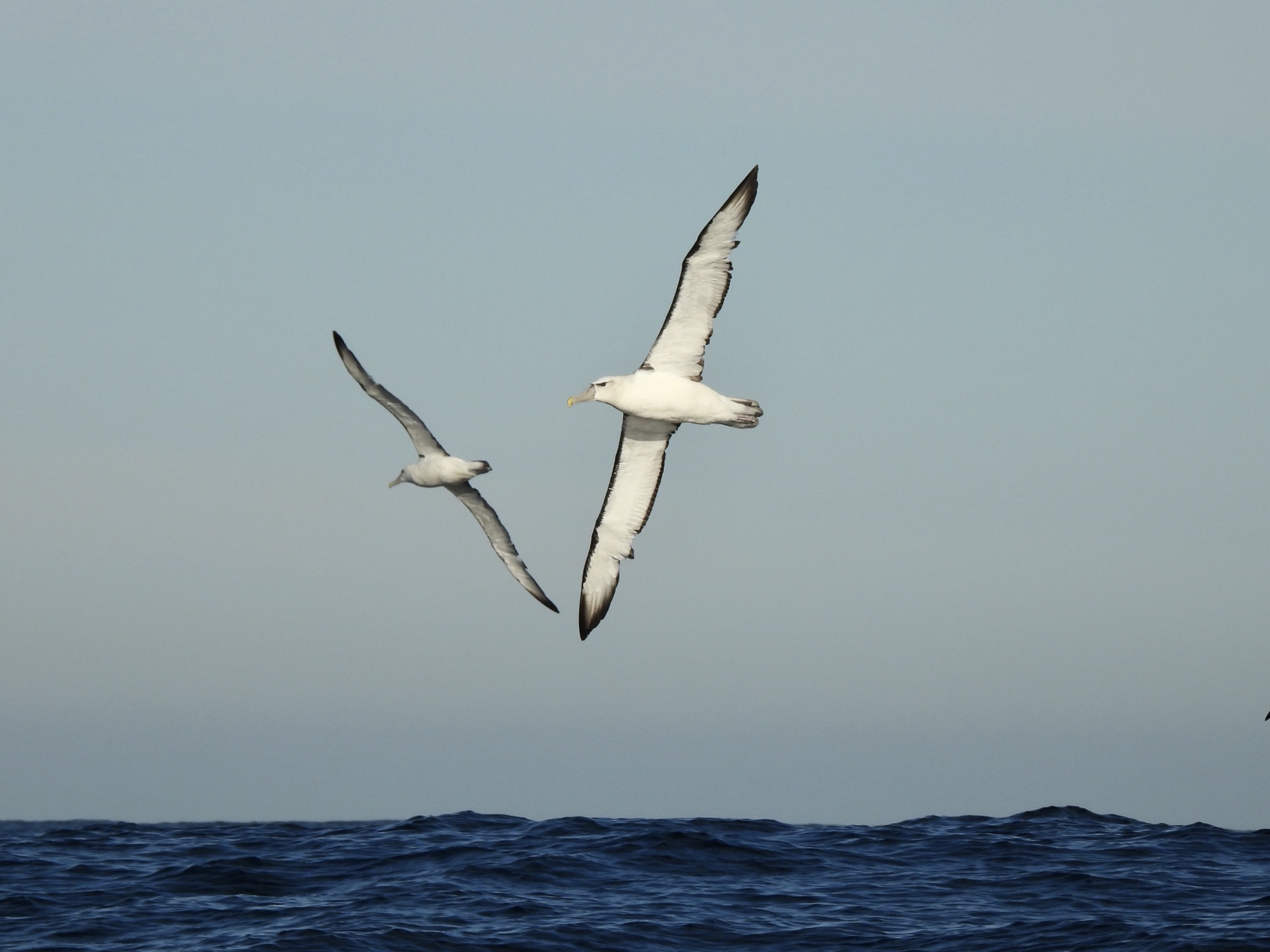
The massive swarm included sooty shearwaters, white-chinned petrels, pintado petrels, black-browed albatrosses (Thalassarche melanophris) and shy albatrosses (Thalassarche cauta) for the most part. Watching hundreds of albatrosses flying and swimming at close distance was a dream coming true, as were the stunning pintado petrels, so characteristic of these southern waters.
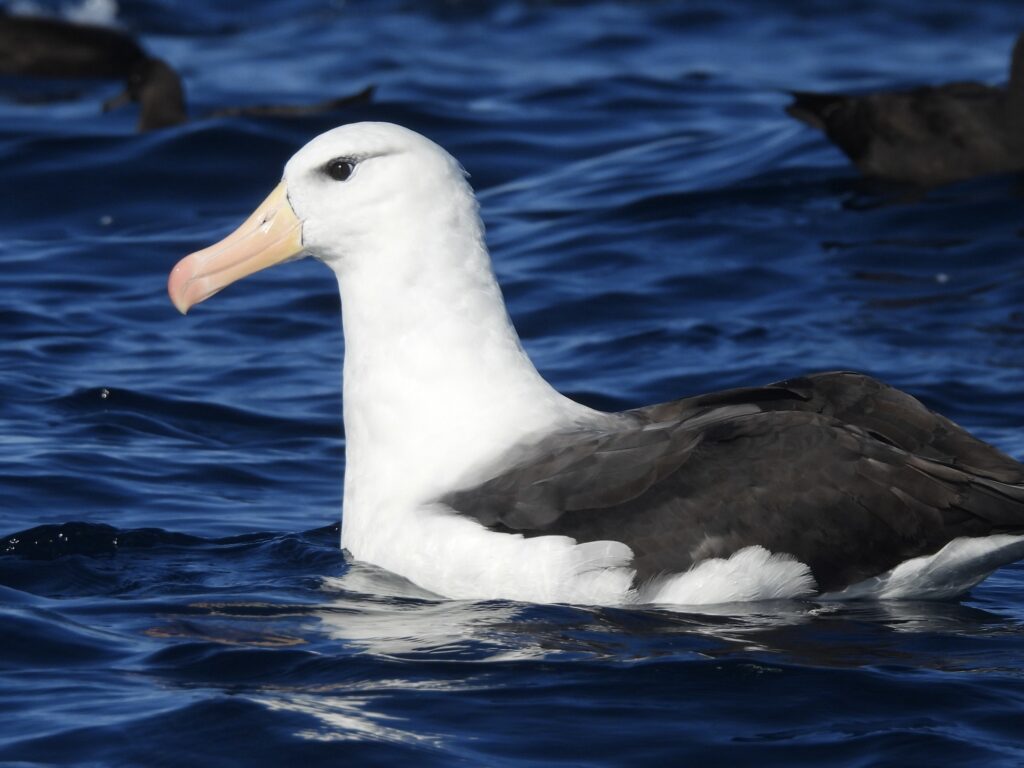
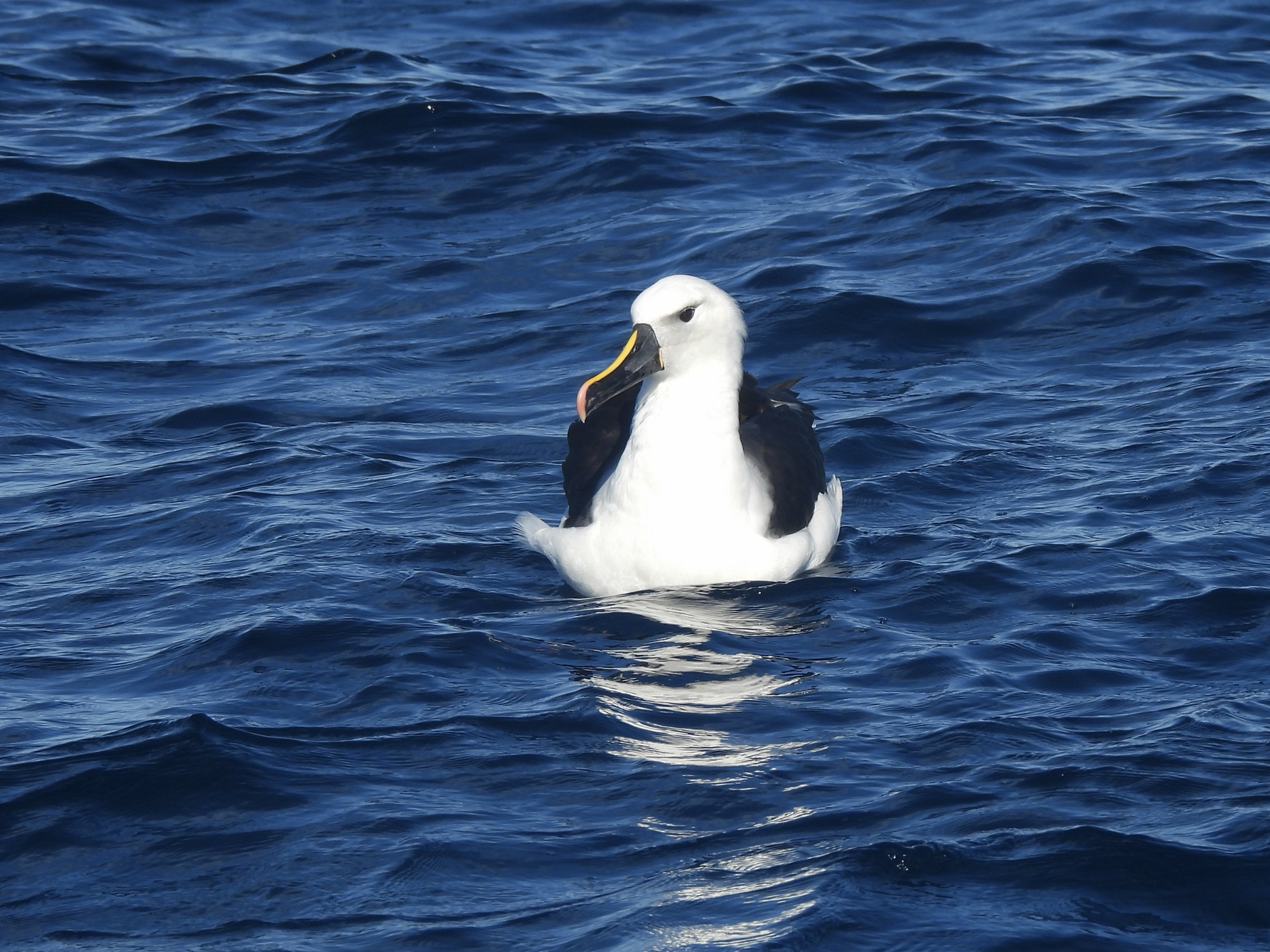
In more modest numbers, we also connected with an array of other seabirds. We reached a total of four albatross species, as we noted some tens of Indian yellow-nosed albatrosses (Thalassarche carteri) and a few Atlantic yellow-nosed albatrosses (Thalassarche chlororhynchos).
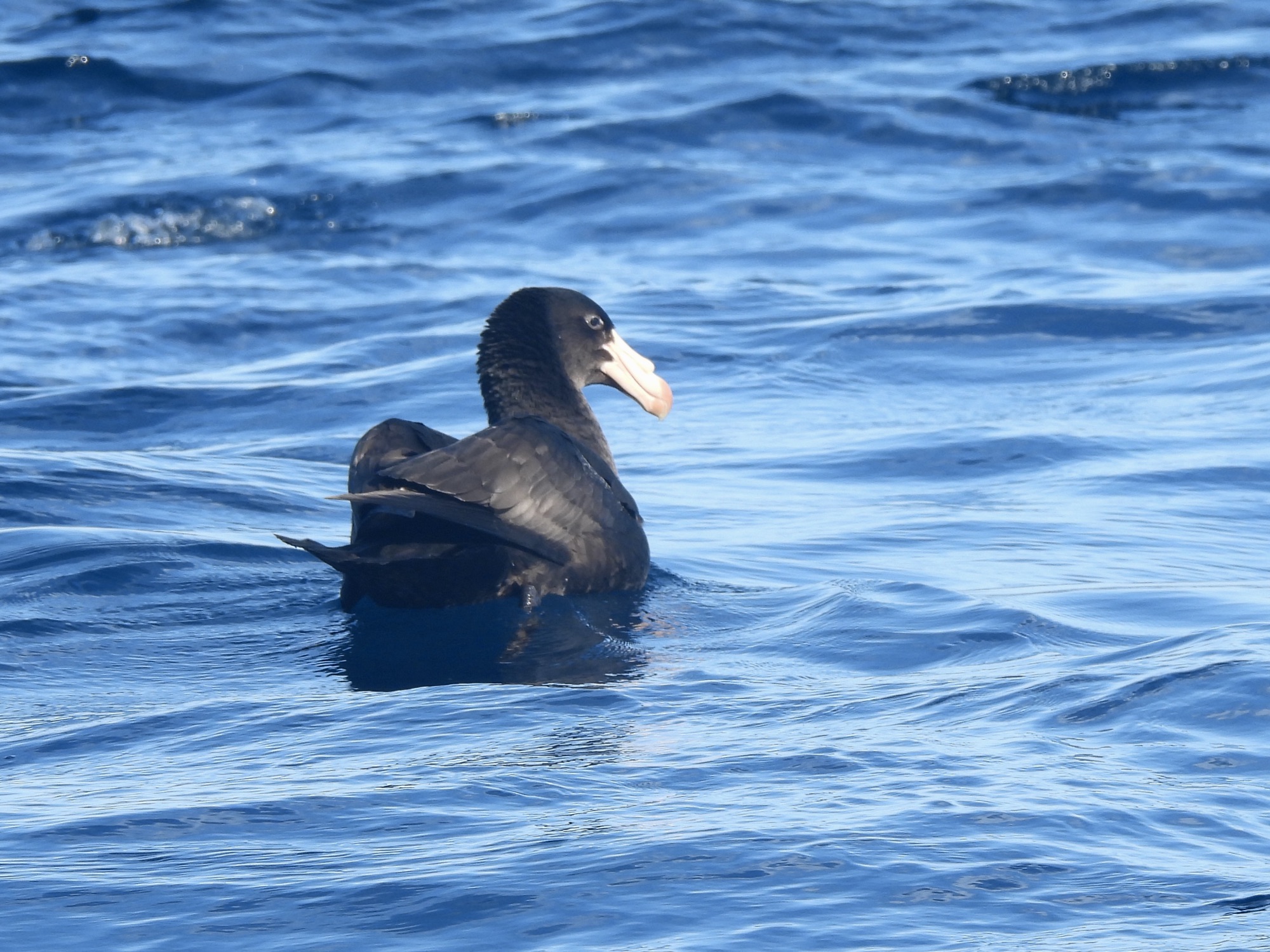
Also in smaller numbers, northern giant petrels (Macronectes halli) put on a show among the most numerous southern relatives. These were not the only scavengers in place, as the brown skuas (Stercorarius antarcticus) patrolled from above like thieves in disguise.
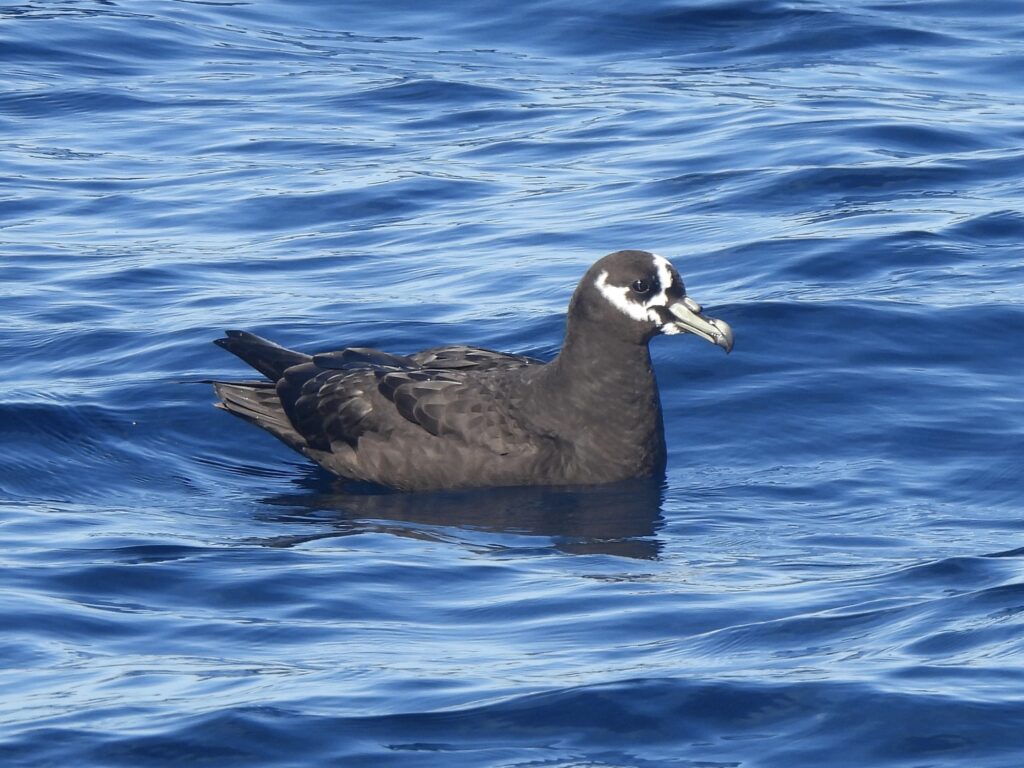
We had been hyping ourselves over looking for one seabird in particular, which we learned had been seen on previous outings. At a certain point, Guillem shouted as he picked up one among the swarm. A spectacled petrel (Procellaria conspicillata), a mythical seabird only breeding on Inaccessible Island off Tristan da Cunha, in the middle of the South Atlantic. Later, Arnau picked another one. Surprisingly, our pelagic did not only produce one, nor two, but four different sightings of at least three individuals of this fantastic petrel.
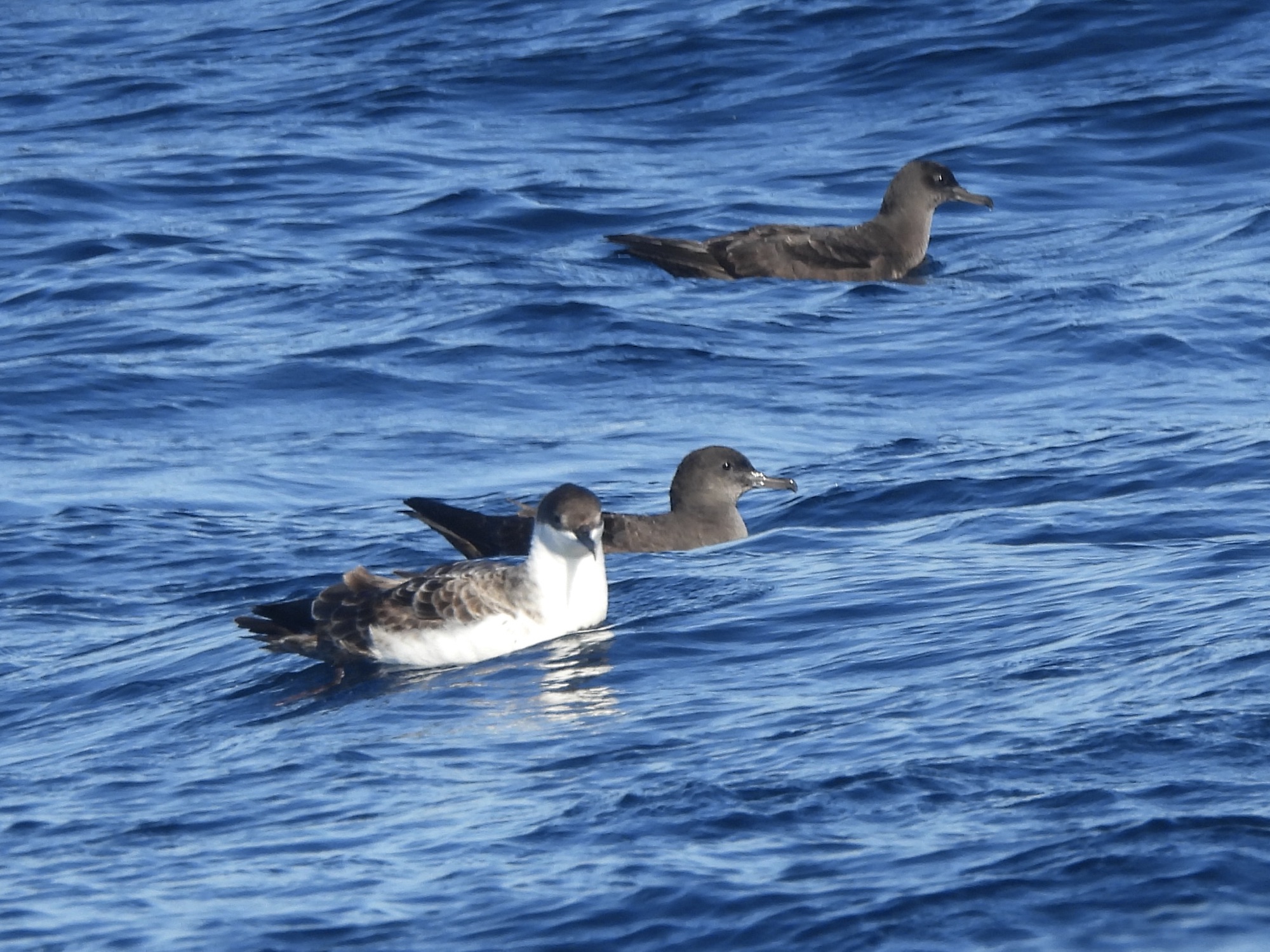
This was not the only highlight of our outing. A great shearwater (Ardenna gravis) came as a great surprise to most of us. For the South Africans, because it is completely out of date. And for us, despite being regular in Spain, because it is a mega in our region in the Mediterranean and we had never enjoyed such close views of this smart species before.
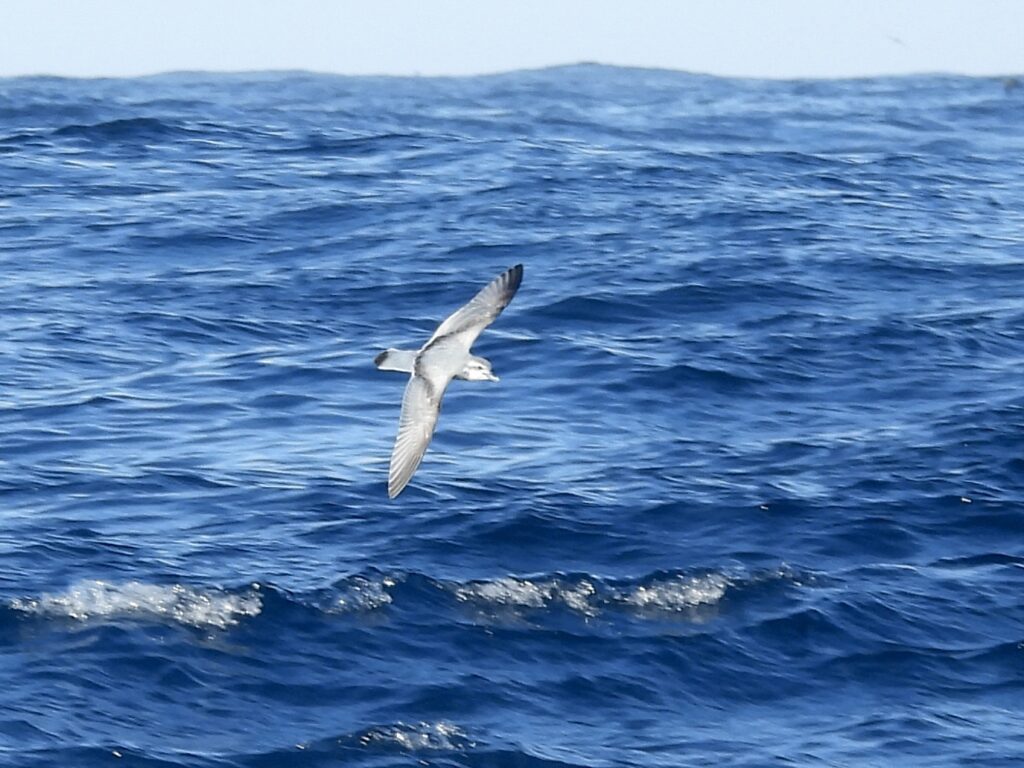
Another great addition to our long list of highlights was connecting twice with Antarctic prions (Pachyptila desolata), a stunning species that we were also looking forward to seeing, knowing that it is not guaranteed in the South African winter. Right before departing the trawler area back north towards Cape Point, we connected with a juvenile-plumaged tern that only later could we confirm as an Antarctic tern (Sterna vittata) after reviewing Guillem’s pictures.
We headed back to False Bay after an unbelievable morning. The boat briefly docked close to the cliffs once inside False Bay — much to the relief of certain passengers who, despite the calm seas, had the most unpleasant experience due to terrible seasickness and could not disagree more with all the excitement I am writing about, but still somehow managed to briefly come back from complete blackout and unbelievably connect with pretty much every highlight bird. The crew had prepared us a light snack, and we chatted about Flock to Marion and other fantastic pelagic experiences in these awesome waters.
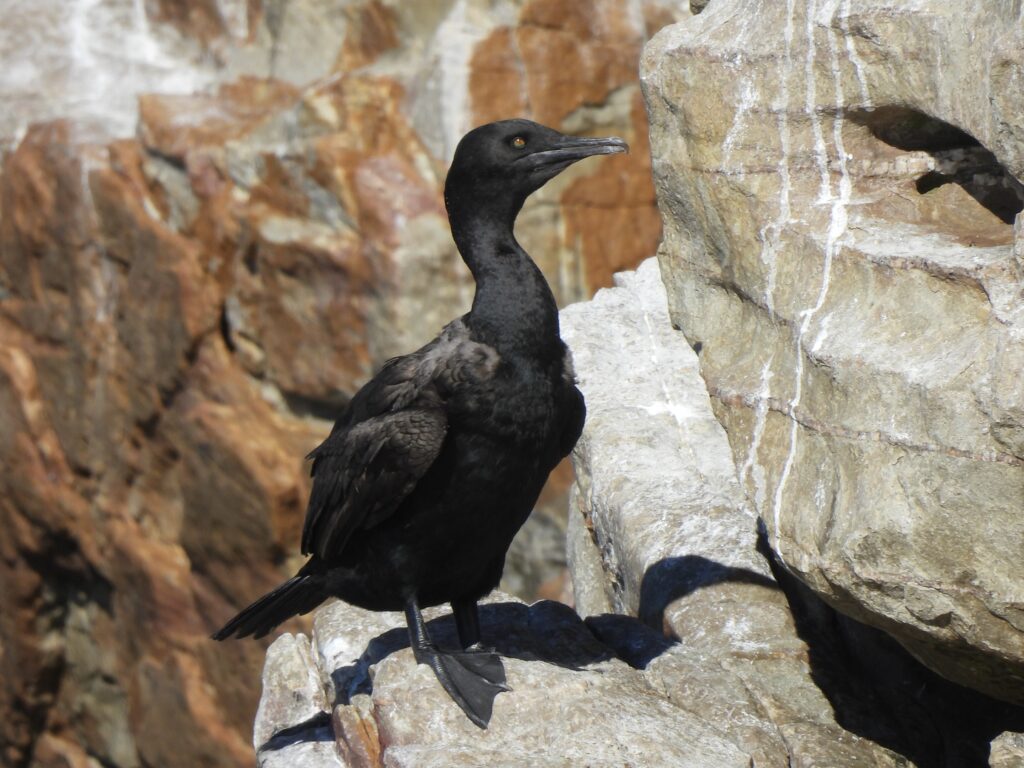
The pelagic trip finished while slowly sailing through some rocks off the shore of the Cape Peninsula, where we had close-up views of the endemic crowned cormorants (Microcarbo coronatus) and bank cormorants (Phalacrocorax neglectus), including a ‘spectacled’ bank cormorant, a roosting bird with partial leucism in the head. Cape fur seals had fished along birds around the trawlers and rested on some of those rocks.
While some of us might have used some Biodramine before entering the boat (yes Darío, I’m looking at you…), this experience certainly was a dream come true. Other pelagics elsewhere might offer more diverse sets of albatrosses, petrels and seabirds in general, but being surrounded by swarms of thousands of seabirds around fishing trawlers in the south Benguela Current must be hard to beat. The pictures illustrating these notes are only a humble contribution to the grandiosity we witnessed.