Last weekend I flew into Córdoba for a flash trip to get to know some specialties in central Argentina. For three days, I drove across the northern half of the province and got to know some specialty locations. While I paid a quick visit to the Sierras west of Córdoba city on my first day (read about it here), most of my birding took place in the vast Chaco lowlands.
As soon as I got out of the airport, I first drove into Reserva General San Martín, just on the outskirts of the city. I drove into the parking lot of the camping area, apparently just where the reserve ends, and was asked to pay a small parking fee (as would happen at several campgrounds along this trip). This parking lot was favoured by eared doves (Zenaida auriculata), white-tipped doves (Leptotila verreauxi), shiny cowbirds (Molothrus bonariensis), greyish baywings (Agelaioides badius) and brown cacholotes (Pseudoseisura lophotes).
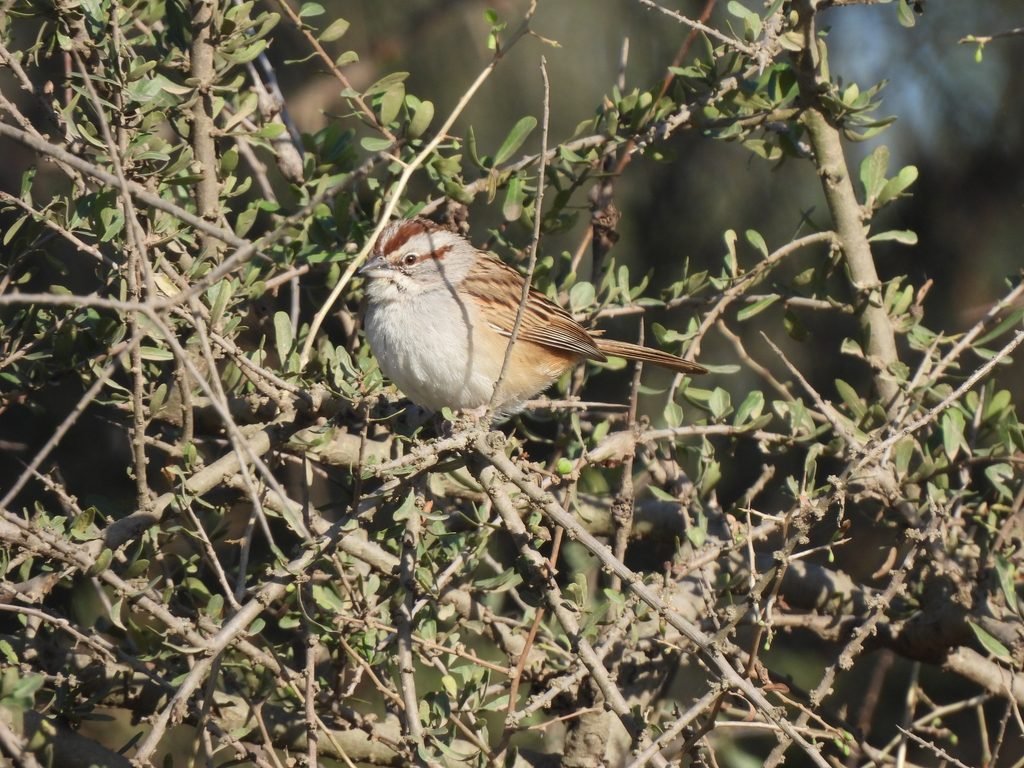
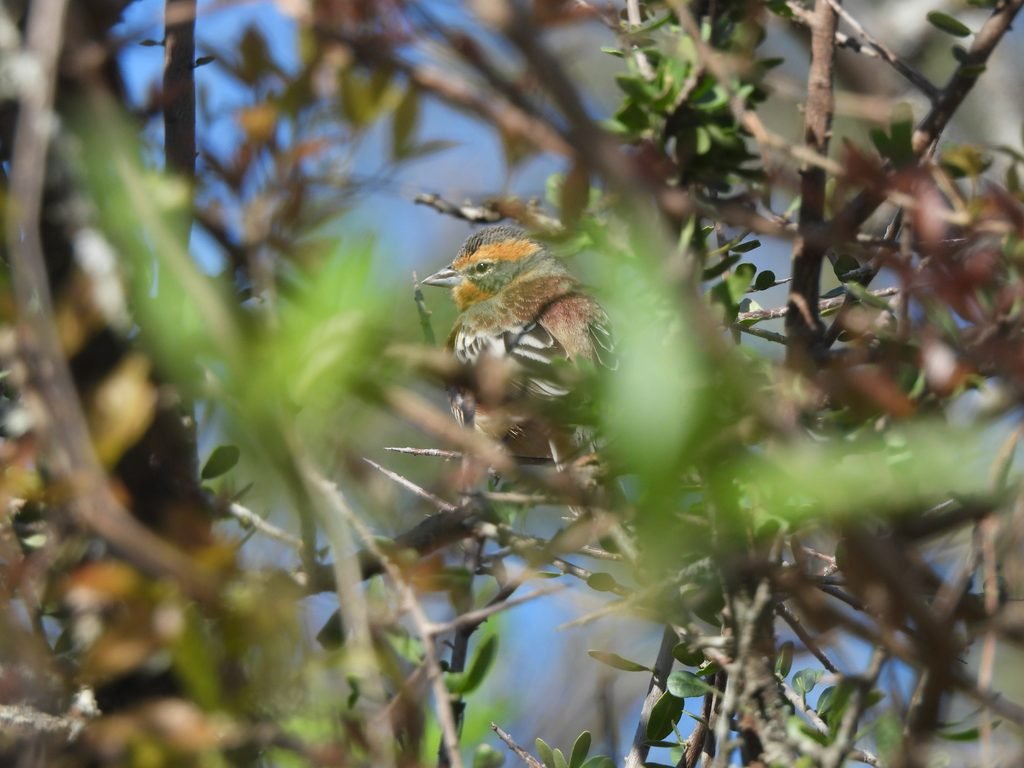
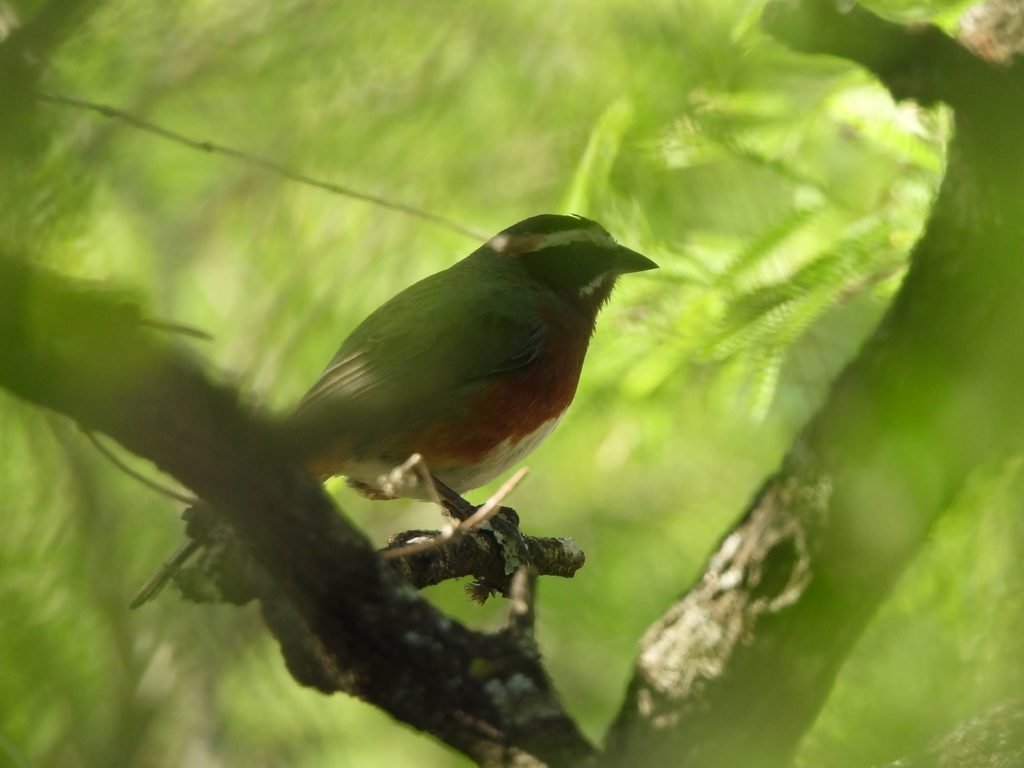
This great location produced a number of local specialties, including a small flock of chaco sparrows (Rhynchospiza strigiceps), a cinnamon warbling finch (Poospiza ornata) and a black-and-chestnut warbling finch (Poospiza whitii).
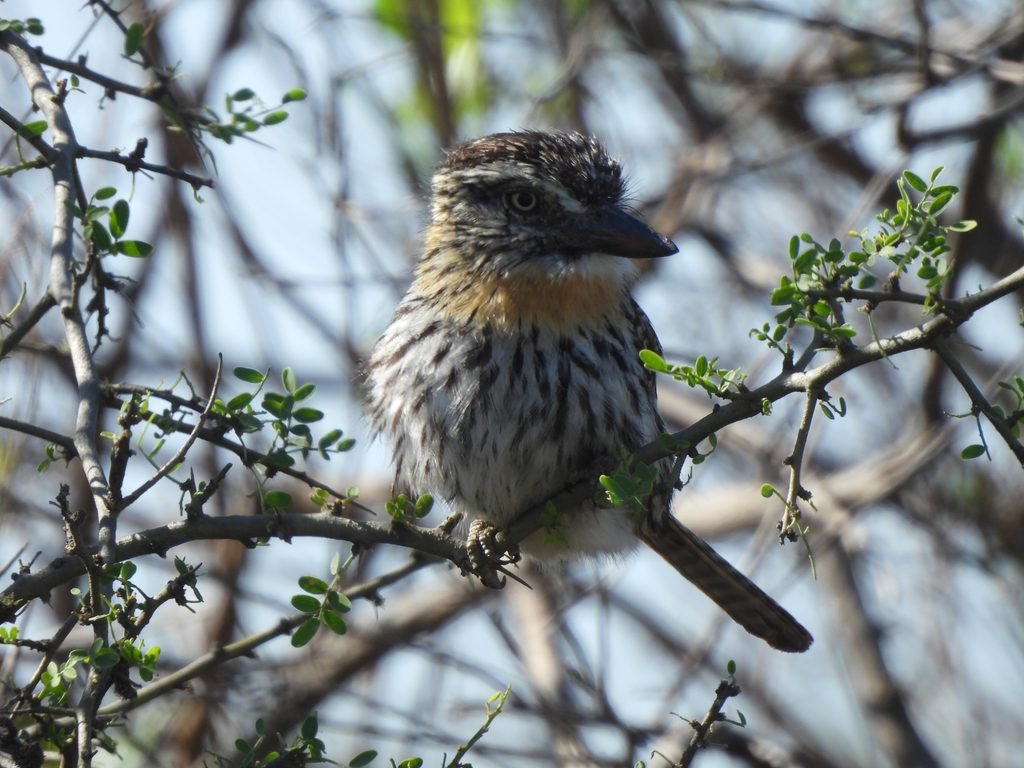
Tree canopies were filled with bird activity. Straneck’s tyrannulets (Serpophaga griseicapilla) and suiriri flycatchers (Suiriri suiriri) shared space with my first greater wagtail-tyrants (Stigmatura budytoides) and scimitar-billed woodcreepers (Drymornis bridgesii). Great kiskadees (Pitangus sulphuratus) and roadside hawks (Rupornis magnirostris) sang loud and clear, as did a distant spot-backed puffbird (Nystalus maculatus).
I spent the rest of my first day exploring the Sierras west of Córdoba, which hold a couple of endemic birds mixed with a variety of montane specialties (read about it here). Then I drove north to accommodation in Deán Funes, a relatively strategic spot in the middle of all the places I wanted to visit.
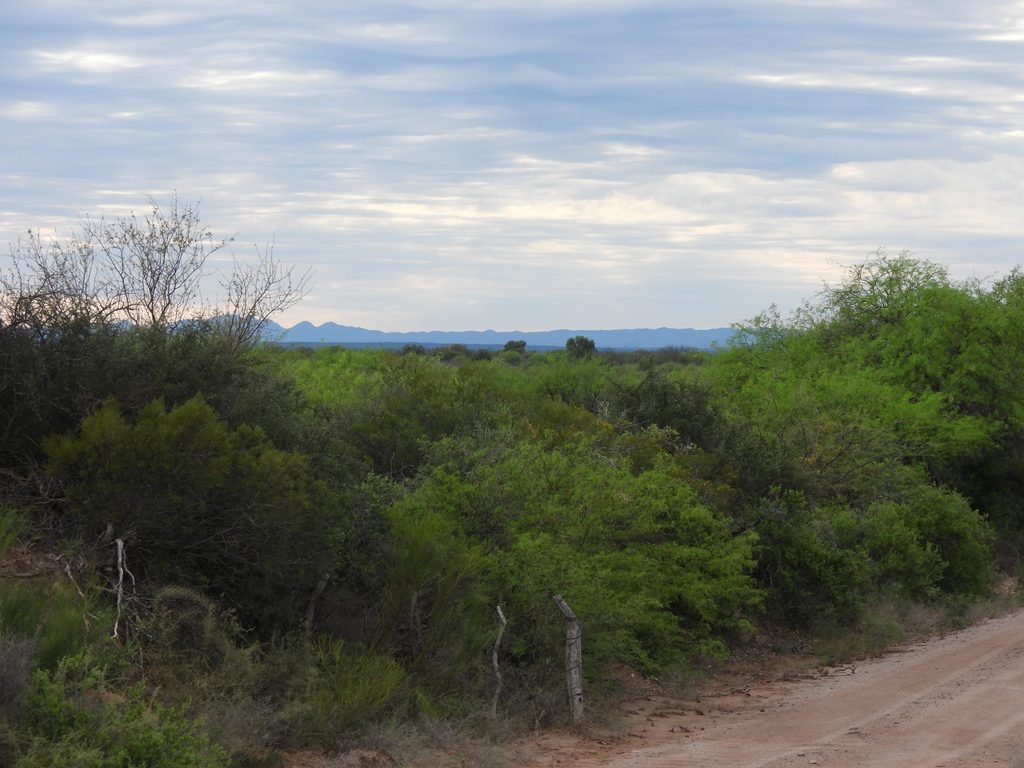
The following day was set aside to explore Salinas Grandes, a set of hypersaline flats along the border between Córdoba, Catamarca, La Rioja and Santiago del Estero. The Chaco surrounding the village of San José de las Salinas is spectacular and delivered heaps of lifers as I arrived right after sunrise.
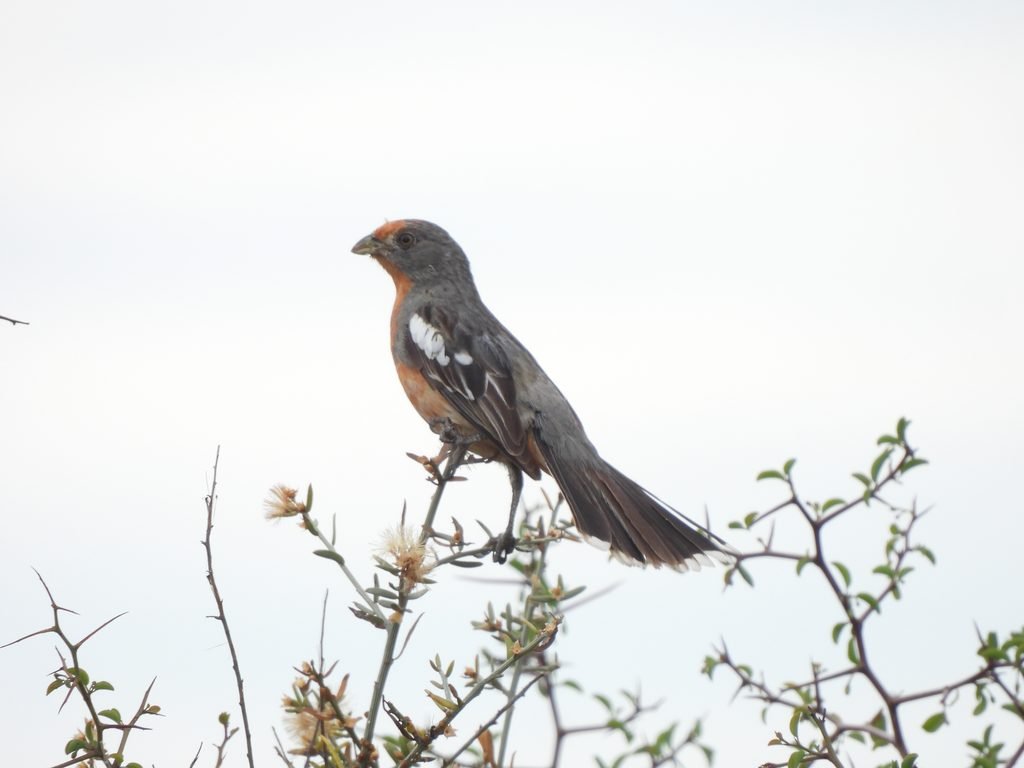
Several spot-winged falconets (Spiziapteryx circumcincta) motivated my first stop, right at the diversion towards San José de las Salinas. This was one of my Chaco targets, a scarce bird that nevertheless showed up on several occasions throughout the day.
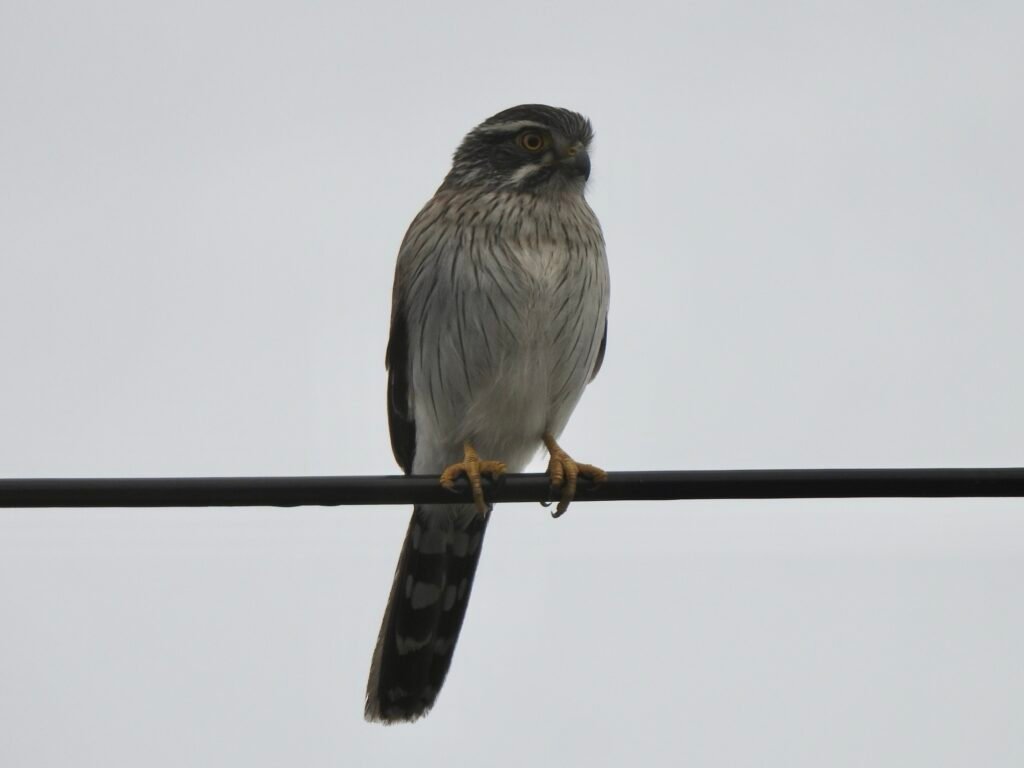
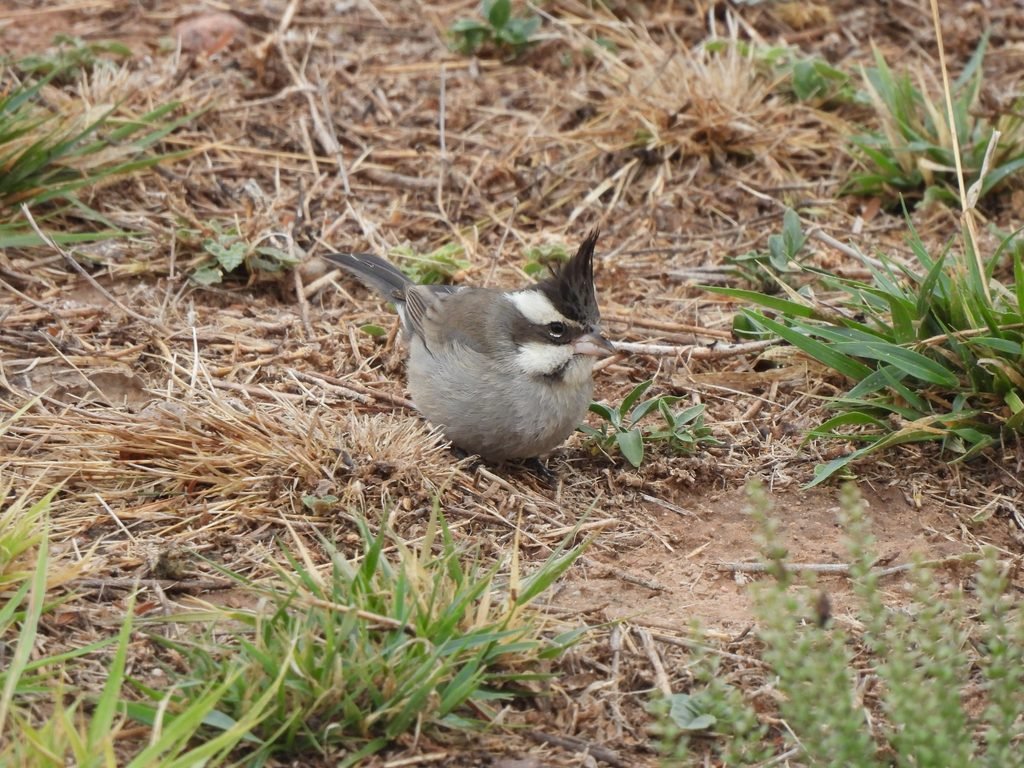
The roadside vegetation held a large variety of birds. Black-crested finches (Lophospingus pusillus), many-coloured chaco finches (Saltatricula multicolor), golden-billed saltators (Saltator aurantiirostris), Straneck’s tyrannulets and white-crested tyrannulets (Serpophaga subcristata) proved numerous. Large flocks of monk parakeets (Myiopsitta monachus) were on the move too.
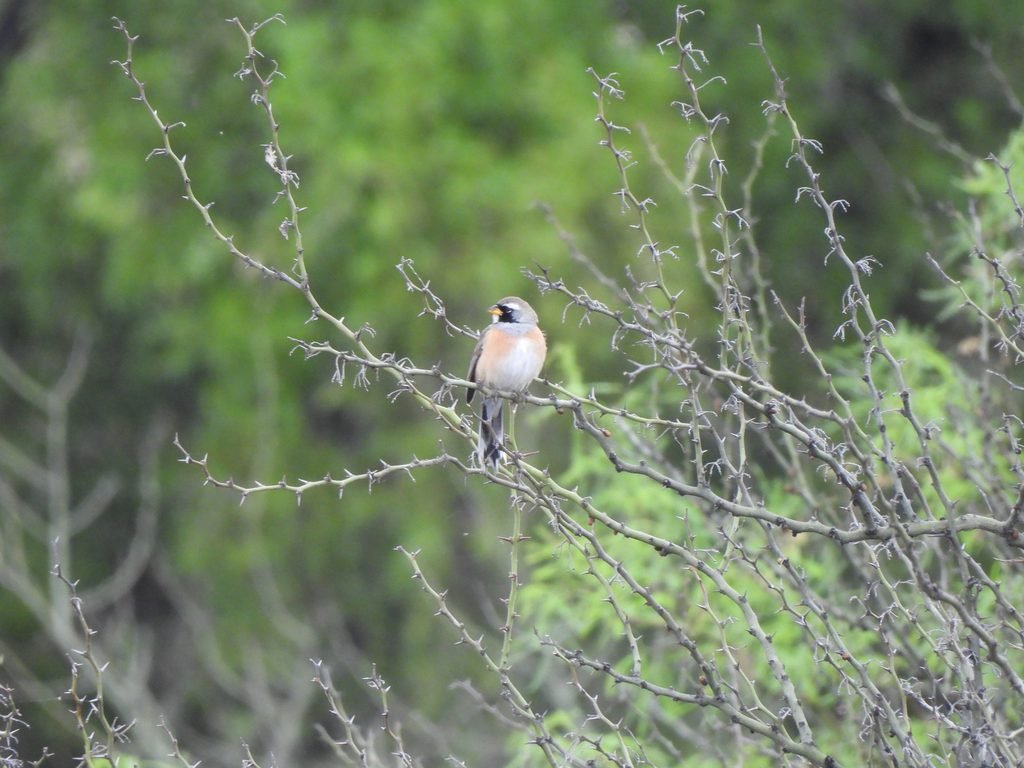
Many other birds were vocalizing in the morning, including pale-breasted spinetails (Synallaxis albescens), variable antshrikes (Thamnophilus caerulescens), short-billed canasteros (Asthenes baeri) and crested gallitos (Rhinocrypta lanceolata).
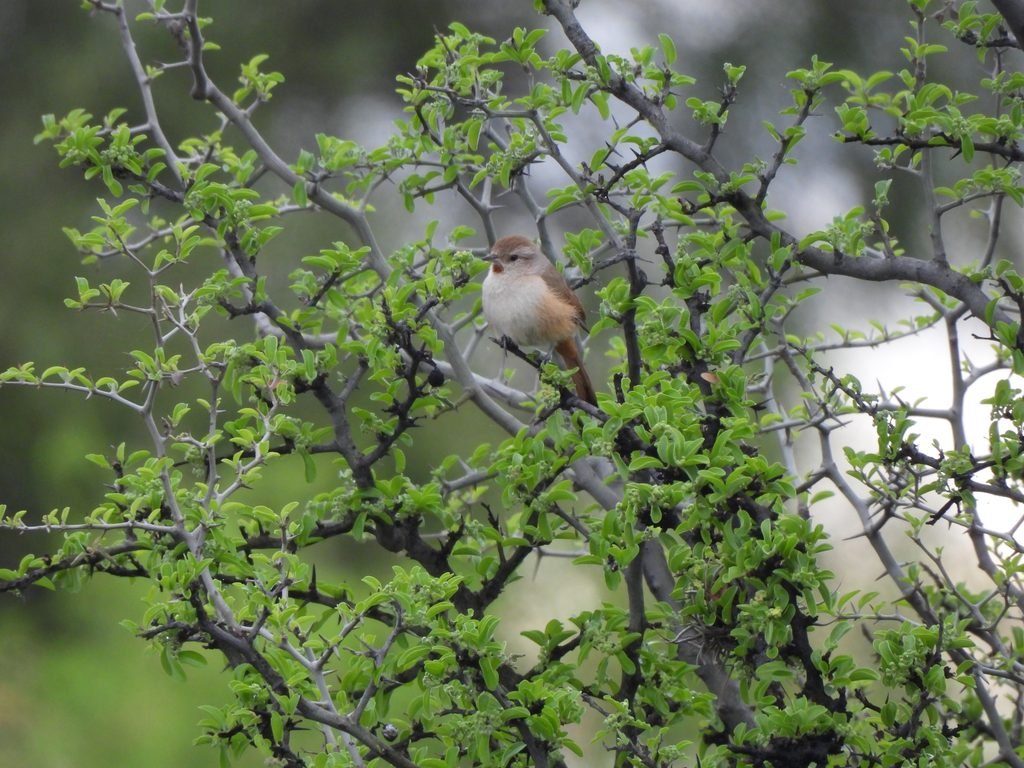
As I crossed town, flocks of picui ground doves (Columbina picui), rufous-collared sparrows (Zonotrichia capensis) and saffron finches (Sicalis flaveola) featured Chaco specialties like black-crested finches and lark-like brushrunners (Coryphistera alaudina).
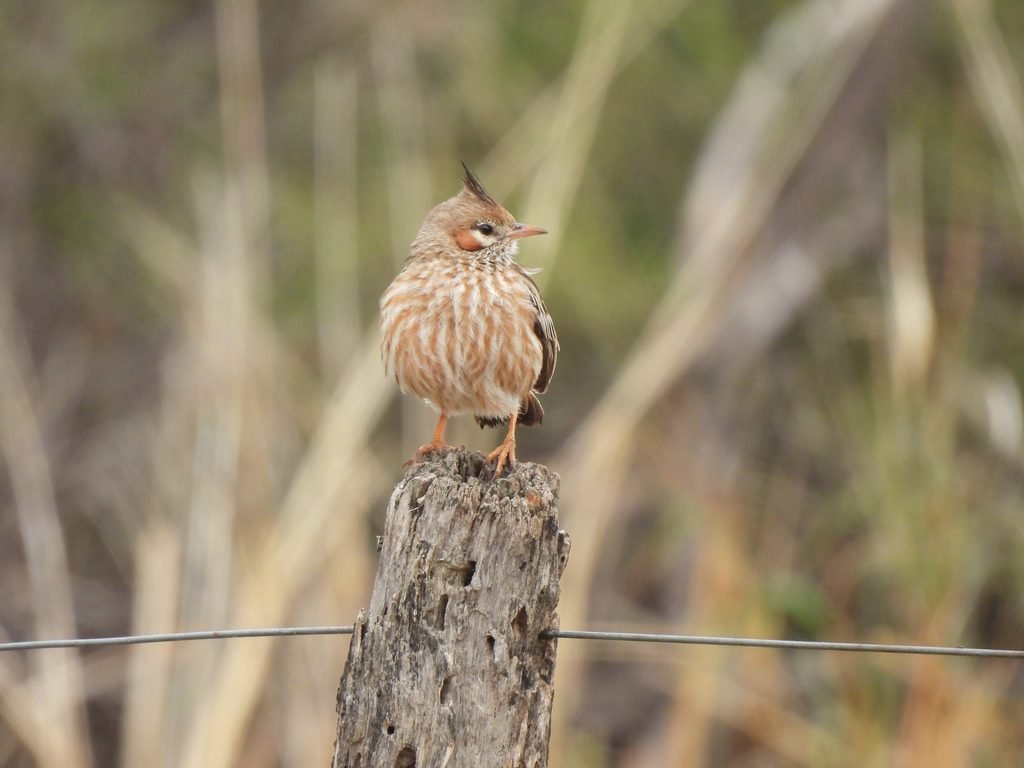
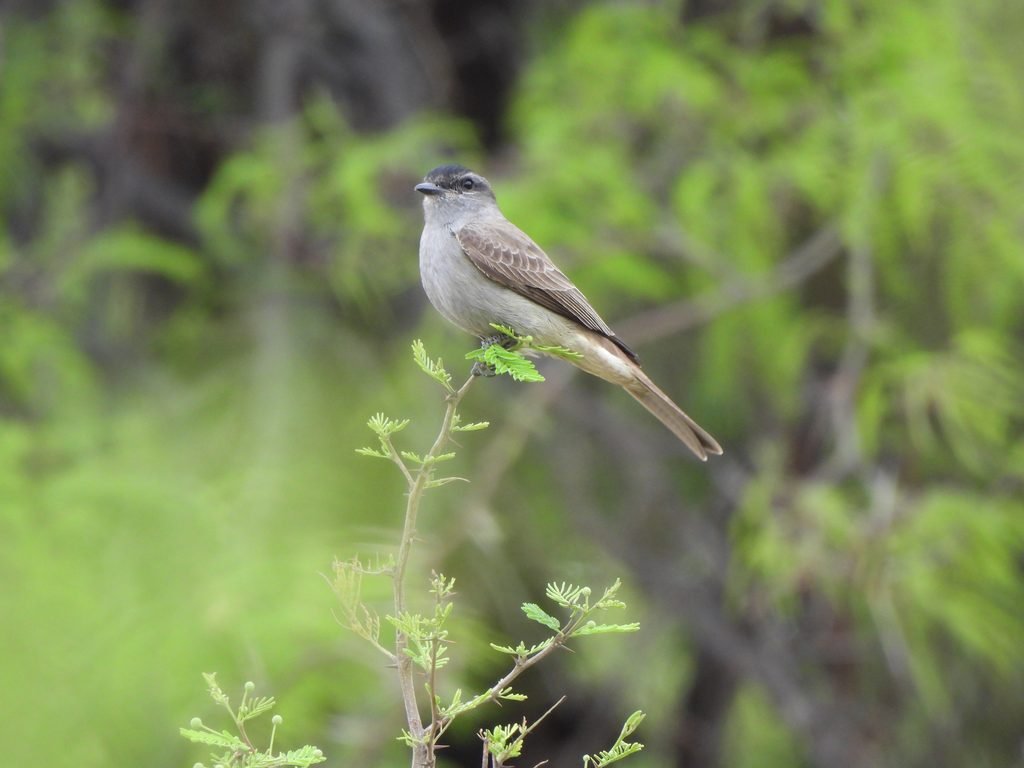
I then headed west towards the Salinas proper. Several crowned slaty flycatchers (Empidonomus aurantioatrocristatus) and tufted tit-spinetails (Leptasthenura platensis) showed up along the way. After hearing several individuals, I also got to see a brushland tinamou (Nothoprocta cinerascens) on the road.
I walked the last stretch towards the saltpans, as several signs indicated that the area was private — still, I saw several cars of tourists driving back and forth. However, walking allowed me to get close looks at ringed warbling finches (Microspingus torquatus), chaco earthcreeper (Tarphonomus certhioides), white-tipped plantcutter (Phytotoma rutila) and spot-backed puffbird. My first long-awaited screaming cowbirds (Molothrus rufoaxillaris), Patagonian mockingbirds (Mimus patagonicus) and white-banded mockingbirds (Mimus triurus) also put on a show.
However, finding the endemic Salinas monjitas (Neoxolmis salinarum) was the absolute highlight of the day. A few of these smart birds foraged in the distant halophilous vegetation. As I walked carefully to approach them, a flock of six birds flew into the scene very close to me, chirping and chasing each other, only to fly away a few seconds later.
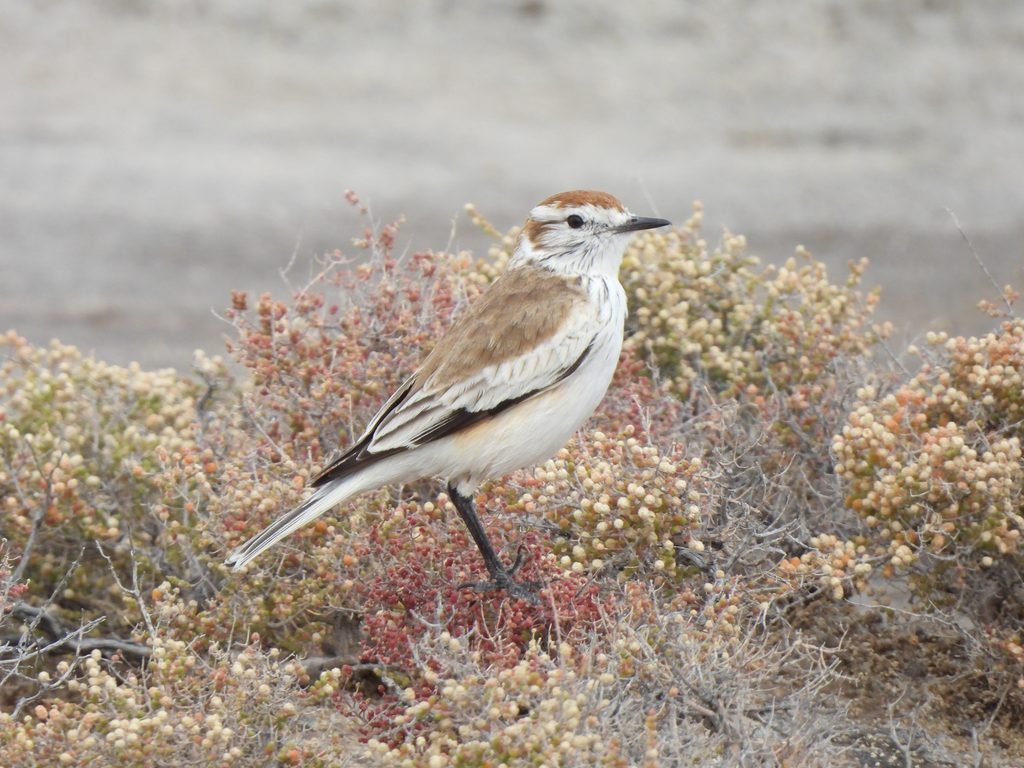
Luckily, some of the birds that foraged alone showed confiding behaviour, allowing me to observe them at close range. More than passerines, they sometimes behaved like plovers, running over the dry, salt-covered white soils. I had a blast watching an individual chase flies, at times twirling in the air and displaying its rich brown and pure white plumage pattern.
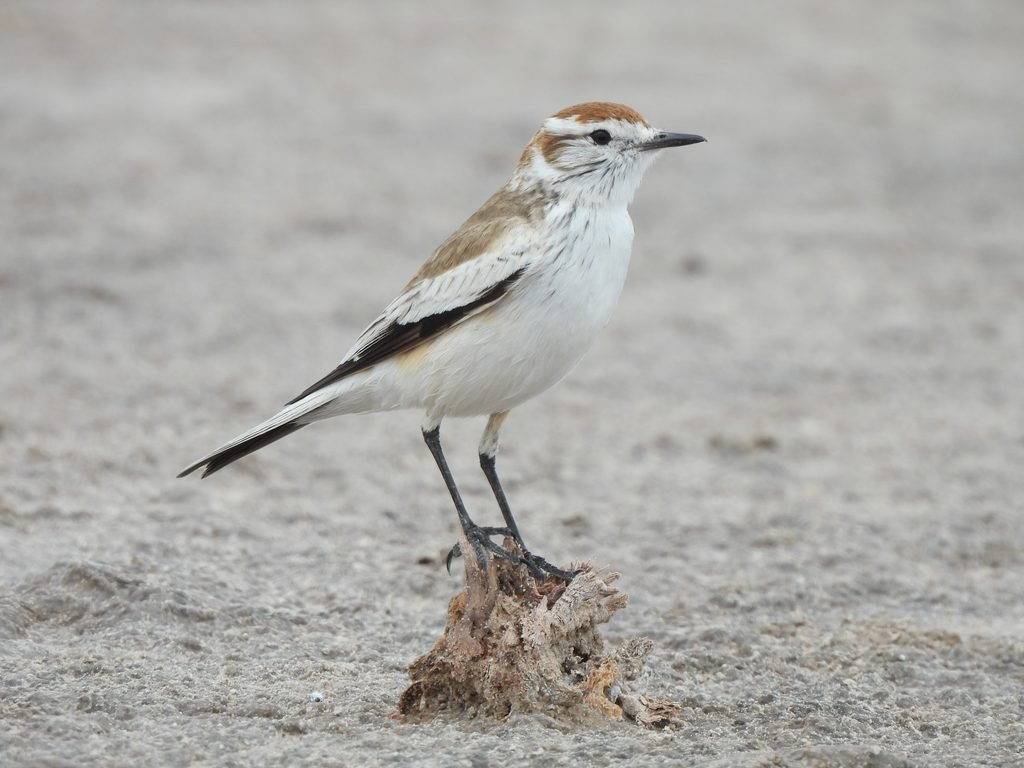
This exquisite bird happens to be extremely range-restricted, found only in this set of saltpans in central Argentina. It was formally described only in 1979 and had fewer than 375 eBird records at the time of my observation. Not only did their rarity stand out, but so did their beauty, and I spent quite some time enjoying this major target of my trip.
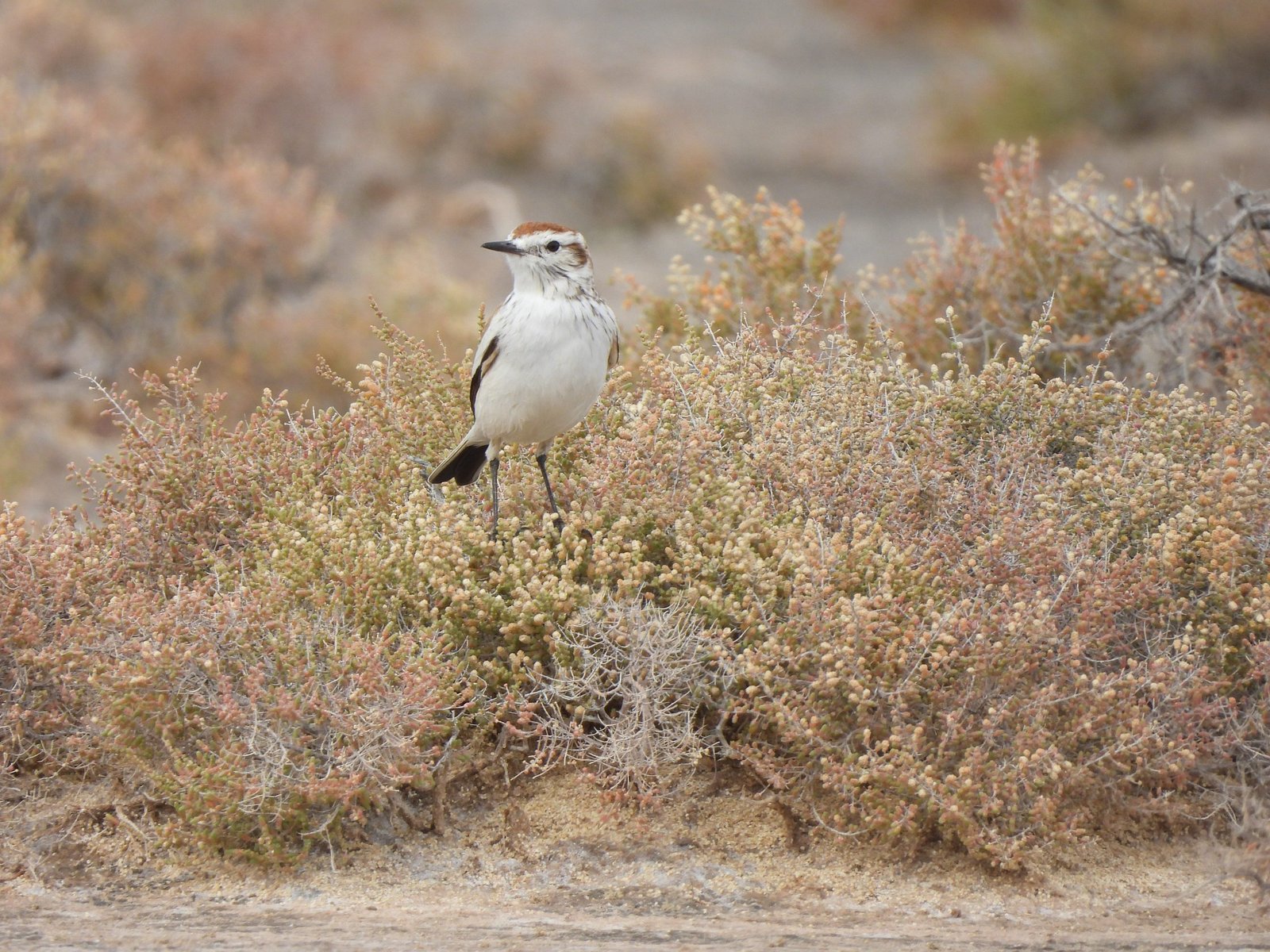
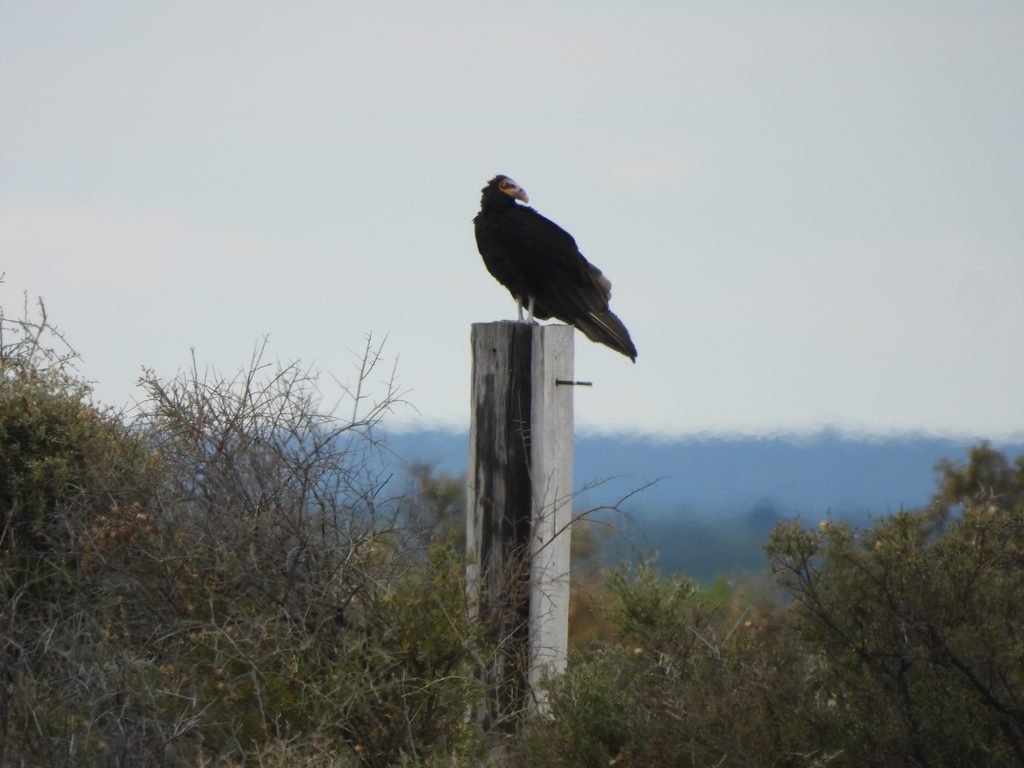
Once satisfied, I walked back. The day was getting hotter, and I noticed the first vulture of the day perched on a pole close to my car. After taking a couple of distant documentary pictures, I noticed another dark vulture flying low and approaching it, eventually flushing it away and taking its place on the pole. The size difference between the two was remarkable, with the newcomer being smaller. Indeed, the newcomer turned out to be a lesser yellow-headed vulture (Cathartes burrovianus), first flushed by a turkey vulture (Cathartes aura), and then flying low along the road for a while. I had great views of several of these stunning vultures, as well as black vultures (Coragyps atratus), as the temperature rose towards the middle of the day.
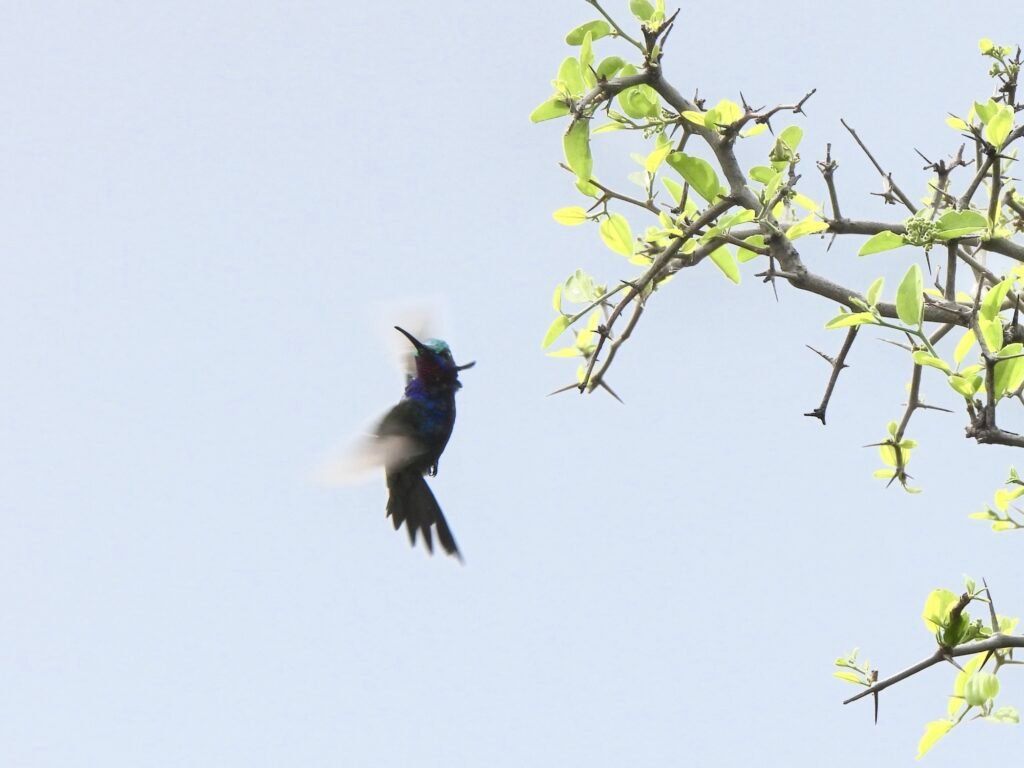
Driving the road north of San José de las Salinas at midday still produced some new birds, including the stunning blue-tufted starthroat (Heliomaster furcifer), a fulvous-crowned scrub tyrant (Euscarthmus meloryphus) and heard-only spotted nothura (Nothura maculosa), pearly-vented tody-tyrant (Hemitriccus margaritaceiventer) and black-legged seriema (Chunga burmeisteri). I was particularly sad to miss getting views of the latter throughout the trip, but at least it called at midday after a whole morning of not noticing any.
Before leaving the area, I drove around town one last time, which produced my first white-fronted woodpecker (Melanerpes cactorum) and crested hornero (Furnarius cristatus). After trying all day, a crested gallito eventually revealed itself, calling from a dense shrub — too large a bird considering how skittish it had proved to be.
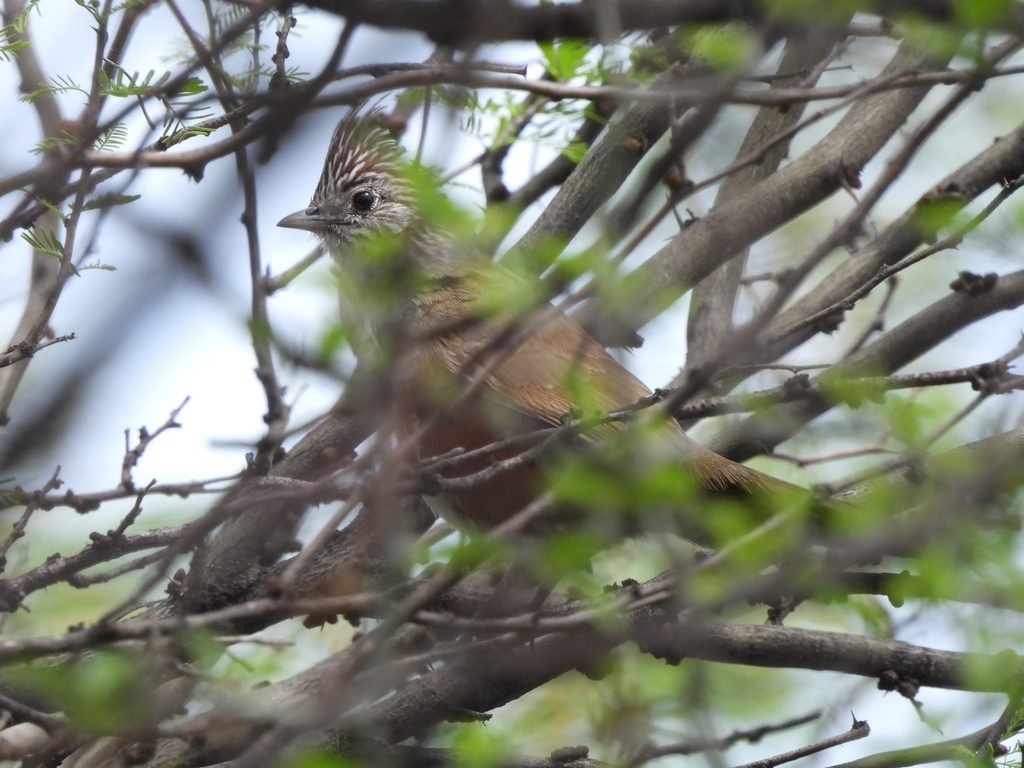
The last day of my flash trip in the Córdoba Chaco started off very early, as I departed Deán Funes at night to make it to Mar Chiquita by sunrise. Rather surprisingly, I did not see any nocturnal mammals on the road that night — or throughout the trip, for that matter. Instead, a short-eared owl (Asio flammeus) flew past in front of my car as I left my accommodation, and a number of unidentified tinamous were flushed along the way.
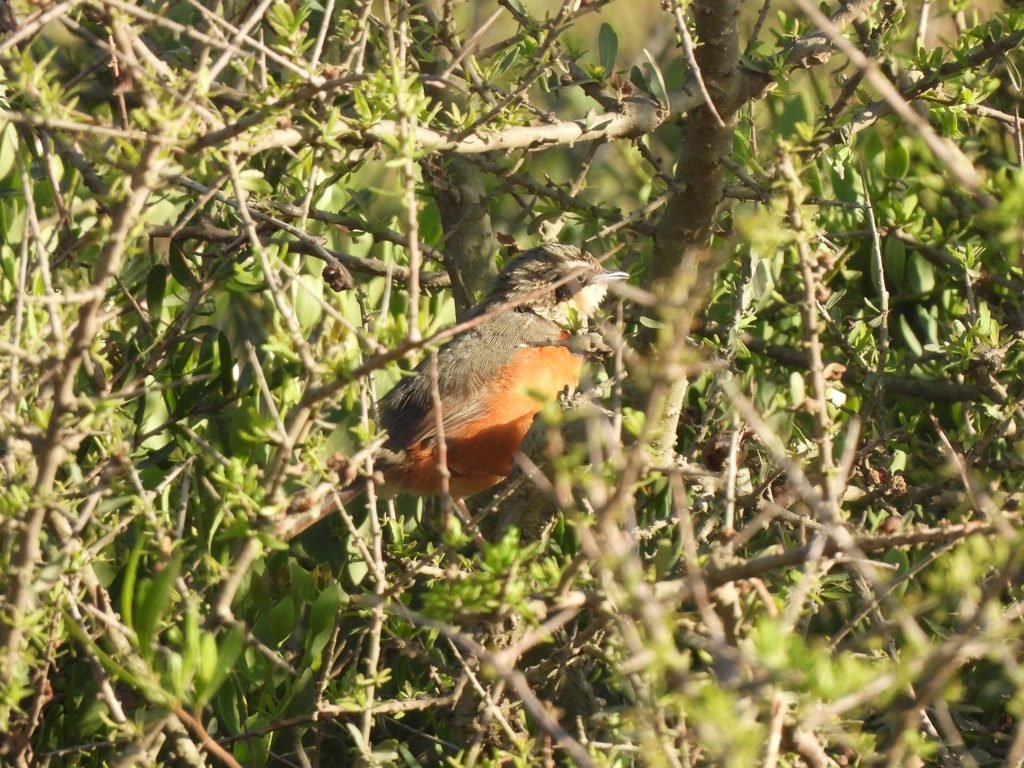
My first stop in Mar Chiquita was the road towards Península de Maré, past the village of La Para. This productive place was filled with grassland yellow finches (Sicalis luteola), red-crested cardinals (Paroaria coronata), shiny and screaming cowbirds and picui ground doves.
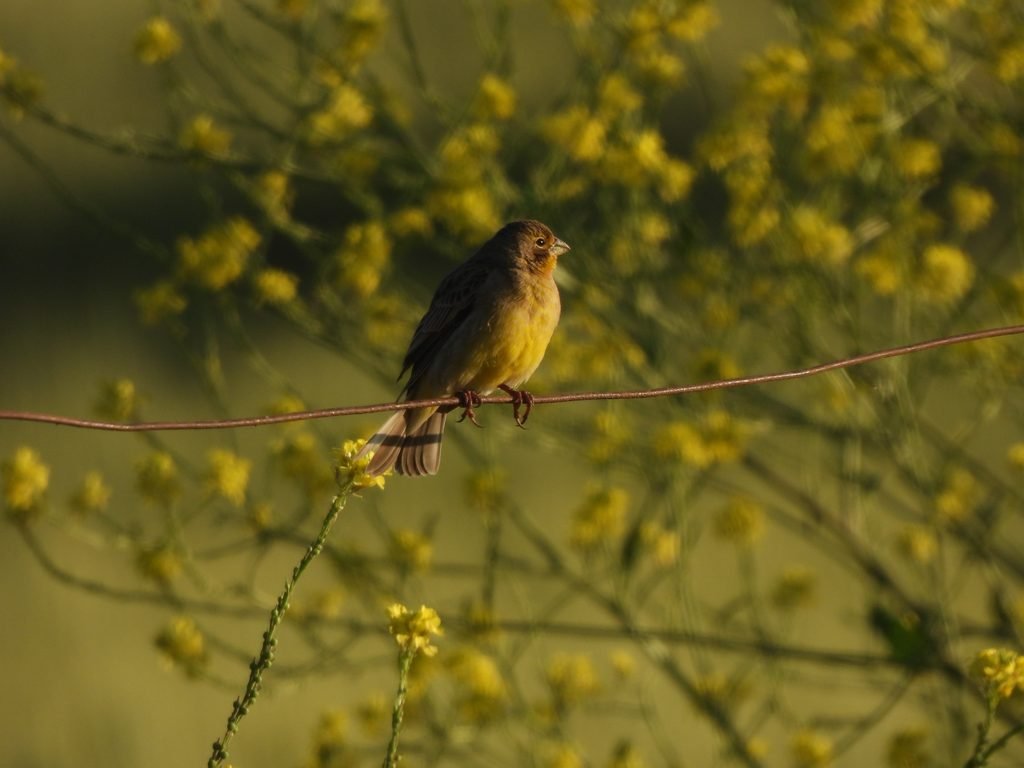
Ditches on the roadside acted as rich wetlands, featuring black-necked stilts (Himantopus mexicanus), yellow-billed pintails (Anas georgica) and coypus (Myocastor coypus). Even a couple of ringed teals (Callonetta leucophrys) flew past quickly on several occasions. On the ground, I bagged a smart male white-naped xenopsaris (Xenopsaris albinucha) and finally secured views of an olive-crowned crescentchest (Melanopareia maximiliani).
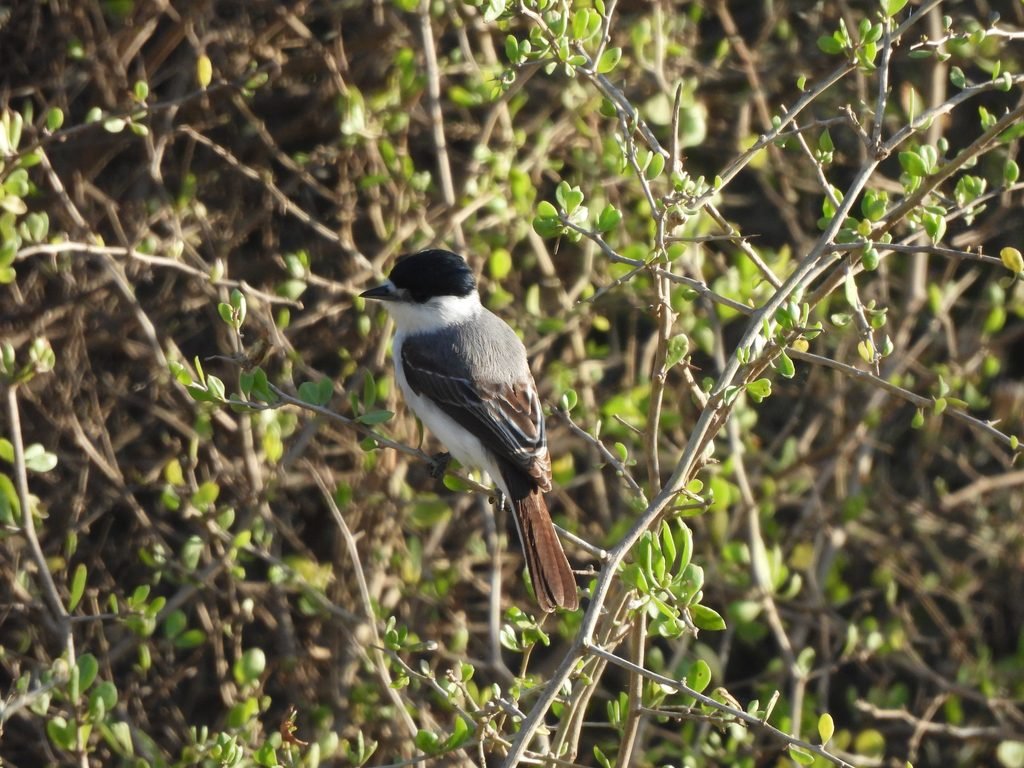
Southern martins (Progne elegans) and brown-chested martins (Progne tapera) foraged along the ditch vegetation. In this area, I also connected with my first glittering-bellied emerald (Chlorostilbon lucidus), southern yellowthroat (Geothlypis velata) and bluish-grey saltator (Saltator coerulescens). The road also featured another brushland tinamou and a number of lowland guinea pigs (Galea leucoblephara).
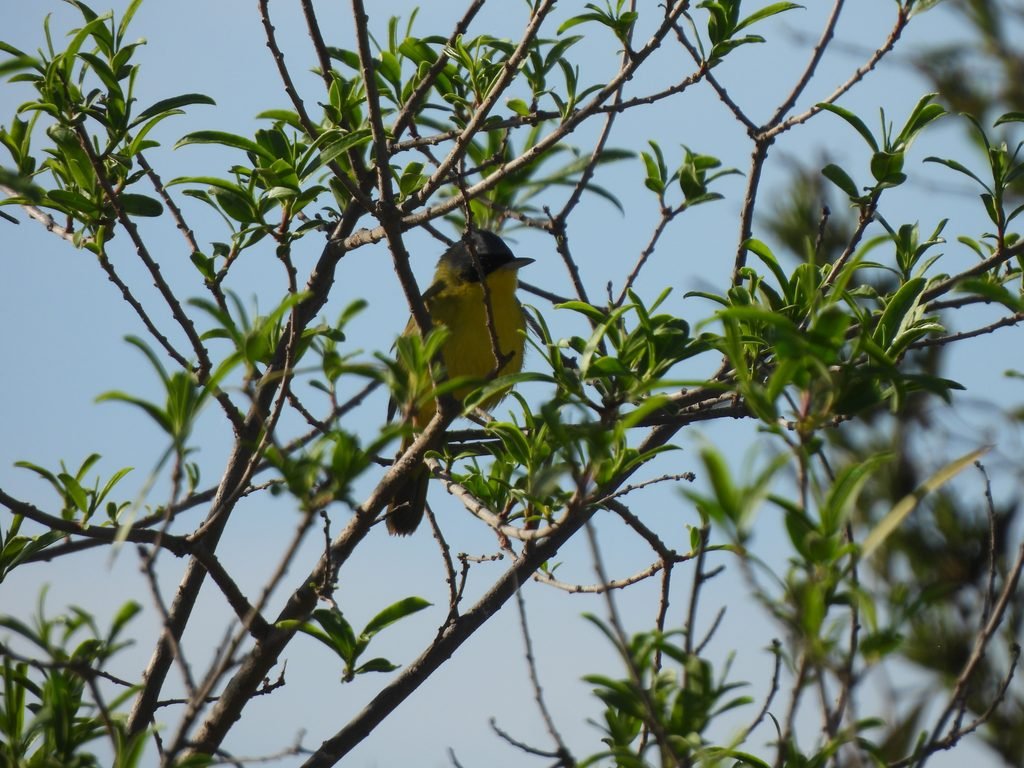
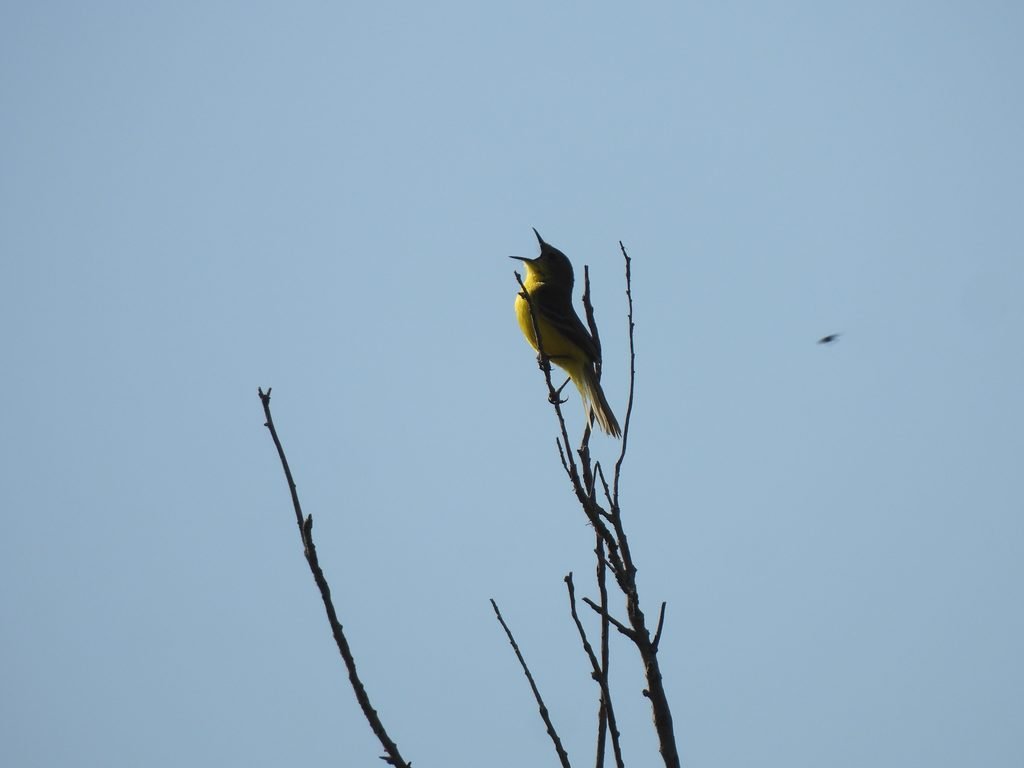
The road ends where it meets the large lake of Mar Chiquita at Península de Maré. Walking through the vegetation along the muddy shores produced a couple of territorial Dinelli’s doraditos (Pseudocolopteryx dinelliana) singing and briefly putting on a show. This localized migratory passerine is an endemic breeder in this region of Argentina and was also high on my target list.
I then drove to the last stop on my itinerary before a long drive back to the airport. Mar Chiquita is renowned as the only place outside the Andes that holds three species of flamingos worldwide, and Bahía de Ansenuza is arguably the best place to spot them. This gave me an opportunity to connect with these mega birds in lowland conditions, making it easier in several ways.
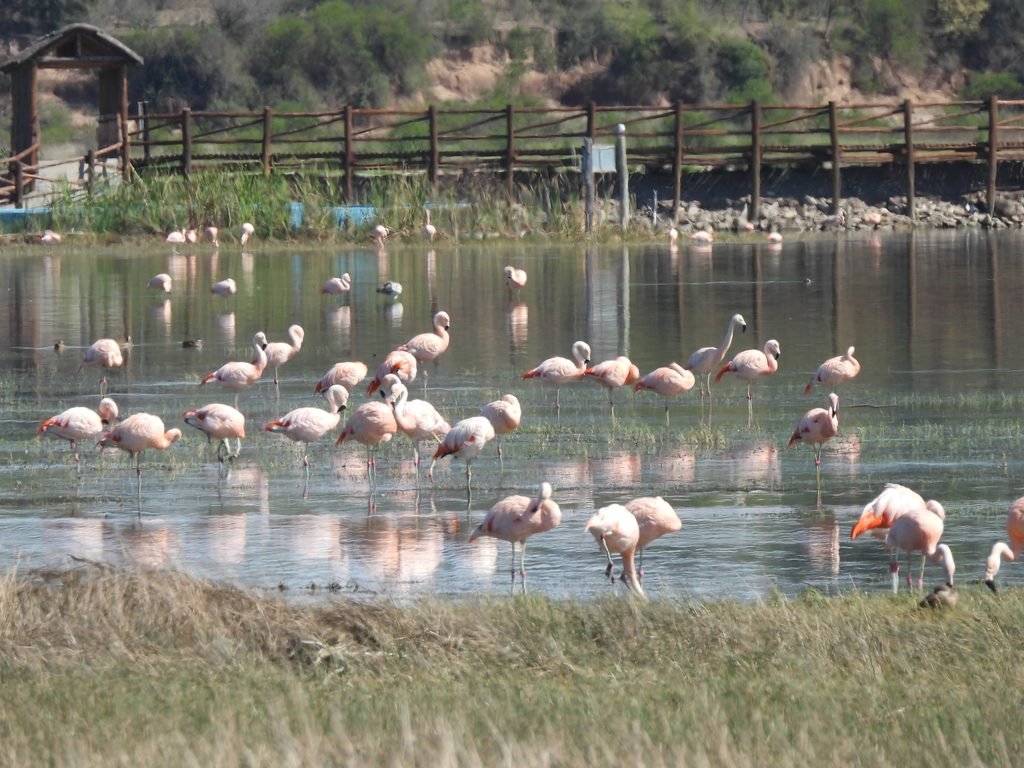
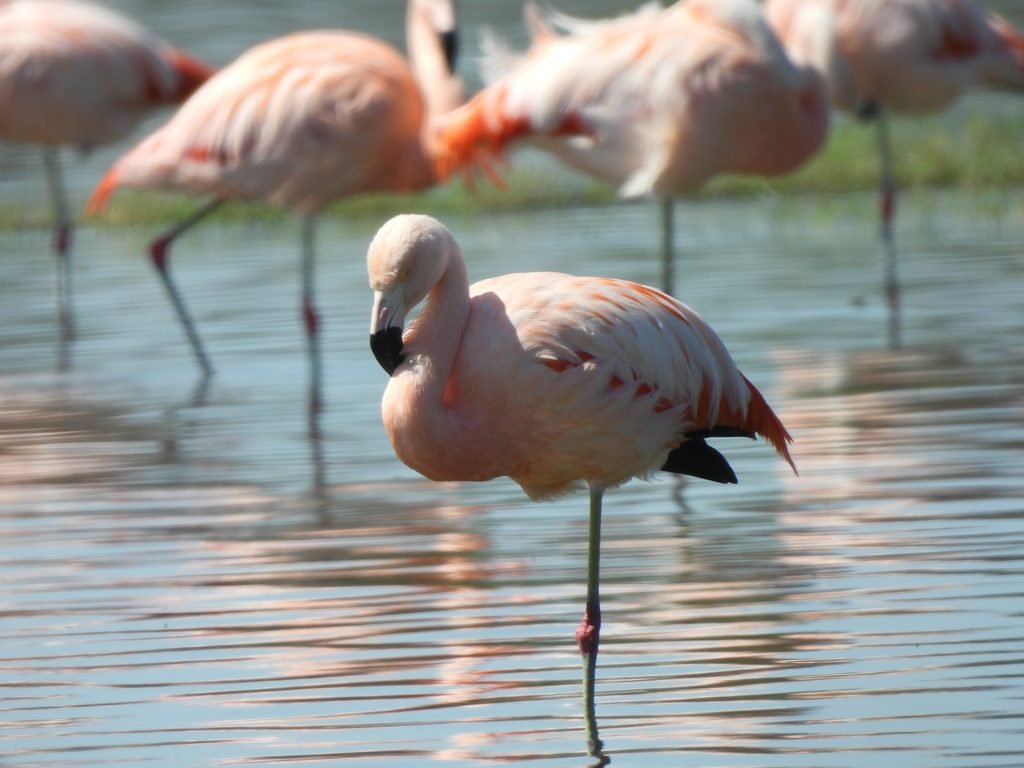
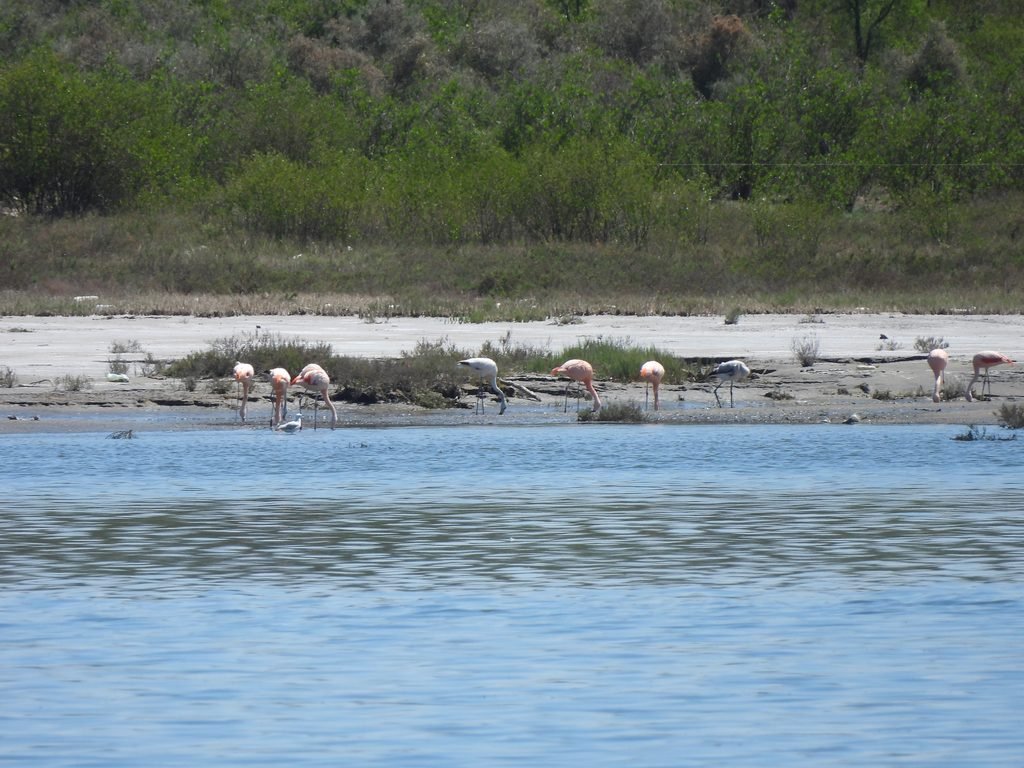
However, these birds were certainly not guaranteed. As soon as I arrived at Camping Laguna del Plata, hundreds of Chilean flamingos (Phoenicopterus chilensis) lined up and foraged along the entire coastline of the massive lake, with large flocks flying over at times.
Between the flamingos, large numbers of white-cheeked pintails (Anas bahamensis), brown-hooded gulls (Chroicocephalus maculipennis) and grey-hooded gulls (Chroicocephalus cirrocephalus) gathered. White-tufted grebes (Rollandia rolland), great grebes (Podiceps major), coscoroba swans (Coscoroba coscoroba), black-necked swans (Cygnus melancoryphus), rosy-billed pochards (Netta peposaca) and yellow-billed teals (Anas flavirostris) were also present.
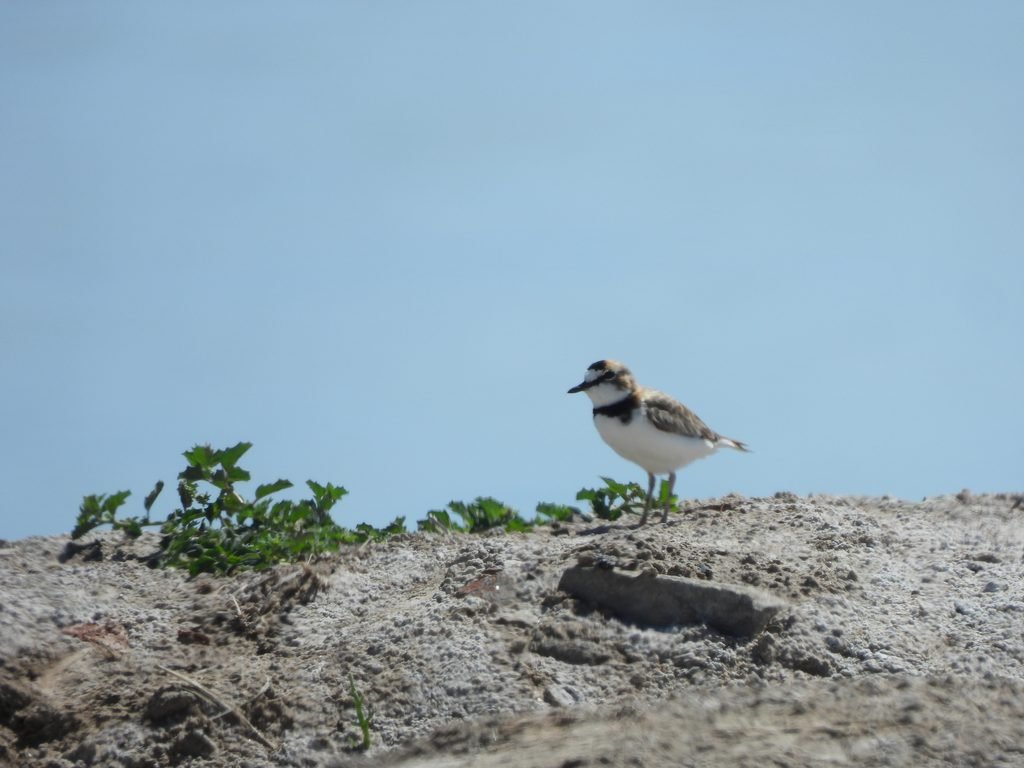
The shoreline produced good views of collared plovers (Anarhynchus collaris) as well as other distant waders. Wilson’s phalaropes (Phalaropus tricolor), greater yellowlegs (Tringa melanoleuca), lesser yellowlegs (Tringa flavipes) and Baird’s sandpipers (Calidris bairdii) foraged among the flamingo flocks.
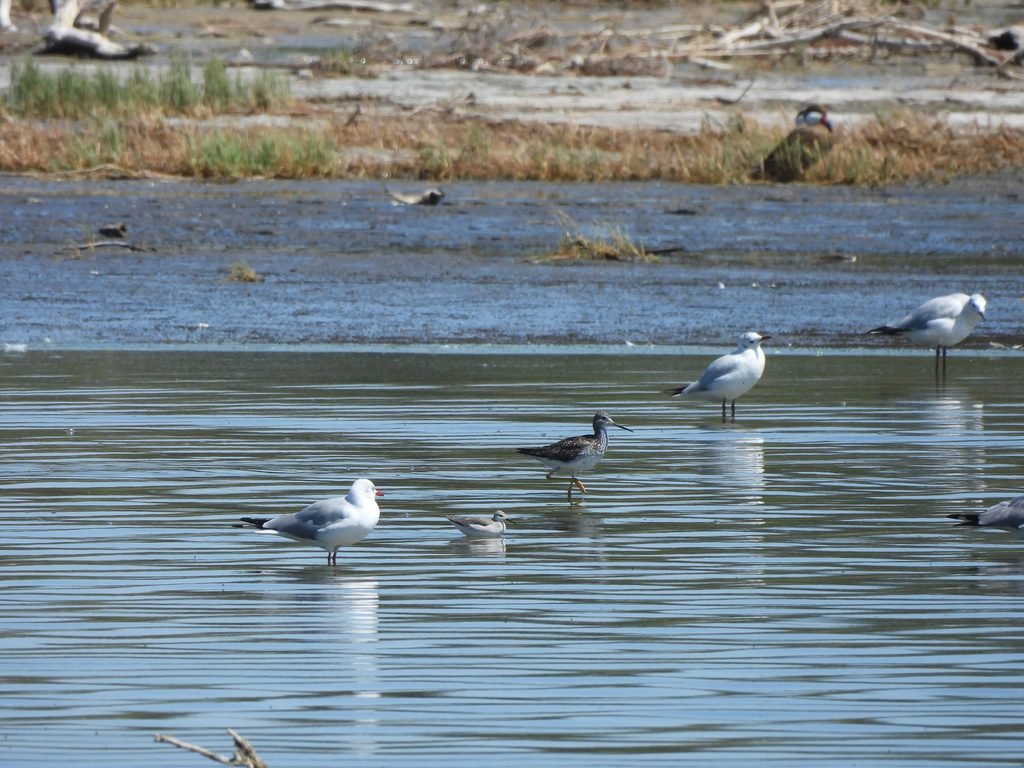
In the end, I had to leave Mar Chiquita after examining every single flamingo at close range and ruling out anything other than Chilean flamingos. Without a telescope, I could only connect with a handful of James’s flamingos (Phoenicoparrus jamesi) through pictures of distant flocks — these birds looked much paler than their Chilean counterparts. The rare Andean flamingo (Phoenicoparrus andinus) was, alas, nowhere to be seen for me that day.
Still, Córdoba offered some of the most interesting bird diversity I have experienced during my time in Argentina. I initially didn’t expect much from dry forests compared with other habitats, but instead I left stunned by the density of birds and the diversity of charismatic species to look for. A short visit of only three days produced over 140 species including well over 50 lifers — an increasingly difficult figure considering that I am progressively getting more acquainted with Argentina’s avifauna. Somehow, I left the ecoregion eager to visit it again in the future.