The central Sierras of Argentina are a puzzling montane ecoregion just on the outskirts of Córdoba. Isolated from the Andes, an important part of their avifauna is reminiscent of that of the Andean region at this latitude. Some of these organisms evolved into different forms, giving rise to several species endemic to these Sierras. I am currently visiting Córdoba Province, and because these endemics were some of my main targets, I headed to the Sierras as soon as I touched down.
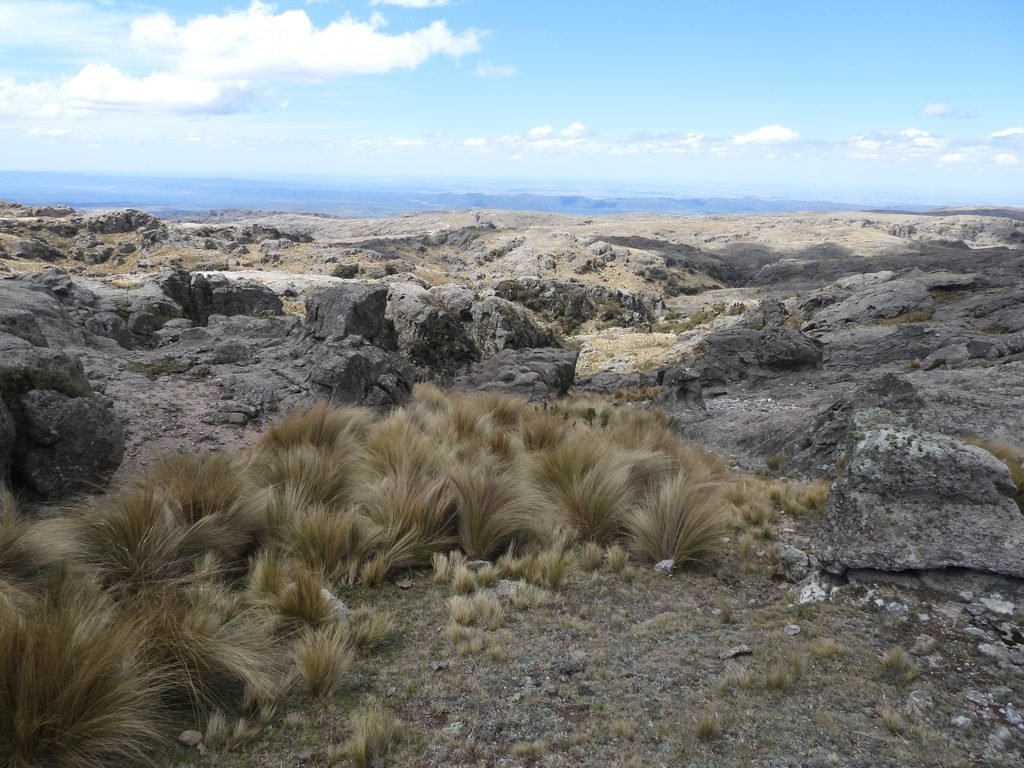
Part of these Sierras is protected under Quebrada del Condorito National Park. While I never got to enter the park properly — all the eBird spots for my targets happened to be scattered around it — my host Argentinian research team carries out a number of projects in the National Park. They speak wonders about the place. As its name suggests, Andean condors (Vultur gryphus) are numerous, and good numbers soar at close distance all around the Sierras. The research team works to establish the connection between this isolated population and the rest of the species’ distribution along the Andes. Turkey vultures (Cathartes aura), black vultures (Coragyps atratus), variable hawks (Geranoaetus polyosoma) and black-chested buzzard-eagles (Geranoaetus melanoleucus) were also abundant.
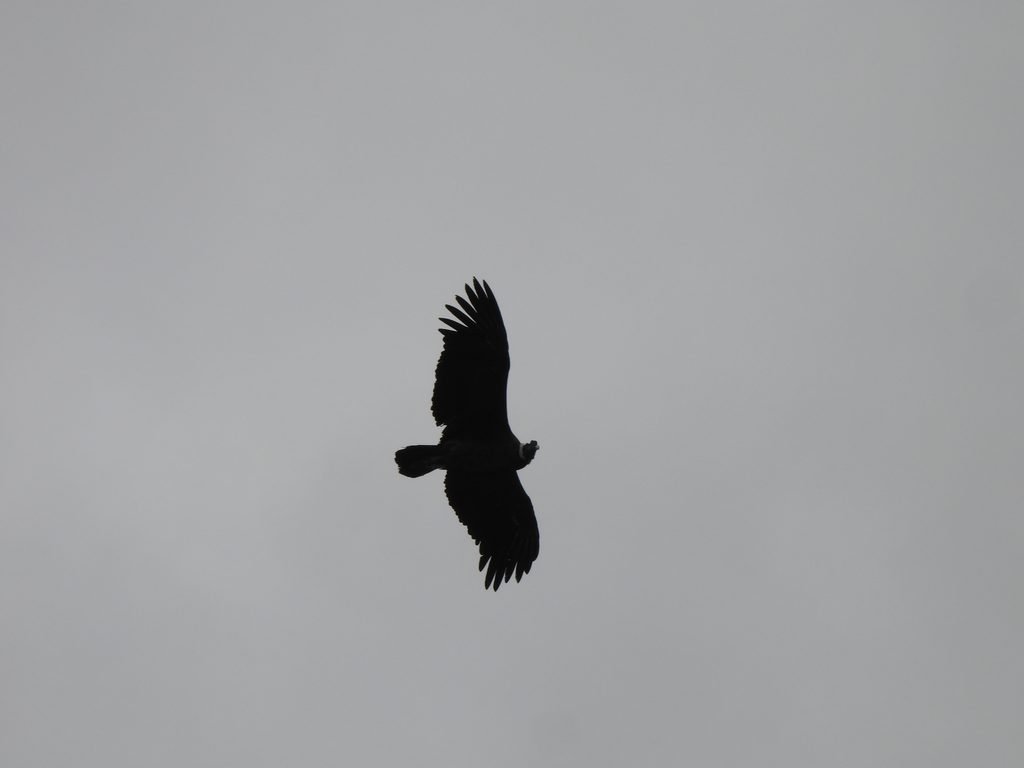
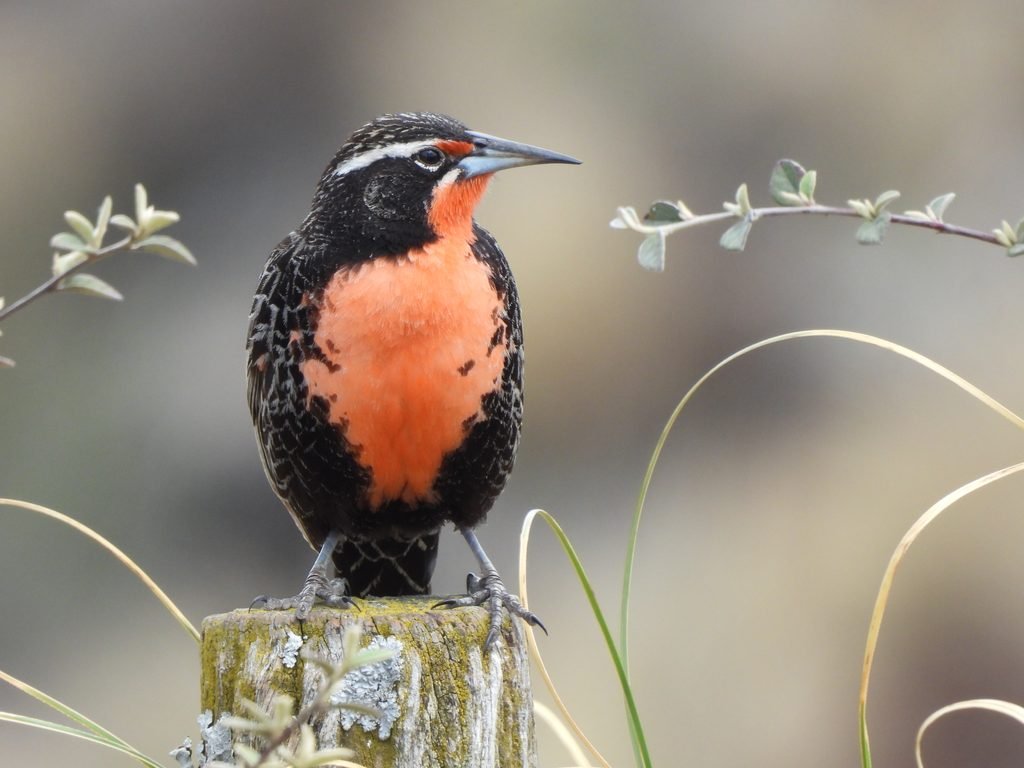
However, those magnificent vultures were not the objective of this visit. A couple of cinclodes are only found within the Sierras. Because I have most often found these water-dwelling furnariids along creeks and puddles, I tried to look for water points around the eBird spots I had saved before my visit. At my first stop in Quebrada del Batán, I was introduced to the local “Sierran” obscura form of long-tailed meadowlark (Leistes loyca). This particularly smart form is treated as a potential species in my Helm guidebook, Birds of Argentina.
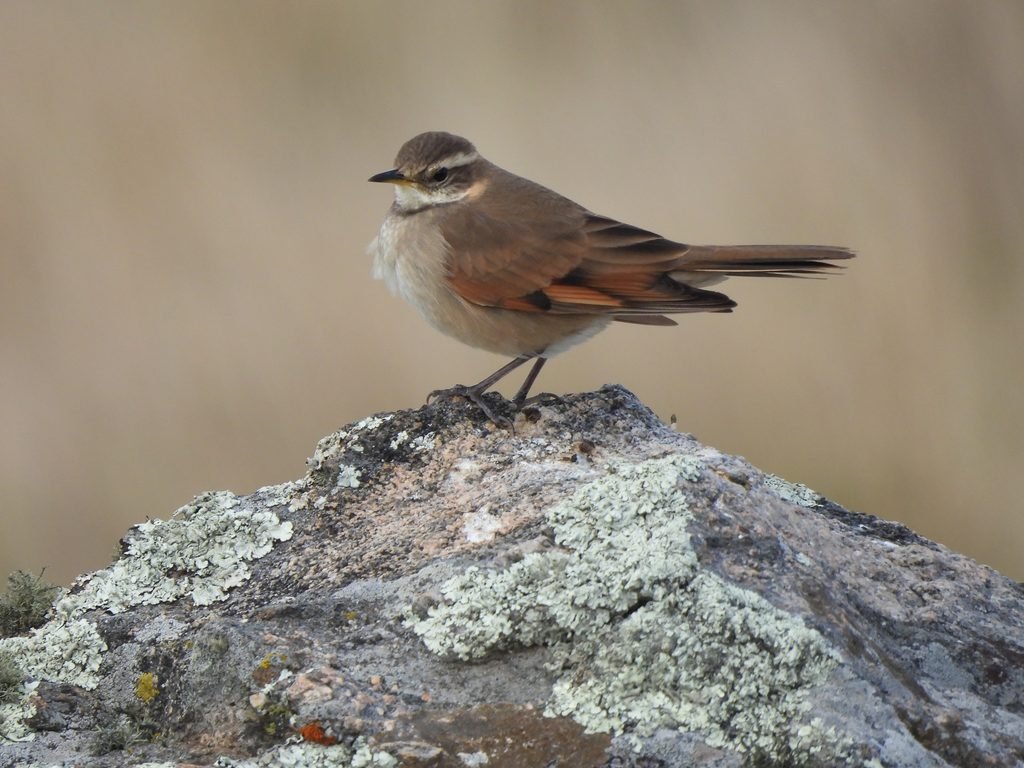
After having little success, I quickly moved on to the area of El Cóndor, on a diversion northwards towards Colima. Here I quickly encountered my first Cordoba cinclodes (Cinclodes comechingonus). A couple of these local endemics foraged on the dry slopes covered in tussock grass.
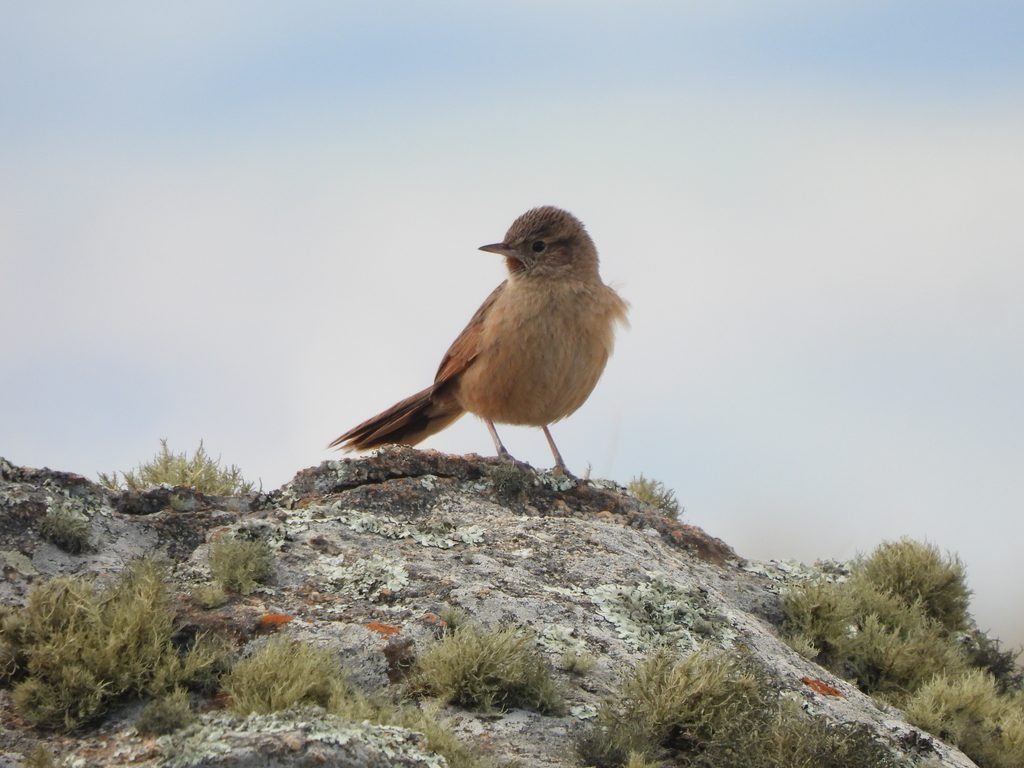
The same habitat was favoured by streak-backed canasteros (Asthenes wyatti). Several sang at different spots in the distance. At a certain point, a particularly cooperative individual started marking its territory around me, posing for some nice shots.
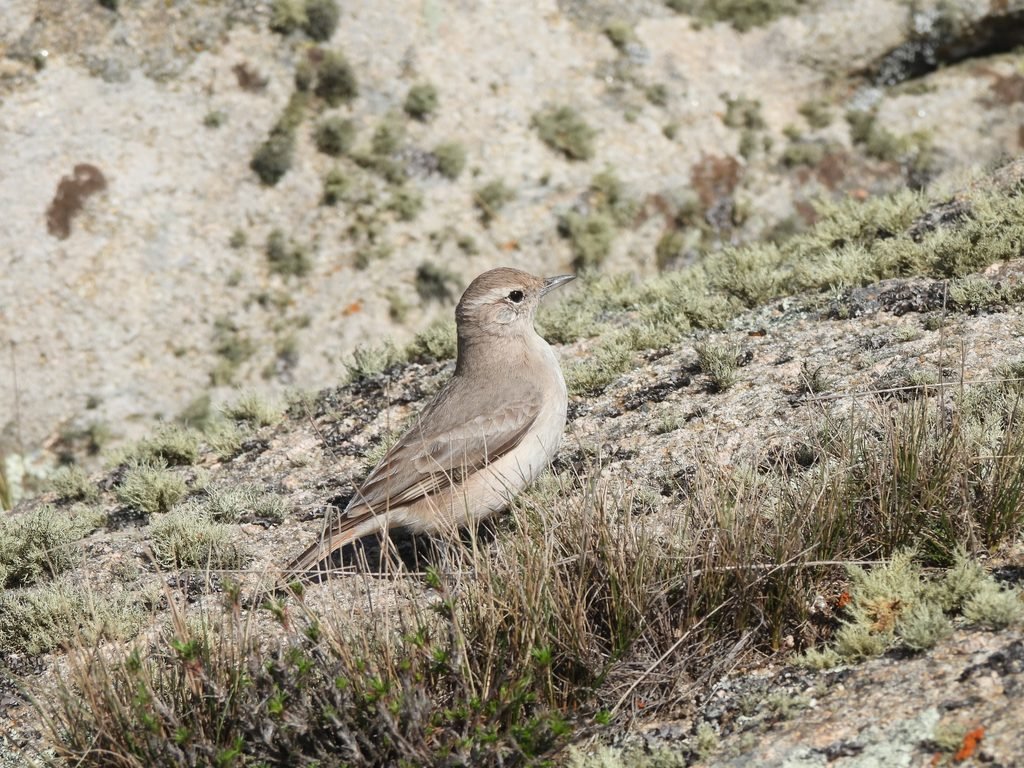
Walking around the rocky outcrops produced several plumbeous sierra finches (Geospizopsis unicolor), band-tailed sierra finches (Rhopospina alaudina), black-billed shrike-tyrants (Agriornis montanus), blue-and-white swallows (Pygochelidon cyanoleuca) and rufous-collared sparrows (Zonotrichia capensis). A red-tailed comet (Sappho sparganura) flew past like a small dart. Meanwhile, a cooperative rufous-banded miner (Geositta rufipennis) foraged very close to my feet, at times calling with the distinctive buzzing sound of the local so-called “buzzing” rufipennis form of this species.
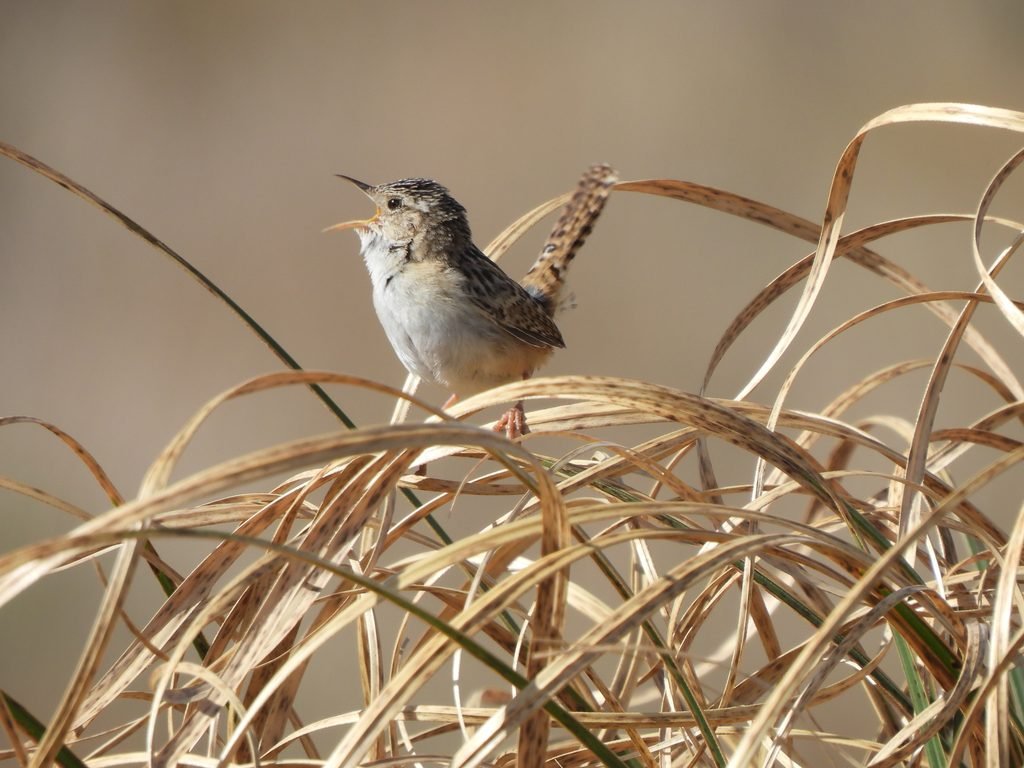
While the wind filled the soundscape throughout the whole day, I was glad to connect with a distant olive-crowned crescentchest (Melanopareia maximiliani) of the “Sierran” argentina form. Unlike this species, some grass wrens (Cistothorus platensis) put on a show in the low grasses among all the singing birds.
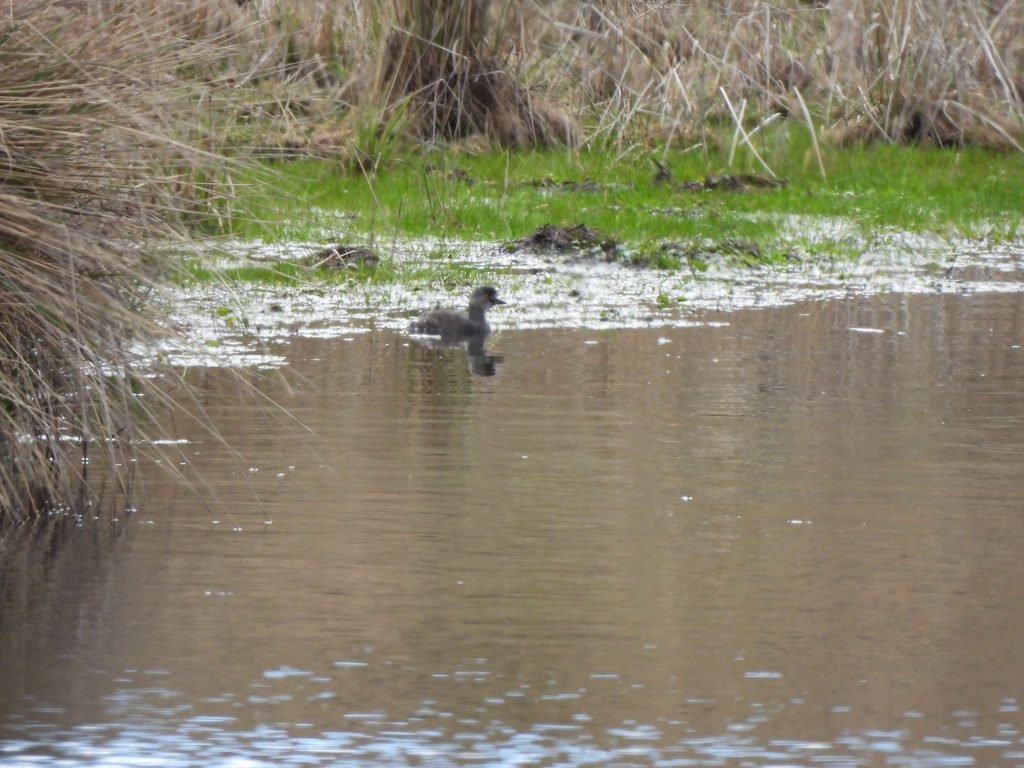
I resumed my search for creeks and water bodies, looking for more cinclodes. I continued driving along the main road a couple of kilometres westwards, until I crossed a river and reached a small lagoon just by the road. Besides spectacled tyrants (Hymenops perspicillatus) and a group of yellow-billed pintails (Anas georgica), I was thrilled to find an unobtrusive least grebe (Tachybaptus dominicus) standing still at the vegetated end of the lagoon. Not only is this location just beyond the very southern end of its distribution, but the lagoon was also an unusual setting for this tropical species. I noticed there were no previous records in these Sierras on eBird.
Then I started driving back east, stopping at one of the several restaurants along the road, initially aiming to admire some Andean condors flying very low. However, Parador La Pampilla featured a small creek where I hit the jackpot. Walking past a fallen fence upriver shortly produced all the cinclodes of these Sierras.
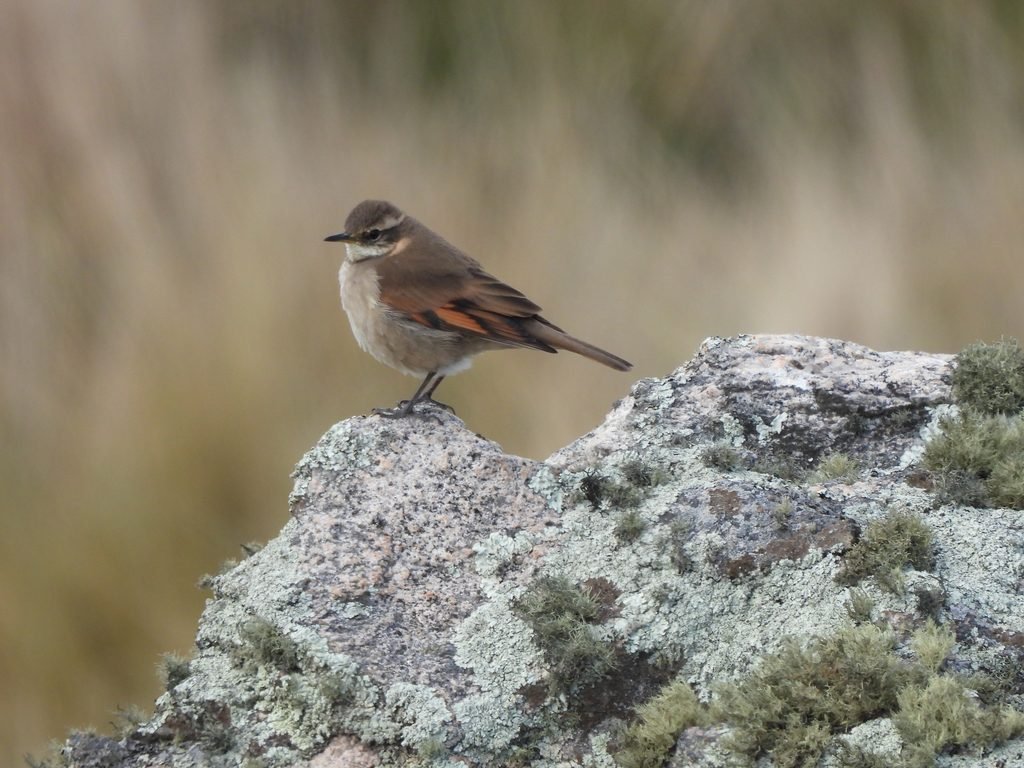
First, the awaited Olrog’s cinclodes (Cinclodes olrogi) appeared in the form of a bird that kept flying away upriver, as I had experienced with other cinclodes species along other creeks and coastlines — unlike the Córdoba cinclodes I had seen earlier that day. Olrog’s cinclodes looked much more similar to other Argentinian cinclodes species, featuring a rusty-coloured base to the primaries and an overall chocolate colour that gives it its Spanish name, “remolinera chocolate”.
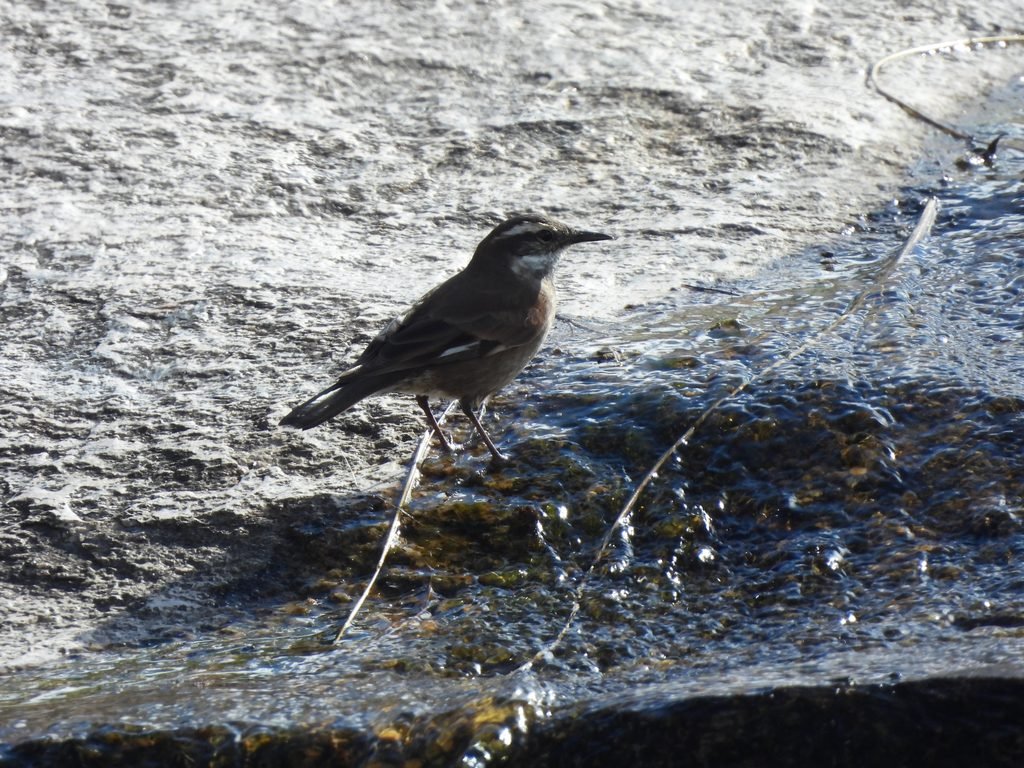
At a certain point, a second bird came into action, first foraging farther upriver and eventually scaring the Olrog’s cinclodes away. This second bird turned out to be a white-winged cinclodes (Cinclodes atacamensis), the third of the set and the only member of the genus seen that is not endemic to these Sierras. Although quite similar to Olrog’s cinclodes, the white-winged cinclodes has a white base to the primaries. Rather than chocolate, this bird had a rich rusty-brown colour.
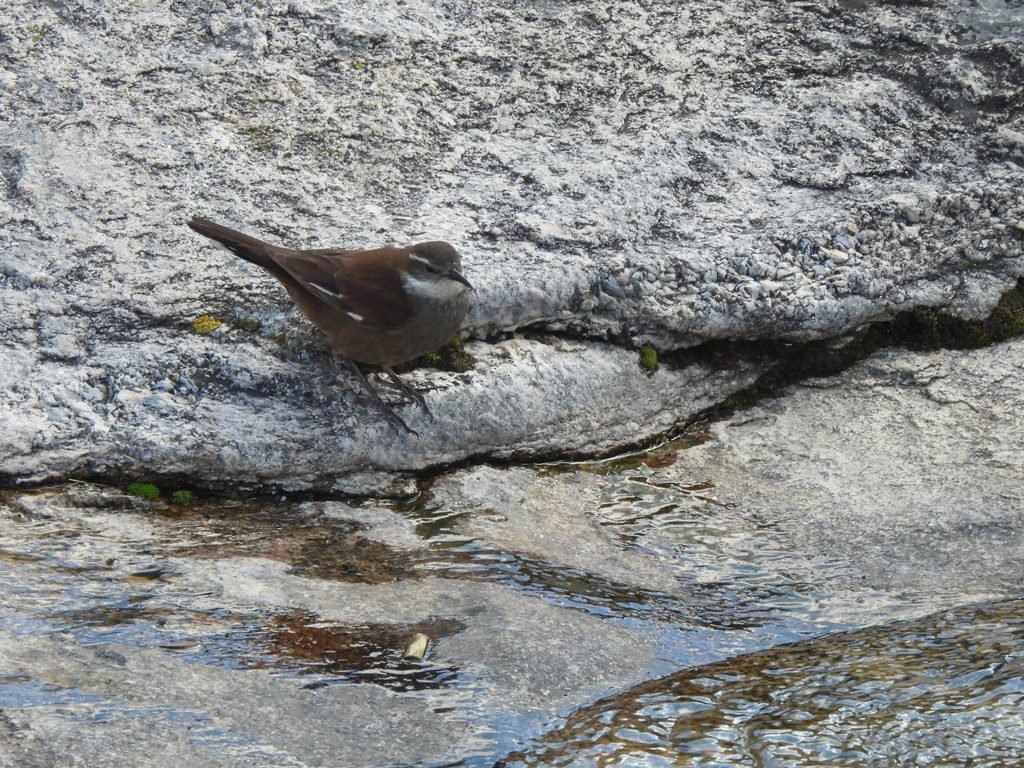
As I walked back to the car, I bumped into a last-minute Córdoba cinclodes and several long-tailed meadowlarks in the vegetation bordering the picturesque creek. My short visit only provided an overview of the Sierran diversity, but I got gripped by the scenery and biodiversity of this montane oasis. Hopefully, next time I will have the time to explore Quebrada del Condorito National Park and get to know this place in more depth.