August has been a month of big changes this year. Not only did I come back from a long trip in South Africa, but I also moved to Patagonia, radically switching from boreal summer to austral winter as I get acquainted with the Neotropical avifauna and a new period in Argentina. The plan is to go back to Europe already next year, which brings a whole new start for this challenge in 2026, where I am trying to sight and report a different bird species every day.

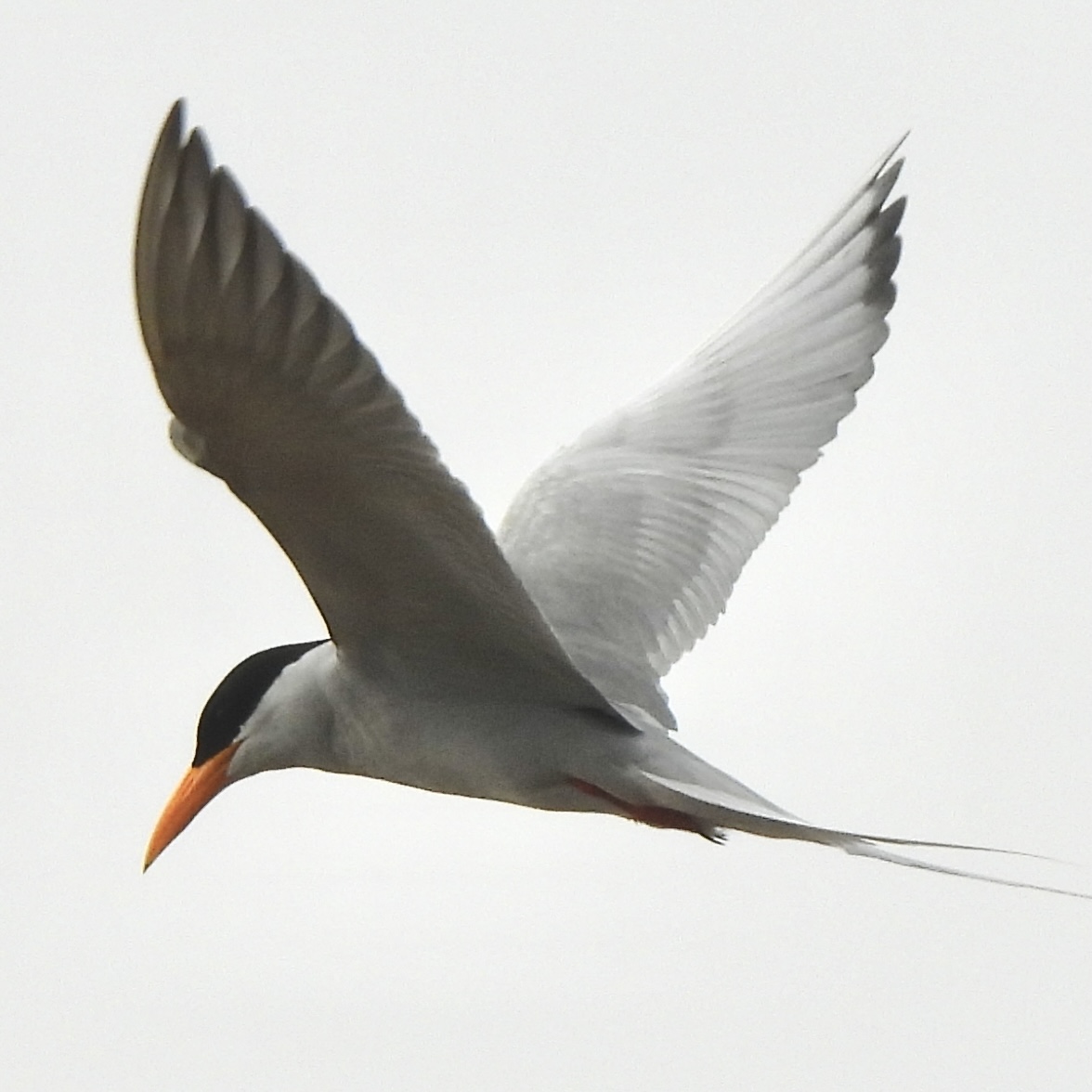
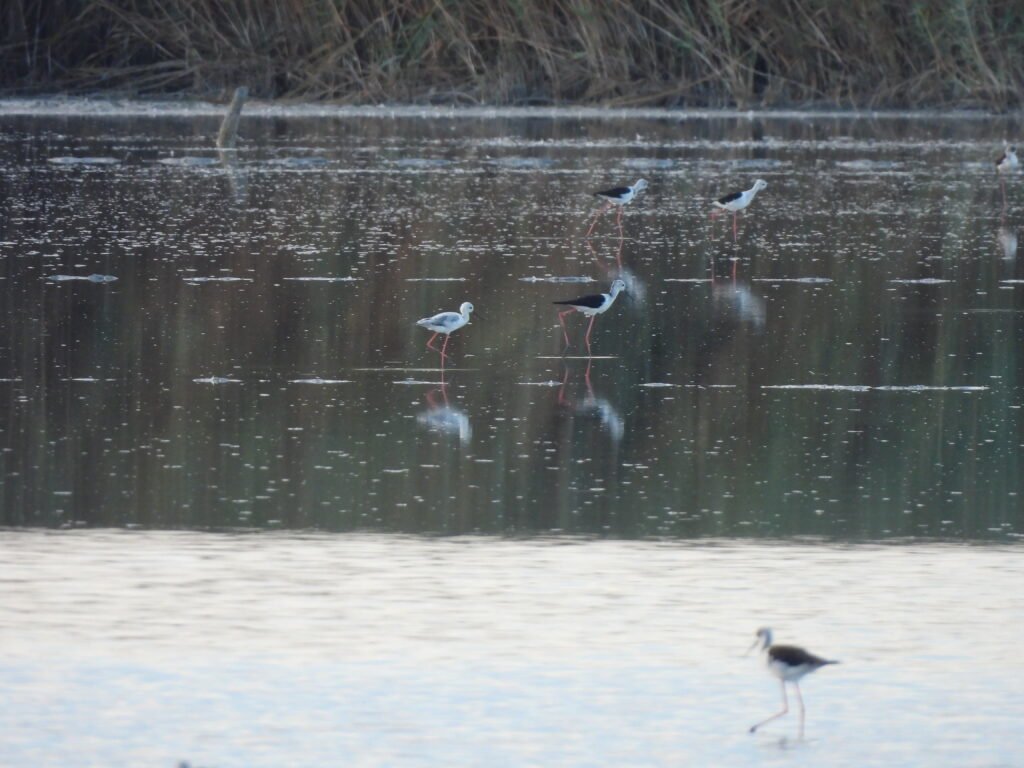
The time spent at home involved balancing work duties at Font Roja Natural Park and Alcoi — where I connected with the usual robins (Erithacus rubecula), crested tits (Lophophanes cristatus), bee-eaters (Merops apiaster) and common swifts (Apus apus) and pallid swifts (Apus pallidus) already on the move, and among the last singing western Bonelli’s warblers (Phylloscopus bonelli) — and spending quality time with family and friends. Some beach outings offered little terns (Sternula albifrons), common terns (Sterna hirundo) and Sandwich terns (Thalasseus sandvicensis) and Audouin’s gulls (Ichthyaetus audouinii), plus a welcome Eurasian oystercatcher (Haematopus ostralegus) off Dénia. Luckily, I also found some time to visit the heat-barren wetlands south of Alicante. My friend Mihika Sen visited from Helsinki and we reached Santa Pola, where several black terns (Chlidonias niger) rested among the usual suspects at El Pinet colony, while some rollers (Coracias garrulus) displayed in nearby fields. Plus, the typical dunlins (Calidris alpina), curlew sandpipers (Calidris ferruginea) and little stints (Calidris minuta) of passage were present in El Hondo, as well as a Temminck’s stint (Calidris temminckii). The sight of a leucistic black-winged stilt (Himantopus himantopus) among the waders was very nice.
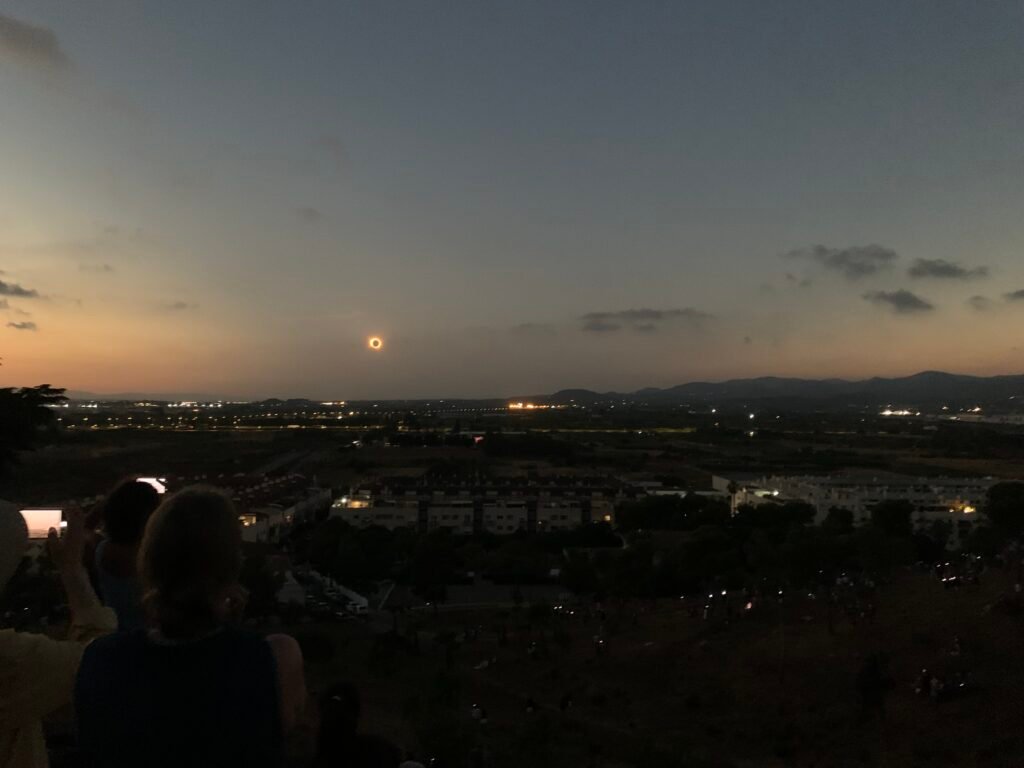
However, the biggest highlight this month has to be the total solar eclipse on 12th August. Darío Gijón and I drove a couple of hours north to enjoy this astonishing phenomenon. While the partial phase was exciting, hundreds of people watching the eclipse from the castle at El Puig de Santa Maria became emotional during some 70 seconds when everything got dark and only an orange halo brightened the sky. Nothing I could have heard about eclipse totality prepared me for this fantastic show, and I truly cannot find the words to describe the magic and madness of the moment. I only hope I will get to experience this again.
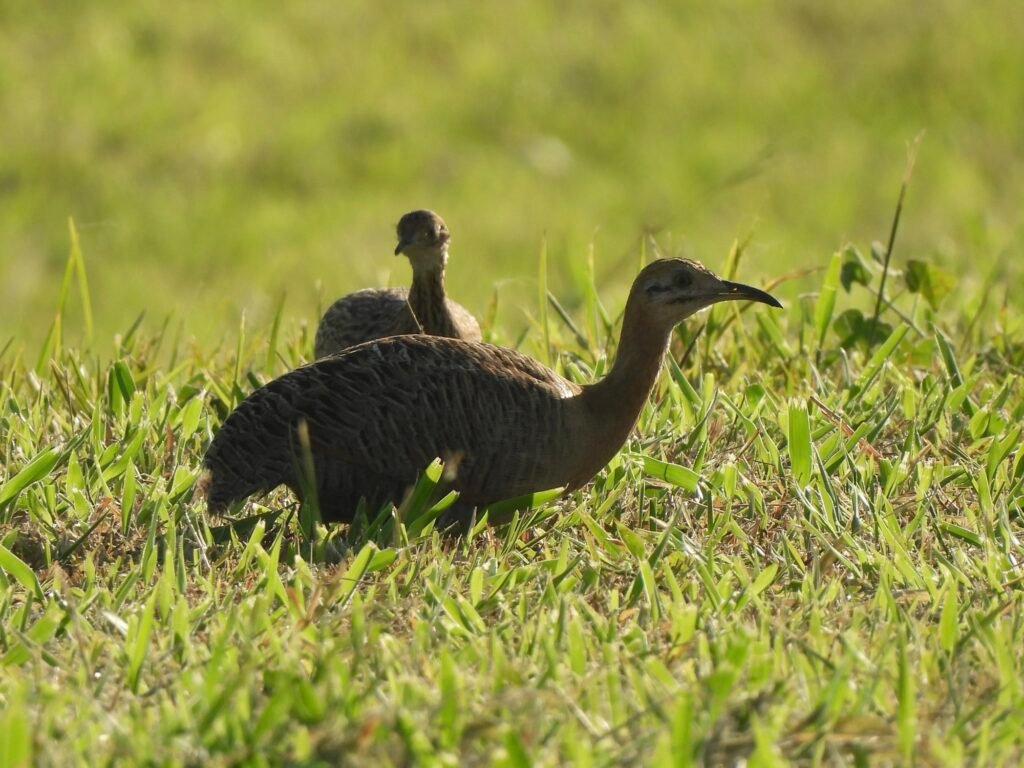
Then, the whole journey towards the Americas began. An inconvenient timing meant that I spent a whole morning in Barajas Airport in Madrid — where I saw some magpies (Pica pica) while waiting — and a whole night in Santa Cruz de la Sierra, in Bolivia. In exchange, I got to experience a couple of hours after sunrise walking the fantastic grassland just outside the airport. Not only did I connect with my first Neotropical birds, but I enjoyed great views of greater rheas (Rhea americana), two tinamous and some other 30 species (read about it here). Because the white-bellied nothura (Nothura boraquira) is not found in Argentina, unlike all the other species I found, I think that was the safest choice.
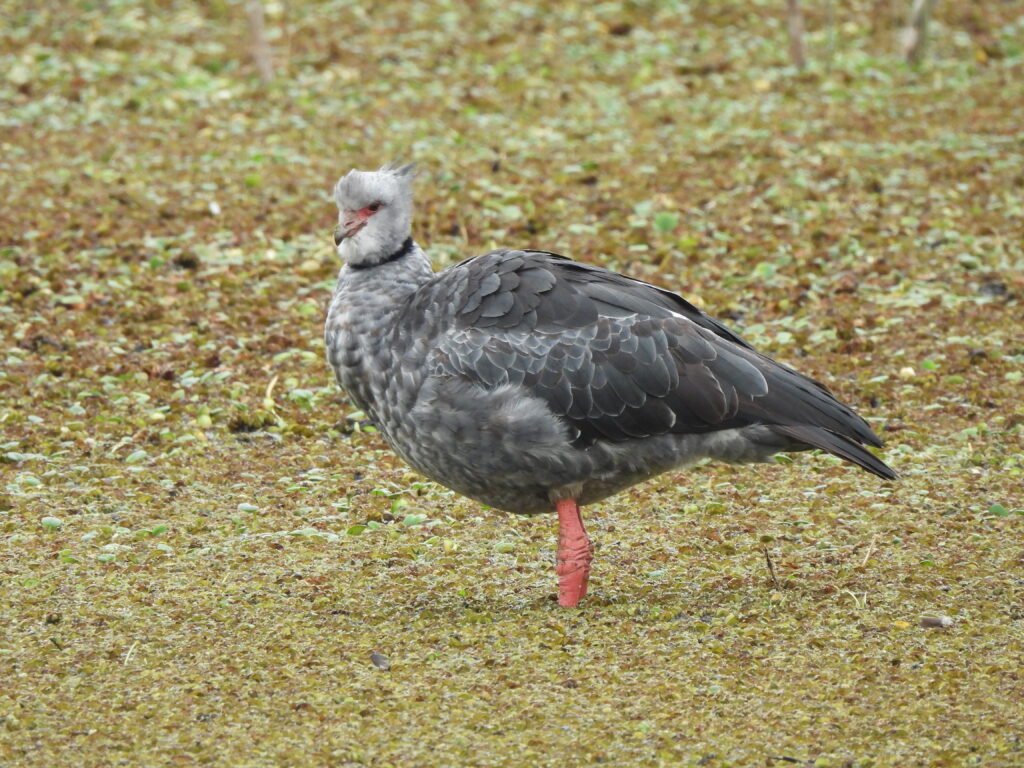
Right on arrival in Argentina, I set base in Buenos Aires and dropped my luggage at a convenient hostel in the city center for a few days. Reserva Ecológica Costanera Sur is located some 20 minutes away from the hostel, and I had a great time exploring the different lagoons and groves and finding the local specialties. This includes masked duck (Nomonyx dominicus), grey-throated warbling finch (Microspingus cabanisi), black-and-rufous warbling finch (Poospiza nigrorufa) and the charismatic southern screamer (Chauna torquata). However, I chose species that I was not targeting but was glad I saw, including diademed tanager (Stephanophorus diadematus) and green-winged saltator (Saltator similis).
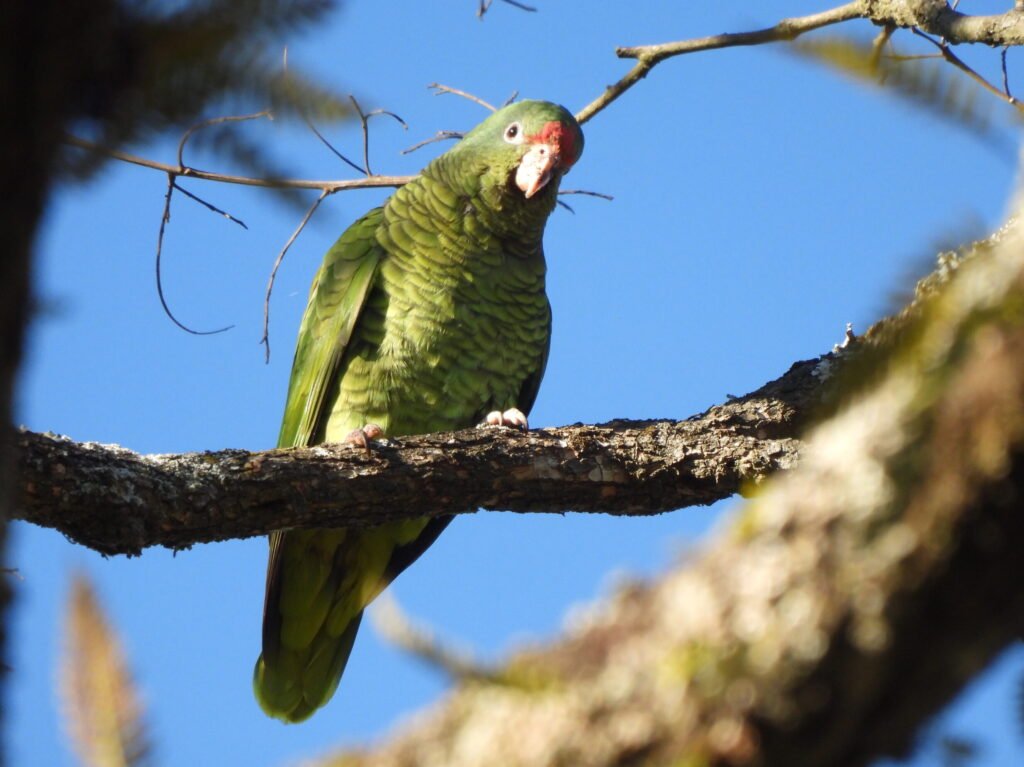
Then I packed light and left for Salta for a few days. I got completely gripped by Northwest Argentina while walking around town and exploring the neighboring yungas on foot and by public transport. My biggest target took some wet socks while walking a picturesque stream but performed fantastically: the rufous-throated dipper (Cinclus schulzii) was arguably the bird of the month, although finding my first-ever torrent duck (Merganetta armata) and Andean condor (Vultur gryphus) on the same walk made it all even more intense (read more about it here). Two other major targets also obliged on different days: the yungas sparrow (Rhynchospiza dabbenei) in an urban park in Salta and the Tucuman amazon (Amazona tucumana) in nearby San Lorenzo, where I also got brief views of a male slender-tailed woodstar (Microstilbon burmeisteri).
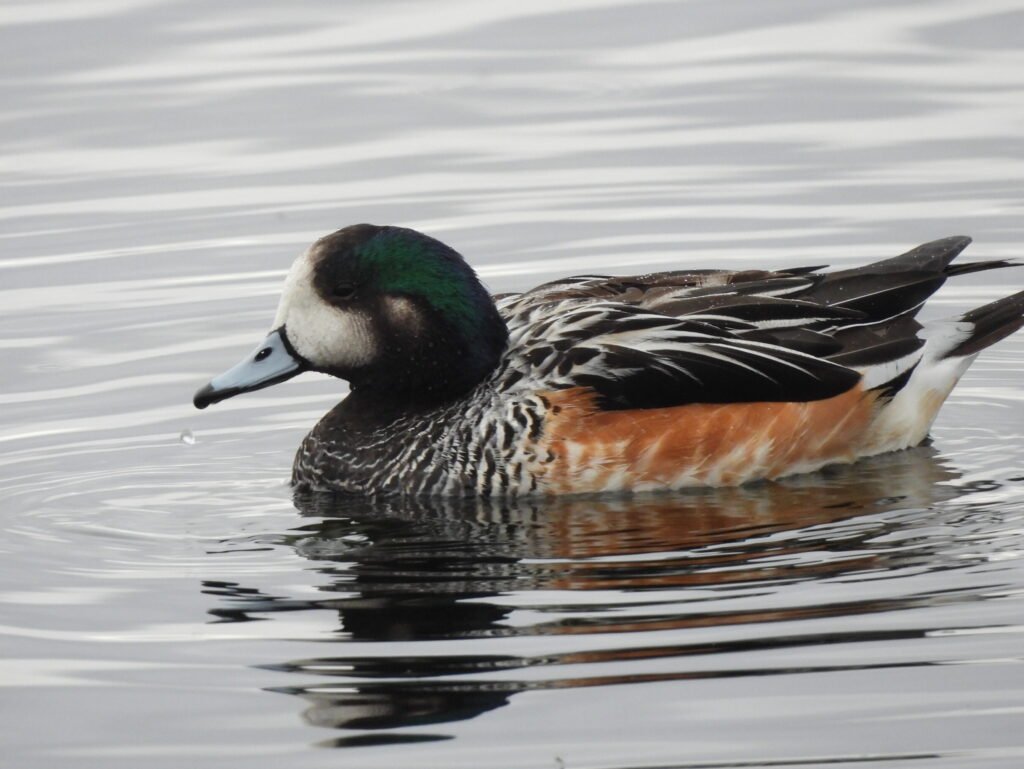
I eventually reached San Carlos de Bariloche, the city where I will be based for the following months. I am afraid not a lot of birds occur in Bariloche, especially so in winter. And indeed, winter is very present. I have been having the most rainy, snowy, cold days, at times making it impossible to go anywhere. Still, I managed to find myself a couple of local spots in the city center where I now live, and walked on different days along Lake Huapi, where good numbers of Chiloe wigeon (Mareca sibilatrix) or great grebes (Podiceps major) swim close to foraging dark-faced ground tyrants (Muscisaxicola maclovianus) and long-tailed meadowlarks (Leistes loyca). Short walks under the pouring rain somehow offered heard-only black-throated huet-huet (Pteroptochos tarnii) in Llao Llao and a completely unexpected Des Murs’s wiretail (Sylviorthorhynchus desmursii) quite close to home towards Cerro Otto.
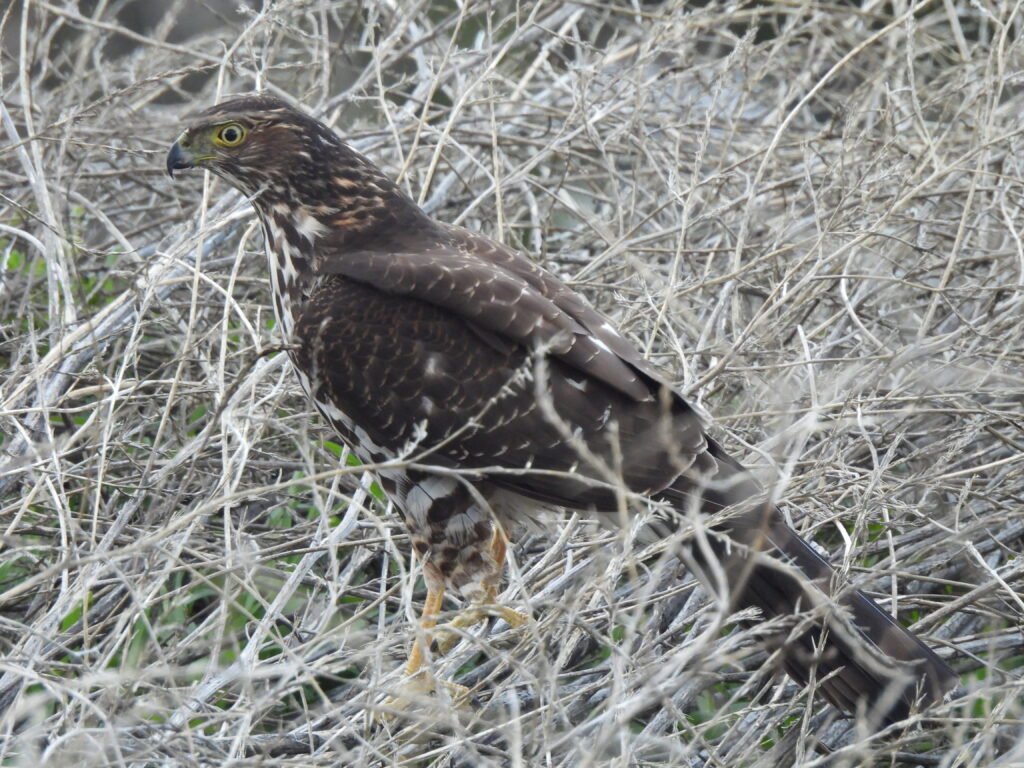
Only on the last day of the month did the rain stop. Leaving late from work was not the best of options, but I was surprised to bump into a juvenile Chilean hawk (Astur chilensis) right next to a viewpoint a few steps away from work. Finding unexpected birds seems the best formula to survive the challenge while in Bariloche. I have thus far connected with just over 40 species of birds in and around the city — which may showcase the difficult viability of this challenge over the following months, considering I must report a different species every day.
Anyway, here is the archive of the birds of the day for August 2026. As always, birds are reported in scientific, English and, in this case, either Valencian (in the local variety of my hometown, as requested for the challenge) or Argentinian Spanish names, together with the location of each sighting.
- 1 Aug 2026: Cape grassbird (Sphenoeacus afer) (Rooi-Els, South Africa)
- 2 Aug 2026: Black-headed gull (Chroicocephalus ridibundus) gavina riallera (València, Spain)
- 3 Aug 2026: European robin (Erithacus rubecula) pitroig (Alcoi, Spain)
- 4 Aug 2026: Mistle thrush (Turdus viscivorus) griva (Font Roja National Park, Spain)
- 5 Aug 2026: Crested tit (Lophophanes cristatus) capellana (Font Roja National Park, Spain)
- 6 Aug 2026: Eurasian moorhen (Gallinula chloropus) polla d’aigua (Alcoi, Spain)
- 7 Aug 2026: Black tern (Chlidonias niger) fumarell negre (Salines de Santa Pola Natural Park, Spain)
- 8 Aug 2026: Little tern (Sternula albifrons) mongeta (El Campello, Spain)
- 9 Aug 2026: Western Bonelli’s warbler (Phylloscopus bonelli) mosquiter pàl·lid (Serra Mariola National Park, Spain)
- 10 Aug 2026: Green sandpiper (Tringa ochropus) xerlovita (Alguazas, Spain)
- 11 Aug 2026: European bee-eater (Merops apiaster) abellerol (Benilloba, Spain)
- 12 Aug 2026: Grey heron (Ardea cinerea) agró blau (El Puig de Santa Maria, Spain)
- 13 Aug 2026: Common swift (Apus apus) falciot negre (Alcoi, Spain)
- 14 Aug 2026: Common tern (Sterna hirundo) xatrac d’albufera (Dénia, Spain)
- 15 Aug 2026: Dunlin (Calidris alpina) territ variant (El Fondó Natural Park, Spain)
- 16 Aug 2026: Eurasian magpie (Pica pica) blanca (Madrid, Spain)
- 17 Aug 2026: White-bellied nothura (Nothura boraquira) perdiz chaqueña (Santa Cruz de la Sierra, Bolivia)
- 18 Aug 2026: Diademed tanager (Stephanophorus diadematus) frutero azul (Buenos Aires, Argentina)
- 19 Aug 2026: Rufous-throated dipper (Cinclus schulzii) mirlo de agua (Salta, Argentina)
- 20 Aug 2026: Tucuman amazon (Amazona tucumana) loro alisero (San Lorenzo, Argentina)
- 21 Aug 2026: Yungas sparrow (Rhynchospiza dabbenei) cachilo vallisto (Salta, Argentina)
- 22 Aug 2026: Brown-capped whitestart (Myioborus brunniceps) arañero corona rojiza (Salta, Argentina)
- 23 Aug 2026: Green-winged saltator (Saltator similis) pepitero verdoso (Buenos Aires, Argentina)
- 24 Aug 2026: Chiloe wigeon (Mareca sibilatrix) pato overo (Bariloche, Argentina)
- 25 Aug 2026: Dark-faced ground tyrant (Muscisaxicola maclovianus) dormilona cara negra (Bariloche, Argentina)
- 26 Aug 2026: Great grebe (Podiceps major) macá grande (Bariloche, Argentina)
- 27 Aug 2026: Neotropic cormorant (Nannopterum brasilianum) biguá (Bariloche, Argentina)
- 28 Aug 2026: Long-tailed meadowlark (Leistes loyca) loica (Bariloche, Argentina)
- 29 Aug 2026: Black-throated huet-huet (Pteroptochos tarnii) huet-huet (Bariloche, Argentina)
- 30 Aug 2026: Des Murs’s wiretail (Sylviorthorhynchus desmursii) colilarga (Bariloche, Argentina)
- 31 Aug 2026: Chilean hawk (Astur chilensis) peuquito (Bariloche, Argentina)