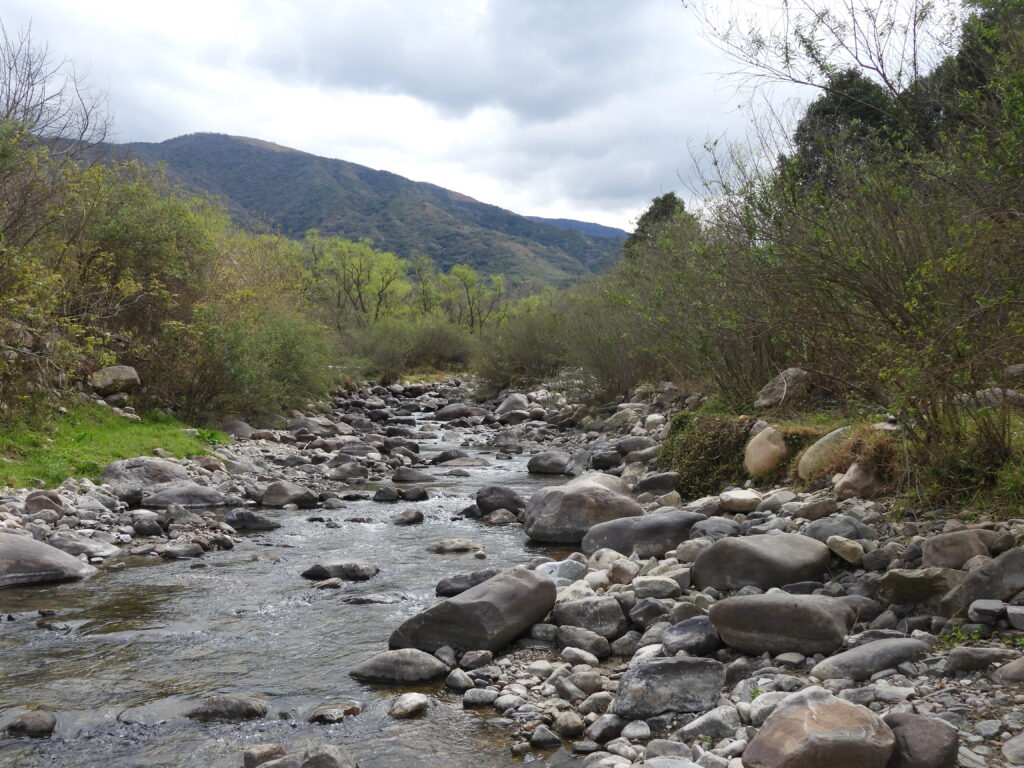
I am currently in Northwest Argentina, right at the foot of the Andes, exploring the surroundings of the city of Salta. Here, the humid Atlantic winds bump into the Andes range and generate a cloud forest full of endemisms, the yungas. While the idea of exploring these cloud forests was attractive, there was a bird that really drew my attention and eventually encouraged me to come for a visit. Therefore, after a whole first morning in town hiking a forest trail, I took the urban bus 7C from Salta towards Rotonda de Castellanos. I would spend the whole evening looking for my target in Arroyo Castellanos, a scenic creek surrounded by yungas-covered hills.
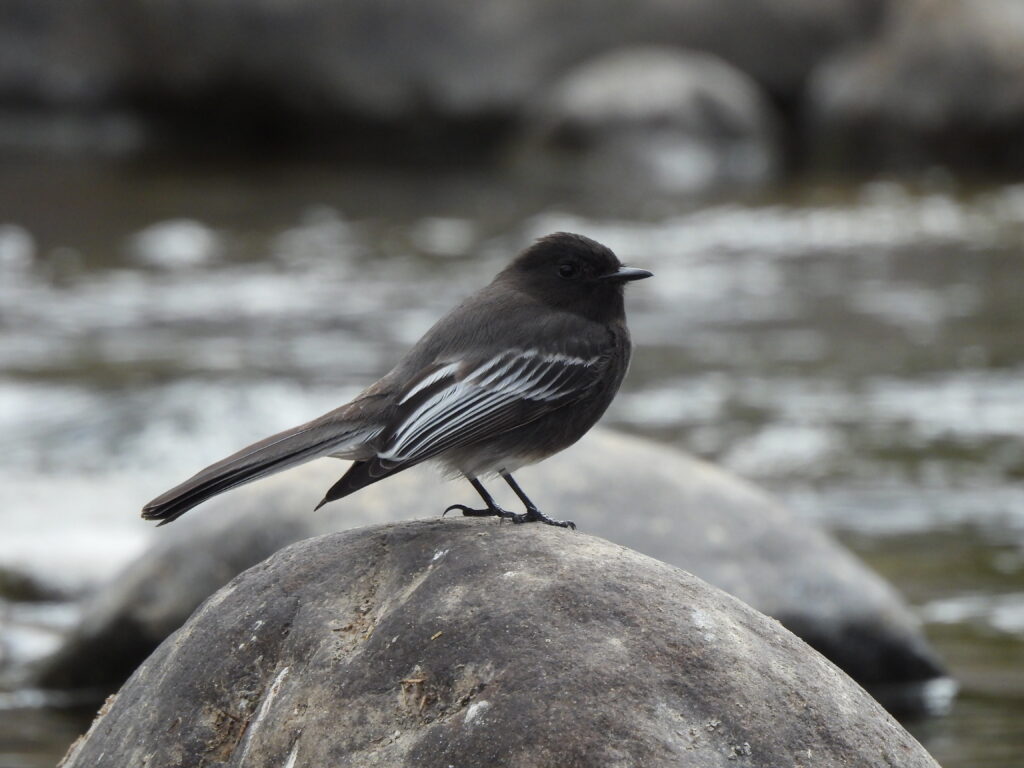
As soon as I arrived, the first birds started calling my attention. Black phoebes (Sayornis nigricans) seemed to control a small territory just down the bridge where I started my hike.
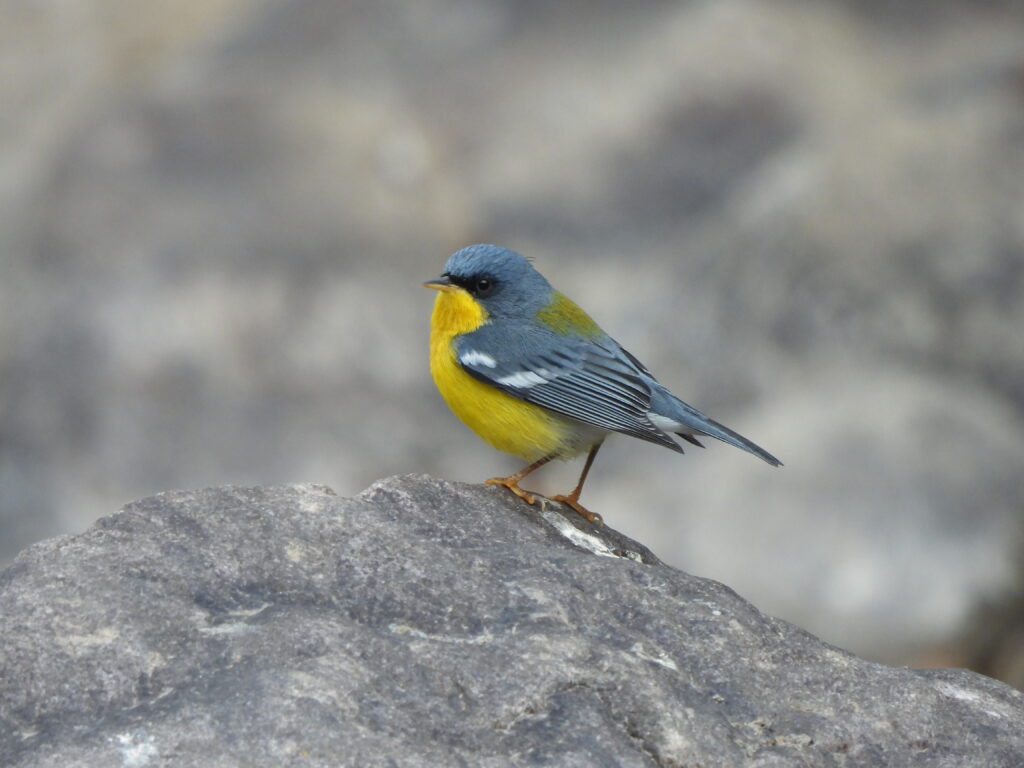
The omnipresent southern house wrens (Troglodytes musculus), tropical parulas (Setophaga pitiayumi) and yungas specialists brown-capped whitestarts (Myioborus brunniceps) and two-banded warblers (Myiothlypis bivittata) were all very numerous. Not only were they foraging on most trees, but they also came down to drink at the river, offering terrific views as I hopped from rock to rock upriver.
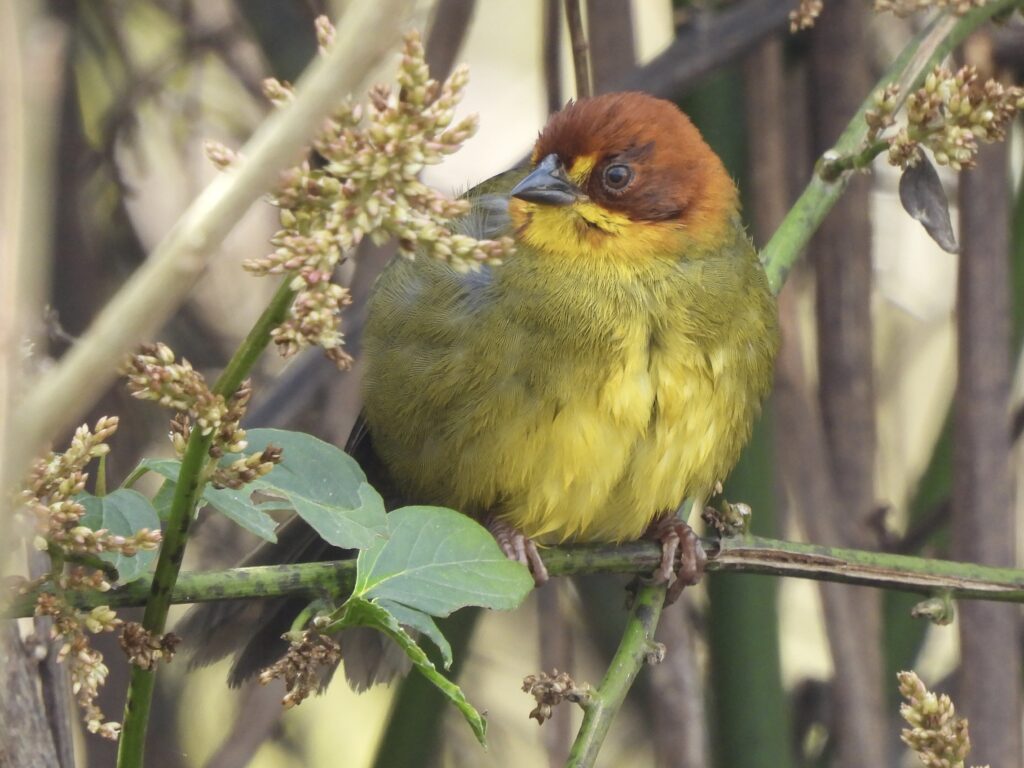
Some Arremon-like calls caught my attention. I was amazed to find a couple of cooperative fulvous-headed brushfinches (Atlapetes fulviceps) that gave great views. Foraging with them, a more elusive white-browed brushfinch (Arremon torquatus) kept calling. Just a few bushes ahead, a pair of moss-backed sparrows (Arremon dorbignii) completed the trio of ‘cerqueros‘ that can be found in the region, all three brushfinch species with very smart looks.
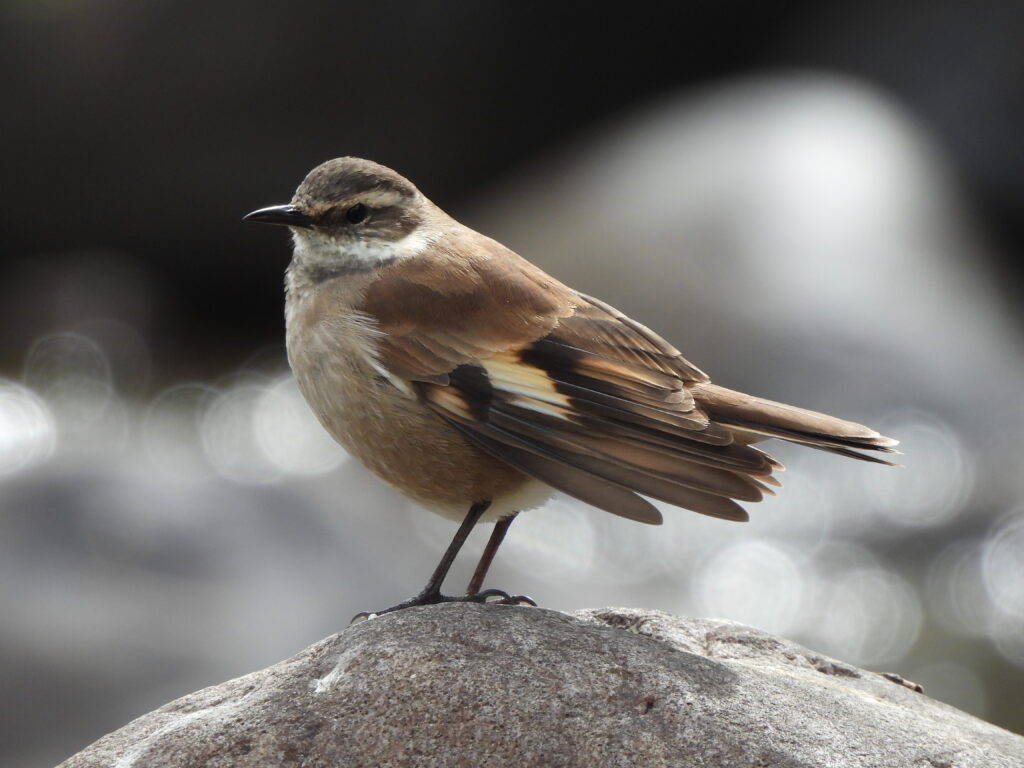
The river was inhabited by several cream-winged cinclodes (Cinclodes albiventris), each patrolling a stretch of the creek. Some of these birds were incredibly tame, while others proved elusive and skittish — those made me skip a heartbeat a couple of times, initially thinking they might have been the bird I was looking for.
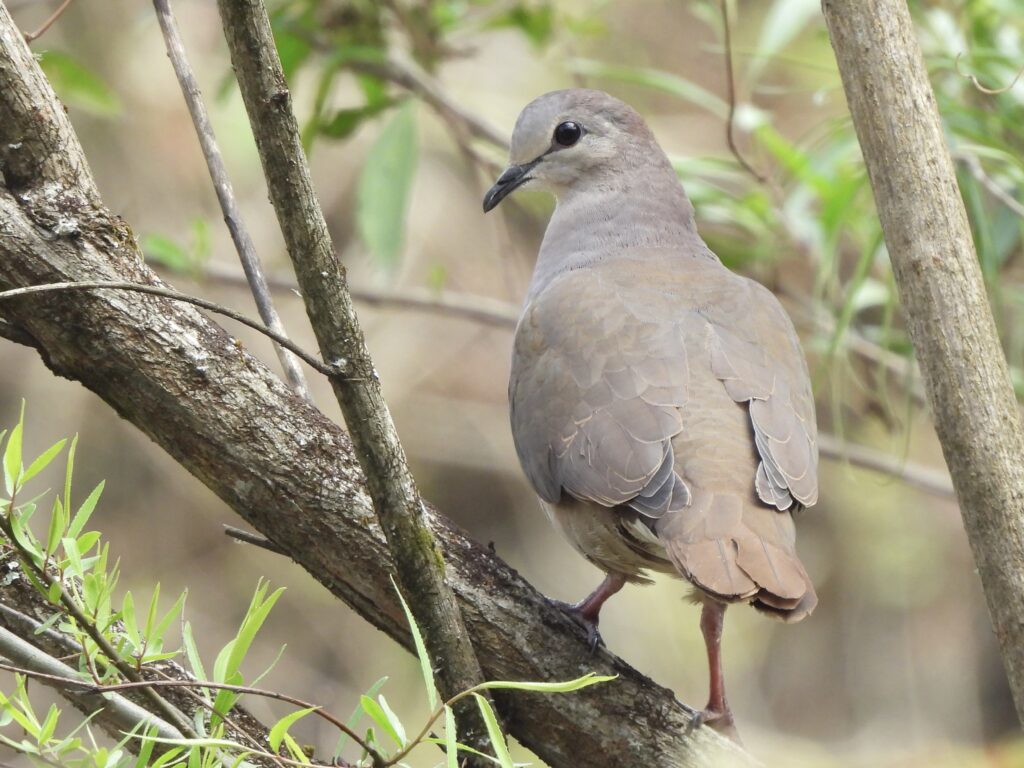
A number of birds approached the bushes by the river, so I hid and waited a couple of times. This provided awesome views of yungas dove (Leptotila megalura) and highland elaenia (Elaenia obscura), both obliging habitat specialists. In addition, I also had nice views of ultramarine grosbeak (Cyanoloxia brissonii), yellow-billed tit-tyrant (Anairetes flavirostris), rufous-bellied thrush (Turdus rufiventris), chiguanco thrush (Turdus chiguanco) and sayaca tanager (Thraupis sayaca). The loud plush-crested jays (Cyanocorax chrysops) also came and checked me out, while a calling yungas guan (Penelope bridgesi) remained hidden in the forest.
The water flowed mostly as rapids in the creek, and it was not always easy to go ahead. However, my wanted bird did not show up, so I kept going. At a certain point, I reached a fairly small area with slow water, where a couple of yellow-billed teals (Anas flavirostris) and I were surprised to bump into each other. As I saw the teals fly away upriver, I noticed a couple of distant large birds also flying upriver shortly afterward, and then stopping behind some rocks.
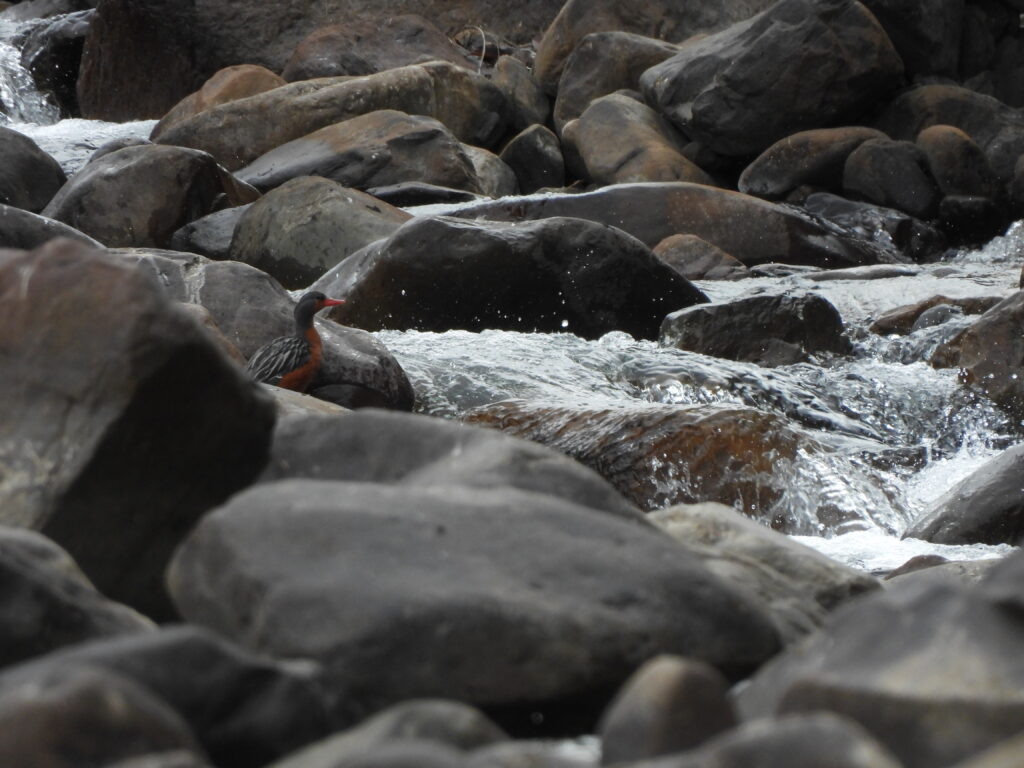
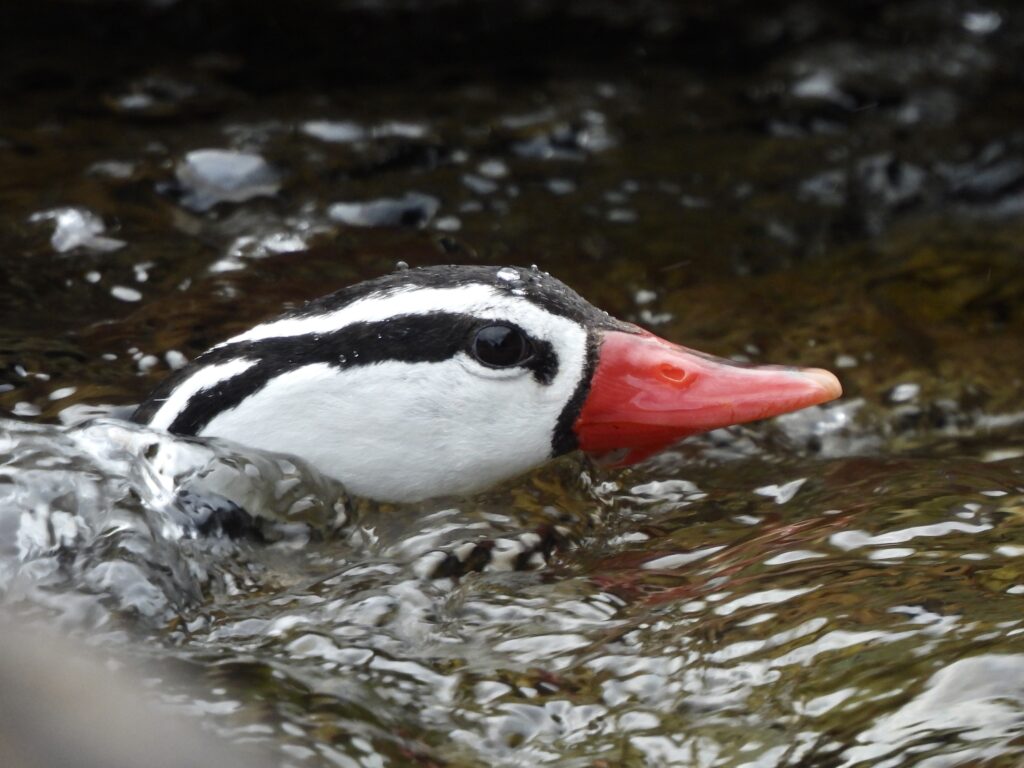
I was extremely excited to find a pair of torrent ducks (Merganetta armata) and observe their behavior for a while. First, I noticed the female looking at me from a distance, right after they landed on a waterfall. As I got closer to get a better look, I could not understand where they had gone. Then I noticed a small, bright red bill showing up behind the very rock I was sitting on. The male was checking me out in complete silence, swimming quickly to stay still and remain concealed while looking for any chance to swim away. Having this dream bird (which I was certainly not looking for today) just a couple of meters away was incredible. After taking some pictures, I walked away to give the duck some distance for a couple of seconds, and as I turned back again, it swam an incredible distance down the rapids! What a beast.
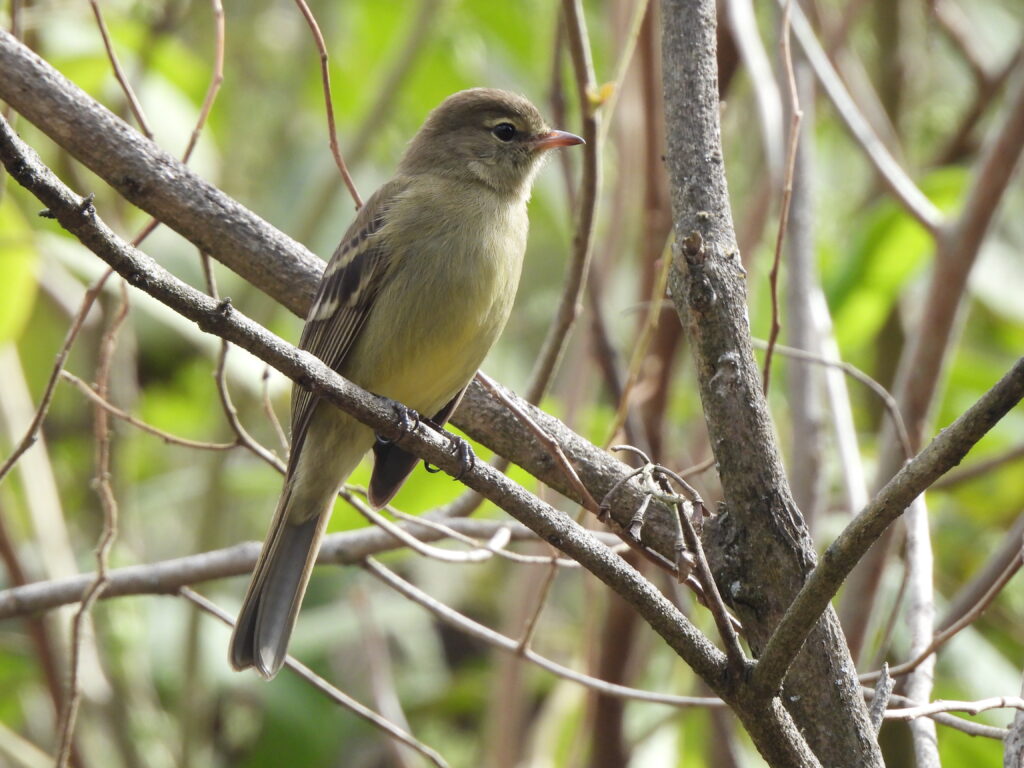
The creek got more complicated as I continued ahead, and it was getting a bit late. Therefore, filled with satisfaction after my memorable encounter with my first torrent ducks, I backed up and tried walking through the forest instead of the creek — when possible, as a recent windstorm had caused many tree falls and the paths were impassable at times. This produced sightings of buff-browed foliage-gleaner (Syndactyla rufosuperciliata), sooty-fronted spinetail (Synallaxis frontalis), mottle-cheeked tyrannulet (Phylloscartes ventralis) and southern beardless tyrannulet (Camptostoma obsoletum).
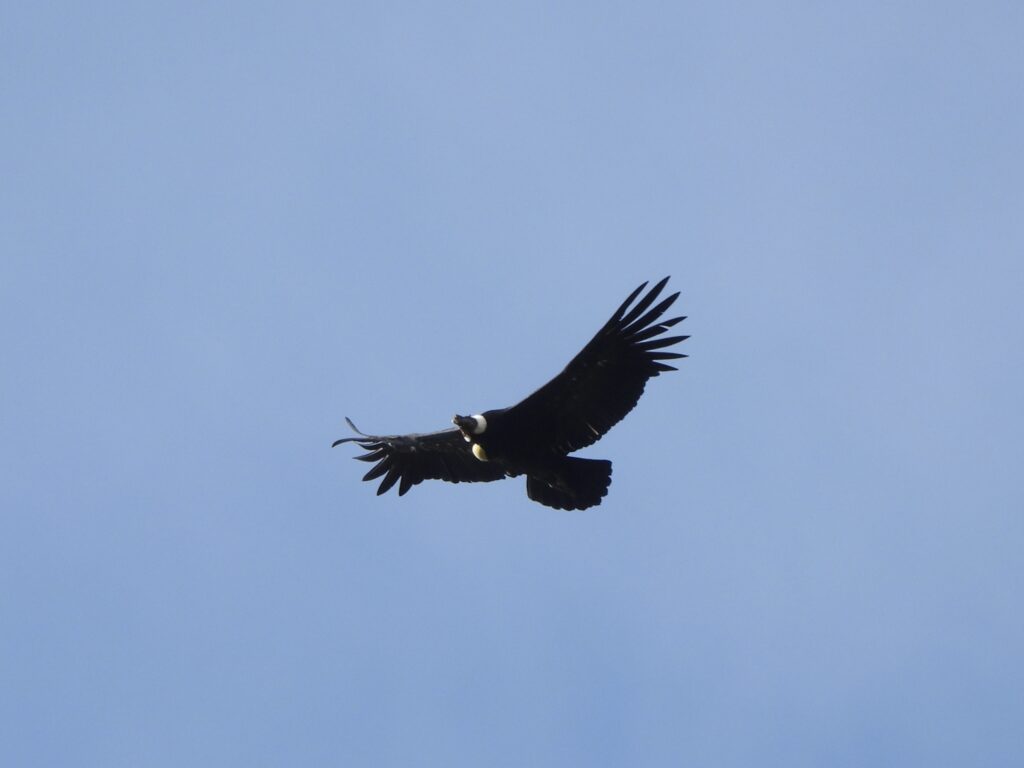
A number of birds had also been flying overhead, including black vultures (Coragyps atratus) and turkey vultures (Cathartes aura), crested caracaras (Caracara plancus), roadside hawks (Rupornis magnirostris), pairs of scaly-headed parrots (Pionus maximiliani) and a small group of locally scarce green-cheeked parrots (Pyrrhura molinae). However, when I walked back into the creek again, I was incredibly pleased to find my first Andean condor (Vultur gryphus) flying relatively low right on top of me. A couple of these gigantic birds circled around for a while — yet another dream bird I was not expecting to see today.
Only when I was reaching the starting point, when I could see the bridge I had walked down towards in the distance, did I spot my target. A distant, small, bright orange spot in the middle of the grey rocks of the rapid revealed it. Finally, the rufous-throated dipper (Cinclus schulzii) I was looking for.
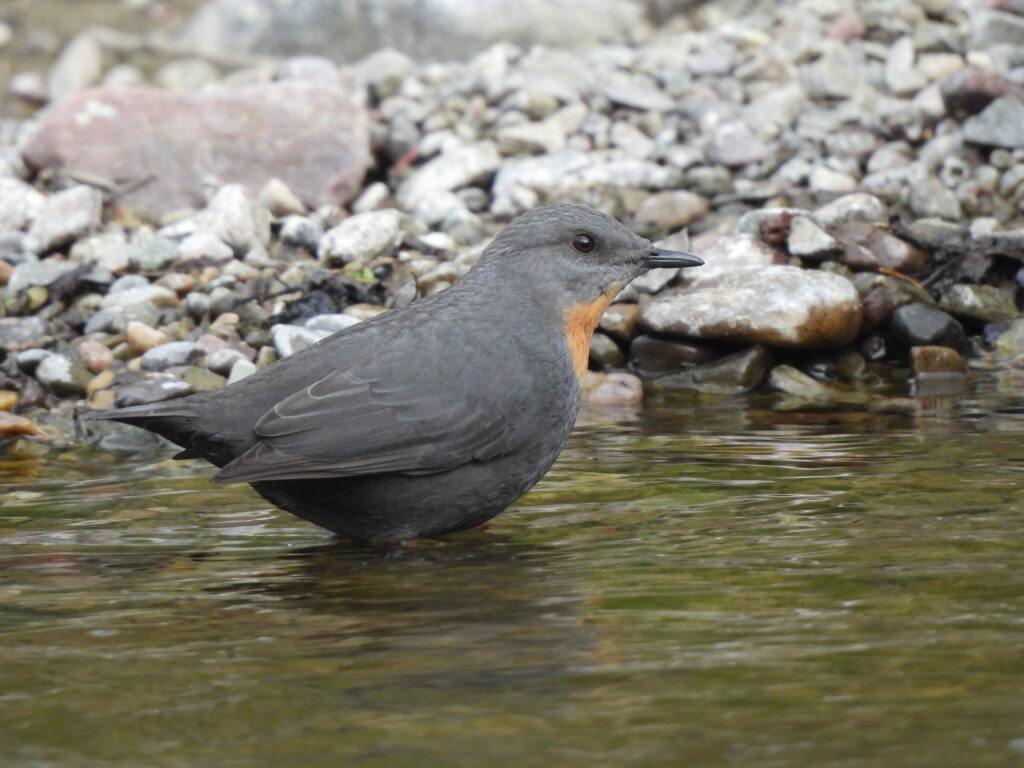
Filled with excitement, I took a bad distant photo and hid under some rocks to avoid scaring it away while I switched my camera batteries. However, the bird put on an incredible show as it kept progressively coming closer and closer, foraging for arthropods in the crystal-clear waters of Arroyo Castellano, completely unbothered by my presence. Besides the catchy orange spot, this bird has the habit of briefly opening its wings while it forages, showing the attractive white flashes of its wing pattern.
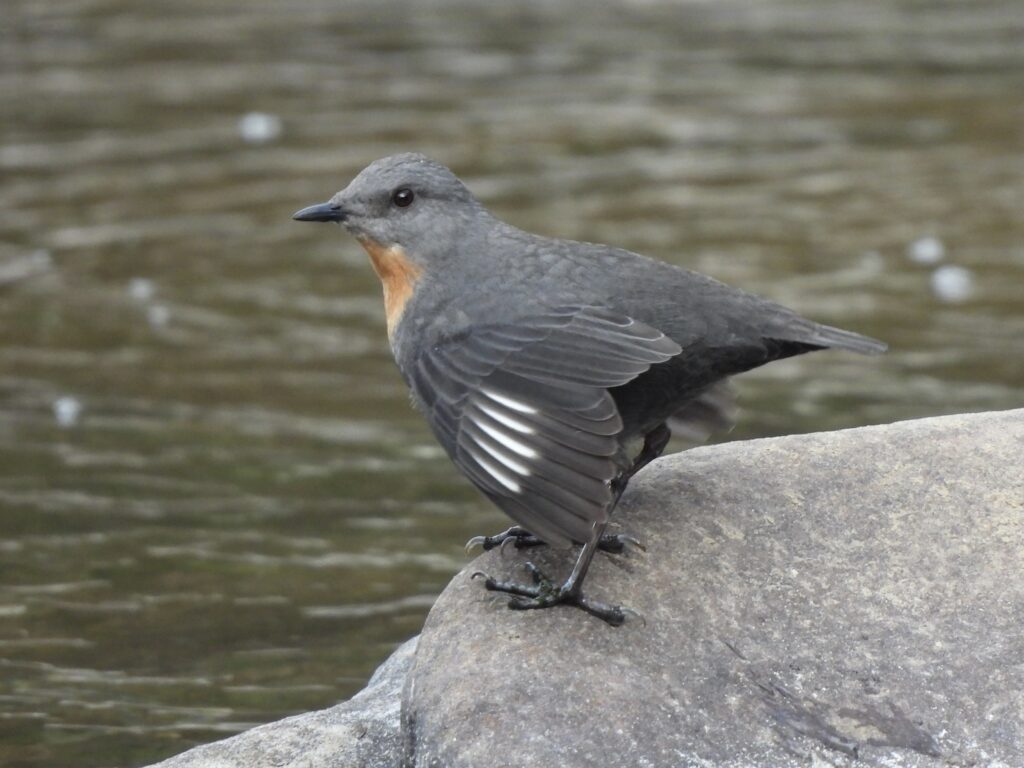
I had long read about this bird as the hardest of all dippers, a family of birds that I find extremely attractive. I recall reading in trip reports that this bird is far from guaranteed even among the montane creeks where it is found, within its reduced distribution range in northwest Argentina and extreme southern Bolivia. Not only that, this species is odd among dippers, as it is the only one among all five that shows some color besides white and dark.
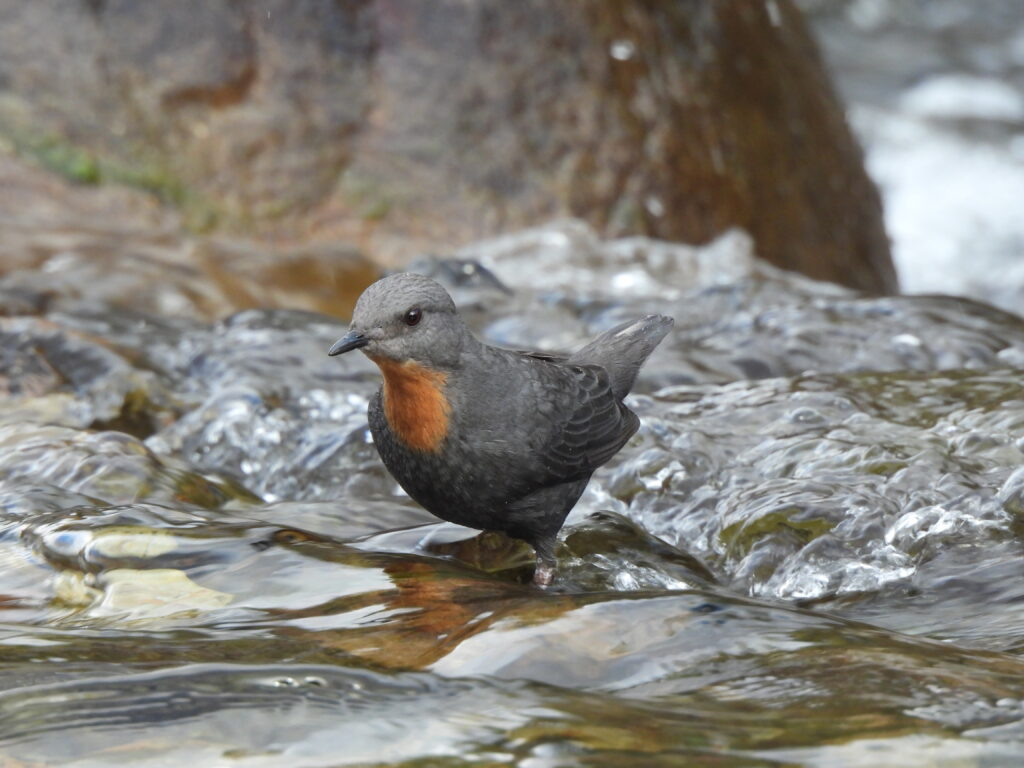
After a long, rather hard walk up and down the creek, including soaked shoes from falling into the creek a couple of times, I was absolutely thrilled to have this mega bird foraging just a few meters away, all by myself. However, the array of stunning species I enjoyed along the way, including obliging yungas specialties and unbelievable views of torrent duck and Andean condor in a terrific landscape, already made the trek worthwhile. Now, three other dippers to go!