Stepping foot on a completely new continent as a birdwatcher is absolutely overwhelming. In a way, it reminded me of those times when my parents brought me to wetland reserves as a bird-enthusiast kid from somewhere in the mountains: some of the species were remotely familiar and only a few were well-known dream birds, but my ID skills were incredibly poor for somebody spending so much energy on bird-related stuff.
In this case, a research stay for my PhD is bringing me to the Americas for the first time. On my way to Argentina, I took a Boliviana de Aviación flight from Madrid via a stopover at Viru Viru Airport in Santa Cruz de la Sierra. A schedule change extended my stopover to over 14 hours. I decided to get some sleep inside the airport in my sleeping bag in the public area and wait for sunrise — all international transfers must go through customs, and apparently no room service is currently operating at the airport. Recently, while talking about this itinerary with friends, Adrián Orihuela had advised me about the great birding just around the airport. Because my connecting flight to Buenos Aires departed at 10:00, I had just over a couple of spare hours to try some birding once the sun rose.
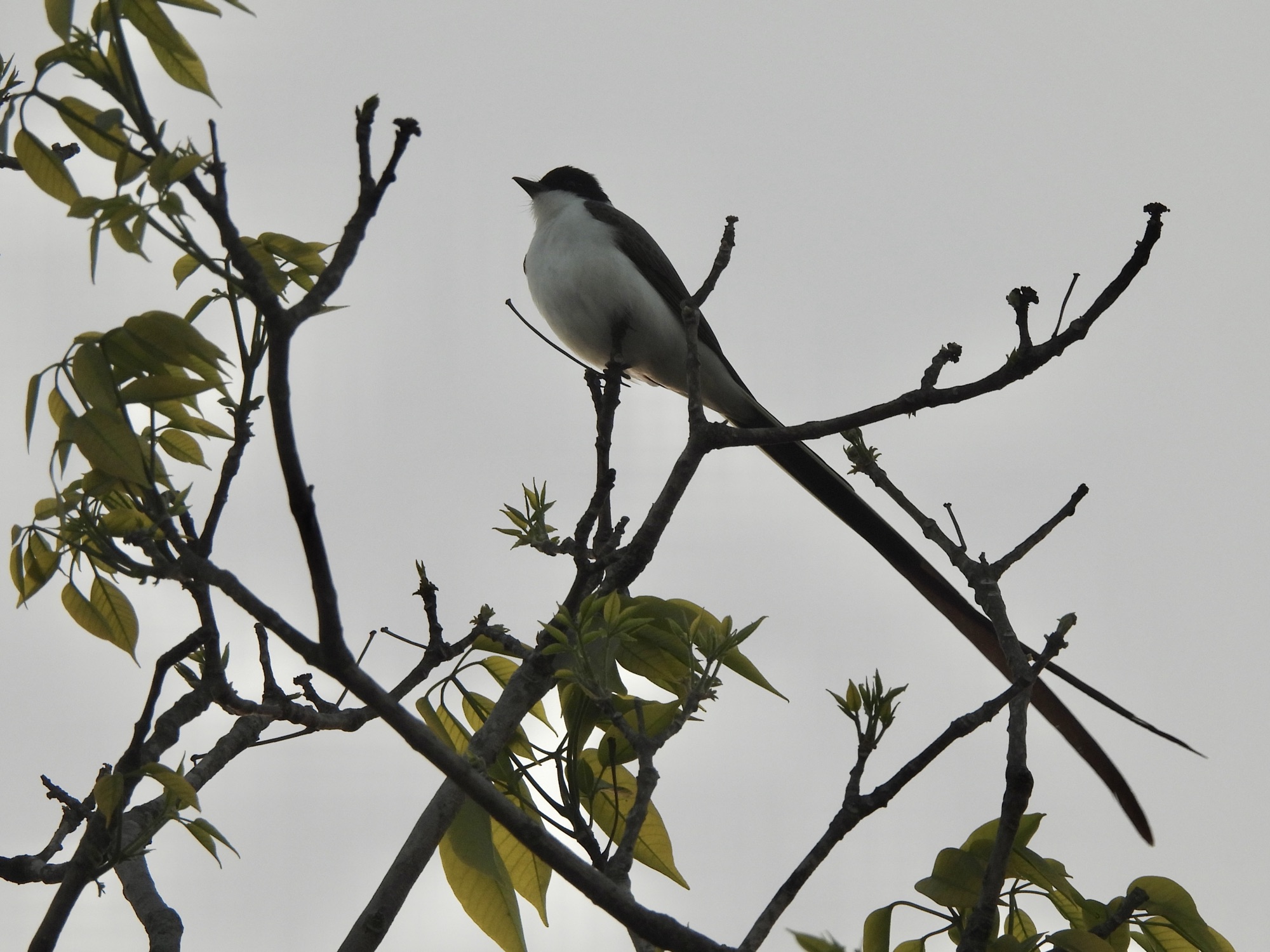
My first contact with Neotropical birds felt exactly like that largely uninformed kid I once was back home. The faint daylight before sunrise offered many silhouettes and sounds coming from all the trees in the airport parking lot, but nothing I could really grasp. It took me a moment to acclimate and notice my first Neotropical bird: the unmistakable fork-tailed flycatcher (Tyrannus savana).
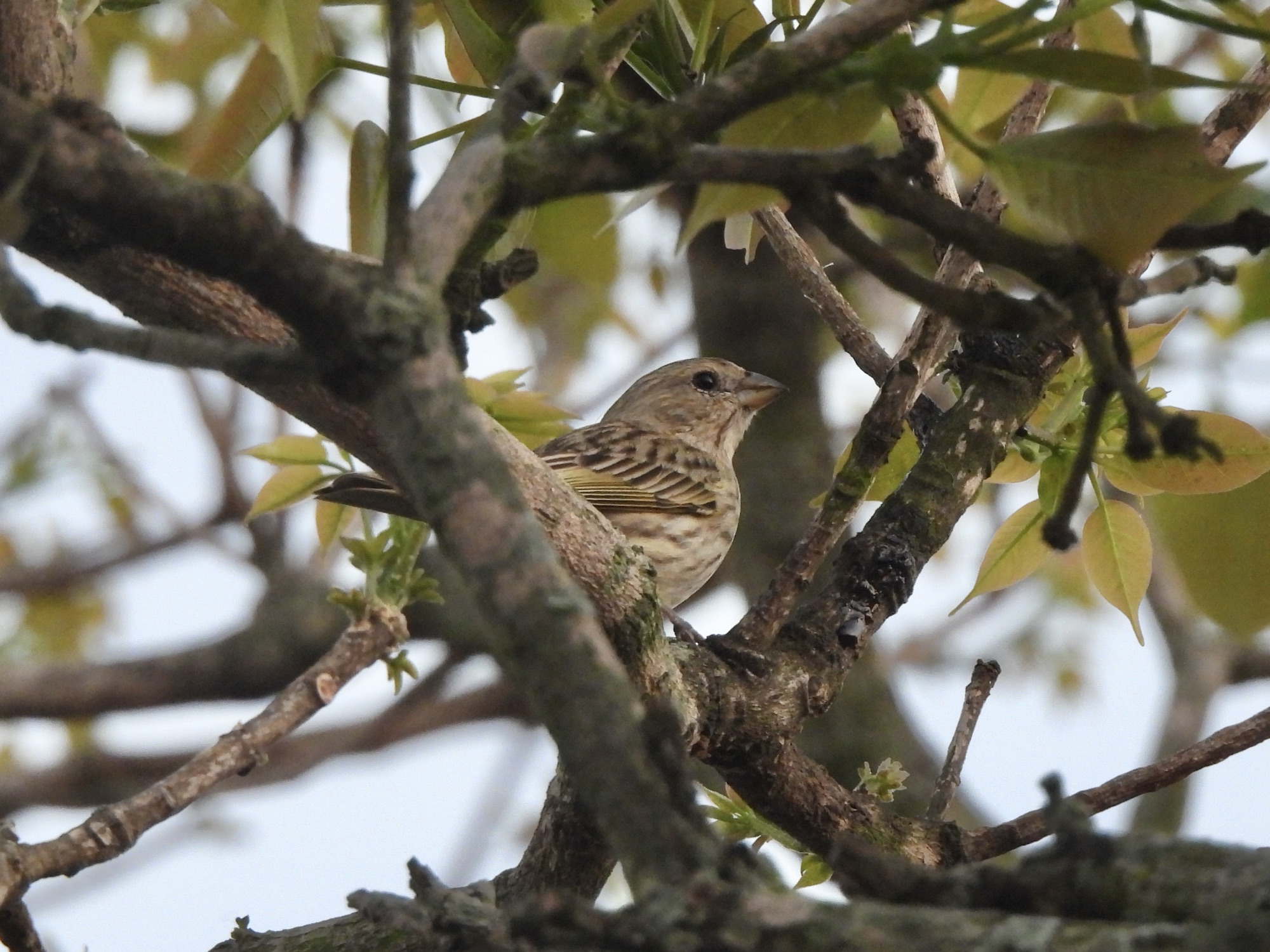
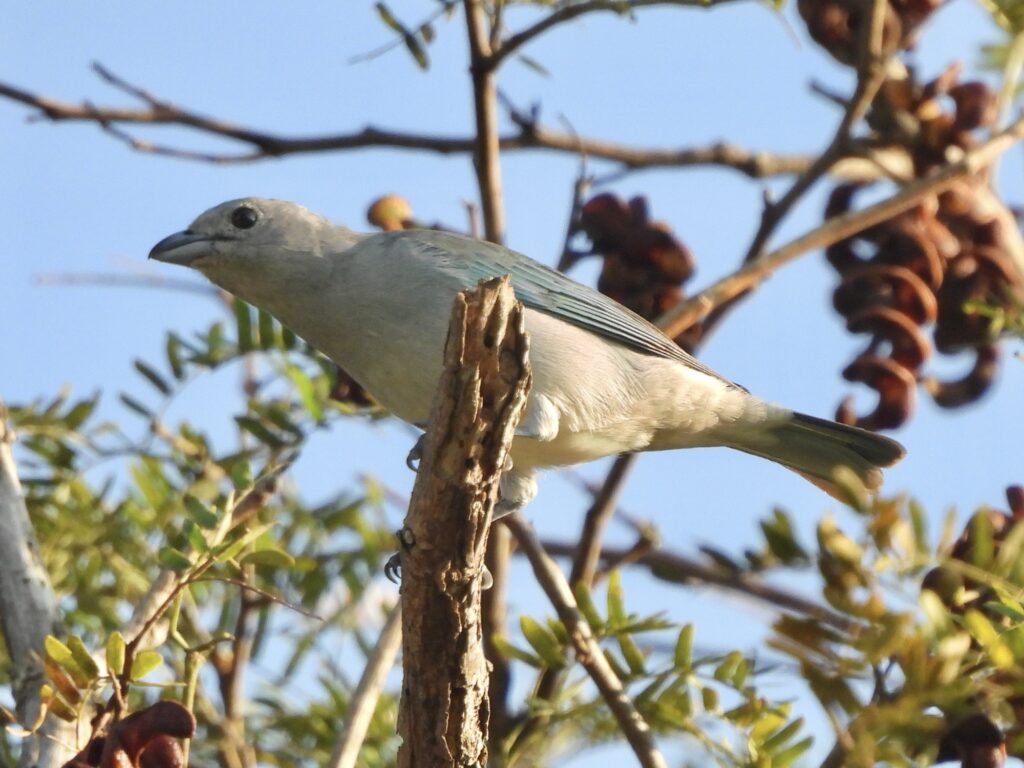
Slowly, I started noticing some of the usual suspects among those trees: saffron finches (Sicalis flaveola), sayaca tanagers (Thraupis sayaca) and chopi blackbirds (Gnorimopsar chopi) proved relatively numerous throughout my short outing from the airport. Several tropical kingbirds (Tyrannus melancholicus), eared doves (Zenaida auriculata) and flyby white-eyed parakeets (Psittacara leucophthalmus) were also out and about.
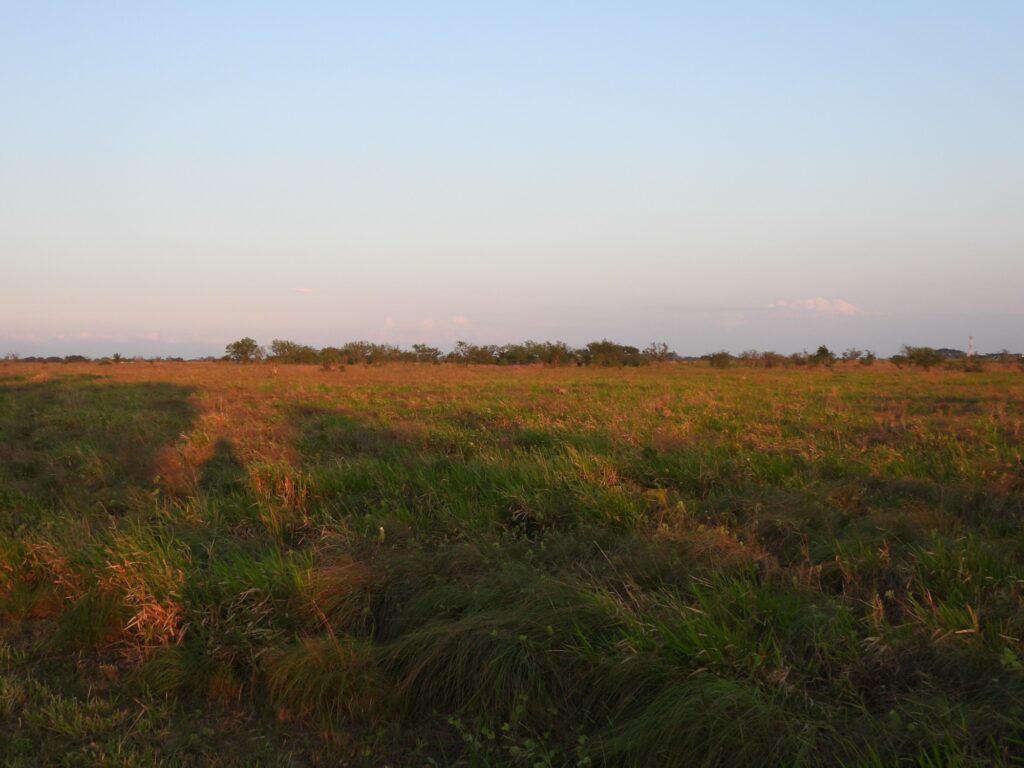
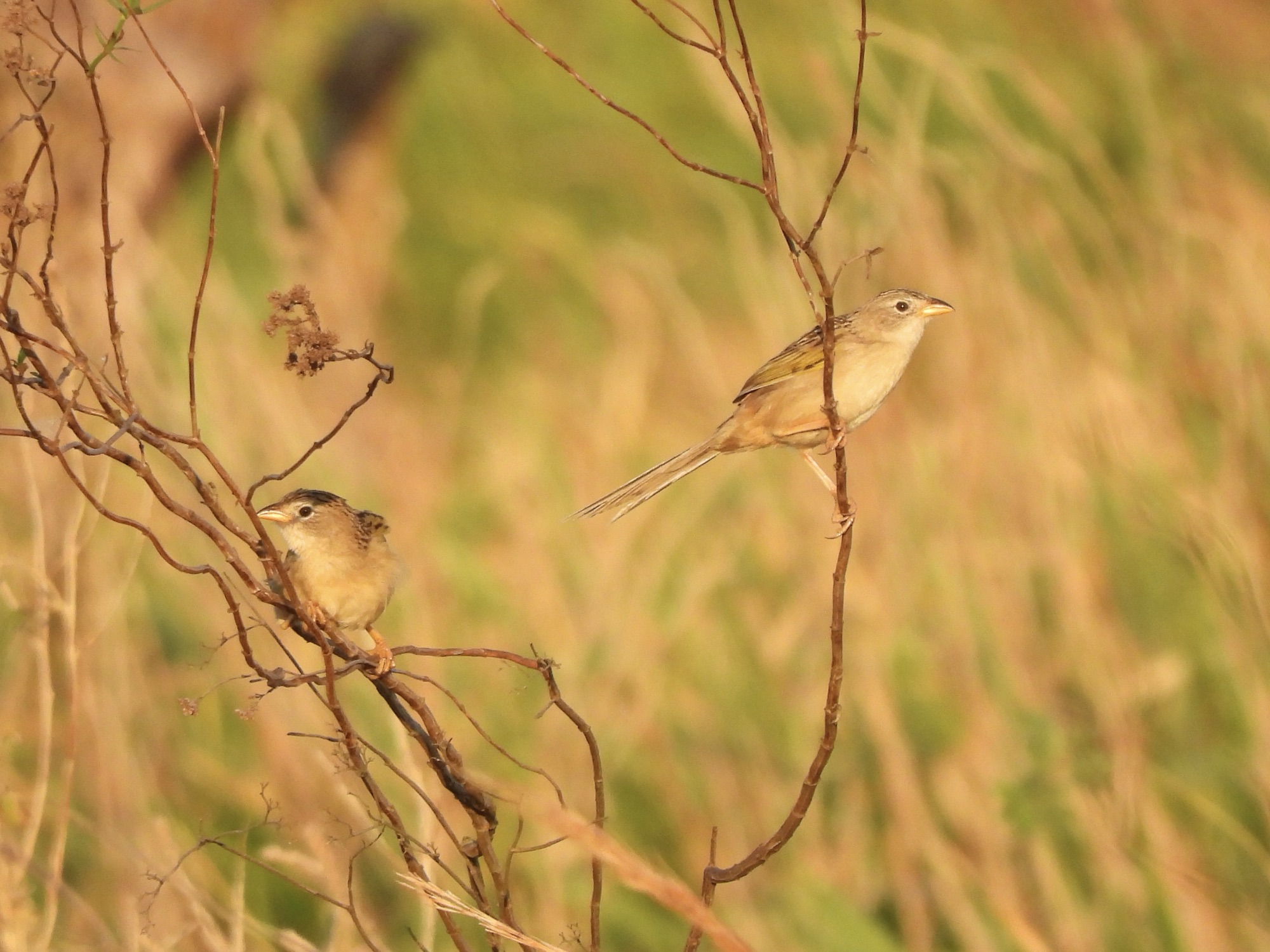
I then headed westwards to the road perpendicular from the airport, which crosses a fantastic grassland. Good numbers of wedge-tailed grass-finches (Emberizoides herbicola) posed on grass blades and shrubs, while a few grassland sparrows (Ammodramus humeralis) remained concealed in the vegetation. A couple of chalk-browed mockingbirds (Mimus saturninus) made an appearance. Brief views of flyby lesser kiskadee (Philohydor lictor) and white woodpecker (Melanerpes candidus) were also nice additions.
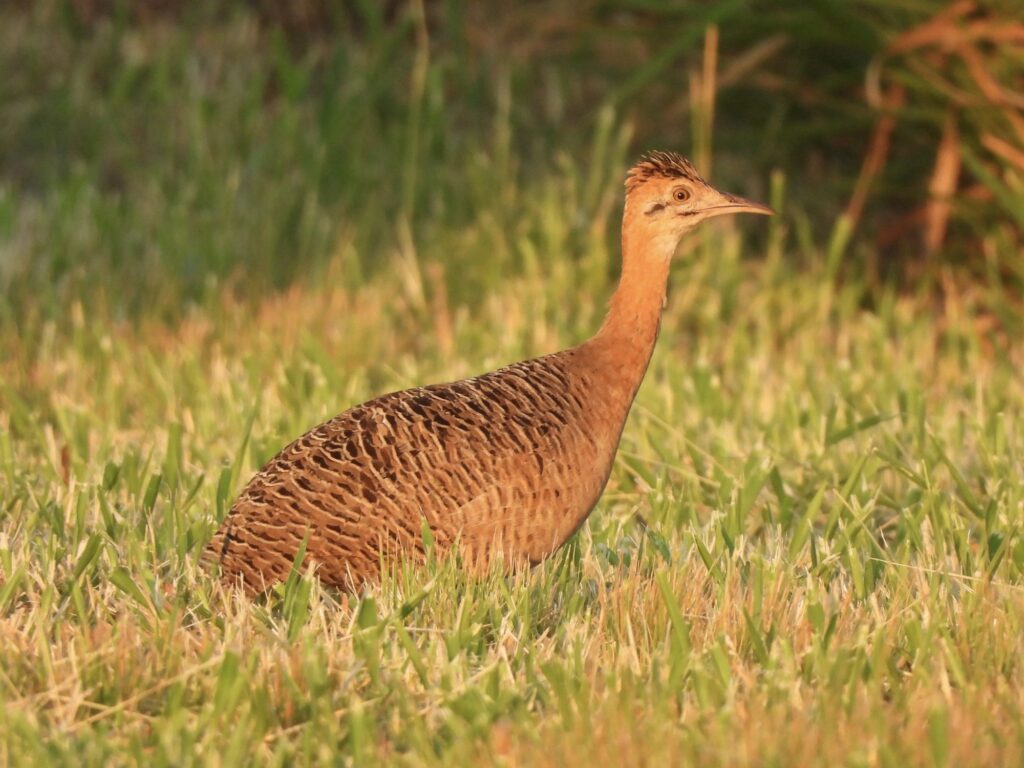
I walked along the mowed grass on the roadside, which produced good views of the grassland. I was excited to flush a tinamou from a short distance. Sadly, the bird soon disappeared into the grassland. However, a few meters ahead, I bumped into a very cooperative red-winged tinamou (Rhynchotus rufescens). I had the impression that tinamous were hard to see, but this was only one of four different birds that posed in the open along my walk.
Taking the right turn only produced some closer views of wedge-tailed grass-finches and distant views of buff-necked ibises (Theristicus caudatus). Flying over, I noted a black vulture (Coragyps atratus), a couple of crested caracaras (Caracara plancus), a maguari stork (Ciconia maguari) and several picazuro pigeons (Patagioenas picazuro).
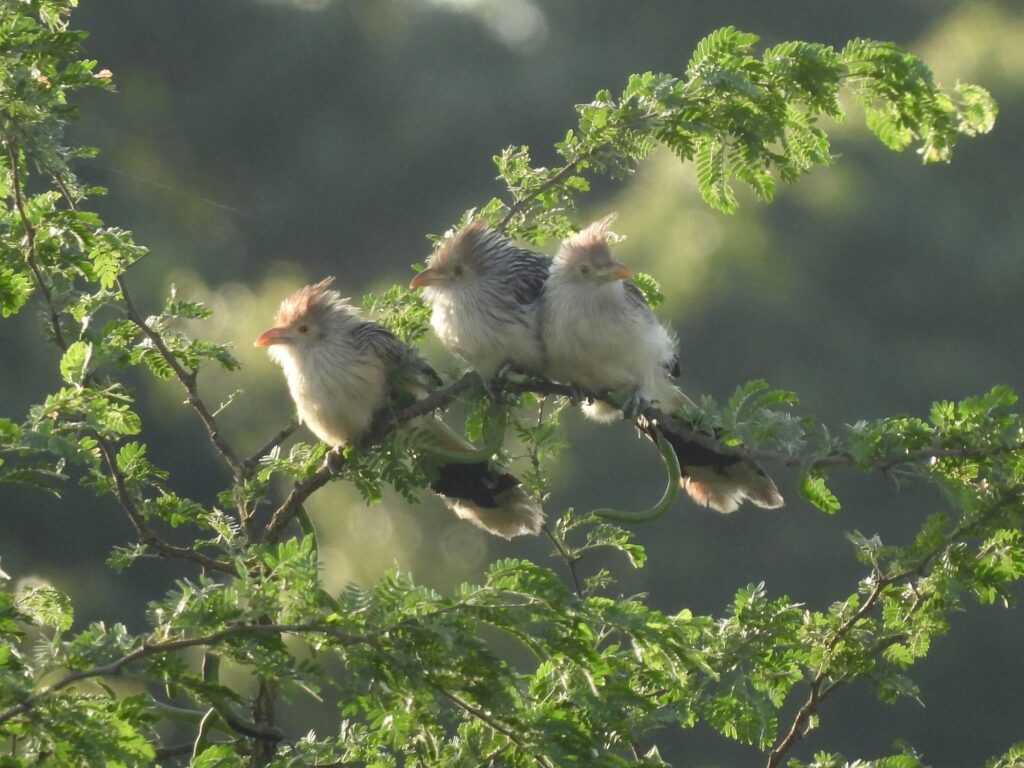
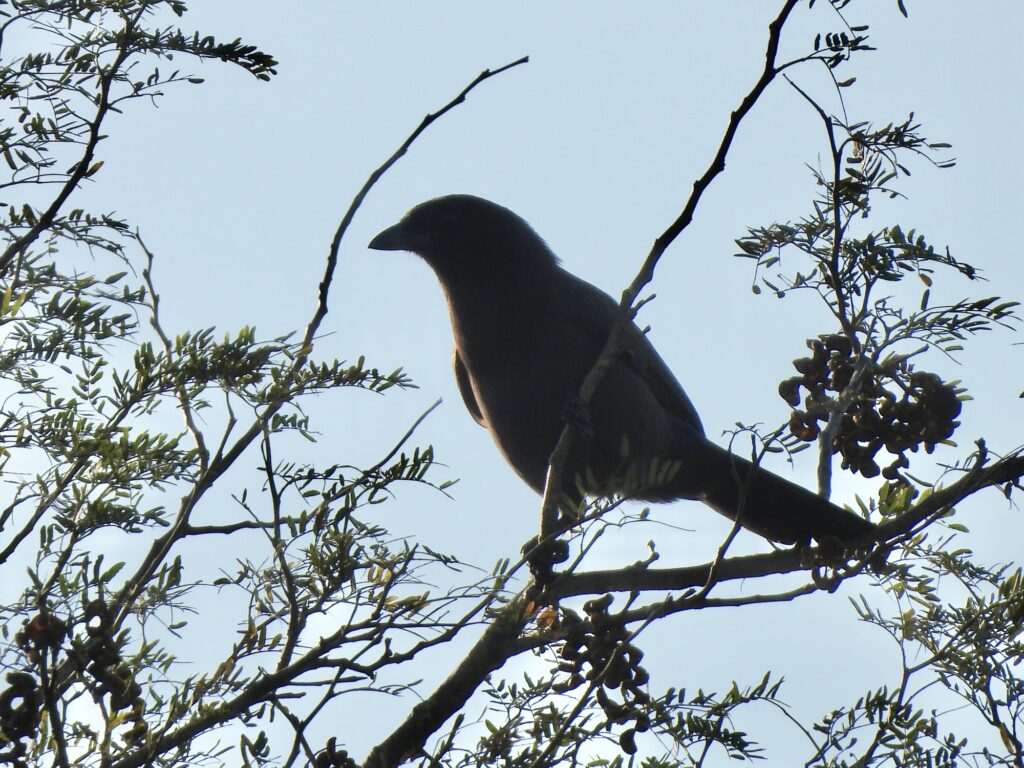
Then I walked back and took the left turn, which eventually reaches a nearby police headquarters. Some trees featured a concealed female vermilion flycatcher (Pyrocephalus rubinus), three lovely guira cuckoos (Guira guira) and one of my targets of the day: a purplish jay (Cyanocorax cyanomelas) calling loudly. Three bare-faced ibises (Phimosus infuscatus) and a calling lesser yellowlegs (Tringa flavipes) flew over.
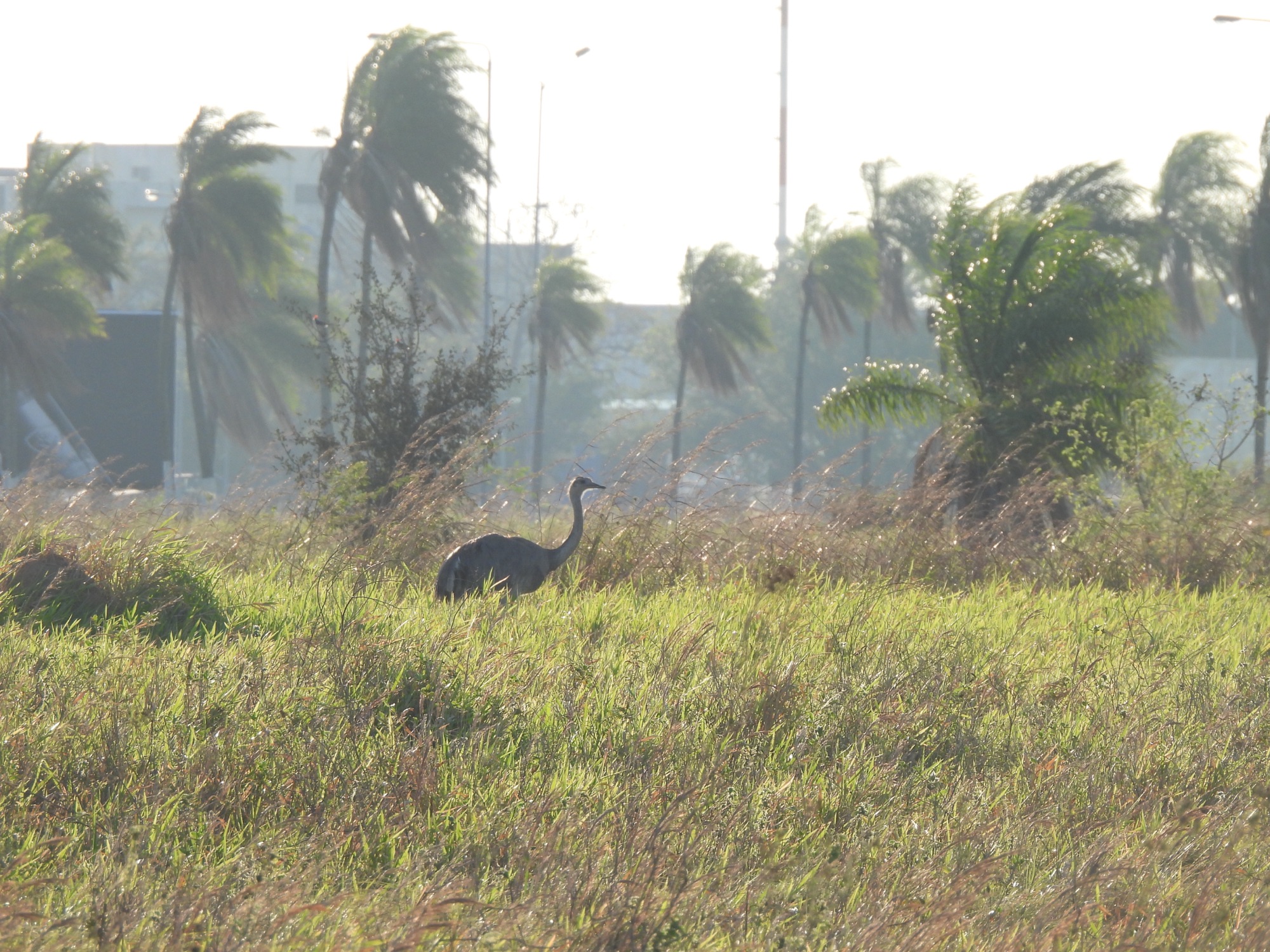
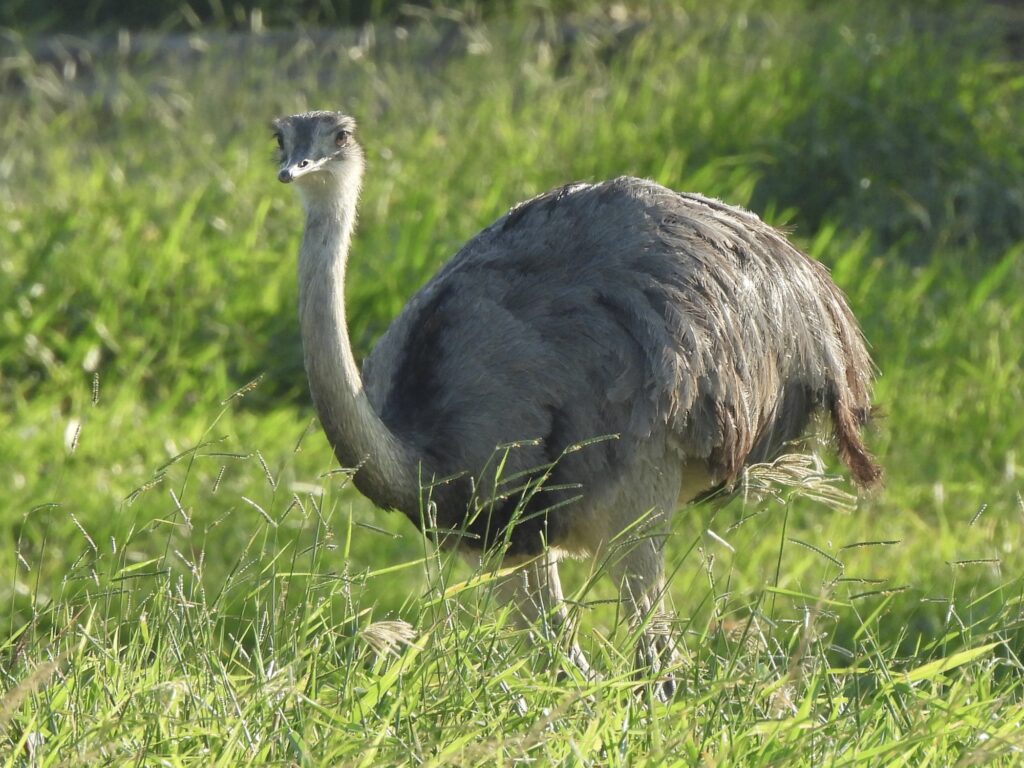
The sand on the trails featured footprints of another target. As I walked back, I finally noticed the large silhouettes of greater rheas (Rhea americana). The scene of these gentle giants browsing with the airport in the background was quite astonishing.
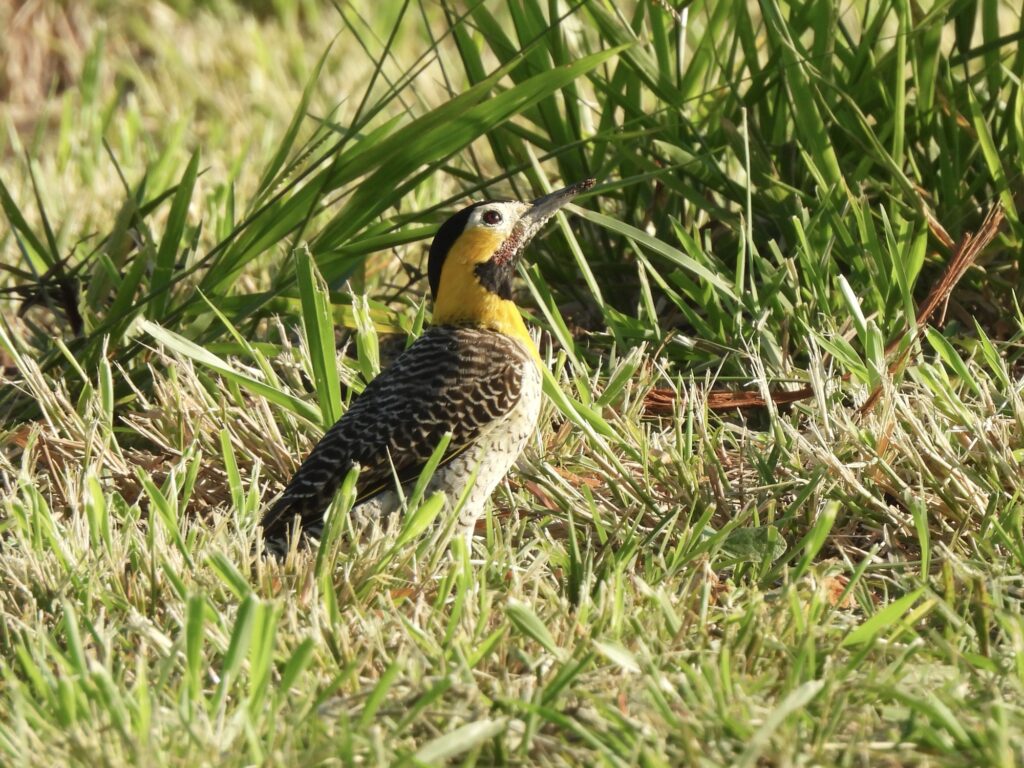
The mowed grass around the airport featured a large flock of picui ground doves (Columbina picui), pairs of burrowing owls (Athene cunicularia) and southern lapwings (Vanellus chilensis), cattle tyrant (Machetornis rixosa) and campo flicker (Colaptes campestris) together with numerous chopi blackbirds.
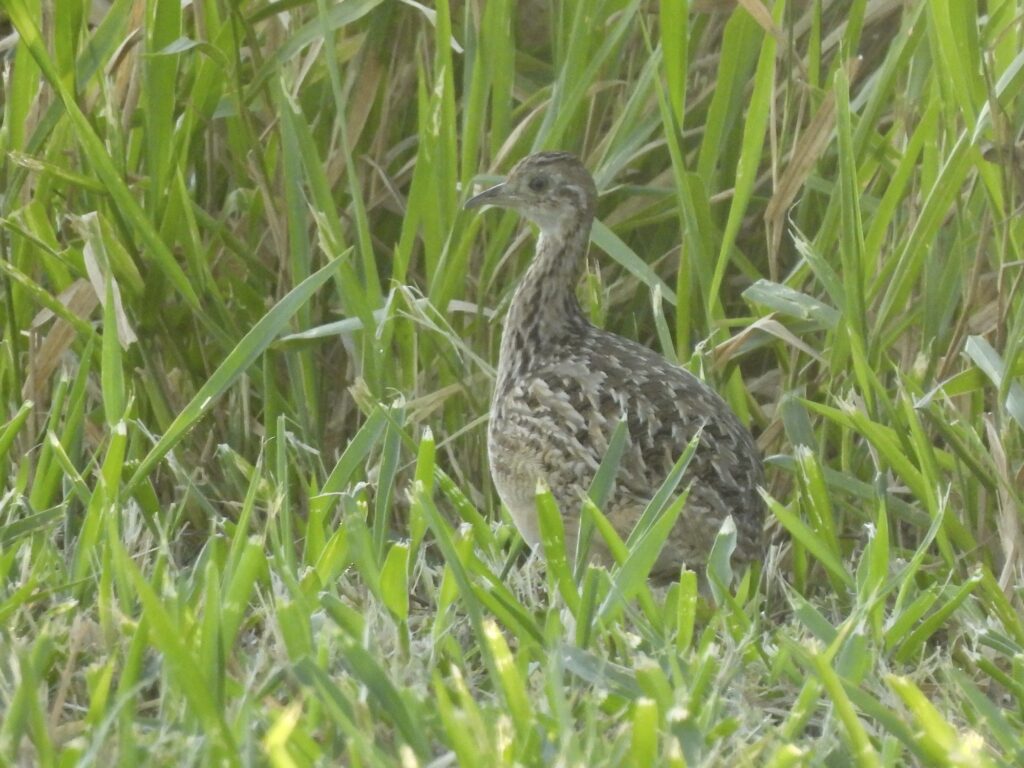
However, I was most surprised to see a couple of small tinamous foraging right next to a red-winged tinamou. Although I first thought they might have been immatures following their parent, I soon noticed their different silhouette and plumage pattern. Indeed, two white-bellied nothuras (Nothura boraquira) foraged in the open, but more cautiously than their relative, soon running into the security of the grassland. This small tinamou has a very interesting disjunct distribution range, with populations in the Bolivian-Paraguayan Chaco and in far eastern Brazil.
Considering how long it took me to first locate the greater rheas, I was thrilled to see three of them foraging on the lawn bordering the car park, very close to people, as I walked back to the airport at around 08:00. A last-minute aplomado falcon (Falco femoralis), chased by chopi blackbirds, was the cherry on top.
Viru Viru grasslands exceeded my expectations, with incredible views of rheas and tinamous. A short morning walk, long awaited after such a long flight, delivered over 30 lifers, including eight new families and several species either absent or with a very limited range in Argentina, the country I will be exploring next. As the plane took off, I noticed that the road north of the car park was worth looking at, as it might provide views of a large flooded area — surely the site where many report interesting waterbirds.