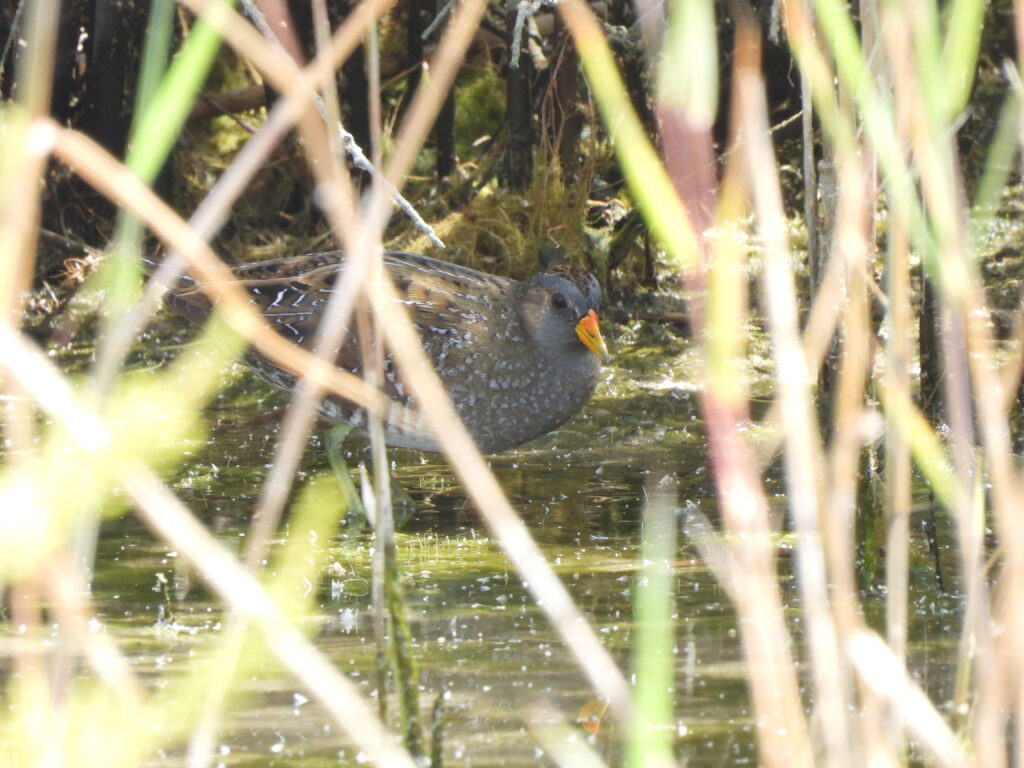
In Spain, three species of crakes regularly visit the muddy edges and shallow waters bordering reedbeds during spring migration. The Mediterranean coast seems to be the best area to search for these birds, but each species is scarcer than the previous one and all are notoriously elusive. Until this spring, I had only been lucky enough to observe the commonest species of the trio, the spotted crake (Porzana porzana), on a couple of occasions in El Hondo — always at some distance and quite briefly.
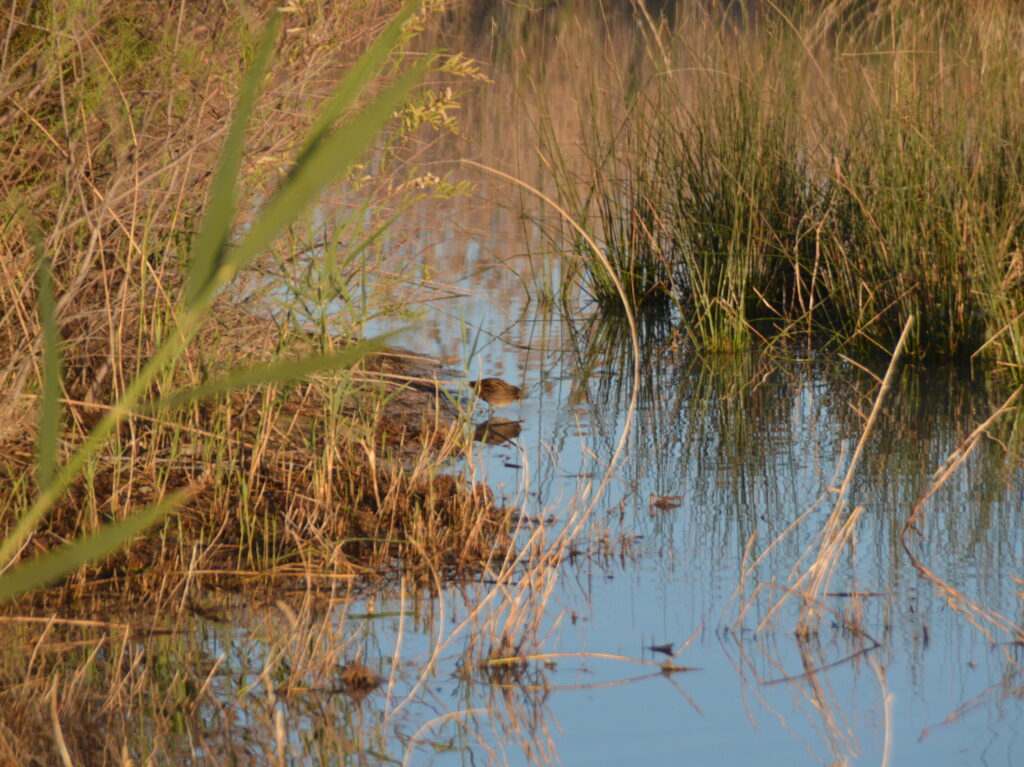
The more I learned about this group of birds, the more eager I became to see them again. I was often told that crakes tend to linger in the same small area for several days during migration, although I believe that the birds I had previously encountered ended up as flowers of one day. This year, I actively searched for these elusive rallids during my numerous visits to local wetlands from late February onwards (these are early migrants!) to no avail. By the end of March, not a single crake had been reported in the Alicante region. Was this shaping up to be a terrible spring for crakes?
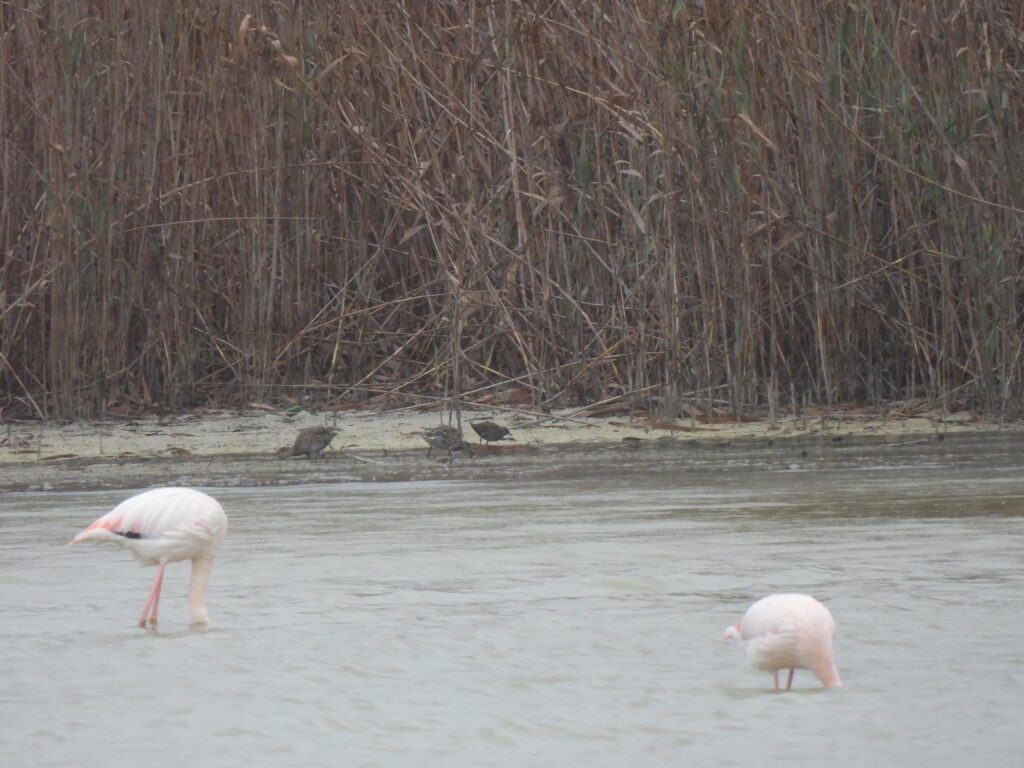
Things changed on 27 March, when Marcos Real located a spotted crake in the lagoon beside Aula de la Naturaleza near Catral, within El Hondo Natural Park. The entire site was buzzing with activity throughout the season, but this crake stole the show, foraging at very close range beneath the sparse shade of low bushes along the partially flooded shoreline.
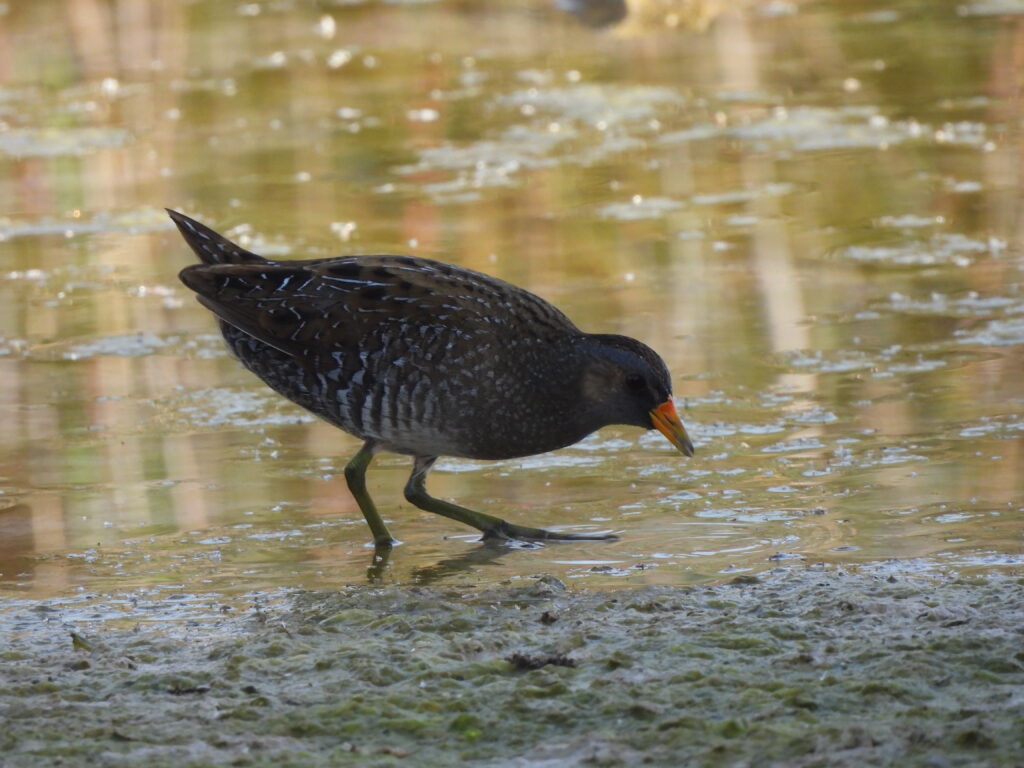
This time, I finally got to experience how crakes really do linger in the same place where they are first found. I could only visit later in April, but I returned on several dates, including 9 April, which turned out to be the final day the bird was seen. This means that the crake remained in the area for at least 13 days, and local birdwatchers made the most of its unusually confiding behavior.
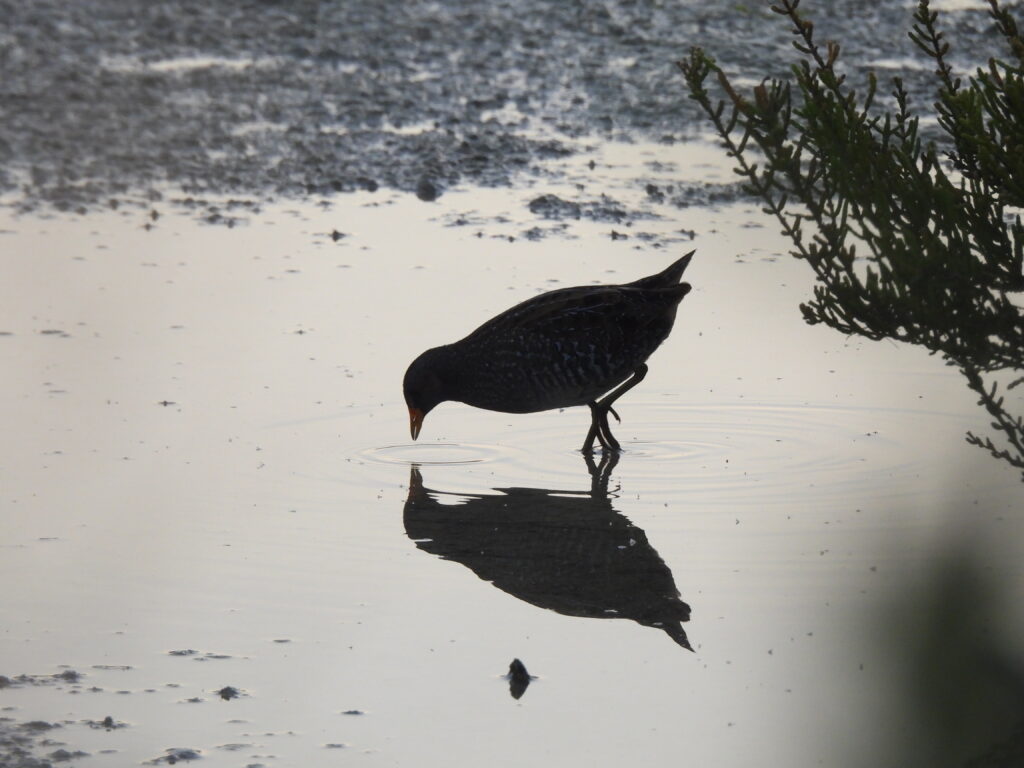
This may sound like a rather long stay for a migrating bird, but Aula de la Naturaleza was particularly lively after benefiting from spring rains. Numerous marbled ducks (Marmaronetta angustirostris), curlew sandpipers (Calidris ferruginea), Temminck’s stints (Calidris temminckii), displaying pied avocets (Recurvirostra avosetta), and several wood warblers (Phylloscopus sibilatrix) gave testimony to the exceptional conditions.
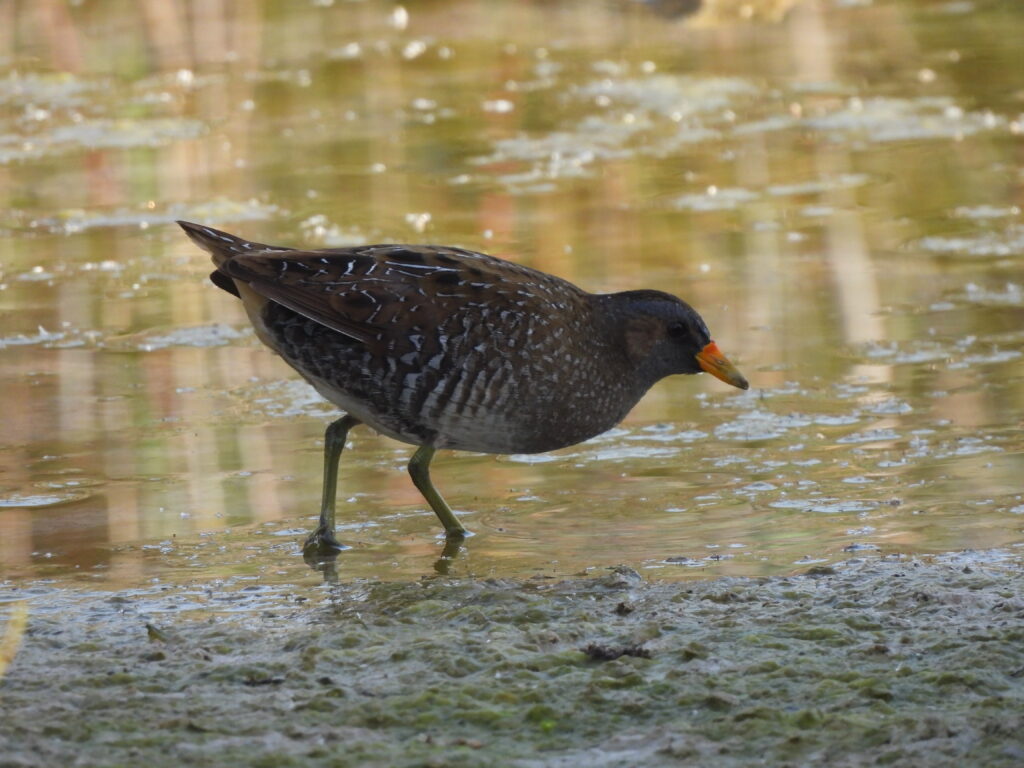
The spotted crake (Porzana porzana) is by far the most frequently recorded crake species in Spain, with just over 150 reported sightings in the Alicante region alone. El Hondo appears to be the regional hotspot for the species, although birds have also been reported over the years from Clot de Galvany, Marjal de Pego-Oliva, the lower Riu de l’Algar, and even farther inland around Villena and along the Serpis river up to downtown Alcoi.
Once we had experienced lingering crakes firsthand, news broke of another sighting at Clot de Galvany some days later. This time, however, it involved a different species: the little crake (Zapornia parva). The bird had been reported the previous afternoon while Darío Gijón and I were birding far away in Villena. Excited about the possibility of getting to see a new bird of this combo, we decided to make a detour and drive down to Clot de Galvany. And as soon as we made it, we got the jackpot.
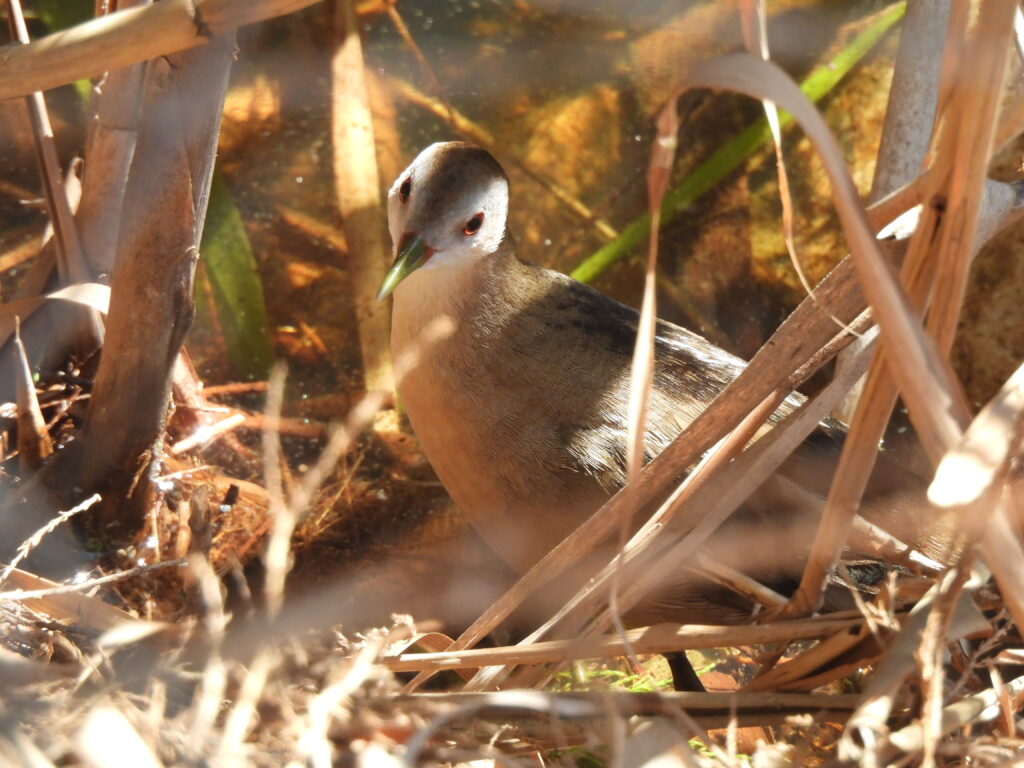
A female little crake (Zapornia parva) was moving through the exact same area where it had been found the evening before: the reeds and concrete edges in front of the main observatory of the wetland. Another thing I learned about crakes this spring is that they tend to cooperate best during early morning and late evening, when they leave the reeds more confidently and become less wary. In this case, however, we observed the bird around midday. Even so, we enjoyed excellent views of this lifer as it quietly preened and foraged among the vegetation.
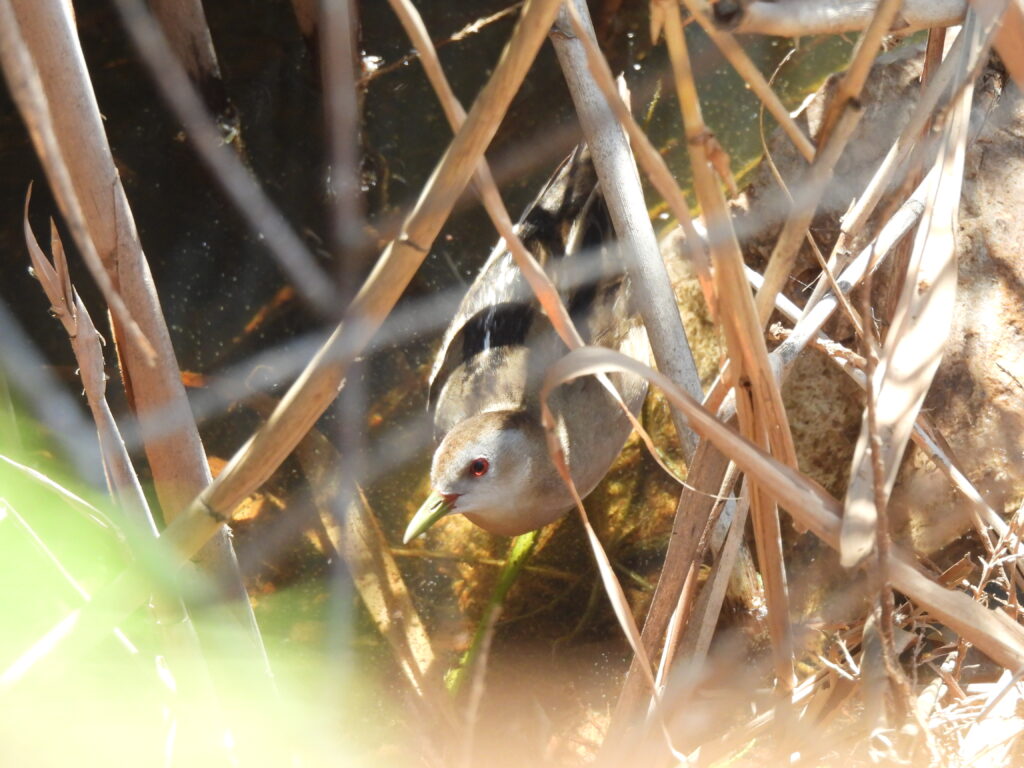
The little crake (Zapornia parva) is considerably scarcer than the previous species, although some individuals at El Hondo and Clot de Galvany remained twitchable long enough for many local birdwatchers to catch up with them, resulting in around 75 eBird reports. Elsewhere, the species has also been recorded along the lower Riu de l’Algar, at Lo Monte wastewater treatment plant farther south, and inland at l’Albufera de Gaianes near Alcoi. Unlike some of those sightings, however, the bird we observed was alone (some involve pairs) and unfortunately only remained until that second day.
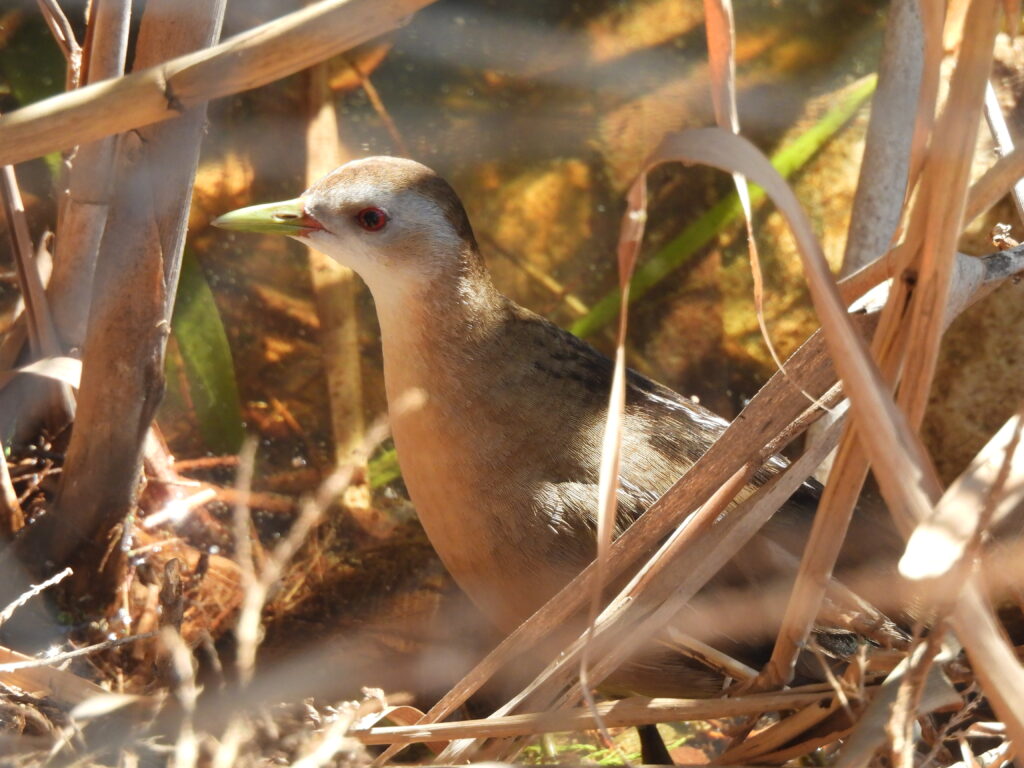
This still leaves me with the rarest species of them all. The Baillon’s crake (Zapornia pusilla) is, interestingly enough, the only member of this group that actually breeds in Spain. However, it has only been reported a handful of times in recent years within the Alicante region. Only three sites have received records on eBird, all of which have hosted all three crake species at some point: Marjal de Pego-Oliva, the mouth of the Riu de l’Algar in Altea, and the very same lagoon at Aula de la Naturaleza in El Hondo. I am convinced that all these species — particularly Baillon’s crake (Zapornia pusilla) — are far more widespread and numerous in our region than the number of sightings suggests. Therefore, I wonder when and where the next one will appear.