This July, I am spending the holidays birdwatching in South Africa along with Darío Gijón, Guillem de los Santos, Arnau and Miquel Rivera. While planning, we realized that driving across the country could give us a great overview of the country’s habitats and wildlife diversity, despite the extra effort. Therefore, we are driving across the entire country in a 9-seat Mercedes Vito from Cape Town, and we will eventually drop it off in Johannesburg. Part of the group was interested in visiting the Kalahari desert on the border with Namibia and Botswana, so the first leg of our trip involved driving through the Namaqua region and the karoo.
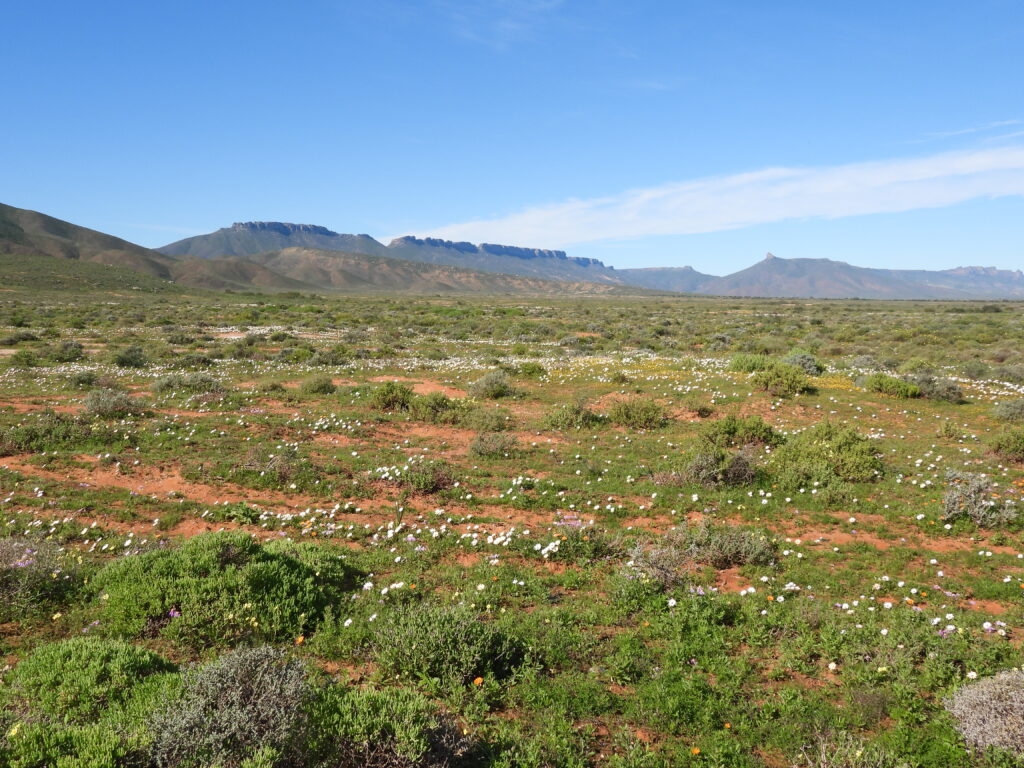
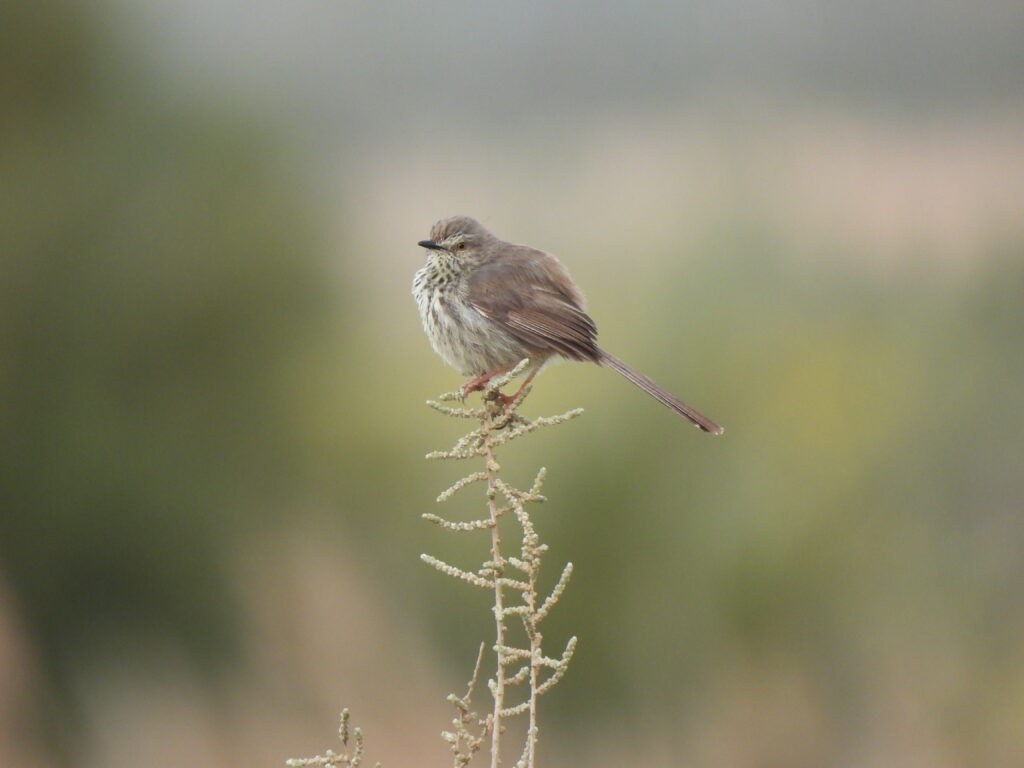
I am by no means knowledgeable about the vast floral diversity of South Africa, but driving from Cape Town towards the fynbos-covered mountains in the Ceres area contrasted with the drier scrub farther east. Only a few hours’ drive from Cape Town, we entered the karoo. Usual suspects throughout our first outings in this habitat included jackal buzzards (Buteo rufofuscus), black-winged kites (Elanus caeruleus), pied crows (Corvus albus), Cape buntings (Emberiza capensis) and Cape sparrows (Passer melanurus), southern double-collared sunbirds (Cinnyris chalybeus), karoo prinias (Prinia maculosa), familiar chats (Oenanthe familiaris), southern fiscals (Lanius collaris), white-throated canaries (Crithagra albogularis), yellow canaries (Crithagra flaviventris) and grey-backed cisticolas (Cisticola subruficapilla).
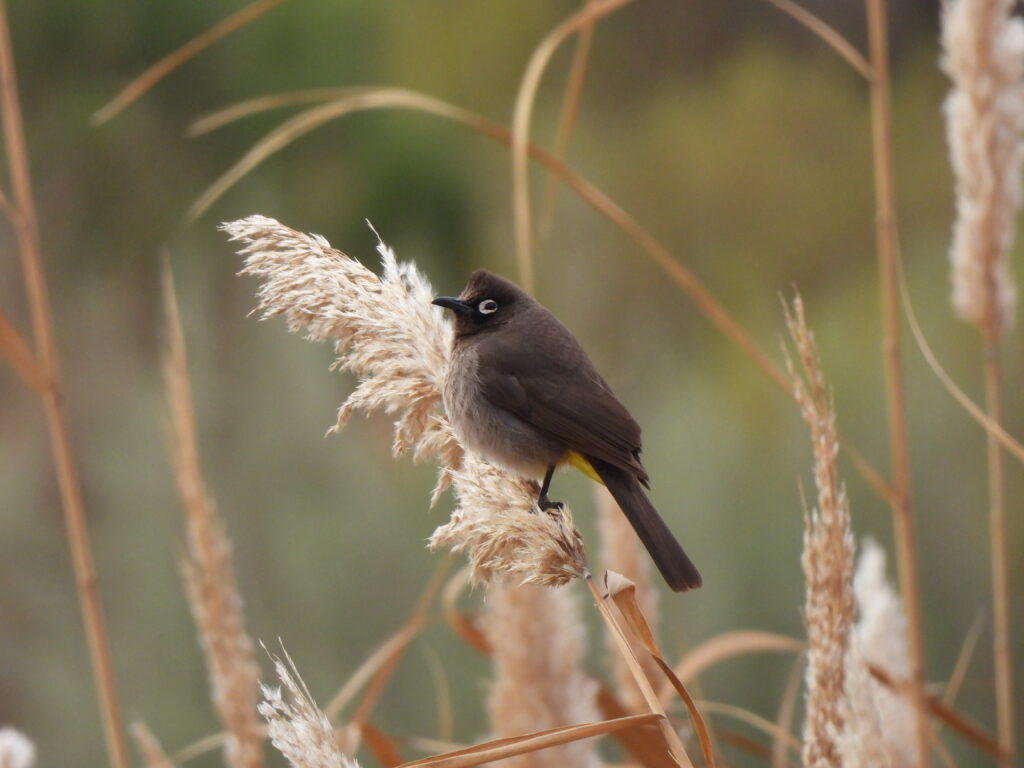
Our first stop in this habitat took place at the base of the fynbos-covered mountain in Karooport. Here we connected with Cape bulbuls (Pycnonotus capensis), karoo scrub-robins (Tychaedon coryphoeus), red-faced mousebirds (Urocolius indicus) and white-backed mousebirds (Colius colius).
After a short wait along the reeds of a stream, we heard and eventually saw our target, Namaqua warbler (Phragmacia substriata), among numerous karoo prinias. The monotypic genus name of this warbler, Phragmacia, is a perfect description of its habitat in Karooport: a mix of reeds (Phragmites) and sparse acacia trees.
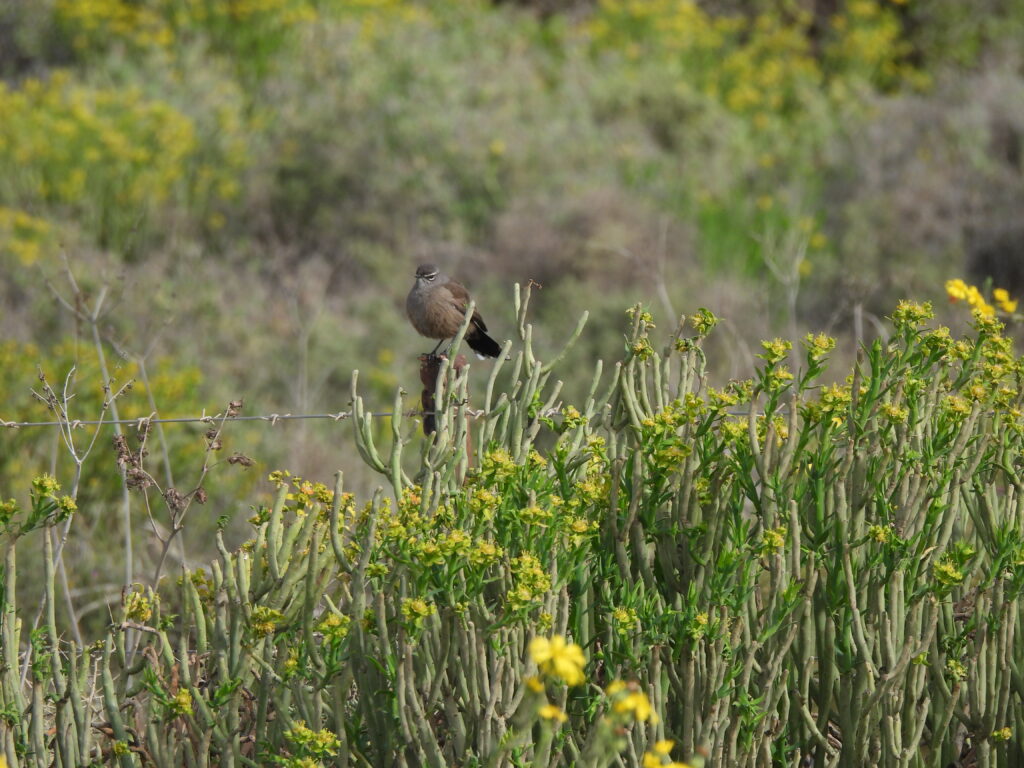
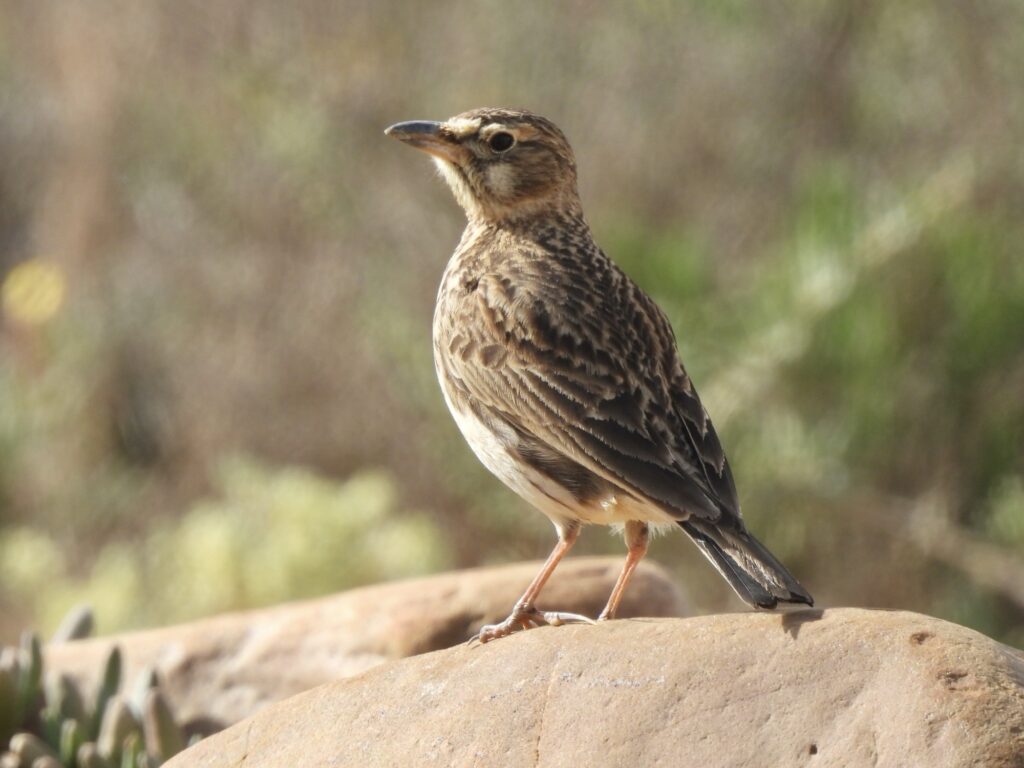
We then drove through the Tankwa karoo along the mythical (unpaved) R355 road. It did not take long before we connected with the first pale chanting-goshawks (Melierax canorus), large-billed larks (Galerida magnirostris), karoo larks (Calendulauda albescens), mountain chats (Myrmecocichla monticola) and karoo chats (Emarginata schlegelii), plus the odd endemic sickle-winged chat (Emarginata sinuata) and two pairs of black-headed canaries (Serinus alario).
Driving along R355 — and everywhere in the karoo and in South Africa — resulted in some interesting mammal watching. Here we connected with small herds of springboks (Antidorcas marsupialis), as well as a few ostriches (Struthio camelus) here and there. Because virtually all the country is filled with fences, these sights left us wondering whether these animals are of wild origin.
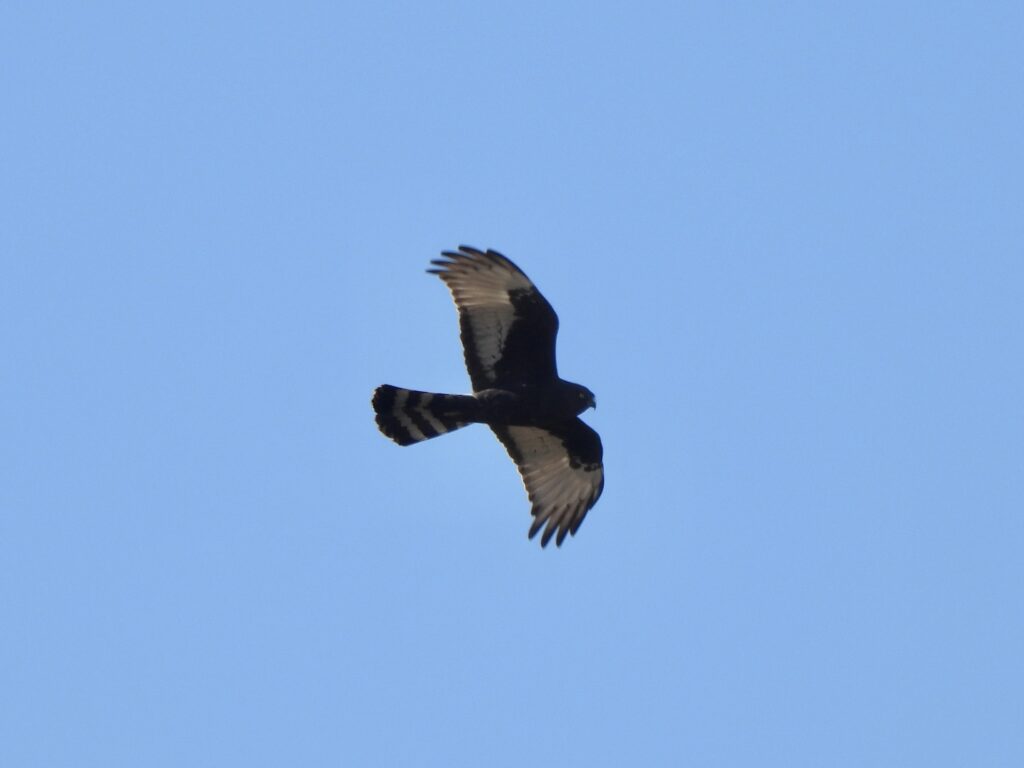
We took a turn off R355 towards the mountain, first driving through a renowned gorge, Skitterykloof. As we arrived, a stunning black harrier (Circus maurus) put on a show. We also noted pale-winged starlings (Onychognathus nabouroup), lanner falcon (Falco biarmicus) and Layard’s warbler (Curruca layardi), plus numerous rock hyraxes (Procavia capensis).
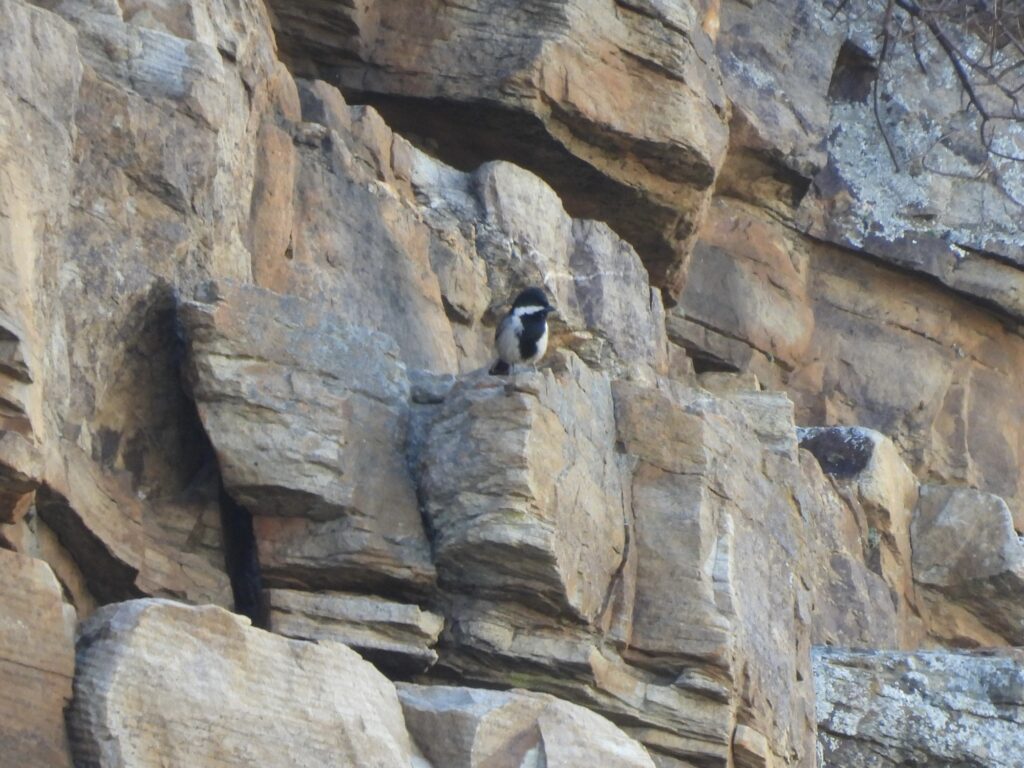
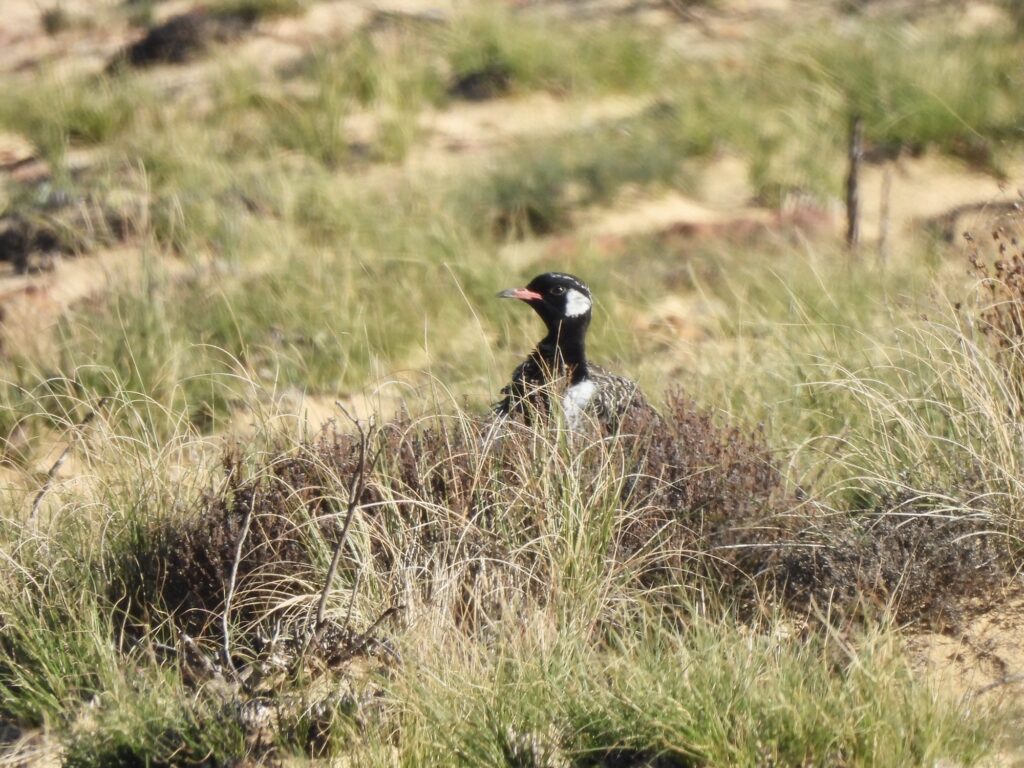
I did some waiting in the narrow part of the gorge, where some unidentified whistles reminded me of my main target in the area: the cinnamon-breasted warbler (Euryptila subcinnamomea). While I did not manage to catch a glimpse of this species during the lunch break we spent on site, we enjoyed a couple of grey tits (Melaniparus afer) bringing material to a nest. While driving through the mountain west of R355, we bumped into several southern black korhaans (Afrotis afra) — a stunning South African endemic, specialist of coastal fynbos and karoo scrub.
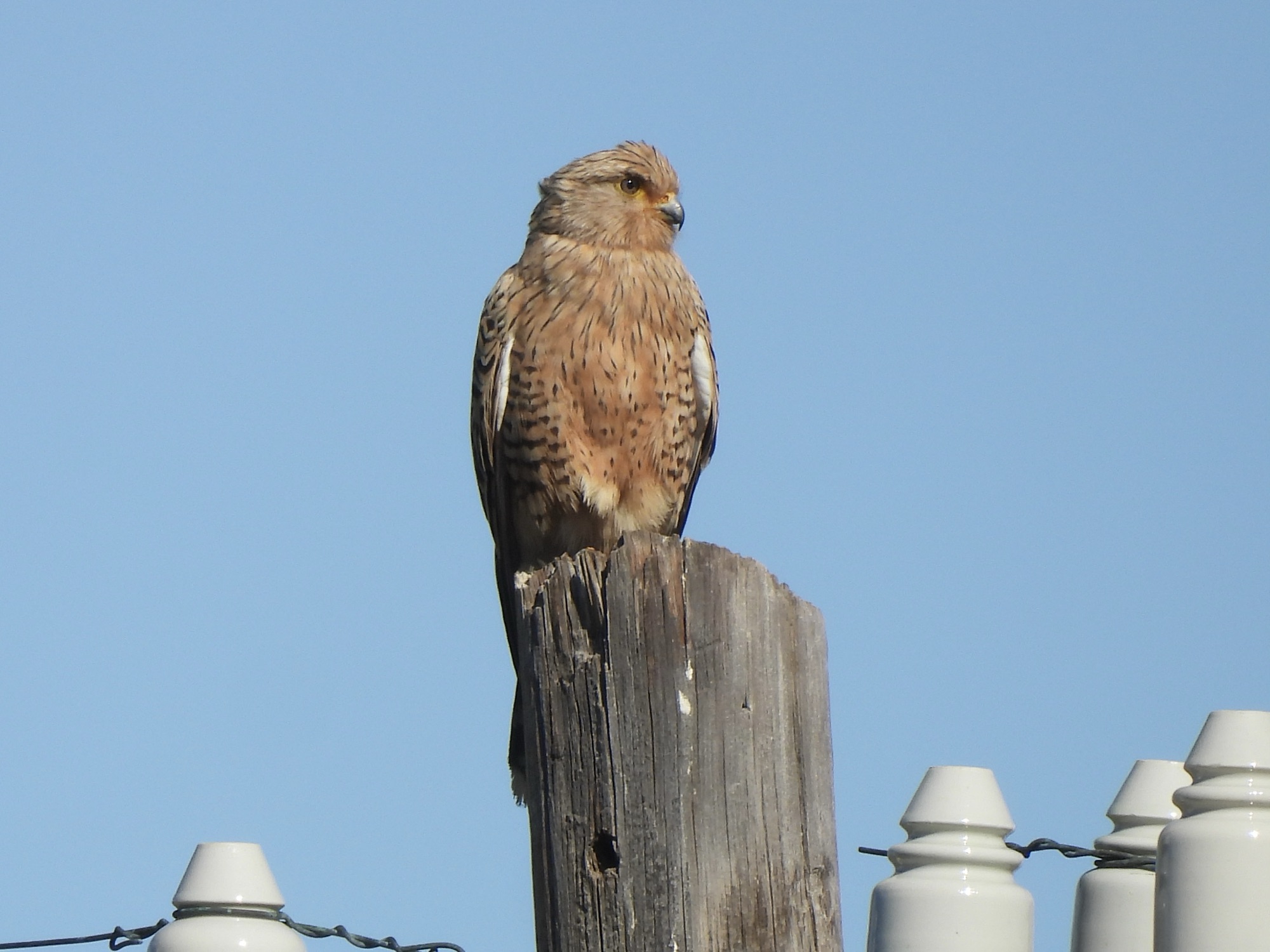
Our karoo drive turned progressively drier farther north. Past Clanwilliam, the succulents and tall scrub became dominated by shorter shrubs and grasses. Greater kestrels (Falco rupicoloides) and Cape crows (Corvus capensis) on top of poles became part of the landscape, and we noted red bishop (Euplectes orix) males with partly red plumage.
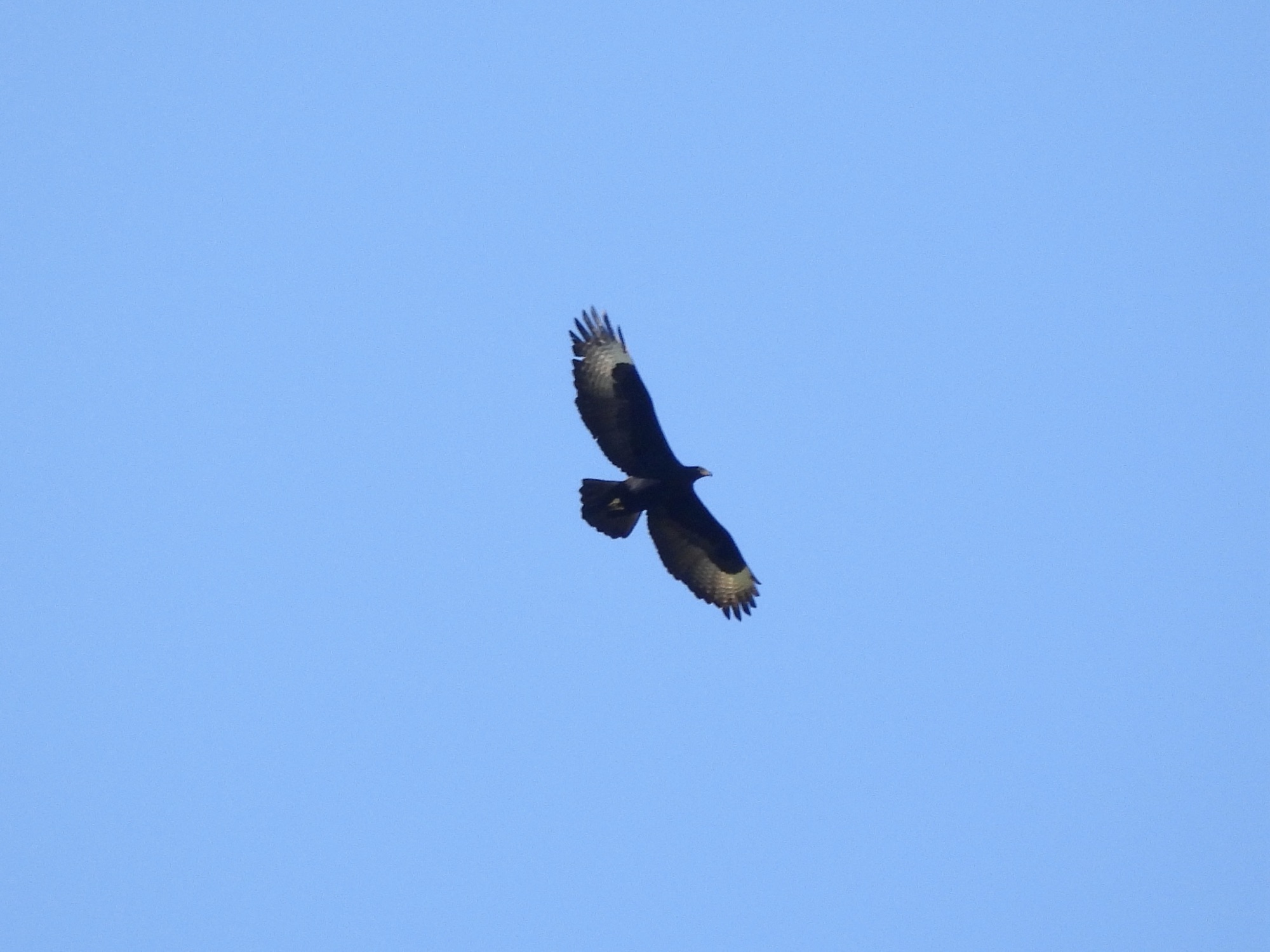
This turn towards drier shrublands had a long pause as we crossed the area around Nieuwoudtville. This town is located on a plateau that we ascended through a ridge road. As we stopped at a lookout, we got great views of a pair of Verreaux’s eagles (Aquila verreauxii) and two much-appreciated klipspringers (Oreotragus oreotragus).
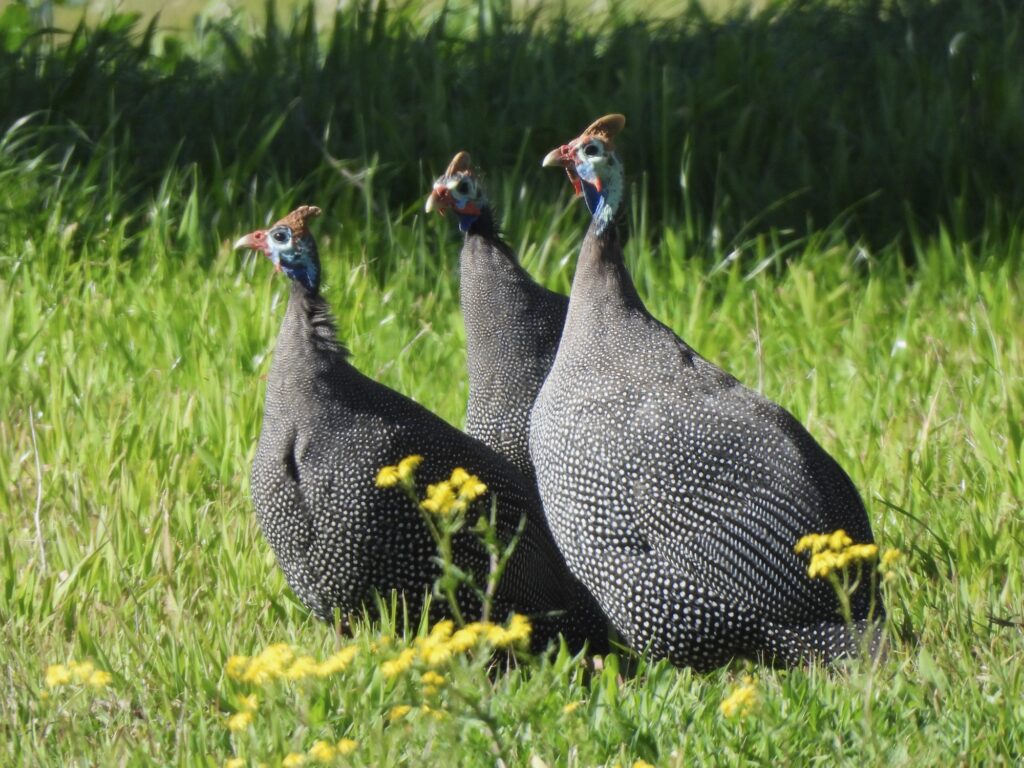
Our short time around Nieuwoudtville was extremely productive. The area was fully covered in lush green short grass, renosterveld, appreciated by numerous hadada ibises (Bostrychia hagedash), sacred ibises (Threskiornis aethiopicus) and helmeted guineafowl (Numida meleagris). With a couple of birds in mind — and poor references from the internet — we drove towards the closed gate of Hantam Botanic Garden. Thinking we would dip our targets, we stopped for a quick snack right there. Luckily, Simphiwe Madlala, the local ranger, showed up and invited us in.
More than a garden, Hantam is a large reserve dedicated to the appreciation of karoo flora. The peak bloom season is August–September, and the reserve closes on weekdays for the rest of the year. We told Simphiwe about our aims, and he kindly gave us a ride in a safari car around the garden. As we waited at the headquarters for him to get the car, we enjoyed great looks at a roosting spotted eagle-owl (Bubo africanus), an adult martial eagle (Polemaetus bellicosus) and our target of the day: nine of the endangered and localized Ludwig’s bustards (Neotis ludwigii) flying in front of us.
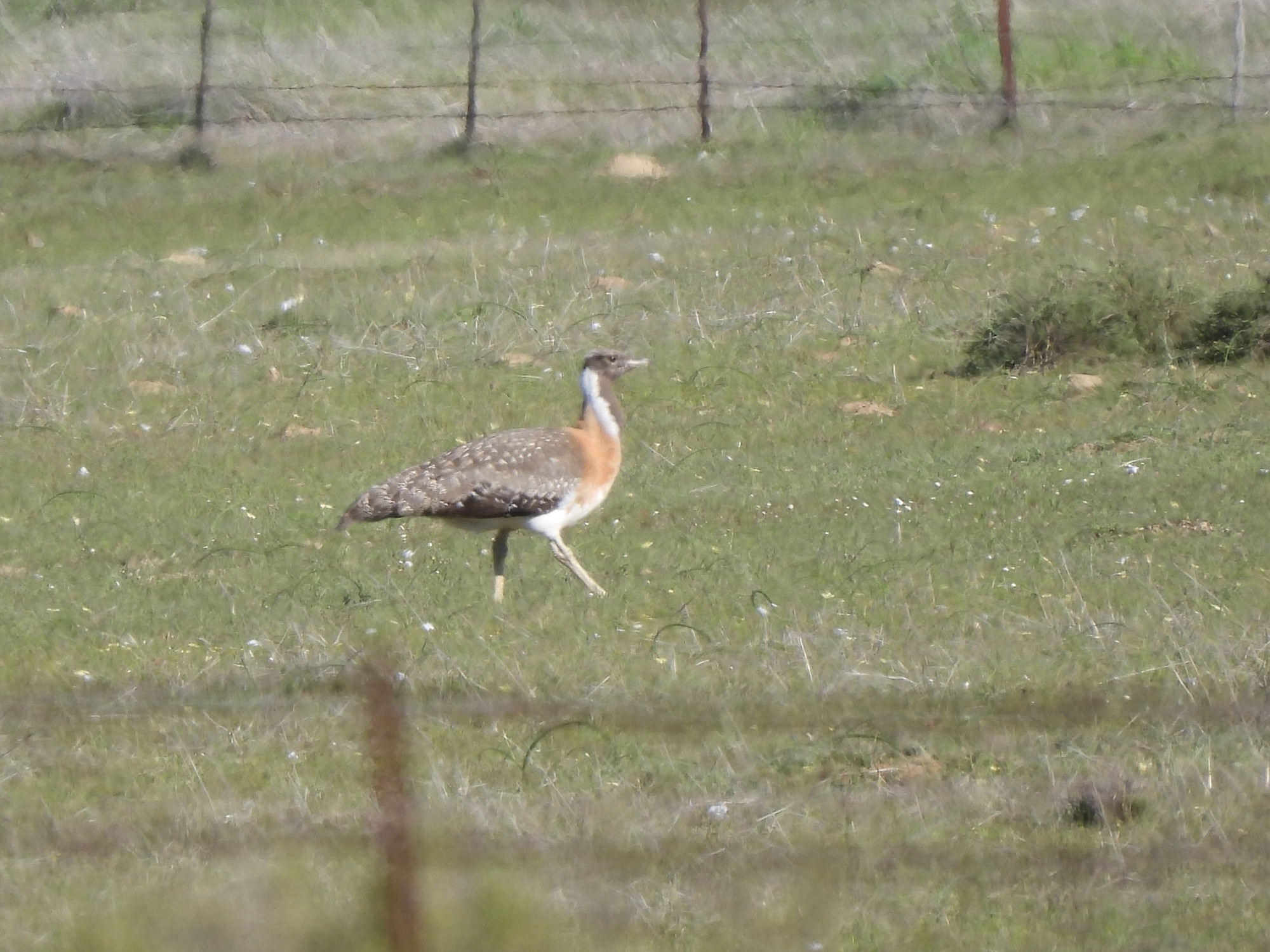
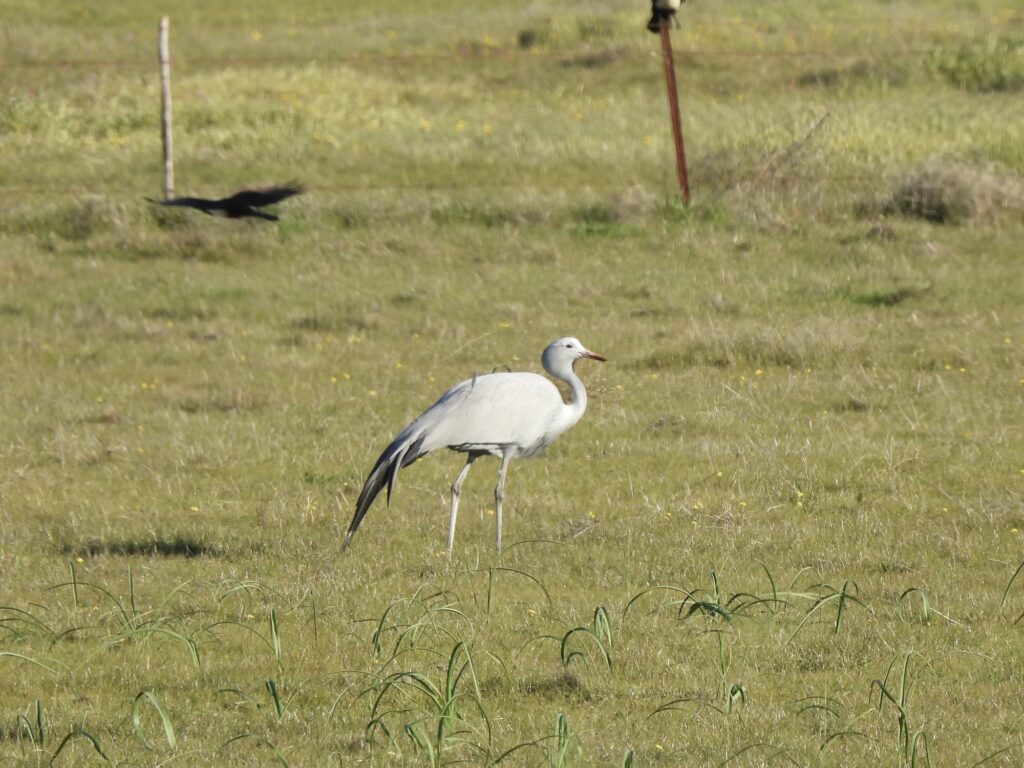
Simphiwe drove us close to a Ludwig’s bustard that landed nearby, where we got great looks at this majestic bird. However, Simphiwe’s expertise on the land and its plants stole the show and was the highlight of the day. He showed us some extremely endemic flora that were only starting to bloom — a large red flower endemic to the reserve and its surroundings, Romulea monadelpha, especially caught our attention. Beyond, blue cranes (Grus paradiseus) and spur-winged geese (Plectropterus gambensis) also foraged around, while steenboks (Raphicerus campestris), warthogs (Phacochoerus africanus) and bat-eared foxes (Otocyon megalotis) followed.
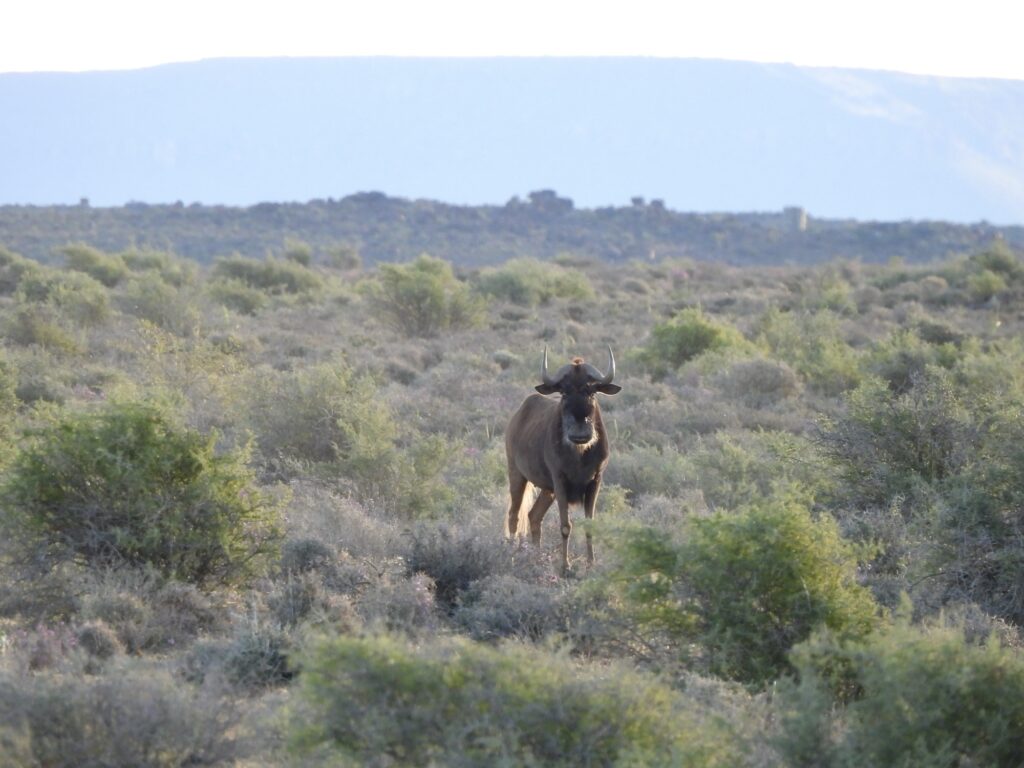
Right after leaving the renosterveld northwards, the karoo turned drier again. As it got dark on our way north, we connected with a herd of black wildebeest (Connochaetes gnou) and blue wildebeest (Connochaetes taurinus), as well as springboks and ostriches. A last-minute pair of karoo korhaans (Heterotetrax vigorsii) on the roadside were much welcome.
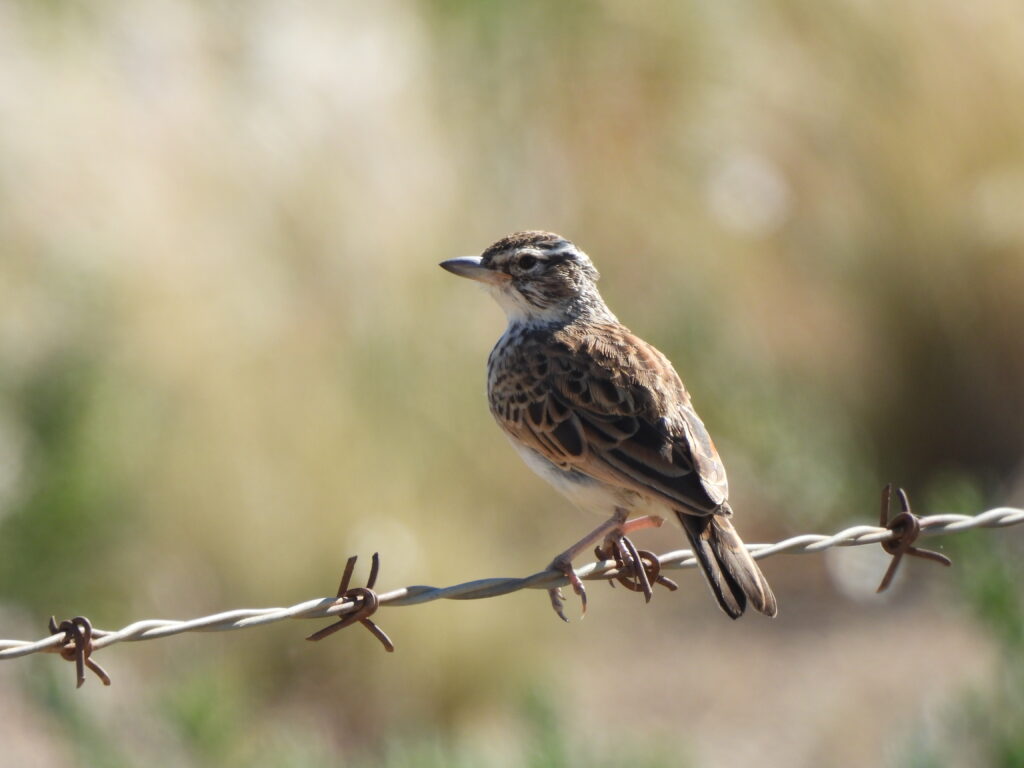
Our next morning was freezing cold but very productive. The dry karoo around Brandvlei had likely seen some recent rains, considering the numbers and diversity of birds seen. Brandvlei proved to be lark city. Most of our targets in the area belonged to this group. Even buntings here look like larks: lark-like buntings (Emberiza impetuani) were very abundant in the shrublands. The spike-heeled lark (Chersomanes albofasciatus) was the most abundant lark, while fawn-coloured larks (Calendulauda africanoides), red-capped larks (Calandrella cinerea) and karoo long-billed larks (Certhilauda subcoronata) were also present in more modest numbers.
Large flocks of red-billed queleas (Quelea quelea), grey-backed sparrow-larks (Eremopterix verticalis) and black-eared sparrow-larks (Eremopterix australis) accompanied us throughout the day — the latter being a scarce, nomadic rain specialist, with males displaying in the area.
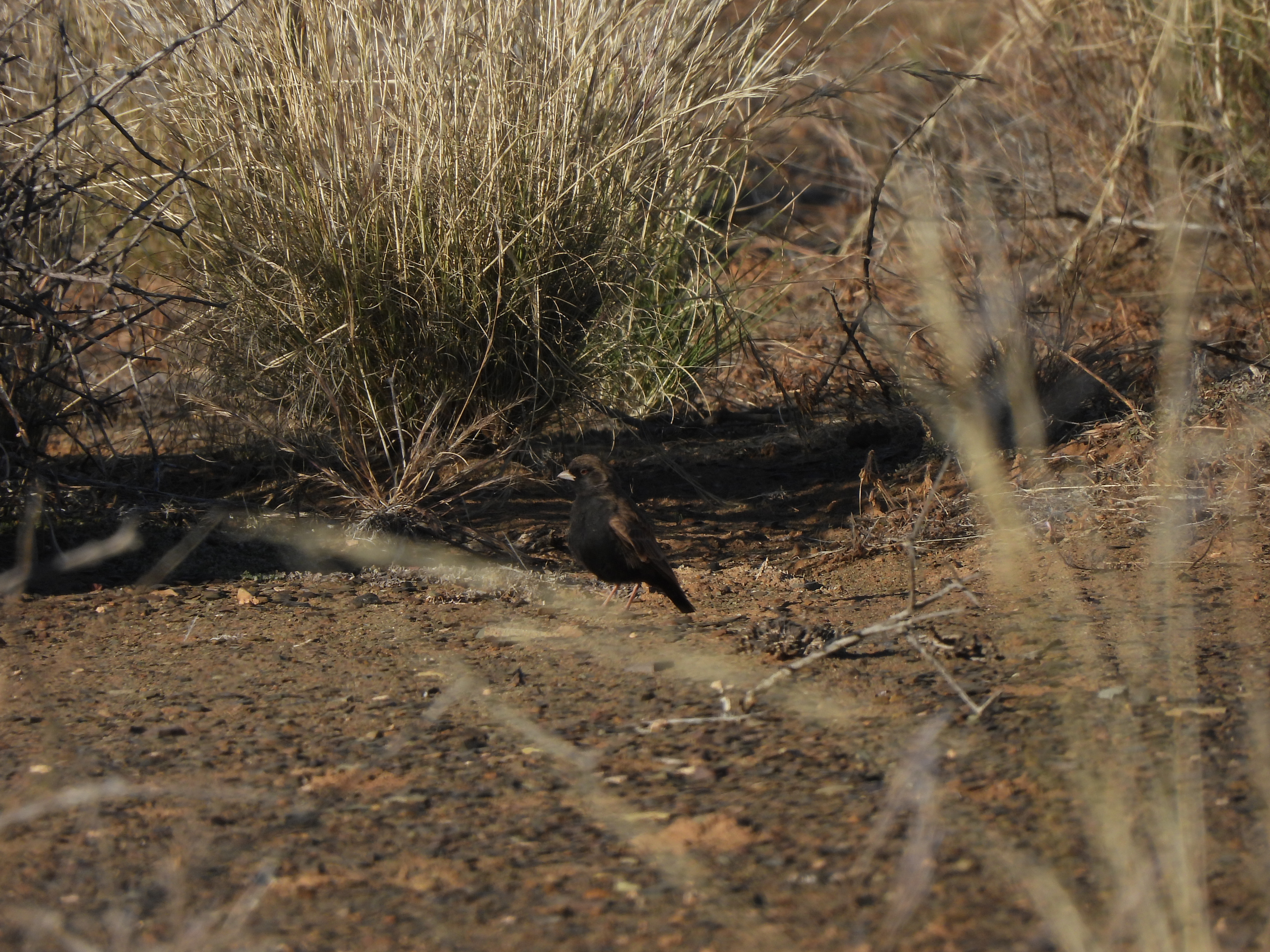
We drove two roads around Brandvlei. Northeast of town, we caught up with rufous-eared warblers (Malcorus pectoralis), yellow-vented eremomelas (Eremomela icteropygialis), chat flycatchers (Agricola infuscatus), karoo chats and African pipits (Anthus cinnamomeus). Eventually, we located our major target, the red lark (Calendulauda burra) — a highly localized South African endemic that we thought would be extremely hard at this time of year.
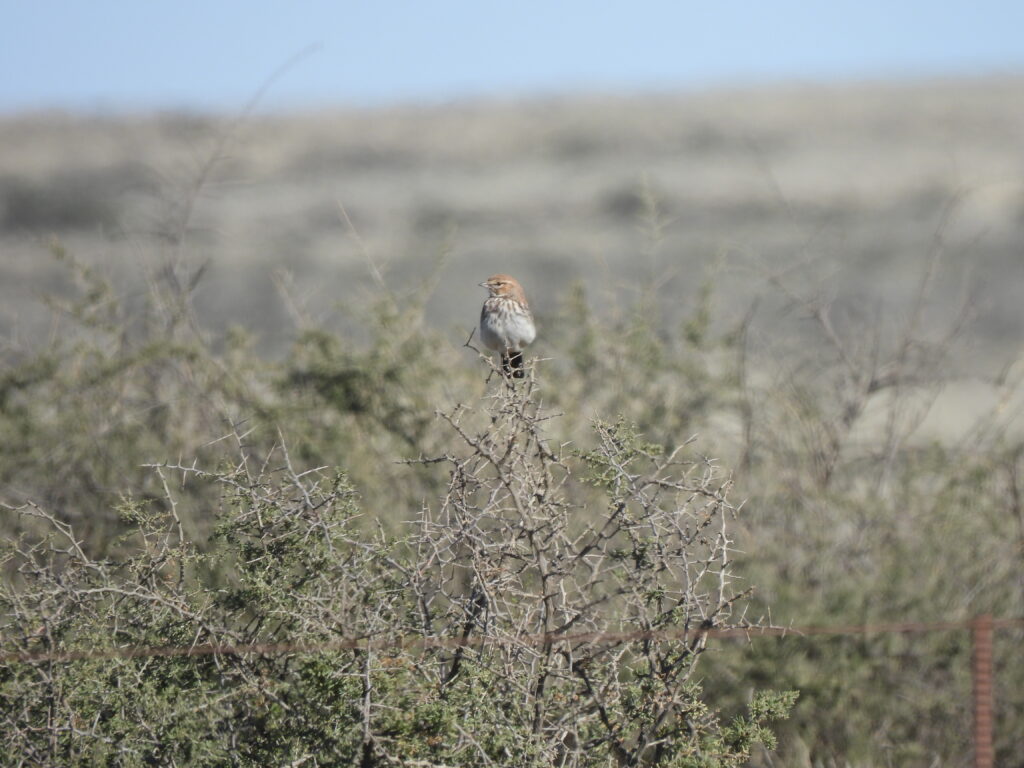
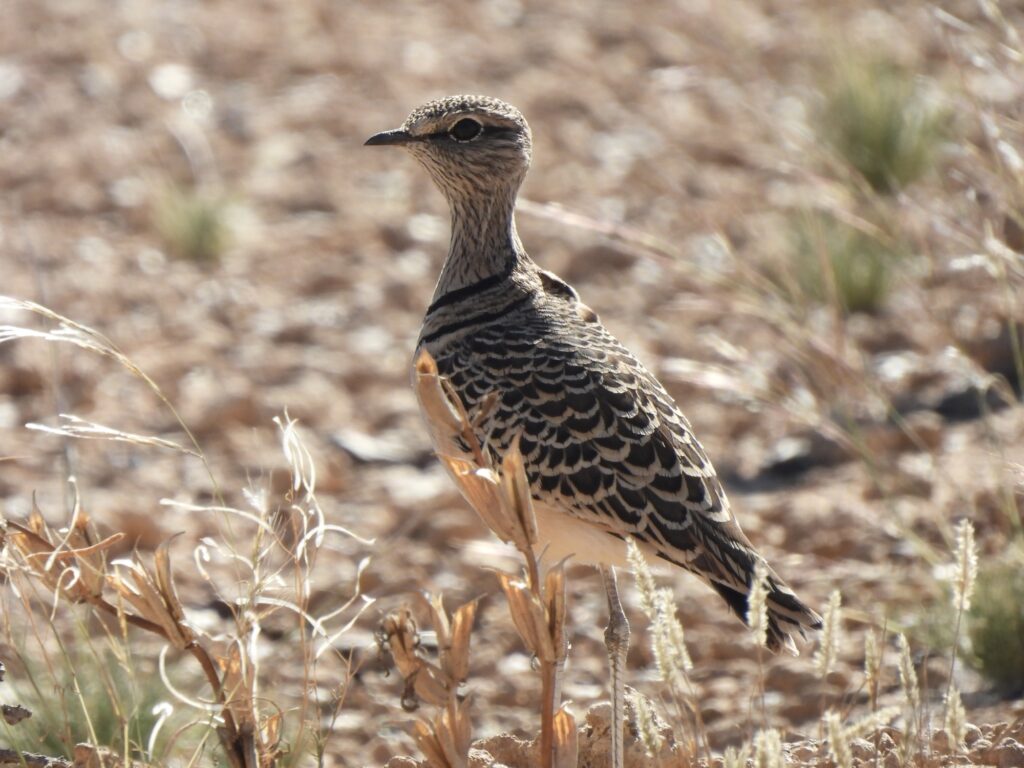
Later, driving northwest, we tried to look for Sclater’s larks (Spizocorys sclateri) to no avail. These rare nomadic larks are usually found drinking in puddles — where, instead, we found several black-headed canaries again. We added sabota larks (Calendulauda sabota), chestnut-vented warbler (Curruca subcoerulea), ant-eating chat (Myrmecocichla formicivora), black-chested snake-eagle (Circaetus pectoralis) and fantastic views of a pair of Namaqua sandgrouse (Pterocles namaquus) and three double-banded coursers (Smutsornis capensis).
Our whole four-day drive through the karoo involved an important variety of habitats in itself, and from my ignorance, the exact moment when we actually left the karoo is not perfectly clear. Most of the karoo specialists were found mainly in the areas described above, and I felt a difference in the bird assemblage and the general dryness when leaving Brandvlei northwards. Aloeidendron trees and large nests of sociable weavers (Philetairus socius) started taking a bigger part in the landscape, slowly giving it a more Kalahari desert-like feel as we drove towards Pofadder. Therefore, this is where I will draw the line.