This month of July has been extremely eventful in terms of birds. I spent almost the entirety of the month birdwatching in South Africa along with Darío Gijón, Guillem de los Santos, Arnau and Miquel Rivera. Our itinerary involved driving over 7,700 km across different habitats, which offered a great opportunity to get an overview of the diversity of the country. To add some spice to this little challenge of mine, choosing a different bird seen every day of the year, this July I decided to try reporting a lifer every day during my trip to South Africa. While this proved hard on different occasions, I managed. This chronicle will serve as a brief overview of our travel itinerary and bird highlights.
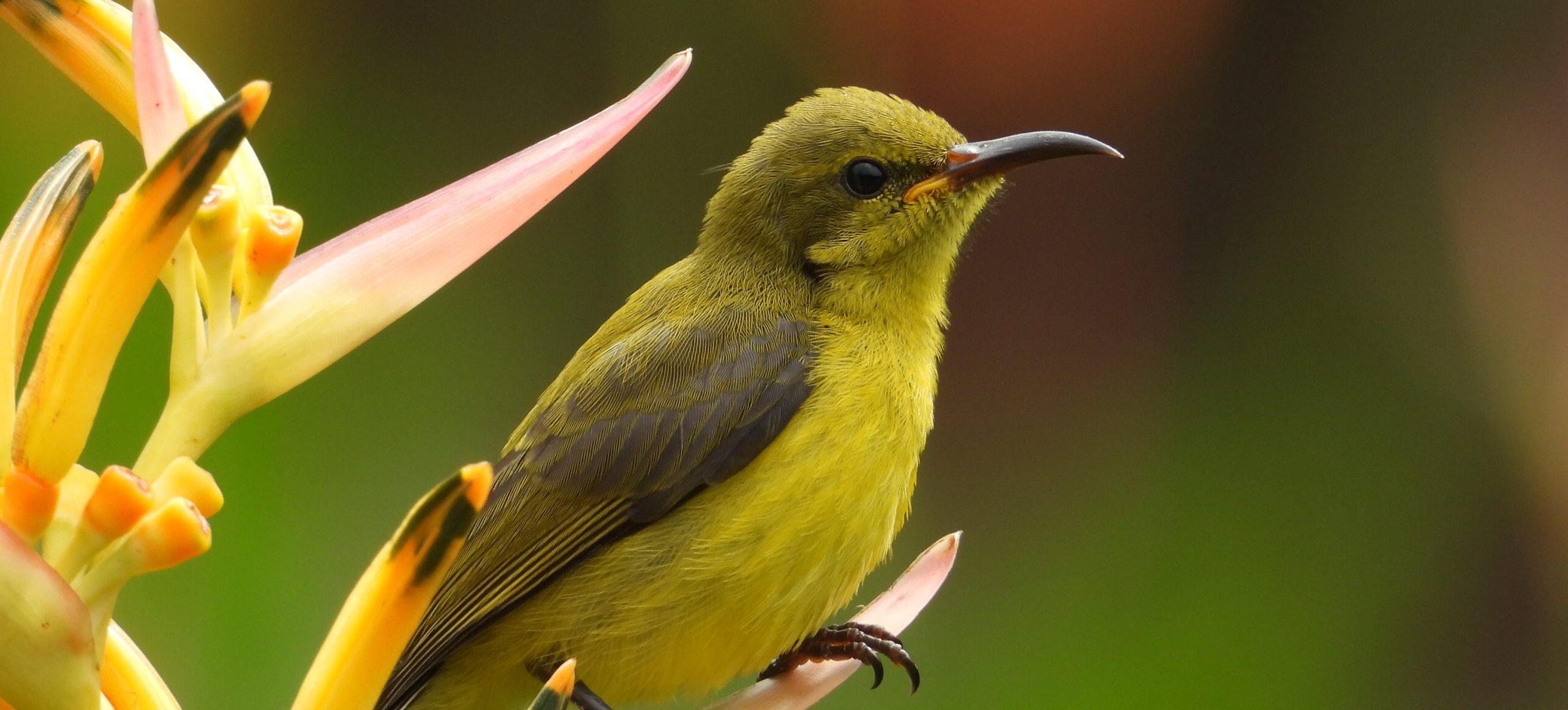
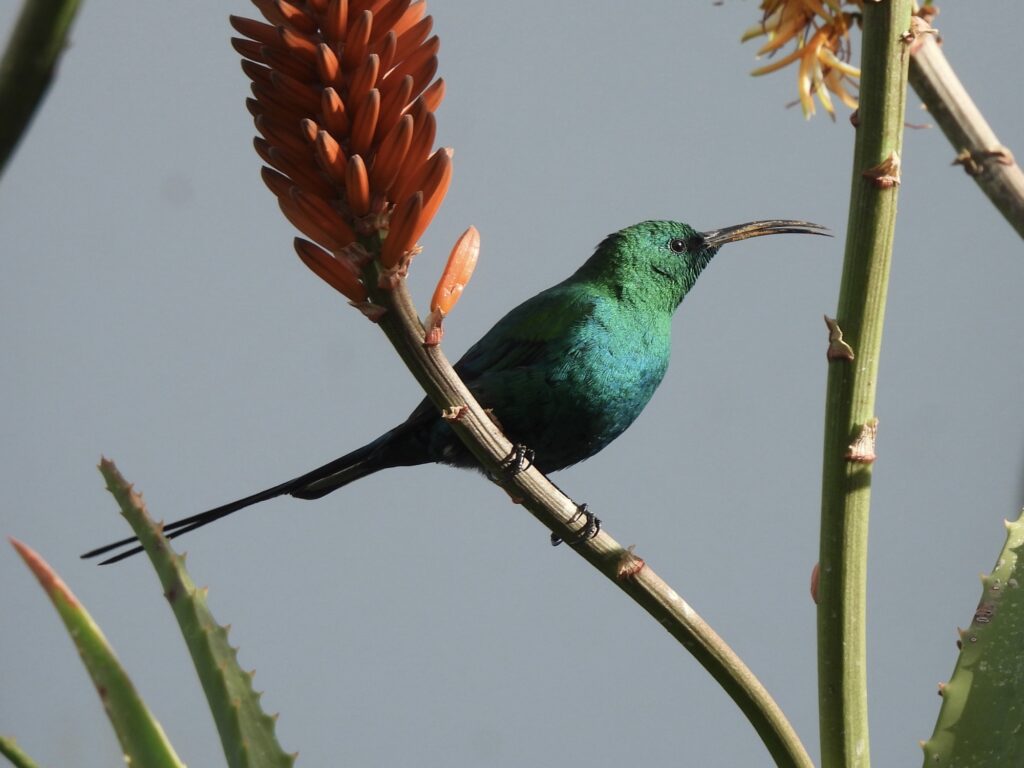
The trip started after midday on the first day of the month, after a quick birdwatching session on the local patch in my hometown. An overnight flight from Valencia via Istanbul brought us all to Cape Town, where we rented a car and slowly started driving northwards. An initial incursion through fynbos on the first day provided malachite sunbird (Nectarinia famosa) on the way to Ceres.
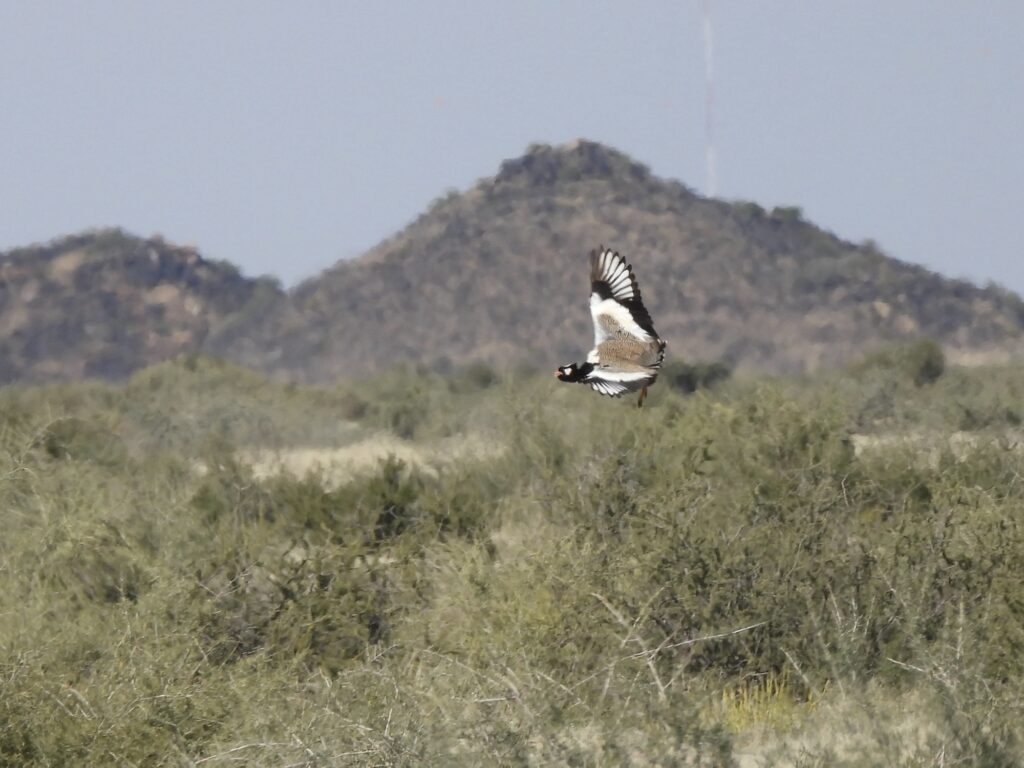
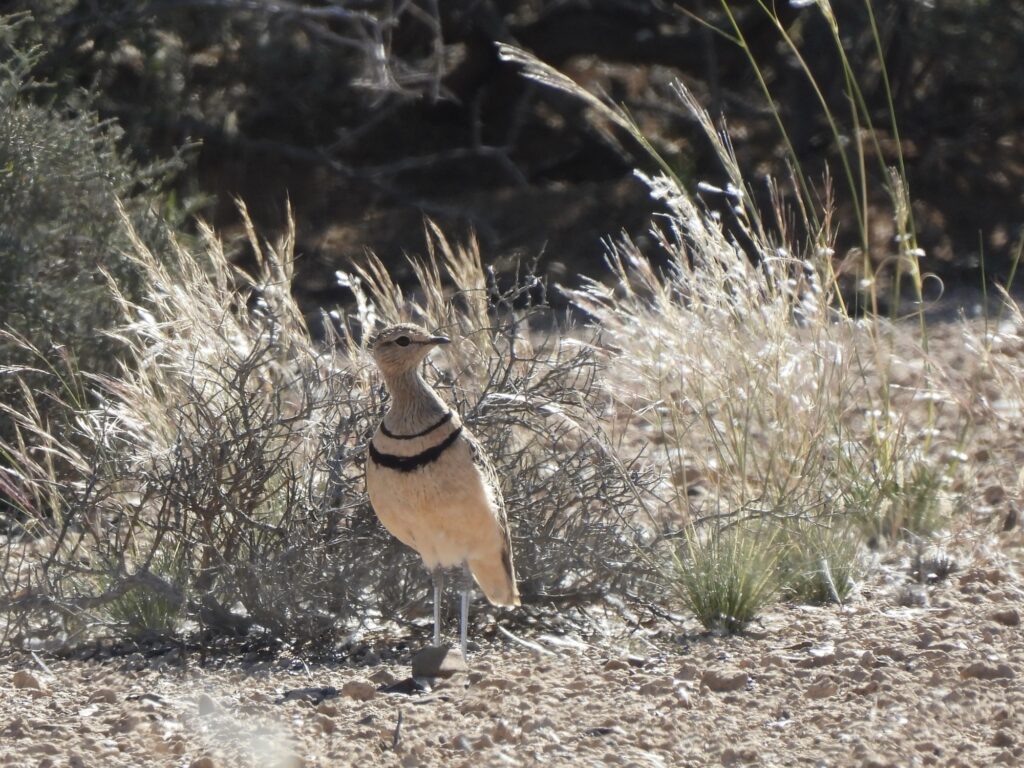
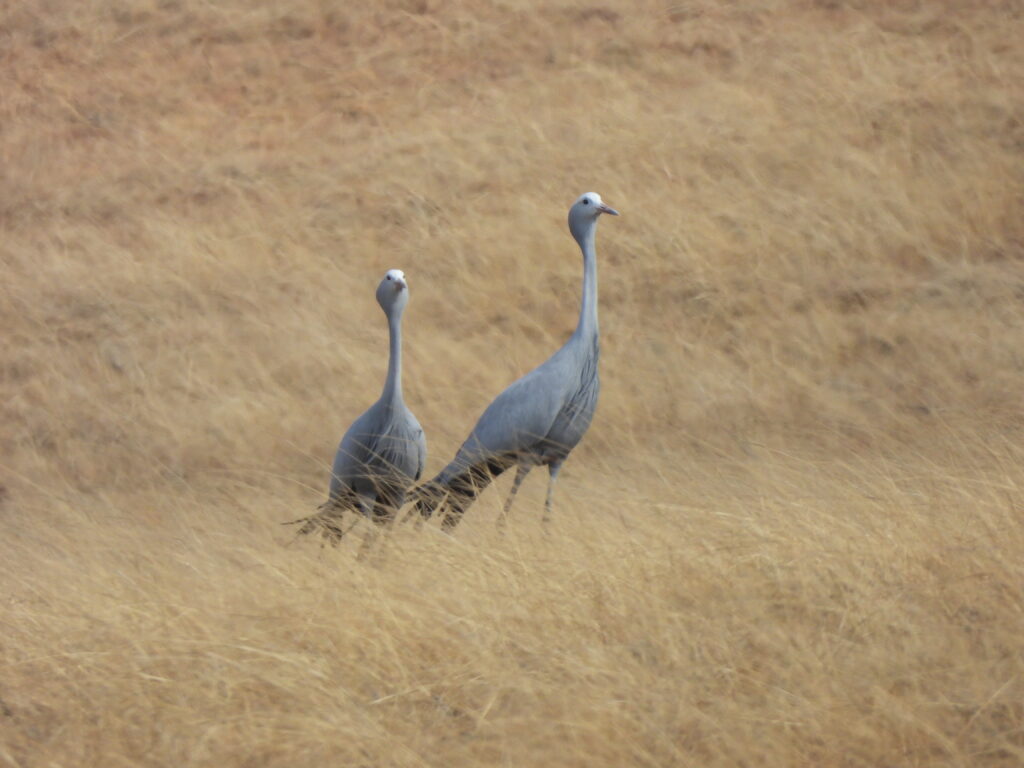
The following day, already in the Tankwa Karoo, included numerous highlights such as Namaqua warbler (Phragmacia substriata), black harrier (Circus maurus) and black-headed canary (Serinus alario). Passing through greener karoo in the renosterveld around Nieuwoudtsville, we were surprised to find our target Ludwig’s bustard (Neotis ludwigii) in good numbers, along with showy blue cranes (Grus paradiseus) and martial eagle (Polemaetus bellicosus). The drier karoo around Brandvlei proved fantastic, offering great views of Namaqua sandgrouse (Pterocles namaqua), double-banded courser (Smutsornis africanus) and numerous scarce larks, including the endemic red lark (Calendulauda burra)! Read more about our time in the Karoo region here.
Moving up north to the Kalahari area, some of the highlights were mammals, including aardwolf (Proteles cristatus) and great looks at meerkats (Suricata suricatta), bat-eared fox (Otocyon megalotis) and lion (Panthera leo). Bird-wise, our target rosy-faced lovebird (Agapornis roseicollis) obliged on the border with Namibia at Onseepkans, while our days in Kgalagadi National Park offered good views of small waxbill lifers such as green-winged pytilia (Pytilia melba), black-faced waxbill (Brunhilda erythronotos), violet-eared waxbill (Granatina granatina) and shaft-tailed whydah (Vidua regia). Additionally, improvised night drives resulted in stunning Verreaux’s eagle-owl (Ketupa lactea) and southern white-faced owl (Ptilopsis granti). Read more about our days in the Kalahari here.
Next on our trip was crossing the country eastwards. A fairly unplanned stop in the residential area of Kathu offered the only sightings of karoo thrush (Turdus smithii) of our trip, plus some of the few Bradfield’s swifts (Apus bradfieldi), cardinal woodpecker (Dendropicos cardinalis), piping cisticola (Cisticola fulvicapilla), wattled starlings (Creatophora cinerea), Marico sunbirds (Cinnyris mariquensis) and black-throated canaries (Crithagra atrogularis) seen. I had been particularly on the lookout for the localized Bradfield’s swift, justifying my choice. The following day, we bumped into our first crested barbet (Trachyphonus vaillantii), which was virtually the only lifer made on the road.
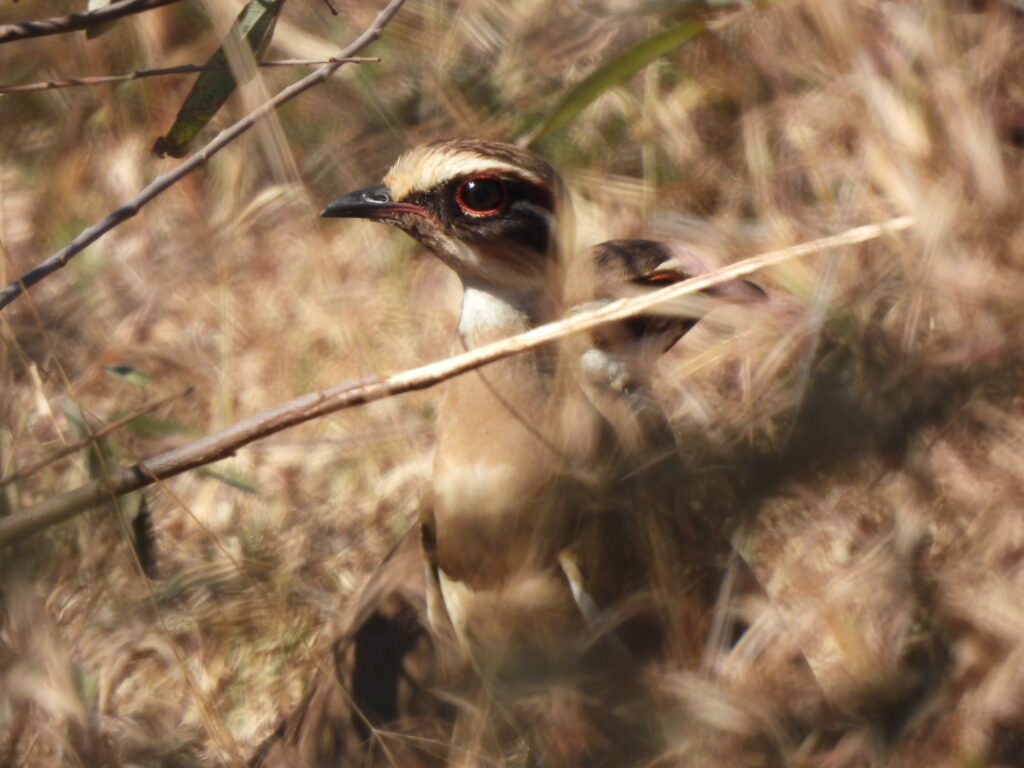
Our days in Wakkerstroom were not cost-effective in terms of birds. Still, the numerous hours on the road prospecting for korhaans, rare larks and pipits (almost to no avail) produced over 20 lifers. Among the highlights, we connected with several African swamphens (Porphyrio madagascariensis), blue-billed teal (Spatula hottentota), Kittlitz’s plover (Anarhynchus pecuarius), African snipe (Gallinago nigripennis), African marsh harrier (Circus ranivorus), Drakensberg prinia (Prinia hypoxantha) and calling African rails (Rallus caerulescens) and red-chested flufftail (Sarothrura rufa) in the main wetland and satellite ponds.
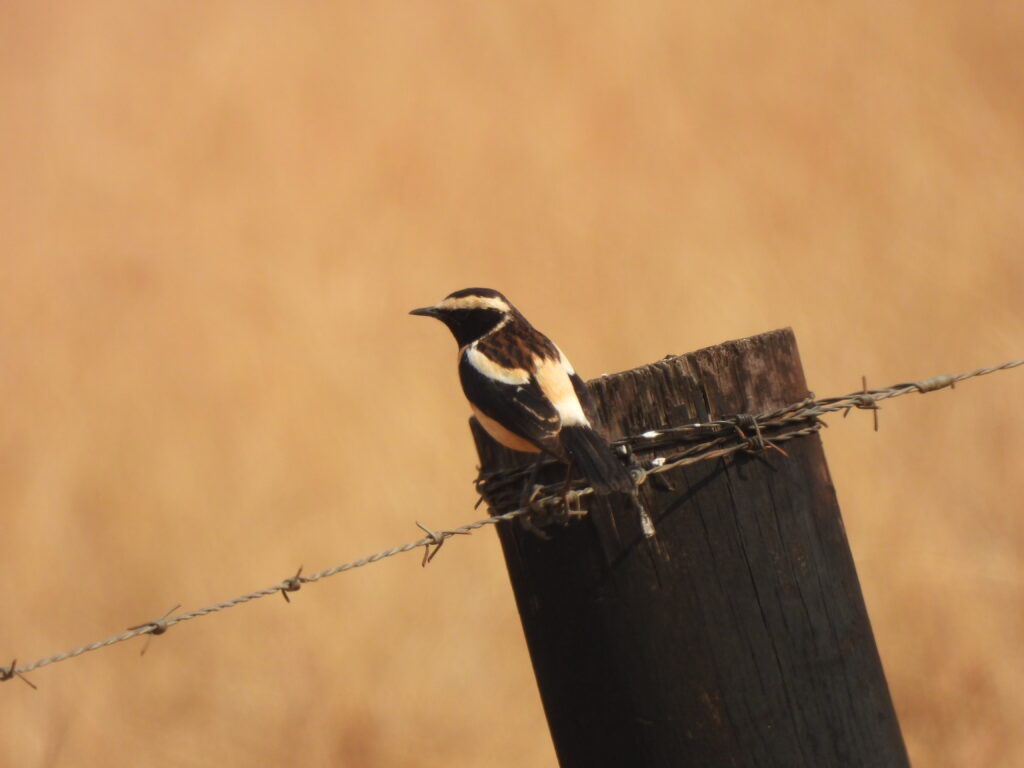
Around town, we located several black-collared barbets (Lybius torquatus), a lesser honeyguide (Indicator minor) and a stunning pair of red-throated wrynecks (Jynx ruficollis). Meanwhile, driving the fields filled with long-tailed widowbirds (Euplectes progne) and Cape longclaws (Macronyx capensis) produced several Swainson’s (Pternistis swainsonii) and red-winged francolins (Scleroptila levaillantii), eastern long-billed lark (Certhilauda semitorquata) and eastern clapper lark (Corypha fasciolata), buff-breasted chat (Campicoloides bifasciatus), sentinel rock thrush (Monticola explorator) and Nicholson’s pipit (Anthus nicholsoni). Additionally, leaving Wakkerstroom southwards produced the only black-winged lapwings (Vanellus melanopterus) of our trip.
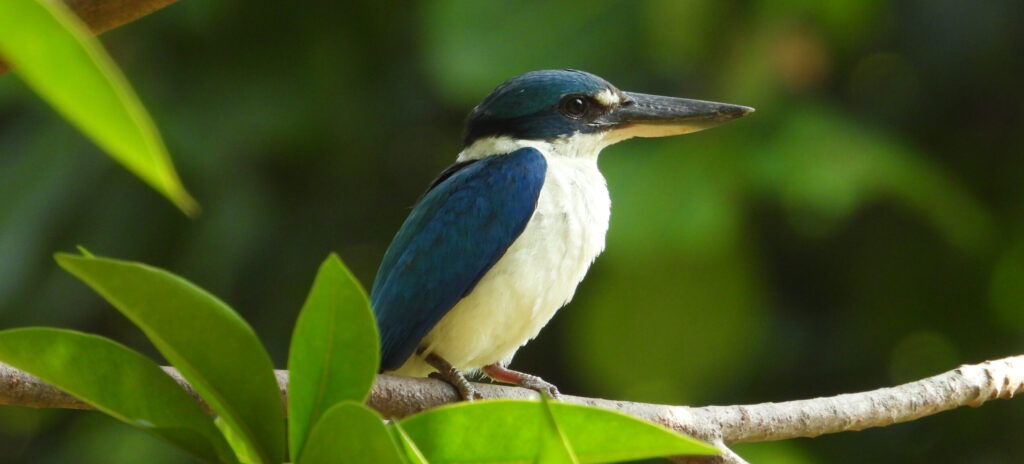
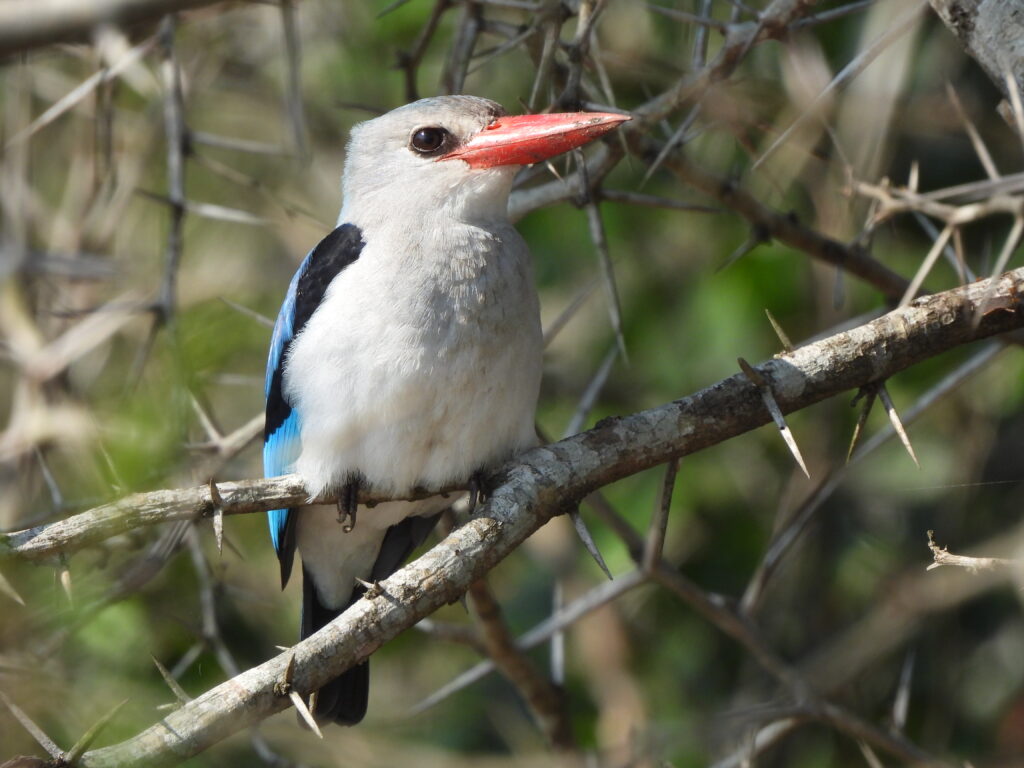
A series of different coastal forests and moist grasslands provided incredible birdwatching during mid-July. Dlinza Forest in Eshowe produced the very localized spotted ground thrush (Geokichla guttata) and a narina trogon (Apaloderma narina). The mangroves in eMthunzini gave distant views of target palm-nut vulture (Gypohierax angolensis), while mangrove kingfisher (Halcyon senegaloides) and green malkoha (Ceuthmochares australis) offered good looks.
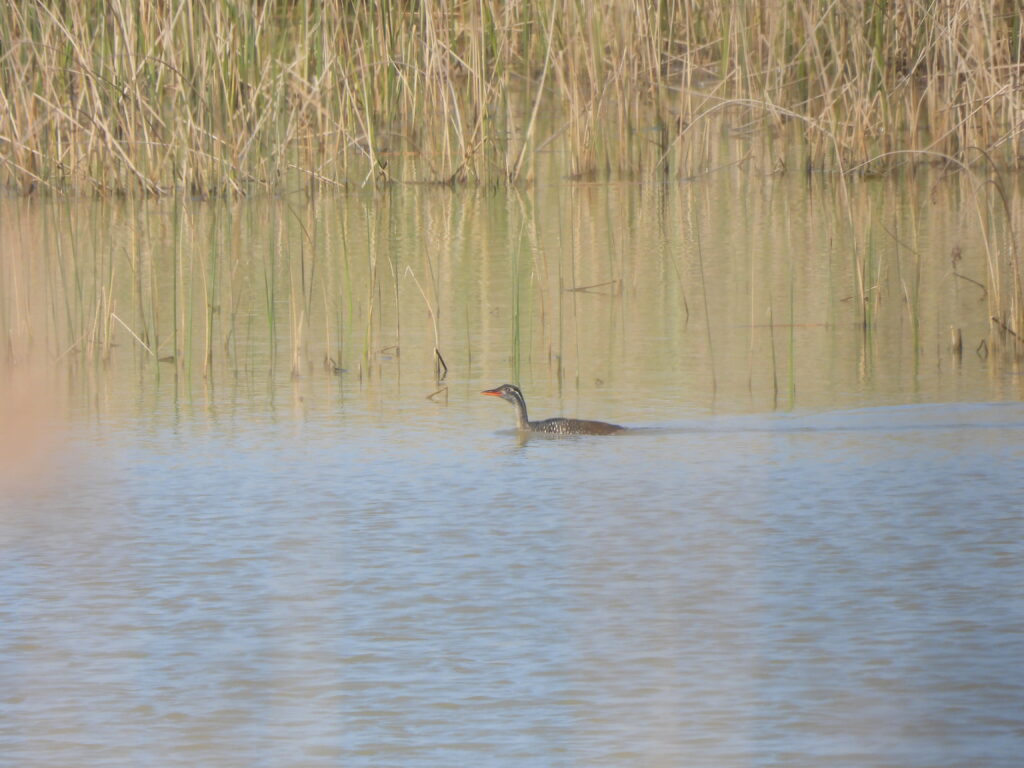
We then moved on to the coastal area of St Lucia, where honey badgers (Mellivora capensis) and hippos (Hippopotamus amphibius) were usual suspects at night in town. We had a blast exploring iSimangaliso Wetland Park, where we noted numerous African cuckoo-hawks (Aviceda cuculoides), the localized southern-banded snake-eagle (Circaetus fasciolatus) and long-crested eagle (Lophaetus occipitalis), plus a stunning Indian yellow-nosed albatross (Thalassarche carteri) stealing the show, flying close to shore at Cape Vidal beach in front of humpback whales (Megaptera novaeangliae). Birds in the town area were mind-blowing too. The river estuary produced black-throated wattle-eye (Platysteira peltata) and a stunning African finfoot (Podica senegalensis), while iGwalagwala Trail obliged with a completely unexpected crowned eagle (Stephanoaetus coronatus), Rudd’s apalis (Apalis ruddi), Woodward’s batis (Batis fratrum), Livingstone’s turaco (Tauraco livingstonii), green twinspot (Mandingoa nitidula), buff-spotted flufftail (Sarothrura elegans) and yet another spotted ground-thrush.
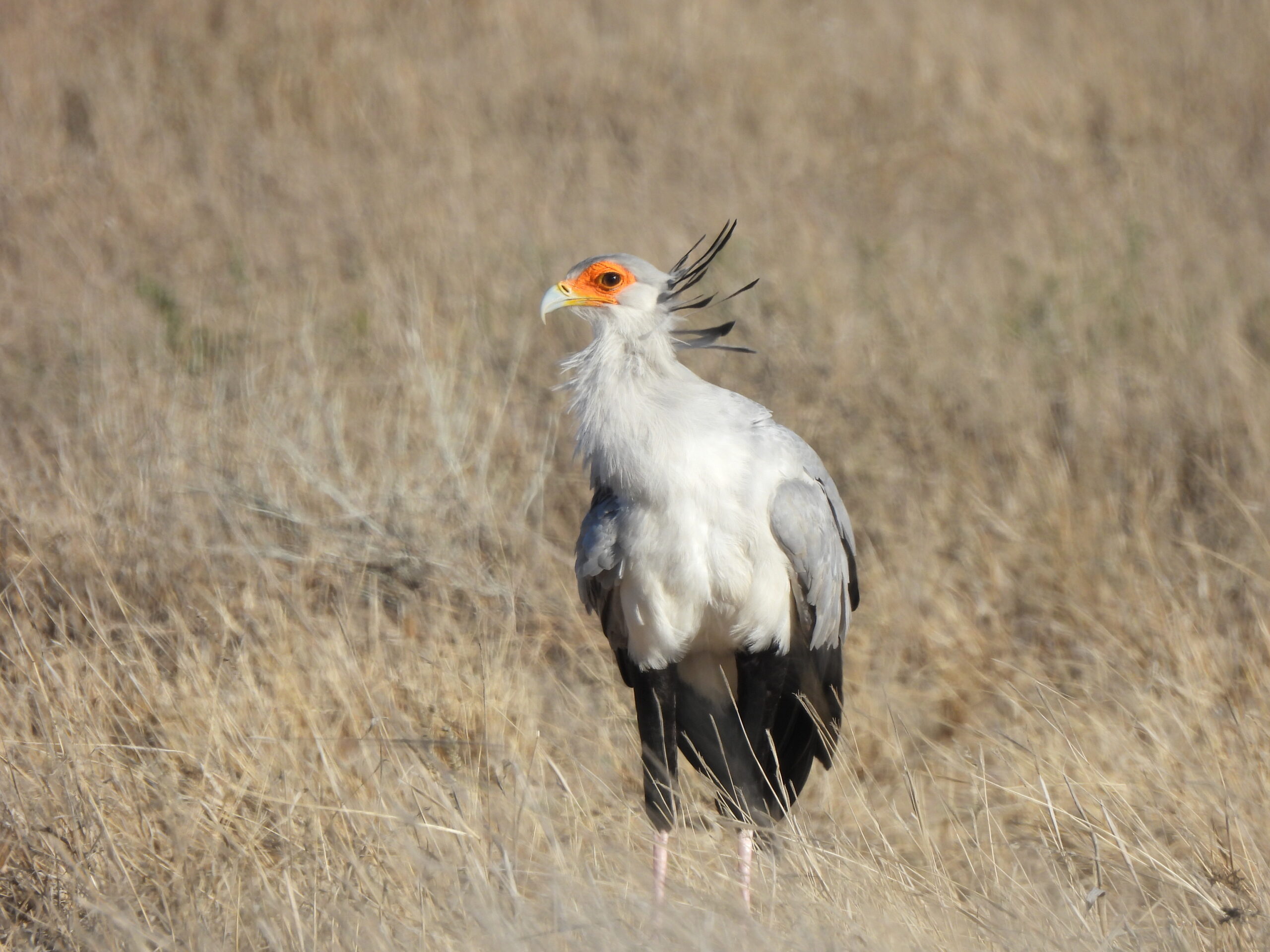
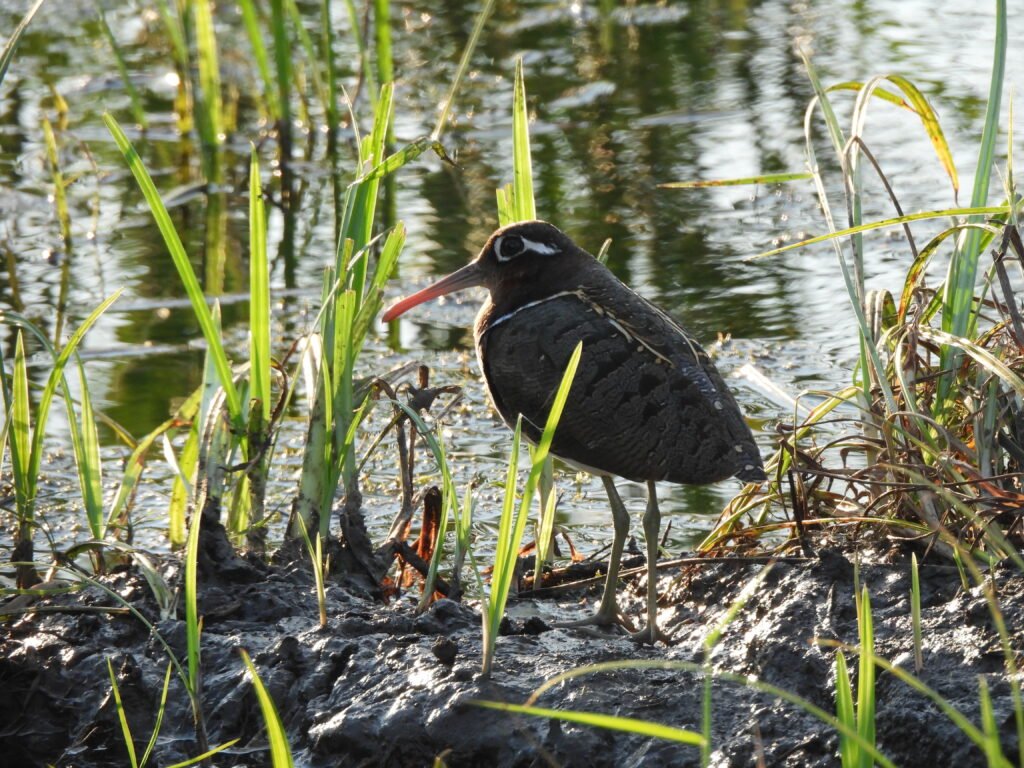
The following leg of our trip involved driving northwards towards Kruger National Park. We first crossed the Kingdom of eSwatini, where we got our first (of many) brown snake-eagles (Circaetus cinereus), magpie shrikes (Urolestes melanoleucus) and Burchell’s starlings (Lamprotornis australis). Our days in Kruger included real goodies such as bronze-winged courser (Rhinoptilus chalcopterus), African skimmer (Rhynchops flavirostris), greater painted-snipe (Rostratula benghalensis), southern ground hornbill (Bucorvus leadbeateri) and numerous raptors. Mammal-wise, Kruger offered a bonanza of memorable sightings, including lions, leopards (Panthera pardus), cheetah (Acinonyx jubatus), black rhino (Diceros bicornis) and white rhino (Ceratotherium simum).
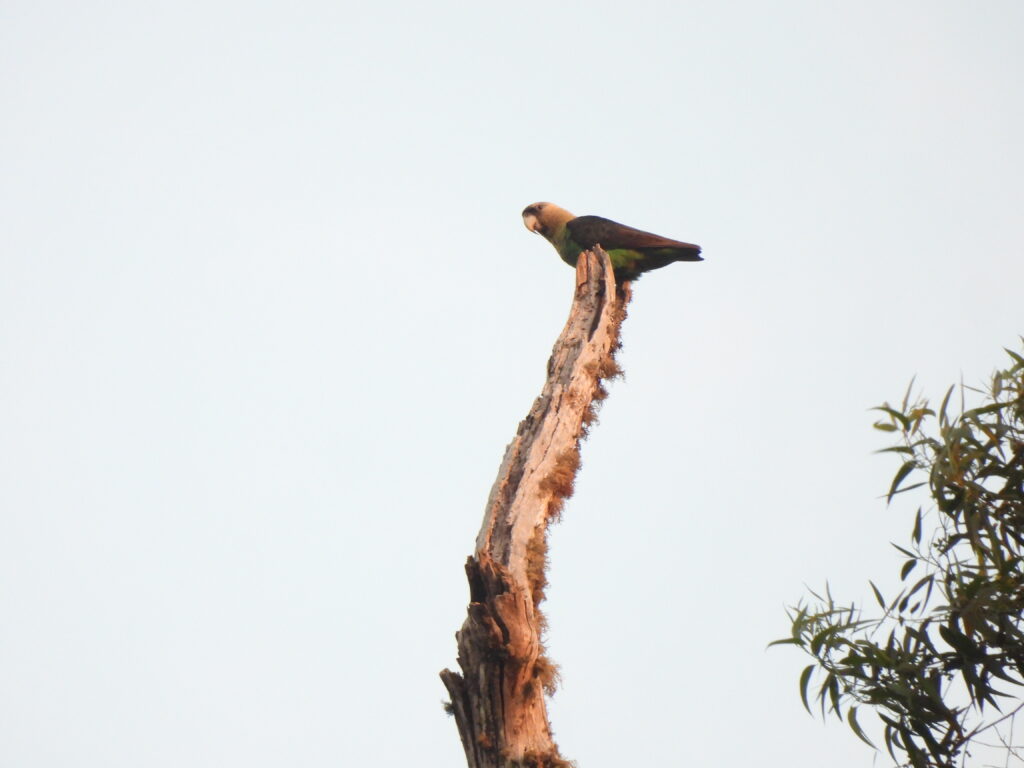
An overnight stay around the Afromontane forest of Woodbush was our only chance with Cape parrot (Poicephalus robustus), Knysna turaco (Tauraco corythaix), black-fronted bushshrike (Chlorophoneus nigrifrons) and yellow-streaked greenbul (Phyllastrephus flavostristus) and our last good chance of greater double-collared sunbird (Cinnyris afer) and amethyst sunbird (Chalcomitra amethystina). Thankfully, all of these obliged on an otherwise silent forest.
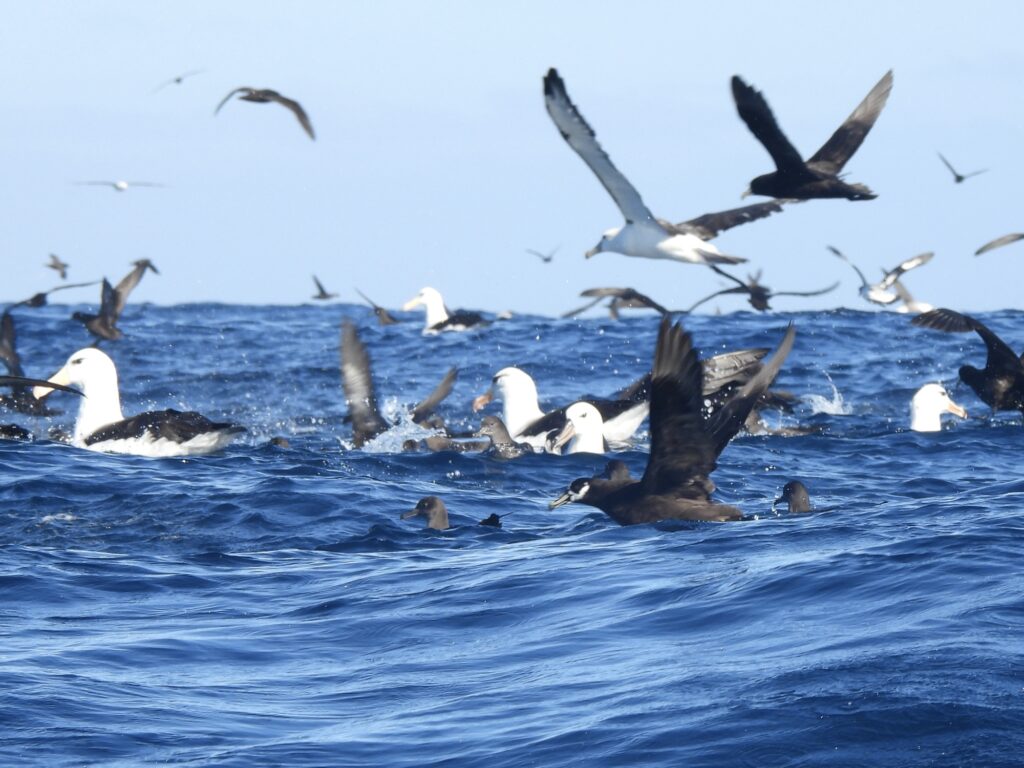
Back in the Cape region, we started off strong with a pelagic tour on our first day in town. Spectacled petrel (Procellaria conspicillata) was the true star of the show, although Antarctic prion (Pachyptila desolata) and pintado petrel (Daption capense) were other great additions besides four species of albatrosses and thousands of shearwaters and petrels. Read about our pelagic trip here.
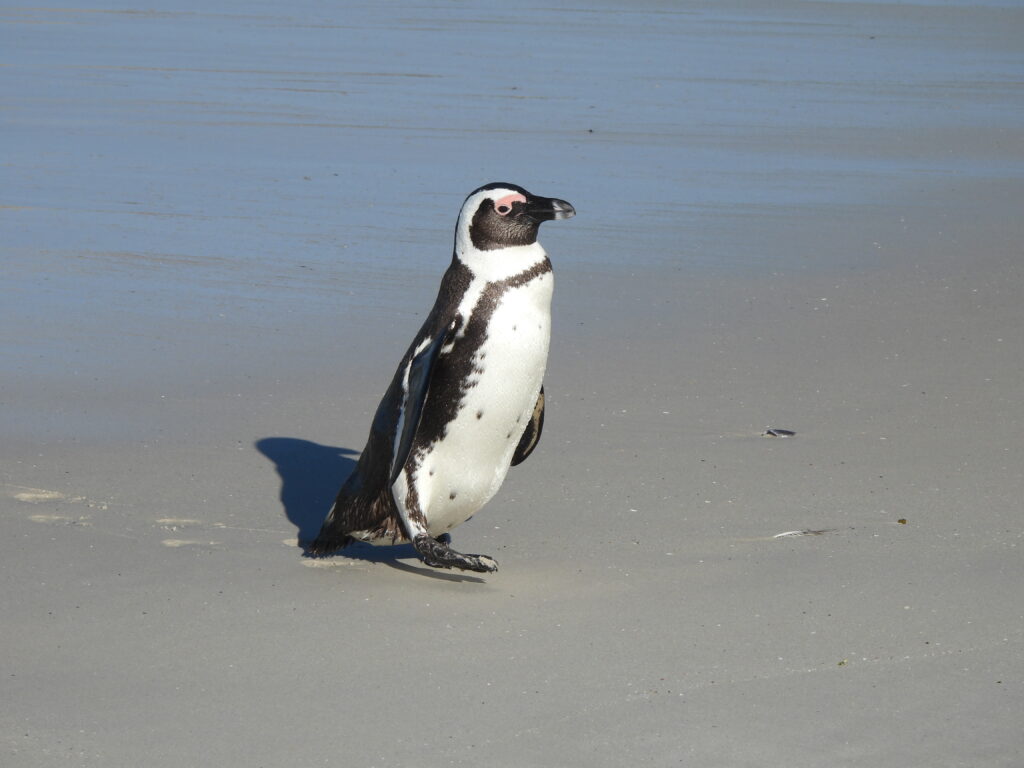
Cape Town itself was quite productive, proving one of the best urban destinations for birdwatching. Few days exploring the city with Uber delivered lemon dove (Aplopelia larvata), forest buzzard (Buteo trizonatus), forest canary (Crithagra scotops), Cape sugarbird (Promerops cafer), African penguin (Spheniscus demersus), bank (Phalacrocorax neglectus) and crowned cormorant (Microcarbo coronatus) all obliging in different parts of the city. Read more about our time around Cape Town here.
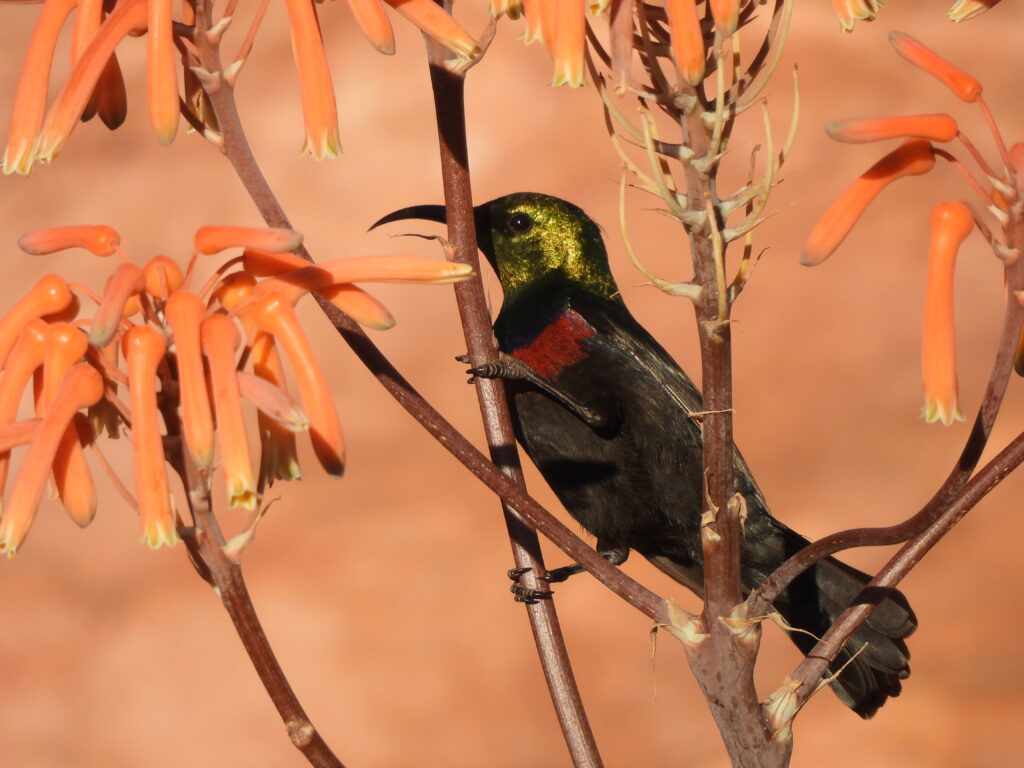
Our last dance took place in the fynbos south and east of Cape Town. Not only did we enjoy incredible looks at the endemic sugarbirds and orange-breasted sunbird (Anthobaphes violacea), but we also connected with the extremely range-restricted Victorin’s warbler (Cryptillas victorini), the charismatic Cape rockjumper (Chaetops frenatus) and other endemics, including Cape grassbird (Sphenoeacus afer), Cape siskin (Crithagra totta), southern tchagra (Tchagra tchagra) and Cape griffon (Gyps coprotheres). Read more about our time in the fynbos here.
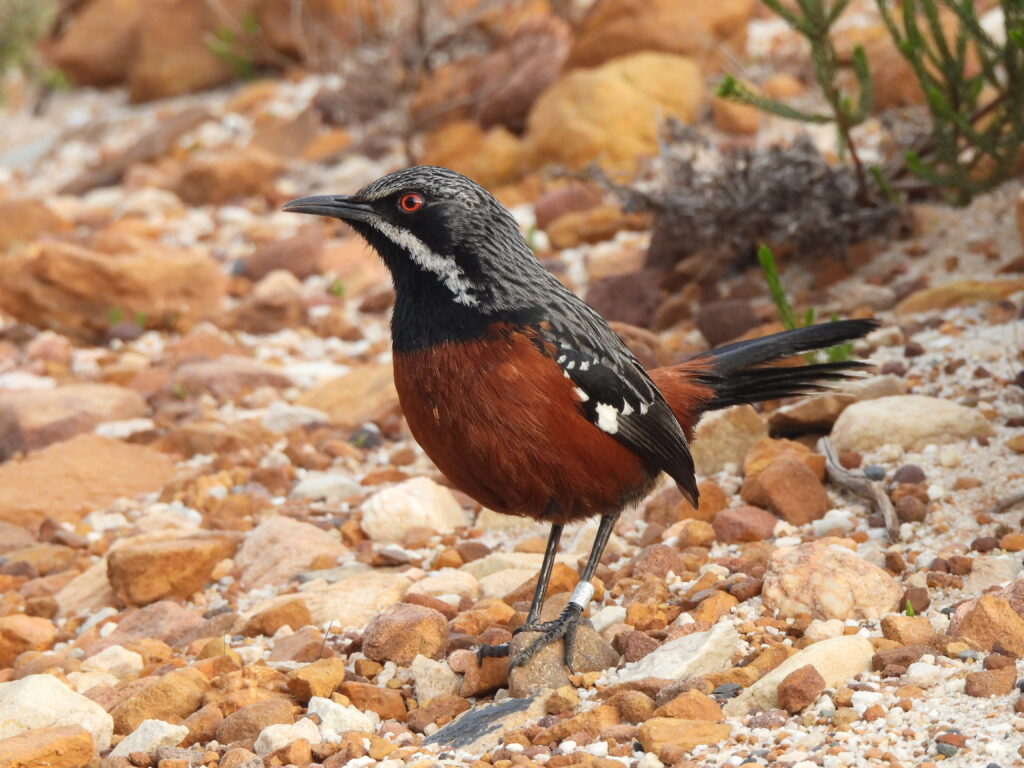
All in all, it has been a fantastic month in a new country where we managed to connect with over 440 species of birds — many more than in any other country I have ever visited thus far. I am quite happy with the result, looking at our initial list of targets, which was largely fulfilled (while missing some interesting goodies for an unknown future), and a large number reached in the season with the least bird diversity and activity. South Africa is filled with incredible bird diversity, including many erratic, unpredictable species that keep one in anticipation. This proved to be a magnetic country with loads of contrasting experiences to offer.
Here is the archive of the birds of the day for April 2026. Birds are reported in scientific and English names, together with the location of each sighting.
- 1 Jul 2026: Cetti’s warbler (Cettia cetti) Alcoi, Spain
- 2 Jul 2026: Malachite sunbird (Nectarinia famosa) Paarl, South Africa
- 3 Jul 2026: Black-headed canary (Serinus alario) Ceres, South Africa
- 4 Jul 2026: Ludwig’s bustard (Neotis ludwigii) Vanrhynsdorp, South Africa
- 5 Jul 2026: Red lark (Calendulauda burra) Brandvlei, South Africa
- 6 Jul 2026: Rosy-faced lovebird (Agapornis roseicollis) Onseepkans, South Africa
- 7 Jul 2026: Shaft-tailed whydah (Vidua regia) Kgalagadi Transfrontier Park, South Africa
- 8 Jul 2026: Verreaux’s eagle-owl (Ketupa lactea) Kgalagadi Transfrontier Park, South Africa
- 9 Jul 2026: Bradfield’s swift (Apus bradfieldi) Kathu, South Africa
- 10 Jul 2026: Crested barbet (Trachyphonus vaillantii) Delayreville, South Africa
- 11 Jul 2026: Buff-breasted chat (Campicoloides bifasciatus) Wakkerstroom, South Africa
- 12 Jul 2026: Red-chested flufftail (Sarothrura rufa) Wakkerstroom, South Africa
- 13 Jul 2026: Spotted ground thrush (Geokichla guttata) Eshowe, South Africa
- 14 Jul 2026: Green malkoha (Ceuthmochares australis) eMthunzini, South Africa
- 15 Jul 2026: Indian yellow-nosed albatross (Thalassarche carteri) St Lucia, South Africa
- 16 Jul 2026: African finfoot (Podica senegalensis) St Lucia, South Africa
- 17 Jul 2026: Burchell’s starling (Lamprotornis australis) Hlane Royal National Park, Eswatini
- 18 Jul 2026: Bronze-winged courser (Rhinoptilus chalcopterus) Kruger National Park, South Africa
- 19 Jul 2026: Greater painted-snipe (Rostratula benghalensis) Kruger National Park, South Africa
- 20 Jul 2026: Southern ground hornbill (Bucorvus leadbeateri) Kruger National Park, South Africa
- 21 Jul 2026: White-throated robin-chat (Dessonornis humeralis) Kruger National Park, South Africa
- 22 Jul 2026: Grey-headed bushshrike (Malaconotus blanchoti) Kruger National Park, South Africa
- 23 Jul 2026: Yellow-billed oxpecker (Buphagus africanus) Kruger National Park, South Africa
- 24 Jul 2026: Cape parrot (Poicephalus robustus) Magoebaskloof, South Africa
- 25 Jul 2026: Yellow-streaked greenbul (Phyllastrephus flavostriatus) Magoebaskloof, South Africa
- 26 Jul 2026: Spectacled petrel (Procellaria conspicillata) Offshore, South Africa
- 27 Jul 2026: Cape sugarbird (Promerops cafer) Cape Town, South Africa
- 28 Jul 2026: Lemon dove (Aplopelia larvata) Cape Town, South Africa
- 29 Jul 2026: Orange-breasted sunbird (Anthobaphes violacea) Table Mountain National Park, South Africa
- 30 Jul 2026: Cape rockjumper (Chaetops frenatus) Somerset West, South Africa
- 31 Jul 2026: Cape vulture (Gyps coprotheres) De Hoop Nature Reserve, South Africa